
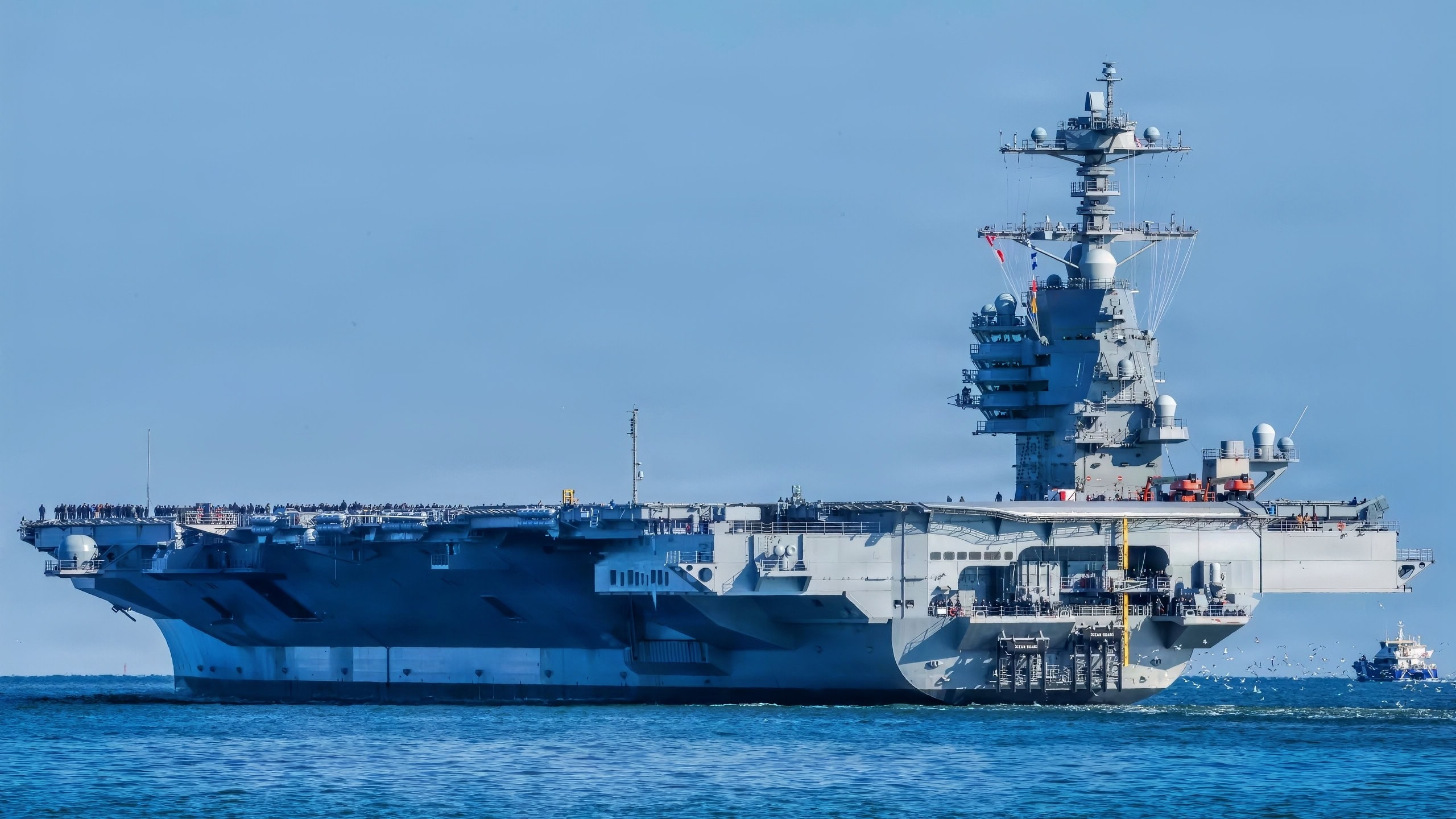
3 U.S. Aircraft Carriers Are About to Be Unavailable at the Same Time
The decline of U.S. naval shipbuilding has been well documented over the past several years. Shipyards lack the resources and manpower to meet the Navy’s ambitious demands; the global supply chain has experienced frequent disruptions; and many naval projects have suffered from mismanagement.
As a result of these issues, the Navy has encountered numerous delays and challenges with its carrier maintenance programs.
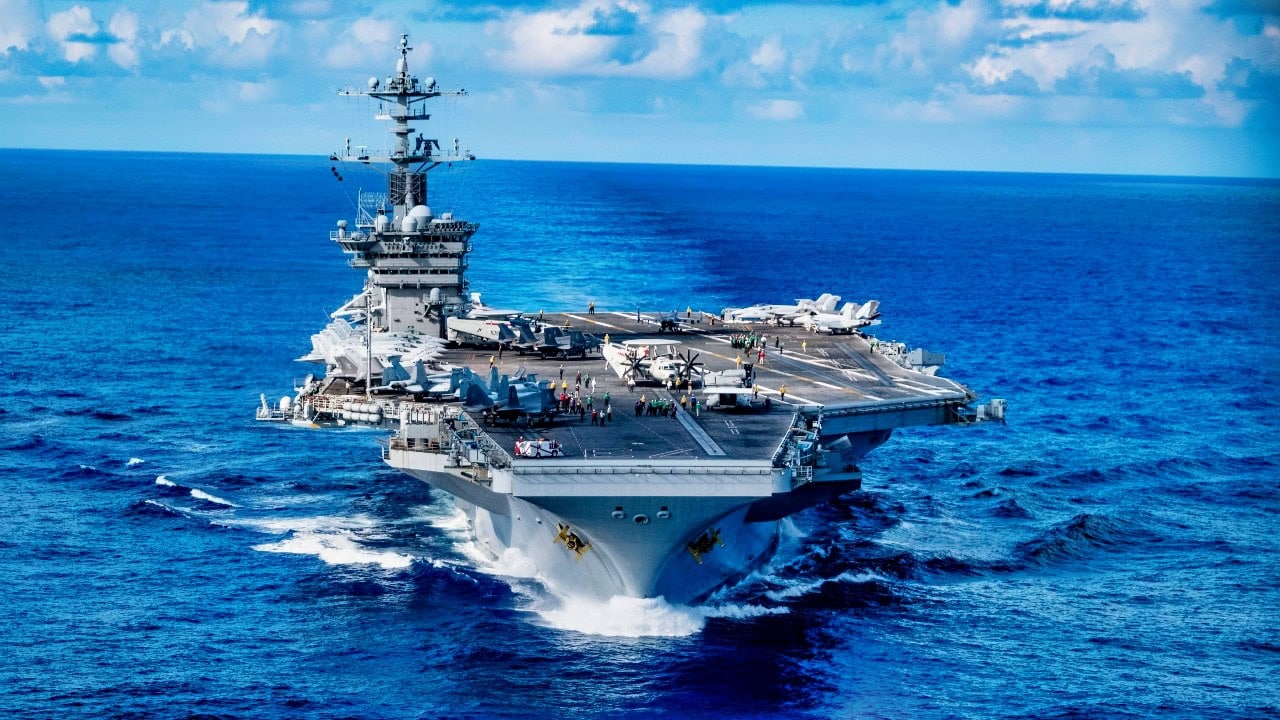
U.S. 7th Fleet’s premiere forward-deployed aircraft carrier USS George Washington (CVN 73) steams in the Western Pacific Ocean during Keen Sword 25, Oct. 29. The embarked staff of the George Washington Carrier Strike Group is coordinating air and surface operations in the exercise. Keen Sword is a biennial, joint and bilateral field-training exercise involving U.S. military and Japan Self-Defense Forces personnel, designed to increase readiness and interoperability while strengthening the ironclad U.S.-Japan alliance. (U.S. Navy photo by Mass Communication Specialist 2nd Class Caroline H. Lui)
The first major delay was encountered by USS George Washington (CVN-73) during its refueling and complex overhaul (RCOH), which was somewhat excusable considering the pandemic at the time. Now, the USS John C. Stennis (CVN-74) has encountered its own delays, threatening to throw off the U.S. Navy’s operational tempo.
John C. Stennis Behind Schedule
Stennis entered its RCOH in May 2021 at Newport News Shipbuilding, the only U.S. yard capable of refueling nuclear aircraft carriers.
The overhaul was originally expected to conclude in 2025, but a combination of pandemic-era workforce shortages, material delays, additional work discovered after the ship was opened, and sheer congestion at the yard significantly delayed its completion.
Current estimates place Stennis’ return to operational status in late 2026 or 2027, making it one of the longest carrier overhauls since 2001, surpassed only by USS George Washington.
While some may argue that Stennis’ delay is not that significant, her prolonged RCOH is threatening to have massive consequences in the short and medium-term. Carrier force planning assumes that roughly a third of the fleet is deployed, a third is preparing or in workups, and a third is in maintenance at any given time. In practice, the Navy faces intense strain, even with eleven carriers under ideal conditions.
When one carrier is delayed far beyond its planned overhaul window, the entire model destabilizes.
In practical terms, Stennis has effectively been removed from the force for more than five years, forcing other carriers to deploy more frequently and stay at sea longer to compensate. Those longer deployments, in turn, drive wear and tear, which feeds back into maintenance delays elsewhere in the fleet.
Harry S. Truman: The Next Disaster Waiting to Happen
The USS Harry S. Truman (CVN-75) is gearing up to be the first victim of these cascading delays. Commissioned in 1998, Truman is approaching the end of her 50-year service life and is scheduled to enter RCOH in mid-2026.
Under normal circumstances, the Navy plans around this absence and uses other carriers to cover the gap. The difficulty now is timing. Truman is entering overhaul at a time when the rest of the fleet is already stretched thin, with no surplus capacity to easily absorb the loss.
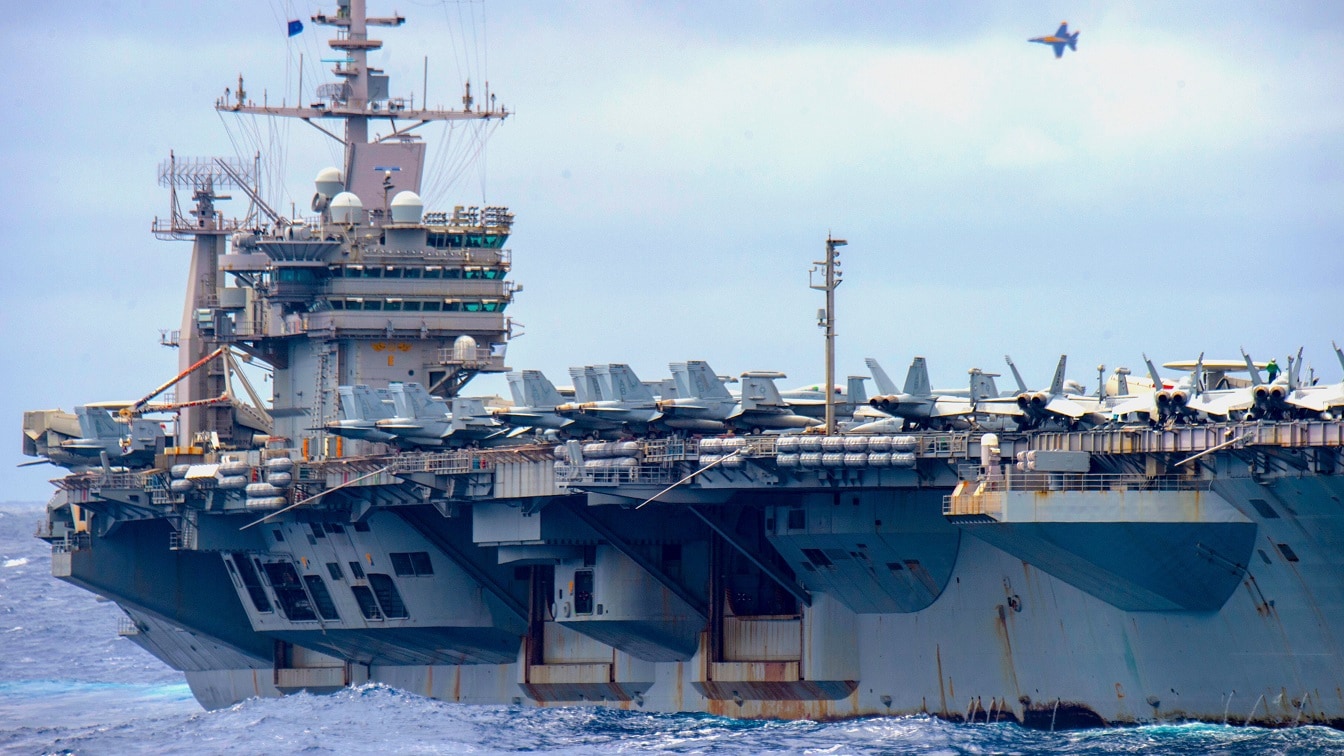
The Blue Angels, flies over the Nimitz-class aircraft carrier, USS Harry S. Truman (CVN-75) on May 20, 2020. US Navy Photo/
Once Truman enters the shipyard, it will be unavailable until at least 2029, likely longer if unexpected work emerges during the overhaul. During her most recent deployment, Truman collided with a large merchant ship during her extended patrol in the Mediterranean.
While the collision did not cause any major damage or harm to any of the sailors on either vessel, the carrier did sustain noticeable damage on the outer layer of her hull. Given the trend on the last two RCOHs, this unfortunately means that delays on Truman are almost certainly inevitable. This would be manageable if the rest of the fleet were healthy. It is not.
And Then There is Ford…
Instead, Truman’s scheduled downtime coincides with the numerous problems affecting the Navy’s newest and most technologically advanced carrier, USS Gerald R. Ford (CVN-78).
The Ford was meant to alleviate pressure on the rest of the force by increasing sortie generation, automating processes, and reducing manpower requirements. Unfortunately, even the most advanced carriers have their limits.
After deploying for roughly nine months, the ship suffered a serious onboard fire in March 2026 while supporting active combat operations near Iran. The fire destroyed berthing spaces, injured sailors, and forced a halt to sustained operations as the carrier withdrew first to Crete and then to Croatia for assessment and repairs.
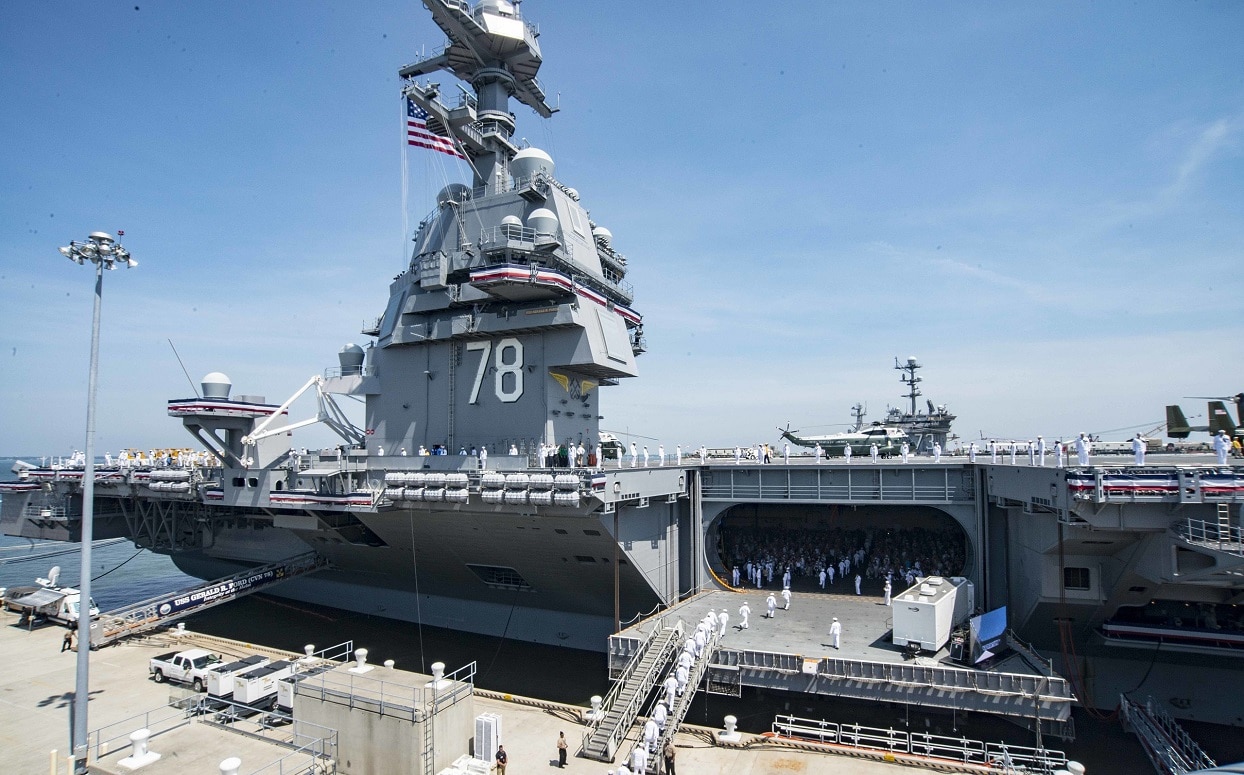
Gerald R. Ford-class. Image: Creative Commons.
While the Navy has claimed that Ford remains “mission capable,” the fire came on top of months of deferred maintenance, crew fatigue, and cumulative strain from operating at high tempo for far longer than planned.
As some experts have warned, once the full scope of damage and deferred work is accounted for, Ford could face a maintenance period lasting a year or more, potentially up to 12–14 months. For the Navy, this is particularly damaging because Ford was expected to be one of the most flexible carriers in the fleet. Instead, the newest carrier may be sidelined at precisely the moment when demand for carrier presence in the Middle East, Europe, and the Indo-Pacific is at an all-time high.
Three Aircraft Carriers Unavailable
Truman going into RCOH is to be expected; Stennis being delayed is frustrating but unsurprising at this point; Ford potentially being unavailable for a year or more is, to put it simply, bad news. Individually, these issues can be handled, but together they put a lot of stress on an industrial base that is already stretched too thin.
Three major carriers, roughly a quarter of the entire force, are either unavailable or on the brink of becoming unavailable at the same time. While the Navy technically maintains eleven carriers, only about eight (and sometimes fewer) can realistically be considered operationally available in 2026.
That number shrinks further when accounting for training cycles, certifications, and the need to preserve at least some maintenance margin to avoid cascading failures.
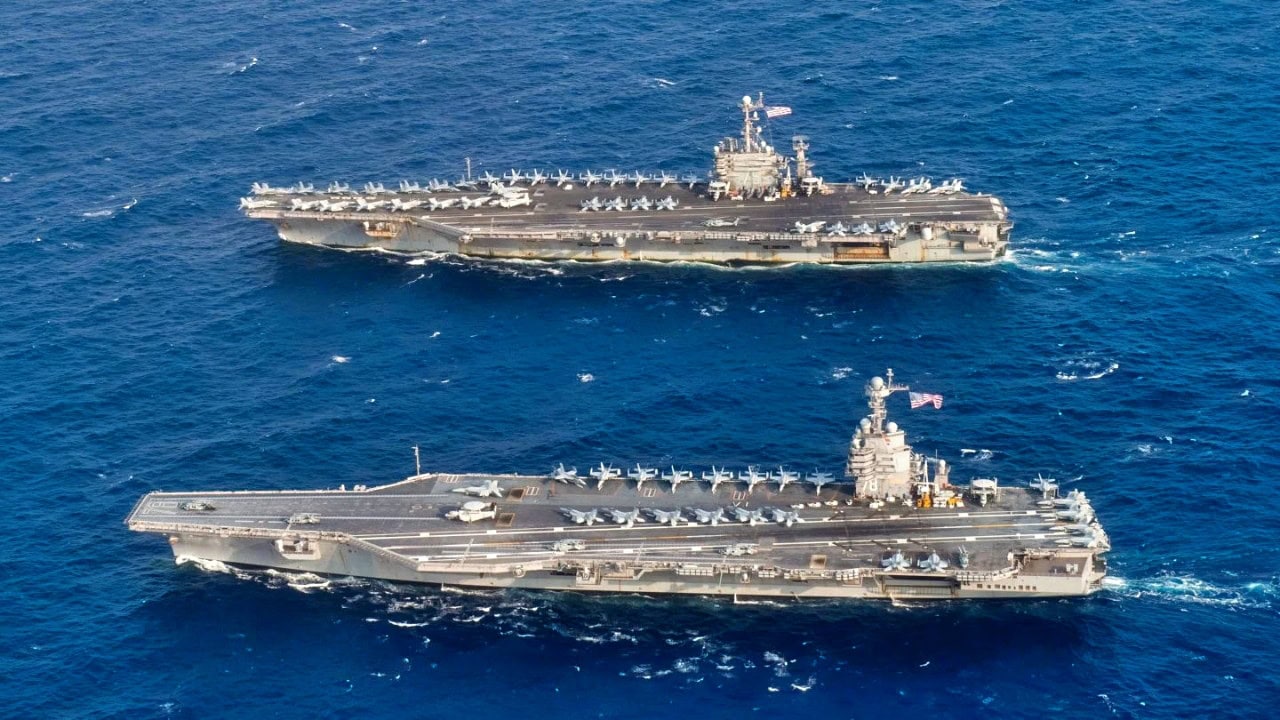
Ford-Class Aircraft Carrier U.S. Navy. Image Credit: Creative Commons.
Underlying all of this is the reality that the U.S. naval industrial base is operating at or near its limits. Newport News Shipbuilding is simultaneously responsible for new Ford-class construction, carrier overhauls, and a share of submarine work, all while trying to rebuild and retain a skilled workforce depleted by retirements and pandemic disruptions.
The Navy has been warned multiple times about the degrading shipbuilding industry and how its own over-budget programs have contributed to the problem. Despite hefty investments, the short-term consequences are unavoidable.
MORE – The SR-71 Blackbird Required Titanium Manufacturing That Didn’t Exist
Photo Essay: Meet the U.S. Navy’s Nimitz-Class Aircraft Carrier
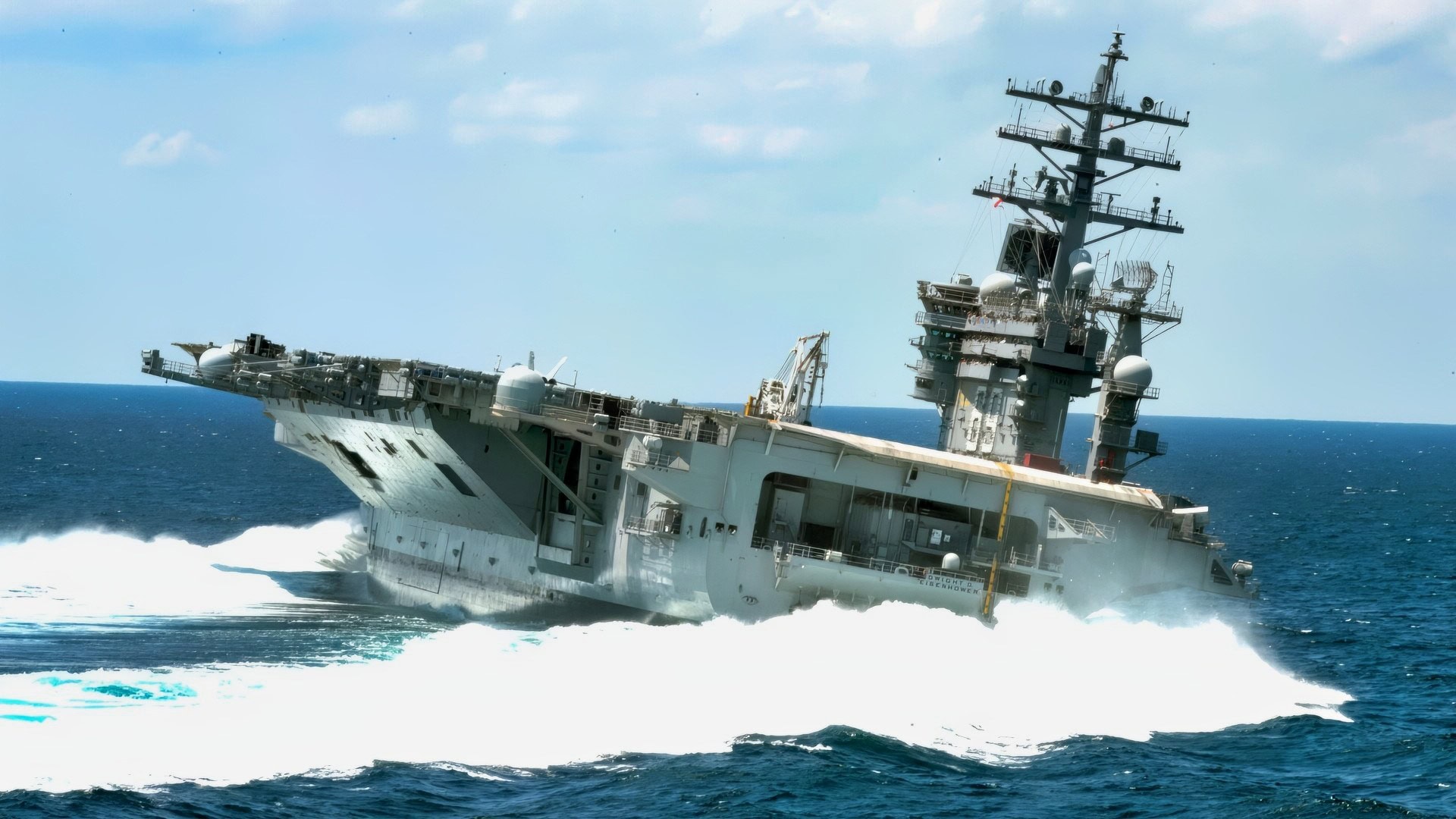
ATLANTIC OCEAN (June 14, 2011) The Nimitz-class aircraft carrier USS Dwight D. Eisenhower (CVN 69) conducts rudder turns during sea trials. Dwight
D. Eisenhower completed a nine-month planned incremental availability at Norfolk Naval Ship Yard on June 10 and is scheduled to resume underway operations this summer. (U.S. Navy photo by Mass Communication Specialist 1st Class Christopher Stoltz/Released)
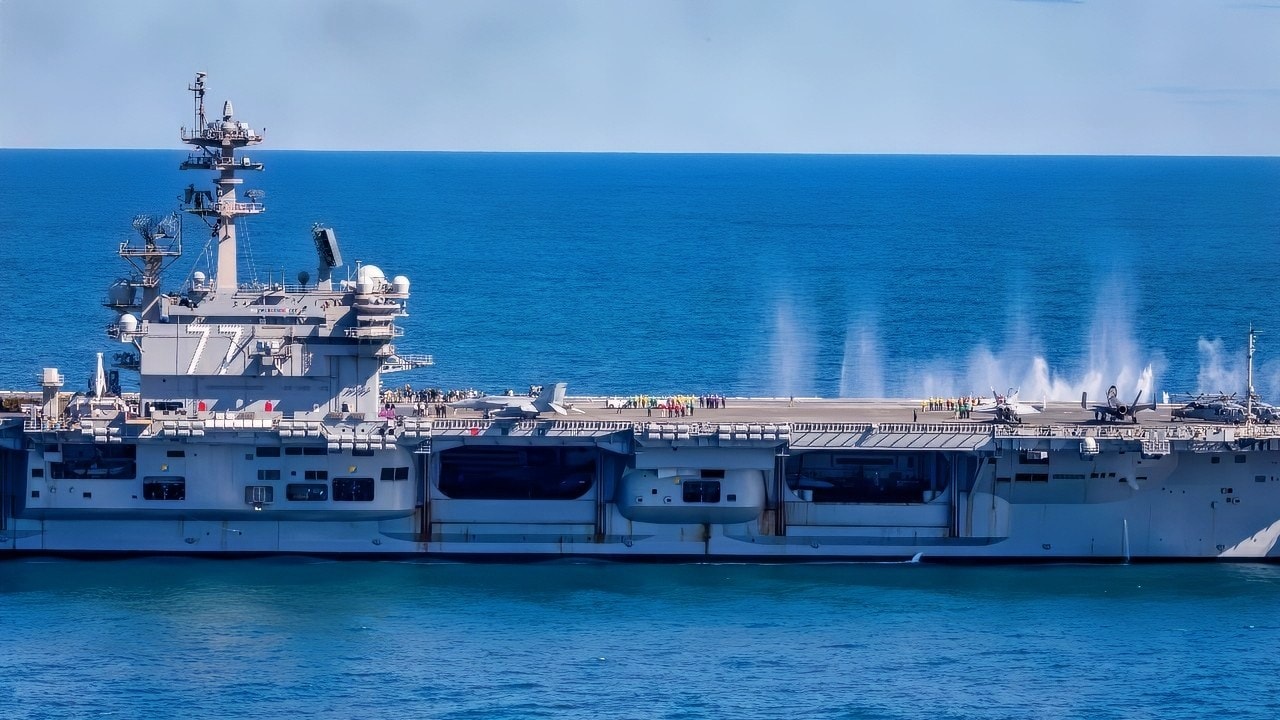
ATLANTIC OCEAN (Oct. 5, 2025) The Nimitz-class aircraft carrier USS George H.W. Bush (CVN 77) transits the Atlantic Ocean while an F/A-18E Super Hornet, attached to the “Pukin Dogs” of Strike Fighter Squadron (VFA) 143 fire rounds into ocean in support of the Titans of the Sea Presidential Review. The Titans of the Sea Presidential Review is one of many events taking place throughout the country to showcase maritime capabilities as part of the U.S Navy’s 250th birthday. America is a maritime nation. For 250 years, America’s Warfighting Navy has sailed the globe in defense of freedom. (U.S. Navy photo by Mass Communication Specialist 2nd Class Mitchell Mason)
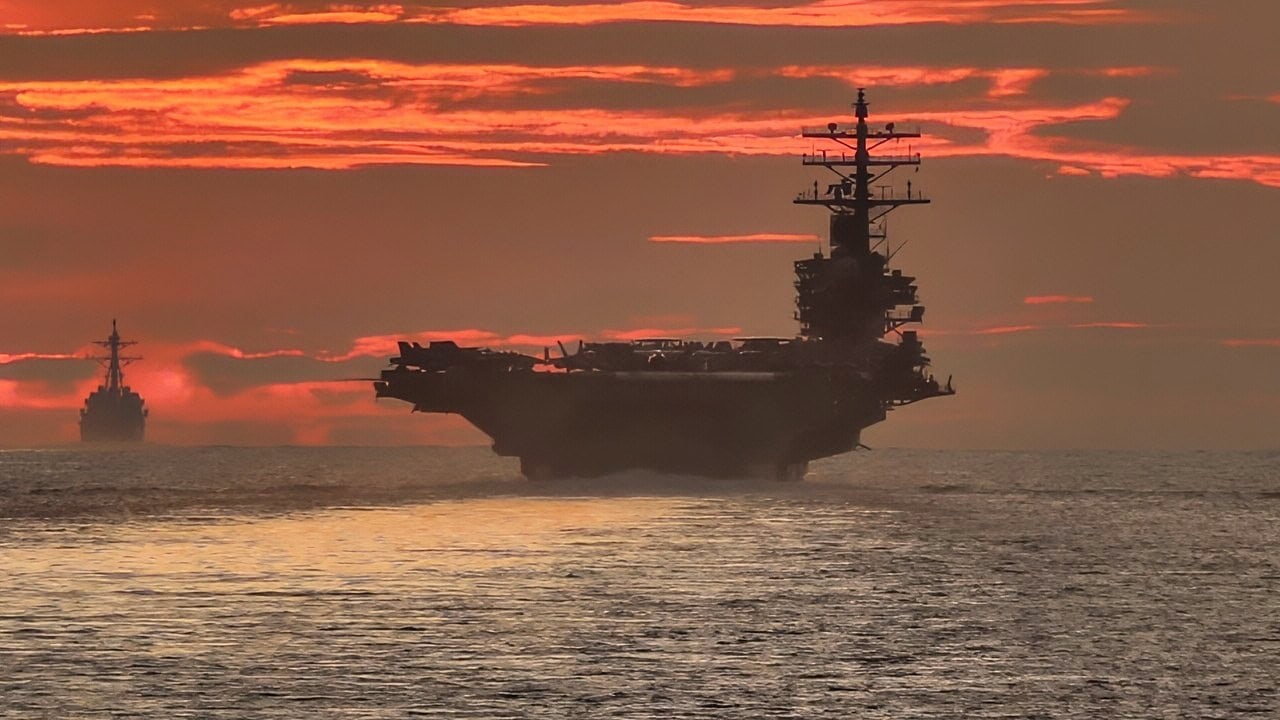
210618-N-JW440-2165 STRAIT OF MALACCA (June 18, 2021) As seen from the Ticonderoga-class guided-missile cruiser USS Shiloh (CG 67), the Navy’s only forward-deployed aircraft carrier USS Ronald Reagan (CVN 76) transits the South China Sea with the Arleigh Burke-class guided missile destroyer USS Halsey (DDG 97). The ships are part of Task Force 70/Carrier Strike Group 5, conducting underway operations in support of a free and open Indo-Pacific. (U.S. Navy Photo by Mass Communication Specialist 1st Class Rawad Madanat)
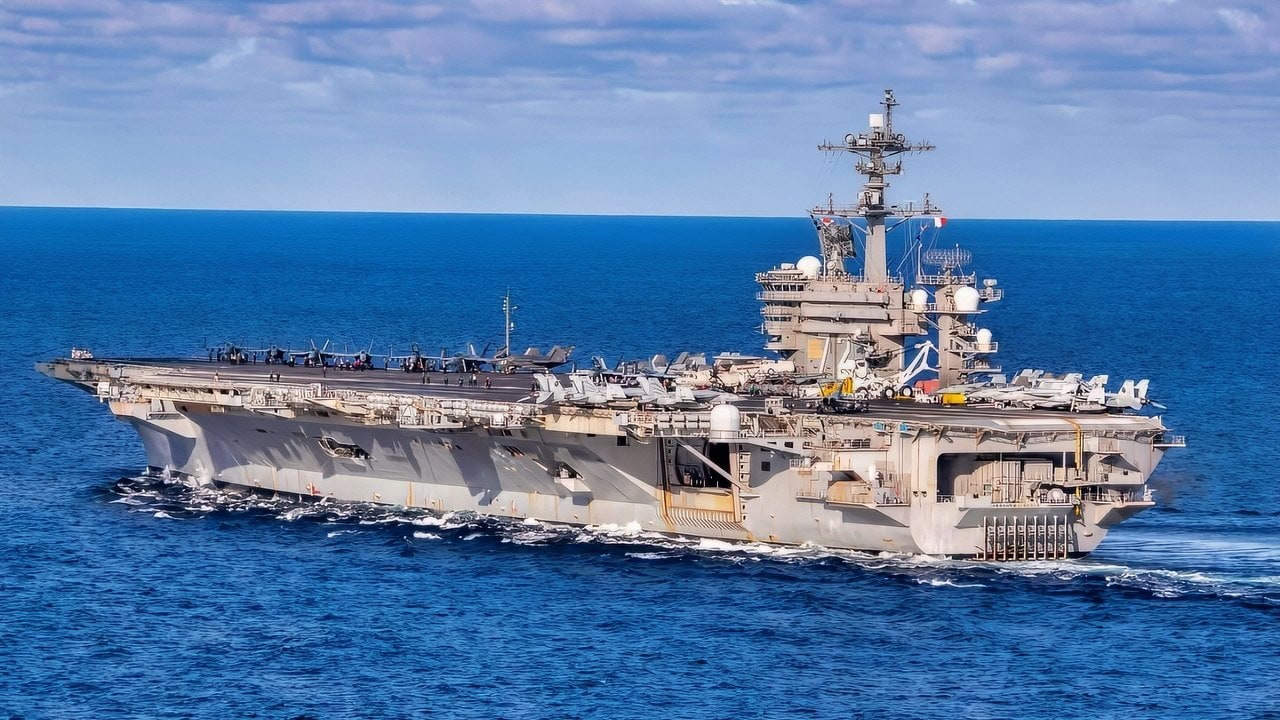
Nimitz-Class Aircraft Carrier At Sea. Image Credit: Creative Commons.
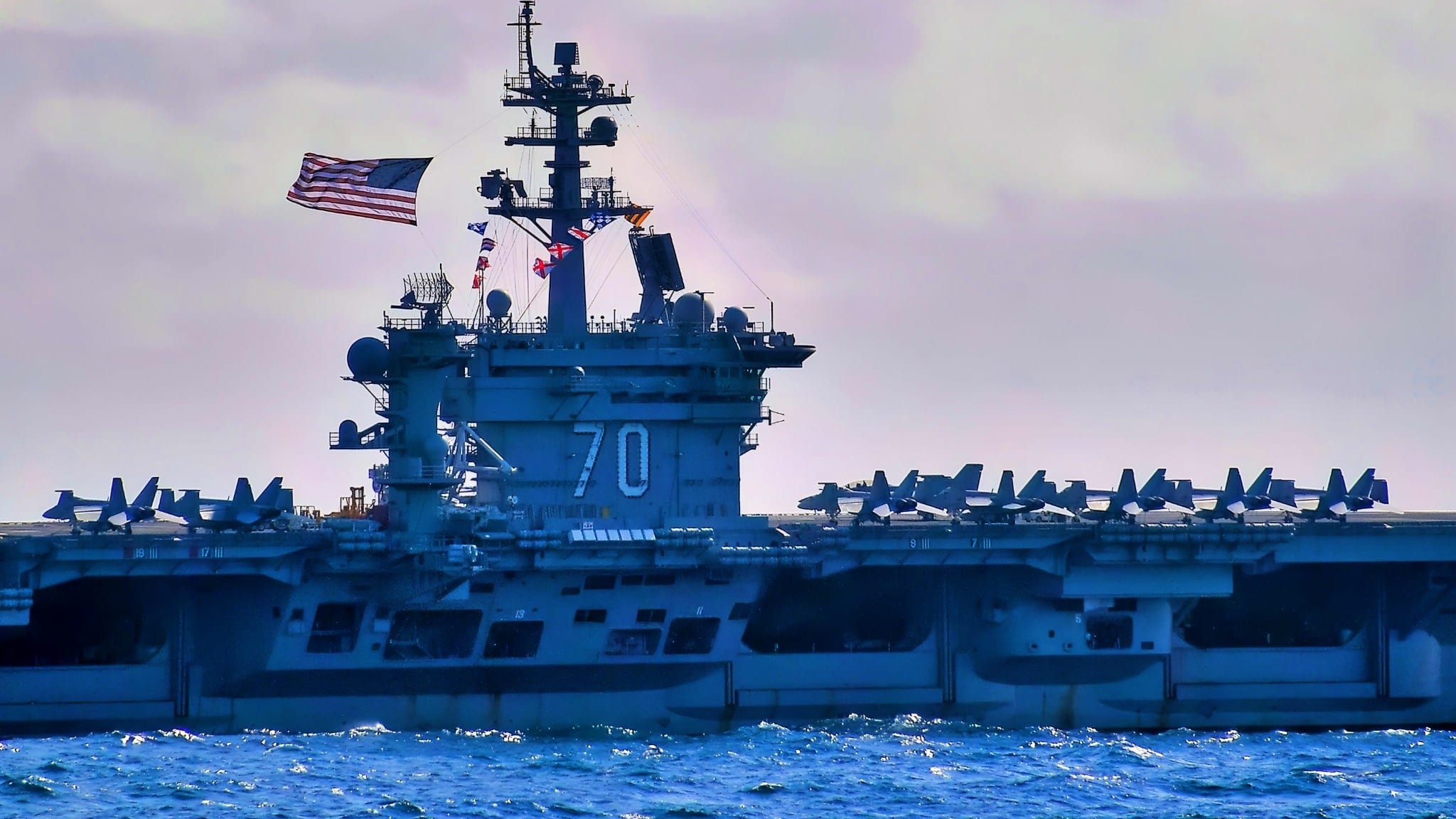
The Battle Ensign is flown aboard the Nimitz-class aircraft carrier USS Carl Vinson during an exercise with the Peru navy. Carl Vinson is supporting Southern Seas 2010, a U.S. Southern Command-directed operation that provides U.S. and international forces the opportunity to operate in a multi-national environment.
About the Author: Isaac Seitz
Isaac Seitz, a Defense Columnist, graduated from Patrick Henry College’s Strategic Intelligence and National Security program. He has also studied Russian at Middlebury Language Schools and has worked as an intelligence Analyst in the private sector.