
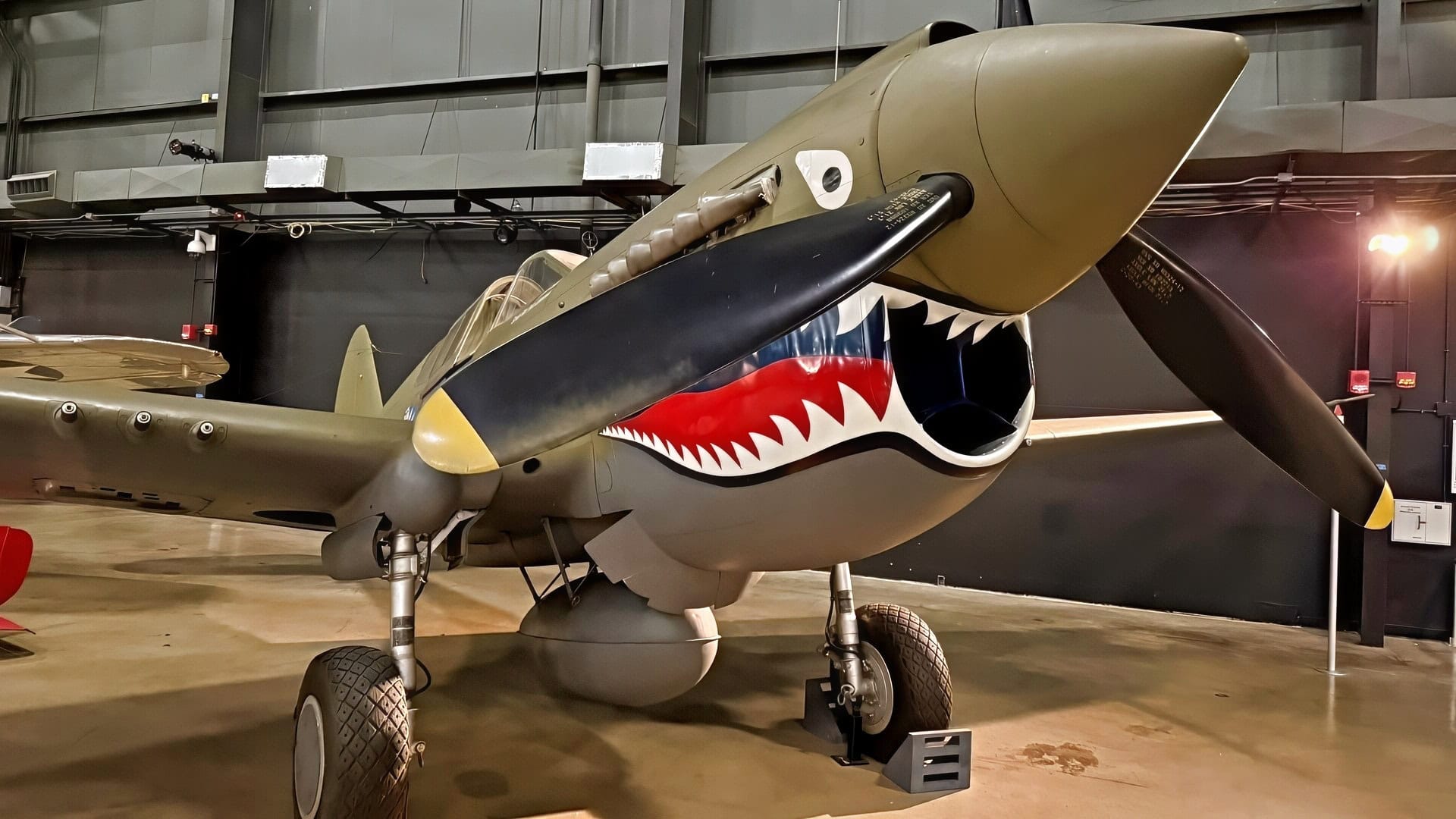
The American-made P-40E Warhawk, aka Kittyhawk (not to be confused with the U.S. Navy aircraft carrier USS Kitty Hawk [CV-63]) is one of the many World War II-era warplanes exhibited at the National Museum of the United States Air Force (on the grounds of Wright-Patterson Air Force Base, Ohio), and one of the many planes photographed by our esteemed Editor, Mr. Harry J. Kazianis, during a recent trip to that Museum. (Speaking for myself as a U.S. Air Force officer, I’m a tad envious, as I’ve yet to cross that venue off my Bucket List).
The P-40 is one of the iconic fighter planes of WWII, thanks especially to Gen. Claire Chennault’s American Volunteer Group (AVG)—better known as the “Flying Tigers“—and the shark mouth nose art painted on their warbirds.
P-40E Warhawk. Image Credit: 19FortyFive.com Taken by Harry J. Kazianis on July 19, 2026.
It spawned multiple variants, so what differentiated the “E” model from the earlier ones?
Semantic Clarification: Warhawk vs. Kittyhawk vs. Tomahawk
More “hawks” than you can shake a stick at, so, as Juliet said to Romeo, “What’s in a name?”
Built by the Curtiss-Wright Corporation (which still exists, though it no longer builds aircraft; it still makes many related components), the P-40 was the direct successor to the P-36 Hawk (yes, just plain “Hawk”), which had debuted in 1938.
It was designated the Warhawk by the U.S. Army Air Corps, a name retained by the successor, the U.S. Army Air Forces (USAAF), from June 1941 onward.
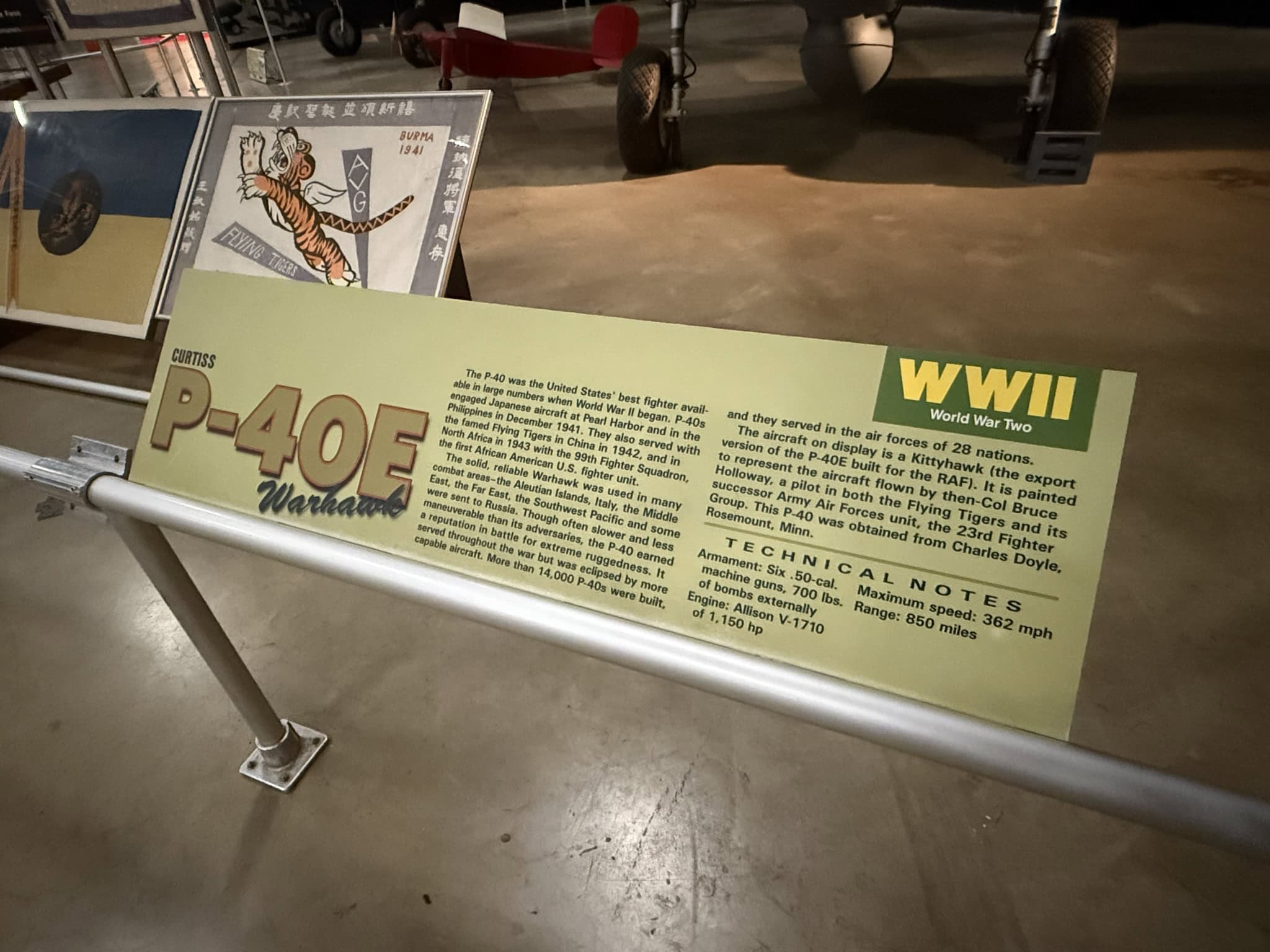
Meanwhile, British Commonwealth and Soviet Air Forces (both beneficiaries of the Lend-Lease Act) used the name Tomahawk moniker for models equivalent to the original P-40, P-40B, and P-40C (Curtiss Model 81), and the Kittyhawk label for models equivalent to the P-40D and all later variants (Curtiss Model 87).
Got all that?
P-40E Initial History and Tech Specs
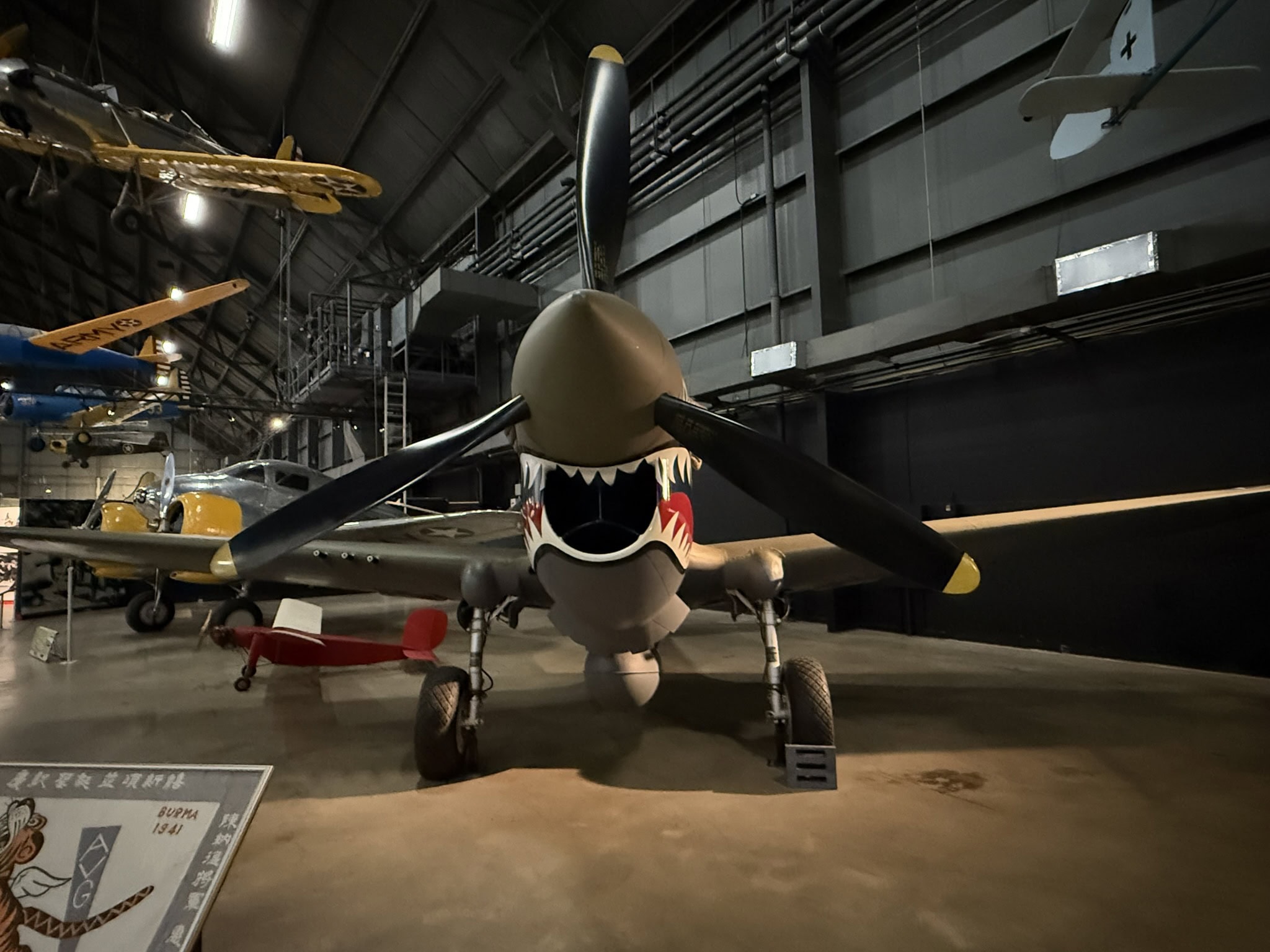
P-40E Warhawk. Image Credit: 19FortyFive.com Taken by Harry J. Kazianis on July 19, 2026.
The XP-40 prototype made its maiden flight on October 14, 1938, with Curtiss test pilot Edward Elliott at the controls. The “E” model arrived in early 1942, with the Flying Tigers as the first recipients. The Republic of China Air Force’s (ROCAF) 4th received 27 P-40Es the following year.
The P-40E carried over many of the same modifications of the “D” model, namely a slightly narrower fuselage, improved cockpit, and redesigned canopy (somewhat akin, though not perfectly analogous, to the improved canopy of the P-51D Mustang compared with earlier editions of that famous fighter).
The P-40D was the first to eliminate the nose-mounted machine guns, instead installing two.50 Browning caliber machine guns in each wing.
The P-40E went a step further by putting an additional “Ma Deuce” in each wing, thus equaling the total gun tally of the P-51D. In addition, the “E” had a more powerful Allison V-1710-39 V-12 liquid-cooled piston engine, generating 1,240 hp (920 kW); the carburetor intake was moved forward 6 inches.
Roughly 2,320 P-40Es were built (thus comprising 16.5 percent of the roughly 14,000 total P-40 airframes produced); 820 for the USAAF, and the remaining 1,500 for export.
Combat Performance
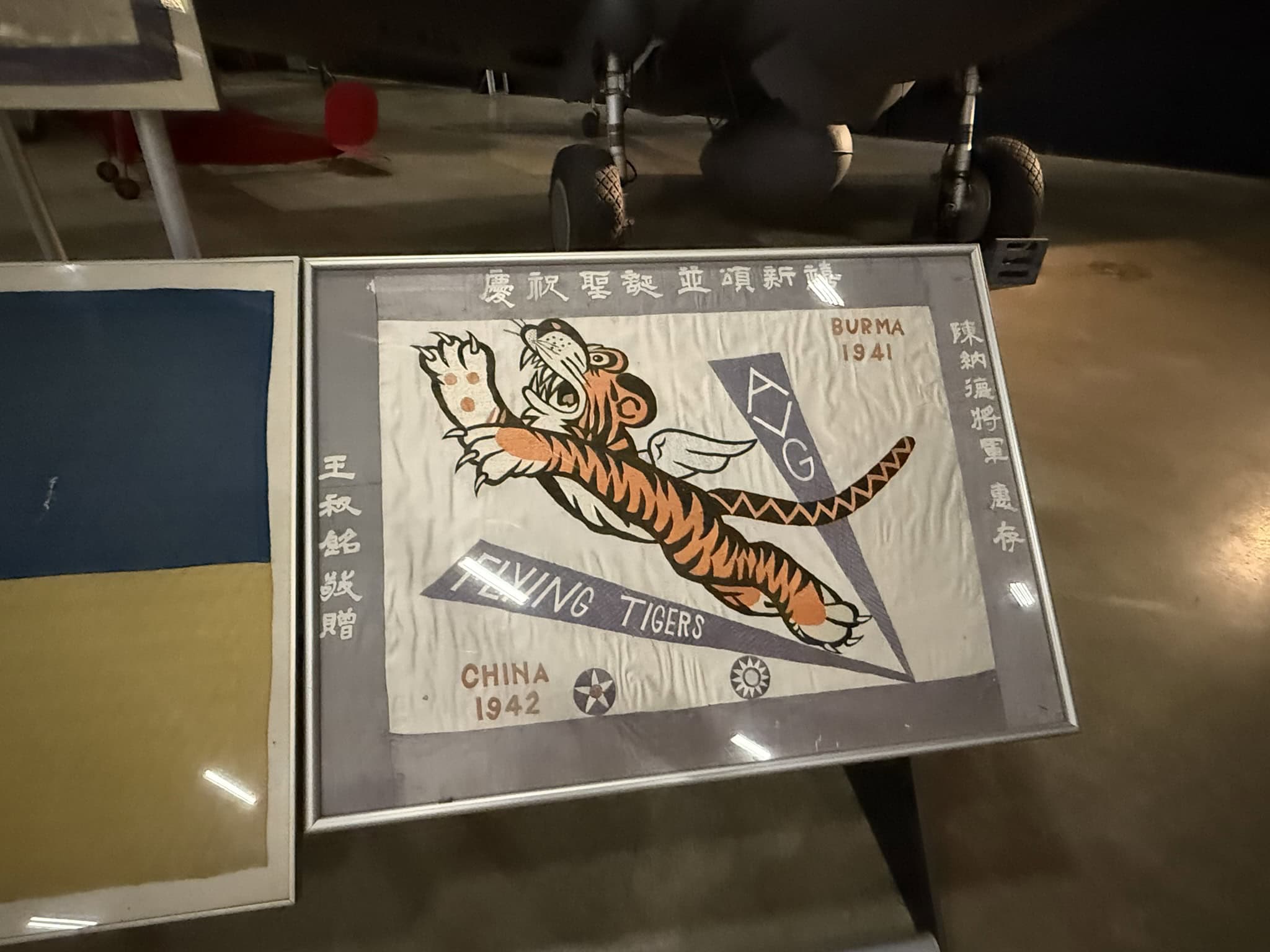
P-40E Warhawk. Image Credit: 19FortyFive.com Taken by Harry J. Kazianis on July 19, 2026.
The P-40E was the variant that bore the lion’s share of the burden of air-to-air combat by the type in the key period of early to mid 1942, amongst USAAF units relieving the AVG, the Royal Australian Air Force (RAAF), the Royal New Zealand Air Force (RNZAF), and Commonwealth air forces in North Africa alike.
Meanwhile, before the Flying Tigers were officially relieved by their USAAF counterparts, Chennault’s ever-innovative and resourceful armorer jerry-rigged their P-40Es with bomb racks for 570-lb Russian bombs (the planes already had auxiliary bomb racks that could hold 35-lb fragmentation bombs).
Thusly upgraded in payload, the Tigers used these warbirds at the Battle of the Salween Gorge in late May 1942, which kept the Imperial Japanese Army from entering China from Burma and threatening the key city of Kunming.
Where Are They Now?
Of the surviving P-40Es, five are airworthy, with two in Australia (Serial Nos. 41-25109 and 41-25158), one in Belgium (Serial No. 41-13570, restored by Pioneer Aero of Ardmore, Auckland, New Zealand), and two in the United States (Serial No. ET564, based at Military Aviation Museum in Virginia Beach, Virginia; and 41-5709 – based at Dakota Territory Air Museum in Minot, North Dakota).
Nine are in various stages of restoration worldwide, and five are fully restored museum static displays.
Which brings us back to the subject of the beautiful NMOTUSAF specimen that oh-so-gracefully adorns the photographs accompanying this article, which bears Serial No. AK987.
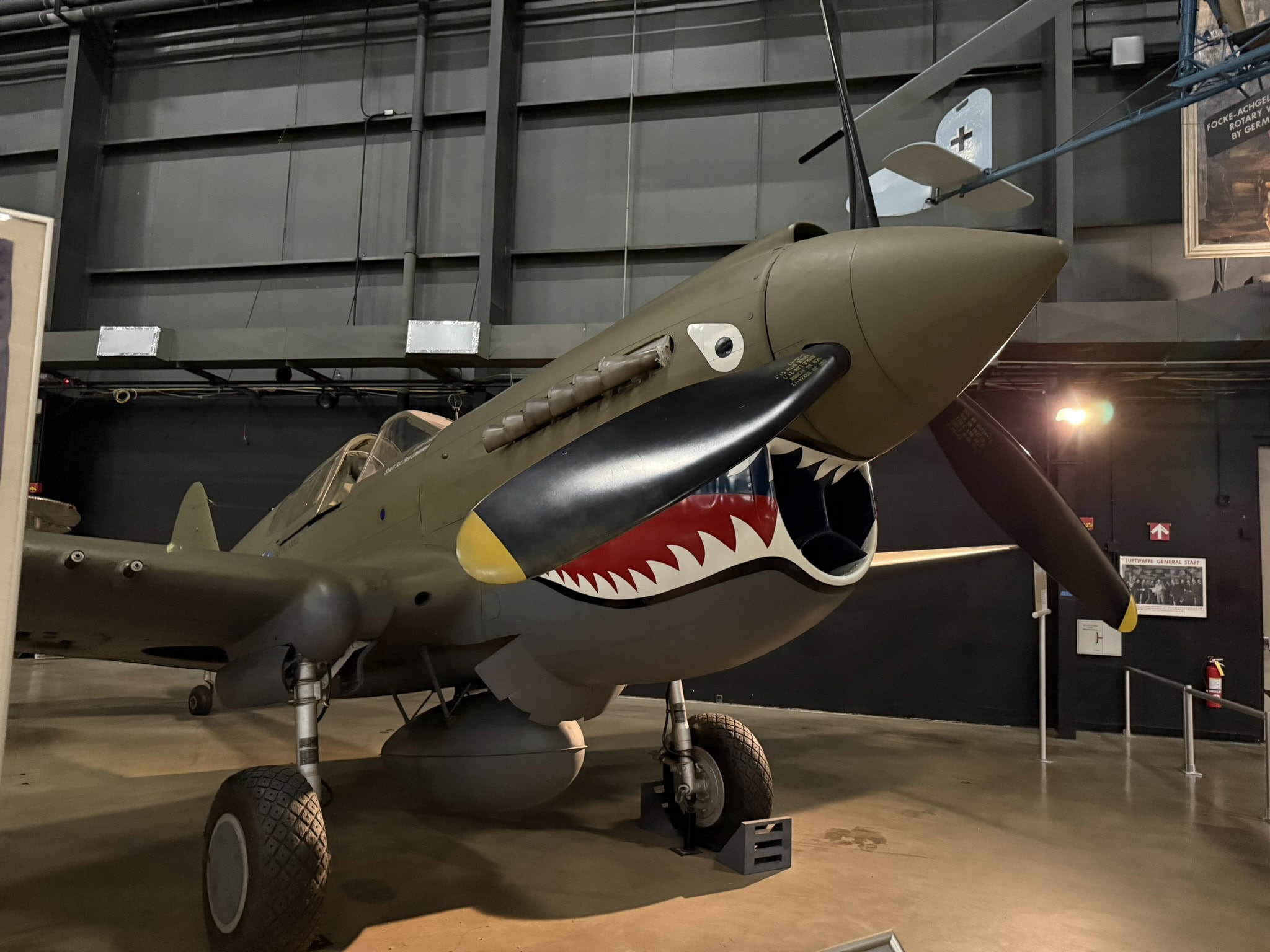
P-40E Warhawk. Image Credit: 19FortyFive.com Taken by Harry J. Kazianis on July 19, 2026.
As per the Museum’s official info page, “The aircraft on display is a Kittyhawk (the export version of the P-40E built for the RAF). It is painted to represent the aircraft flown by then-Col. Bruce Holloway was a pilot in both the Flying Tigers and its successor, the Army Air Forces unit, the 23rd Fighter Group. This P-40 was obtained from Charles Doyle, Rosemount, Minn.”
Incidentally, Bruce K. Holloway (September 1, 1912 – September 30, 1999) shot down 13 Japanese planes during WWII. He eventually attained the rank of four-star General and served as commander of Strategic Air Command (SAC) from August 1968 until his retirement in April 1972.
About the Author: Christian D. Orr
Christian D. Orr is a Senior Defense Editor. He is a former Air Force Security Forces officer, Federal law enforcement officer, and private military contractor (with assignments worked in Iraq, the United Arab Emirates, Kosovo, Japan, Germany, and the Pentagon). Chris holds a B.A. in International Relations from the University of Southern California (USC) and an M.A. in Intelligence Studies (with a concentration in Terrorism Studies) from American Military University (AMU). He is also the author of the book “Five Decades of a Fabulous Firearm: Celebrating the 50th Anniversary of the Beretta 92 Pistol Series,” the second edition of which was recently published.