
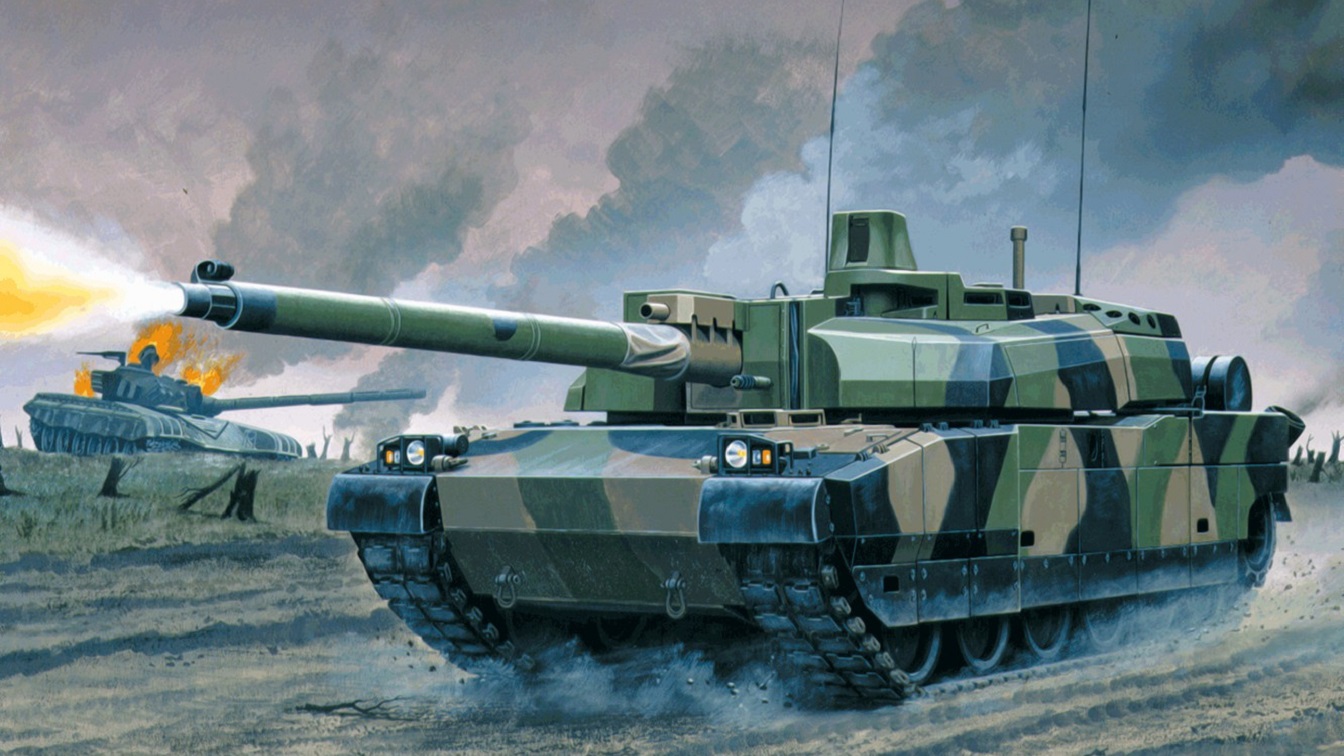
The M1 Abrams tank gets a lot of mainstream attention, mainly due to its impressive combat record. Likewise, the German Leopard 2 receives significant mainstream attention due to its popularity among NATO members and its service history.
The French Leclerc main battle tank (MBT) receives far less attention in comparison. This is primarily because the tank has not seen much combat during its service life, nor has it been as widely exported on the international market as, say, the M1 and the Leopard 2.
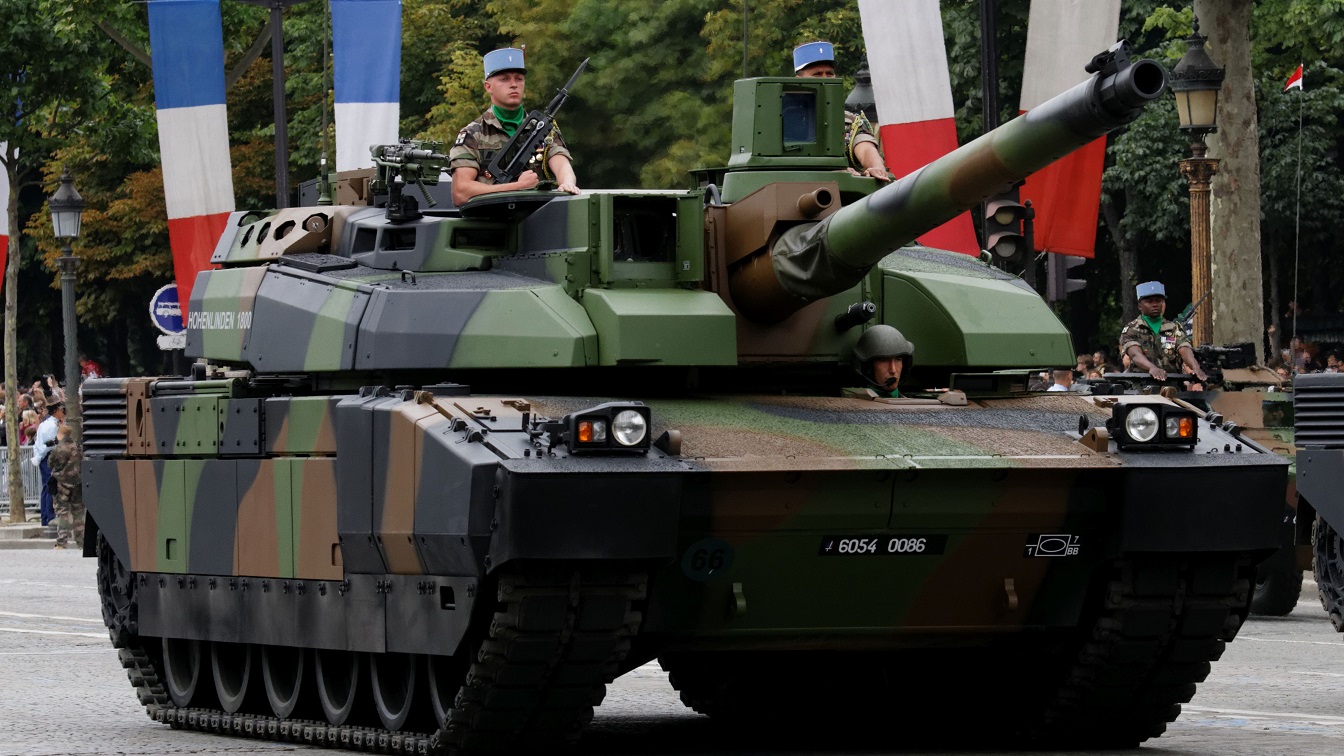
Leclerc Main Battle Tank. Image Credit: Creative Commons.
Despite its lesser popularity, the Leclerc is an excellent tank. While it is arguably not as good as an M1A2, the Leclerc has almost everything it needs to survive and thrive on the modern battlefield.
Development of the Leclerc
Development of the Leclerc began in the 1960s. Like so many other nations, France struggled to develop its own tanks during the Cold War.
It had developed the AMX-30 MBT in 1964, which had placed greater emphasis on speed and maneuverability over armor.
This meant that the tank was massively underprotected against contemporary armor-piercing rounds and anti-tank weapons for the time.
In the 1980s, France partnered with West Germany on a joint venture to develop a next-generation MBT. As with all joint efforts involving Germany, the program ultimately fell apart, leaving the French to develop their own tank.
To develop the new tank, France imported foreign models like the M1 Abrams, the Leopard 2, and the Merkava MBTs and studied them thoroughly.
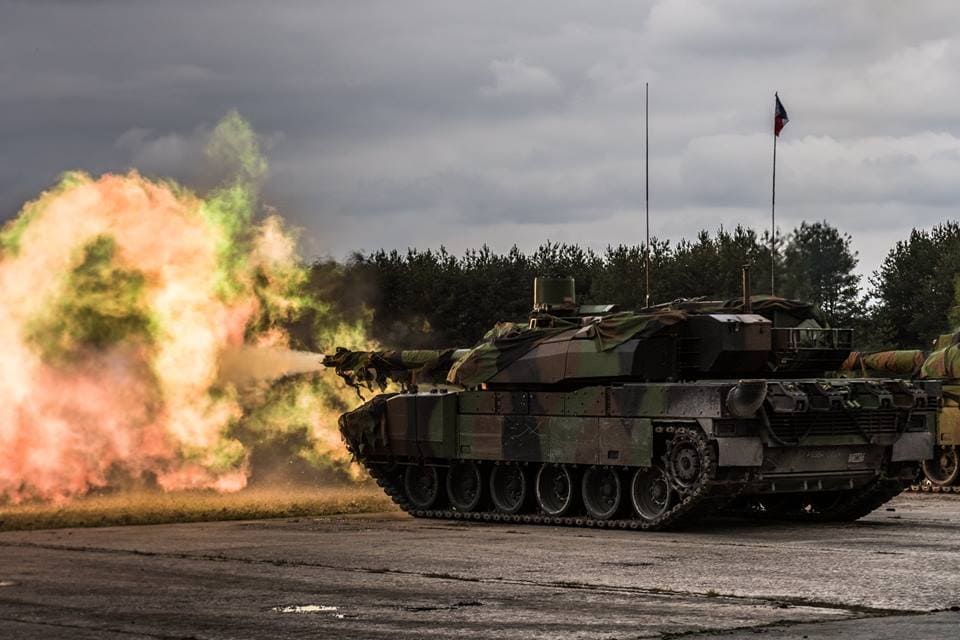
Leclerc Tank. Image: Creative Commons.
Like the earlier AMX-30, the French wanted their new tank to be nimble and highly maneuverable.
This time, however, close attention was paid to the tank’s survivability, particularly against shaped charges and modern sabot rounds.
The tank was christened the “Leclerc” in honor of Marshal Phillipe Leclerc de Hauteclocque. To reduce the program’s cost, France partnered with the UAE, which ordered 436 tanks in addition to the 426 tanks ordered by the French Army.
Firepower and Mobility
Mobility was of special importance to the French Army.
The Leclerc is one of the lightest Western tanks on the market. With a combat weight of 56 tons, the tank has one of the best power-to-weight ratios of any tank at 27 hp per ton.
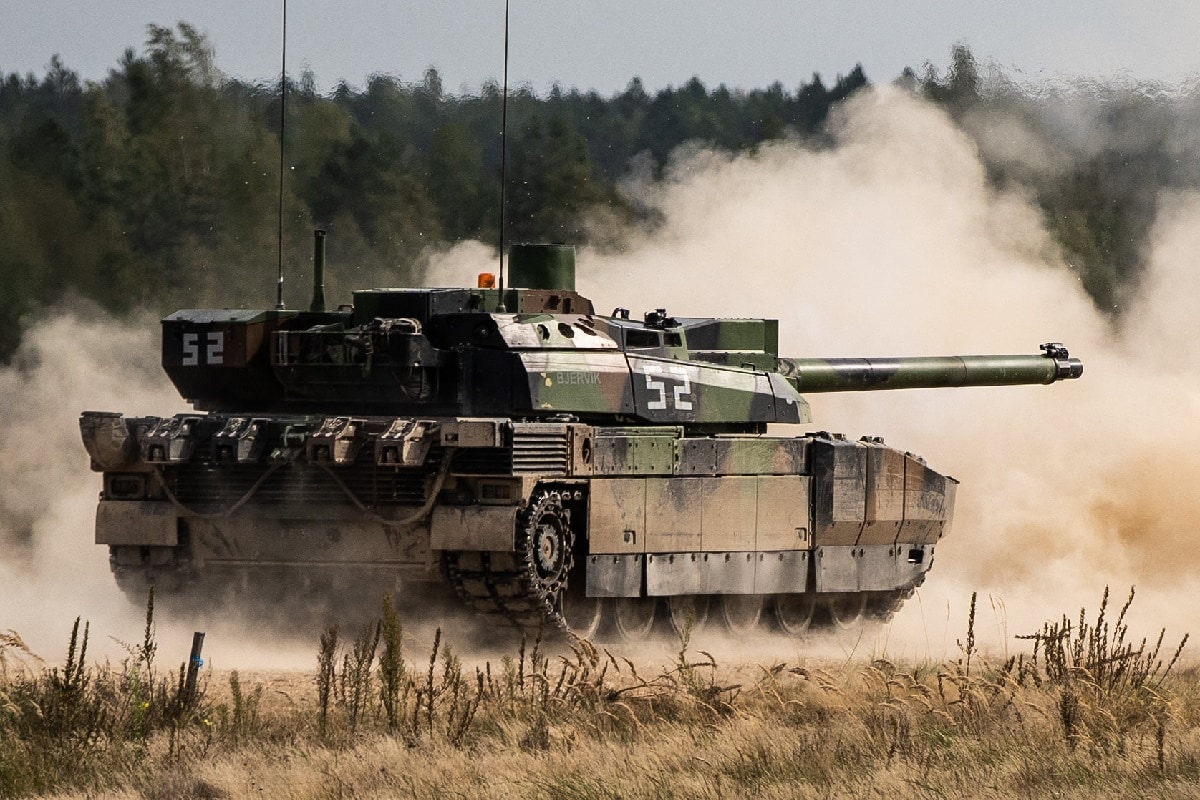
A French Leclerc battle tank fires its main gun during Exercise Furious Hawk in Ādaži, Latvia. The French tanks are deployed to NATO’s enhanced Forward Presence Battlegroup in Estonia.
While it is considerably heavier than Soviet/Russian tanks, the Leclerc can reach a top speed of 71 km/h off-road and is powered by an ACM (now Wärtsilä) V8X-1500 1,500-hp Hyperbar diesel engine.
For auxiliary power, the tank is equipped with a small TM 307B gas turbine engine to power the system when the main engine is shut down or disabled.
Combined with the Renk AG automatic transmission system and hydropneumatic suspension, the Leclerc is quick, nimble, and smooth both on- and off-road.
The Leclerc is armed with a GIAT CN120-26/52 (simply referred to as F1) 120 mm smoothbore cannon, which is interoperable with standard NATO ammunition.
What separates the Leclerc from other NATO tanks, however, is the inclusion of the autoloader. The tank features a bustle-style autoloader, which compartmentalizes the majority of the ammo to the sealed-off bustle.
In the event of ammo cook-offs, the turret is also equipped with blowout panels to ensure crew survivability even in worst-case scenarios.
The autoloader can reload the tank in about six seconds, and a control panel allows the gunner or the commander to select the ammunition type.
Fire Control and Protection
Currently, all Leclercs in operational service are equipped with the ICONE BMS for fire control. This system integrates all the tank’s sights and sensors and can be operated independently by the gunner or the commander.
The system also integrates data from other tanks and command posts to give the tank a complete battlefield picture.
The Leclerc is equipped with modern thermal imagers for the gunner and the commander, each with a semi-automatic tracker for target acquisition.
All of these systems ensure that the tank has good situational awareness at all times and that the crew has a complete picture of the battlefield.
The Leclerc is equipped with advanced composite armor on its turret and frontal hull, which gives it excellent protection against modern APSFDF rounds and shaped charges alike.
The latest iteration of the tank, the Leclerc SXXI, is fitted with modular semi-reactive armor, which not only improves protection but also saves some weight.
The tank was designed to withstand multiple armor-piercing rounds from the largest available caliber fired from the front, and over time, greater attention was placed on side protection with the addition of add-on composite armor.
These measures ensure that the Leclerc is well protected against most contemporary threats and can keep fighting even when hit.
Why Doesn’t the Leclerc Get More Recognition?
Overall, the Leclerc is an excellent tank with top-of-the-line protection, mobility, and firepower, so why does it not get more praise?
The main reason for this is that, although the tank looks good on paper, it is still a comparatively unproven platform. The only combat experience that the tank has is its deployment in Yemen in 2015 against Houthi insurgents.
This relatively small-scale combat outing does not provide a clear picture of the tank’s true combat potential, although reports suggest that it performed well.
Unlike the Abrams, which has dominated the battlefield time and time again, the Leclerc has not had a chance to prove itself to the same degree.
Additionally, the Leclerc is not nearly as widely exported as, say, the Leopard 2. The Leclerc is operated only by France, the UAE, and Jordon.
The Leopard 2, by comparison, is operated by many nations worldwide. France simply isn’t interested in advertising the tank as aggressively as Germany has been.
This isn’t a failure on the part of the Leclercs; it simply illustrates France’s different priorities.
Consequently, the tank has not built up the international reputation that other NATO tanks have and is often overlooked while more widely produced tanks take the spotlight.
About the Author: Isaac Seitz
Isaac Seitz, a Defense Columnist, graduated from Patrick Henry College’s Strategic Intelligence and National Security program. He has also studied Russian at Middlebury Language Schools and has worked as an intelligence Analyst in the private sector.