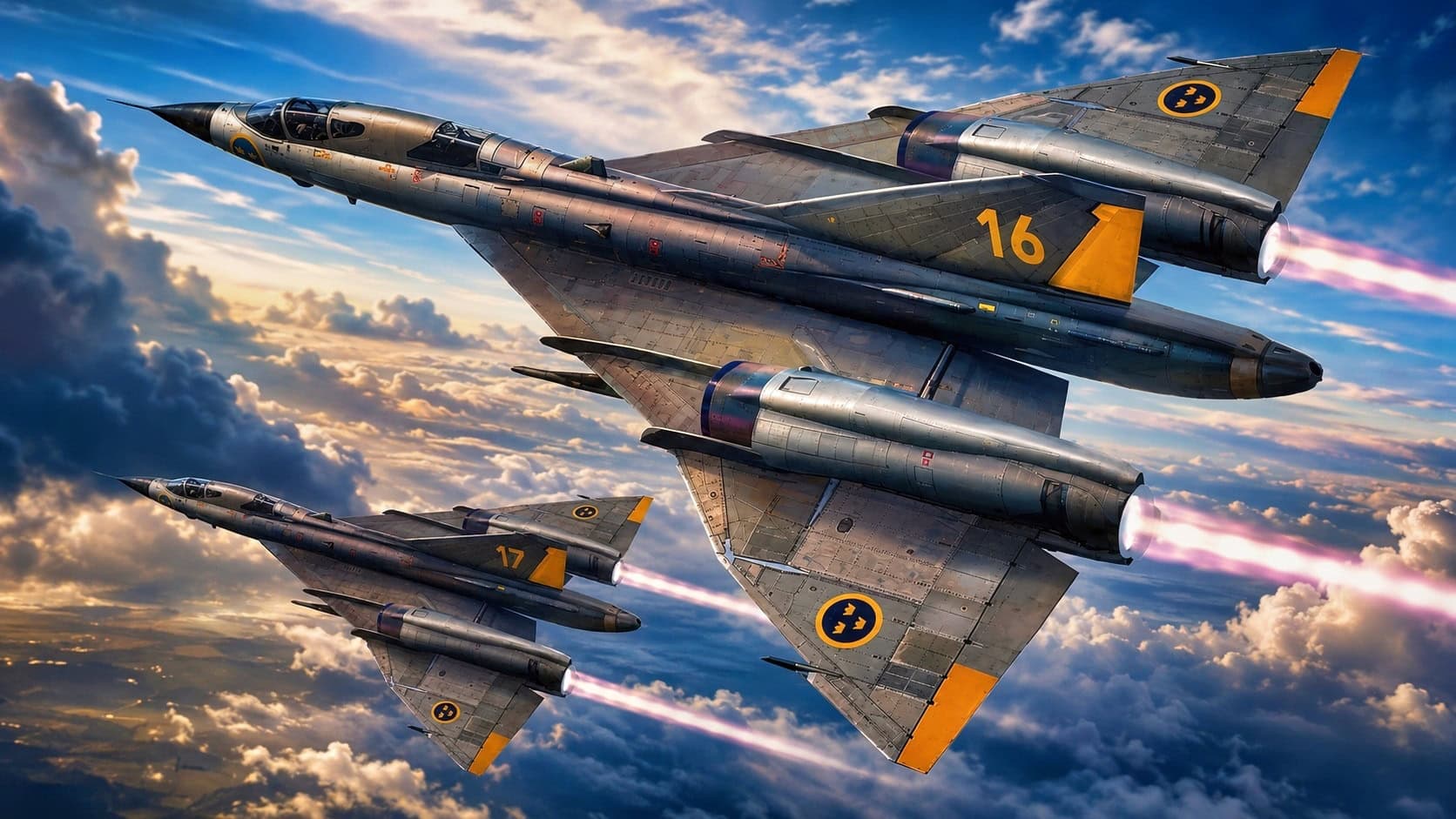
Meet the Saab 36 Nuclear Bomber: During the Cold War, notably at its outset, multiple powers committed to acquiring their own nuclear capabilities. Fearing that the two nuclear heavyweights of the era, the United States and the Soviet Union, would bully them, the smaller nations that had scientific and industrial bases capable of supporting a limited nuclear weapons capability began investigating how they could create such an indigenous capacity. Britain and France, among the smaller powers in the Cold War, committed themselves to this goal and achieved it.
Sweden, in fact, desired a nuclear weapon capability. This nuclear capability wasn’t just a dream, though. Swedish strategists began thinking deeply not just about having the weapons but about possessing the capability to deliver them if the need ever arose. That’s why the prominent Swedish company Saab designed the Saab 36, which was its answer to the iconic American B-52 Stratofortress long-range nuclear bomber and the Soviet (later Russian) Tu-95 long-range nuclear bomber.

Saab A-36. Image: Creative Commons.
The Swedish Armed Forces wanted the ability to drop nuclear weapons against Soviet targets just across the Baltic Sea before the Reds overran Sweden (in what everyone at the time assumed would eventually be another major European war).
Saab 36: Why Sweden Wanted a Nuclear Bomber
Many people forget how dangerous Sweden’s strategic position looked during the early Cold War. Although officially neutral, Sweden sat directly across the Baltic from the Soviet Union. If World War III erupted, Swedish strategists assumed they’d need to attack Soviet naval, air, and amphibious forces almost s.
So, Sweden calculated it needed an indigenous nuclear weapon, aircraft capable of dropping them, and it wanted the reliable indigenous ability to threaten Soviet military infrastructure in the Baltic region.
Sweden’s Armed Forces selected the Saab 36 (or the A36 “Vargen,” the Swedish word for “Wolf”) for this mission set.
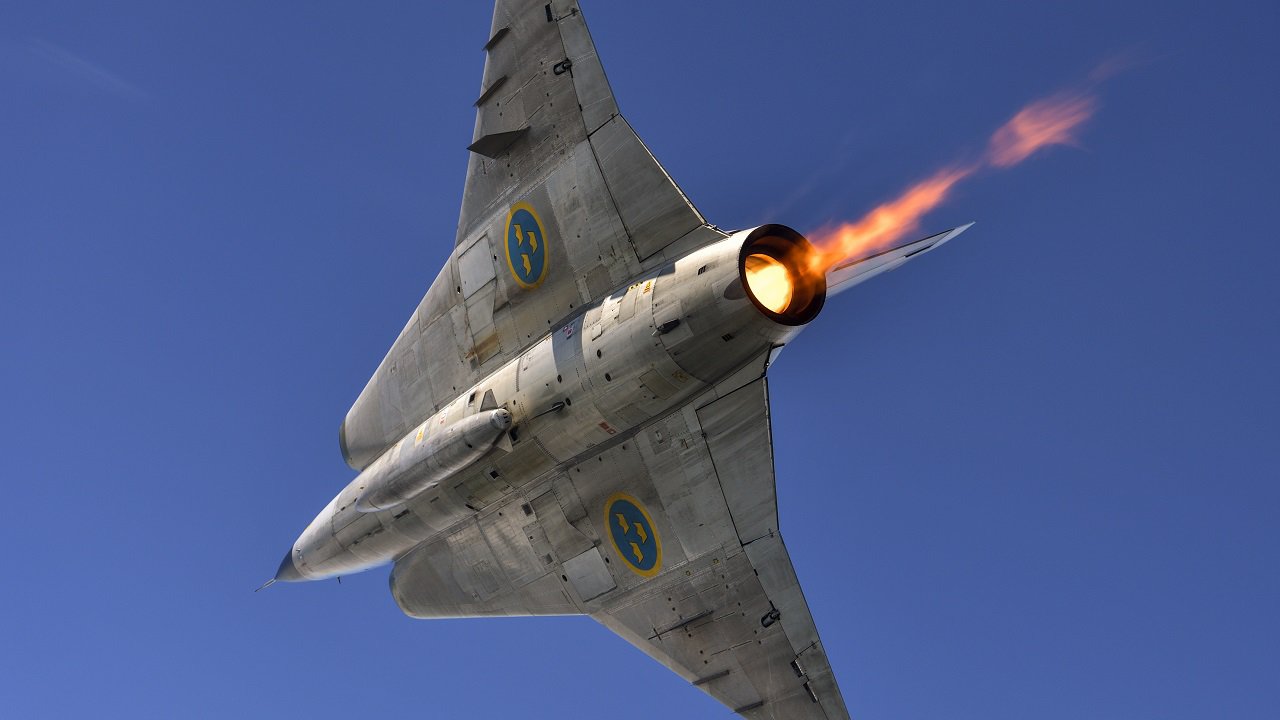
Image of a Cold War Saab 35, a plane that would have looked similar to the A-36.
The Saab 36 Was Basically a Scandinavian XB-70
Visually, the aircraft looked decades ahead of its time, a clear reminder that Sweden is home to one of the world’s most innovative defense firms, Saab.
The design created by Saab’s brilliant engineers featured a large delta-wing airframe and twin engines, and the plane could exceed Mach 2.
The Vargen could also achieve a service ceiling of around 60,000 feet. There was an internal carriage for a single nuclear bomb and a minimal crew complement. In fact, Saab winnowed down the crew to just one pilot.

XB-70 photo taken at U.S. Air Force Museum by 19FortyFive in 2025.
Several observers of the project remarked later on how advanced the plane appeared. Some aspects of this bird clearly influenced later aircraft such as the Saab 35 Draken, while others foreshadowed high-speed bomber concepts pursued in America and Europe during the 1960s.
The goal was simple: fly extremely fast, extremely high, and reach Soviet targets before interceptors could stop it.
A Bomber Designed Around One Bomb
One of the most interesting aspects of the Saab 36 is that it carried only one weapon—an 800-kilogram gravity nuclear bomb. Back in the 1950s, though, many of the nuclear weapons delivery systems in use were effectively “one-shot” strategic assets.
Swedish planners weren’t trying to level Moscow. Their goals were tactically sound. They were only targeting–in a limited fashion–Soviet naval bases, amphibious staging areas, strategic airfields within reach of Sweden, and command facilities in nearby Soviet territory that undoubtedly would have served any Soviet Red Army invasion force attacking Swedish territory.
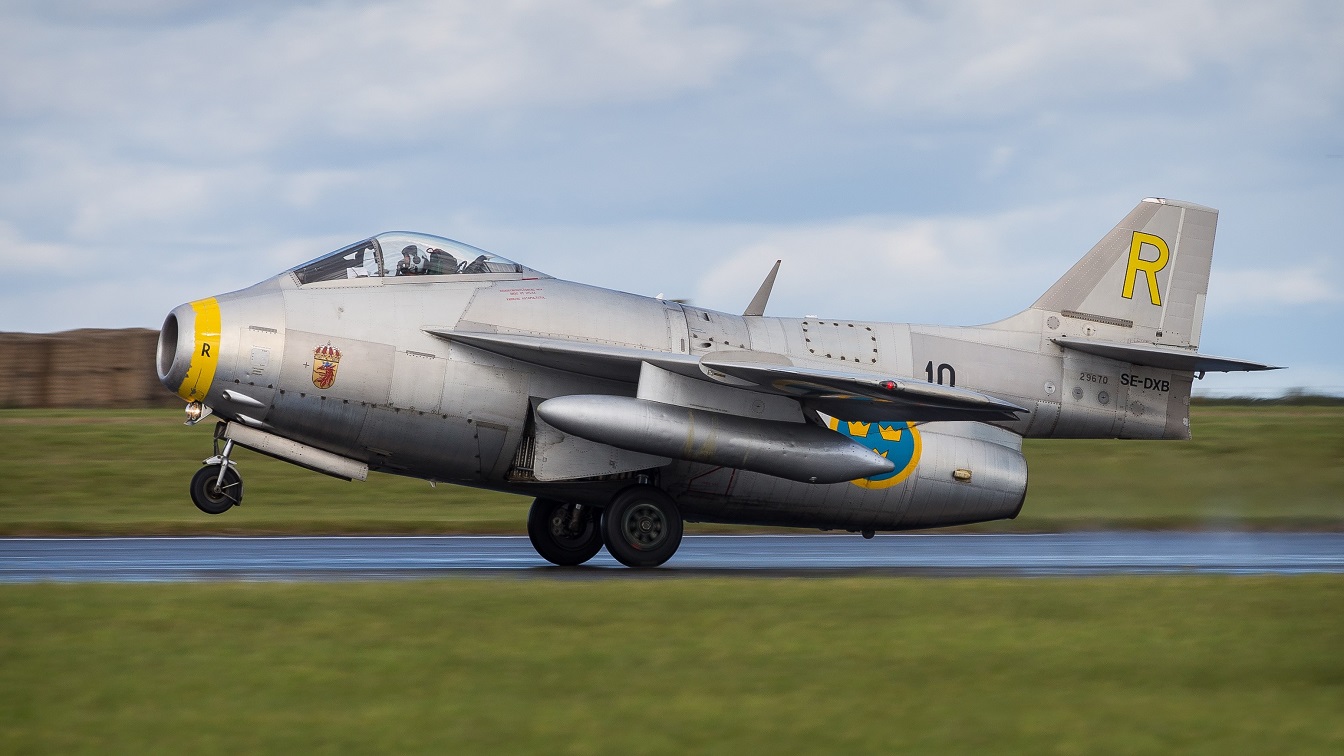
Saab 29. Image Credit: Creative Commons.
Given Sweden’s location, the country did not require an intercontinental range. Estimates placed the operational range at only a few hundred kilometers, which was more than sufficient for targets across the Baltic.
The Draken Killed the Bomber
The Saab 36, however, was overtaken by technological change. As the 1950s progressed, Sweden’s defense planners increasingly favored smaller aircraft, better missiles, and more survivable, dispersed operations. So, the revolutionary Saab 35 Draken became the focus of Swedish planners.
The Draken could achieve many air-defense missions without requiring an expensive, dedicated strategic bomber force.
Meanwhile, surface-to-air missiles (SAMs) were becoming increasingly capable. The assumption that a fast bomber could outrun defenses was becoming questionable. Soviet SAM capabilities weren’t a problem unique to Sweden.
Similar doubts emerged around American and Soviet high-speed bomber concepts throughout the late 1950s.
The Real Reason It Died: Sweden Abandoned the Bomb
Ultimately, enemy fire did not kill the Saab 36. Politics did. The bomber only made sense if Sweden possessed nuclear weapons. And Sweden was serious about possessing them when they began designing the Saab 36.
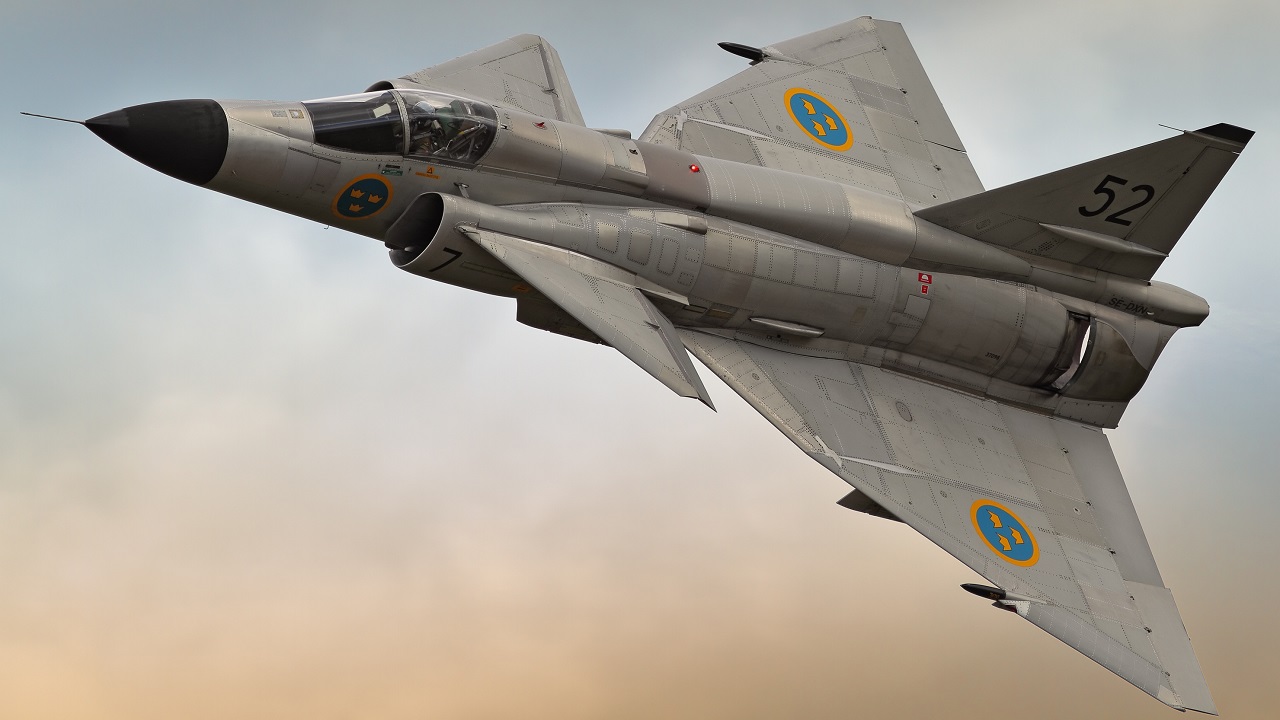
Saab 37. Image Credit: Creative Commons.
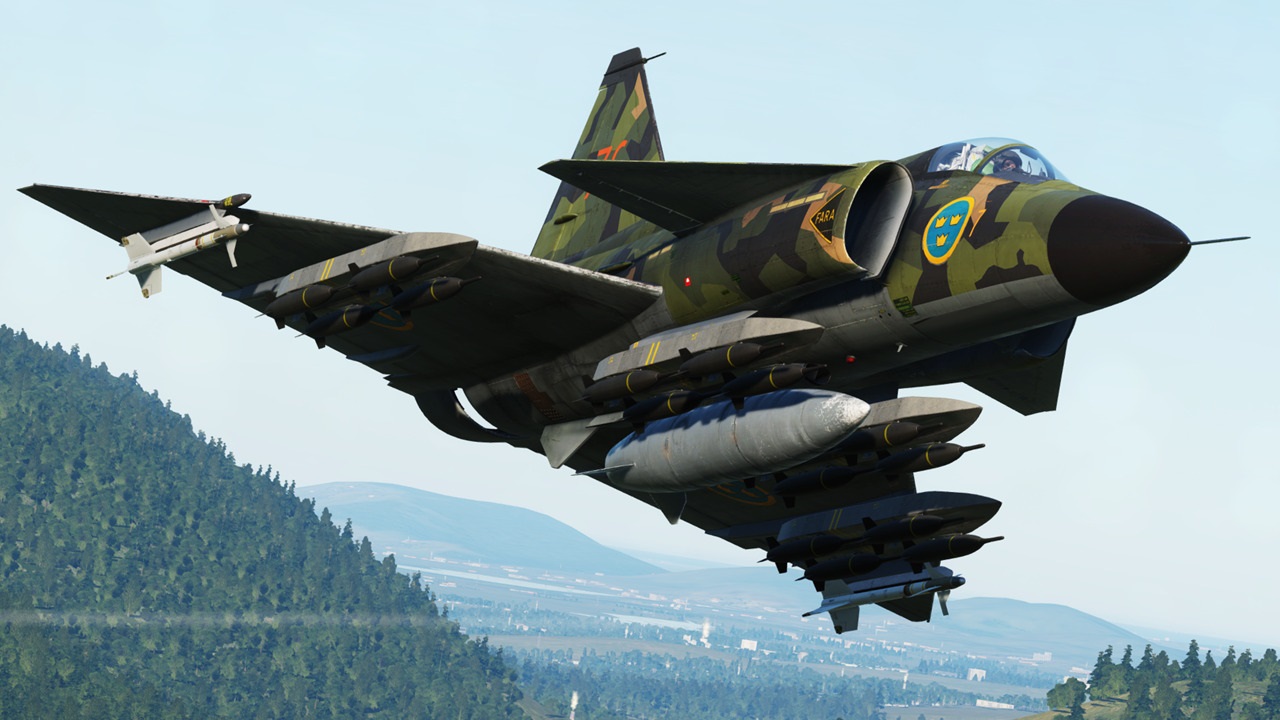
JA 37 by Saab. Image Credit: Creative Commons.
By the 1950s and early 1960s, Sweden had developed significant nuclear expertise and could easily have produced the weapons it sought if it had chosen to do so.
But Sweden decided against becoming a nuclear weapons state. Once the Swedish government abandoned its budding nuclear program, the Saab 36 instantly lost its value. Without a nuclear payload, it became an expensive, highly specialized bomber with little strategic utility.
The project was canceled in 1957, while Sweden’s nuclear ambitions faded away during the following decade.
The Strategic Lesson
The Saab 36 illustrates a broader reality of the Cold War. Neutral countries prepared for war far more aggressively than outsiders realized. Sweden always projected a posture of neutrality. Behind the scenes, though, they were feverishly building a war machine primed for anticipatory self-defense.
That self-defense apparently included a potential nuclear deterrent and a Mach 2 strategic bomber on top of it all
Saab’s Vargen nuclear-capable bomber was not a fantasy project. Indeed, it was quite serious. The aircraft represented Sweden’s belief that neutrality could survive only if backed by sufficient military power to make invasion prohibitively expensive.
That’s why the Saab 36 remains such a fascinating “what-if.”
Had Sweden chosen the nuclear path, the Baltic during the Cold War might have contained not just NATO and Soviet nuclear forces–but a third independent Scandinavian nuclear power armed with one of the most unusual strategic bombers ever conceived.
About the Author: Brandon J. Weichert
Brandon J. Weichert is the Senior National Security Editor at 19FortyFive.com. He also manages The Weichert Brief on Substack. Weichert also hosts “National Security Talk” on Rumble. He is the author of four bestselling national security books, the most recent of which is A Disaster of Our Own Making: How the West Lost Ukraine (Encounter Books). Follow him via Twitter/X @WeTheBrandon.