
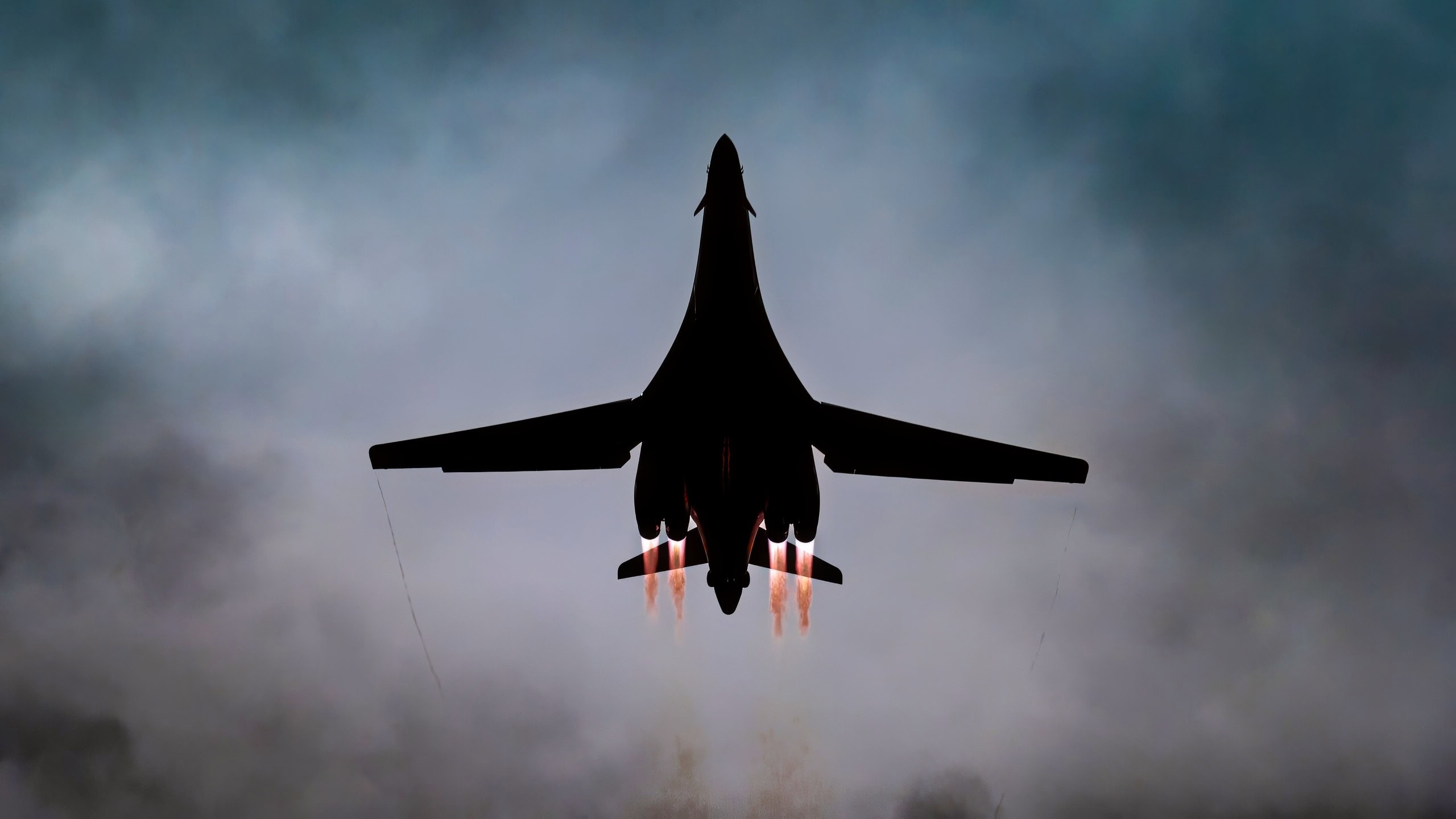
The strategic shifts characterizing the second Trump administration increasingly indicate a significantly reduced US presence in Europe. The force posture review recently announced by Secretary Hegseth will hopefully include repositioning of permanent US bases in Poland and other NATO flank countries, but it will also involve a substantial reduction of US manpower and equipment in Europe. While such a force posture realignment is long overdue, poor implementation could lead to excessive cuts that, in the worst case, result in the United States withdrawing from Europe. The likelihood of this outcome has increased, especially since key figures in the Trump administration have argued for years that the United States must “pivot” to Asia, leaving Europe to handle most of its own defense.
Since 2011, when the idea of pivoting to Asia was first proposed by Barack Obama, this notion that the United States can keep relatively low spending levels while developing a new strategy—one that, through political maneuvering, especially by pressuring Europe to do more—would enable it to secure the homeland and protect its interests worldwide has gained supporters and momentum in DC.
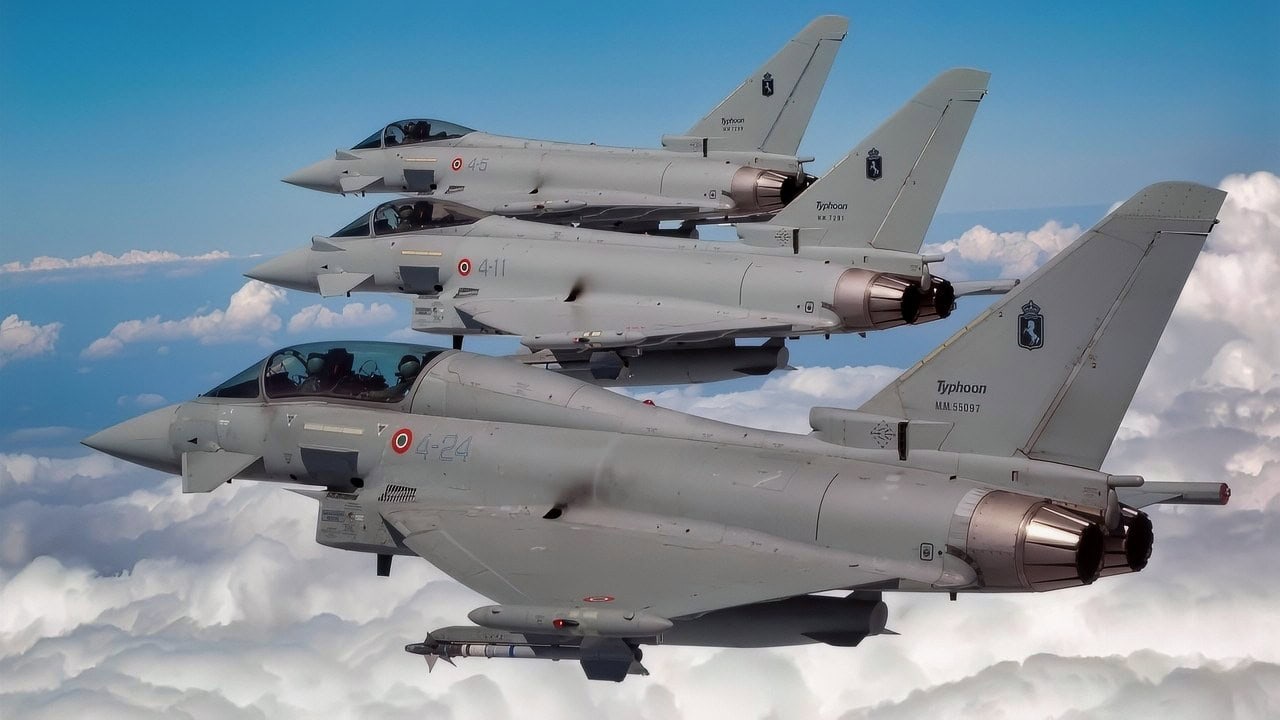
Eurofighter Typhoon Aircraft NATO. Image Credit: Creative Commons.
This school of thought argues that the Atlantic and Pacific theaters can, in effect, be disaggregated, reducing US alliance commitments and freeing our limited military resources for other regions. While this idea makes sense from a resource management perspective, it is, nonetheless, largely disconnected from the geopolitical realities the US must face to ensure homeland security and the nation’s prosperity moving forward. Simply put, the Atlantic and the Pacific are not an either-or, but rather an interconnected problem set. Therefore, the “pivot” is an exercise in strategic shortsightedness.
Europe Is the Cornerstone, Not a Sideshow
A U.S. withdrawal from Europe would be a major strategic mistake because Europe is not, as proponents of the pivot strategy argue, an increasingly minor theater; it is the cornerstone of the American alliance system. Since 1945, U.S. global power has relied not only on military strength but also on a network of alliances that provide Washington with strategic depth, forward presence, political legitimacy, industrial capacity, and access to the world’s critical regions. NATO is the foundation of that system.
If the United States withdraws from Europe, it would not only reduce its regional commitment but also weaken the architecture that enables America to operate as a global power.
The “Focus on China” Argument Gets American Power Backwards
The argument that the United States must leave Europe to focus on China misinterprets the nature of American power. The U.S. is strongest in Asia when Europe remains stable, NATO stays united, and Russia is kept in check. If Europe falls apart, Washington won’t be able to shift its attention to the Indo-Pacific; instead, it will be pulled back into Europe later, under worse circumstances, at a higher cost, and with fewer allies. The purpose of maintaining a presence in Europe isn’t philanthropy toward Europeans.
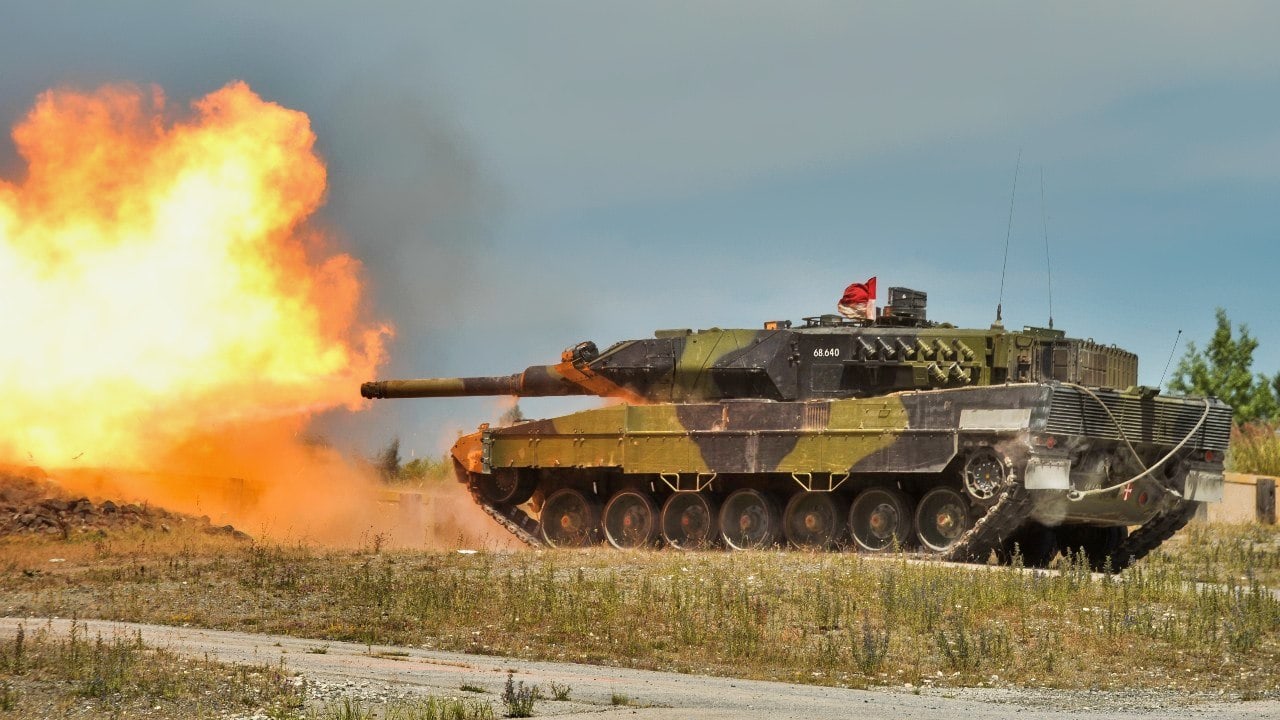
A Royal Danish Army Leopard 2 tank fires at a target during a live-fire exercise at the 7th Army Joint Multinational Training Command’s Grafenwoehr Training Area, Germany, July 04, 2014. The 7th Army JMTC provides dynamic training, preparing forces to execute Unified Land Operations and contingencies in support of the Combatant Commands, NATO, and other national requirements.
(U.S. Army photo by Visual Information Specialist Markus Rauchenberger/released),
It’s to prevent the rise of a hostile hegemon on the Eurasian landmass, which has been the main geopolitical threat American strategy has sought to avoid for over a century. This fundamental geopolitical truth has guided American strategy since Woodrow Wilson decided that America would enter World War I, FDR emphasized the “Europe first” strategy in World War II, and Harry Truman committed the United States to the containment of Russia, which ultimately led to the fall of the Soviet empire and an unprecedented growth of freedom and prosperity worldwide.
Leaving Europe Would Weaken Deterrence in the Pacific
What the proponents of the pivot often overlook is that the US withdrawal from Europe would have serious negative consequences in the Pacific. It would send a damaging signal to allies in Asia. All America’s key allies there—Japan, South Korea, Australia, Taiwan, and the Philippines—would all reach the same conclusion: if Washington can abandon NATO, its oldest and most institutionalized alliance, then no American guarantee is likely to last. In that sense, withdrawing from Europe would weaken deterrence in the Indo-Pacific and send a message of appeasement across the three remaining key regional areas: the Indo-Pacific, the Korean Peninsula, and the Middle East.
Beijing, Pyongyang, Tehran, and, of course, Moscow would see it as proof that American commitments can be broken through pressure, political division, or simply exhaustion.
Alliances Are a Force Multiplier, Not a Burden
The biggest threat isn’t that Europe uses too many American resources; it’s that abandoning Europe would undermine the credibility that makes American power affordable. Alliances serve as force multipliers.
They offer bases, intelligence, logistics, industrial capacity, legitimacy, and political support. Without Europe, the United States would confront China not as the leader of a global coalition, but as a more isolated maritime power trying to oversee Eurasia from offshore.
The NATO alliance is not a burden but America’s force multiplier. It gives the United States the world’s most capable coalition of advanced democratic allies whose defense spending is rising sharply. The right answer, therefore, is not American abandonment but a rebalanced alliance in which Europe takes on the bulk of the conventional burden while the United States continues to provide the nuclear umbrella and high-end enablers.
The Answer Is Burden-Transferring, Not Abandonment
The core US strategic objective in the Atlantic theater should therefore be burden-transferring, not abandonment. Europe should become the primary conventional defender of the European theater, but the United States must remain engaged as NATO’s nuclear guarantor, strategic enabler, and ultimate balancer. This would allow Washington to prioritize the Indo-Pacific without collapsing the alliance system that enables such prioritization.
In short, leaving Europe would not fix the problem of American overstretch. It would make it worse. It would invite Russian revisionism, split NATO, unsettle Asian allies, embolden China, and weaken the alliance structure that gives the United States its global edge.
Europe is not a distraction from the Indo-Pacific; it is the strategic base that allows the United States to compete there from a position of strength.
About the Author: Dr. Andrew A. Michta
Andrew A. Michta is Professor of Strategic Studies at the Hamilton School at the University of Florida, a Nonresident Senior Fellow at the Atlantic Council in Washington, D.C., and a Visiting Fellow at the Hoover Institution at Stanford University. The views expressed here are his own. Follow Him on X: @Andrewmichta.