
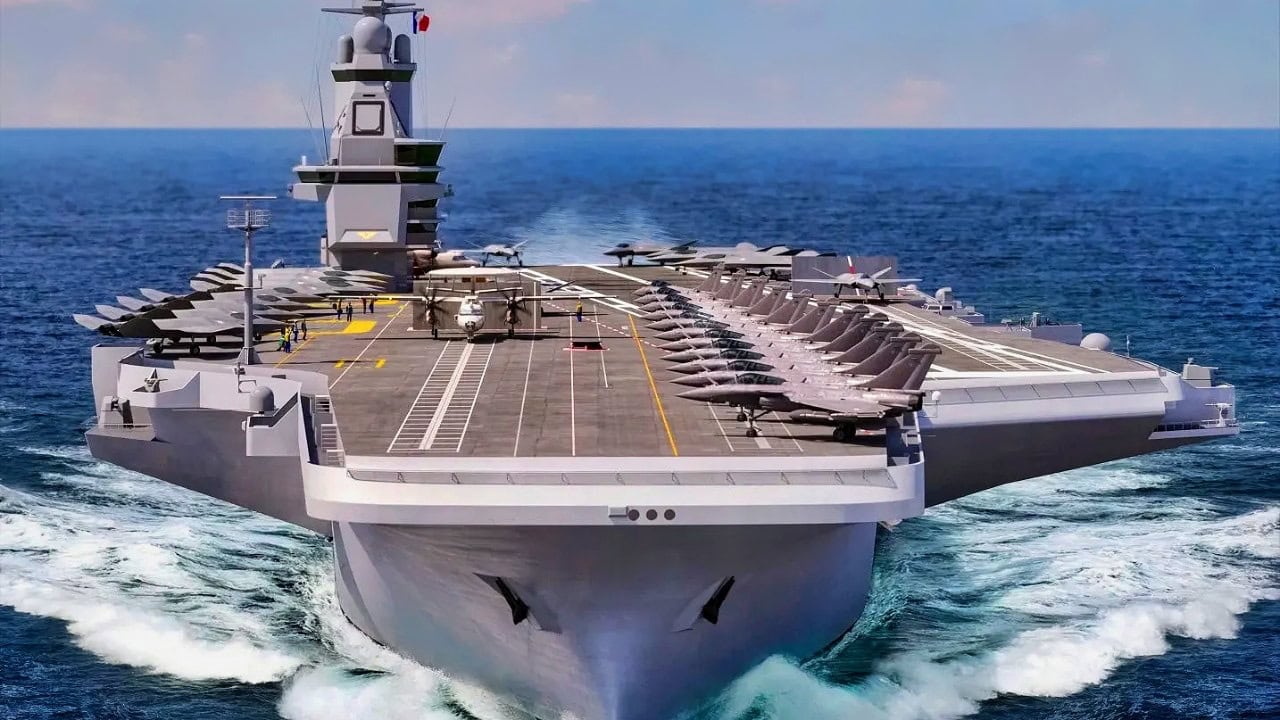
Libre: Meet France’s New Nuclear Aircraft Carrier – The French Resistance played an outsized role in World War Two. The plucky insurgents took on Germany and the Vichy government, fighting with aplomb and bravery.
Now French President Emmanuel Macron is honoring their legacy and memory by naming France’s new aircraft carrier the “France Libre” or “Free France.”
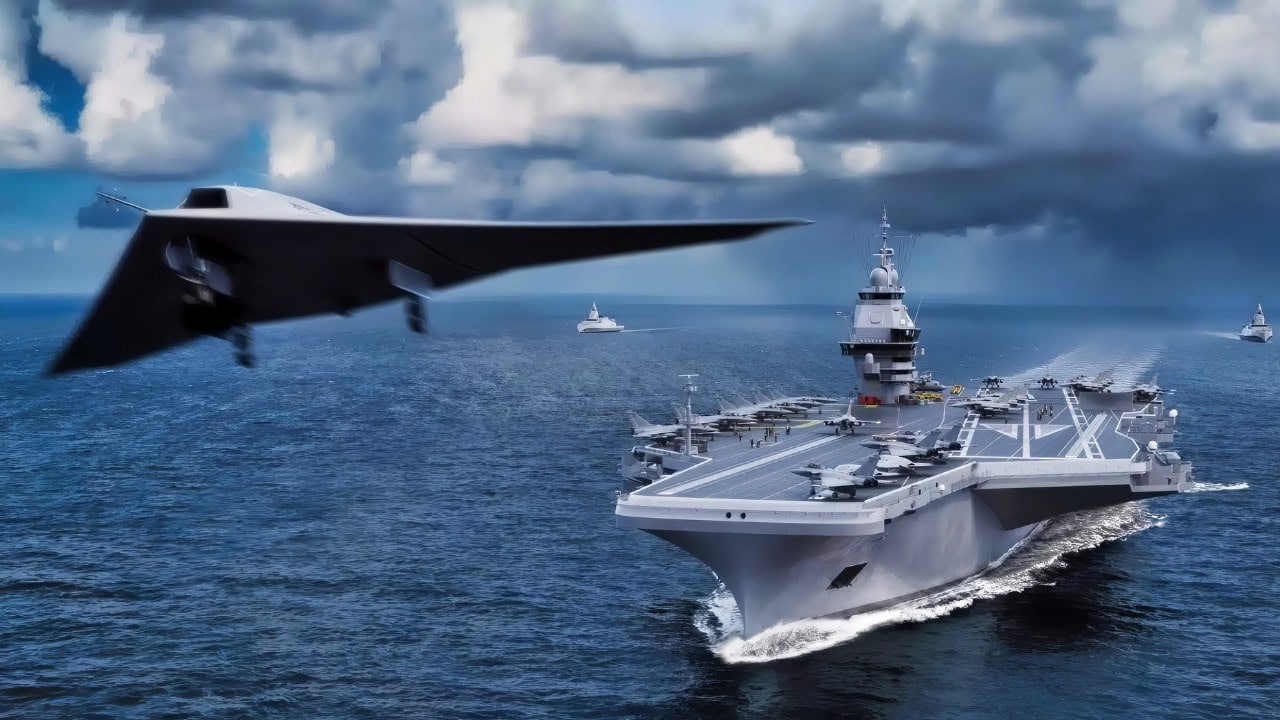
PANG France Nuclear Aircraft Carrier. Image Credit: French Government.
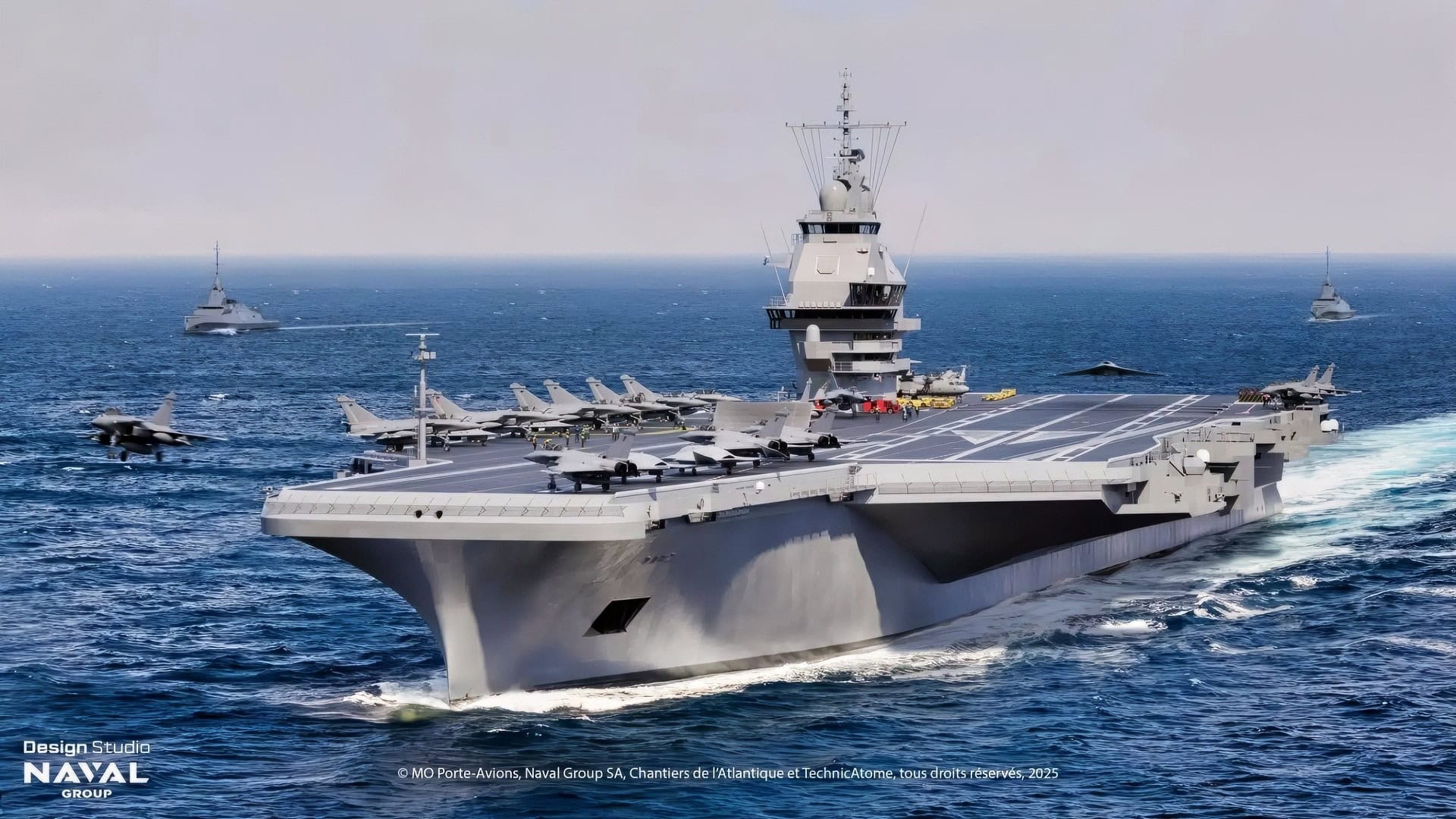
PANG Aircraft Carrier French Navy Photo.
This ship will be a force of nature when it comes online in 2038. It will replace the country’s only aircraft carrier – the Charles De Gaulle.
France is not only aiming to dominate its region with the new flat-top, but it will be majestic and able to carry the flag to far-off shores.
The French Navy is seeking an asset that projects power more effectively and offers greater range than the Charles de Gaulle, and it hopes to be a naval power better able to pursue France’s national interests.
Macron Is Excited
“I wanted our future aircraft carrier to follow in the footsteps of General de Gaulle. His life, his destiny,” Macron said in March at a shipyard in the French city of Indret, near Nantes. This location will host two nuclear reactors. “This name honors the memory of the men and women who stood up against barbarity.”
This Will Cost a Pretty Penny
The new carrier will be expensive, at around $11 billion. That is close to the cost of the U.S. Navy’s Gerald R. Ford, but France’s flat-top will be a major factor in the navy’s deterrence strategy.
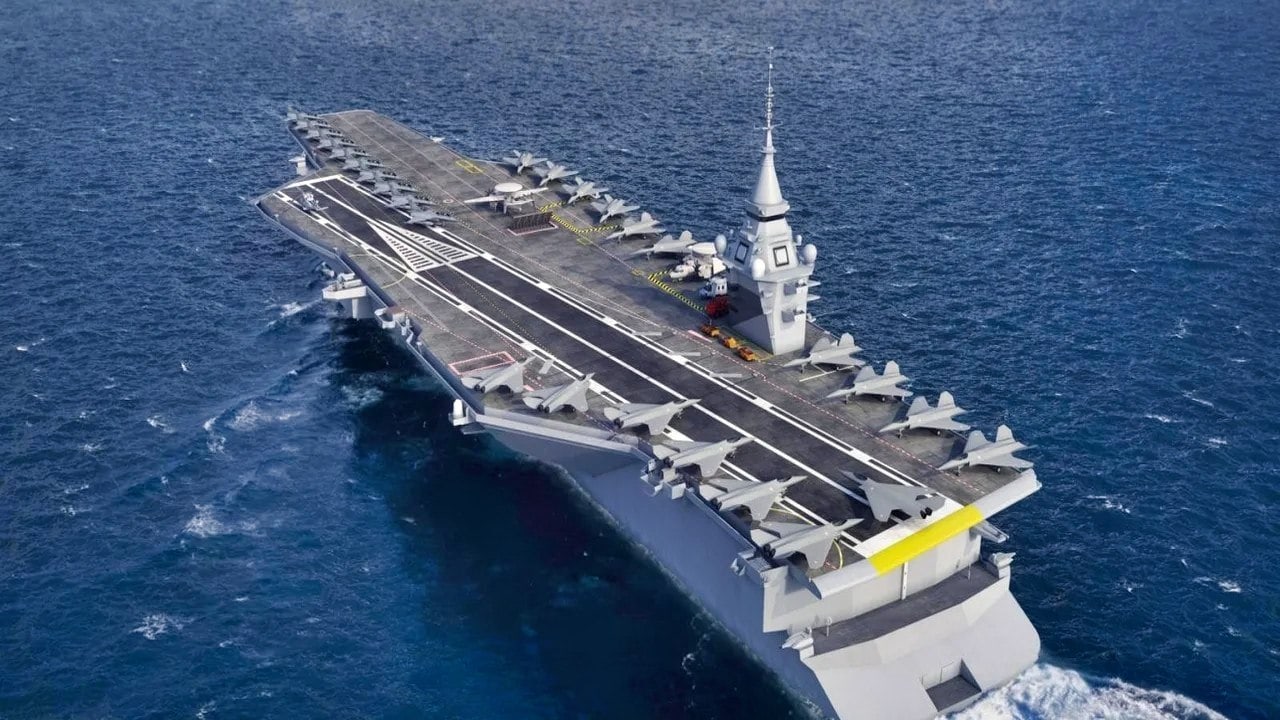
PANG Aircraft Carrier from France. Image Credit: French Navy.
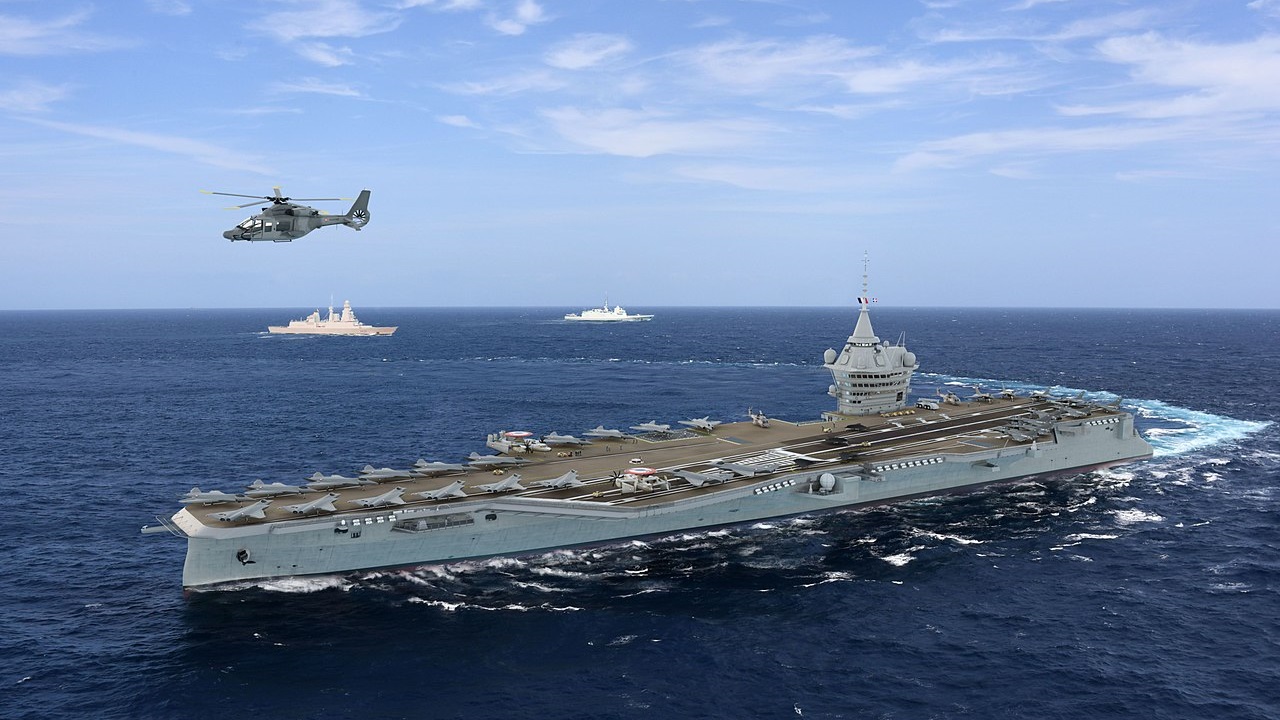
PANG Aircraft Carrier. Image Credit: Creative Commons.
“To remain free, we must be feared. To be feared, we must be powerful,” Macron said.
Charles De Gaulle Has Successful Middle East Deployment
The French Navy has been busy lately.
The Charles De Gaulle was in the Middle East to help keep the Strait of Hormuz open.
The country announced this month that it would return after freedom of navigation operations.
The rest of the De Gaulle strike group will stay in the region to help clear mines and assist the United States in keeping the strait free for shipping to transit.
Gargantuan Beast of a Carrier
Meanwhile, the development of the France Libre will be impressive. The French have designed the carrier to displace 80,000 tons.
This will be double the size of the De Gaulle. The carrier had earlier been deemed the PANG, which stands for “Porte-Avions de Nouvelle Génération.”
Two TechnicAtome K-22 nuclear reactors will power the ship, and this means the carrier will be part of worldwide power projection – an option that is sure to make the French Navy salivate.
Link to U.S. Ford-class Supercarrier
It’s interesting that the French are copying some aspects of the USS Gerald R. Ford.
There will be U.S.- made EMALS (Electromagnetic Aircraft Launch System) and Advanced Arresting Gear (AAG). Macron’s navy is pairing up with General Atomics for the construction of these features.
An excellent result of this collaboration with the United States is that the France Libre will be interoperable with the Americans and able to combine for operations with the U.S. Navy and NATO.
France Libre will have unlimited range and endurance depending on replenishment, with a top speed of 27 knots via three shaft lines. Two thousand sailors will be onboard.
Can the France Libre Prevent Cost Overruns?
The relationship with U.S. developers of the French carrier’s technology will hopefully keep the costs down.
Components and parts can be bought in bulk, and the French will learn from the Americans’ experience with the integration of EMALS and AAG.
The Gerald R. Ford had problems with these systems that forced delays and cost overruns, but the French manufacturers will have all the kinks worked out of EMALS and AAG by the time these systems are placed into the carrier.
EMALS and AAG will help the French carrier wing conduct more sorties and allow for efficient launches and landings.
This will ultimately be safer too, and French aviators are liable to prefer the arresting process to the one on the De Gaulle. The launches will also be less rough than on the prior carrier and reduce wear and tear.
One Carrier Navy Is Still a Problem
While the France Libre will be an impressive beast of a floating aircraft carrier, I have some concerns. When it enters active duty, the French will still have only one flat-top.
This still hampers the Navy from making two or three missions at once.
If it is deployed to the Middle East, it cannot perform homeland defense against the Russians.
France would also not be able to respond to any conflict that could break out against China.
Will Naval Strategy Be Constrained?
This means that the French Navy is still confined to reacting to one global contingency at a time.
Another problem is that de Gaulle will have to serve another 12 years. This carrier is already getting old. It was commissioned in 2001.
The two K15 nuclear reactors will have to be refueled before the France Libre is ready. France would have no aircraft carrier for approximately 1 to 3 years during maintenance and repairs.
Plus, by 2038, the French will need to develop new escort ships for the France Libre that can be deployed worldwide by the time the France Libre is ready.
Politically, by 2038, France will have a new president. Will he or she remain invested in this new aircraft carrier, and can it maintain momentum throughout its manufacturing process?
France could have a left-wing or right-wing government that may be more isolationist.
This point of view could hurt the France Libre, even though Macron is so gung-ho about its development now.
We’ll continue to track the France Libre’s manufacturing process to see if it is on time and under budget. The dual technology with the Ford-class carrier is a good idea.
Nuclear power will be better, and French aviators will be satisfied with the new EMALS and AAG. But having only one carrier is still problematic, as the De Gaulle is refueled and eventually retired.
About the Author: Brent M. Eastwood, PhD
Author of now over 3,500 articles on defense issues, Brent M. Eastwood, PhD, is the author of Don’t Turn Your Back On the World: A Conservative Foreign Policy and Humans, Machines, and Data: Future Trends in Warfare, plus two other books. Brent was the founder and CEO of a tech firm that predicted world events using artificial intelligence. He served as a legislative fellow for US Senator Tim Scott and advised the senator on defense and foreign policy issues. He has taught at American University, George Washington University, and George Mason University. Brent is a former US Army Infantry officer. He can be followed on X @BMEastwood.