
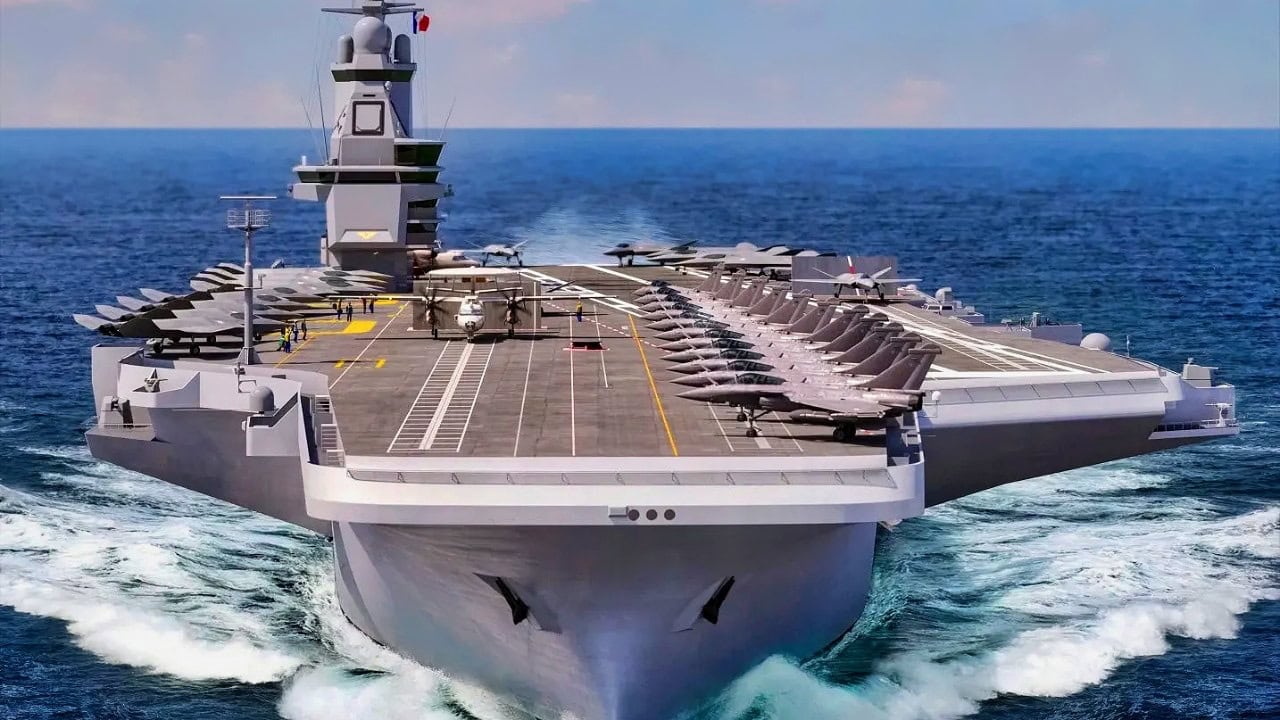
France gave its next aircraft carrier the name France Libre, meaning “Free France,” after Charles de Gaulle’s wartime government-in-exile. The €10 billion ship that Naval Group, Chantiers de l’Atlantique, and TechnicAtome are now beginning to build will launch its fighters using three electromagnetic catapults purchased from an American company under a U.S. government export license. That single dependency, on a program otherwise sourced more than 90 percent inside France, is the sharpest of several industrial problems Paris has to solve before 2038. The reactors are a harder one.
France’s New Aircraft Carrier Explained
PANG France Nuclear Aircraft Carrier. Image Credit: French Government.
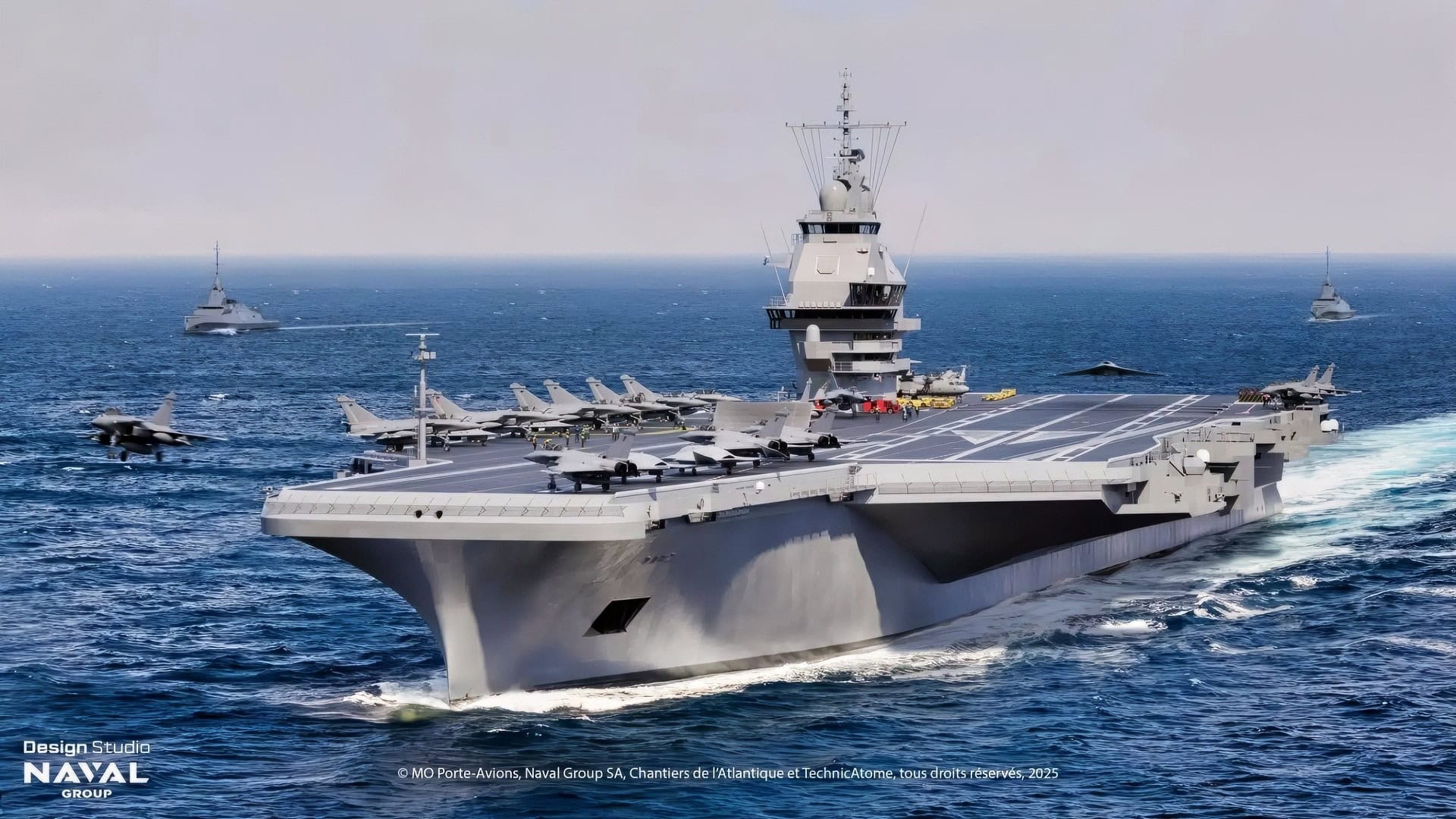
PANG Aircraft Carrier French Navy Photo.
Naval Group, Chantiers de l’Atlantique, and TechnicAtome are the three companies now responsible for turning France’s most expensive defense program in a generation from a set of design files into a 78,000-tonne warship, and the industrial choreography they have committed to is unforgiving. The prime contractor is MO Porte-Avions, a joint venture between Naval Group and Chantiers de l’Atlantique created specifically for the ship. The French defense procurement agency, the DGA, holds the contracting authority, and the Commissariat à l’énergie atomique oversees the reactors. The program is valued at roughly €10 billion by President Emmanuel Macron’s own figure, with some outside estimates running higher, and it mobilizes around 800 suppliers and up to 14,000 jobs, some 80 percent of them small and medium enterprises. The France Libre is meant to enter service in 2038, the same year the Charles de Gaulle leaves service. Everything in the schedule below exists to hit that date, and the hardest parts are already underway.
Why Naval Group and Chantiers de l’Atlantique Have Only 12 Years to Build It
The timeline has almost no slack because it is pinned at both ends. The Charles de Gaulle, in service since 2001 and France’s only carrier, is due to retire in 2038 after a service life stretched about as far as it can go. The France Libre has to be ready to take its place the moment it steps down, and a carrier of this size is a 12-year build, even when nothing goes wrong. Macron authorized the realization phase in December 2025, concluding more than five years of design work, and the industrial plan that followed reads as a chain of deadlines with no room between the links. Chantiers de l’Atlantique assembles the hull in blocks at Saint-Nazaire between roughly 2031 and 2034, outfitting runs through 2035, the ship transfers to the Toulon naval base for final outfitting and nuclear fueling in mid-2035, sea trials begin in 2036, and commissioning follows in 2038. Miss any milestone by much, and France faces the one outcome the whole program exists to prevent: a period with no operational carrier at all.
That risk is not hypothetical, because France already lives with a version of it. With a single carrier, every maintenance cycle on the Charles de Gaulle leaves the Marine Nationale without a deck for months at a time. The France Libre does not solve that structural gap, since France will still operate one carrier, but a late delivery would turn a recurring maintenance gap into an open-ended capability hole. The 12-year clock is the first industrial constraint, and it is the one that makes every other problem in the program more dangerous, because there is no schedule margin to absorb them.
The K22 Reactor Is the Hardest Thing on the Ship, and TechnicAtome Started It First
The propulsion plant is where the engineering risk concentrates, which is why work on it began before the rest of the ship was even formally approved. TechnicAtome, the Aix-en-Provence firm that has designed France’s naval reactors for decades, is the prime contractor for two K22 pressurized-water reactors, each rated at roughly 220 megawatts thermal, about 50 percent more powerful than the K15 reactors aboard the Charles de Gaulle. The extra output is not a luxury. An electromagnetic catapult draws enormous electrical loads in short bursts, and the ship’s radars, electronic warfare suite, and any future directed-energy weapons all pull from the same supply, so the reactor had to grow to feed a far more electrified warship. The K22 shares a technology generation with the reactor going into France’s third-generation ballistic missile submarines, and TechnicAtome validates the design using the Cadarache land-based test reactor.
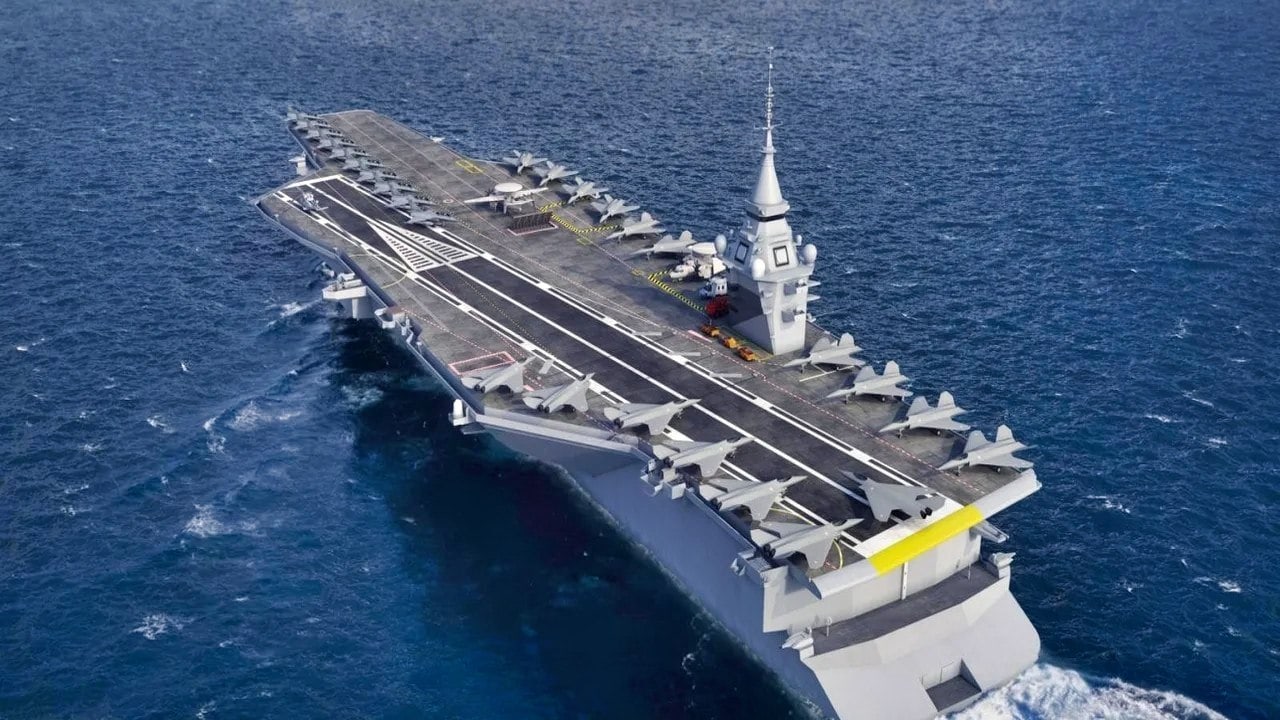
PANG Aircraft Carrier from France. Image Credit: French Navy.
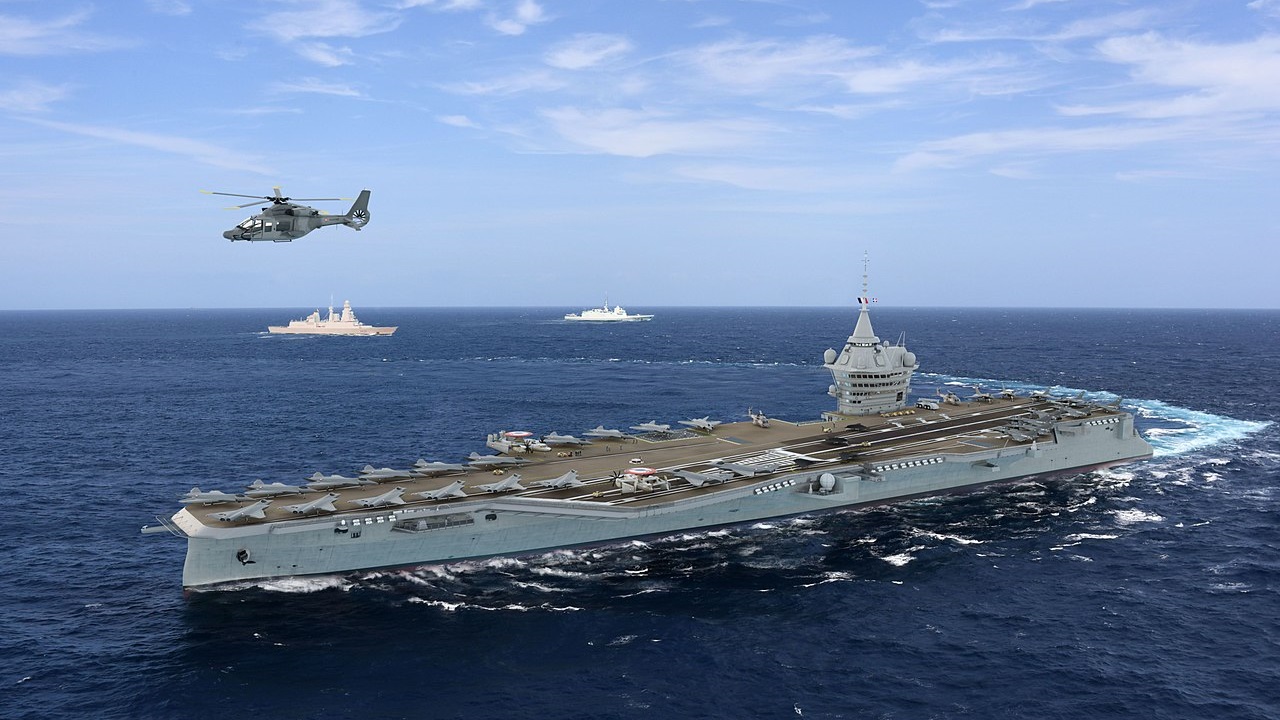
PANG Aircraft Carrier. Image Credit: Creative Commons.
The DGA moved early to protect this part of the critical path. In April 2024, it placed a €600 million order for long-lead propulsion items, the boiler rooms, their containment enclosures, and the steam-conversion equipment, well ahead of the full build decision, precisely because these components take the longest and gate everything downstream. On May 7, 2024, Framatome signed a contract to forge the boiler components over five years at its Le Creusot works, the site in France capable of the heavy nuclear forging required, delivering to Naval Group’s Nantes-Indret and Cherbourg facilities. Then, on September 25, 2025, at Cherbourg, welders struck the first steel plate of a reactor containment enclosure, the heavily armored shell that surrounds the reactor plant. Each enclosure stands about 14 meters tall, spans 13 meters across, and weighs on the order of 1,300 tonnes, and Naval Group is drawing on its experience building the K15 plants for both the current carrier and the submarine fleet to fabricate them. Reactor-component production runs from 2024 through 2029. The nuclear section then becomes the spine of the ship: the hull is assembled in blocks around it, which is why a delay in Cherbourg or Le Creusot would propagate through every stage that follows.
The EMALS Problem: France’s Independence Carrier Needs an American Export License
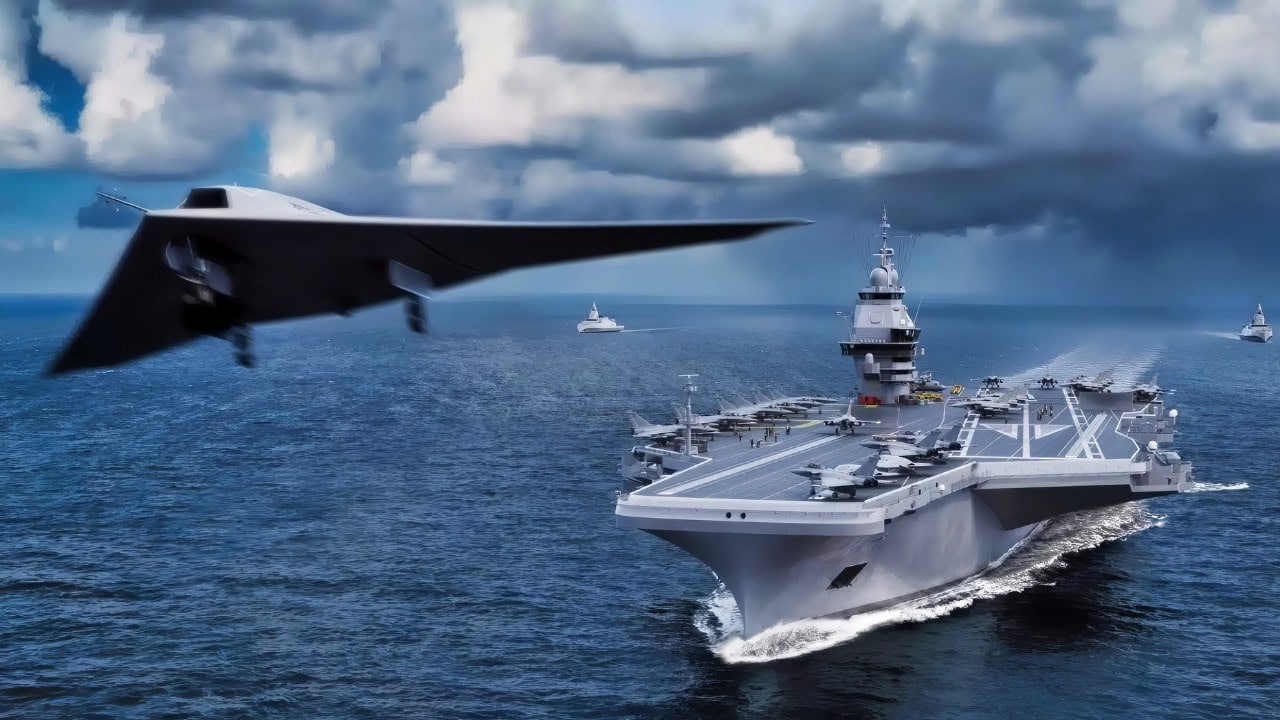
The most quotable contradiction in the entire program sits on the flight deck. The France Libre is a CATOBAR carrier, meaning it launches aircraft by catapult and recovers them with arresting gear, and both systems will be American. Naval Group confirmed on March 16, 2026, that the ship will carry three General Atomics Electromagnetic Aircraft Launch System catapults and three sets of Advanced Arresting Gear, the same launch and recovery technology General Atomics built for the U.S. Navy’s Ford-class carriers, bought through the U.S. Foreign Military Sales system and funded entirely by France. The systems let the carrier run simultaneous launch and recovery and handle everything from a heavy E-2D Hawkeye to a lightweight drone, a capability the two-steam-catapult Charles de Gaulle never had. France chose to buy rather than build because developing a sovereign electromagnetic catapult from scratch would have added cost and schedule risk to a program that already has too much of both.
The catch is that a ship named for French independence now depends on Washington for the one system without which it cannot fly aircraft. U.S. export approval for the catapults was first granted in 2022, but the current political climate reintroduced enough uncertainty that Naval Group is preparing a fallback, and reporting around the March configuration announcement was explicit that the contingency is being readied in case U.S. approval is withheld. A domestic alternative could in principle be developed by Alstom, Cegelec, and Schneider Electric, French firms with the relevant electrical engineering, but standing up a sovereign catapult program late in the build would inject exactly the kind of first-of-type risk the France Libre can least afford on its timeline.
Compatibility testing between the Rafale M and the General Atomics catapult is already underway in the United States at Lakehurst, New Jersey, which is the practical reason the American option remains the baseline. For a program whose entire political justification is strategic autonomy, carrying a foreign single point of failure on the flight deck is the industrial decision that will define how independent France Libre actually is.
The 800-Supplier Base Is the Real Product
Strip away the ship for a moment, and the France Libre is an industrial-base program as much as a warship, and Macron has framed it that way in public. More than 90 percent of the program’s procurement is sourced from French suppliers, roughly 800 companies in all, about 80 percent of them small and medium enterprises, spread across the forging, nuclear, electrical, and shipbuilding trades. More than 200 distinct trades are engaged, and the forging ecosystem alone pulls in Framatome, Aubert & Duval, and Industeel to produce metal that only a handful of sites in France can make. Building one carrier every few decades is, among other things, how a country keeps the ability to build carriers at all, and a program on this scale preserves skills in naval nuclear engineering and heavy fabrication that would otherwise atrophy between ships.
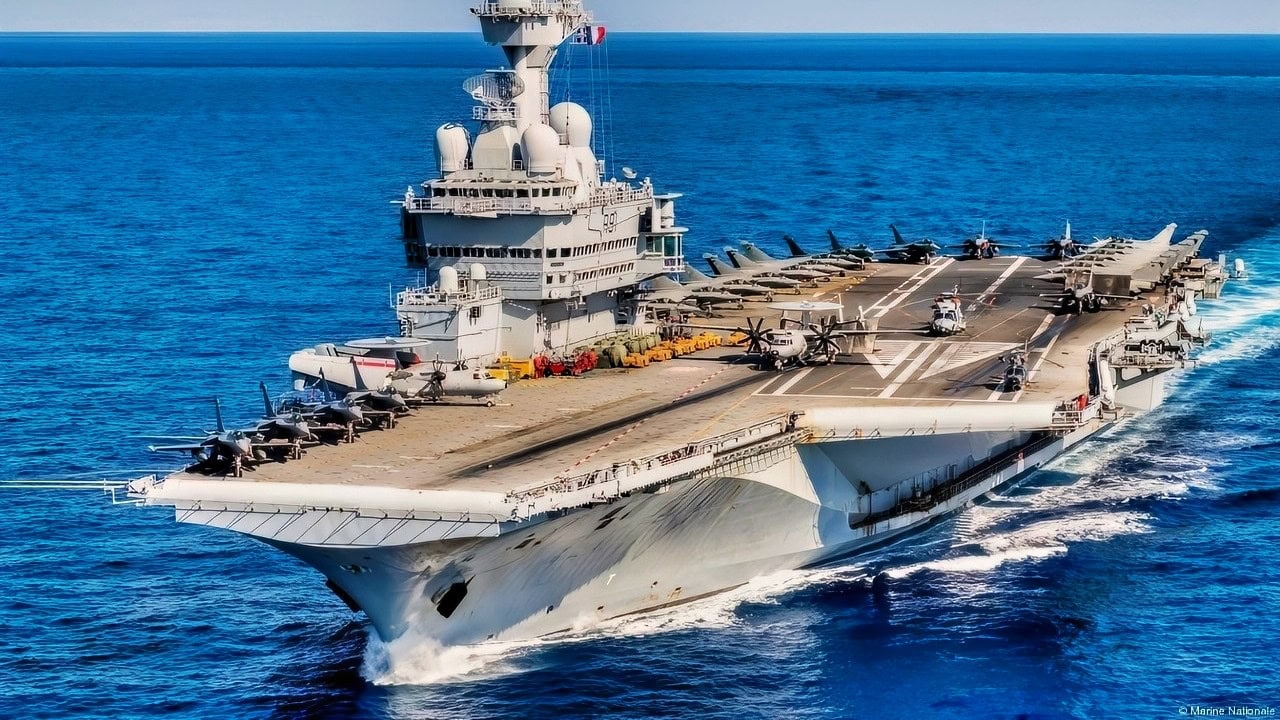
Charles de Gaulle Aircraft Carrier at Sea. Image Credit: Creative Commons.
That breadth is both a strength and an exposure. A supply chain running to 800 firms, most of them small, has 800 places where a bankruptcy, a skills shortage, or a late forging can nick the schedule, and on a build with no slack, small disruptions do not stay small.
The EMALS decision looks different in this light too, less a lapse in ambition than a calculated judgment that France’s industrial base could absorb the risk of a new reactor and a first-of-class hull, but not also a sovereign catapult, all at once and all against the same 2038 deadline. The France Libre is designed to serve into the 2060s and beyond, roughly 45 years, which means the choices Naval Group, TechnicAtome, and the DGA are locking in now will shape French naval power for half a century.
The first weld is struck, the forging contracts are signed, and the one system France chose not to build itself is the one still waiting on a signature in Washington.
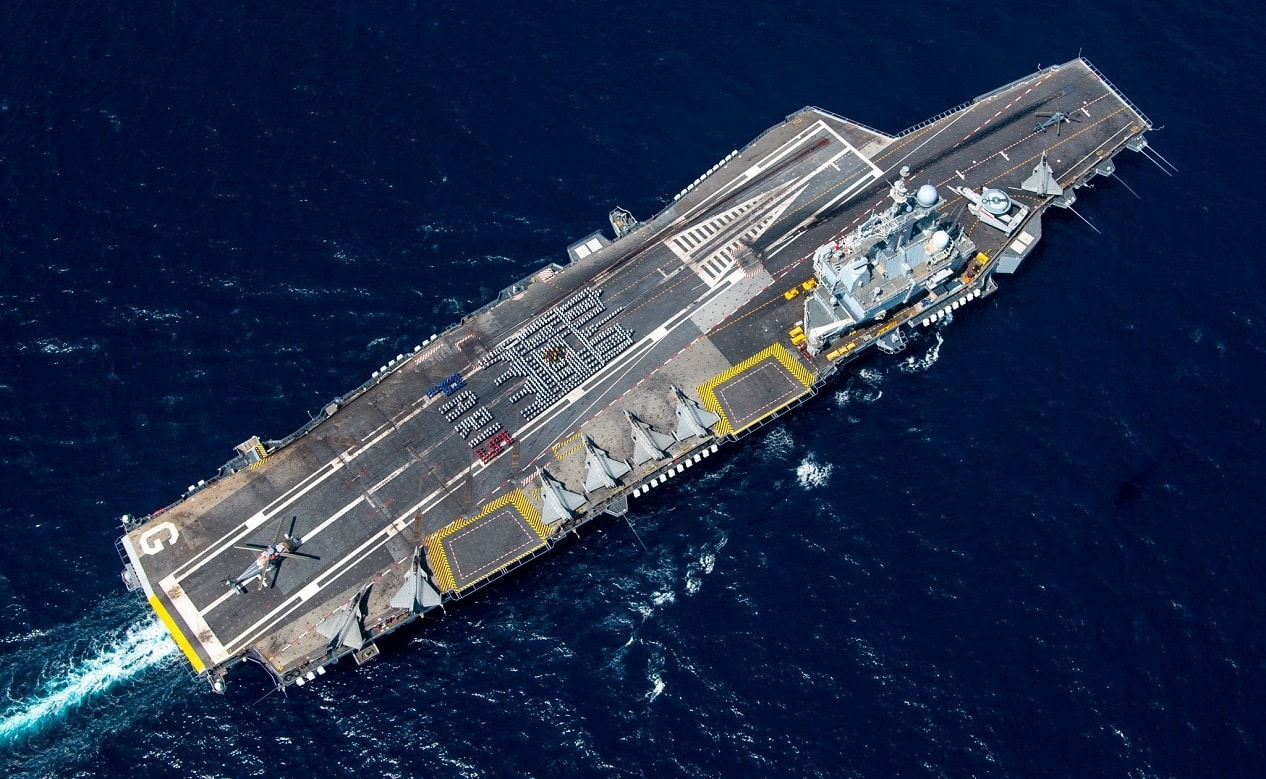
French Aircraft Carrier Charles de Gaulle.
About the Author: Harry J. Kazianis
Harry J. Kazianis (@Grecianformula) was the former Senior Director of National Security Affairs at the Center for the National Interest (CFTNI), a foreign policy think tank founded by Richard Nixon based in Washington, DC. Harry has over a decade of experience in think tanks and national security publishing. His ideas have been published in the NY Times, The Washington Post, The Wall Street Journal, CNN, and many other outlets worldwide. He has held positions at CSIS, the Heritage Foundation, the University of Nottingham, and several other institutions related to national security research and studies. He is the former Executive Editor of the National Interest and the Diplomat. He holds a Master’s degree focusing on international affairs from Harvard University.