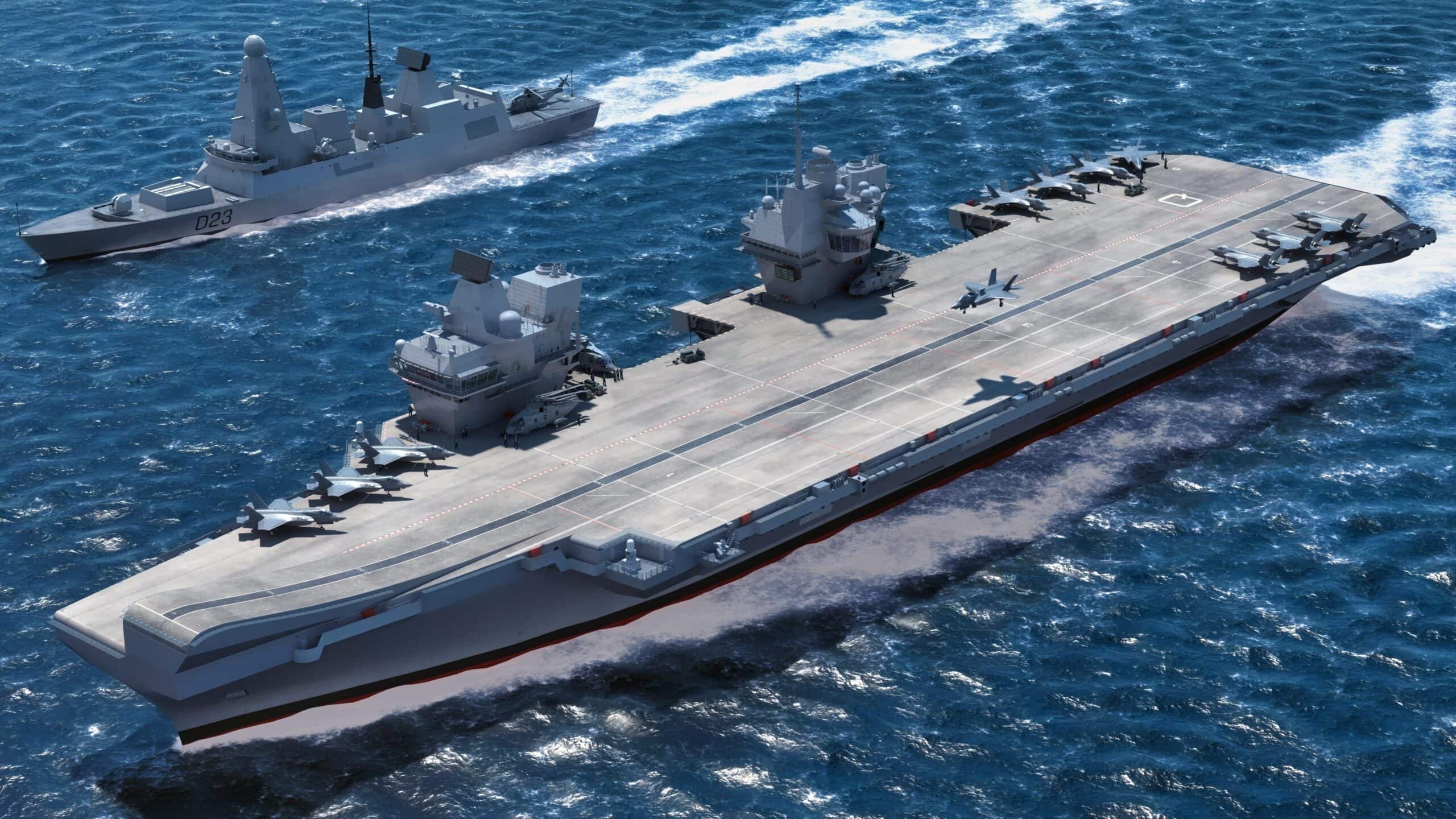
Summary and Key Points: The Royal Navy’s two Queen Elizabeth-class carriers displace about 65,000 tons and operate the F-35B from a ski-jump deck, a configuration that precludes the F-35C and the E-2D airborne early-warning aircraft. HMS Prince of Wales broke down in 2022, and HMS Queen Elizabeth withdrew from NATO’s Steadfast Defender exercise in early 2024 after inspections found a propeller-shaft coupling problem, forcing a short-notice carrier swap. Each ship carries three Phalanx close-in weapon systems and no surface-to-air missile batteries of its own.
The Royal Navy’s Carrier Crisis
For more than a decade, the British Royal Navy’s Queen Elizabeth-class aircraft carriers were presented as the centerpiece of Britain’s return to global naval power. Once these ships became active, London deluded itself with notions of going “East of Suez,” like during the glory days of the British Empire.
At 65,000 tons, the two ships–HMS Queen Elizabeth and HMS Prince of Wales–were designed to restore fixed-wing carrier aviation after the retirement of the Invincible-class carriers.
A Symbol of Decline: The Queen Elizabeth-Class Aircraft Carriers
Instead, the program has become a symbol of the United Kingdom’s broader defense procurement failures.
That ongoing failure has been marked by mechanical and design complications, budget pressures, and greater confusion about the purpose and role of these ships within the framework of a much smaller Royal Navy (compared to her past imperial glories).
Conceived as large aviation platforms sporting the Lockheed Martin F-35B Lightning II stealth fighter, the ships have become an embarrassing reminder of how far the British Royal Navy has sunk.
Initially, the carriers were designed to conduct catapult-assisted launches. Instead, the British were forced to abandon those plans and adopt a more limited ski-jump design.
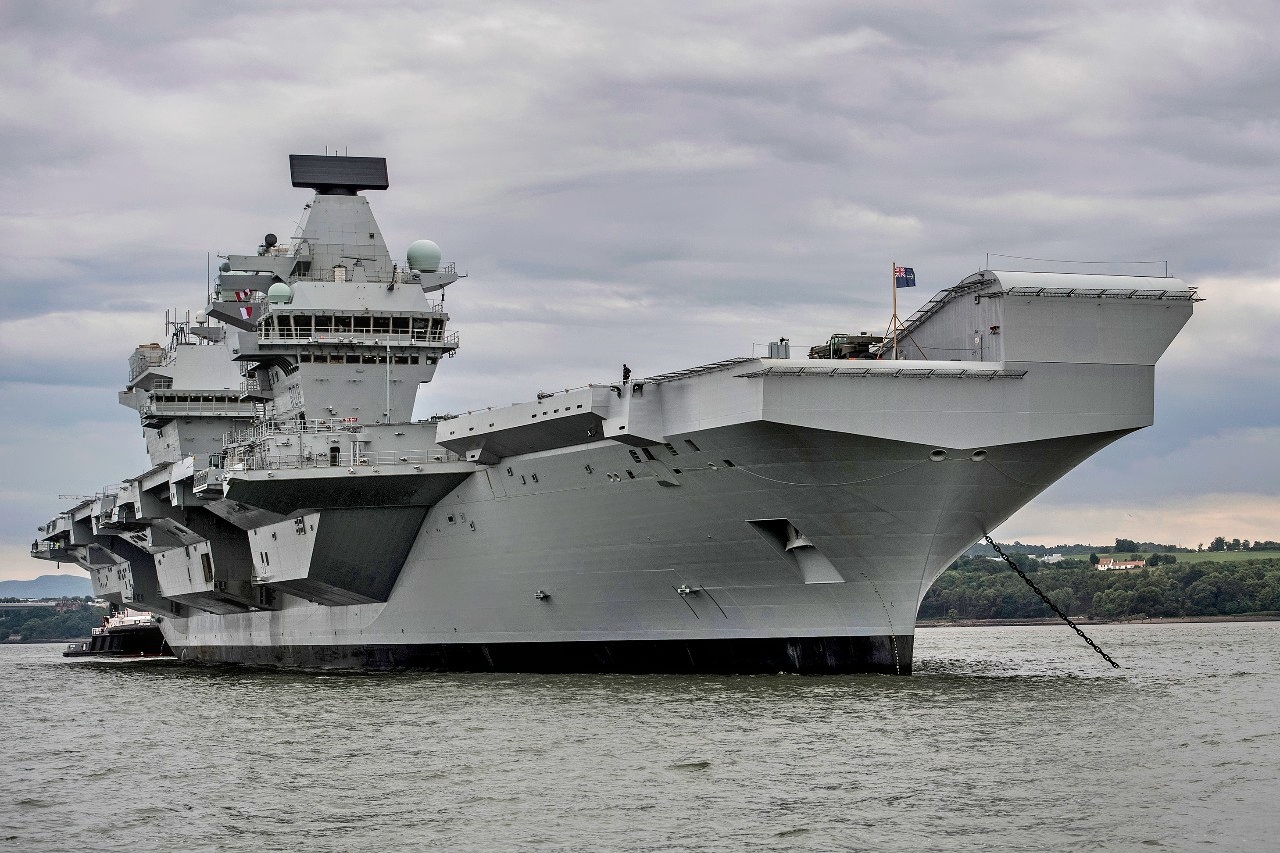
Pictured is HMS Queen Elizabeth under anchor awaiting low tide before departing at the start vital system tests off the coast of Scotland.
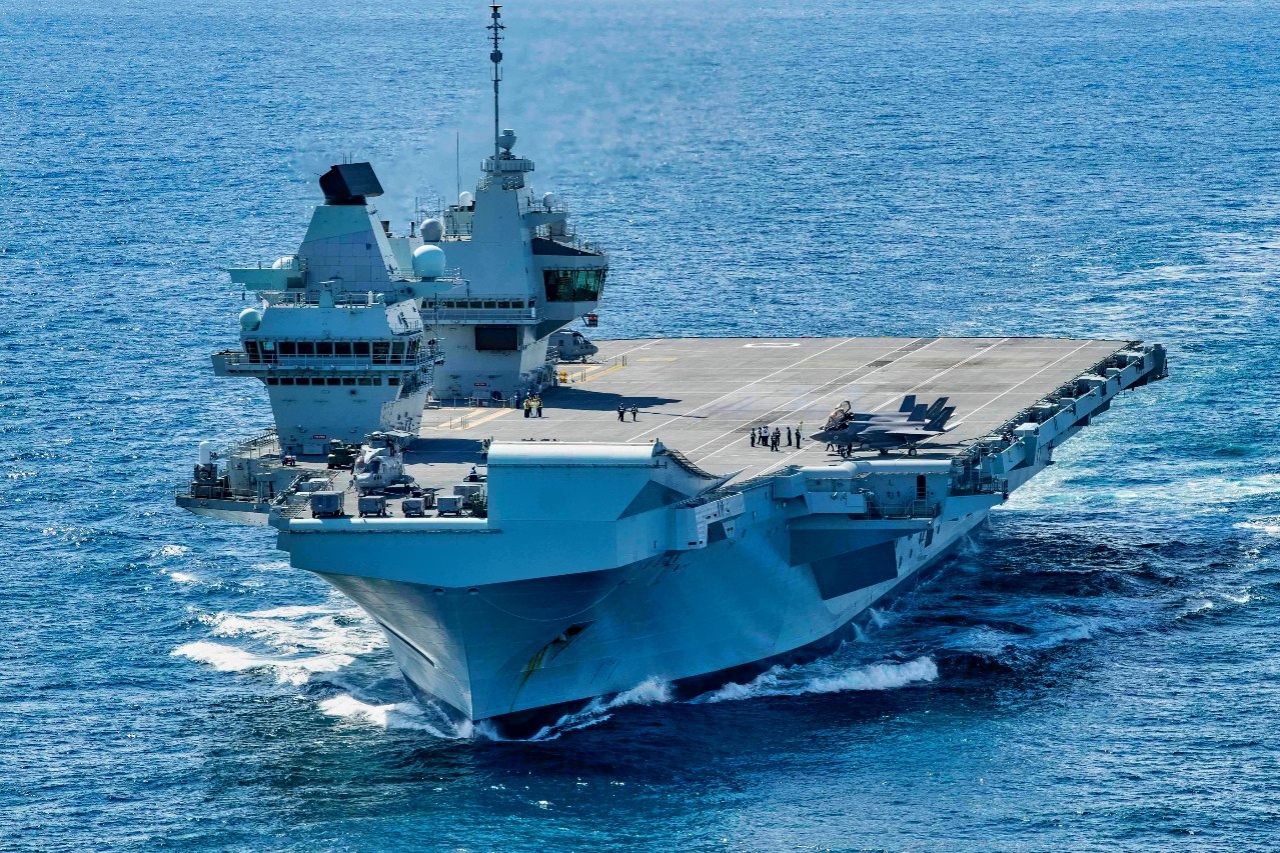
HMS Queen Elizabeth Aircraft Carrier. Image Credit: Royal Navy.
So, the F-35C as well as the all-important E-2D Hawkeye airborne early warning aircraft could not operate from the Queen Elizabeth-class.
That reduced flexibility has permanently reduced the usefulness of these ships while creating long-term modernization problems for the British.
Then there’s the ongoing plague of mechanical failures on the ships. Both carriers have struggled with propulsion-related woes involving their all-important propeller shafts.
HMS Prince of Wales experienced a major breakdown in 2022 after departing for exercises with North American allies, requiring lengthy repairs.
In early 2024, HMS Queen Elizabeth withdrew from NATO’s Steadfast Defender exercise after inspections revealed problems with a propeller shaft coupling.
Those incidents forced Britain to swap carriers at short notice and renewed questions about quality control and long-term reliability.
The longer the carriers have served, the more problems have arisen.
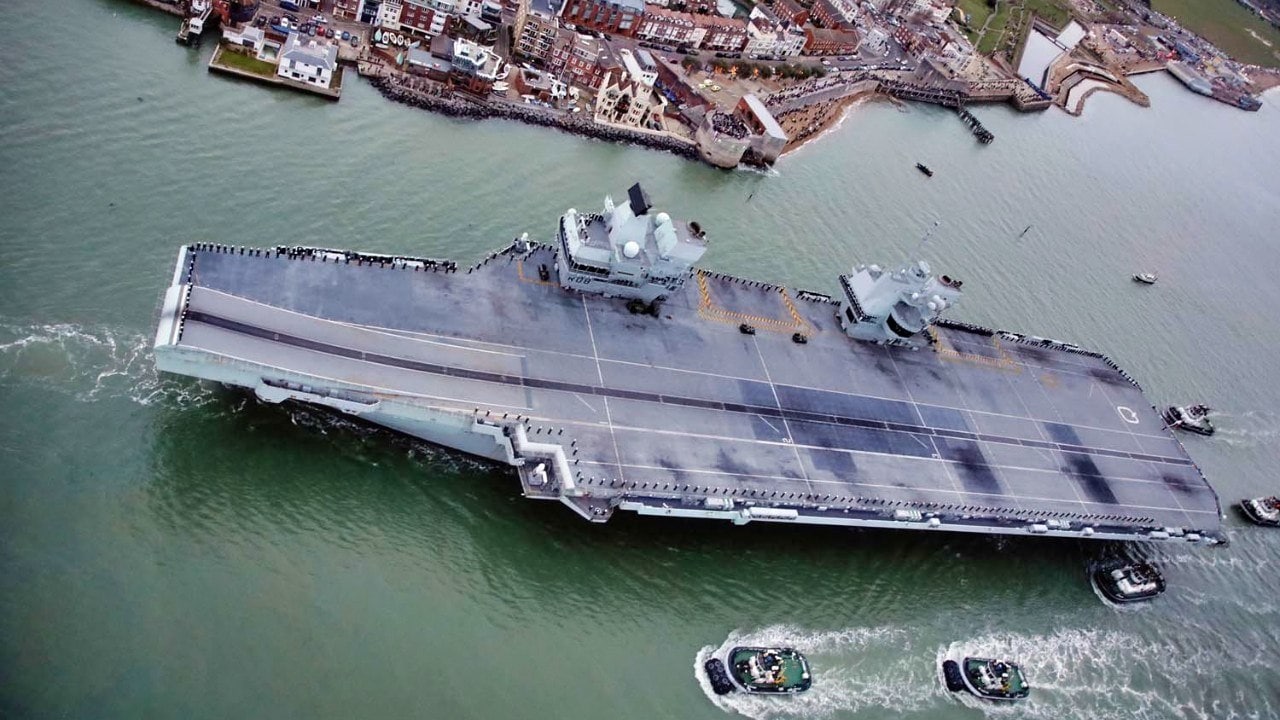
HMS Queen Elizabeth Aircraft Carrier. Image Credit: Royal Navy.
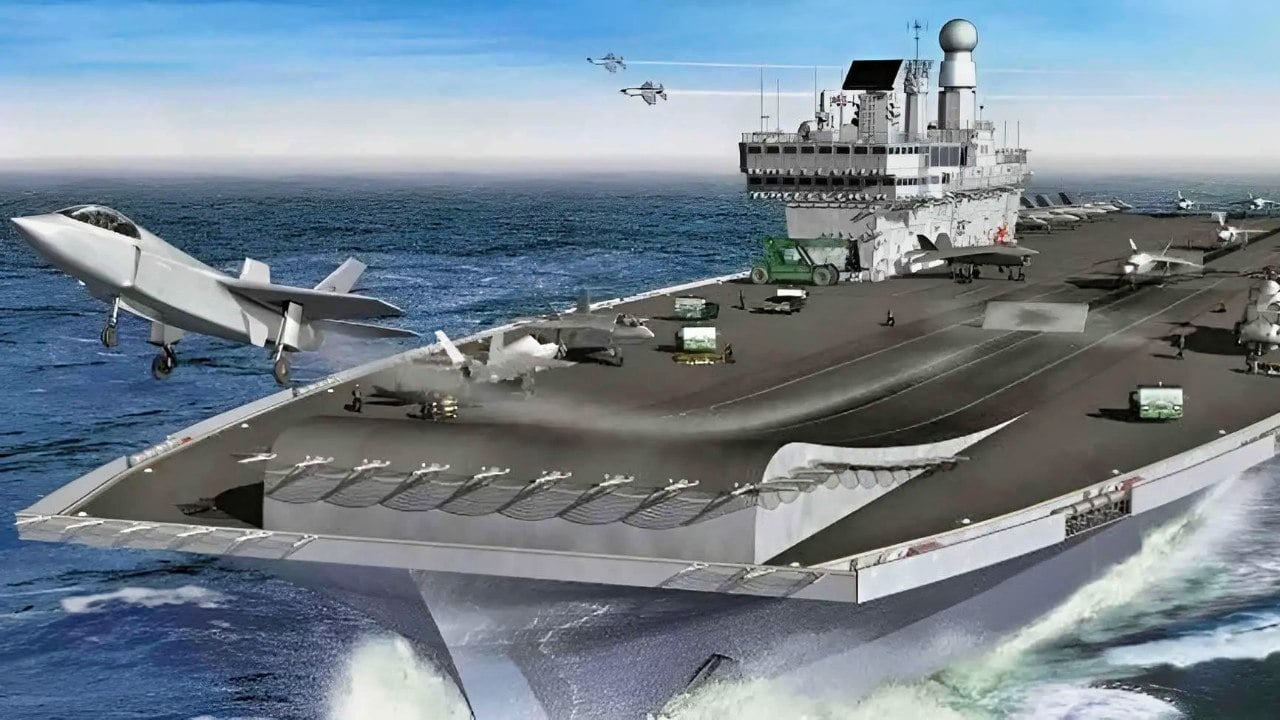
Queen Elizabeth-Class Aircraft Carrier Artist Rendering.
HMS Prince of Wales again suffered a major technical issue while operating near Norway during NATO activities.
Britain’s Ministry of Defense described the malfunction as minor, but the carrier was forced to interrupt operations while engineers investigated the fault.
Reports indicated the suspected issue again involved the propulsion system, reinforcing concerns that shaft-related problems have never been remedied (despite years of repairs), per the National Security Journal.
Reliability concerns extend beyond propulsion as well.
Sailors Can’t Even Shower, Let Alone Fight, From These Ships
Queen Elizabeth became the focus of what was dubbed in the always unruly British media as “Showergate,” after sailors reported spending months without dependable hot water while the carrier remained in Portsmouth.
Crew members complained that showers sometimes required running water for extended periods before the water became warm, and that replacement parts took months to arrive.
The Royal Navy maintained that repairs were underway, but the problem persisted for so long that many sailors assigned to the great ship had to live ashore until the problem was corrected.
Then there are real capability gaps. Whereas US carriers operate within heavily layered defensive networks while carrying extensive self-defense systems, the Queen Elizabeth-class relies heavily on escort protection.
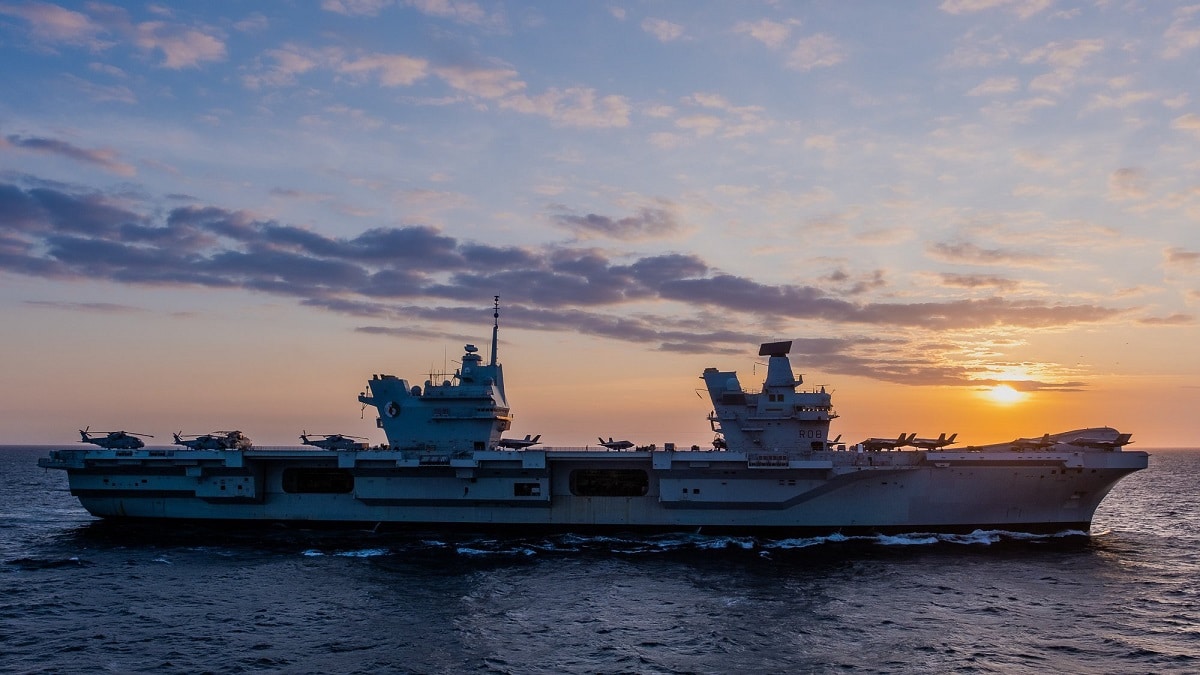
HMS Queen Elizabeth. Image: Creative Commons.
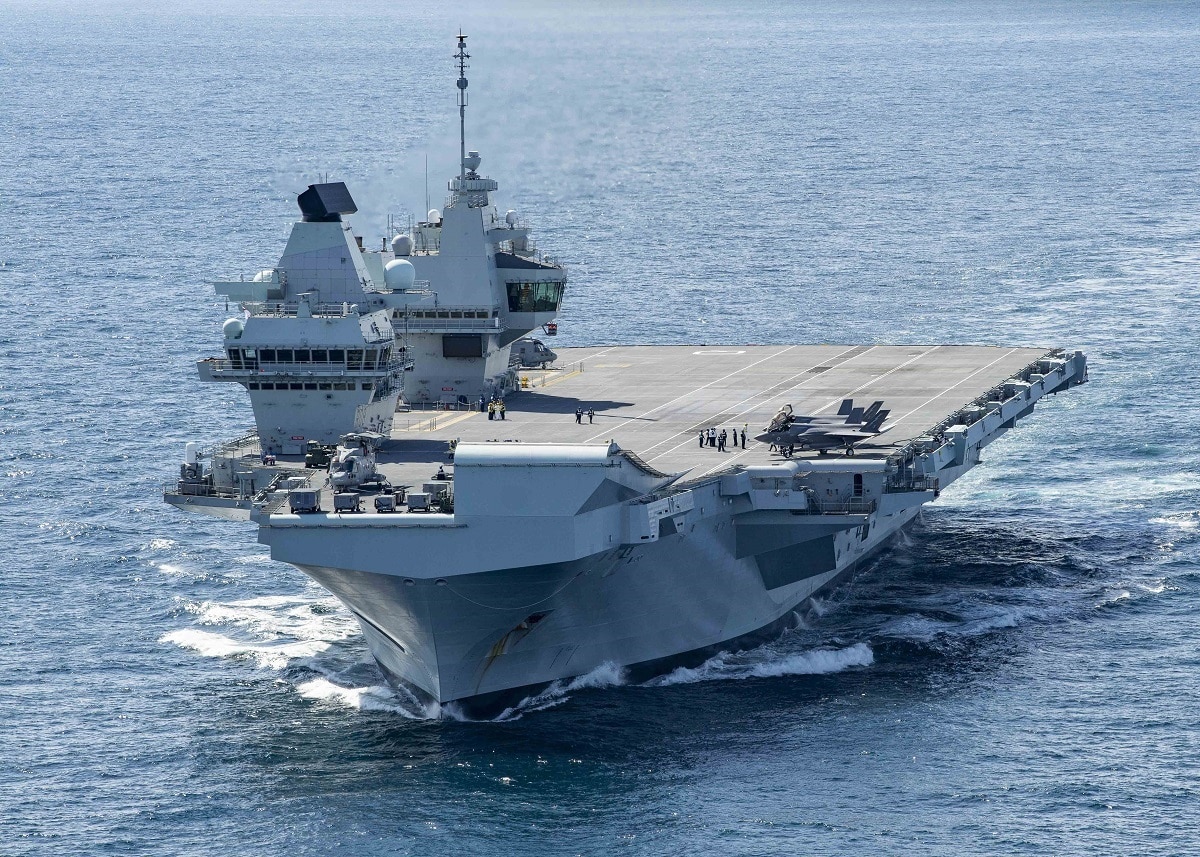
(Oct., 17, 2019) The Queen Elizabeth-class aircraft carrier HMS Queen Elizabeth (RO 8) sails the Atlantic Ocean. HMS Queen Elizbeth is currently deployed in support of WESTLANT 19, which involves mission planning, arming the aircraft using the ship’s Highly Automated Weapon Handling System, flying missions and debriefing on completion. The first operational deployment for HMS Queen Elizabeth 617 Squadron and a squadron of US Marine Corps Lightning jets is due to take place in 2021. (U.S. Navy photo by Mass Communication Specialist 3rd Class Nathan T. Beard/Released)
Each carrier possesses only three Phalanx Close-In Weapon Systems (CIWS) for last-ditch missile defense.
They lack larger surface-to-air missile batteries of their own. That limited protection leaves the carriers particularly vulnerable because defenses from attendant destroyers or frigates are not sufficient against modern anti-ship missile threats.
Further, the carriers have been sunk repeatedly during multiple military exercises that simulated large-scale missile attacks.
Defending against missile and drone swarms is likely the most important defensive feature of any modern aircraft carrier, because swarming attacks are precisely the tactic that enemies will employ against aircraft carriers.
A willingness to use such tactics has already been demonstrated against US military naval assets in their wars against the Houthis of Yemen and the Islamic Republic of Iran (luckily, no carriers were sunk, but the mere threat was enough to send even those better-defended carriers far away from the ranges of anti-ship ballistic missiles).
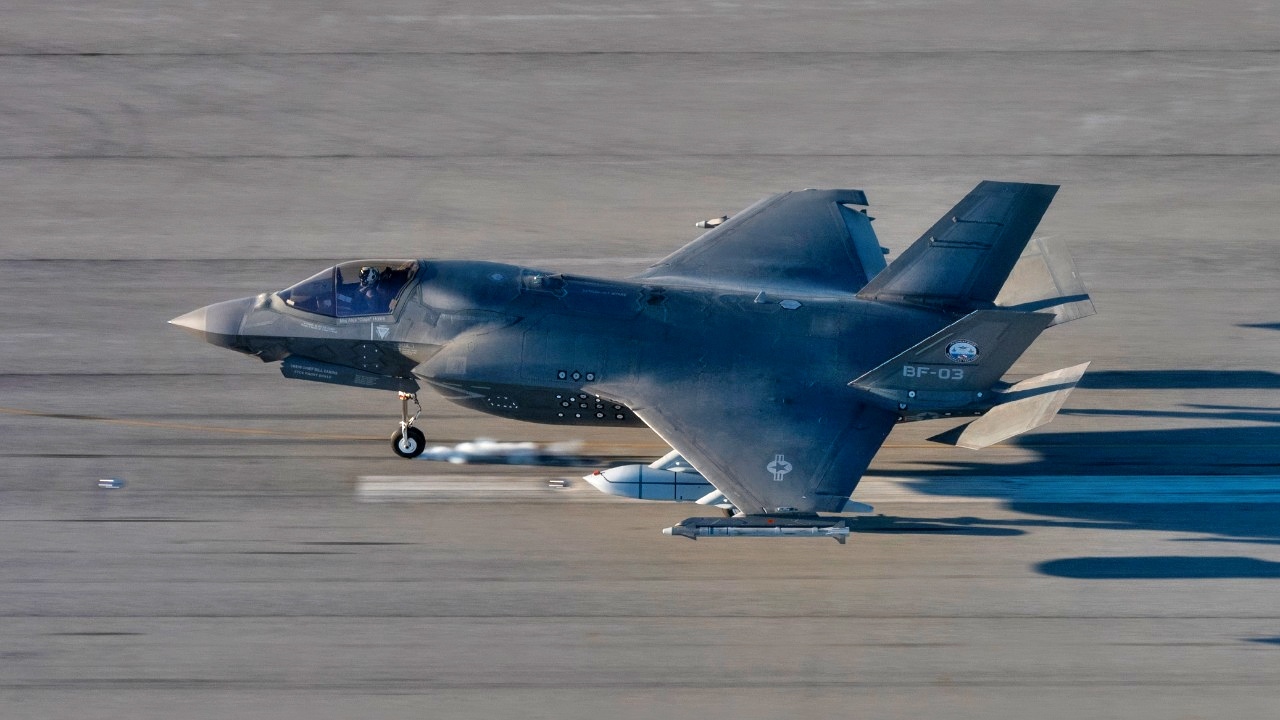
NAS PATUXENT RIVER, Md. — An F-35 Lightning II test pilot conducts the first flight test to certify the F-35B short takeoff and vertical landing variant of the fighter aircraft for carrying the AGM-158C Long-Range Anti-Ship Missile (LRASM). As part of ongoing weapon integration efforts, the Pax River F-35 Integrated Test Force (Pax ITF) team for the first time flew test flights Jan. 14 with two AGM-158 loaded on external stations. LRASM is a defined near-term solution for the Offensive Anti-Surface Warfare (OASuW) air-launch capability gap that will provide flexible, long-range, advanced, anti-surface capability against high-threat maritime targets. The Pax River ITF’s mission is to effectively plan, coordinate, and conduct safe, secure, and efficient flight test for F-35B and C variants, and provide necessary and timely data to support program verification / certification and fleet operational requirements.
An Unmitigated Disaster
The Royal Navy lacks the requisite number of F-35Bs to conduct successful carrier flight operations from both carriers consistently.
London has slowly increased the number of F-35Bs. But they are still nowhere near what is needed to consistently and reliably conduct carrier flight operations on both ships — especially during war.
Plus, the carriers are cost-intensive to operate.
They require thousands of sailors, many escort vessels, support craft, and continuous maintenance.
Budget pressures within the Royal Navy have sparked fierce debates about placing one carrier into extended reserve (or even mothballing one of them) to free up finite resources.
Taken together, the Queen Elizabeth-class carriers illustrate the ambition of a navy exceeding its capacity to conduct and support advanced carrier flight operations.
And as new missile and drone threats increase, the notion that Britain needed these carriers becomes more ridiculous.
About the Author: Brandon J. Weichert
Brandon J. Weichert is the Senior National Security Editor at 19FortyFive.com. He also manages The Weichert Brief on Substack. Weichert also hosts “National Security Talk” on Rumble. He is the author of four bestselling national security books, the most recent of which is A Disaster of Our Own Making: How the West Lost Ukraine (Encounter Books). Follow him via Twitter/X @WeTheBrandon.