
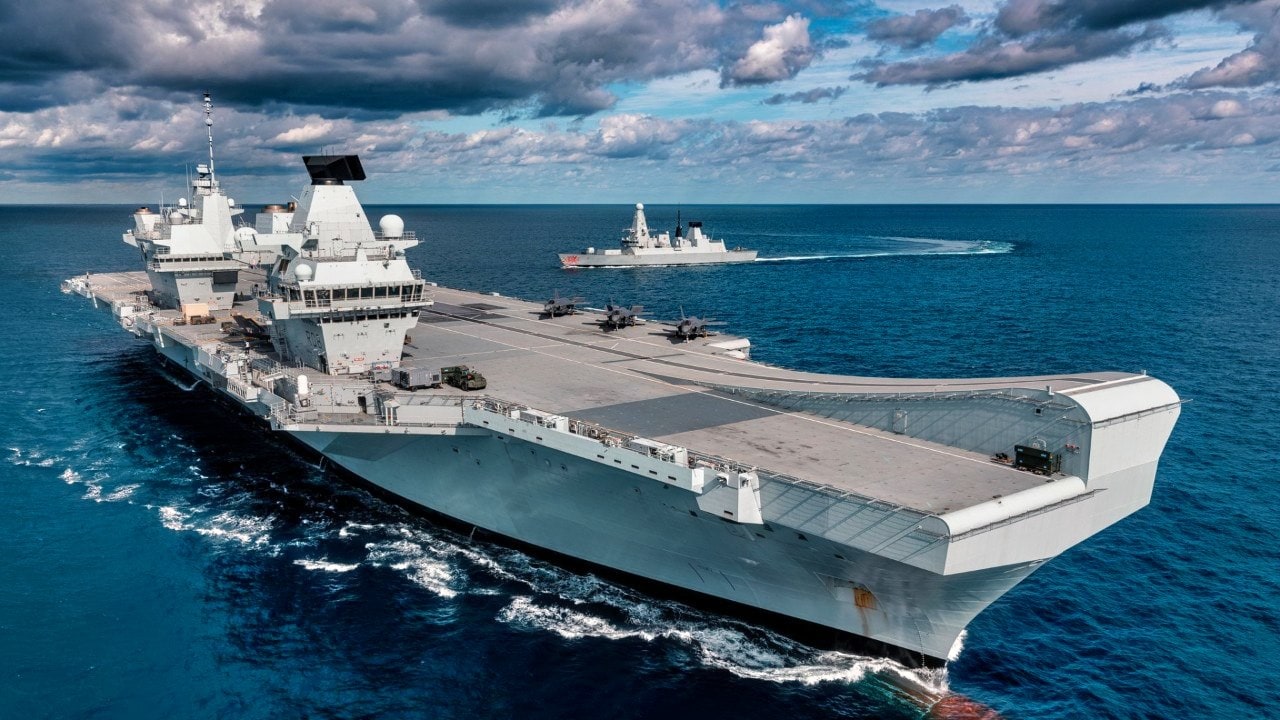
The Royal Navy Has Aircraft Carriers That Can Barely Head Out Of Port
Some people in the United Kingdom are appalled at the condition of the Royal Navy, from aircraft carriers to other big challenges that won’t go away.
For centuries, British ships sailed the seas when the sun never set on the empire. The maritime branch was considered all-powerful and prestigious. There was hardly ever a young boy in Britain who did not have a sailor suit.
Fathers dreamed that their sons could someday be naval officers.
What Is the Current State of the Royal Navy?
Now the Royal Navy is a shell of its former self.
Look no further than carrier aviation. Britain was once a global leader in flat-top warfare, especially during World War Two. At its peak in 1945, the Royal Navy operated over 50 aircraft carriers of various classes — fleet carriers, light carriers, escort carriers — the largest carrier fleet in history, outnumbering even the U.S. Navy at certain points in the war.
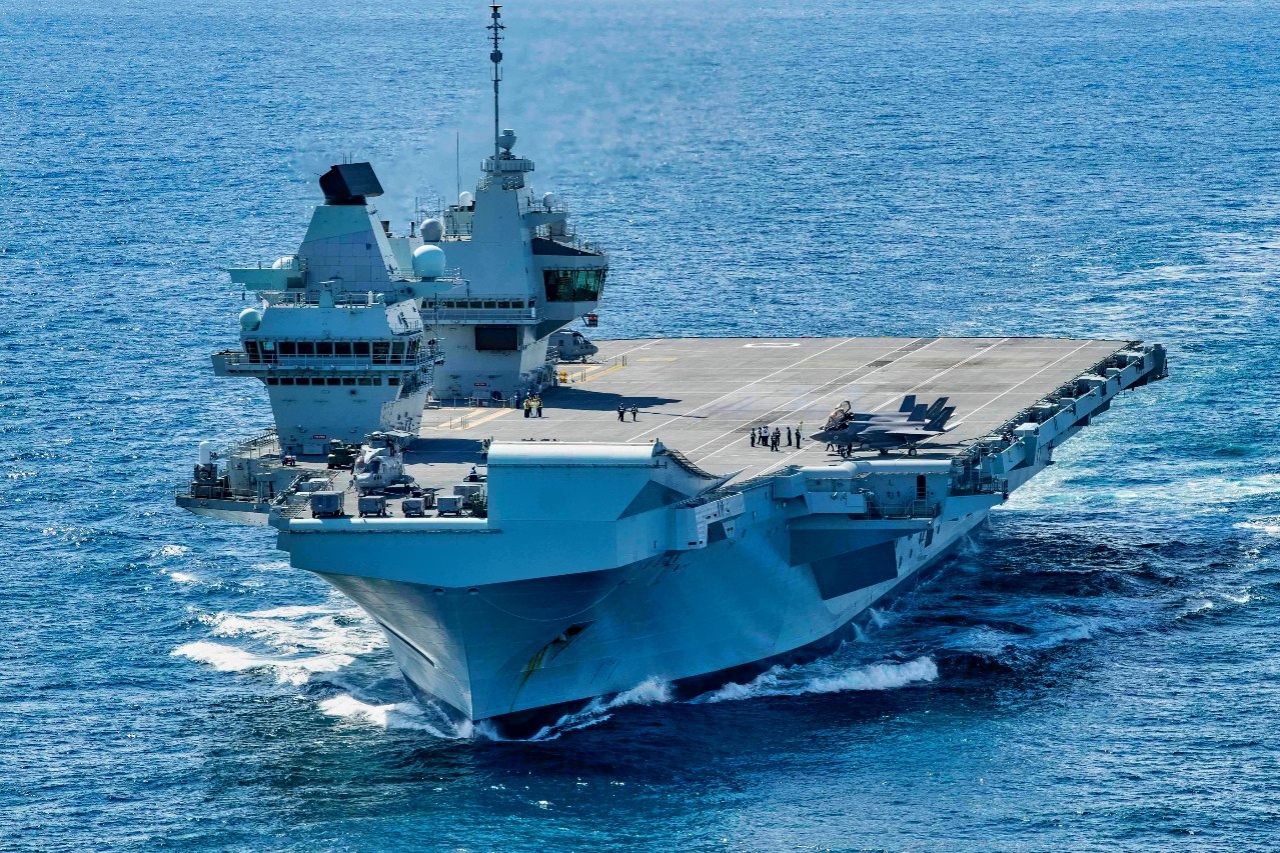
HMS Queen Elizabeth Aircraft Carrier. Image Credit: Royal Navy.
An Inspiring History
Winston Churchill famously turned the British Navy around with his belief that modern ships should be propelled by oil rather than coal. England was known for naval innovation and aviation mastery. Their pilots were some of the best in the world during the Battle of Britain. This transferred over to carriers, too. The naval aviators simply had no fear. Ship drivers were courageous and relentless.
But the Naval Woes Are Difficult to Shake
Today’s Royal Navy is underfunded, outgunned, and outmanned. Political leadership could be blamed the most for naval neglect. Modern Britain has domestic political pressures that have hurt their military. The populace is divided politically, the English cannot seem to agree on what to do with their defense forces.
Domestic Political Pressures Have Hobbled the Navy
Immigration is a thorny topic. The country has “Net Zero” energy policies that have arguably made electricity prices go through the roof. Economic growth is mainly stagnant (GDP increased only 0.1 percent from the last quarter of 2025) and that is creating an eroding tax base that does not create enough revenue to easily balance budgets. This lack of resources for the military has hurt Britain exceedingly.
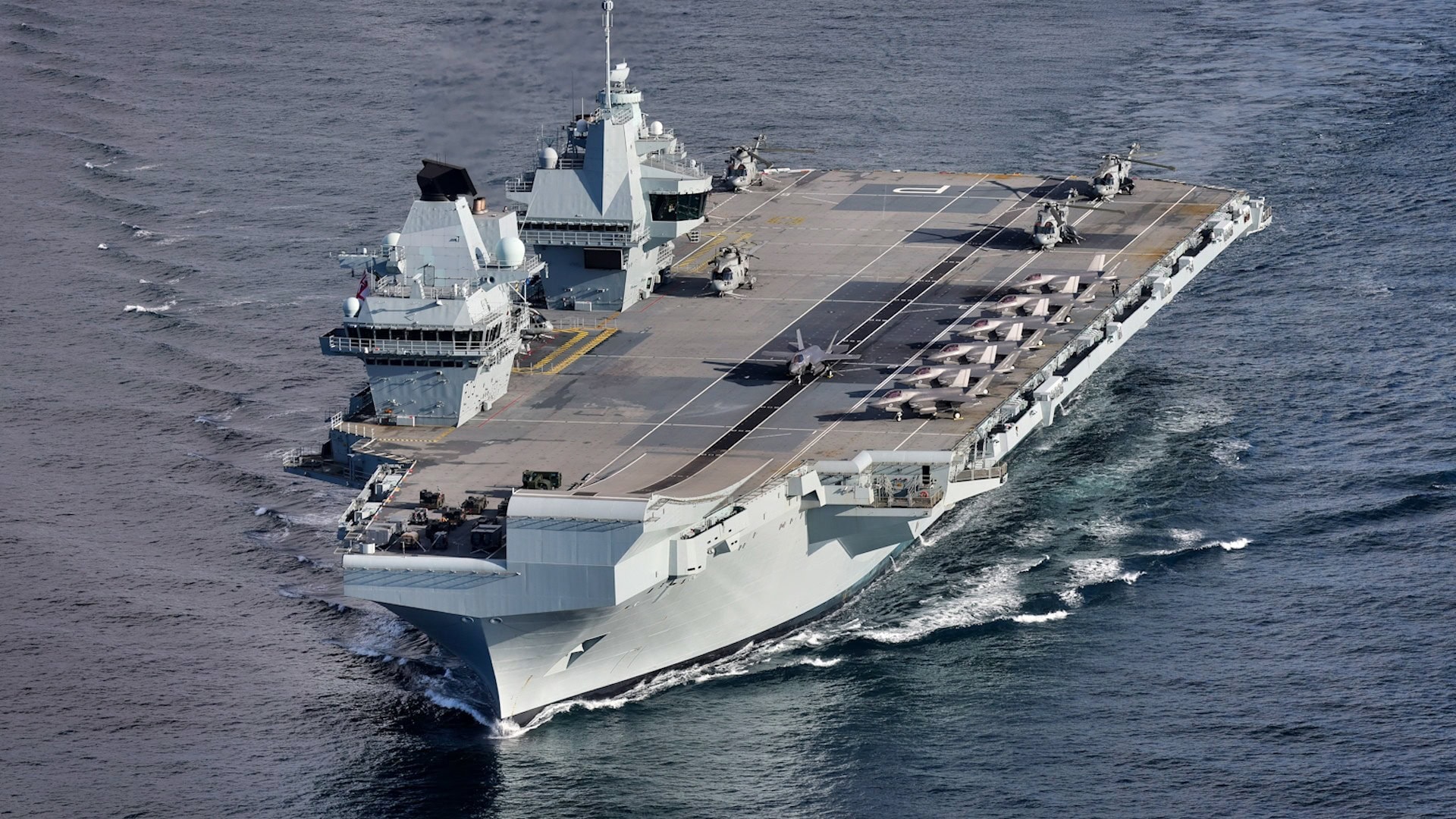
Royal Navy Aircraft Carrier. Image Credit: Royal Navy.
To be sure, the United Kingdom is no longer an empire, and many are glad not to have that responsibility. The country has not fought a conflict on its own since the Falklands War in 1982, which actually saw the Royal Navy operate effectively.
Where Is the Naval Pride?
Not as many young men and women want to be sailors anymore, creating a human capital problem in the active navy and in shipbuilding. Recruiting is up slightly, but critical shortages of trained manpower have negatively affected the career specialties required to run a modern navy. Few engineers and technicians are graduating from school and picking careers in shipyards.
Keeping the Ships Operational
Many vessels have maintenance delays. Several of the 13 Type 23/Type 45 destroyers and frigates are not in the water. This is frustrating to the naval brass, and it continues to be a sore spot for battle planners who look at the fleet’s shape and wonder how they could fight a naval war with Russia without ships breaking down.
Britain Cannot Hide from Security Responsibility
Military necessity still has Britain struggling with future strategic needs. NATO has almost worldwide responsibility. Carriers are still badly needed. Russia is always a threat, and Britain still must project power beyond its shores even though the population and political leadership are more preoccupied with domestic concerns.
This is a “hollowed out” navy. One that could be described as in crisis mode. And naval aviation, an area of sea war that Britain once dominated, is struggling to be relevant.
What About Those Carriers?
To the United Kingdom’s credit, it does have two functioning aircraft carriers. But these have struggled with faulty systems and maintenance issues. They have been mostly a disappointment.
Take the HMS Prince of Wales. It was supposed to steam to Cypress to monitor the situation in Iran amid the war. Prime Minister Keir Starmer does not want to conduct offensive military strikes to help England’s ally, the United States. That’s fine, but is the Prince of Wales even up for the voyage to the theater?
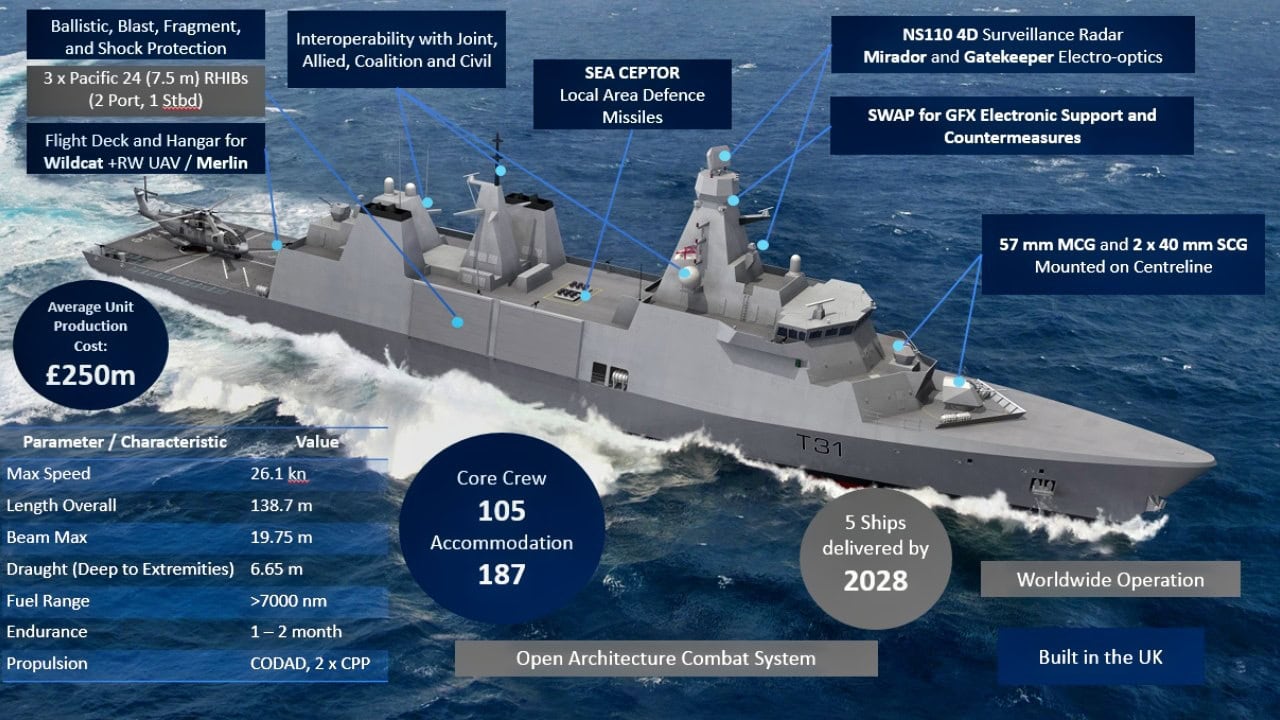
Type 31 Frigate. Image Credit: Royal Navy.
The Prince of Wales does not have a full complement of F-35B stealth fighter jets. Only a handful are operational. The Phalanx close-in weapons systems are not up to par. And there aren’t enough Type 45 destroyers to properly escort the carrier. There are only seven Duke-class frigates.
Mechanically, the Prince of Wales has struggled. The starboard shaft coupling failed in 2022. The shaft was misaligned. This required a long period of repairs. While in dry dock, a similar problem was found on the port side. There have been leaks and other component failures since then.
HMS Queen Elizabeth Has Struggled Too
The other carrier, the HMS Queen Elizabeth, had propeller issues in 2024, and it missed a major NATO exercise. The ship also had problems with shaft couplings. It appears both carriers have suffered from design errors.
Fashion a Strategy and Stick to It
The British desperately need a 21st-century naval strategy. Does the nation plan to become a naval power capable of supporting NATO worldwide? Or does it simply want to protect its shoreline as a regional force?
This is a government-wide problem. The country seems to have other priorities than focusing on the Navy. To address personnel and readiness issues, the government should focus on a naval recruiting program for the fleet and shipyards. Articulation for this would have to come from the prime minister. The Navy needs to be more lethal and prepared for war.
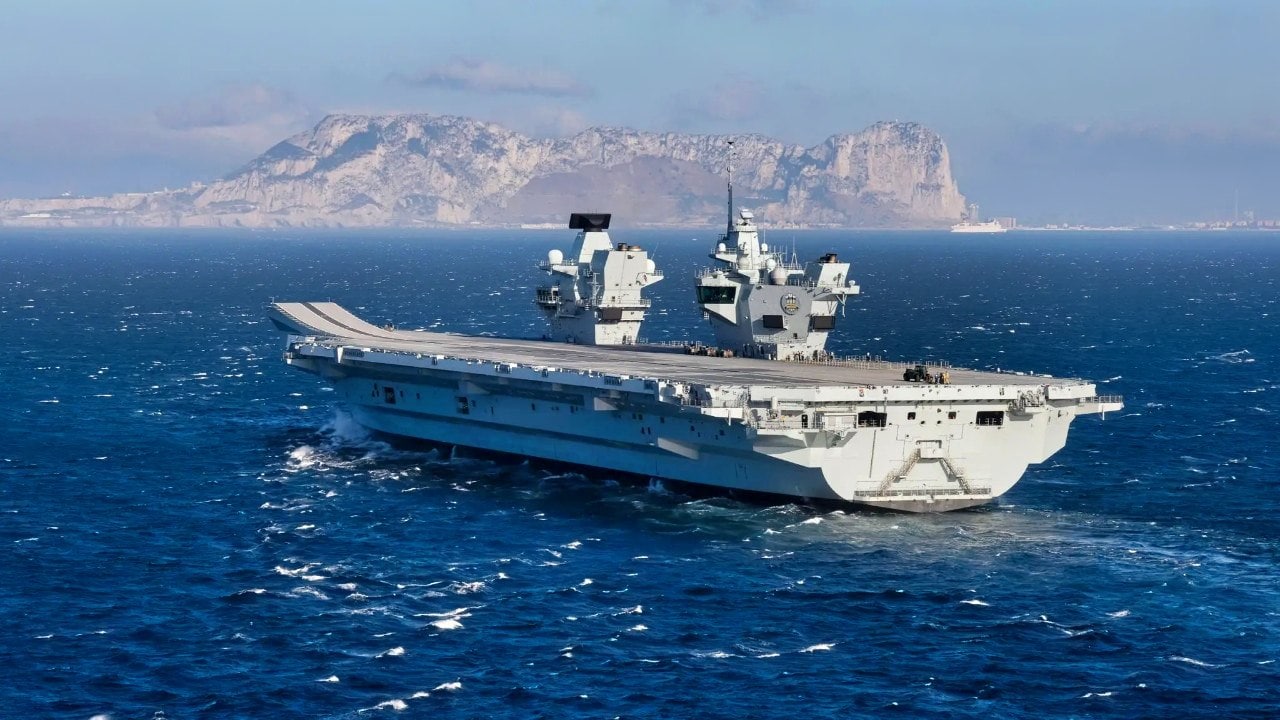
HMS Prince of Wales Royal Navy. Image Credit: Royal Navy.
Spend More Get More
Also, naval budgets must be plussed-up. Warfighting costs money, and if the British government does not want to make a real and sustained investment in the Navy, it should create a strategy that is much less ambitious. That could mean curtailing NATO rehearsals and drills.
Communications with Ordinary Britains Is Key
Finally, there needs to be a public relations campaign highlighting the Navy’s importance to national security and an effort to answer critical questions. The British people seem to be confused about their role in the world. What does this military want to accomplish? Is it a valuable ally with the United States? Can it deploy in hotspots without significant delays?
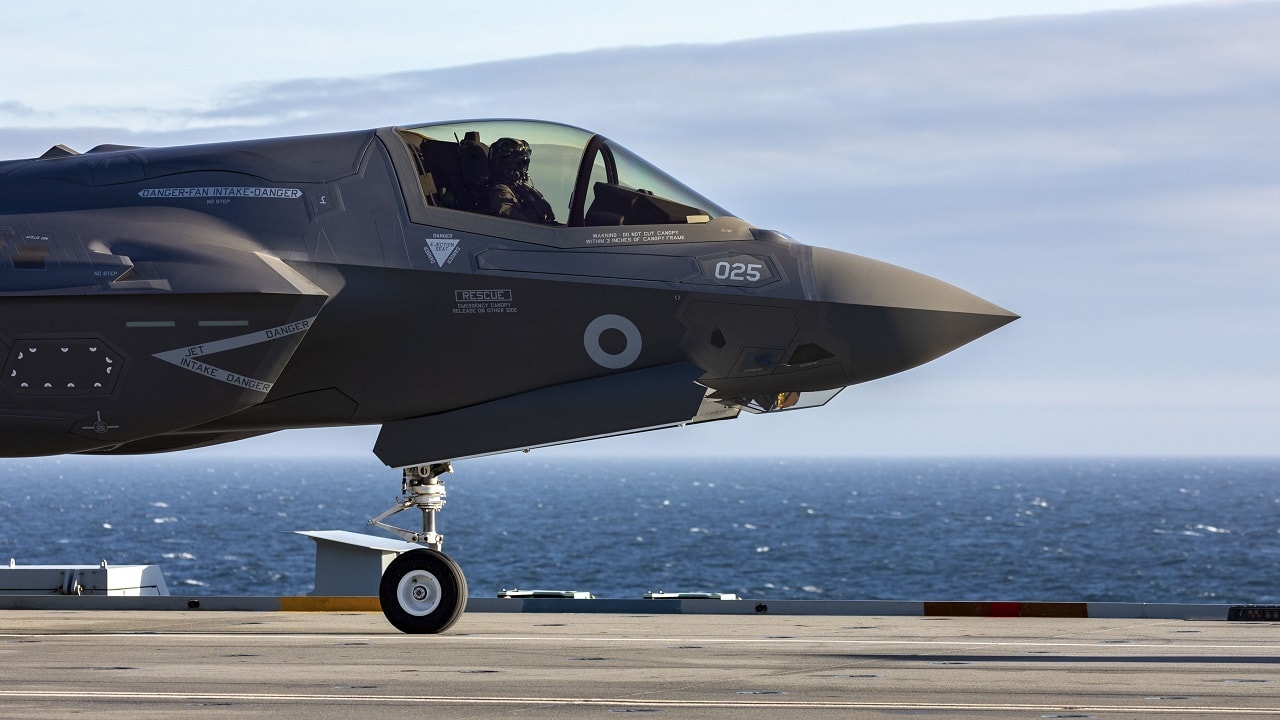
Image Credit: Royal Navy.
I don’t want to come off as criticizing the British people. This is a brave society of men and women that can more than hold its own. There just needs to be a strategic boost to the Navy and a government that makes the defense of the nation a priority. This land can return to martial greatness; it will just take more time, money, resources, manpower, and a belief that Britain can be great again. This is all possible but will require a stiff upper lip and the ability to “Keep Calm and Carry On.”
MORE – Russia Has Built 30 Su-57 Stealth Fighters: The F-35 is 1,300 Strong and Adding More by the Day
MORE – The U.S. Navy’s New $15,000,000,000 Columbia-Class Nuclear Submarine Is Way Behind Schedule
About the Author: Brent M. Eastwood
Author of now over 3,000 articles on defense issues, Brent M. Eastwood, PhD, is the author of Don’t Turn Your Back On the World: A Conservative Foreign Policy and Humans, Machines, and Data: Future Trends in Warfare, plus two other books. Brent was the founder and CEO of a tech firm that predicted world events using artificial intelligence. He served as a legislative fellow for US Senator Tim Scott and advised the senator on defense and foreign policy issues. He has taught at American University, George Washington University, and George Mason University. Brent is a former US Army Infantry officer. He can be followed on X @BMEastwood.