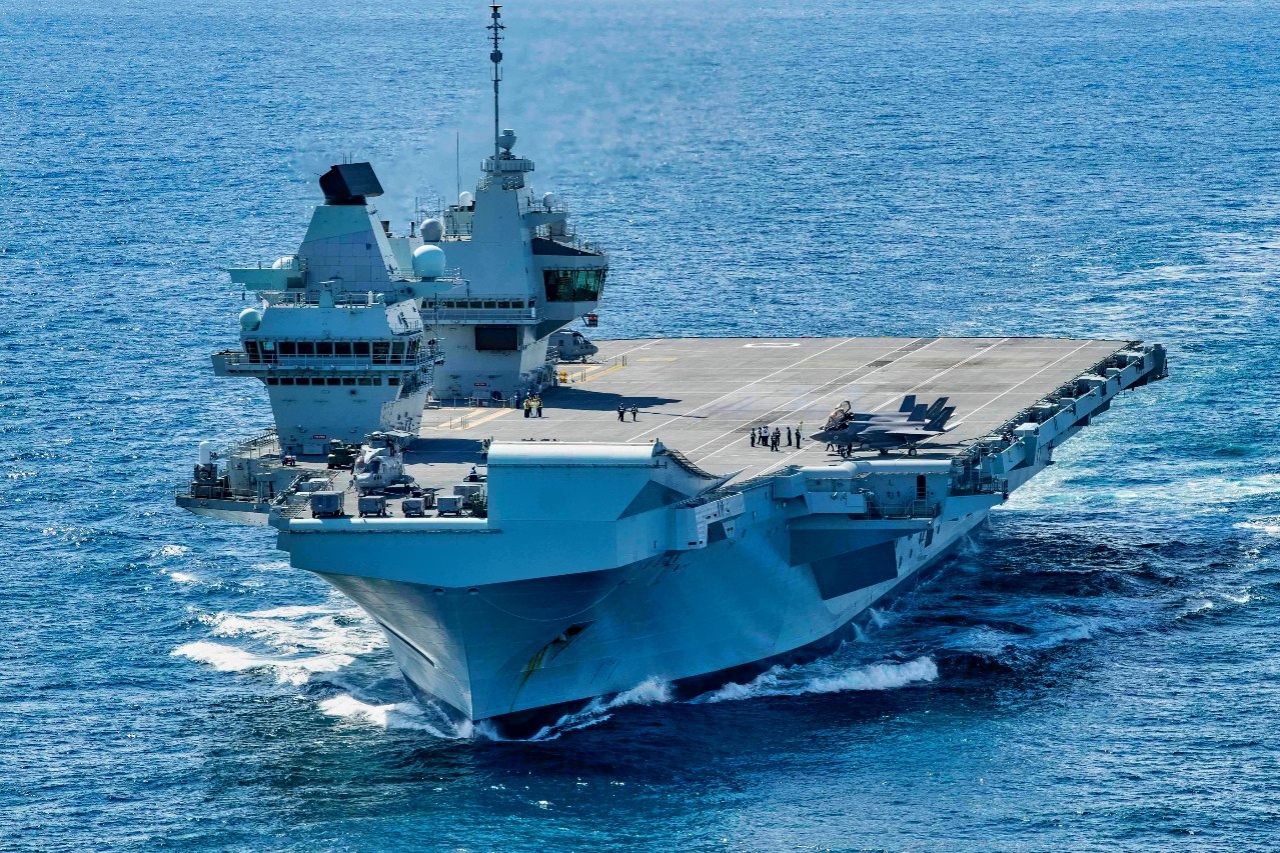
Summary and Key Points: The Royal Navy’s aircraft carrier program has become a cautionary tale of strategic overreach.
-Originally budgeted at £2 billion, the Queen Elizabeth-class costs have doubled, draining funds from vital submarine and hypersonic programs.
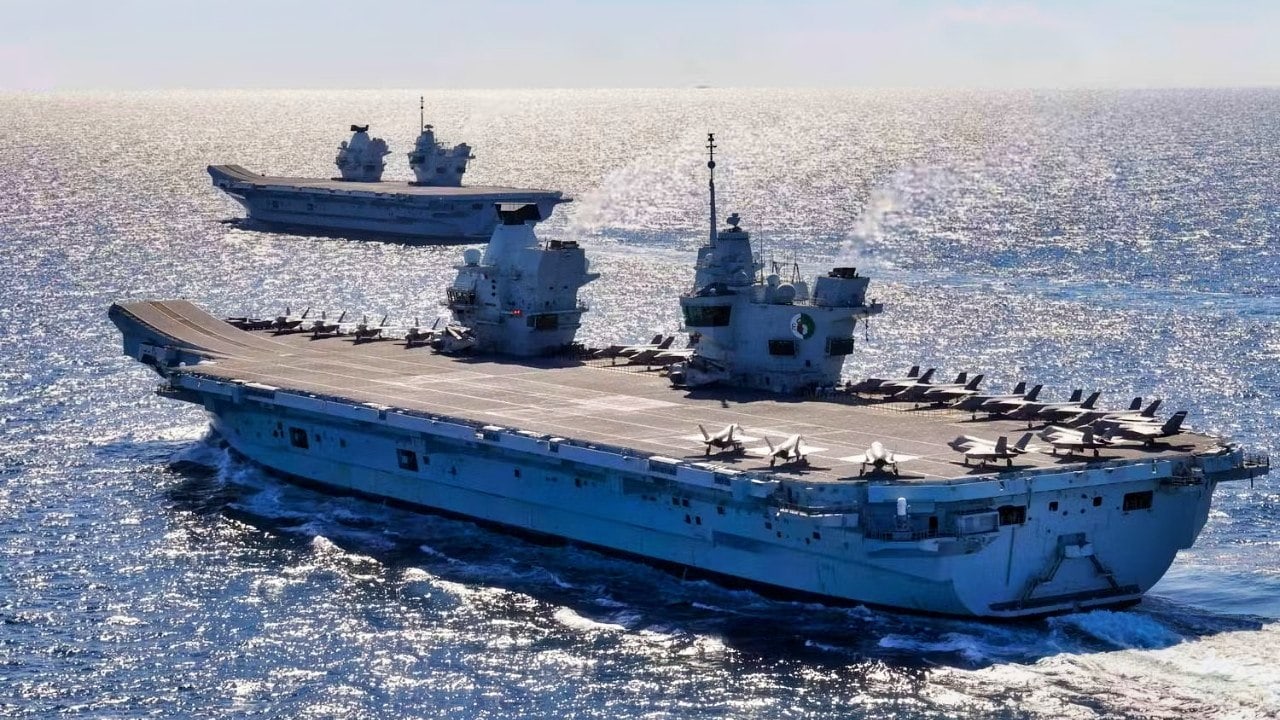
Queen Elizabeth-Class. Image Credit: Royal Navy.
-Persistent technical issues—most notably recurring propeller shaft coupling failures—have frequently sidelined the vessels.
-Compounding these mechanical woes is a severe personnel shortage; the Royal Navy currently struggles to staff these 65,000-ton ships while lacking enough F-35B Lightning IIs to fill their flight decks.
-In an American-led alliance, these carriers increasingly appear as redundant “sentimental” projects rather than modern warfighting necessities.
The “Prestige” Trap: Britain’s Queen Elizabeth-Class Aircraft Carrier Mistake
Britain once ruled the waves. For centuries, the British Royal Navy was the greatest naval force. An extension of the British government’s will, no place on Earth did not feel the power and might of the British Royal Navy.
When Britain Ruled the Waves
But those days are long over.
With its empire gone, the British cannot even rely on their navy remaining a competent mid-sized navy. That’s because the ambitions of British policymakers far outstrip the Royal Navy’s capabilities.
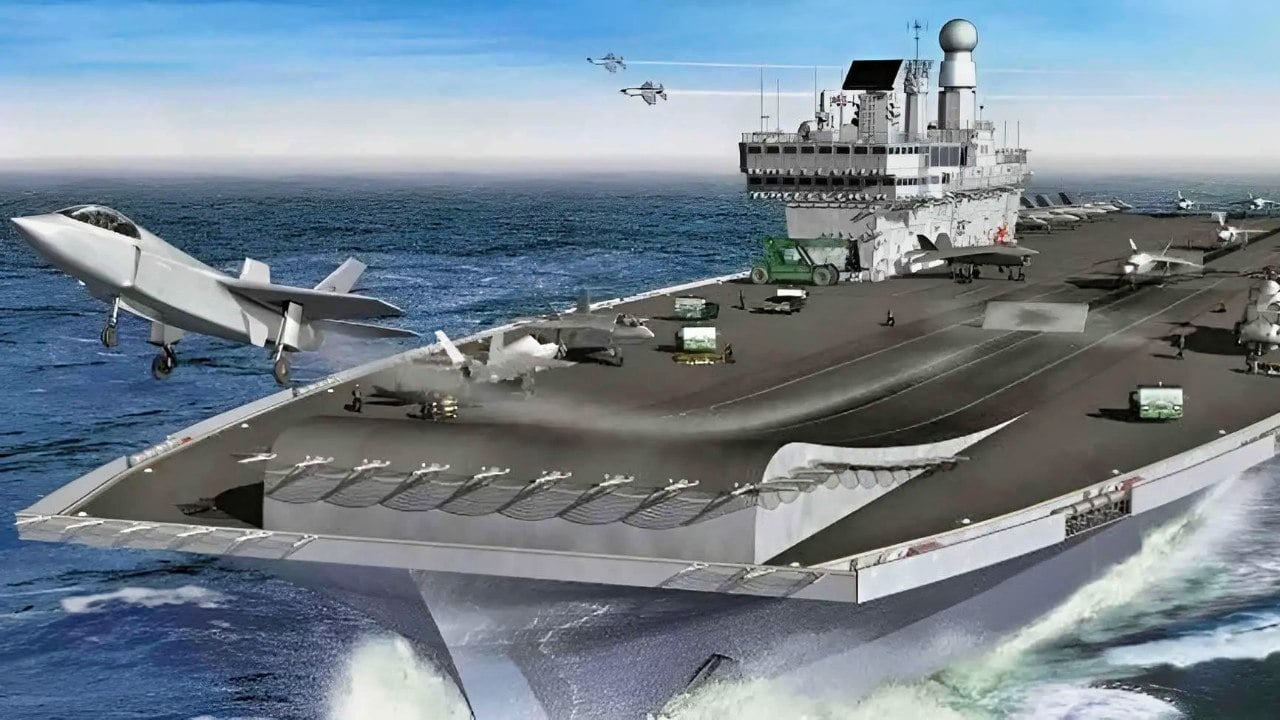
Queen Elizabeth-Class Aircraft Carrier Artist Rendering.
This has never been more evident than in the development of the Royal Navy’s two aircraft carriers, the HMS Queen Elizabeth and the HMS Prince of Wales. To build these monstrosities, the Royal Navy, with its finite budget, had to mothball other ships.
Queen Elizabeth-Class Aircraft Carriers: Prestige Projects on a Shrinking Budget
Originally, the carriers were supposed to cost £2 billion. As with far too many Western military projects, the cost doubled, and the time to build these ships was longer than anticipated (adding to the cost as well).
Because the British government would not increase the budget of the Royal Navy to fund both the construction of these carriers and other, frankly, more important programs, the Royal Navy had to choose what they would spend their limited funds on.
They chose the carriers. In other words, the Royal Navy had to divest from far more important, realistic naval capabilities to pay for a capability that was both unnecessary and, given their close relationship with the United States, redundant.
And what have they gotten for their trouble in Britain?
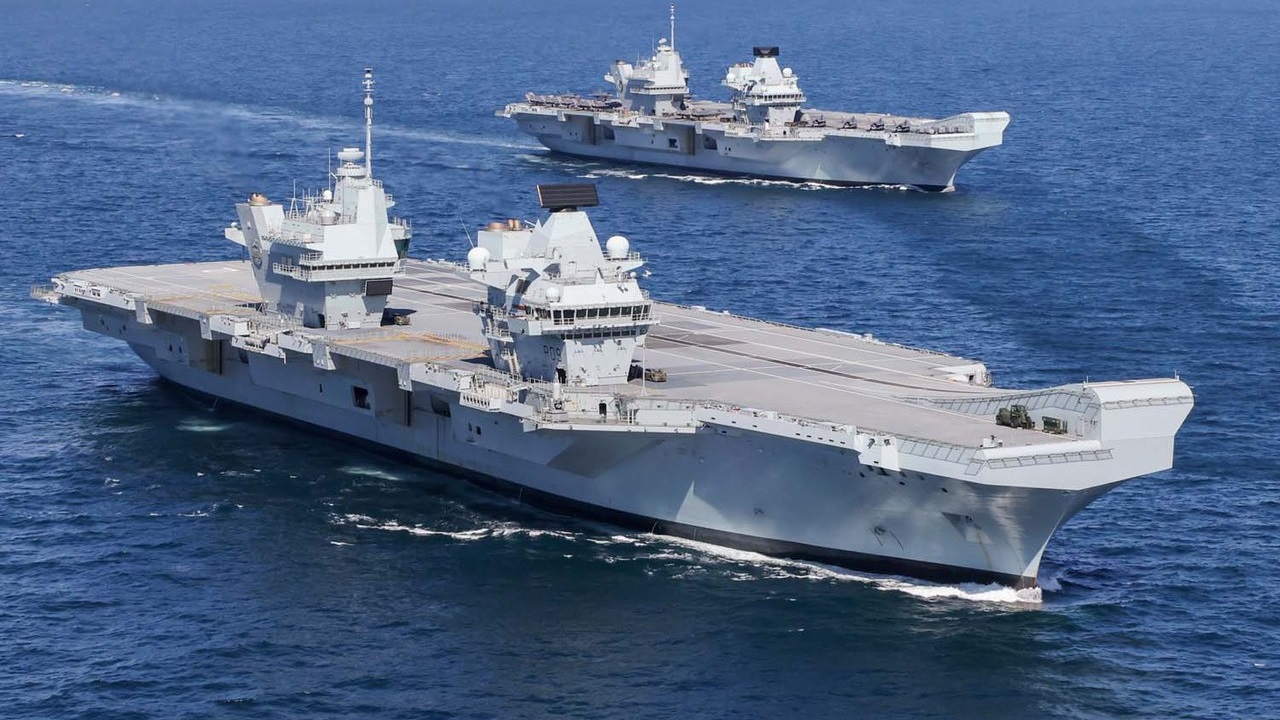
HMS Prince of Wales and HMS Queen Elizabeth pictured at sea for the first time…Wednesday 19 May 2021 saw a historic moment in Britain’s carrier renaissance as HMS Queen Elizabeth and HMS Prince of Wales met at sea for the first time. With two 65,000 tonne carriers in operational service, Britain has a continuous carrier strike capability, with one vessel always ready to respond to global events at short notice. Image: Creative Commons.
Two Carriers, Endless Problems
The Queen Elizabeth-class carriers have been drowning in one technical failure after another. And because there are only two ships available, with no future systems planned, these ghastly ships are extremely expensive to maintain—especially when one factors in all the technical glitches and complications through which these ships have suffered.
One of the biggest recurring problems these ships have struggled with has been the propeller shaft couplings. This has degraded the reliability of these relatively new ships, causing all manner of headaches and costly fixes over the handful of years they have been in service.
What’s more, the two ships are expensive to operate. Oh, and there aren’t enough warplanes to fully complement the carrier’s airwing requirements.
There’s an even more basic problem afflicting the Royal Navy currently. They are unable to meet their recruitment goals. This has had direct, negative consequences for the two carriers that Britain went to great lengths to build.
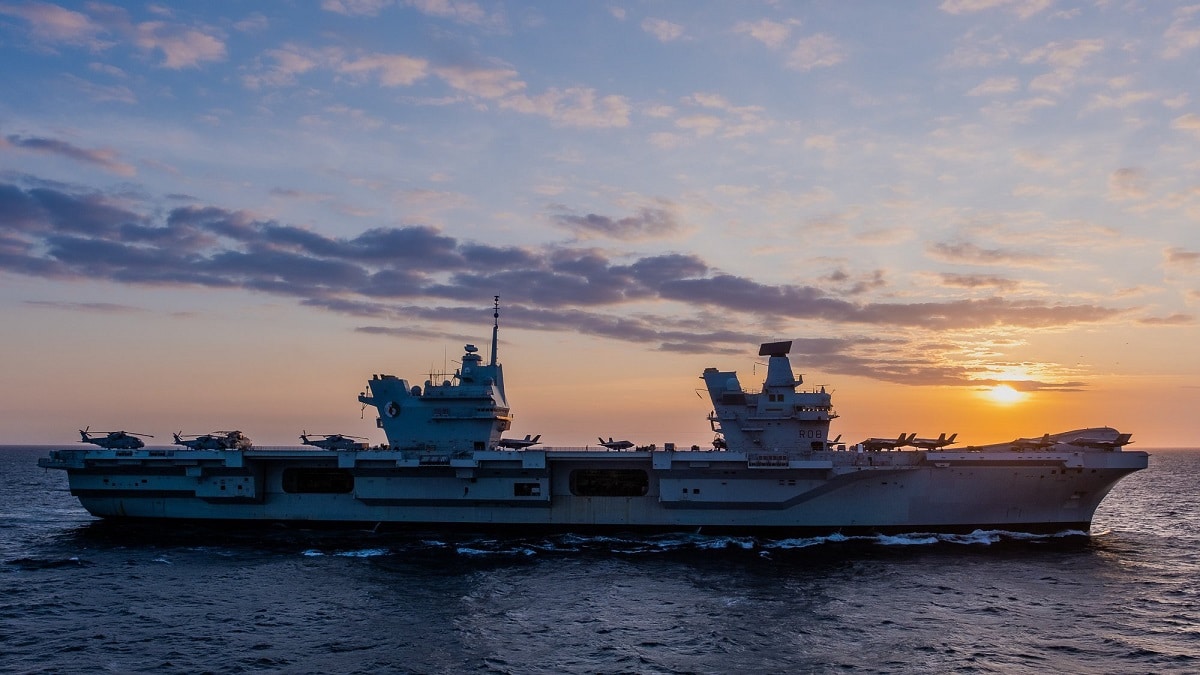
HMS Queen Elizabeth. Image: Creative Commons.
Basically, the Royal Navy has difficulty staffing the two massive ships due to overall personnel shortages.
In all probability, these carriers will never provide a return on investment for the British taxpayer or the Royal Navy more generally.
Of course, they confer upon the Royal Navy some key capabilities that the British had been lacking for years. Because it had declined for so long as a global power, the Royal Navy had mothballed its carriers. With these two new carriers, the British were reconstituting a long-forgotten capability.
Yet, as you’ve read, the shortages inherent within the carrier force of Great Britain are making these carriers less of a worthwhile commitment by the Royal Navy. Had the British sat back and assessed whether they wanted these ships (and thought clearly rather than sentimentally about their past imperial glory), they would have quickly determined the impracticality of building them.
Redundant Capability in an American-Led Alliance
Instead, London would have invested its limited resources into making the Royal Navy more plug-and-playable with the United States Navy, since the two powers are essentially married (at least geopolitically). Not only does America not need two more carriers augmenting its fleet, it shouldn’t be fixated on carriers anyway (but that’s another topic for another day, of course).
What America needs is more submarines. It cannot build them quickly enough.
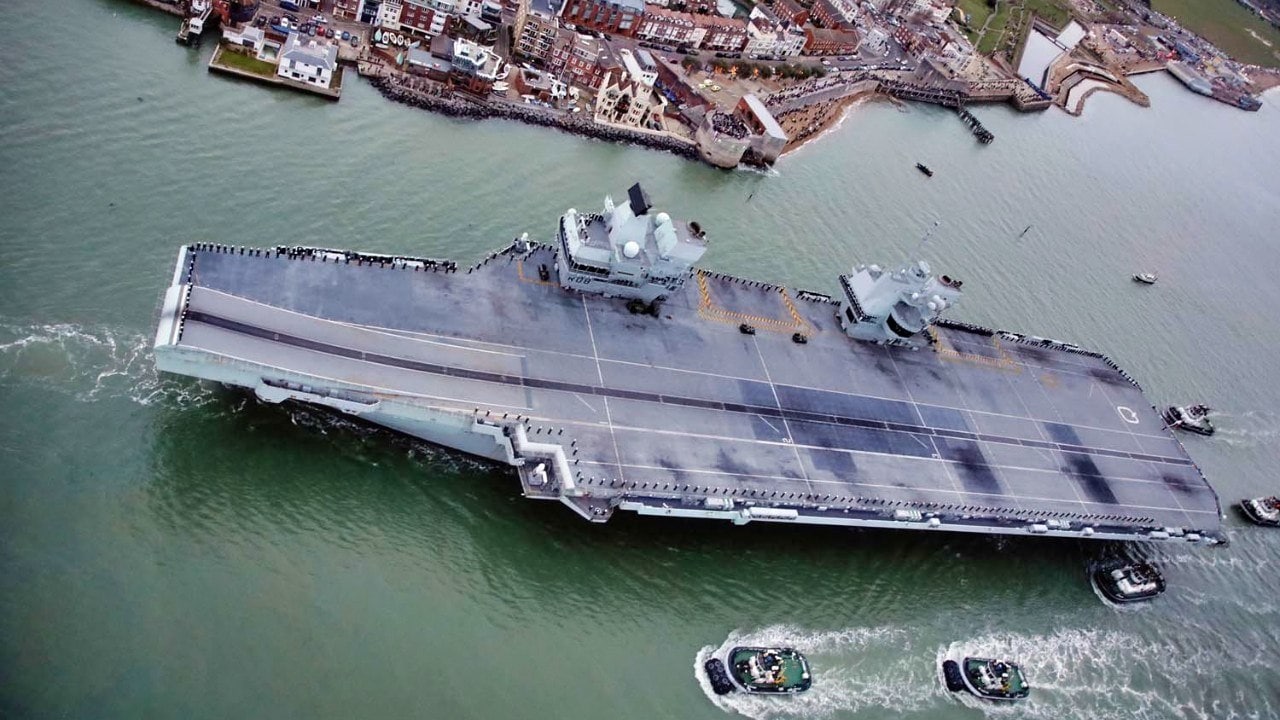
HMS Queen Elizabeth Aircraft Carrier. Image Credit: Royal Navy.
It would have been better if the British had focused on expanding their submarine capabilities. It’d also have been helpful if the British had invested in hypersonic weapons research and development rather than blowing their budget on two carriers that will never perform as advertised. Alas, we are in an age of extremes in the West.
And an era of extreme denialism.
The British live in abject denial over the fact that their empire is gone and is never returning. The HMS Queen Elizabeth and her sister ship, the Prince of Wales, embody this new ethos. It’s all downhill from here for the Royal Navy, sadly.
About the Author: Brandon J. Weichert
Brandon J. Weichert is the Senior National Security Editor at 19FortyFive.com. He was previously the senior national security editor at The National Interest. Weichert is the host of The National Security Hour on iHeartRadio, where he discusses national security policy every Wednesday at 8pm Eastern. He hosts a companion show on Rumble entitled “National Security Talk.” Weichert consults regularly with various government institutions and private organizations on geopolitical issues. His writings have appeared in numerous publications, among them Popular Mechanics, National Review, MSN, and The American Spectator. And his books include Winning Space: How America Remains a Superpower, Biohacked: China’s Race to Control Life, and The Shadow War: Iran’s Quest for Supremacy. Weichert’s newest book, A Disaster of Our Own Making: How the West Lost Ukraine, is available for purchase wherever books are sold. He can be followed via Twitter/X @WeTheBrandon.