
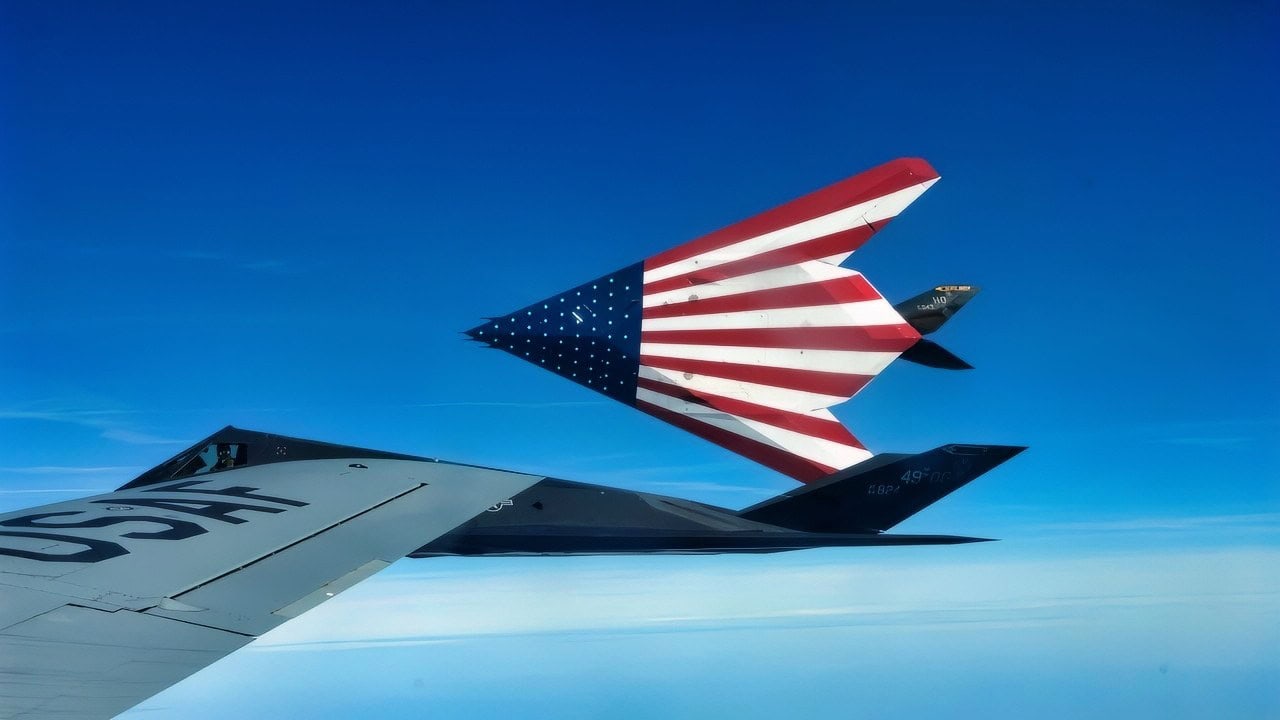
Summary and Key Points: On October 18, 2002, Austrian air-surveillance controllers flagged a flight plan for a U.S. KC-10 tanker, callsign Cacti 31, crossing neutral Austria from Spangdahlem, Germany, noting additional aircraft registrations and two short-notice changes. Two Austrian Air Force Saab 35 Draken interceptors scrambled from Zeltweg and identified two F-117 Nighthawk stealth jets flying in close formation beneath the tanker, photographing the formation during its ten minutes in Austrian airspace. Austria’s National Security Council reviewed the photographs on October 24, and Vienna lodged a diplomatic protest. The Drakens, a 1955 Swedish design and Austria’s first true interceptors, retired in 2005 and were replaced by Eurofighter Typhoons.
Introduction: F-117 Stealth Got Caught
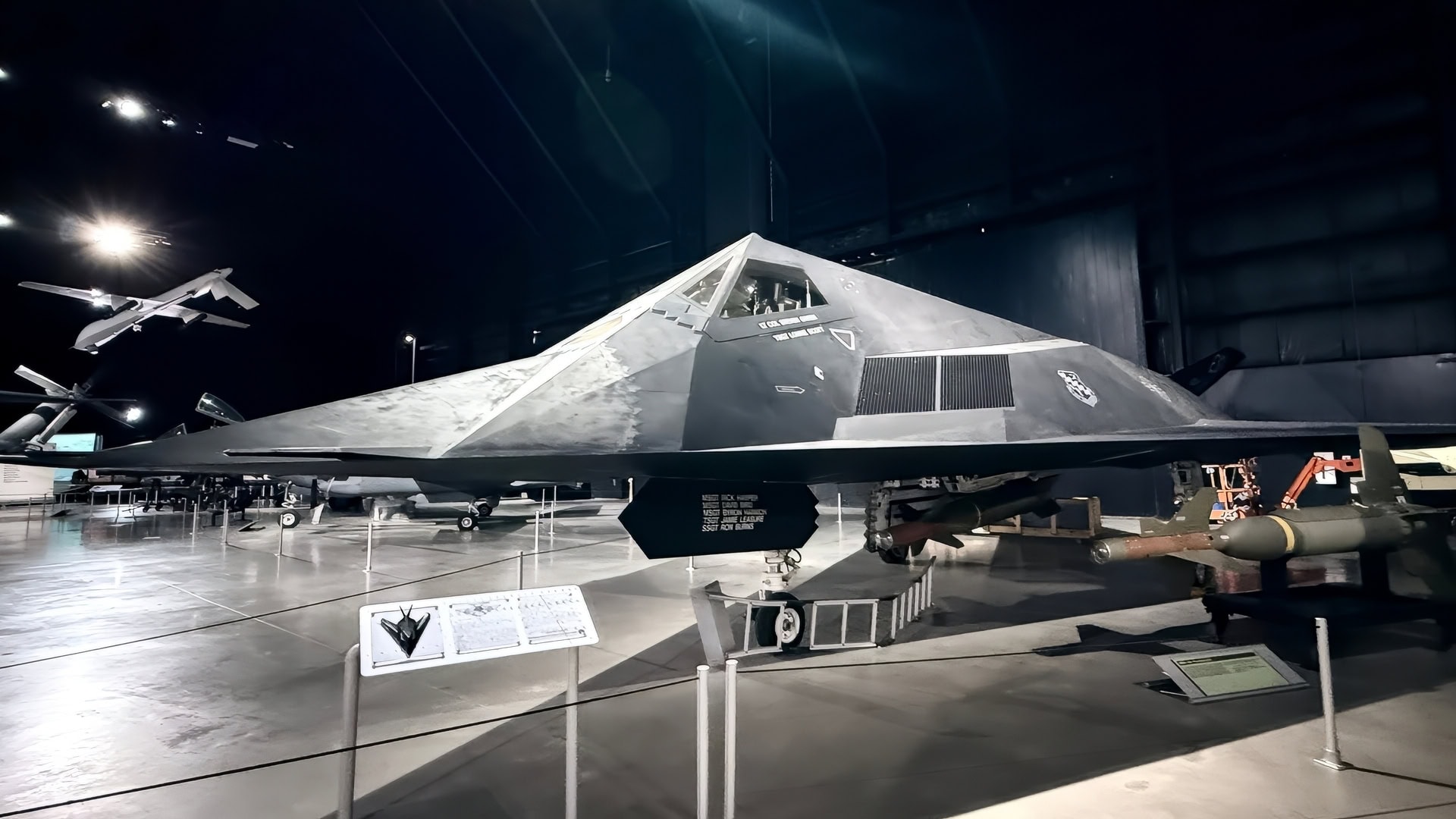
F-117A Nighthawk 19FortyFive.com Image. Taken on July 2025 at the National Museum of the U.S. Air Force by Harry J. Kazianis.
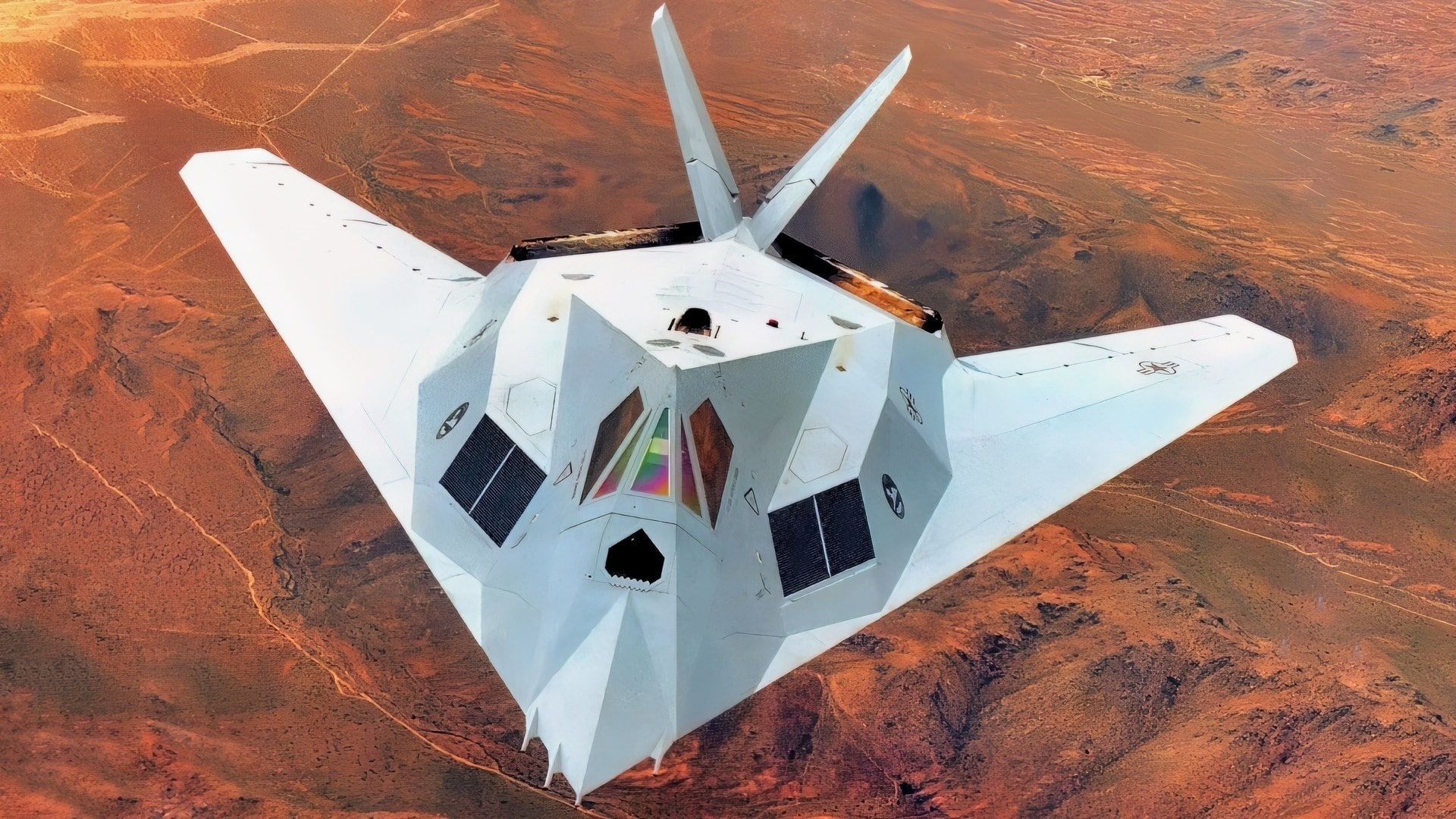
F-117 Nighthawk in White Config. Image Credit: Creative Commons.
On October 18, 2002, the flight plan said one American tanker would cross neutral Austria. The radar picture said something about the paperwork was wrong, and two Austrian Air Force Drakens scrambled to look for themselves. What they found flying tight beneath the tanker’s wings were two F-117 Nighthawks — the most famous stealth aircraft on Earth, of which only 36 operational examples existed — transiting a neutral country without permission. The interceptor that caught them was a Swedish design from 1955, three years from retirement, that had spent its first years in Austria legally forbidden to carry a single missile. The photographs went straight to the U.S. Embassy.
The afternoon unfolded like a procedural. The flight plan filed for the transit listed a “DC-10,” callsign Cacti 31, routing from Spangdahlem in Germany across Austrian airspace — but Austrian controllers noticed the registration belonged to a KC-10 tanker, that the paperwork carried more registrations than the single aircraft it declared, and that the plan had been changed twice on short notice, according to the Austrian military aviation journal Airpower. at, which reconstructed the intercept minute by minute. The decision came down to identifying the contact visually.
Shortly before 3:00 p.m., Austria’s Goldhaube air-surveillance network picked up the aircraft near Kaiserslautern; two Drakens took off from Zeltweg on an Alpha Scramble. The American formation entered Austrian airspace at 15:03 and promptly left its filed track. At 15:06, the Drakens met it on a reciprocal heading and saw what the flight plan had not mentioned.
Two Austrian pilots photographing a tanker over the Alps became a story worth telling twenty-four years later because of the airplane they were flying and the strange legal condition it lived under.
A Neutral Country’s Interceptor, Banned From Carrying Missiles
The 1955 State Treaty that restored Austria’s sovereignty and committed it to permanent neutrality came with a weapons clause: Austria’s armed forces were forbidden to operate guided missiles of any kind, air-to-air or surface-to-air. For three decades, the country’s airspace was policed first by secondhand Saab Tunnans bought from Sweden in the early 1960s, then by subsonic Saab 105 jet trainers pressed into the interception role, which meant that for most of the Cold War, one of Europe’s most transited neutral corridors had no aircraft that could genuinely contest a violation.
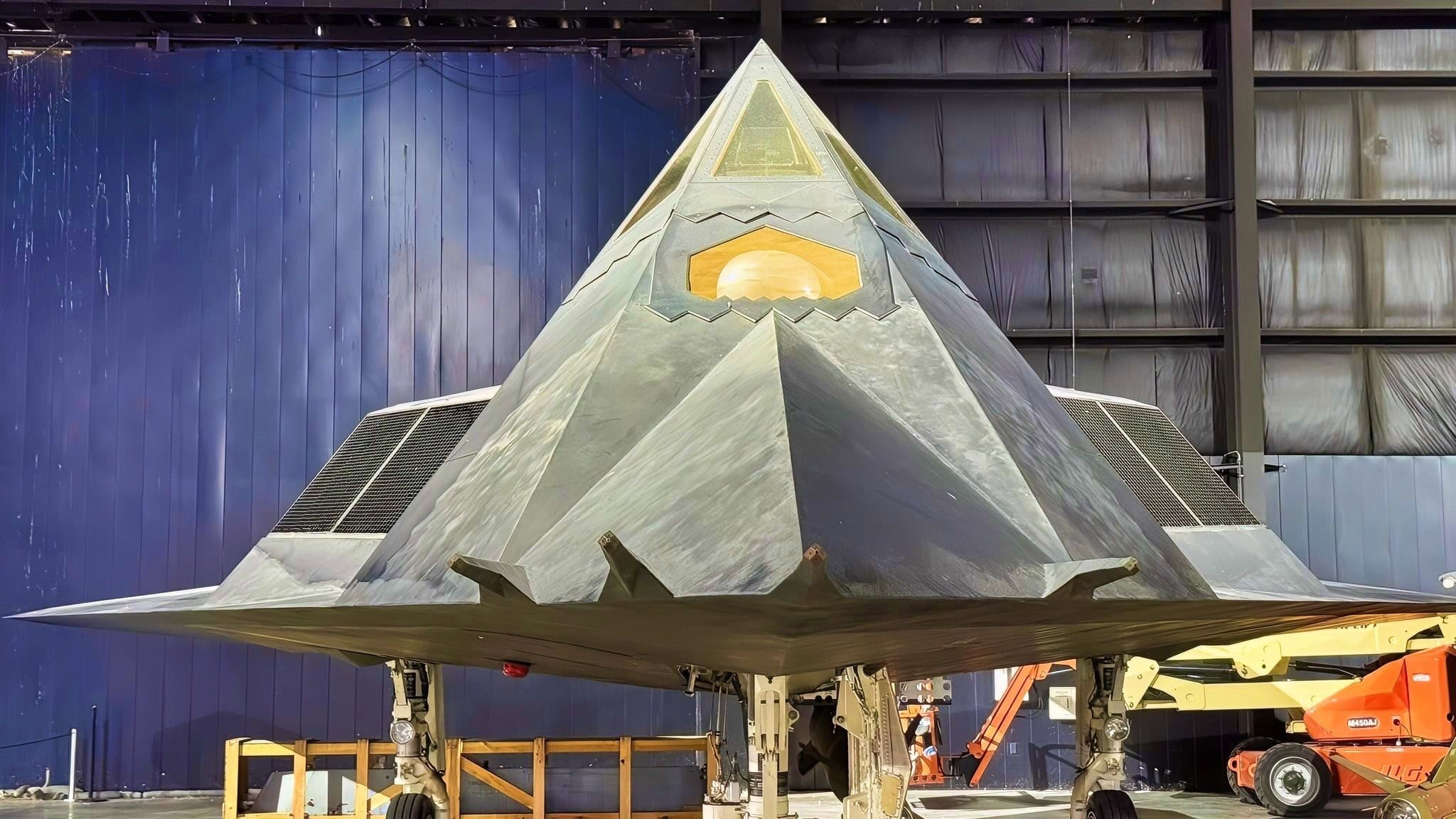
F-117 Nighthawk Stealth Fighter Harry Kazianis Photo from the U.S. Air Force Museum back in July of 2025.
The answer, ordered in the mid-1980s, was 24 refurbished Saab 35 Drakens, ex-Swedish jets, which arrived in the late 1980s as the first real interceptor Austria had ever owned.
The airframe was already a legend of restraint-driven engineering. Built around the radical double-delta wing Saab proved on a subscale demonstrator that flew roughly a thousand test flights, the Draken gave 1950s Sweden a Mach 2 interceptor that could operate from stretches of highway, and it stayed viable so long that it served somewhere until 2005, fifty years after the type’s first flight, with Austria as the final operator. But the Austrian jets flew under a condition no other Draken ever faced: in accordance with the treaty, they were armed with their 30mm cannons and nothing else.
Austria had bought a supersonic interceptor and was required by international law to operate it like a 1940s gunfighter.
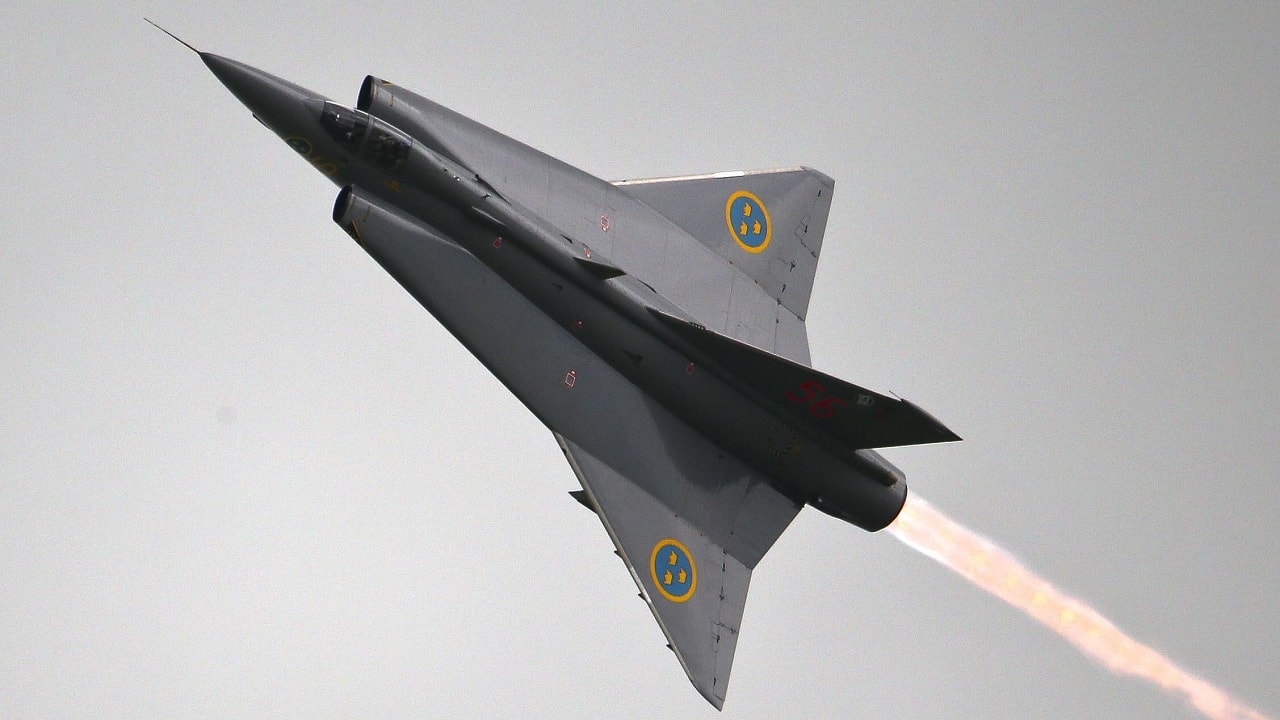
Saab 35 Draken. Image Credit: Creative Commons.
1991: A War Arrives at the Border, and the Gunfighters Scramble
The arrangement met reality in the summer of 1991.
When Slovenia declared independence on June 25 and the Yugoslav People’s Army moved to seize the border crossings, the Ten-Day War was fought, in places, directly against the Austrian frontier: Yugoslav aircraft struck a JNA column at Strihovec, on the border itself, killing four truck drivers, and Austria’s army deployed with live ammunition, putting tanks into the streets of Styrian border towns like Bad Radkersburg, a rare sight in postwar Austria.
Overhead, armed Yugoslav aircraft crossed into Austria repeatedly, and on June 28, a MiG-21 pushed deep enough into Austrian airspace to reach Graz, a provincial capital. The Drakens scrambled to meet a shooting war, carrying nothing but their cannons.
Nothing was fired, but the summer broke the taboo. Repeated border violations by armed aircraft forced a debate about what Austria’s interceptors were actually for, and the government moved to a revised reading of the treaty’s weapons clause as a Cold War relic.
In January 1993, Austria ordered AIM-9 Sidewinders for the Drakens — the first batch bought used from Swedish Air Force stocks, secondhand missiles for the secondhand jets, followed by newer-model AIM-9s bought straight from Washington, which began arriving in 1995, and French Mistral surface-to-air missiles arriving through 1996 to break the other half of the ban.
Thirty-eight years after the State Treaty was signed, Austria’s air force was finally allowed to be one.
October 2002: Two Drakens, One Tanker, and Two Airplanes That Weren’t Supposed to Be There
Which brings the story back to that October afternoon, with a detail that closes the loop: the two Drakens that launched from Zeltweg were carrying Sidewinders — the weapons the 1991 crisis had won them.
The context was the American buildup for the coming war in Iraq. U.S. military traffic routinely crossed Austria and Switzerland when routing from Germany toward Italy and the Middle East, and clearance came more easily for unarmed tankers and transports than for combat aircraft; as The War Zone reconstructed it, the flight plan for Cacti 31 declared the tanker and omitted the two F-117A Nighthawks flying in close formation beneath its wings, where they would likely paint as a single radar target.
The Drakens turned in behind and below the formation and photographed everything. “We identified two F-117s very close below the KC-10,” Austrian aviation writer Georg Mader recounted, adding that the American formation spent exactly 10 minutes in Austrian airspace; it was reported at the time that the formation attempted a defensive maneuver as the interceptors closed in. The political detonation followed within the week.
At the request of Green parliamentarian Peter Pilz, Austria’s National Security Council convened on October 24, where Defense Minister Herbert Scheiber presented the intercept photographs, and Vienna lodged a diplomatic protest at the U.S. embassy.
The American side said the flights had been properly planned; the Austrian Defense Ministry allowed that there had been confusion and stopped short of an accusation.
Airpower.at drew the conclusion Austrians cared about most: catching two of the 36 operational stealth jets on the planet, in a corridor of neutral airspace only minutes wide, was proof that every link in the surveillance chain — the controllers who flagged the paperwork, the Goldhaube radars, the alert crews at Zeltweg, and a 1950s airframe with the legs to run down a tanker — worked exactly as designed. The stealth aircraft’s whole reason for existing is not being seen.
Two elderly Swedish fighters saw them, photographed them, and put the pictures before a security council.
The Legacy: Same Mountains, Same Mission, New Jets
The Drakens retired in 2005, replaced after a stopgap lease of Swiss F-5s by the 15 Eurofighter Typhoons that now police Austrian skies. The mission never changed, and neither, apparently, did the pattern.
This May, Austrian Typhoons flew “priority A” intercepts on consecutive days against U.S. Air Force special-operations aircraft — U-28A Draco surveillance planes — detected near the Totes Gebirge in Upper Austria, Defense News reported, in a period when Austria had closed its airspace to American activity connected to the Iran war, with Vice Chancellor Andreas Babler saying Austria wanted no part of it.
The Austrian military’s spokesman, Michael Bauer, explained the scrambles in a sentence any Draken pilot would recognize: “Some things you have to see for yourself.”
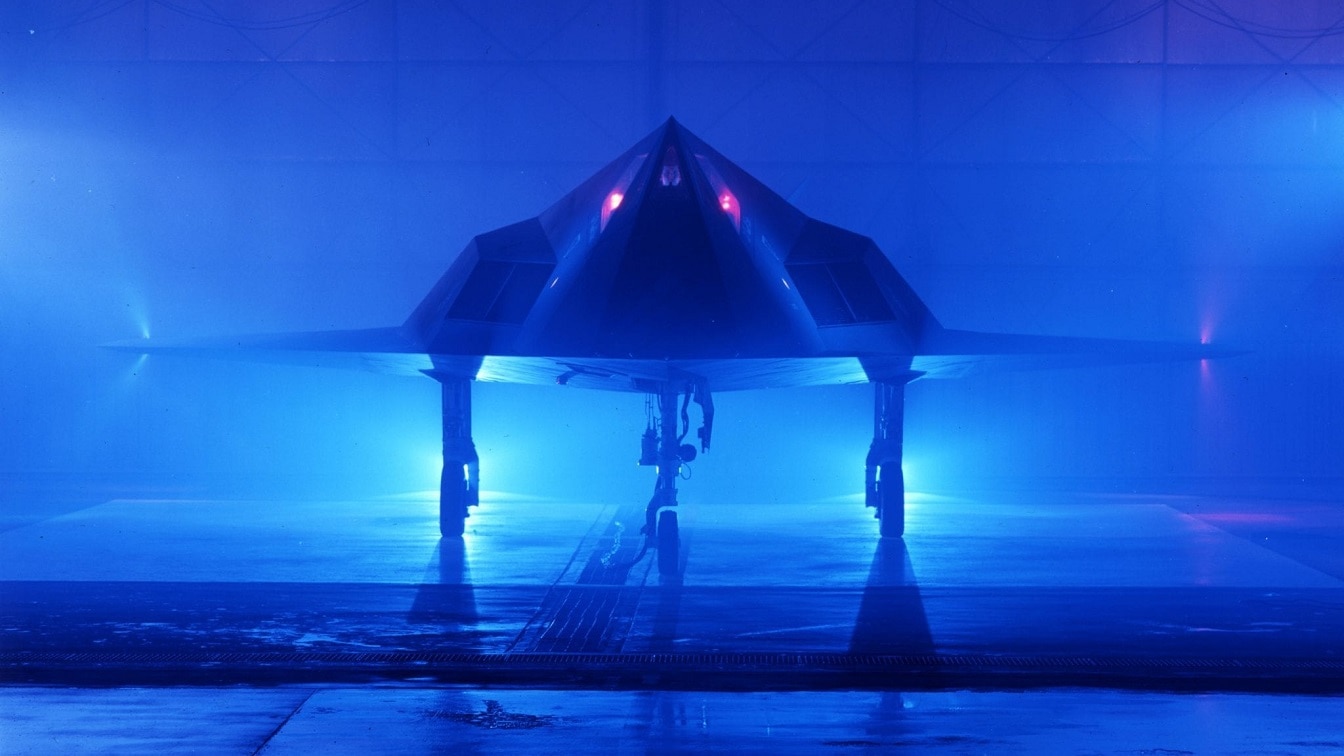
F-117. Image Credit: Lockheed Martin.
And when reporters sought the precedent that defines Austrian air policing, they turned to October 2002 — the day the Drakens caught the Nighthawks.
It is a strange resume for any aircraft: bought under a missile ban, flown as Europe’s last legally mandated gunfighter, blooded against a war that came to the border uninvited, armed at last with another country’s used Sidewinders, and sent into retirement having photographed the unphotographable.
The surviving Austrian Drakens are museum pieces now, several of them parked at the bases they once scrambled from.
The mission outlived them: this spring, over the same ridgelines, Austrian pilots were once again photographing American aircraft that were not supposed to be there.
About the Author: Harry J. Kazianis
Harry J. Kazianis (@Grecianformula) was the former Senior Director of National Security Affairs at the Center for the National Interest (CFTNI), a foreign policy think tank founded by Richard Nixon based in Washington, DC. Harry has over a decade of experience in think tanks and national security publishing. His ideas have been published in the NY Times, The Washington Post, The Wall Street Journal, CNN, and many other outlets worldwide. He has held positions at CSIS, the Heritage Foundation, the University of Nottingham, and several other institutions related to national security research and studies. He is the former Executive Editor of the National Interest and the Diplomat. He holds a Master’s degree focusing on international affairs from Harvard University.