
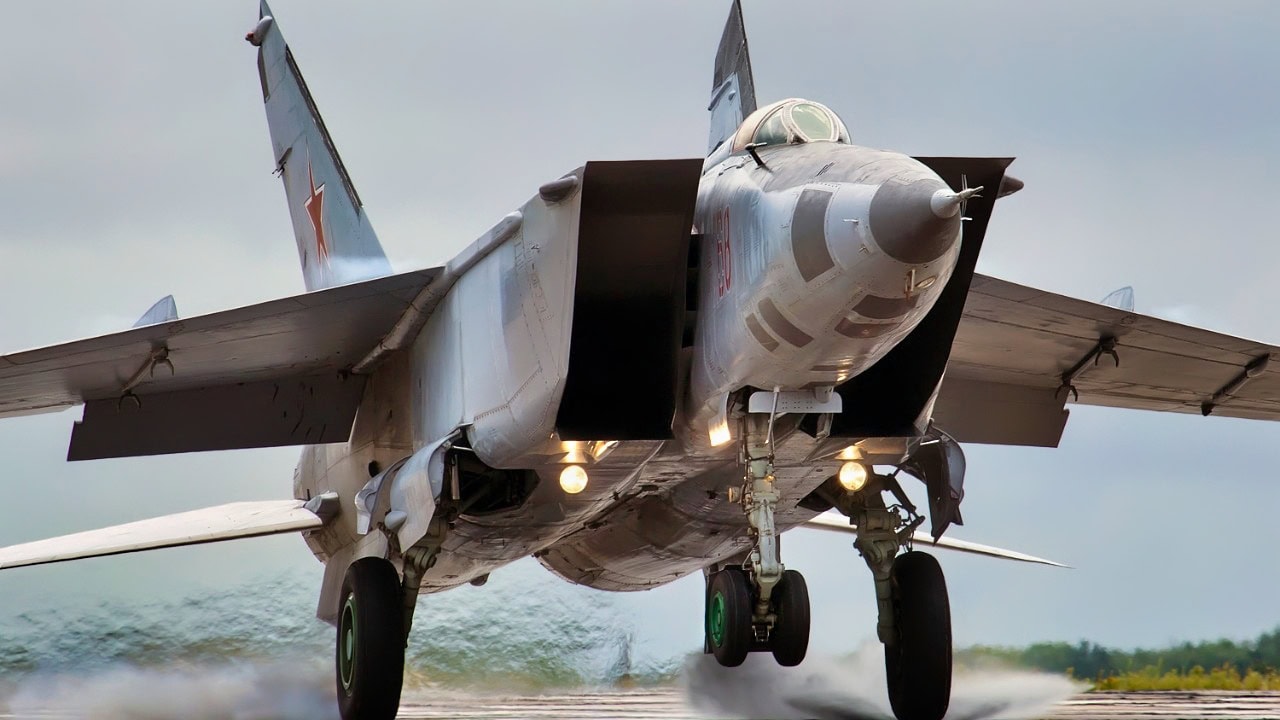
On August 31st, 1977, a Soviet MiG-25 Foxbat made history after it climbed to a record-breaking absolute altitude of 123,523 feet (37,650 meters).
The pilot, Alexandr Vasilievich Fedotov, was a highly esteemed test pilot who had already broken several aviation records.
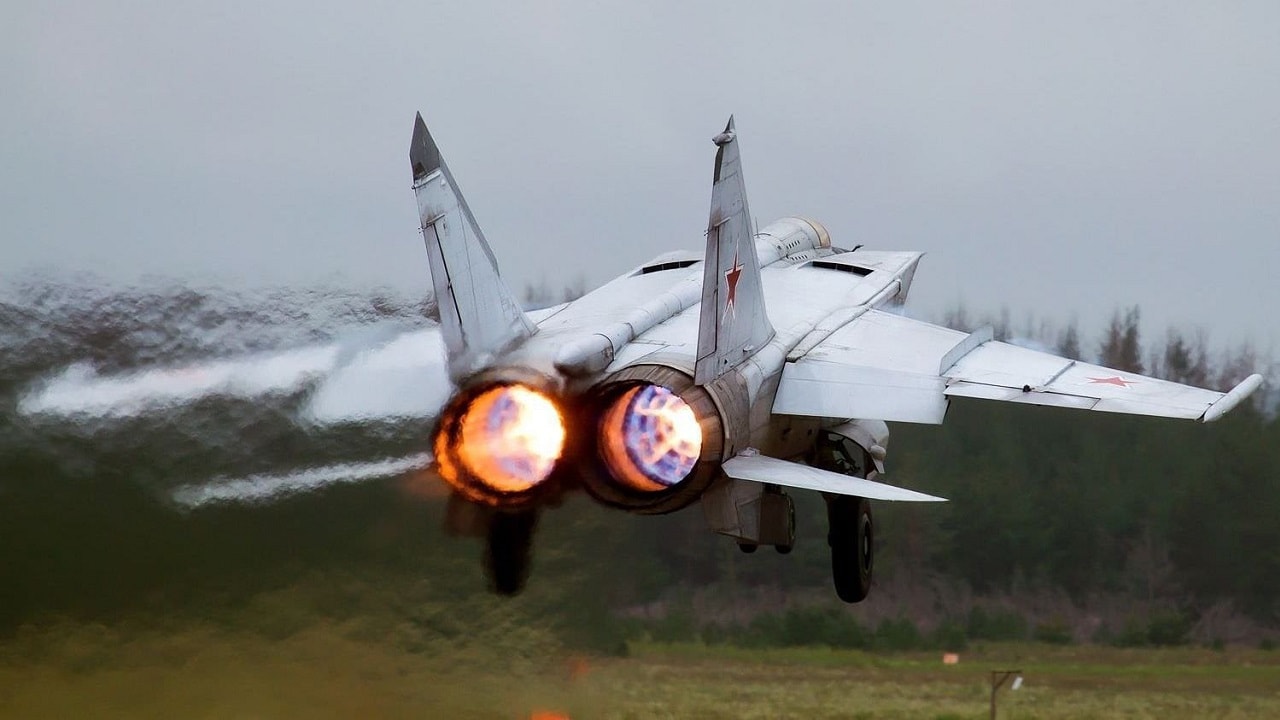
MiG-25. Image Credit: Creative Commons.
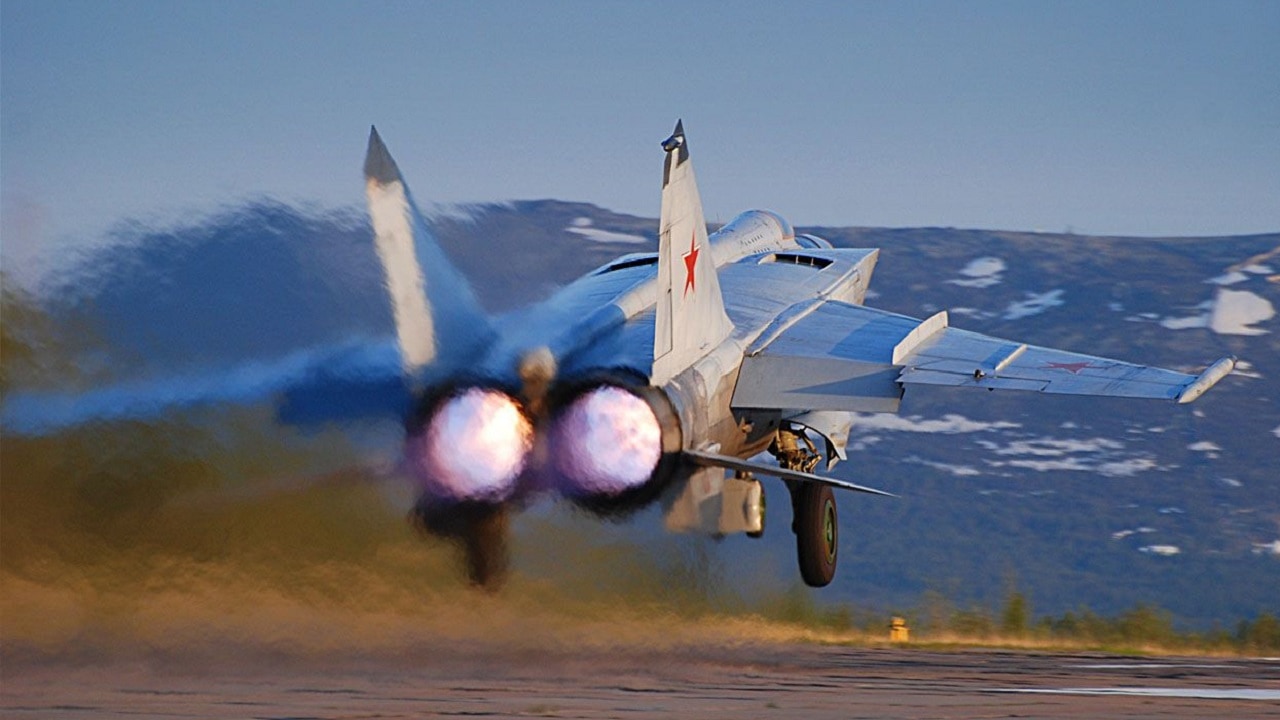
MiG-25. Image Credit: Creative Commons.
He flew in a modified MiG-25RB designated Ye-266M. The MiG-25 Foxbat was no stranger to setting records.
During its tenure, the aircraft set a total of 29 records, several of which still stand today.
Originally designed to intercept high-speed targets, the Mikoyan Design Bureau saw the potential of the MiG-25’s airframe and used it to set several records.
Achieving the Highest Absolute Altitude
The aircraft that Fedetov flew, Ye-266M, was not a typical MiG-25.
It was a modified version of the MiG-25RB variant, which was designed as a reconnaissance/light bomber aircraft.
The aircraft was fitted with two R-15BF2-300 engines, replacing the typical R-15B-300s.
These new engines added an extra compression stage to operate at higher altitudes, increasing fuel consumption.
At this point, the platform had already demonstrated its speed potential, but the designers wanted to go higher, literally.
The tests were conducted to validate the new engines in hopes of equipping newer production MiG-25s with the engines.
However, these hopes were later dashed with the introduction of the more capable MiG-31 Foxhound.

MiG-31 Fighter. Image Credit: Creative Commons.

MiG-31 from Russian Air Force. Image Credit: Creative Commons.
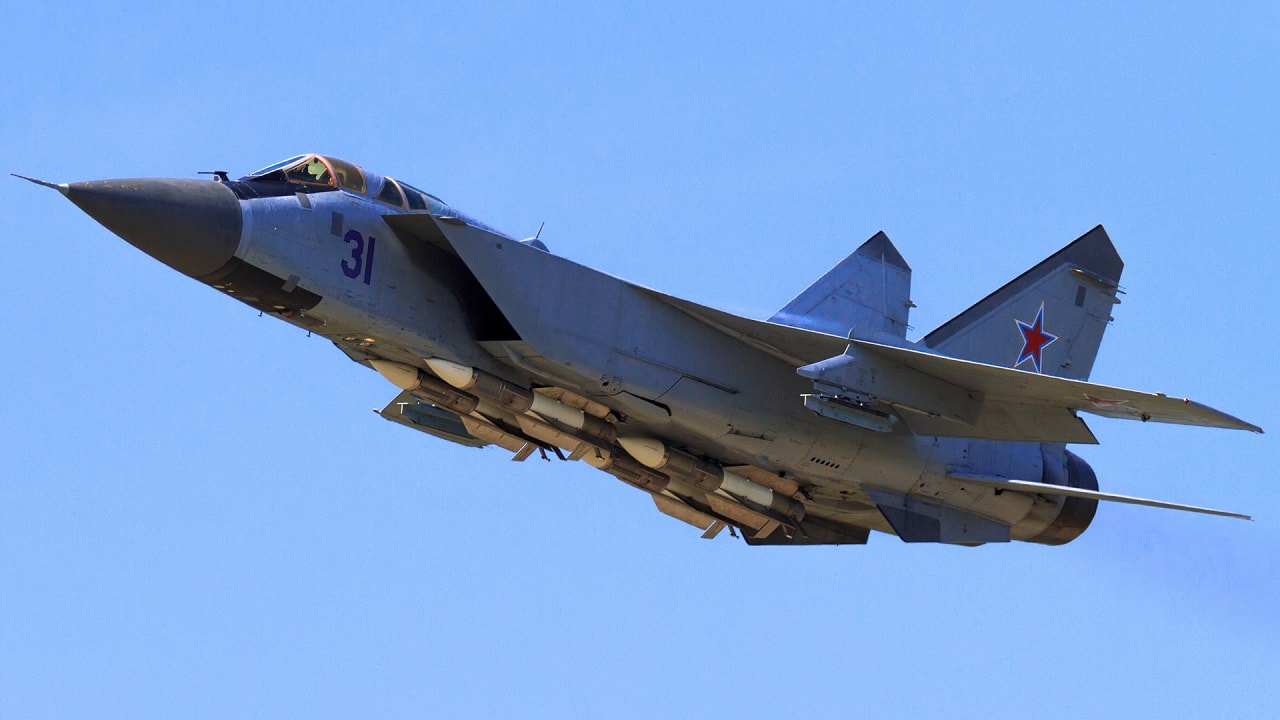
MiG-31. Image Credit: Creative Commons.
Fedetov took off in his MiG-25 on August 31 to set a record that remains uncontested to this day. At 37 kilometers above sea level, the air becomes too thin.
No conventional air-breathing aircraft can operate its engines.
To reach the upper levels of the stratosphere, Fedetov accelerated at a lower elevation, where his engines were designed to operate.
Once he reached a fast enough speed, he pulled up, letting momentum carry him to great heights.
Eventually, his engines stalled, and his aircraft peaked at 123,523 feet (37,650 meters) above the Moscow Oblast.
The aircraft then glided down to breathable air, where Fedetov regained control and returned to base without issue.
The flight had earned him the world record for the highest absolute altitude for a jet aircraft on its own power.
Alexandr Fedetov and His Storied Career
By the time Alexandr Fedetov obtained this height record, he had already earned the title of Hero of the Soviet Union.
Born in 1932 in the city of Stalingrad, Fedetov became an aviator in 1952 and became a test pilot for Mikoyan in 1958.
From then until his death in 1984, he had a long, successful career during which he set many records.
Fedetov served as a test pilot on the MiG-19, MiG-21, MiG-23, MiG-25, MiG-27, MiG-29, MiG-31, and some of their many sub-variants.
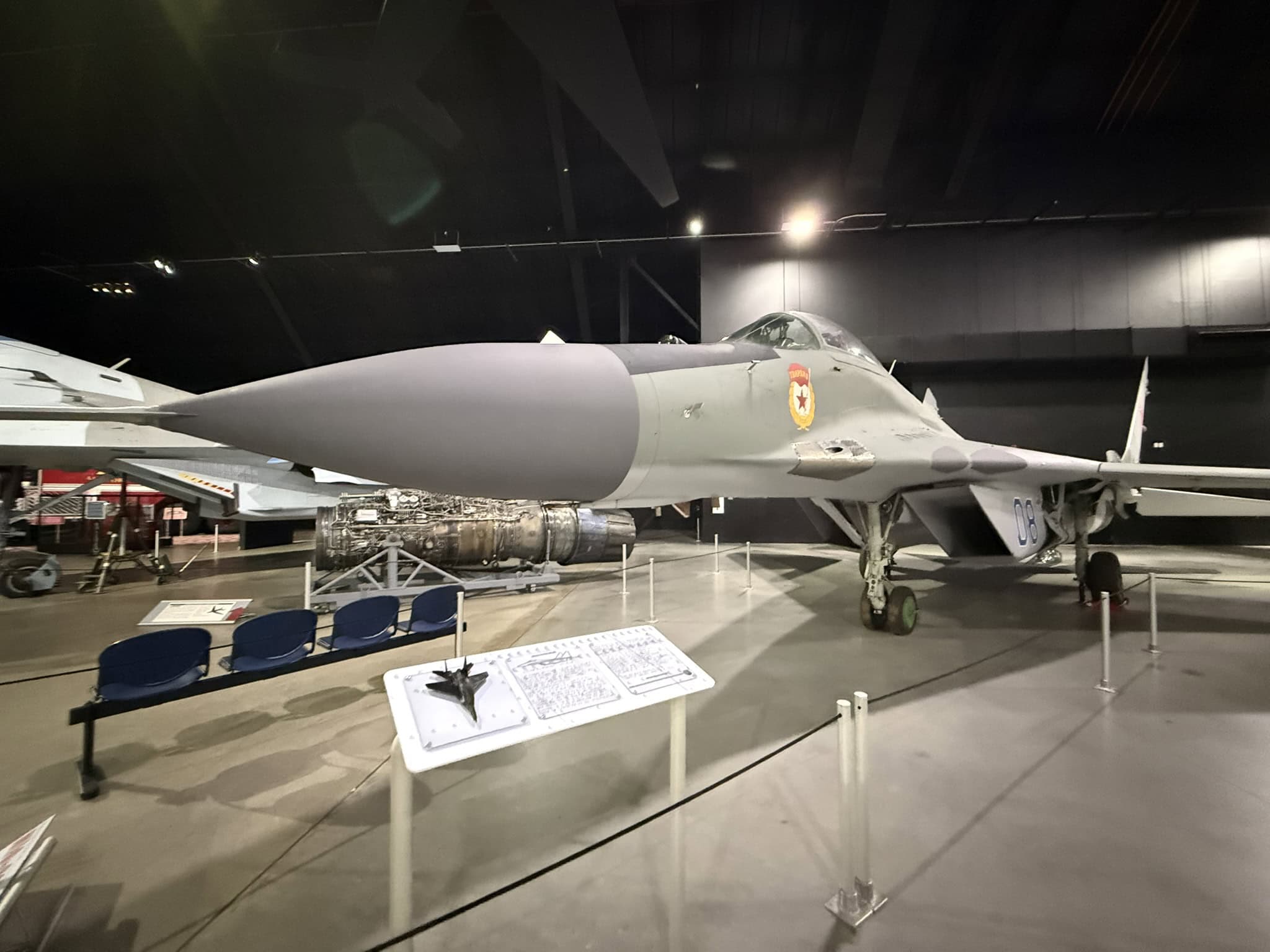
MiG-29 Fulcrum taken back in July, 2025 at the National Museum of the U.S. Air Force by Harry J. Kazianis.

Real MiG-29 at USAF Museum in Dayton. Image Credit: 19FortyFive.com
His career earned him many distinctions. On July 22, 1966, Fedotov was honored as a Hero of the Soviet Union. On February 21, 1969, he was named an Honored Test Pilot of the Soviet Union.
He was qualified as a 1st Class Military Pilot.
Fedotov was twice awarded the Order of Lenin and also held the Order of the Red Banner and the Order of the Red Banner of Labor.
Fedetov was the first person in the Soviet Union to reach Mach 3 in a manned aircraft. Before his 1977 flight, he had broken the record for the highest absolute altitude several times in the MiG-25 prototype Ye-116.
In total, Fedetov set 18 aviation world records for speed, altitude, climbing speed, load capacity, and more. Of those records, 3 remain unchallenged today. Sadly, Fedetov died during the development of the MiG-31.
During the test flight, a false alarm sounded, indicating the aircraft was low on fuel. Fedetov, deciding to return to base, made a sharp maneuver to turn around.
Unfortunately, his heavy, fuel-filled aircraft rolled over and dived into an uncontrollable fall.
Both he and his test navigator, V.S. Zaitsev, died in the crash.
The Record-Breaking MiG-25
The MiG-25 Foxbat was designed in the 1960s to address the threat from high-altitude American bombers and reconnaissance aircraft like the U-2 spy plane and SR-71 Blackbird. To do so, the aircraft had to fly at high speeds and high altitudes.
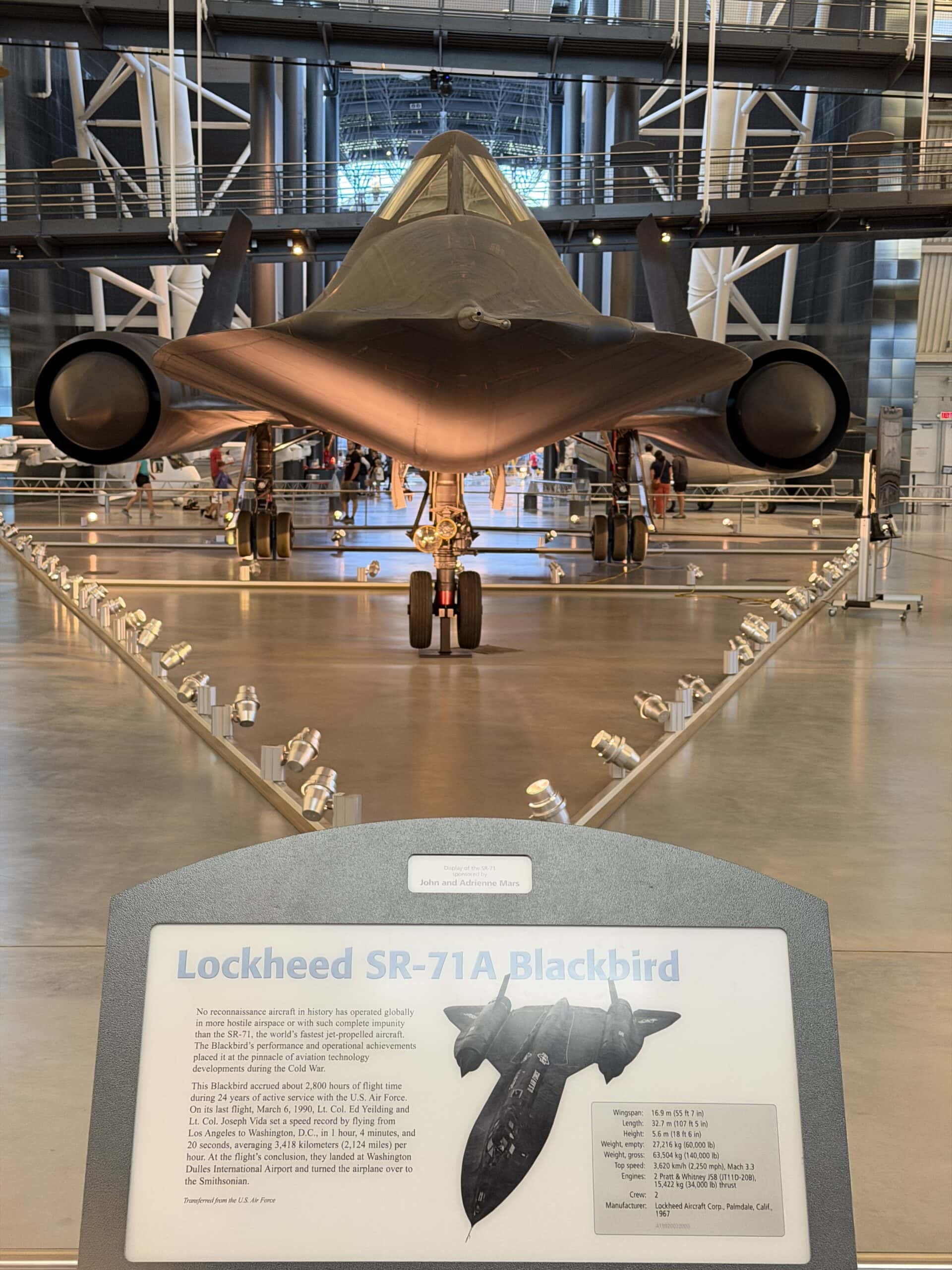
SR-71 Blackbird. Image taken at the Smithsonian on 6/30/2026 by 19FortyFive
Mikoyan considered several potential designs for the aircraft, including a variable-sweep wing configuration.
However, to maximize the aircraft’s fuel load, the designers settled on a simpler fixed-wing configuration.
The aircraft made its first flight in 1964 and made its first public appearance in 1967.
During development of the MiG-25, the designers at Mikoyan realized the raw potential of the fighter’s raw potential and saw an opportunity to set several aviation records.
Several prototypes, Ye-155-P1, Ye-155-R1, and Ye-155-R3, were modified to remove non-vital equipment and lighten their weight.
During testing, the aircraft set 29 world records, several of which Fedetov achieved. Though most of these records have since been surpassed, the record for the highest absolute altitude still belongs to Fedotov and the MiG-25.
About the Author: Isaac Seitz
Isaac Seitz, a Defense Columnist, graduated from Patrick Henry College’s Strategic Intelligence and National Security program. He has also studied Russian at Middlebury Language Schools and has worked as an intelligence Analyst in the private sector.