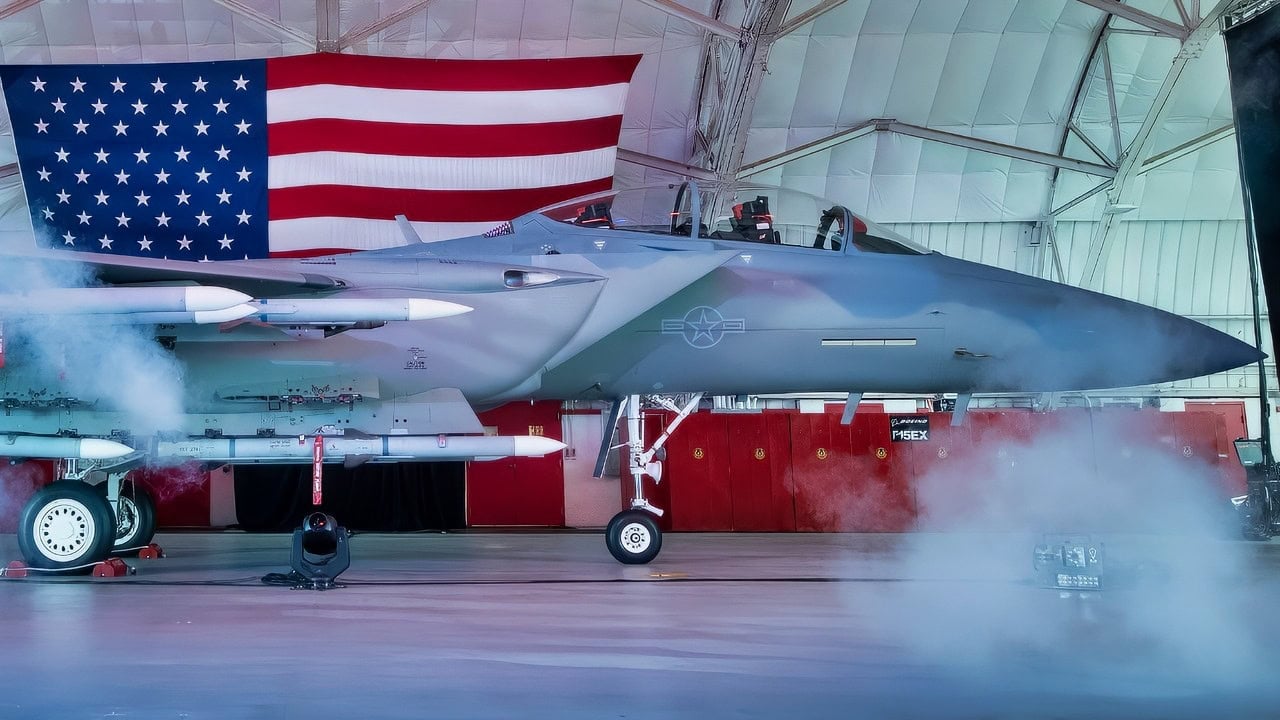
The first F-15EX Eagle II, the long-standing McDonnell Douglas-designed fighter, which will eventually deploy to Kadena Air Base in Japan, has been seen at the now-Boeing-owned production facility in St. Louis, Missouri.
The aircraft reportedly received a “ZZ” tail flash, the signature designation for Kadena, and is painted in the unit insignia of the US Air Force (USAF) 18th Fighter Wing. The first of the two units to receive these aircraft will be the 67th Fighter Squadron, with the 44th as the second unit to operate them.
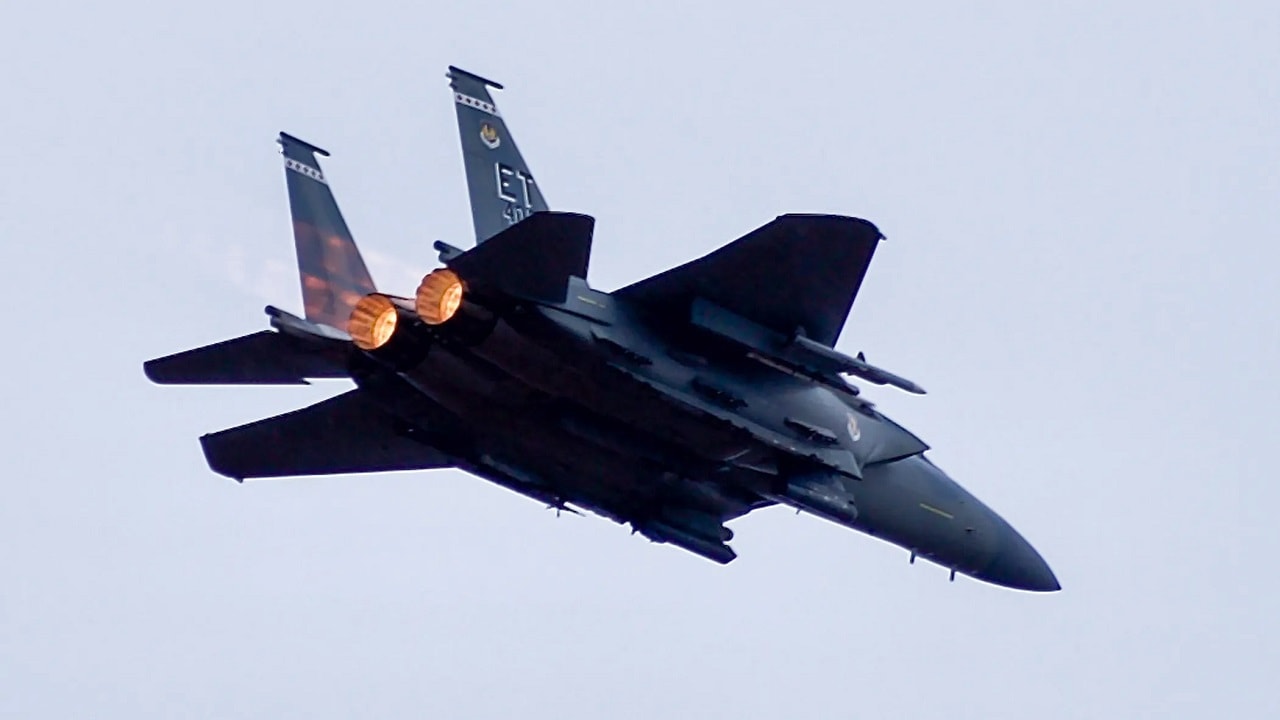
F-15EX Eagle II. Image Credit: Creative Commons.
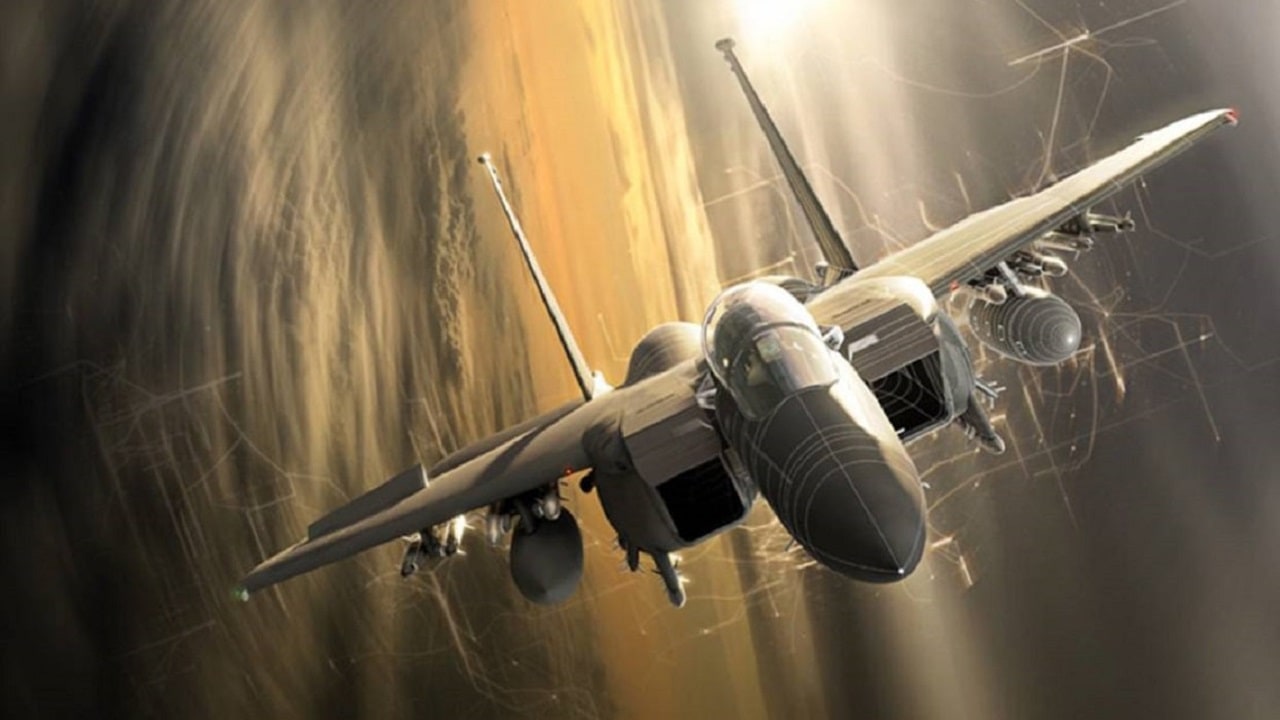
F-15EX Eagle II image provided by Boeing.
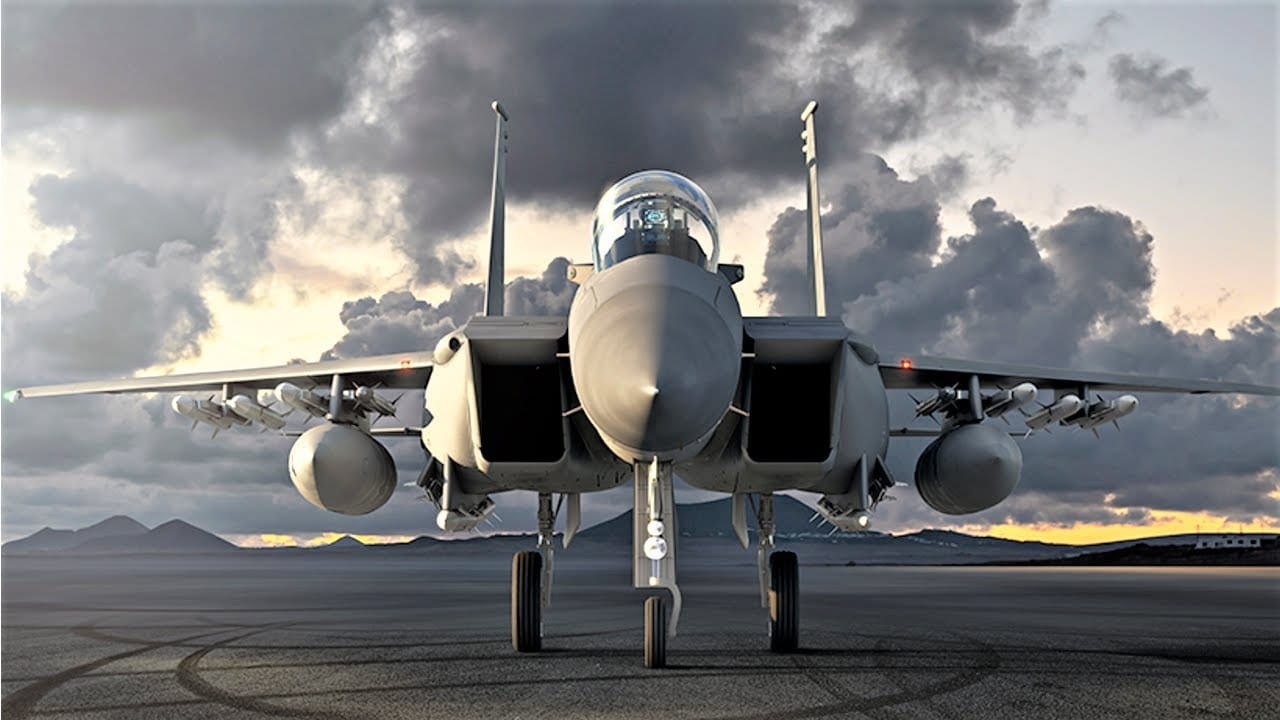
F-15EX Eagle II. Image Credit: Creative Commons.
The aircraft, tail number 22-0022, is additionally reported to have made its first validation flight from the production plant while still in factory primer. The aircraft was then painted in the livery of the 18th USAF Fighter Wing and flown again on 15 August.
This particular Eagle II aircraft is also the first of the new Lot 3 production, with deliveries now planned to begin later this year.
The plan is for a base-36 F-15EX at Kadena, with the first aircraft arriving in 2027 and the full complement in place by 2028.
This was a year later than originally planned for the F-15EX deployment to Kadena. The aircraft’s entire production schedule had been delayed by a several-month-long strike at the St. Louis plant in 2025.
Transition at Kadena
These Eagle II fighters will permanently replace the squadrons of F-15C/D models operated at the base until early last year. The 18th Wing conducted the final operational flight of the F-15C Eagle on 24 January 2025 after 45 years of being regularly operated at the Japanese base.
Since that final 2025 flight, the fighter presence at Kadena has relied on a series of rotating deployments—including, at different intervals, squadrons of F-22 Raptors as part of that schedule.
This was all done to maintain the necessary force level of fighters over the first island chain until a replacement force could complete its production run.
In June 2026, a single F-15EX was deployed to Kadena to become stage one in the process of integrating the aircraft into the local base maintenance and operations organizations.
As well as to conduct training for the air crews that will be flying the Eagle IIs.
Bringing the new aircraft onto the base has mandated a change in the overall organization of the 18th Wing. Specifically, the 67th Fighter Generation Squadron (FGS) was activated to support the arrival of the initial F-15EX aircraft.
At the same time, the 18th Aircraft Maintenance Squadron (AMXS) was deactivated.
Due to the many new-generation systems that are part of the F-15EX configuration (i.e., AN/APG-82 AESA radar, newer higher-thrust GE F110 jet engines, the EPAWSS integrated electronic warfare/radar warning receiver) and a host of other on-board components, maintenance operations will undergo a significant realignment.
Conversion Training
One or more of the last F-15C/D models remaining at Kadena will be kept on base for an undetermined period. These will be converted into maintenance training aircraft for weapons loaders and ground crew/maintainers.
There are numerous differences between aircraft that are essentially at least a generation apart in technology. But there are also still sufficient commonalities from the maintenance perspective between the C/D and EX models.
There are also maintenance crews deployed with the 67th FGS that have been sent to the Portland ANG to train with that unit’s recently delivered F-15EXs.
The need for more of this most modern of the F-15 aircraft models to be forward deployed in Asia grows with each passing day.
Largely due to the People’s Liberation Army Air Force (PLAAF) and Navy (PLAN) continuing to increase their aggressive posturing in the region.
Kadena is also located closer to the Republic of China (ROC) on Taiwan than any other American air base.
A force of 36 heavily armed EX Eagle II fighters, with each aircraft capable of carrying at least a dozen air-to-air missiles, is considered an essential component of the island nation’s defense.
A retired Raytheon executive familiar with the requirements in this region is quick to point out that “the USAF had over the years purchased about 800 F-15s over the years but only ended up with 189 F-22s procured in their place. Something has to fill the gap between those two numbers and act as the best possible complement to the Raptor. The EX performs that job very nicely.”
About the Author: Reuben F. Johnson
Reuben F. Johnson has thirty-six years of experience analyzing and reporting on foreign weapons systems, defense technologies, and international arms export policy. Johnson is the Director of Research at the Casimir Pulaski Foundation. He is also a survivor of the Russian invasion of Ukraine in February 2022. He worked for years in the American defense industry as a foreign technology analyst and later as a consultant for the U.S. Department of Defense, the Departments of the Navy and Air Force, and the governments of the United Kingdom and Australia. In 2022-2023, he won two awards in a row for his defense reporting. He holds a bachelor’s degree from DePauw University and a master’s degree from Miami University in Ohio, specializing in Soviet and Russian studies. He lives in Warsaw.