
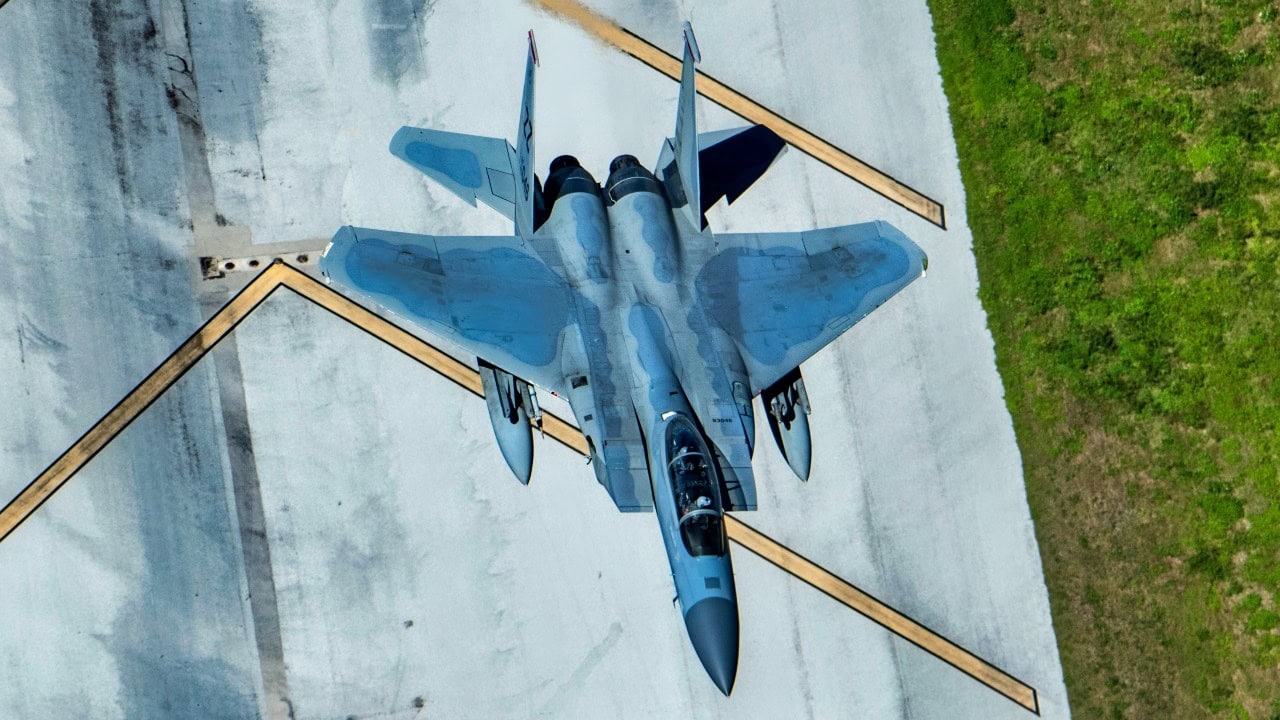
The American F-15 Eagle has always been a fantastic air superiority fighter jet. Boeing’s newest model, the F-15EX Eagle II, is the latest in the series of jets built on the same airframe.
The Eagle II traces its lineage to the McDonnell Douglas F-15E Strike Eagle.
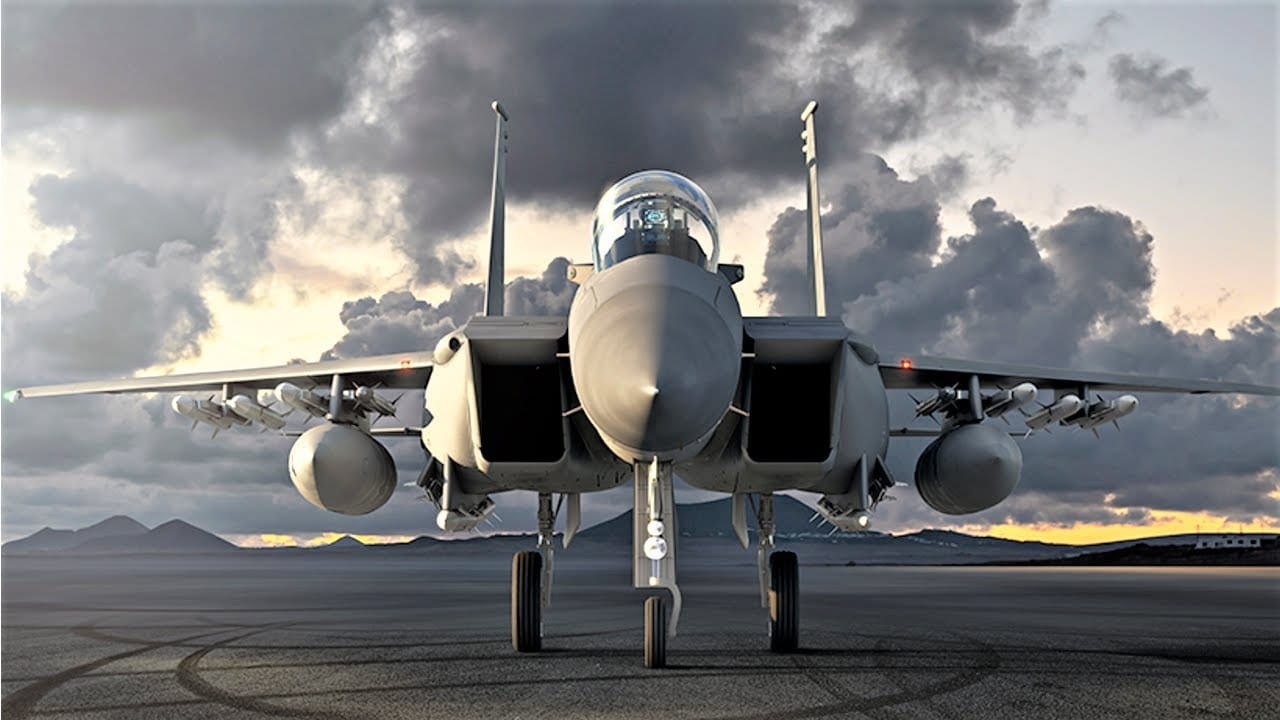
F-15EX Eagle II. Image Credit: Creative Commons.
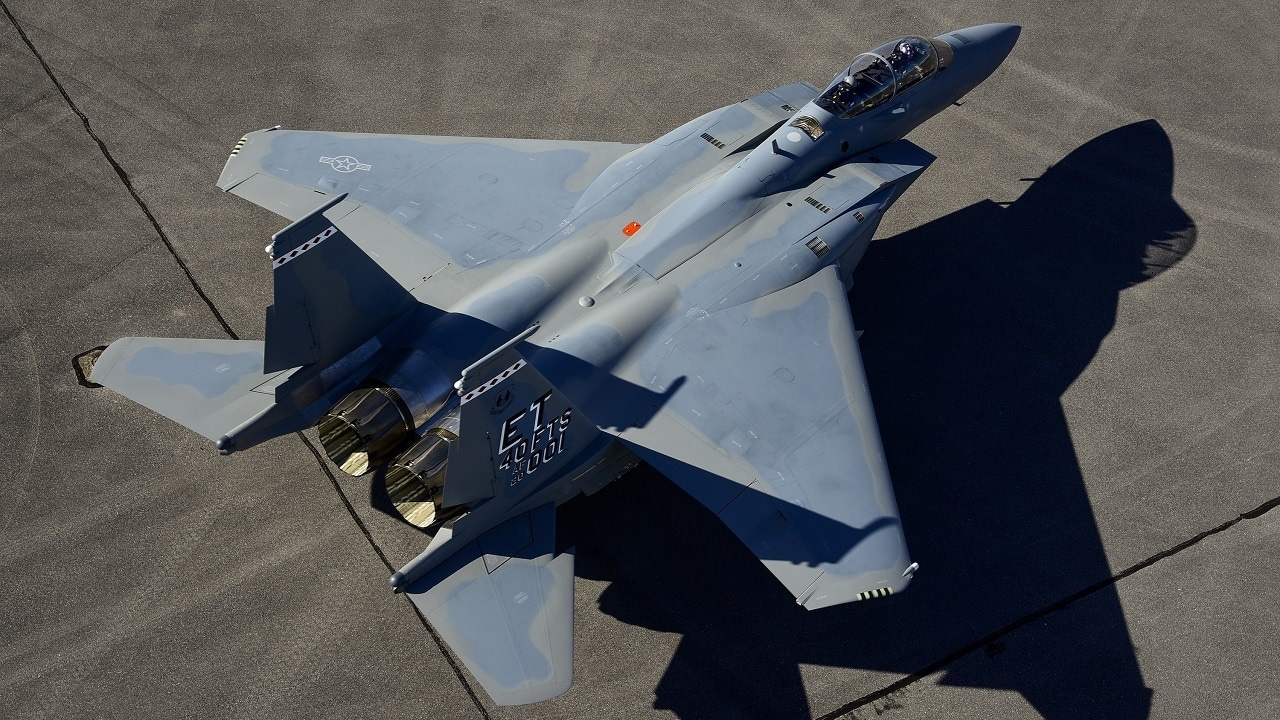
The F-15EX Eagle II, the Air Force’s newest fighter aircraft, arrives to Eglin Air Force Base, Florida March 11. The aircraft will be the first Air Force aircraft to be tested and fielded from beginning to end through combined developmental and operational tests. The 40th Flight Test Squadron and the 85th Test and Evaluation Squadron personnel are responsible for testing the aircraft. (U.S. Air Force photo/1st Lt. Karissa Rodriguez)
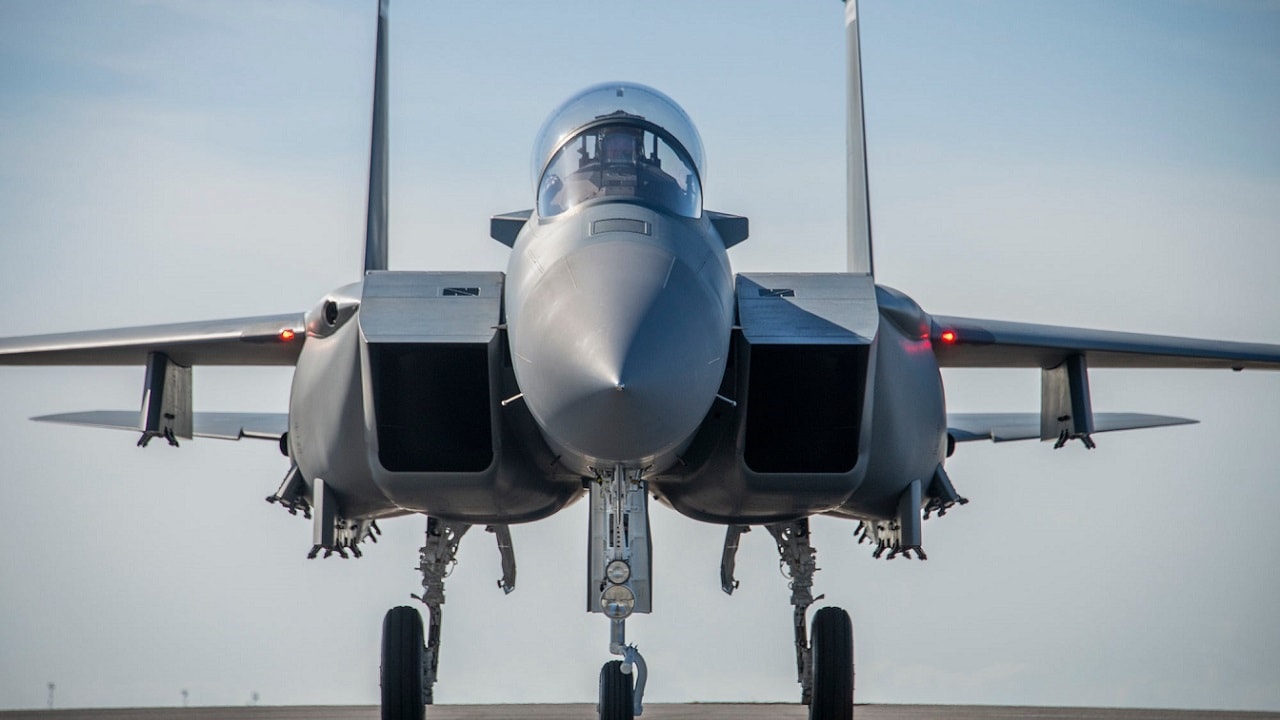
F-15EX Eagle II. Image Credit: Boeing.
The Eagle II is an all-weather, multi-role strike fighter that began as an upgrade to the aging F-15C/D models, replacing them with a mission focused of homeland and air defense and serving as a platform for large stand-off weapons to augment the stealth fighters F-22 and F-35.
The first F-15EX aircraft was delivered in 2021 and entered operational service in July 2024.
The F-15EX is the most advanced variant of the multirole, all-weather, and day-and-night-capable F-15 aircraft family, featuring affordability, speed, range, heavy-weapon payload capacity, a digital backbone, and an open architecture.
The F-15EX can carry a large number of missiles to support of the F-35 Lightning and deliver firepower to destroy threats the F-35 detects during combat operations.
The F-15EX Is A Flying Super Computer
The F-15EX Eagle II relies on the Advanced Display Core Processor II (ADCP II), a high-speed mission computer capable of executing 87 billion operations per second. It is the fastest jet computing processor in the world.
The F-15EX also features a modernized avionics suite. The advanced radar systems and state-of-the-art avionics, including the Eagle Passive/Active Warning and Survivability System (EPAWSS), a new advanced electronic warfare suite, allow the F-15EX to operate in highly contested airspace.
EPAWSS is an all-digital radar warning, geolocation, and situational awareness platform designed to detect and counter threats in dense, contested electromagnetic environments.
It provides radio frequency (RF) electronic countermeasures (ECM) and is smaller and lighter than previous EW systems.
The F-15 EX’s Open Mission Systems (OMS)
The F-15EX Open Mission System (OMS) suite enables rapid upgrades and enhanced capabilities for the F-15EX fighter jet. This includes features like advanced avionics, electronic warfare systems, and a powerful radar.
The OMS architecture also enables the F-15EX to act as a networked battlespace manager, facilitating rapid integration with other aircraft and systems.
The F-15EX Is An Offensive Weapon As A Bomb Truck
As soon as they had been delivered, Boeing and the Air Force were already exploring the use of the Eagle II fighters in offensive operations.
While the F-15EX Eagle II is decidedly a non-stealth Generation Four+ air superiority fighter, it may become invaluable in a use that seems tailor-made for it.
The Eagle II is absolutely a non-stealth aircraft.
However, it can augment a strike by accompanying F-35 or F-22 stealth fighters. In that type of scenario, the F-15 EX aircraft would follow the stealth fighters, neutralizing the target area’s air defense systems. The Eagle II carries a much larger payload and could serve as a massive missile platform.
The stealth fighters would relay information back to the F-15s, and they could loiter out of range of air defense systems and unleash many more weapons than the stealth fighters could carry.
The F-15EX in a “weapons truck” mode can carry a larger payload of weapons, including air-to-air missiles, air-to-ground munitions, and hypersonic weapons.
The F-15EX has an expanded missile carriage capacity of 12 air-to-air missiles, compared to the standard F-15’s capacity of 8 air-to-air missiles, or it can carry 12 air-to-surface missiles.
It can launch a hypersonic missile up to 22ft long, providing an advantage in future near-peer conflicts. A single pilot can operate the aircraft, and it has a payload capacity of 13,300kg.
It can also be able to operate with Collaborative Combat Aircraft (CCA) uncrewed “loyal wingman” aircraft.
The Air Force has now also armed its F-15EX Eagle II with the Stormbreaker, also known as the Small Diameter Bomb II (SDB-II), an American air-launched, precision-guided glide bomb capable of finding, tracking, and destroying moving targets from distances as far as 40 nautical miles in all weather conditions.
The Stormbreaker utilizes a two-way data link, enabling it to adjust course in flight according to a target’s movements, and the weapon is also engineered with a tri-mode seeker.
This targeting and sensing technology uses millimeter-wave, infrared, and laser guidance to track and eliminate targets.
The F-15EX Is Still An Outstanding Homeland Defense Weapon
The F-15EX Eagle for Homeland Defense is an outstanding asset. The Eagle II has a top speed of Mach 2.5. Simply put, it is the fastest fighter jet in the world.
And stealth isn’t as necessary for the defense of the homeland.
The F-35 is the obvious choice for stealth and data fusion.
However, the F-15EX is best suited for an air superiority role, as it carries more weapons and is faster.
The F-35 can carry a weapons payload of 18,000 pounds, while the F-15EX carries a payload of 29,500 pounds. It can carry a dozen air-to-air missiles.
Drone Coordination Platform/Electronic Warfare
Another area where the Eagle II could be used is as a drone coordinator for the Air Force’s Collaborative Combat Aircraft, or CCAs.
The Air Force has been planning for the F-35s and F-15EXs to team with the XQ-58 Valkyrie drone since 2019.
The Air Force is also working on establishing some F-15EX aircraft as electronic warfare platforms, such as the EA-18G Growler.
In July 2024, the USAF explored integrating the Growler’s new Next Generation Jammer Pods into the Eagle II to convert the fighter into an electronic attack platform capable of penetrating contested airspace and increasing the survivability of other 4th-generation and 5th-generation aircraft.
The Air Force took an older legendary icon and reinvented it into a 21st-century supercomputing bomb truck.
About the Author: Steve Balestrieri
Steve Balestrieri is a National Security Columnist. He served as a US Army Special Forces NCO and Warrant Officer. In addition to writing on defense, he covers the NFL for PatsFans.com and is a member of the Pro Football Writers of America (PFWA). His work was regularly featured in many military publications