
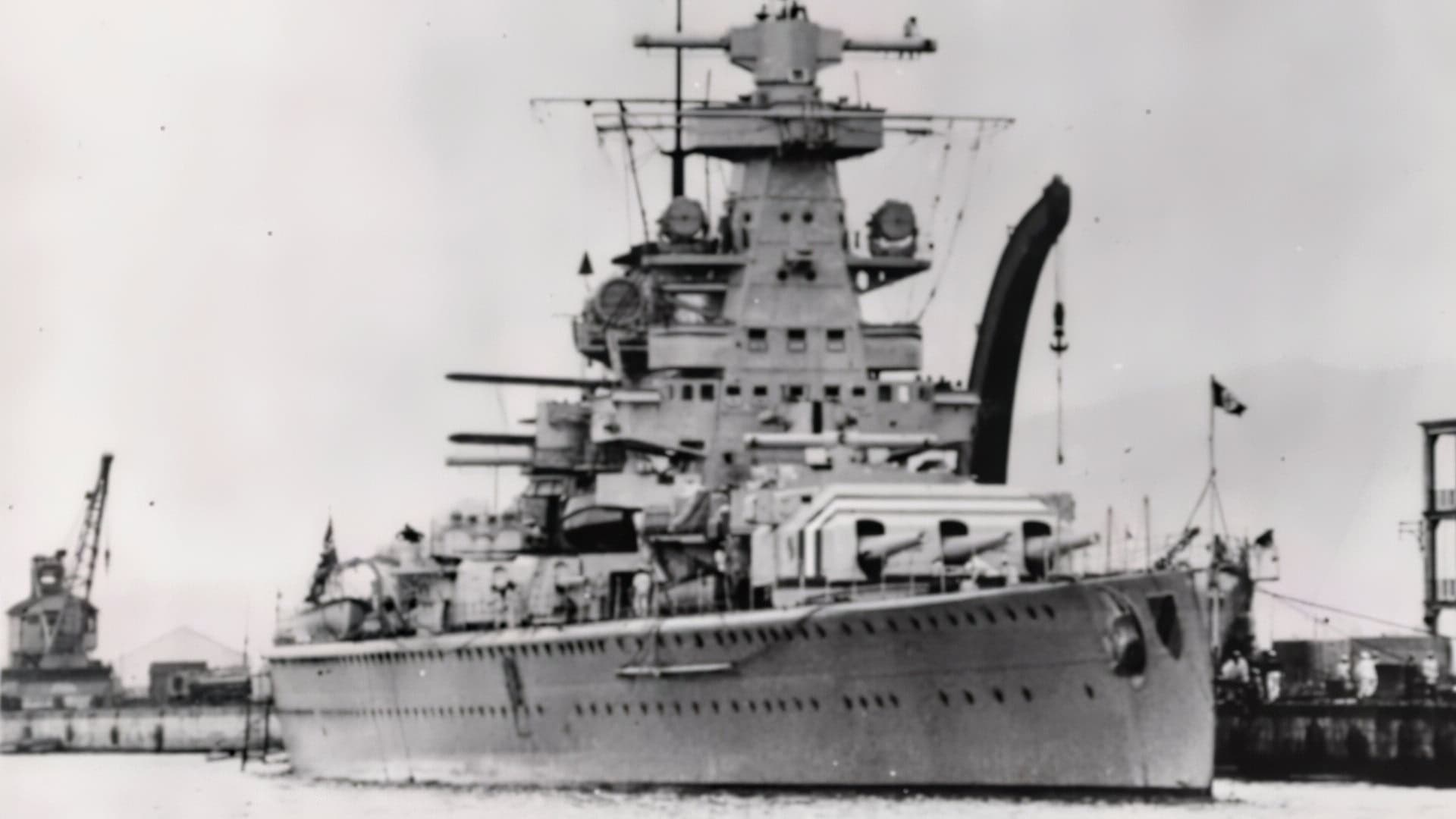
The German “pocket battleship” was an unofficial term used by the British press to describe the Deutschland-class cruisers (Panzerschiffe) built by Nazi Germany in the 1930s.
The class included three primary ships: KMS Deutschland (later renamed Lützow), KMS Admiral Scheer, and KMS Admiral Graf Spee. Germany built these “pocket battleships” to circumvent the restrictions of the Treaty of Versailles after World War I.
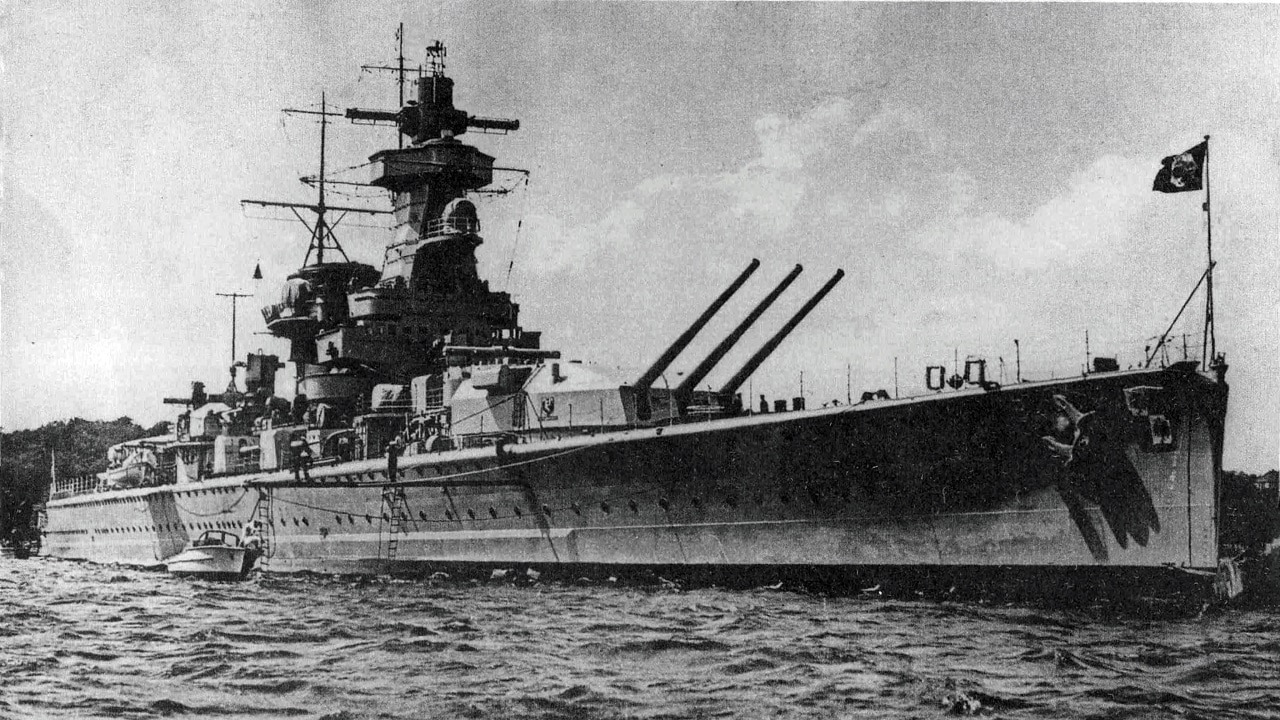
Admiral Graf Spee Pocket Battleship. Creative Commons Image.

The German pocket battleship ADMIRAL GRAF SPEE in flames after being scuttled off Montevideo, Uruguay, after the Battle of the River Plate, 17 December 1939. Creative Commons Image.
As far as success was concerned, they were a mixed bag.
They terrified Allied merchant shipping as raiders, but were very thinly armored to save weight and stay under the 10,000-ton limit stipulated by the Treaty of Versailles.
More Heavily Armed Than Cruisers, The Pocket Battleships Were Fast
However, all three exceeded the weight limit, weighing between 12,000 and 16,000 tons fully loaded.
The three pocket battleships did possess excellent firepower and were designed to outgun any fast cruiser that could catch them, armed with six heavy 11-inch (28 cm) main guns in triple turrets, and outrun any heavy battleship that could sink them.
They each had innovative diesel engines to save weight and were capable of 27+ knots, with a range of about 12,500 miles.
Although they were built for commerce raiding, the first two ships, Deutschland and Admiral Speer, saw their baptism of fire as shore bombardment assets during the Spanish Civil War in 1937.
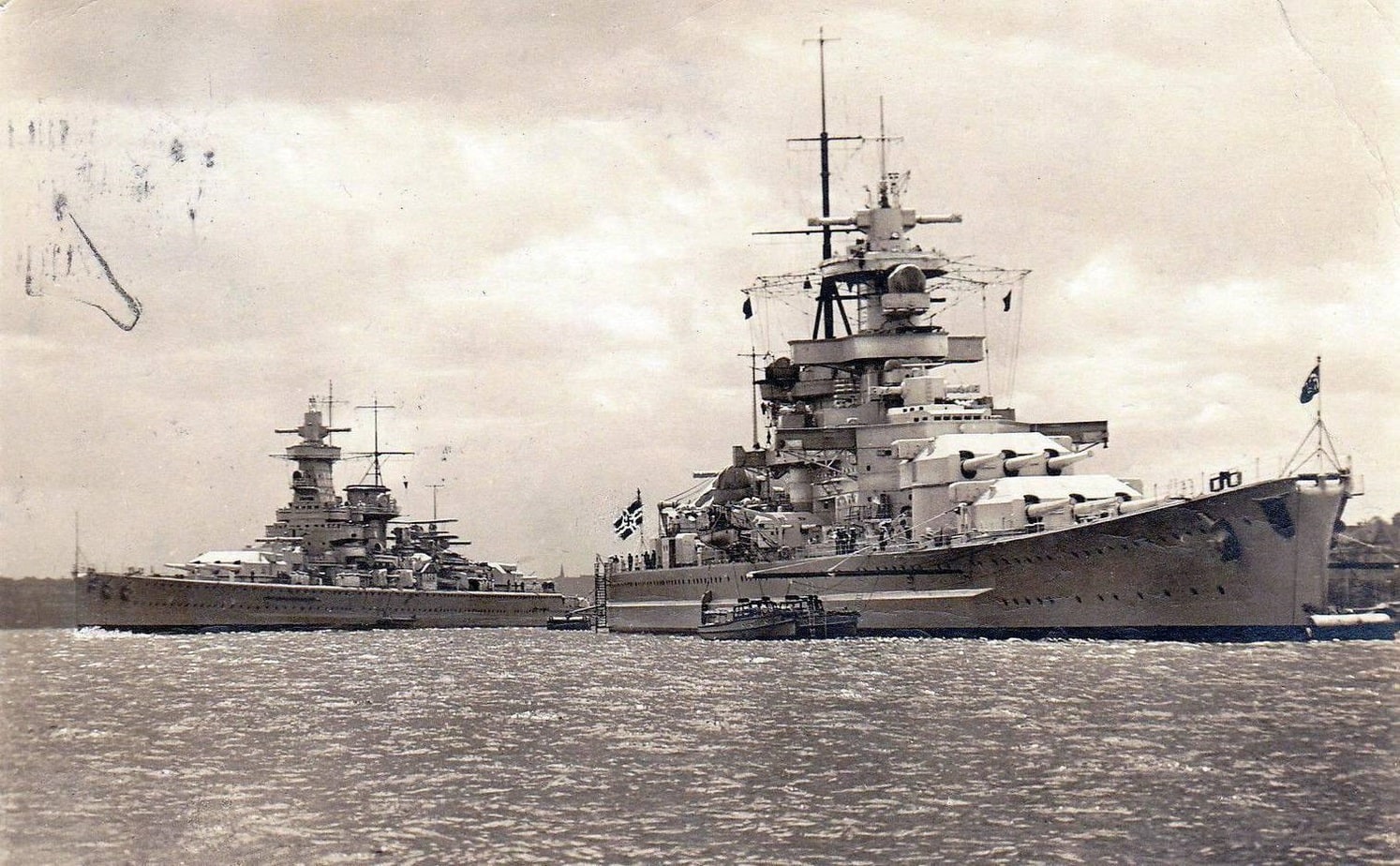
Pocket Battleship. Image: Creative Commons.

Pocket Battleship. Image: Creative Commons.
The KMS Deutschland was bombed by two Soviet-made SB-2 bombers, in a sign of what was to come.
Hit with two 110-pound bombs, she was heavily damaged, with 31 sailors killed and 141 wounded.
The Pocket Battleships Lutlow’s World War II Checkered Service
The Germans classified the three ships as heavy cruisers, despite the moniker the British had given them. KMS Deutschland was renamed KMS Lutzow and was the group’s hard-luck ship.
Just over a month after the war began in October 1939, the KMS Lutzow sank two Allied freighters, her entire tally of the war.
During the 1940 invasion of Norway, shore batteries heavily damaged the ship.
On the way back to Germany, the ship was torpedoed by a British submarine.
Towed into port for repairs, she spent a year there before being returned to duty.
Soon after relaunching, a torpedo plane damaged her, sending her back once again. Seven months later, sailing in the Baltic, ice fouled the propellers, forcing another stint in drydock.
In July of 1942, while en route to attacking a convoy heading for Murmansk, the Lutzow ran aground, necessitating further repairs.
When leaving port, she collided with a harbor crane, which knocked one of her guns out of true.
From October 1944 to March 1945, Lutzow periodically shelled Soviet positions in Finland to support German troops.
A British bomber nearly missed with an enormous 5,000-pound bomb, but did serious damage to its port side.
With the war nearing its end in May 1945, the captain decided to scuttle the ship. In typical Lutzow luck, the charges exploded prematurely.
Pocket Battleship KMS Admiral Scheer
The KMS Admiral Scheer was a Deutschland-class heavy cruiser, also known as a “pocket battleship”, that served Nazi Germany’s Kriegsmarine during World War II.
Named after Admiral Reinhard Scheer, the 13,660-ton ship was launched in 1933 and became the most successful German surface commerce raider of the war, sinking or capturing 17 ships before being bombed and sunk in April 1945.
She embarked on her one-and-only legendary 161-day raiding voyage into the Atlantic and Indian Oceans under Captain Theodor Krancke, starting in October 1940.
Sunk the armed merchant cruiser HMS Jervis Bay while attacking convoy HX84 in November 1940.
Covered over 46,000 nautical miles and destroyed 17 Allied merchant ships totaling over 113,000 tons.
On April 9, 1945 at 10:30 p.m., while in port in Kiel, 600 Allied bombers began dropping their payloads on the port. She was hit and began listing at 16 degrees a few minutes later.
More bomb hits followed, and by 10:45 p.m., her list was at 28 degrees, and the captain ordered the crew to abandon ship.
The once-proud ship then capsized and sank in 50 feet of water with 50 members of her skeleton crew.
The KMS Admiral Graf Spee, The Most Famous Pocket Battleship
The KMS Admiral Graf Spee was a famous German “pocket battleship” (Panzerschiff) of the Nazi Navy.
Built to bypass the Treaty of Versailles limits, she carried massive 11-inch guns on a cruiser frame.
She raided Allied trade ships early in World War II, fought the Battle of the River Plate, and was scuttled by her captain in December 1939.
The most famous of the three pocket battleships is arguably Admiral Graf Spee, the last of the class to be built.
Operating as a commerce raider in the target-rich South Atlantic at the start of the war, between September and December 1939 she sank nine ships totaling 50,089 tons.
Her Captain, Hans Langsdorff, had followed the traditional rules of sea warfare, allowing sailors from unarmed merchant vessels to abandon ship before sinking them.
The British and French navies sent a task force, and she confronted three British cruisers off the coast of Uruguay during the Battle of the River Plate on December 13, 1939.
The Graf Spee’s 11-inch guns inflicted heavy damage on the British cruisers, but unbeknownst to the British, the Graf Spee had been heavily damaged as well.
She limped into Montevideo Harbor for repairs.
The Uruguayan port authorities wouldn’t allow the Graf Spee to remain past 72 hours.
The British broadcast that they had a massive armada waiting for the heavy cruiser in the Atlantic.
Self Destruct Mode
Langsdorff removed the majority of his crew and scuttled the ship in shallow water rather than risk being taken by what he perceived as a superior force.
The German merchant raiders had given the Allies pause in the early days of the war, but they did very little damage after 1940.
About the Author: Steve Balestrieri
Steve Balestrieri is a National Security Columnist. He served as a US Army Special Forces NCO and Warrant Officer. In addition to writing on defense, he covers the NFL for PatsFans.com and is a member of the Pro Football Writers of America (PFWA). His work was regularly featured in many military publications.