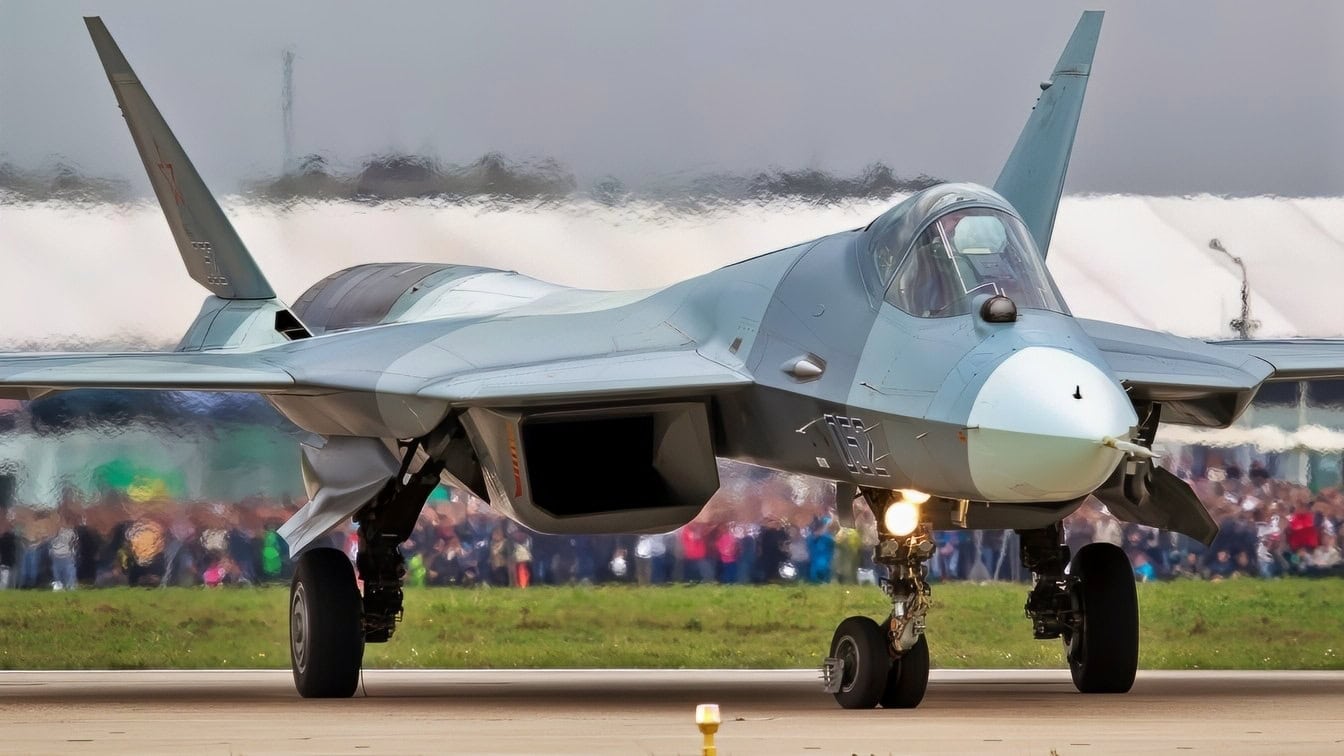
Despite initially stating that it was neither needed nor planned for the future of the program, Russia’s Sukhoi Design Bureau has now revealed more of its plans for the two-seat version of the Su-57 (NATO Codename Felon).
Russia categorizes it as a 5th-generation fighter, but the stealth characteristics of the airframe have long been assessed as far less advanced in radar cross-section (RCS) reduction techniques and materials than those of US-designed 5th-gen aircraft like the F-22 and F-35.
Now, according to recent reports, a new variant of the aircraft will be operated as a platform featuring technologies associated with 6th-generation combat aviation. This new variant is the fighter’s first two-seat model of the fighter, designated Su-57D.
This aircraft first flew in May, in what was rated a successful test of its handling qualities. Revelatory of the importance attached to the program was that the Russian First Deputy Prime Minister Denis Manturov commented briefly on the event and provided a statement to reporters that was later released by the state-run media outlet Ria Novosti.
Russian analysts familiar with Russian defense procurement say that if Manturov is associating himself this closely with the program now, it has been assigned a very high priority.
“This aircraft, developed proactively by our aircraft manufacturers, will not only boast unique combat capabilities, but also the functionality of a combat training aircraft and the capabilities of a combat control aircraft,” Manturov said.
The aircraft’s designation was also assigned to highlight that it will be neither exclusively a trainer nor a for-export-only model. This differentiates it from the special export version of the fighter, the single-seat Su-57E,
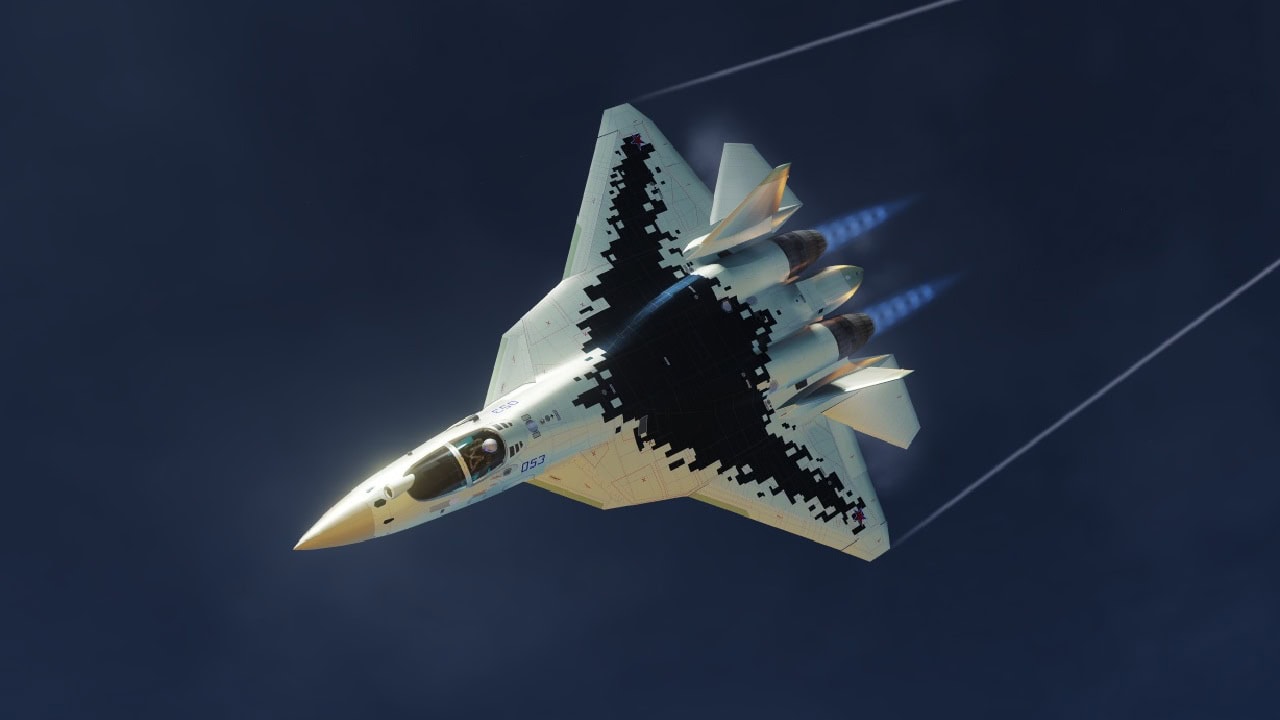
Su-57. Image Credit: Artist Created Image.
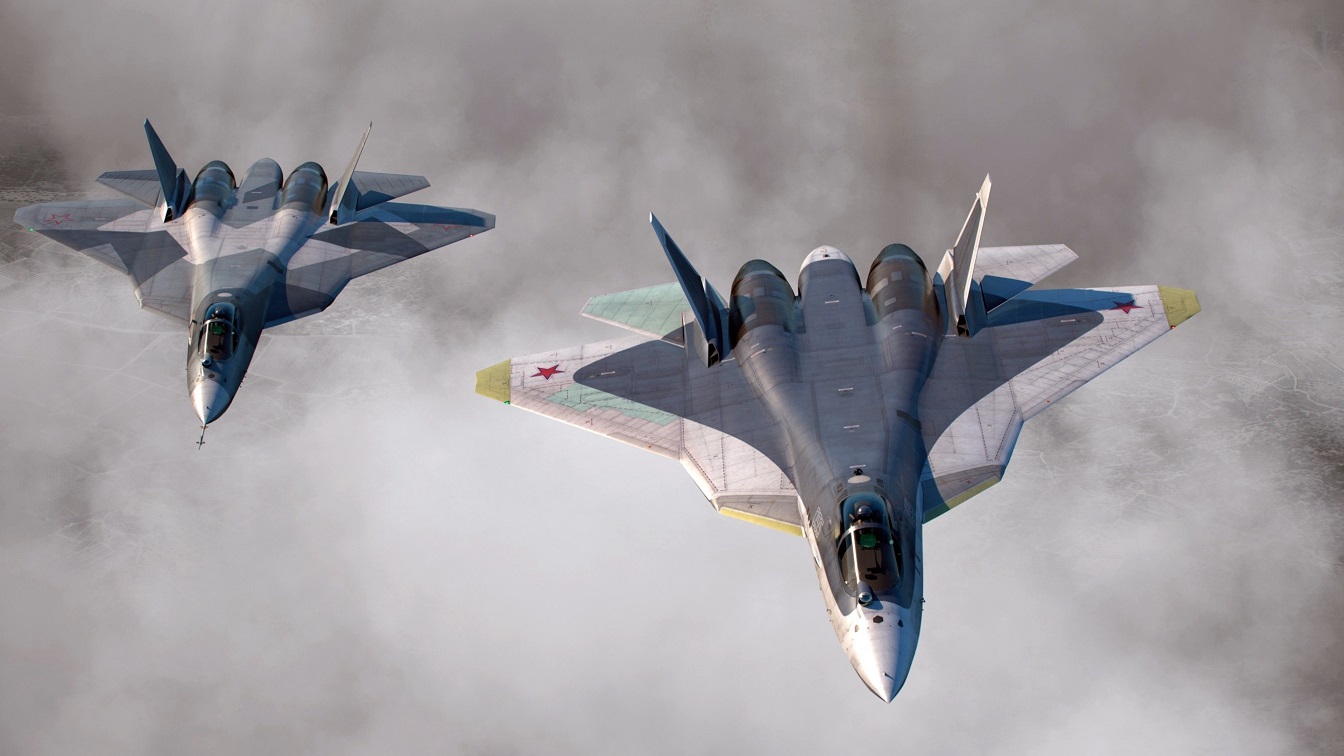
Su-57 stealth fighter. Image Credit: Artist Rendition.
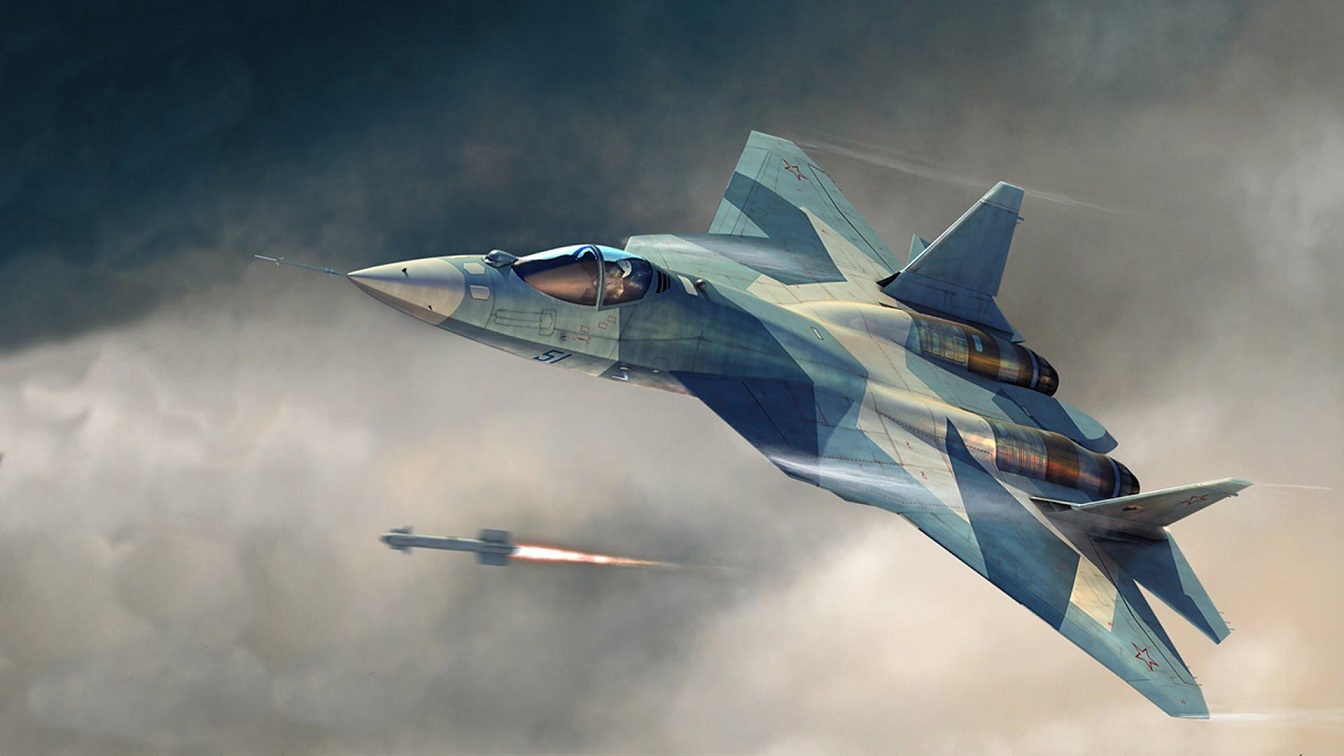
Su-57 artist rendering. Image Credit: Creative Commons.
It Began with India
Initial discussions involving a second seat for the aircraft emerged more than a decade ago as part of the plan to sell the aircraft to Russia’s perennial customer, India.
This was the original concept for what New Delhi at the time had designated as the Future Generation Fighter Aircraft (FGFA).
India had previously entered into an agreement with Russia to jointly develop this version of the fighter, with the air force insisting that it be a two-seat aircraft.
This tandem-seat design was required to match the operational model of the Indian Air Force (IAF).
As for the larger Sukhoi fighters, the IAF has adopted a “two-seat aircraft only” rule. This has become the norm since the force adopted the Su-30MKI as its main workhorse aircraft in the 1990s. More than 260 of these are in service with the Indian Air Force today, but the aircraft is now set to undergo a major modernization refit.
Originally, the Su-57 was to follow the same pattern of a two-seat aircraft. But India withdrew from the cooperative program in 2018 over concerns about delays in the Russian 5th-generation engine, stealth performance, technology transfer, and the limited access India would have to Russian critical technologies. How India moves forward with its own 5th-generation aircraft depends on whether it decides to buy from a foreign supplier or develop its own program.
A New Generation Platform
According to Russian industry sources, the two-seat Su-57D will be a new-generation version of the aircraft. To that end, it will be configured as a fighter equipped with technologies associated with the 6th-generation combat aircraft recently produced in the People’s Republic of China (PRC).
According to Sukhoi Design Bureau Director Mikhail Strelets, the rear seat cockpit will give the aircraft the functionality of an airborne command post.
This will include the capability to direct unmanned combat aircraft while simultaneously carrying out conventional fighter missions.
The major issue is that the Su-57’s platform misalignments, which already affect its stealth, are further exacerbated when it is made into a two-seat fighter.
There are definite trade-offs associated with adding the rear seat, which is why, with the exception of the PRC’s Chengdu J-20S, there are no other two-seater stealth fighter designs.
Extending the cockpit, canopy, and other sections of the aircraft to create a two-seat stealth jet while maintaining a low RCS is far more difficult and cost-intensive than it would be for any other fighter.
Whether Russia has the design talent and funding to complete such a task remains to be seen.
About the Author: Reuben F. Johnson
Reuben F. Johnson has thirty-six years of experience analyzing and reporting on foreign weapons systems, defense technologies, and international arms export policy. Johnson is the Director of Research at the Casimir Pulaski Foundation. He is also a survivor of the Russian invasion of Ukraine in February 2022. He worked for years in the American defense industry as a foreign technology analyst and later as a consultant for the U.S. Department of Defense, the Departments of the Navy and Air Force, and the governments of the United Kingdom and Australia. In 2022-2023, he won two awards in a row for his defense reporting. He holds a bachelor’s degree from DePauw University and a master’s degree from Miami University in Ohio, with a specialization in Soviet and Russian studies. He lives in Warsaw.