
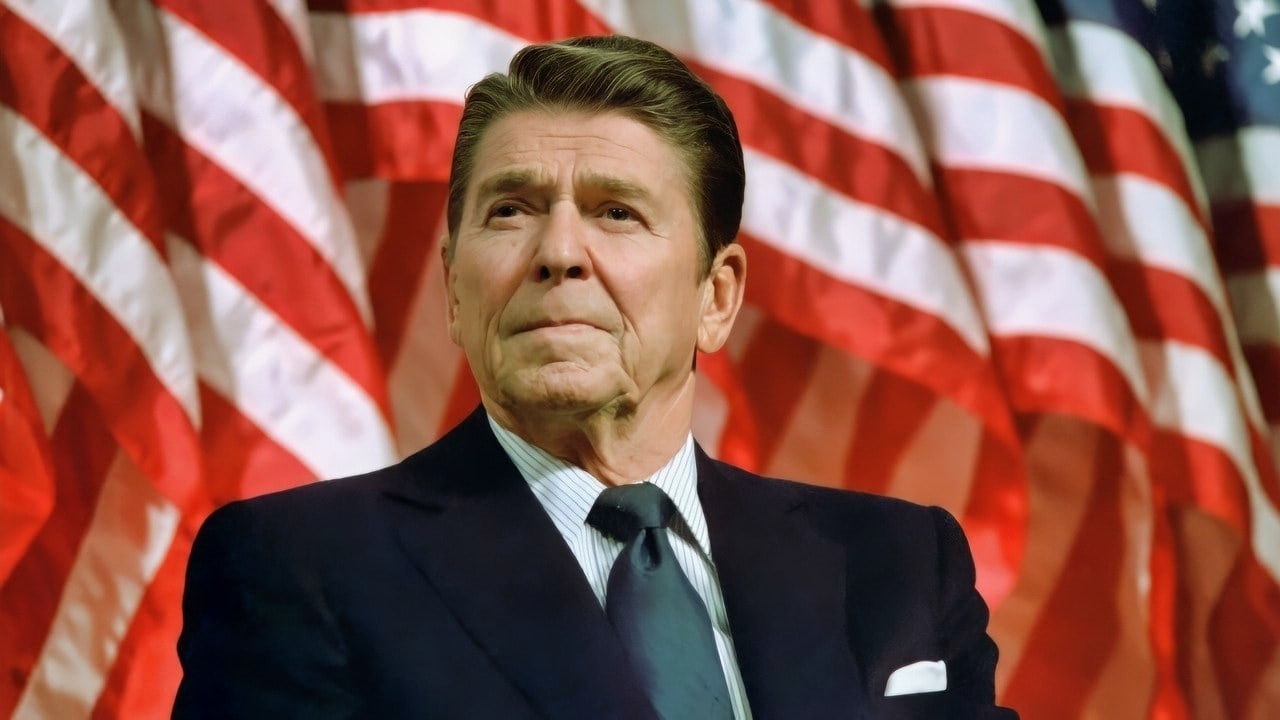
The Reykjavík Summit, which took place over two days in October of 1986, was a pivotal moment in the endgame of the Cold War. And now, just ahead of the summit’s 40th anniversary, it’s the subject of a new movie.
The story is well known to those who lived through it and to amateur Cold War historians: About halfway through Ronald Reagan’s second term as president, he sat down with Soviet Premier Mikhail Gorbachev in Reykjavík, Iceland.
The meeting included discussions about reducing or possibly even banning ballistic missiles, but one thing emerged as a sticking point: Reagan did not want to commit to abandoning the Strategic Defense Initiative (SDI), his proposed missile shield, which Gorbachev had demanded.
Therefore, the talks collapsed without any agreement.
However, the two leaders reached an agreement, a bit more than a year later, in the form of the Intermediate-Range Nuclear Forces Treaty of 1987. And two years after that, the Cold War was over.
Gorbachev would go on to say, years later, that the summit was the turning point in the Cold War. “Because… for the first time the two leaders talked directly over an extended period in a real conversation about key issues.”
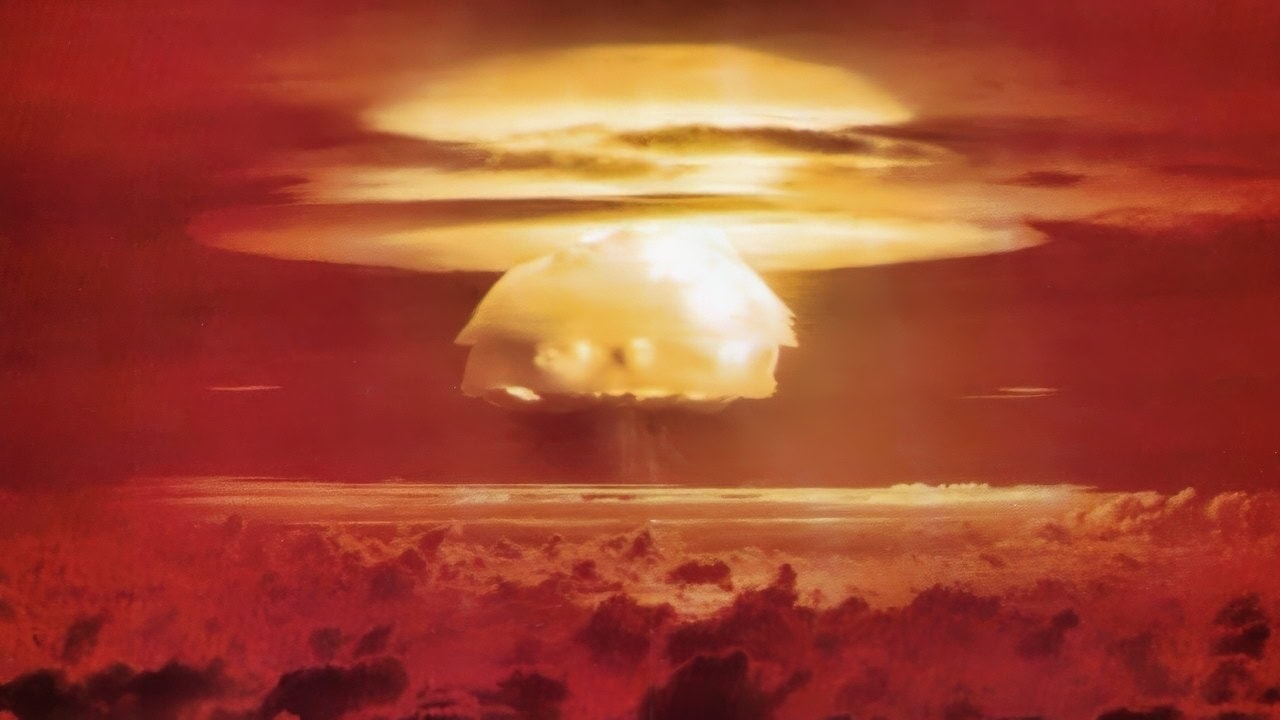
Nuclear Bomb Detonation. Image Credit: Creative Commons.
From Michael Douglas to Jeff Daniels
There have been multiple attempts to turn this story into a movie.
A movie version, originally titled Reykjavik, was in the works to star Michael Douglas as Reagan, the case of one 1980s icon portraying another.
That film, around 2012, was to be directed by Mike Newell, with Ridley Scott producing, but it never came together.
In 2020, the idea was resurrected as a TV miniseries, with Douglas still playing Reagan and Christoph Waltz as Gorbachev; James Foley was to direct, with former Reagan adviser Kenneth Adelman’s Reagan at Reykjavik: Forty-Eight Hours That Ended the Cold War as the source material.
This project, also, never moved forward.
Now, we have The Brink of War, a feature film starring Jeff Daniels as Reagan and Jared Harris as Gorbachev, opening in theaters this Friday.
Written and directed by Michael Russell Gunn, it doesn’t seem to have any connection to the Douglas-oriented projects, although it was initially titled Reykjavik.
Nor is any particular book listed as the source material, although Kenneth Adelman appears as a supporting character.
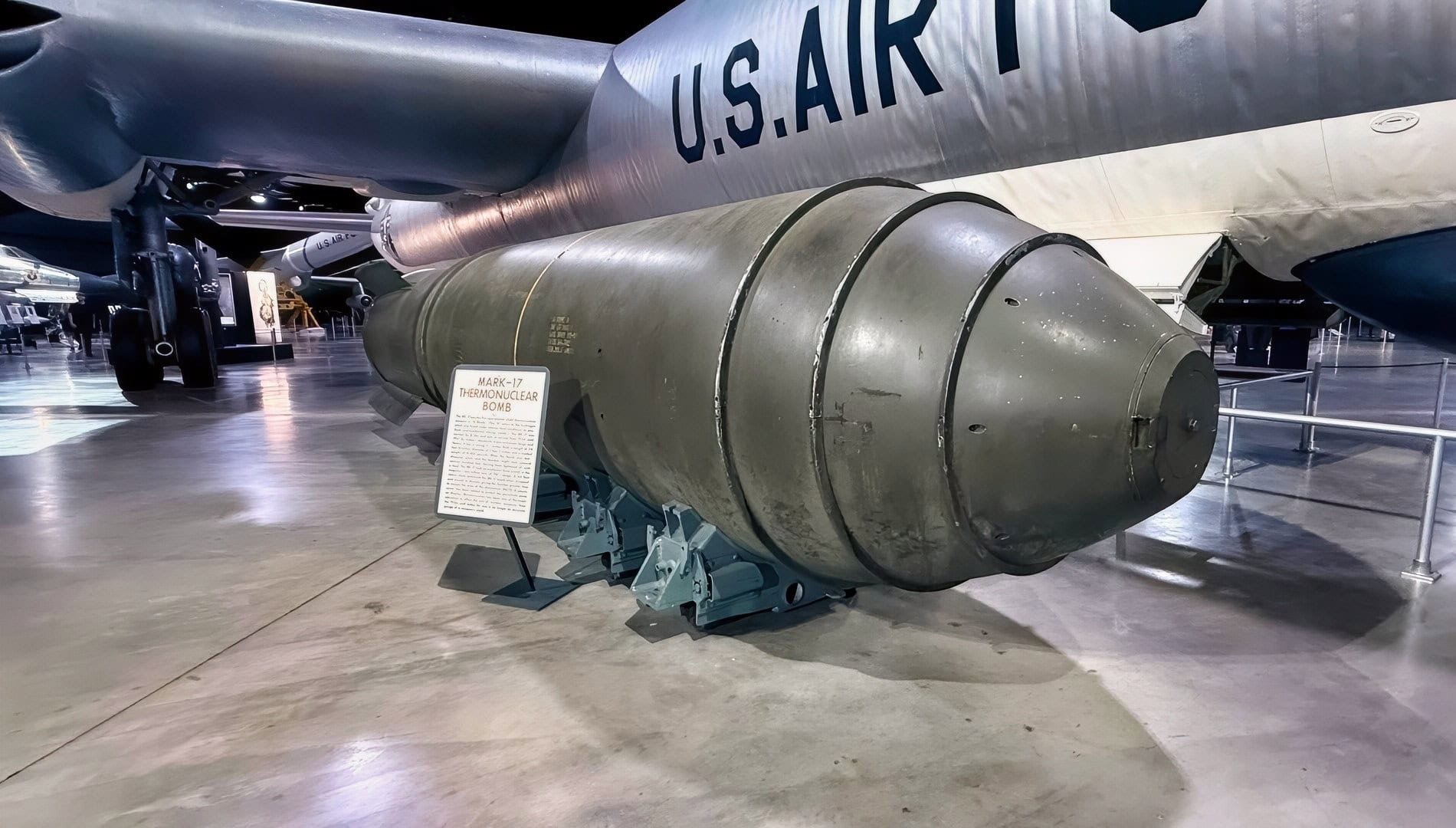
Mark-17 Nuclear Bomb 19FortyFive.com Image

Nuclear Bomber Image Taken at National Museum of the Air Force by 19FortyFive.com

Fat Man Nuclear Bomb from National Museum of the U.S. Air Force. 19FortyFive.com Image.
J.K. Simmons plays then-Secretary of State George Shultz, whom the filmmaker interviewed before his death.
The film is dedicated to him, and the screenplay seems to give especially extra attention to Shultz’s perspective.
In one scene near the end, between him and the Secretary of State, Reagan seems to indicate that he could see the fall of the Soviet Union coming as early as 1986.
Hope Davis plays Nancy Reagan, although since Nancy was not present at the summit, her performance is literally phoned in.
Ironically, in the TV movie The Special Relationship, Davis played Hillary Clinton, while Dennis Quaid—who later also played Reagan—was Bill Clinton.
The Brink of War, which shot on location at Höfði House, where the real summit took place, is being released through Angel Studios, a studio associated with Christian conservatism, although the film isn’t that much of an ideological project.
Unlike the Reagan biopic from a couple of years ago starring Dennis Quaid, it doesn’t seem to treat the lionization of Reagan, or his portrayal as right in every single situation, as its primary objective.
The film is somewhat nerve-wracking, even though most viewers will know exactly how the summit turned out.
One For the Dads
“After you retire they unlock new exclusive movies for you,” one wag on X joked earlier this month. “Dad asked if I had watched the Jeff Daniels Ronald Reagan movie. That doesn’t exist for me yet. I’m not able to see that.”
Indeed, Cold War history buffs, or others interested in that era, are likely to enjoy this, and the film is at its best when the two leaders are in a room together, jousting.
It’s less successful at other moments, such as silly scenes in which Secret Service and KGB agents taunt one another, sometimes with Marx quotes, to pass the time.
And while I bought Harris as the last Soviet leader, Jeff Daniels is doing a Reagan impression that comes and goes. Once in a while, he sounds like Reagan, but the rest of the time he just sounds like Jeff Daniels.
The title, moreover, is misleading, as it would probably be an exaggeration to say that the United States and the Soviet Union, in 1986, were on “the brink of war.” “If we fail here, there will be war,” Shultz says at one point, although they did, to some degree, “fail” there, and there was no war.
As for Gunn’s direction, he keeps the pace moving, although there’s a bit too much of a reliance on extreme close-ups.
What Happened to SDI?
Reagan was famously unwilling to give up the Strategic Defense Initiative space missile shield, known as “Star Wars,” which he saw as a way to circumvent the doctrine of Mutually Assured Destruction.
The shield was never built, especially after the Cold War ended, but a version of it, “The Golden Dome,” has emerged as a Trump-era proposal.
About the Author: Stephen Silver
Stephen Silver is an award-winning journalist, essayist, and film critic, and contributor to the Philadelphia Inquirer, the Jewish Telegraphic Agency, Broad Street Review, and Splice Today. The co-founder of the Philadelphia Film Critics Circle, Stephen lives in suburban Philadelphia with his wife and two sons. For over a decade, Stephen has authored thousands of articles that focus on politics, national security, technology, and the economy. Follow him on X (formerly Twitter) at @StephenSilver, and subscribe to his Substack newsletter.