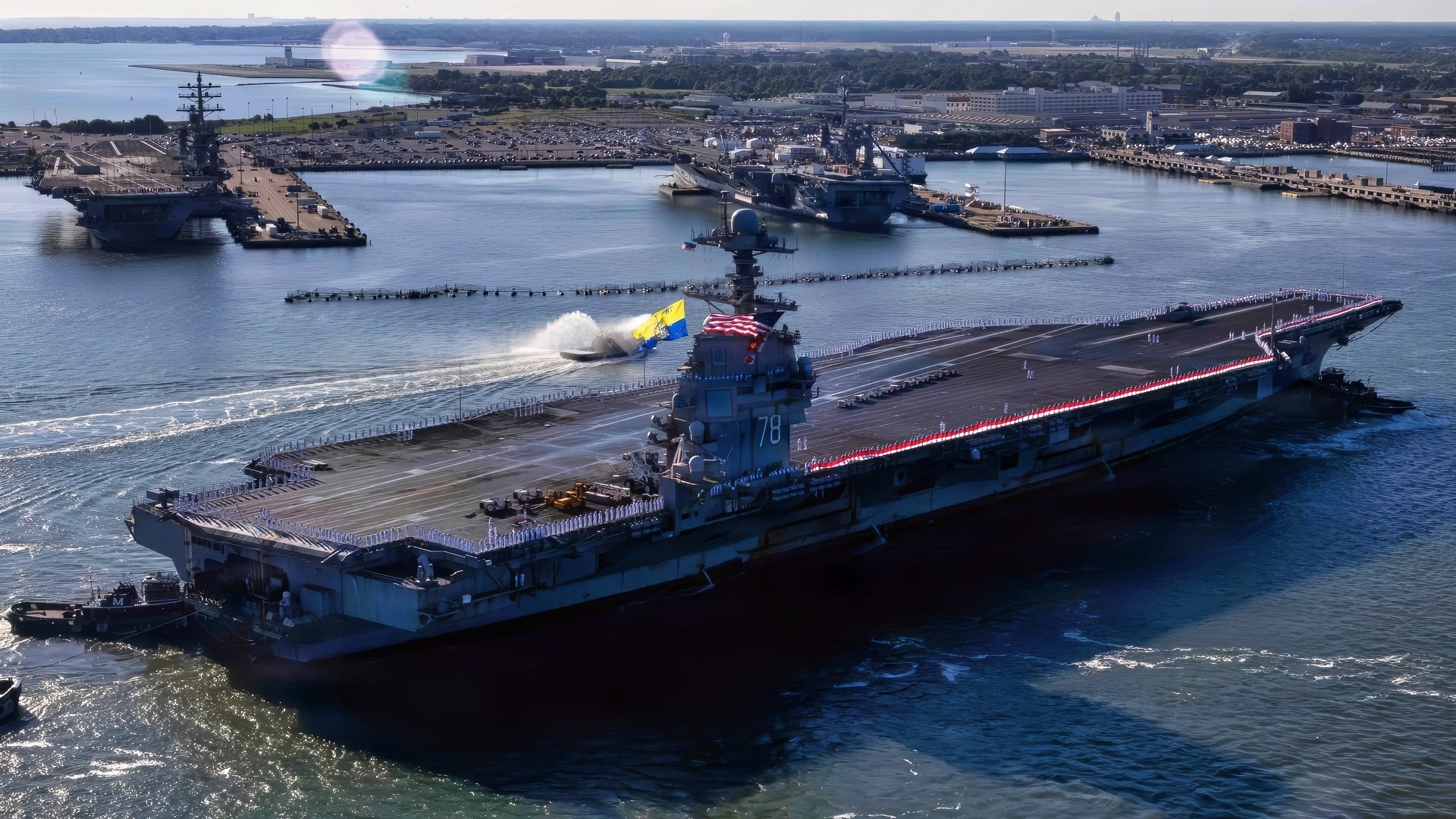
On the aircraft carrier USS Gerald R. Ford(CV-78), the US Navy has flushed $4.2 million down the toilets to keep them working.
The new Ford-Class carriers are engineering marvels.
They have nuclear reactors that can go 25 years between refuelings, electromagnetic catapults and elevators to handle and launch aircraft, and a design built for expansion, with 1,800 miles of fiber-optic and electrical cable to handle enormous power loads up to 250% higher than the Nimitz-Class it’s replacing.
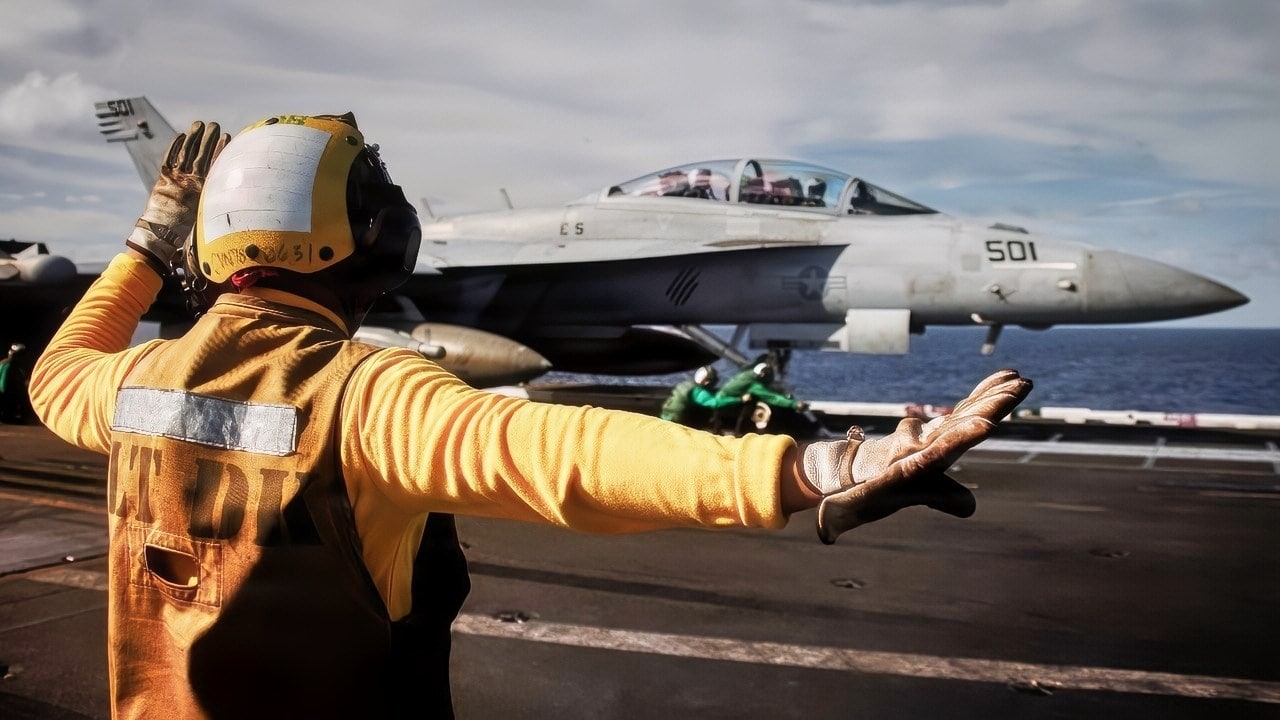
A U.S. Sailor signals to send the aircraft catapult shuttle forward on the flight deck of the world’s largest aircraft carrier, Ford-class aircraft carrier USS Gerald R. Ford (CVN 78), while underway in the Caribbean Sea, Jan. 11, 2026. U.S. military forces are deployed to the Caribbean in support of the U.S. Southern Command mission, Department of War-directed operations, and the president’s priorities to disrupt illicit drug trafficking and protect the homeland. (U.S. Navy photo)
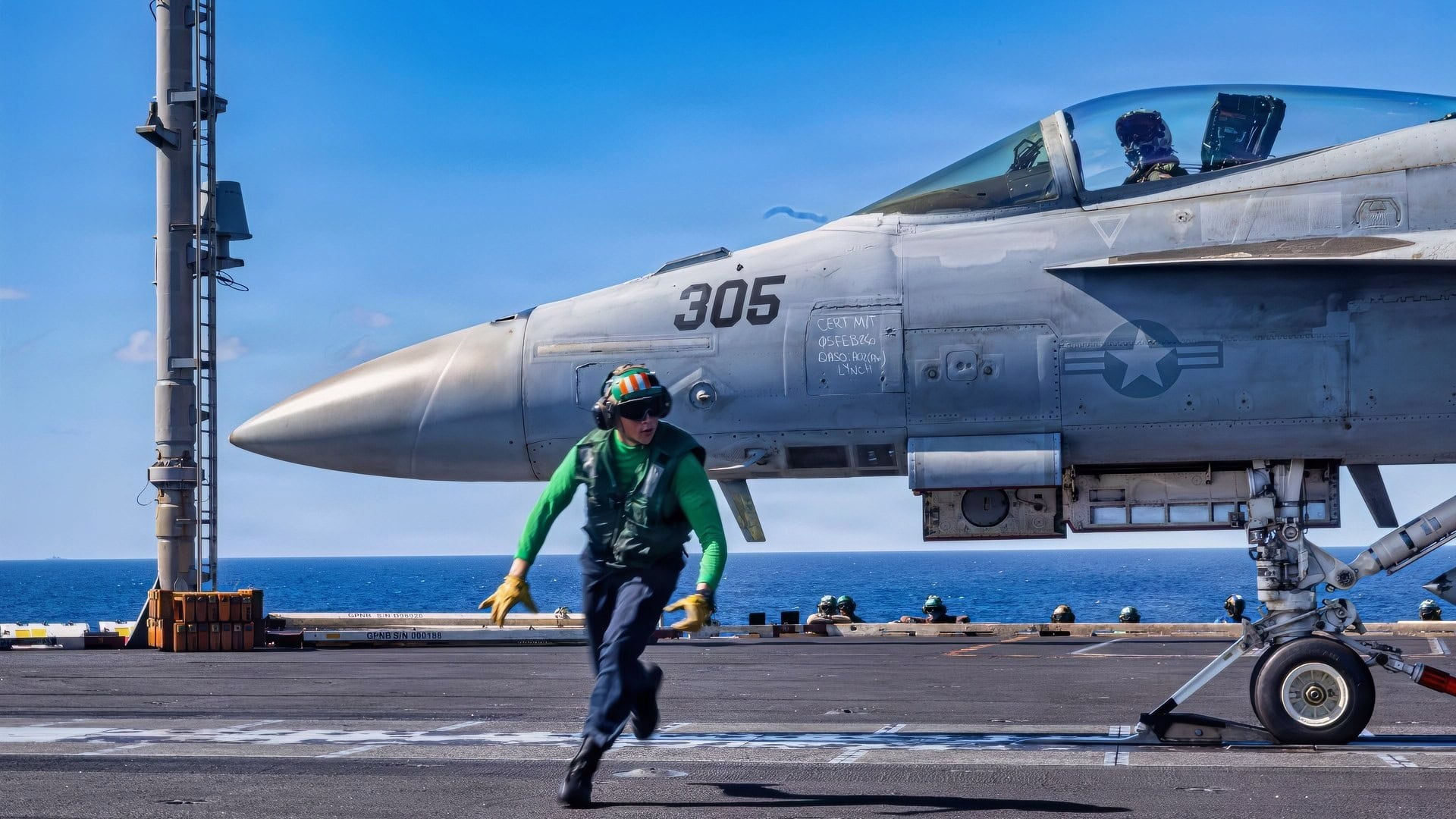
A U.S. Sailor moves behind a flight deck foul line before the launch an F/A-18E Super Hornet aircraft, attached Strike Fighter Squadron 31, from the flight deck of the world’s largest aircraft carrier, Ford-class aircraft carrier USS Gerald R. Ford (CVN 78), while underway in the Caribbean Sea, Feb. 5, 2026. U.S. military forces are deployed to the Caribbean in support of the U.S. Southern Command mission, Department of War-directed operations, and the president’s priorities to disrupt illicit drug trafficking and protect the homeland. (U.S. Navy photo)
Every crew and workspace is fully air-conditioned, which is no small feat in places like machinery rooms.
Finally, an all-new internal plumbing system known as the VCHT, or Vacuum, Collection, Holding, and Transfer system.
This replaced the age-old gravity-fed plumbing systems the Navy has used since the age of sail. Gravity systems are the stuff of legend.
A gravity toilet requires drain pipes that run straight down to a holding tank.
Any sharp bends or shallow angles can cause clogs or slow drainage.
They also use a lot of limited fresh water with each flush.
On long voyages, the holding tanks fill up quickly.
If the ship encounters rough seas, the violent motion can send effluent surging back up the pipes, where it erupts like a geyser from the toilets in the head.
It’s a truly horrifying moment in the life of a Sailor aboard ship.
Aircraft Carriers Create Human Waste On An Industrial Scale
The new VCHT system was supposed to eliminate these problems.
Like systems on cruise ships, it uses vacuum pressure to whisk away the contents of the toilet with a single button push and an instant “WHOOSH.”
It then sucks the waste down into the bowels of the ship, to a holding tank where it is mashed and treated before being flushed overboard as a liquid.
With a crew of some 4,500 Sailors and Marines on board, this is waste management on an industrial scale.
The Ford has 30 miles of sealed, pressurized copper/nickel piping to handle about 600 toilets.
Because the new system relied on vacuum pressure rather than water and gravity, the VCHT system allowed for narrower piping that no longer had to run straight down.
They could have bends and angles. Using less water per flush also allowed the holding tanks to be smaller.
Rather than each toilet requiring its own gravity-fed pipes, multiple toilets on several decks could be linked together to share the pressurized system.
“If you didn’t eat it first, don’t put it in the toilet”
This is where the problems began. The VCHT system worked well as long as a single important rule was scrupulously followed aboard ship: “If you didn’t eat it first, don’t put it in the toilet.” Whether by accident or by intent, things like pens, rags, rope, underwear, and T-shirts would be flushed and clog the narrow pipes.
In a gravity-fed system, that might only affect one or two toilets, but in a linked vacuum system, it would take one-quarter of the ship’s toilets out of service.
Limited water use also caused internal pipe problems.
Calcium deposits built up in the pipes that had to be flushed out with acid at an eye-popping cost of $400,000 per occurrence.
The USS Ford has required ten of these flushes so far, which can only be done in port. Yes, that’s $4,000,000.
More problems began to appear.
A single failed pressure valve on the back of a toilet could bleed off pressure, leaving 50 toilets out of service.
The VCHT system was proving to be the Achilles’ heel on the Ford-Class.
The VCHT System Can Be Deadly If It Fails
It would be easy to find humor in the situation if not for the fact that repairing a VCHT system can be not only a dirty job, but a deadly one.
Aboard the carrier, the Navy calls on its Hull Maintenance Technicians to maintain and repair these systems.
Part of that process is depressurizing it before accessing a pipe to clear a blockage.
If that is not done correctly, the result is known as a “Brown Water Blowout” of not just the open pipe but also the contents of the holding tank.
A byproduct of waste in holding tanks is Hydrogen Sulfide (H2S) gas.
In low concentrations, it has an odor like rotten eggs, causing eye irritation and nausea, but at higher concentrations in an enclosed compartment, the effect is near-instant unconsciousness and death within moments.
VCHT Stays As Is For Now
The Navy has no plans to remove or replace the VCHT system in the Ford or the other nine carriers in the pipeline.
Those $400,000 acid flushes will be recorded as unplanned expenses over the ship’s life.
With an expected life cycle of 50 years, ten acid flushes per year will add $200 million in sustainment costs to each ship at that current price.
That’s a lot of money to flush down the toilet in the long term.
About the Author: Sean Spoonts
Sean Spoonts is the former Editor-In-Chief of SOFREP.com. He is a military analyst, writer, and commentator whose work has appeared in Newsweek, CNS News, Ukrinform, and various military/veteran media networks and professional publications, including the Military Intelligence Professional Bulletin. He is a U.S. Navy veteran, having served as an Aviation Anti-Submarine Warfare Operator and Search and Rescue Helicopter Aircrewman.