Iran’s Minelaying Gives Shippers Headaches – For weeks, the world assumed that the Iran War had entered a new frozen phase of hostilities. While some ships were being attacked in the Strait of Hormuz (SoH), escalations were not really a factor during this time — especially as US ally Oman and the Islamic Republic of Iran negotiated for a settlement over the SoH.
Yet, that frozen conflict was melted into a renewed hot war when the United States launched a limited drone strike on Iran’s Larak Island. Naturally, the Iranians retaliated. In fact, Iran’s retaliation targeting US military facilities in places like Kuwait and Jordan was massive.
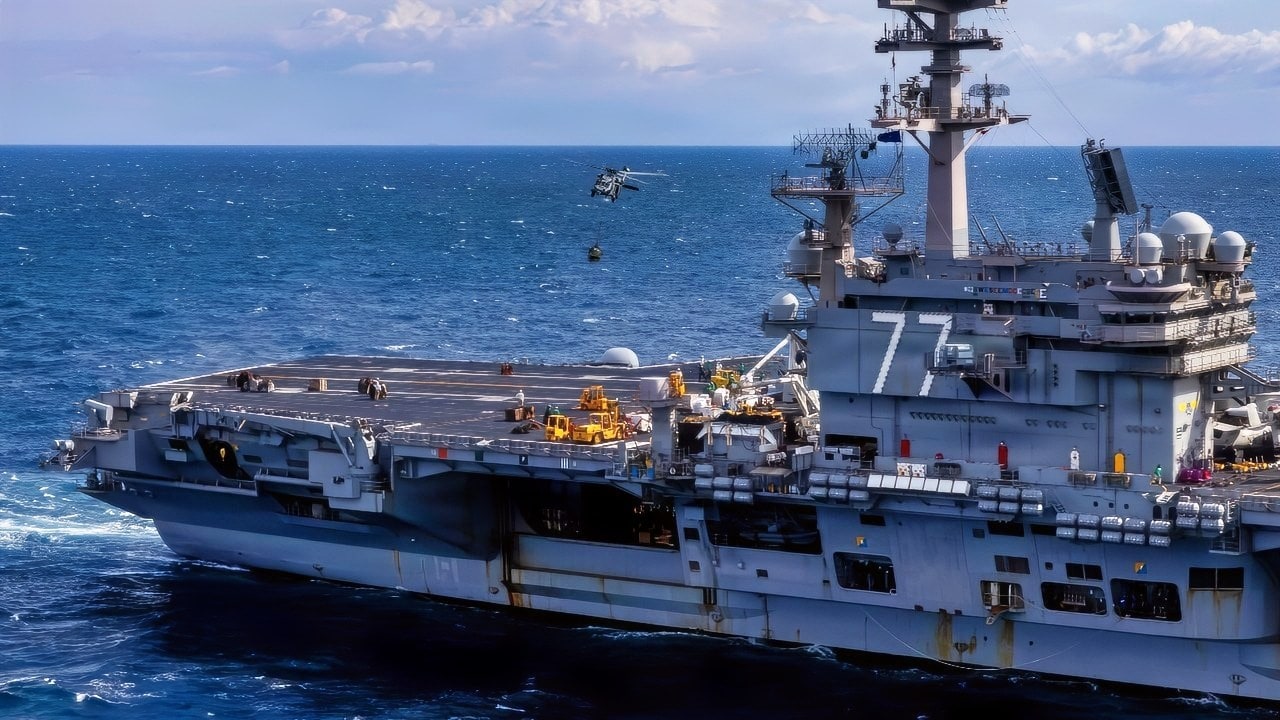
A MH-60S Seahawk helicopter assigned to the “Nightdippers” of Helicopter Sea Combat Squadron (HSC) 5 delivers cargo to the Nimitz-class aircraft carrier USS George H.W. Bush (CVN-77) during a vertical replenishment in the Atlantic Ocean, Feb. 15, 2026. The George H.W. Bush Carrier Strike Group is at sea training as an integrated warfighting team. Composite Training Unit Exercise (COMPTUEX) is the Joint Force’s most complex integrated training event and prepares naval task forces for sustained high-end Joint and combined combat. Integrated naval training provides combatant commanders and America’s civilian leaders highly capable forces that deter adversaries, underpin American security and economic prosperity, and reassure Allies and partners. (U.S. Navy photo by Mass Communication Specialist 2nd Class Mitchell Mason)
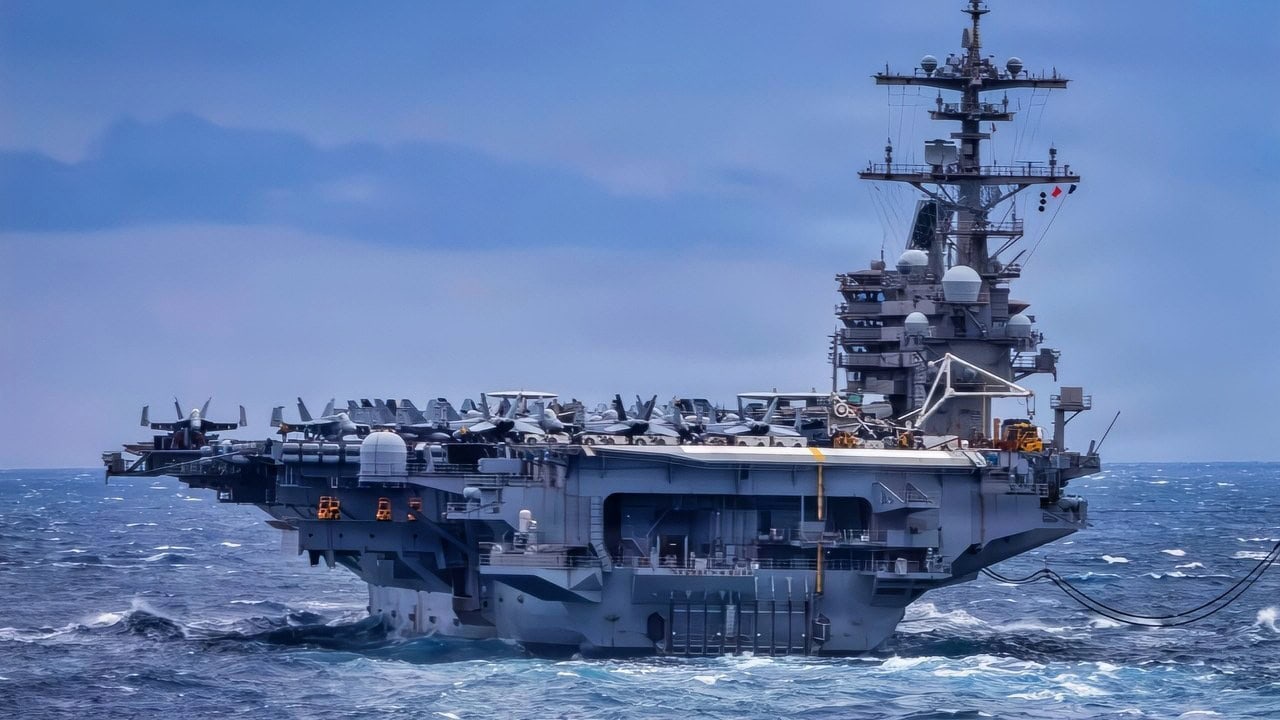
The Nimitz-class aircraft carrier USS George H.W. Bush (CVN 77) and the Henry J. Kaiser-class fleet replenishment oiler USNS John Lenthall (TAO 189) transfer cargo and JP-5 during a replenishment at sea in the Atlantic Ocean, Feb. 15, 2026. The George H.W. Bush Carrier Strike Group is at sea training as an integrated warfighting team. Composite Training Unit Exercise (COMPTUEX) is the Joint Force’s most complex integrated training event and prepares naval task forces for sustained high-end Joint and combined combat. Integrated naval training provides combatant commanders and America’s civilian leaders highly capable forces that deter adversaries, underpin American security and economic prosperity, and reassure Allies and partners. (U.S. Navy photo by Mass Communication Specialist 2nd Class Mitchell Mason)
Why did the Americans target the Iranian island?
Worry About Iranian Mines
According to multiple media reports, it concerned Iran’s minelaying capacity.
You see, the Americans claim that they’ve been working to remove suspected Iranian mines that were laid in the early phase of the Iran War in the main thoroughfare of the SoH. Indeed, Washington claimed some success.
But the US believed that the Iranians were readying to restart their minelaying operations in the SoH. Of course, some critics have alleged that the Americans really struck the Iranian island to disrupt the ongoing Oman-Iran negotiations, which Washington fears will set a dangerous precedent allowing for other countries near strategic chokeholds to impose fees (the Iran-Oman negotiations were over control of the SoH).
That last part remains unconfirmed. What we do know for sure, though, is that the Americans struck a Fajr-5 rocket launch platform where it was suspected that the Iranians had adapted those rockets for minelaying missions. American intelligence estimates that the Iranian mine stockpile is anywhere between 2,000 and 6,000 naval mines.
If those numbers are anywhere near accurate, and if the fight between Iran and the United States over control of the SoH persists, the Iranian minelaying capability becomes a real threat from Washington’s perspective.
Iranian mines vary in capability and complexity. Some go back to the designs of the First World War. Iran also possesses advanced mines, some of which can lie dormant on the floor of the SoH and be activated by the specific acoustic signatures of a ship (stored in the mine’s memory banks). These are very difficult to detect and even harder to destroy. There are many other mines in the Iranian arsenal, too, including magnetic influence mines and limpet mines that swimmers can attach. The Iranians have torpedo-launched mines, too.
The Fajr-5 Minelaying Threat
The most innovative design, though, is with the Fajr-5 rocket.
These rockets are launched and, rather than detonating a warhead, disperse free-floating mines into a body of water. Iran maintained Fajr-5 launchers along the SoH, and the US opted to destroy one of those launch sites. Too bad for the US that the Iranians have more than one launch site and, as you can see from above, Iran possesses more than enough systems–and varieties of those mines–to pose a constant danger.
Iran doesn’t need to mine the whole SoH. All they have to do is even threaten to mine the Strait, and that’d be enough to disrupt global shipping further, as major shipping insurers (like Lloyd’s of London) would become incredibly risk-averse and resist insuring ships using the SoH (which ships must use the Strait). Reports from Lloyd’s of London itself indicate that the US claims about successful mine-clearing efforts, as well as the recent American drone strikes on Fajr-5launchers on Larak Island, have failed to convince the already skittish global shipping insurance firm that it’s safe for civilian transportation to resume through the SoH.
No Real De-Mining
So, the American attempts to end the mine threat in the SoH have been brushed aside. What’s more, the Iranian threat to completely mine the SoH is much greater than what many in the West understand.
Having upwards of 6,000 mines of various sizes and capabilities means that no pinprick drone strike of the kind that the Americans engaged in this last weekend will be enough to calm the roiling waters of the global shipping insurance industry.
Further, the fact that the US Navy’s mine-clearing capability is severely limited raises further doubts and concerns that the Pentagon’s claims of successfully demining the SoH are little more than exaggerations.
The Iranians have had 47 years to prepare for this kind of war. Since the start of hostilities on February 28, Tehran has repeatedly demonstrated a remarkable capacity to endure in the face of severe US and Israeli military threats.
Now, the Iranians are demonstrating a capacity to totally threaten the world in their own unique ways, such as with these mines.
The only off-ramp is true negotiations that meet the Iranians at least halfway. Thus far, the Americans aren’t interested in that. So, they will continue weakening themselves with fruitless military operations that only embolden the Iranian war machine in the SoH.
About the Author: Brandon J. Weichert
Brandon J. Weichert is the Senior National Security Editor at 19FortyFive.com. He also manages The Weichert Brief on Substack. Weichert also hosts “National Security Talk” on Rumble. He is the author of four bestselling national security books, the most recent of which is A Disaster of Our Own Making: How the West Lost Ukraine (Encounter Books). Follow him via Twitter/X @WeTheBrandon.