
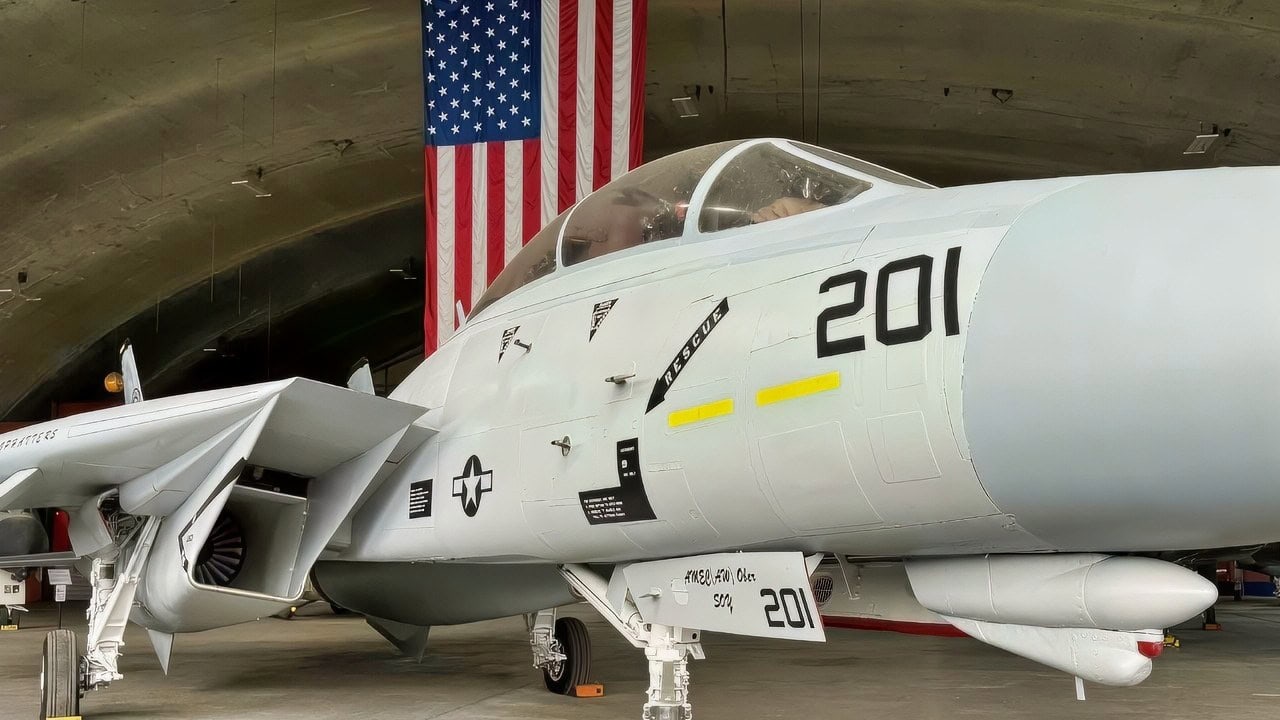
Summary and Key Points: The engine in the F-14 Tomcat began life in 1958 as a proposal for a short-haul jet airliner. Pratt & Whitney scaled down a commercial turbofan for the Navy’s F6D Missileer. The Missileer was canceled in 1961; the engine survived into the F-111, and when Grumman needed powerplants for the Tomcat in the early 1970s, the Navy — under budget pressure and on a schedule — reused it rather than wait for a purpose-built fighter engine. Navy Secretary John Lehman later said the TF30 was responsible for roughly 28.2 percent of all F-14 losses and called it “probably the worst engine-airplane mismatch we have had in many years.” Estimates put the toll at around 40 airframes. Aircrew had a shorter description: a nice aircraft powered by two pieces of junk.
The F-14 Tomcat’s First Engine Was A Disappointment
The Grumman F-14 Tomcat is remembered as one of the most capable fighters of the Cold War, but the jet that made it into Top Gun almost never lived up to that reputation.
For its first decade and a half of service, the Tomcat was saddled with an engine so poorly matched to the airframe that the Navy’s own leadership called it an embarrassment.
That engine was the Pratt & Whitney TF30, and its troubled career says as much about Pentagon procurement shortcuts as it does about jet propulsion.
The Wrong Engine For the Wrong Aircraft
The TF30’s origins trace back to a 1958 Douglas Aircraft proposal for a short-haul jet airliner. Pratt & Whitney pitched a scaled-down turbofan derivative of its JT8D, and when the Navy went looking for power for its ill-fated F6D Missileer interceptor, it picked up the design.
The Missileer was canceled in 1961, but the engine was retained for General Dynamics’ entry in the TFX competition, which became the F-111 Aardvark.
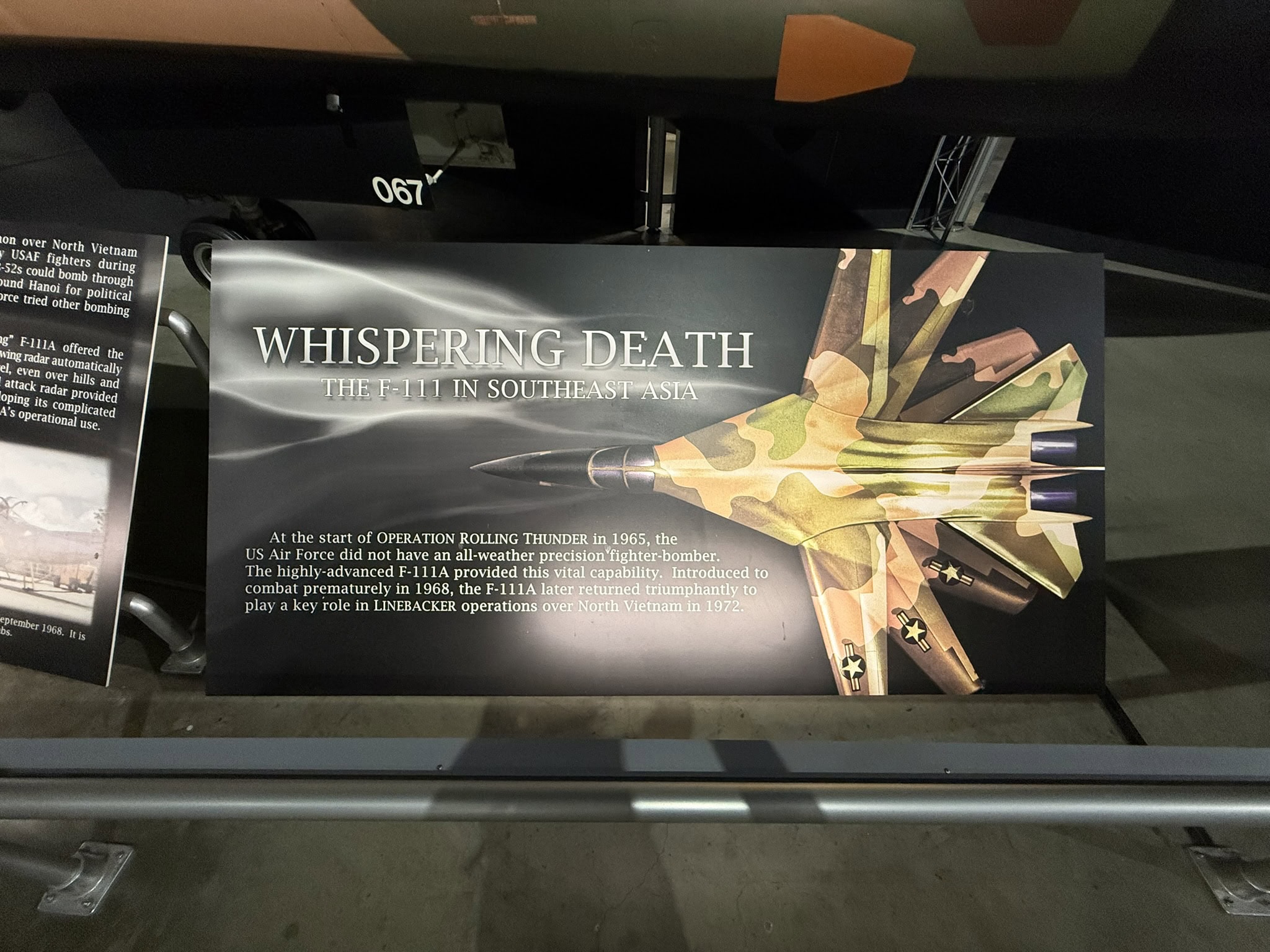
F-111 On Display at the National Museum of the U.S. Air Force. Take on July 19, 2025 by Harry J. Kazianis for 19FortyFive.com
Fitted with an afterburner, the TF30 became the world’s first production afterburning turbofan, and it did reasonably well pushing the F-111’s swing-wing bomber airframe through its paces.
That pedigree was the problem. When Grumman needed engines for the F-14 in the early 1970s, the Navy, under budget pressure and on a tight schedule, opted to reuse the TF30 rather than wait for a purpose-built fighter engine.
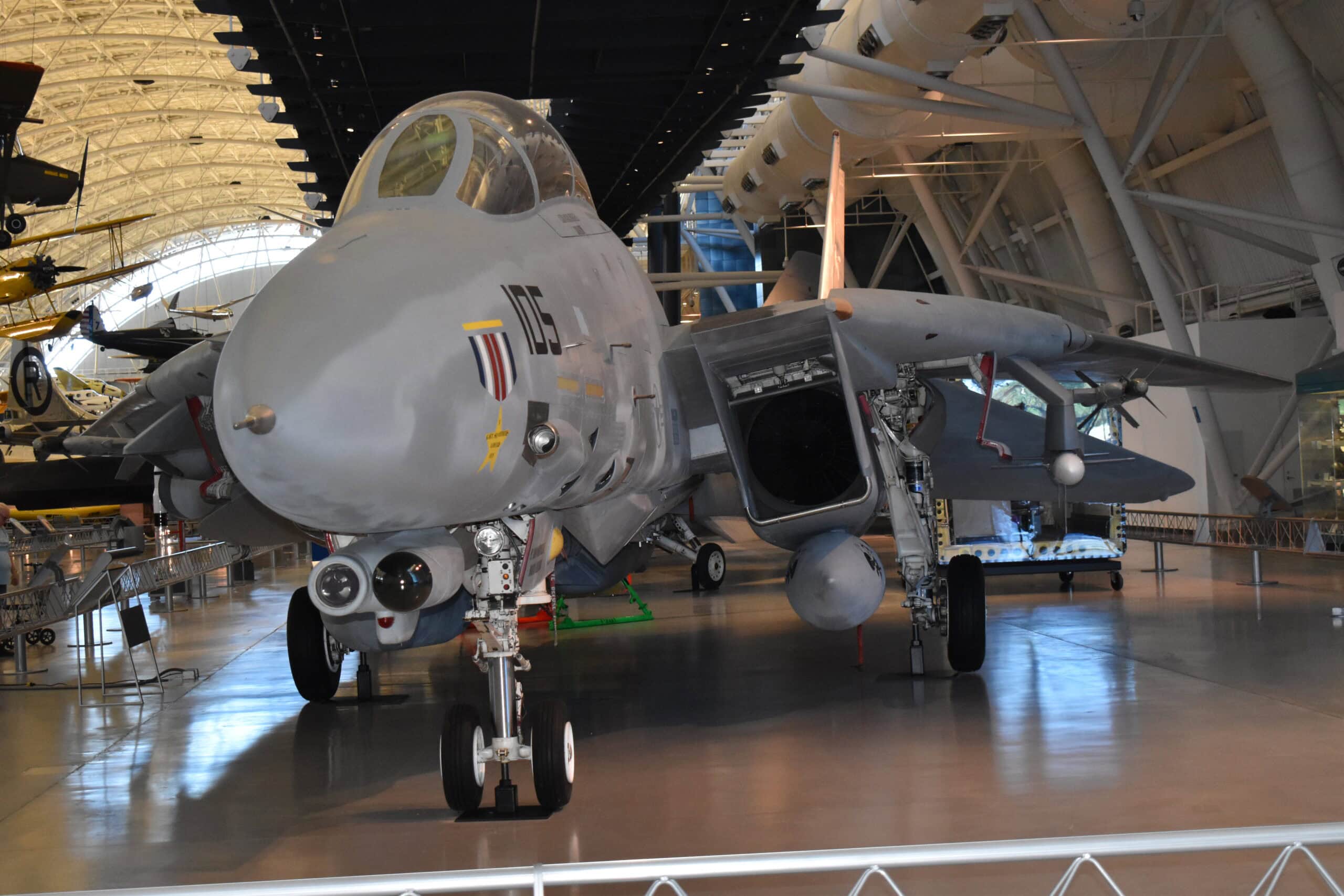
F-14 Tomcat at the Smithsonian. 19FortyFive.com original photo.
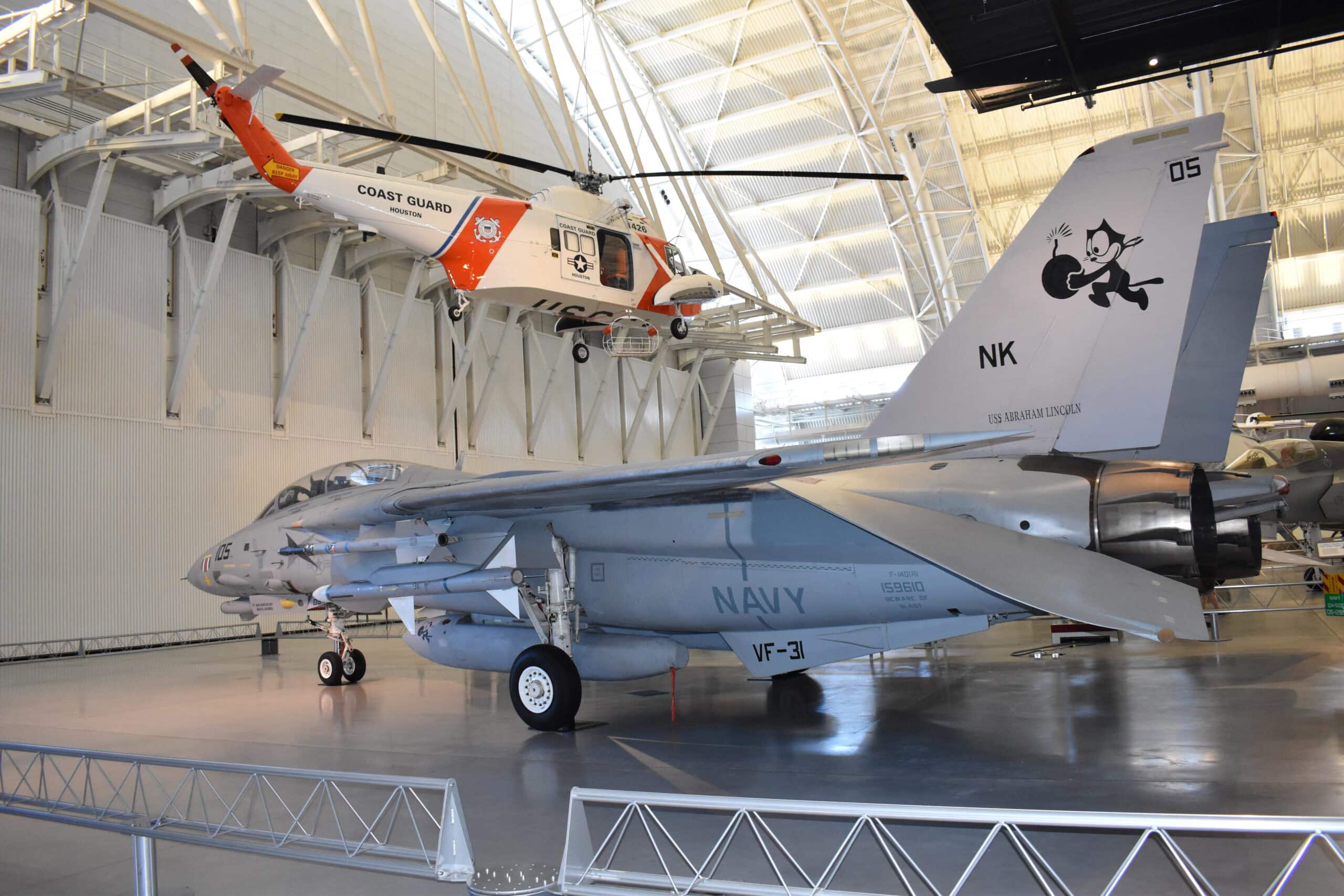
F-14 Tomcat at the Smithsonian. Image Credit: 19FortyFive.com
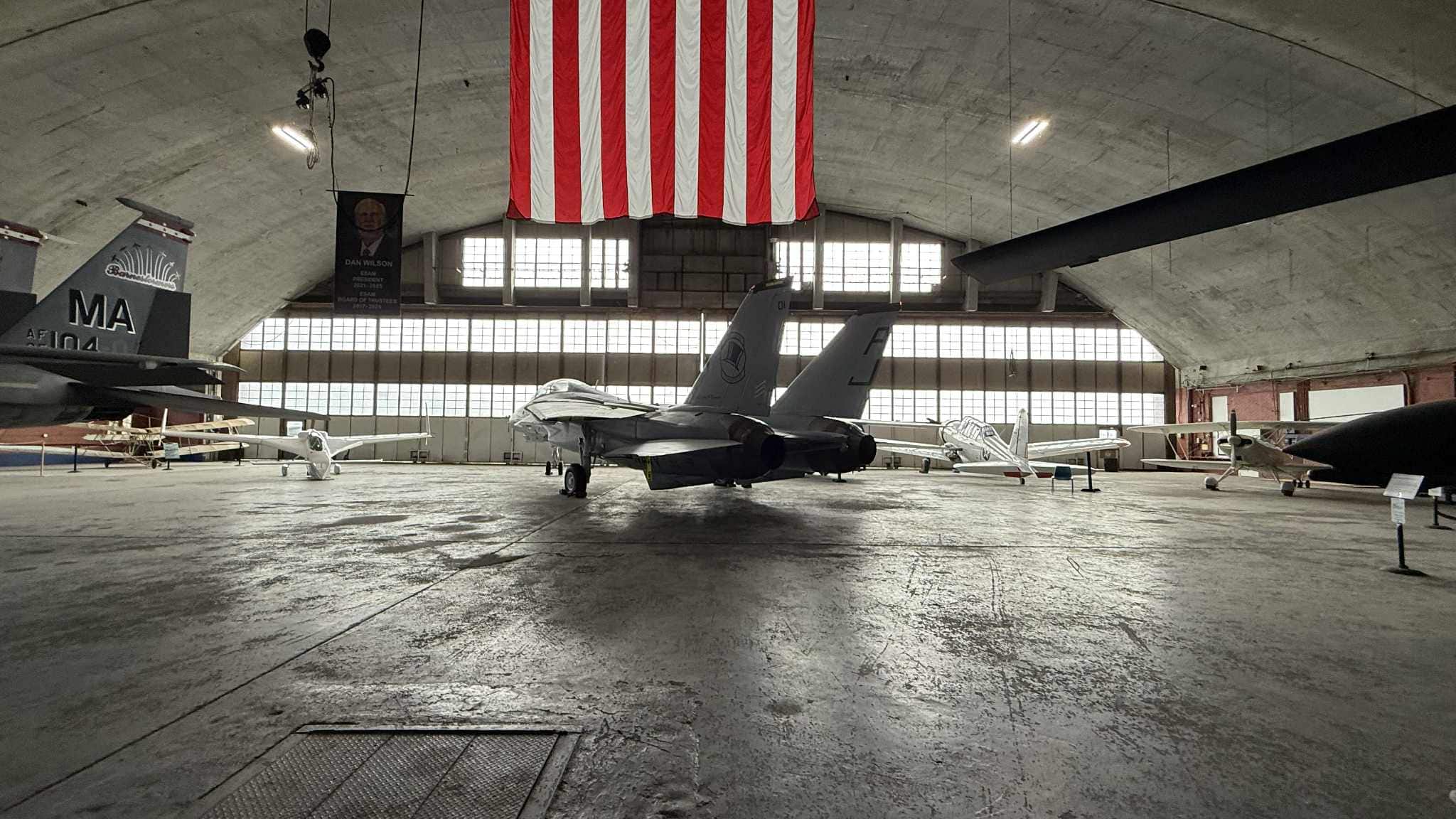
F-14 Tomcat. Image Credit: 19FortyFive.com
It was, as later officials put it, an engine designed for a strike-bomber grafted onto an air-superiority fighter meant for hard, aggressive maneuvering against Soviet MiGs.
The Engine Had A Dangerous Flaw
The TF30’s core weakness was its intolerance for rapid throttle movement at high angles of attack, exactly what dogfighting demands.
If the pilot pushed the throttles too aggressively while the nose was pointed high and the airflow into the compressor could separate, triggering a compressor stall. In most twin-engine fighters, that would be a nuisance.
In the Tomcat it was often catastrophic, because the F-14’s engine nacelles sat roughly nine feet apart.
A stall in one engine produced violent asymmetric thrust, and if a pilot didn’t react immediately, the jet could snap into a flat spin from which recovery was difficult or impossible.
Pilots and engineers came to loathe the powerplant. Compressor stalls were joined by turbine and fan-blade failures, and the engine earned a grim nickname among aviators, who called the Tomcat “a nice aircraft powered by two pieces of junk,” according to an article by Alex Hollings.
The numbers backed up the sentiment. Navy Secretary John F. Lehman Jr. later stated that the TF30 was responsible for roughly 28.2 percent of all F-14 losses, calling it “probably the worst engine-airplane mismatch we have had in many years.”

Aviation Museum of Kentucky F-14 Tomcat. Image Taken on March 1, 2026 by Christian D. Orr.
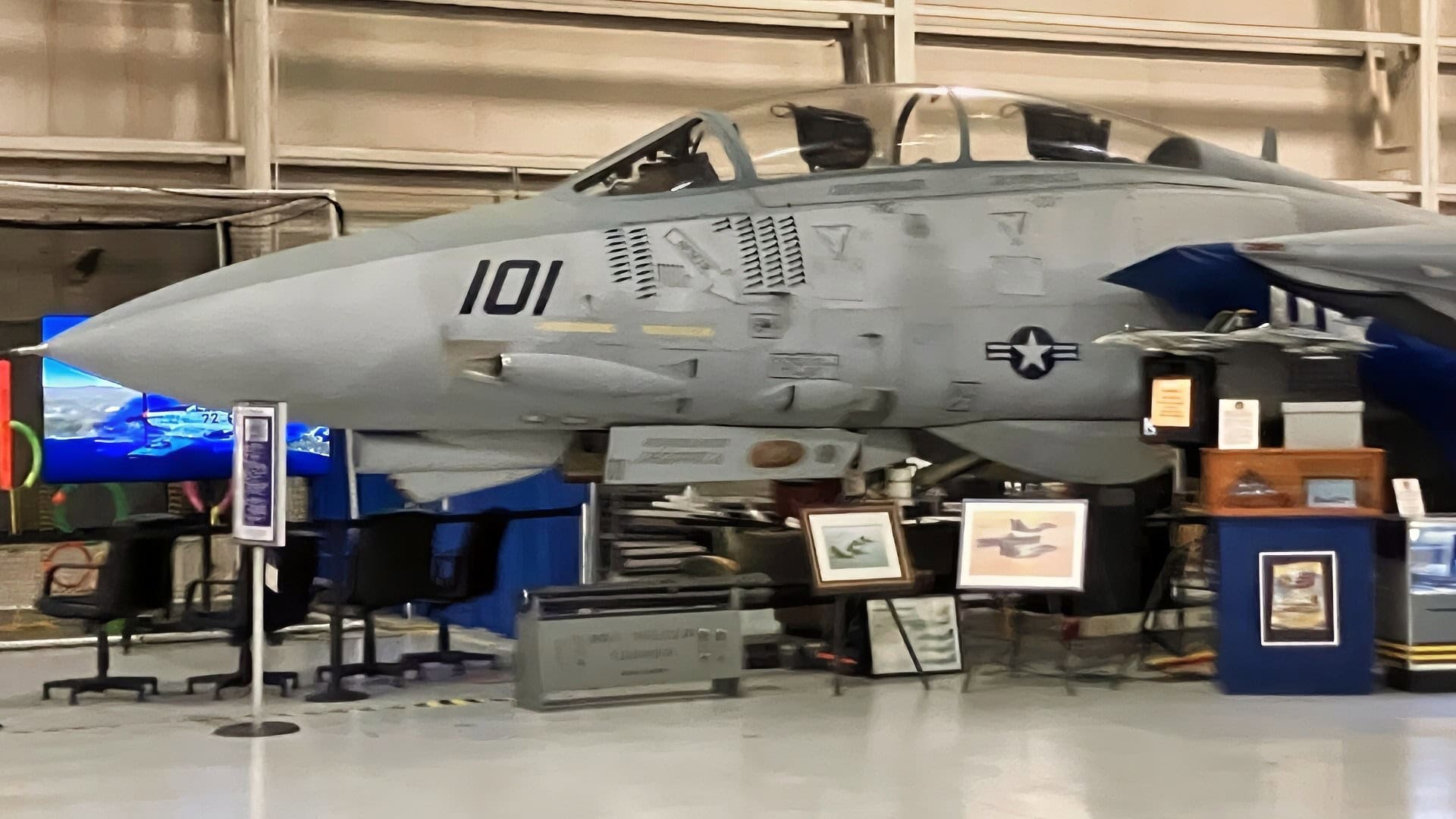
Aviation Museum of Kentucky F-14 Tomcat. Image Credit: 19FortyFive author Christian D. Orr. Taken on March 1, 2026.
Estimates put the total number of Tomcats lost to engine-related failures at around 40 airframes over the type’s service life.
The most painful reminder of the TF30’s danger came in 1994, when Lt. Kara Hultgreen, the Navy’s first female carrier-qualified F-14 pilot, was killed after a compressor stall during her final approach to the USS Abraham Lincoln.
The Navy’s investigation attributed the crash to the engine rather than pilot error, a conclusion that only reinforced how deeply the TF30’s flaws were embedded in the aircraft’s operational history, echoed a year later in a near-identical incident during a high-speed flyby of the USS John Paul Jones, from which both crew members ejected safely.
Fixing The Problem For The F-14 Tomcat
The irony is that the TF30 wasn’t a bad engine everywhere; it flew adequately in subsonic aircraft like the A-7 Corsair II, which never asked it to survive the abrupt, high-alpha throttle inputs of air combat maneuvering. The mismatch was specific to strapping an interceptor-era engine onto a fighter built for dogfighting.
The real fix didn’t arrive until 1988, when the improved F-14B introduced the General Electric F110-GE-400, which delivered nearly 30 percent more thrust along with dramatically better stall resistance.
Once that engine was put into the aircraft, its problems disappeared. Naval aviators loved the F-14 Tomcat for its unmatched long-range fleet-defense capabilities, its high-speed, high-altitude interceptor performance with the powerful AIM-54 Phoenix missile, and its versatile variable-sweep wings that provided both agility in dogfights and high-speed performance.
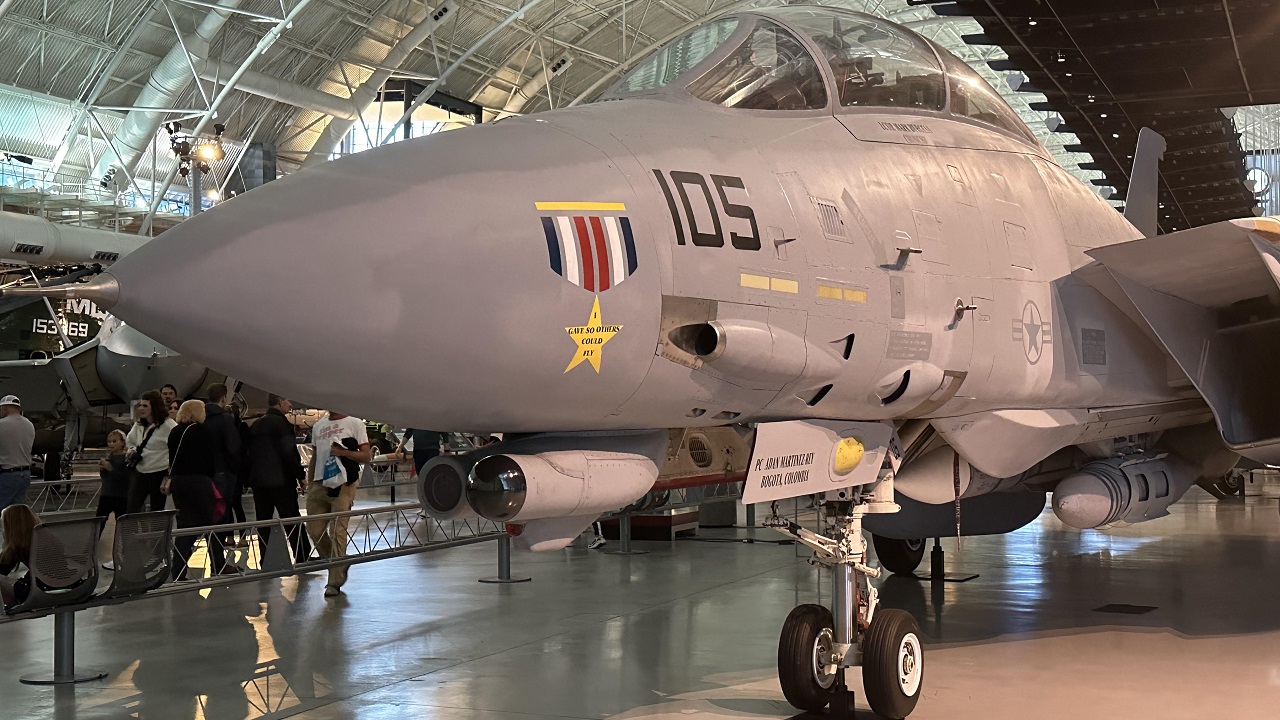
F-14 Tomcat. Image taken at National Air and Space Museum on October 1, 2022. Image by 19FortyFive.
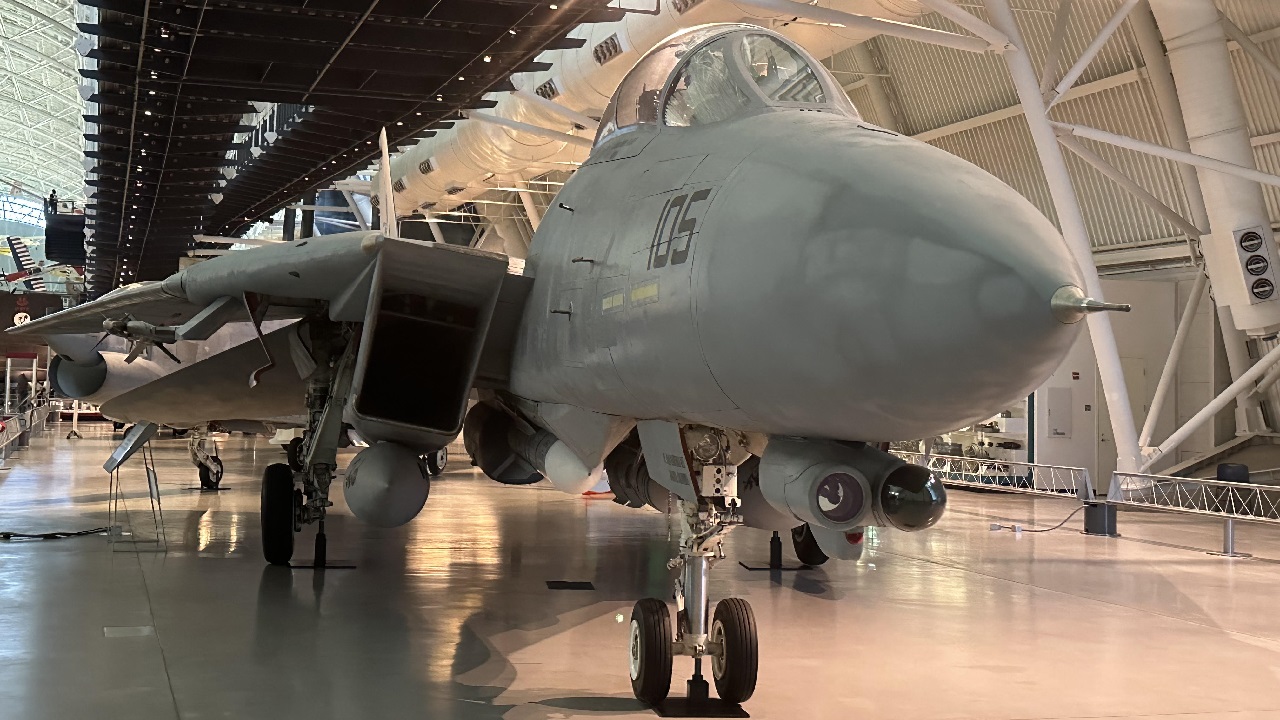
F-14 Tomcat. Image taken at National Air and Space Museum on October 1, 2022. Image by 19FortyFive.
Its powerful radar, capable of tracking multiple targets simultaneously, and its two-man crew, which allowed for enhanced situational awareness, made it a dominant air superiority fighter.
Starting in 1996, the Navy retrofitted many of its remaining F-14As with the F110, finally giving the Tomcat the engine it had needed from day one.
However, a large share of the fleet flew with the original TF30 well into the 1990s and even into the 2000s before the F-14 was retired in 2006, meaning the Navy’s marquee fighter spent most of its operational life at the mercy of an engine that was, by its own leadership’s admission, never meant for the job.
About the Author: Steve Balestrieri
Steve Balestrieri is a National Security Columnist. He served as a US Army Special Forces NCO and Warrant Officer. In addition to writing on defense, he covers the NFL for PatsFans.com and is a member of the Pro Football Writers of America (PFWA). His work was regularly featured in many military publications.