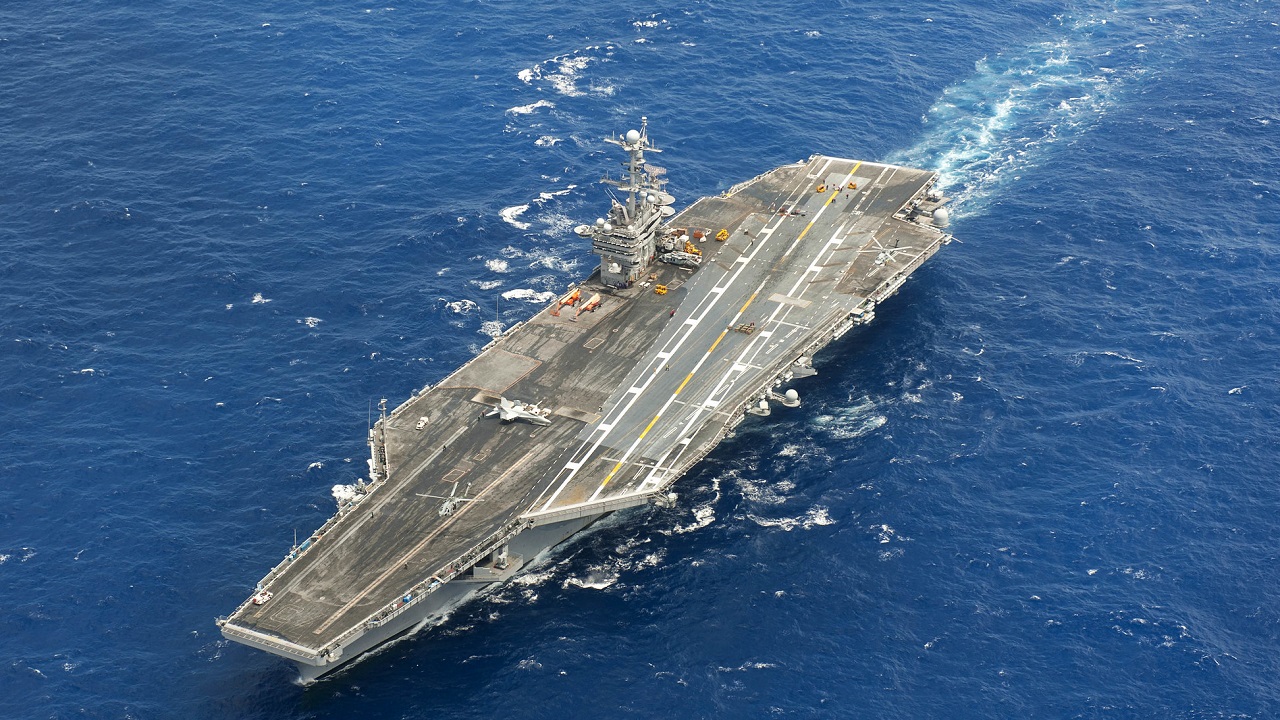
Are serious mishaps involving loss of life, serious injury, and millions in damage on the rise in the US military? The raw numbers seem to confirm it. Take, for example, the aircraft carrier USS Harry S. Truman. In December 2025, the USNI news published a story about the Navy’s investigation of a string of mishaps that resulted in the USS Harry S. Truman colliding with a tanker, losing two F/A-18s brought down by friendly fire, an F/A-18 that slid over the side still attached to a tow tractor, and another F/A-18 that was destroyed when an arresting cable failed on its landing, sending it over the side as well.
The report cited a host of contributing factors that led to these varied mishaps, including:
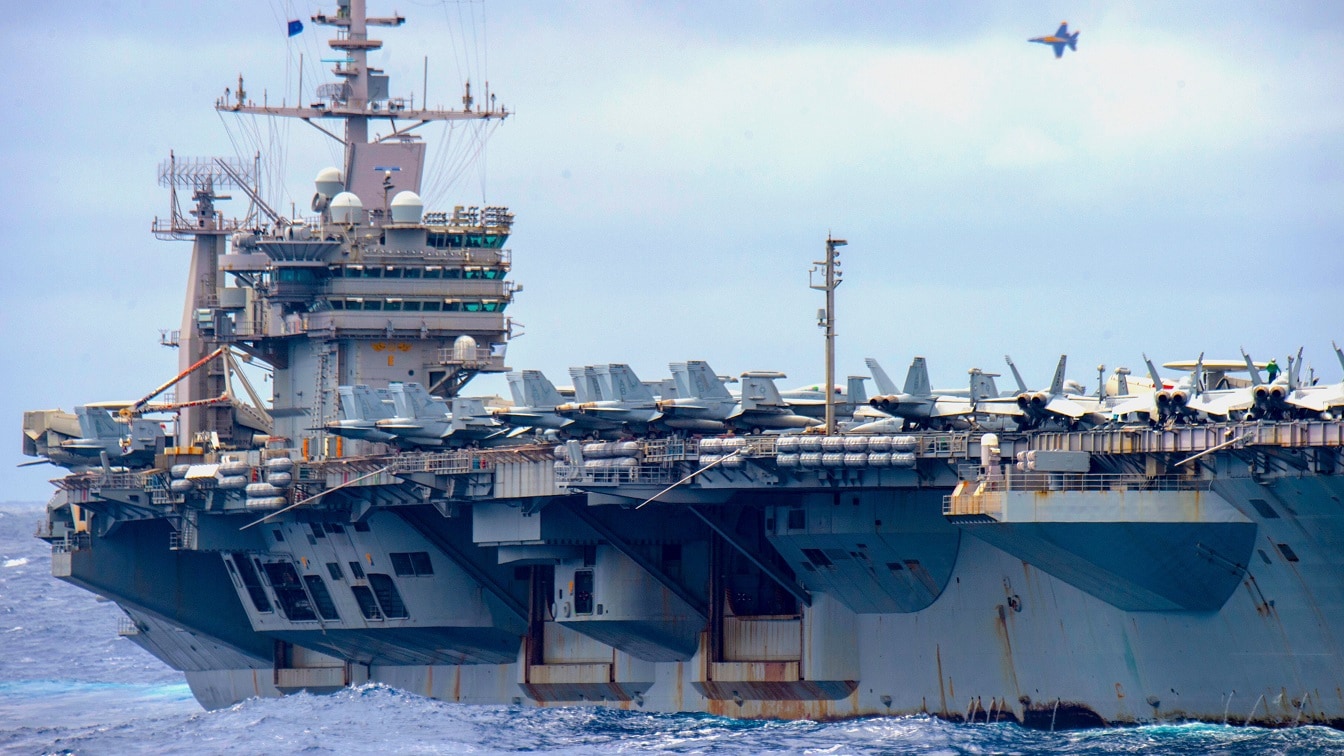
The Blue Angels, flies over the Nimitz-class aircraft carrier, USS Harry S. Truman (CVN-75) on May 20, 2020. US Navy Photo/
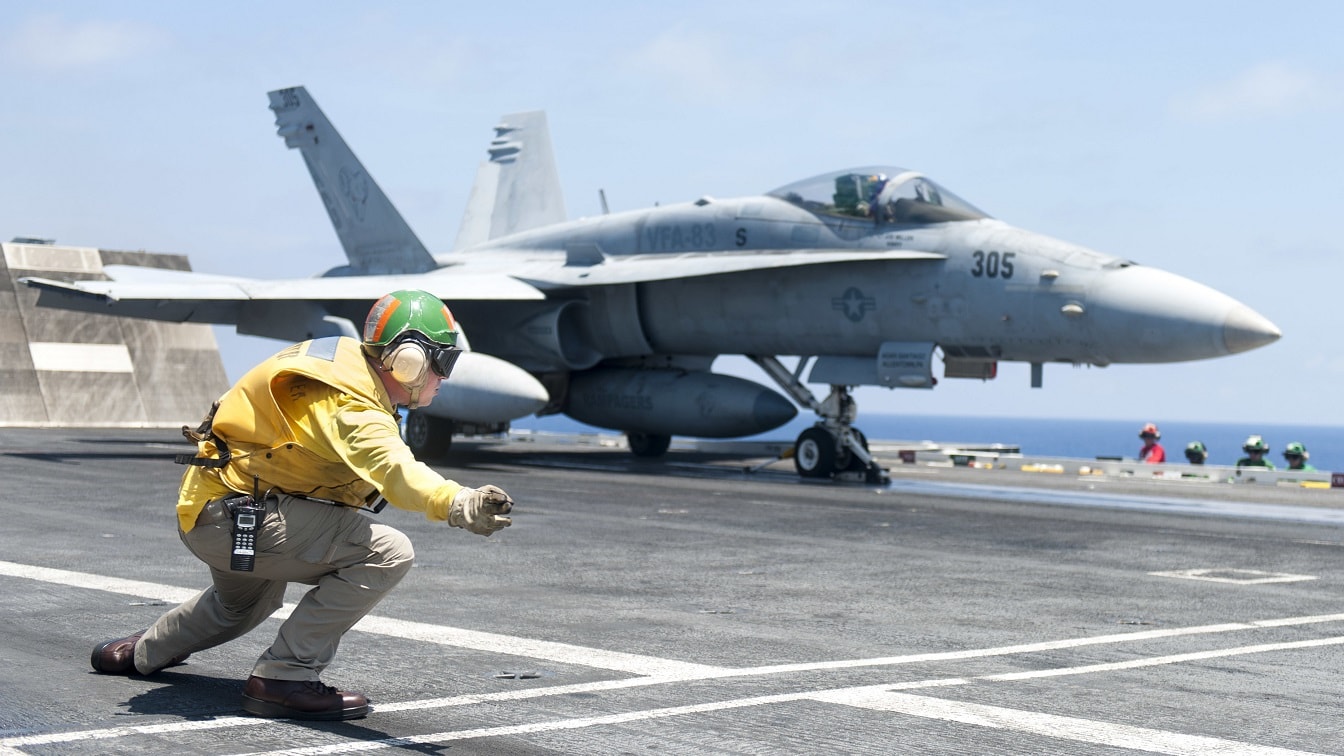
(June 15, 2015) Lt. B. J. Burnham signals to launch an F/A-18C Hornet, assigned to the “Rampagers” of Strike Fighter Squadron (VFA) 83, on the flight deck of aircraft carrier USS Harry S. Truman (CVN 75). Truman is underway conducting Tailored Ship’s Training Availability (TSTA) off the east coast of the United States. TSTA is the first combined training event of a ship’s inter-deployment training cycle that tests and evaluates shipboard drills, including general quarters, damage control, medical and firefighting. Upon successful completion of TSTA, Truman will be considered proficient in all mission areas. (U.S. Navy photo by Mass Communication Specialist 2nd Class K. H. Anderson/Released)
-Improper communications procedures.
-Lack of Communications.
-Under-manned positions aboard the ship.
-Improper maintenance.
-Maintenance not performed.
-Improperly trained personnel.
-Crew fatigue.
-A working climate of “Just get it done.”
A Dramatic Rise In Class A Mishaps
Since 2022, the Navy has seen a dramatic increase in Class A Mishaps at sea and in the air compared with the pre-pandemic years of 2020 and 2021, when active operations were dramatically cut back, and naval aviators had less flight time.
This piece by the Maritime Executive in 2024 found the Navy’s accident-at-sea rate at a decade-high number, led by Military Sealift Command)MCS), whose ships sustain the Navy at sea.
Aviation mishaps are rising as well.
The Navy Safety Command reports a ten-year Class A Mishap rate from 2016-2025 of 1.33 incidents per 100,000 flight hours. In 2025 alone, the mishap rate was 1.89 per 100,000 flight hours, up more than 42%.
A letter sent to the Pentagon by Senator Elizabeth Warren, who sits on the Senate Armed Services Committee, expressed the cost in financial and human terms;
“These mishaps cost the military $9.4 billion, killed 90 service members and DoD civilian employees, and destroyed 89 aircraft between 2020 and 2024. Among the service branches, the Marine Corps had the highest average Class A mishap rates, with a 194 percent increase from 2020 to 2024.”
The Pandemic Takes Some Of The Blame
Some of this increase could be explained by the pandemic’s knock-on effects, which reduced training and operations to what was deemed necessary to ensure readiness.
This would result in fewer flight hours for pilots, and flying is a perishable skill.
The more experience a pilot has, the fewer mishaps occur per total flight hours.
Missing Recruiting Goals
Some planning issues could also be explained by a lack of recruits at the center of the services.
In fiscal year 2022, the Navy barely met its recruiting goals but had a significant shortfall in Delayed Entry Program enlistments that carried over into the next year.
As a result, in FY 2023 the Navy failed to meet any of its active duty or reserve goals for officers or enlisted personnel.
That year, the Navy lost 7,000 more Sailors than it gained.
That is enough Sailors to crew an entire Carrier Strike Group’s aircraft carrier, air wing, and escorting ships.
Missing Sailors May Be The Biggest Cause
Aboard a Navy ship, each Sailor represents a Unit of labor that can perform a certain number of tasks at a certain rate within a twelve-hour workday.
Each ship has a set of tasks assigned different priority levels, from ship safety and operation to superficial cosmetic appearance, like painting and shining brass fittings.
The Navy enlisted ratings function as a Master/Apprentice program where experienced sailors perform tasks while teaching junior Sailors how to perform them.
As a result, Navy ships have larger crews than the bare minimum needed to keep them operating, to train new sailors, and to replace casualties in battle.
If you have too few sailors to do all the work needed, you prioritize the most urgent tasks and defer the rest until more time or people become available.
Being short 18,000 sailors means many lower-priority tasks go incomplete, and new sailors cannot be trained to replace those who leave the Navy in peacetime or become casualties in battle.
As mentioned above, the causes of these Class A Mishaps were reported as entirely avoidable, and the causes seem most related to not having the personnel needed to prevent them.
The Navy Hitting Recruiting Goals May Improve Things Quickly
There is cause for optimism that things will get better.
Despite increased Carrier Strike Group deployments, the Navy has recruited 81,200 Sailors over the last two years, hitting its recruiting goals months ahead of forecast.
The stresses and strains of wartime conditions in the Middle East now would serve to exacerbate these conditions as they existed before all these new enlistments; it does take 3-4 years to get a Sailor out of their apprentice stage of training, where they are actually doing their job with a high level of competence.
2025, the Navy’s reported Class A Mishap rate at sea dropped from 9 to 5 over the previous year, while the mishap rate in the air increased to 12 from 7 in 2024.
When the Navy releases its 2026 safety numbers, we will know more about whether meeting its recruiting goals has positively impacted them.
About the Author: Sean Spoonts
Sean Spoonts is the former Editor-In-Chief of SOFREP.com. He is a military analyst, writer, and commentator whose work has appeared in Newsweek, CNS News, Ukrinform, and various military/veteran media networks and professional publications, including the Military Intelligence Professional Bulletin. He is a U.S. Navy veteran, having served as an Aviation Anti-Submarine Warfare Operator and Search and Rescue Helicopter Aircrewman.