
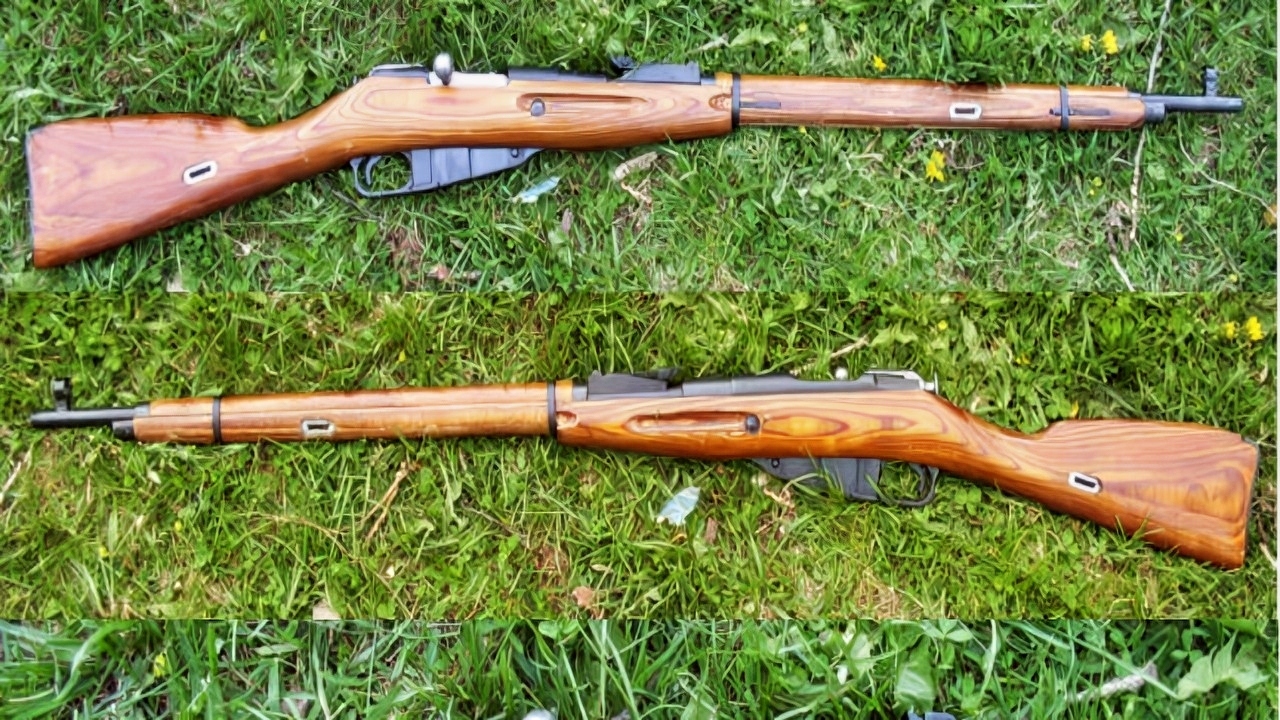
Summary and Key Points: The Russian Imperial Army adopted the Mosin-Nagant in 1891, marrying Captain Sergei Mosin’s bolt to Léon Nagant’s magazine and firing the rimmed 7.62x54R cartridge still in service today. Remington and New England Westinghouse built 3.3 million for the Tsar before the Bolsheviks defaulted. More than 37 million were built in Russia, arming the Tsar’s army, Stalingrad’s defenders, Lyudmila Pavlichenko’s 309 kills, Simo Häyhä’s 500-plus for Finland, and Donbas conscripts in Ukraine in 2022.
The Mosin-Nagant: The Rifle That Refuses to Retire:
Few rifles have been fired in anger longer than the Mosin-Nagant. It was adopted when Benjamin Harrison was in the White House, and it was still turning up on the front lines of a European war in 2022.
Along the way, it armed a Tsar’s army, a revolution, the defenders of Stalingrad, and the deadliest snipers in history.
It was never elegant; few Russian weapons ever are. It didn’t need to be.
A Rifle Built By Committee
In the late 1880s, the Russian Imperial Army knew it was falling behind. Its single-shot Berdan rifles couldn’t compete with the repeaters appearing in European armies. So a commission sought a modern magazine rifle, and two designs rose to the top.
One came from Captain Sergei Mosin, a Russian officer at the Tula arsenal. The other came from Belgian designer Léon Nagant. Nagant’s rifle technically lost.
However, the commission liked enough of it to keep the best parts. As the NRA Museum explains, the final rifle married Mosin’s receiver and bolt, with its two large front locking lugs, to Nagant’s clip-loaded magazine.
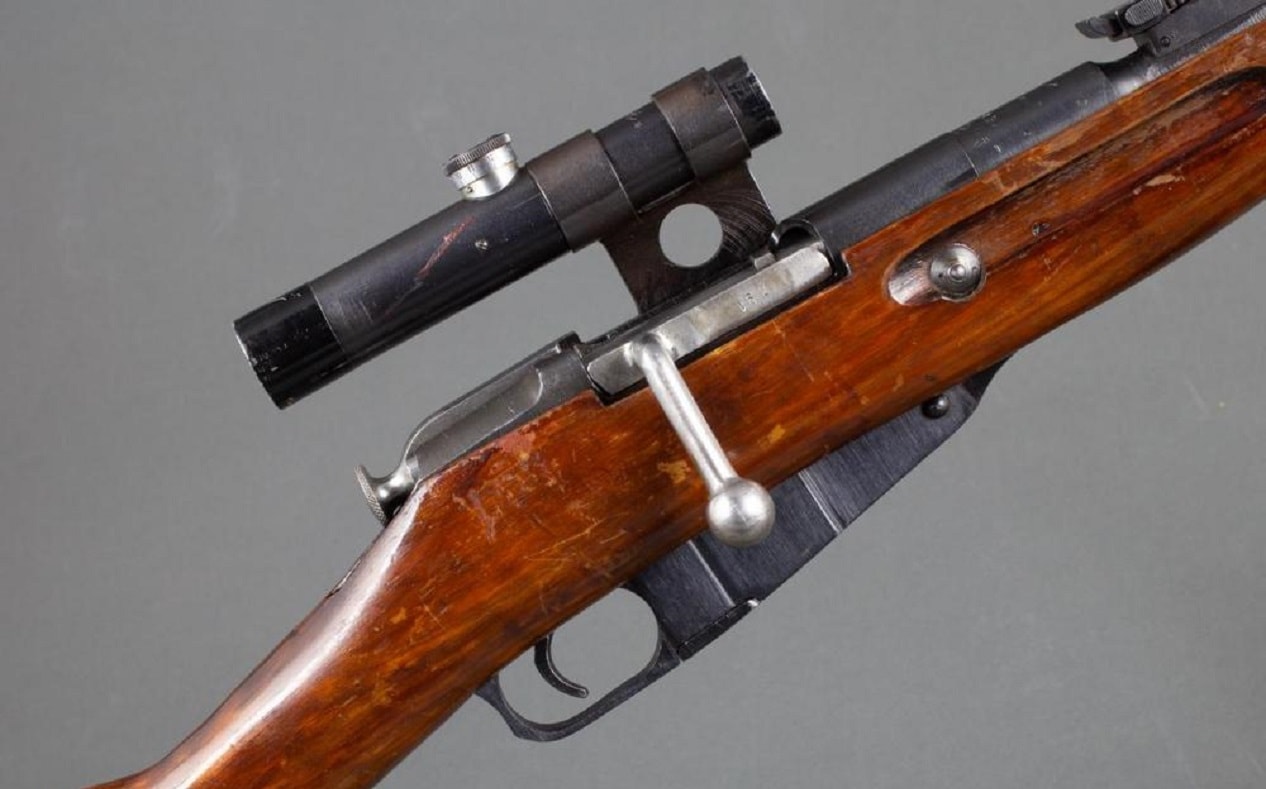
Mosin–Nagant Rifle. Image Credit: Creative Commons.
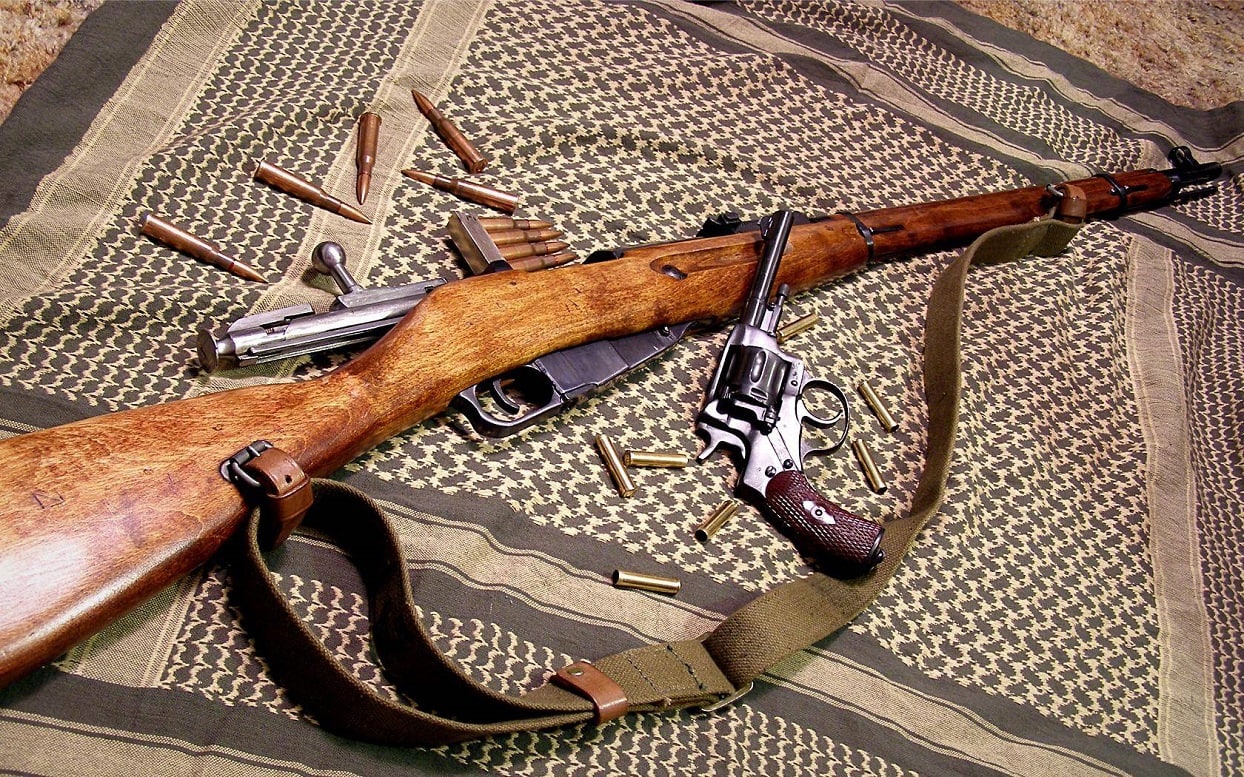
Image: Creative Commons.
The Russians adopted it in 1891 as the “Three-Line Rifle.” A “line” was an old Russian measurement of one-tenth of an inch, so three lines equal .30 caliber.
The cartridge was the 7.62x54R, a rimmed round with power approaching the .30-06. It started with a 210-grain round-nose bullet, and in 1908 the Russians switched to a 148-grain spitzer. That cartridge is still in service today, more than 130 years later. Think about that for a minute.
An American Footnote
Here’s one most people don’t know. When World War I broke out, Russian factories couldn’t keep up with demand, so the Tsar turned to American industry. Remington got an order for 1.5 million rifles, and New England Westinghouse got one for 1.8 million.
Then the Tsar fell. The Bolsheviks defaulted on the contracts, claiming the rifles were substandard, which they weren’t. The U.S. government had to buy the leftovers to keep both companies from going under.
Some were issued as training rifles. Others went with American troops of the Polar Bear Expedition to Archangel in 1918, where U.S. soldiers carried Russian rifles into Russia.
You can’t make this stuff up.
The Mosin-Nagant Was A Soviet Workhorse
The Soviets updated the design in 1930 with the M91/30. It was simpler and cheaper to build, with a 29-inch barrel and plenty of heft. The M38 carbine followed for support troops, and the M44 added a folding bayonet that stayed permanently attached to the rifle.
When Germany invaded in 1941, the Red Army needed rifles by the millions. The Mosin was simple enough to build quickly and tough enough to survive the Eastern Front’s abuse. Mud, snow, minus 30 degrees. It kept working. In total, Russia built more than 37 million Mosins alone.
The Sniper’s Rifle
The Mosin really made its name behind a scope. The Soviets fielded the M91/30 with PE and later PU optics, and they took sniping seriously, working in two-man teams long before many Western armies did.
Lyudmila Pavlichenko was the most famous. Fighting at Odesa and Sevastopol, she was credited with 309 confirmed kills, including 36 enemy snipers. In 1942, she toured the United States and told a Chicago crowd, “Don’t you think, gentlemen, that you have been hiding behind my back for too long?”
On the other side of the ledger, the Finns built their own Mosin variants and turned them against the Soviets during the Winter War of 1939-1940.
Simo Häyhä, the man the Soviets called “The White Death,” was credited with more than 500 kills, mostly with a Finnish M/28-30 and iron sights. No glint, no fogged lens, lower profile. Same basic rifle. Different flag.
The Mosin-Nagant Was Far From Perfect
None of that makes the Mosin a refined rifle. The bolt is stiff, the trigger is heavy and gritty, and the 91/30 is long and front-heavy. The rimmed cartridge doesn’t play well in box magazines, which is part of why the design never really evolved past the bolt gun.
By the end of World War II, the semi-auto SVT-40 and the AK-47 were already showing where things were headed.
However, the Mosin’s strengths never changed. It was cheap, it was rugged, and a farm kid could learn to run it in an afternoon. For a country fighting a war of attrition, that mattered more than a smooth trigger.
It Never Really Went Away
The Soviets sold tooling to China and Hungary and shipped Mosins to client states everywhere. They showed up in Korea and again in Vietnam.
In 2022, SOFREP reported that Donbas conscripts were being sent into Ukraine carrying Mosins, some built as early as the 1890s. One complained they were “fighting with World War Two muskets.”
Back home, the Mosin became the gateway rifle for a generation of American shooters. For years you could buy a crate-fresh 91/30 for less than a tank of gas.
Not anymore. Russian import restrictions starting in 2014 dried up the supply, and average prices at Rock Island Auction more than tripled between 2015 and 2022. In my opinion, anyone who passed on one at $100 may possibly still be kicking themselves if they are looking for a historical firearm.
But this is just my personal opinion: I’ve never cared for it. The bolt was sticky and stiff, the trigger was complete shite, and it wasn’t very accurate, though the ammo I fired may have played a role.
But put the Mosin-Nagant next to a Springfield ‘03 or a Mauser 98k, and it definitely comes in third place.
The Mosin-Nagant Has Its Place In History
The Mosin-Nagant’s legacy is endurance. It served the Tsar, the Soviets, and the Finns who fought them. It outlasted both the empire that adopted it and the Soviet Union that mass-produced it.
It was never elegant. It just never quit.
About the Author: Steve Balestrieri
Steve Balestrieri is a National Security Columnist. He served as a US Army Special Forces NCO and Warrant Officer. In addition to writing on defense, he covers the NFL for PatsFans.com and is a member of the Pro Football Writers of America (PFWA). His work was regularly featured in many military publications