
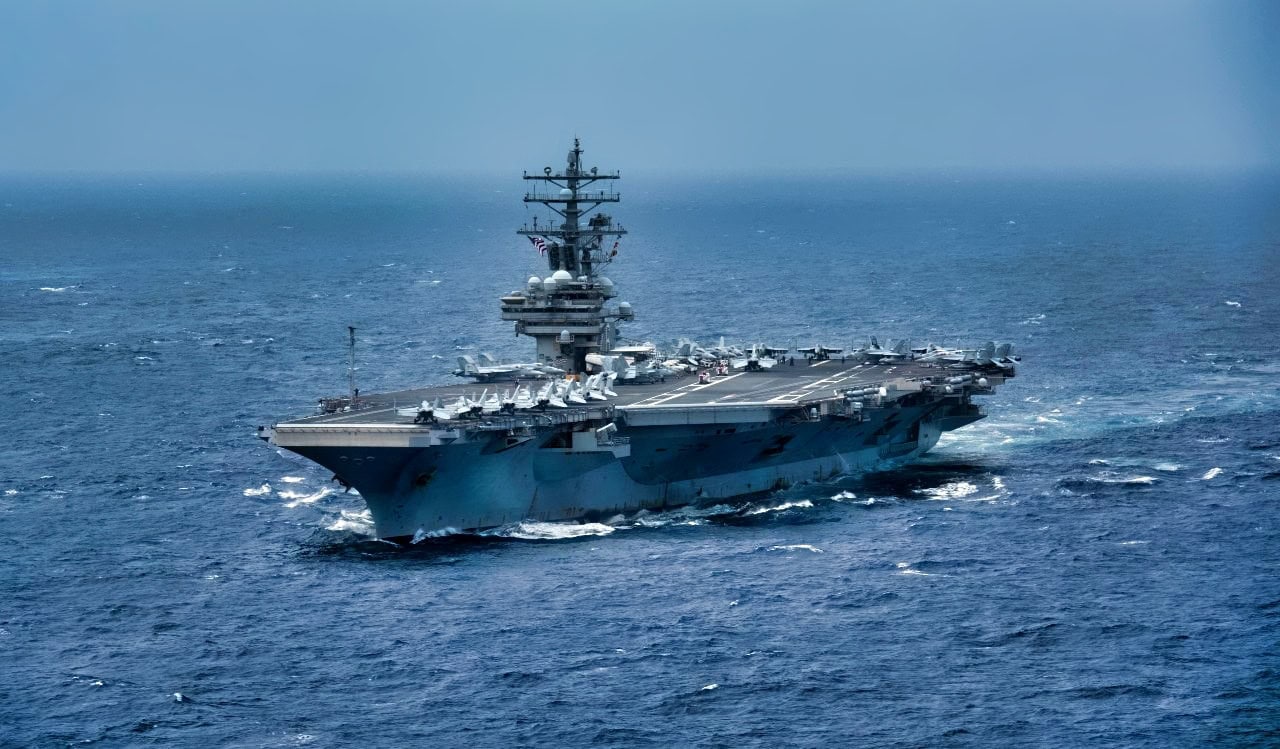
Key Points and Summary: China views U.S. aircraft carriers as symbols of American military power and critical targets in a potential Taiwan conflict.
-By sinking a carrier, Beijing hopes to shock the U.S. public, paralyze American decision-making, and force negotiations.
-However, such a strike could provoke a catastrophic escalation, including nuclear threats. China’s growing naval arsenal—anti-ship missiles, stealth fighters, and submarines—gives it confidence, despite its lack of combat experience.
Meanwhile, the U.S. Navy, bolstered by modern operations, is preparing for such contingencies.
-The stakes are high: losing a carrier could spark unrestricted warfare or drive America to negotiate, reshaping the Indo-Pacific balance of power.
Why is China So Obsessed with Sinking U.S. Navy Aircraft Carriers?
An aircraft carrier, especially when deployed by the United States, has a symbolic purpose above and beyond its aviation operations.
The floating air bases represent American might, national pride, engineering prowess, and manufacturing ability.
That’s why China would love to sink a U.S. Navy aircraft carrier if a war broke out over, say, Taiwan or the South China Sea.
This would freeze military operations as the president, the National Security Counci,l and the Joint Chiefs of Staff try to figure a way forward.
Could the United States Stand the Shock?
With the sinking of a carrier, the Chinese could shock the American public and convince civilians that a fight with China was no longer necessary.
Losing 4 to 5,000 sailors would be unthinkable and would probably bring the Americans to the negotiation table.
The Chinese navy could start with a blockade of Taiwan to starve the island and stem the flow of its imported fuel.
There is a question whether President Donald Trump would do anything to stop a blockade or trade embargo. After painting the Taiwanese into a corner, China could order an amphibious attack to overwhelm the defenders.
Could There Be Carrier-on-Carrier Warfare?
Meanwhile, there would likely be two American carrier strike groups in the area of operations. Would they venture into the Taiwan Strait to halt the Chinese attack?
China would have its own three carriers carrying out aviation activity. This might become the first carrier-on-carrier battle since World War Two. The Chinese could also send fighter jets, submarines, and anti-ship missiles at American strike groups.
Countdown to Armageddon
This is where the United States would have to make a complex military and political decision.
Would they risk a carrier to defend Taiwan?
The stakes would be high. If the U.S. Navy lost a flat-top, the Americans would not necessarily be forced into submission.
They could order a nuclear alert and a countdown to Armageddon. China has over 600 nuclear warheads and has vowed a no-first-strike atomic posture, but Trump could escalate the situation if an aircraft carrier were lost.
Xi Jinping Wagers That Americans Would Stand Down
It is not clear if China is ready to create a nuclear crisis by destroying a carrier. Xi Jinping is betting that the United States would first stand down and ask for peace negotiations.
Then China could say it slayed the American dragon to much fanfare and ceremony.
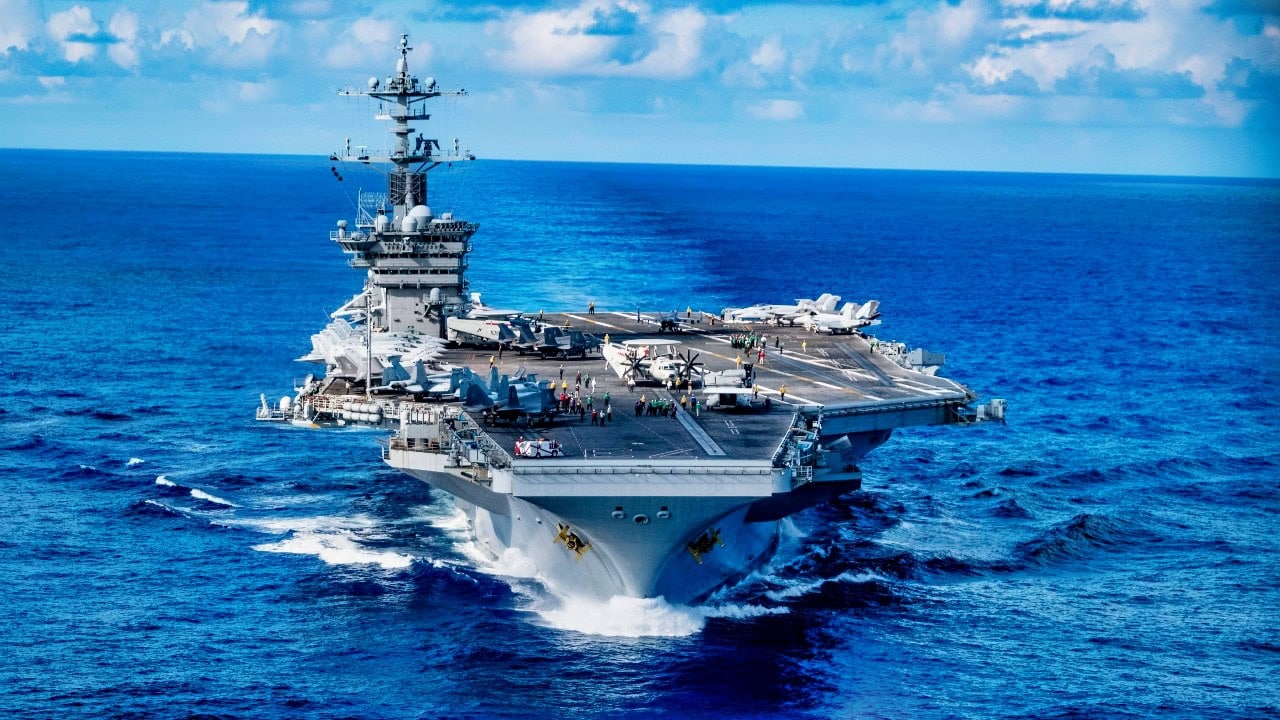
U.S. 7th Fleet’s premiere forward-deployed aircraft carrier USS George Washington (CVN 73) steams in the Western Pacific Ocean during Keen Sword 25, Oct. 29. The embarked staff of the George Washington Carrier Strike Group is coordinating air and surface operations in the exercise. Keen Sword is a biennial, joint and bilateral field-training exercise involving U.S. military and Japan Self-Defense Forces personnel, designed to increase readiness and interoperability while strengthening the ironclad U.S.-Japan alliance. (U.S. Navy photo by Mass Communication Specialist 2nd Class Caroline H. Lui)
Why are the Chinese so confident? Their navy is the biggest in the world. They have three carriers. The mainland is chock full of carrier-killing missiles. They have stealth fighter jets. Their submarines are modern and stealthy.
China Has No Recent Combat Experience
One aspect of warfare that stands out is the Chinese military’s prior combat service.
They have not fought a war in decades.
There is no active duty general or admiral who has experienced warfare. The Chinese haven’t been engaged in battle since a short skirmish with Vietnam in 1979.
Meanwhile, the Americans have been conducting naval operations during times of conflict since 9/11. The U.S. Navy is hoping that even though they have not fought a ship-on-ship naval engagement recently that they can “roll up” and destroy numerous Chinese vessels.
However, it is not clear how the Navy would react if it lost a carrier. Unlimited warfare could ensue and that may mean that the Americans would attack China’s cities with cruise missiles, or they could take out enemy nuclear infrastructure.
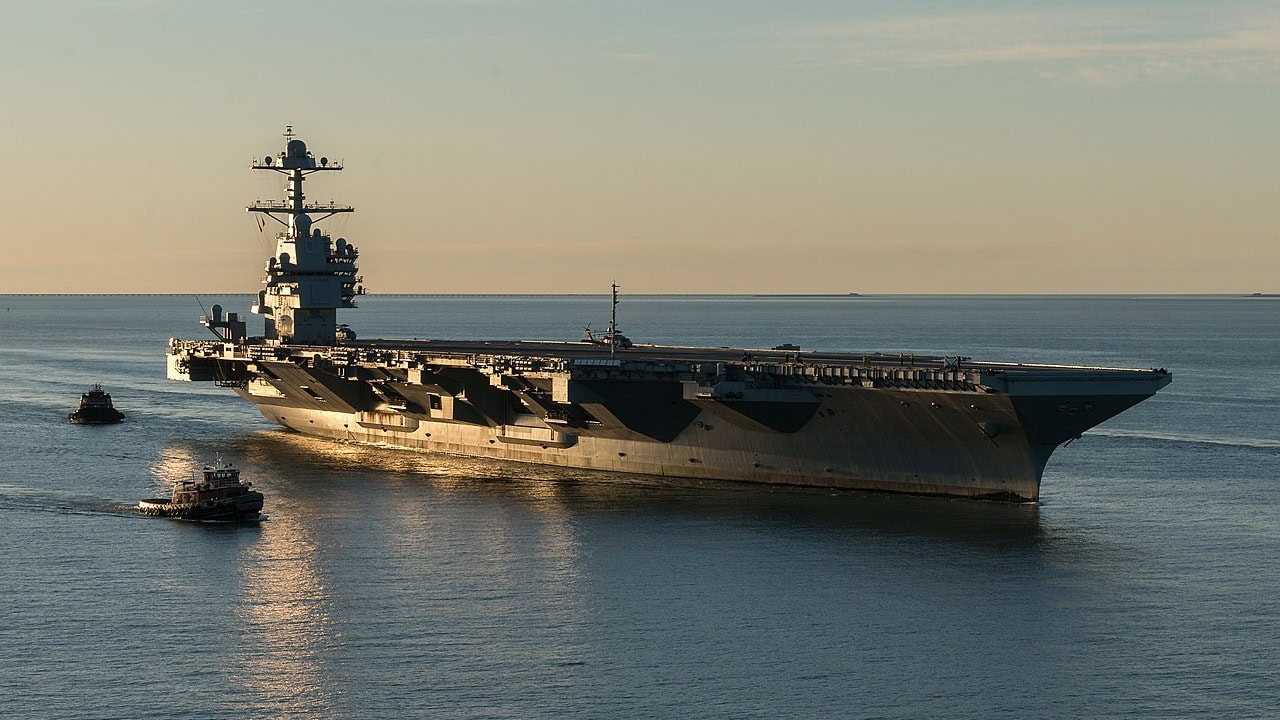
From 2017 – The aircraft carrier Pre-Commissioning Unit (PCU) Gerald R. Ford (CVN 78) pulls into Naval Station Norfolk for the first time. The first-of-class ship – the first new U.S. aircraft carrier design in 40 years – spent several days conducting builder’s sea trails, a comprehensive test of many of the ship’s key systems and technologies. (U.S. Navy photo by Matt Hildreth courtesy of Huntington Ingalls Industries/Released)
Radar and missile defense installations would be targeted as well. The United States would try to blind the Chinese and then send in its stealth bombers to punish the Mainland.
What Would Trump Do Next if Aircraft Carrier Was Attacked?
Thus, two things could happen with a lost American carrier. President Trump could stand down or he could order unrestricted warfare.
The Chinese are betting that America would not have the stomach for a fight after a carrier is eliminated, or they are depending on anti-war citizens in the United States who would not favor a continued war.
The aircraft carrier is the number one target for China. A sinking could paralyze the United States into inaction. A carrier attack instead could also set off a vast conflict.
The Chinese are known for biding their time and avoiding direct military confrontations that could spark a fight they don’t want.
However, if push came to shove, their doctrine likely calls for targeting aircraft carriers first with fighters, bombers, submarines, and anti-ship missiles. This may be enough to overcome a carrier’s defenses and start a nuclear crisis. The world would stand by, wondering what the next step would be.
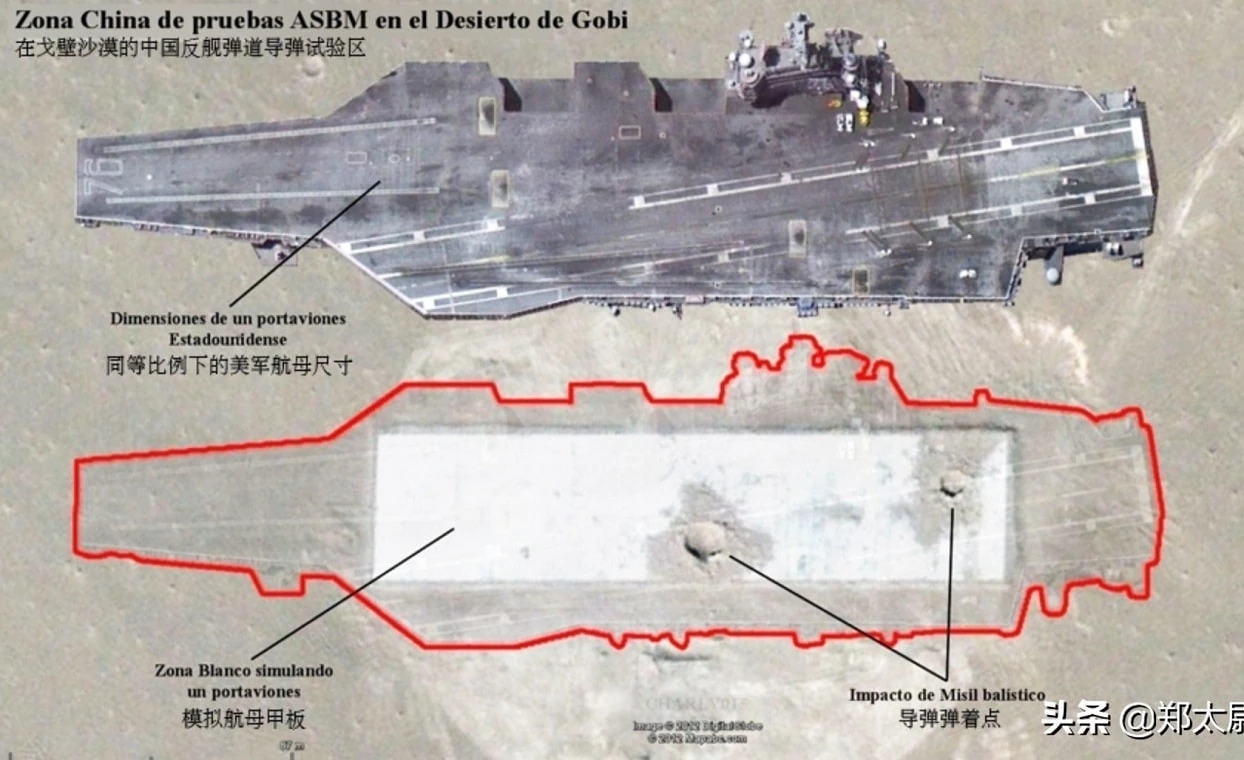
Image of US Navy Aircraft Carrier Under a Simulated Attack in Chinese Desert Mockup.
So, look out for a naval confrontation should the Chinese begin with a blockade or amphibious attack against Taiwan which some military analysts think could happen in 2027. The United States must face the facts that the Navy could lose a carrier, and they must plan for that contingency. Then, Trump would have to make a decision that could risk his presidency. He is a politician who promised never to start a war. Let’s see if he could finish one.
About the Author: Dr. Brent M. Eastwood
Brent M. Eastwood, PhD, is the author of Don’t Turn Your Back On the World: a Conservative Foreign Policy and Humans, Machines, and Data: Future Trends in Warfare plus two other books. Brent was the founder and CEO of a tech firm that predicted world events using artificial intelligence. He served as a legislative fellow for U.S. Senator Tim Scott and advised the senator on defense and foreign policy issues. He has taught at American University, George Washington University, and George Mason University. Brent is a former U.S. Army Infantry officer. He can be followed on X @BMEastwood.