
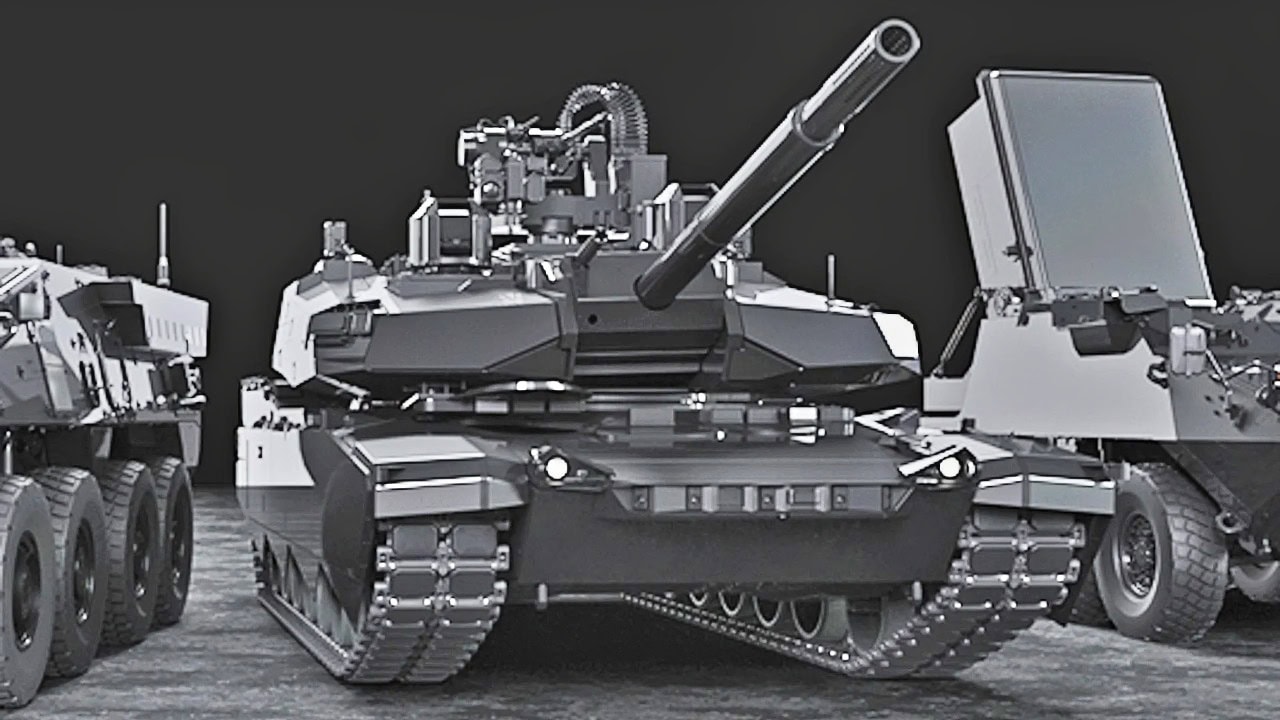
The AbramsX promises to introduce a plethora of advanced capabilities. One of the designers’ selling points is the tank’s ability to launch drones to increase its situational awareness or deploy loitering munitions to conduct precision strikes.
This move aligns with the United States Army’s efforts to integrate drones and unmanned systems further. But how practical is this system in practice? Will this be a new mainstay feature, or is it a fad that will soon be discarded?
Types of Drones Launched by AbramsX
The AbramsX is equipped with launchers for Switchblade 300 loitering munitions. These drones, often referred to as “kamikaze” or “suicide” drones, are designed for precision strikes. The Switchblade 300 is a small, portable UAV that can be deployed quickly and controlled remotely by the tank crew.
Depending on the variant, it carries a warhead equivalent to a Javelin anti-tank missile, making it highly effective against armored targets.
Additionally, the AbramsX can serve as a sort of “drone mothership,” integrating various UAVs for different missions. This suggests that the AbramsX can use drones for surveillance and scouting in addition to offensive precision strikes.
This flexibility allows the tank to adapt to various combat scenarios, from reconnaissance to direct engagement.
Useful Feature or Short-Lived Gimmick?
The AbramsX is not the only tank experimenting with integrated drone technology. The French Lecler Evolution and German Leopard 2A8 are both rumored to incorporate drone launching technology. The use of drones in Ukraine has inspired tank designers to incorporate drones as much as possible in new platforms. The big question right now is whether this feature will stick or be discarded in a few years.
Advantages of Integrated Drone Technology
One of the primary advantages of drone-launching capability is enhanced surveillance. Drones equipped with high-resolution cameras and thermal imaging can provide real-time intelligence, allowing the tank crew to monitor enemy movements and positions without exposing themselves to danger.
Because tanks usually have limited visibility, they rely on other units to get battlefield information. With integrated drones, tanks won’t have to rely on specialized units for battlefield data and can retrieve it themselves. This capability is crucial for situational awareness, enabling commanders to make informed decisions based on accurate, up-to-date information.
The Switchblade 300 drones offer precision strike capabilities, allowing the AbramsX to engage targets beyond its line of sight. This feature is particularly useful for neutralizing high-value targets, such as enemy tanks or fortified positions, with minimal collateral damage. The ability to launch drones for targeted operations enhances the tank’s offensive capabilities, making it a formidable asset on the battlefield.
Drones can be deployed for various missions, including electronic warfare, search and rescue, and offensive strikes. This versatility allows the AbramsX to adapt to different combat environments, from urban warfare to open battlefields. The integration of drones into the tank’s operations provides a multi-dimensional approach to warfare, combining traditional armored capabilities with modern UAV technology.
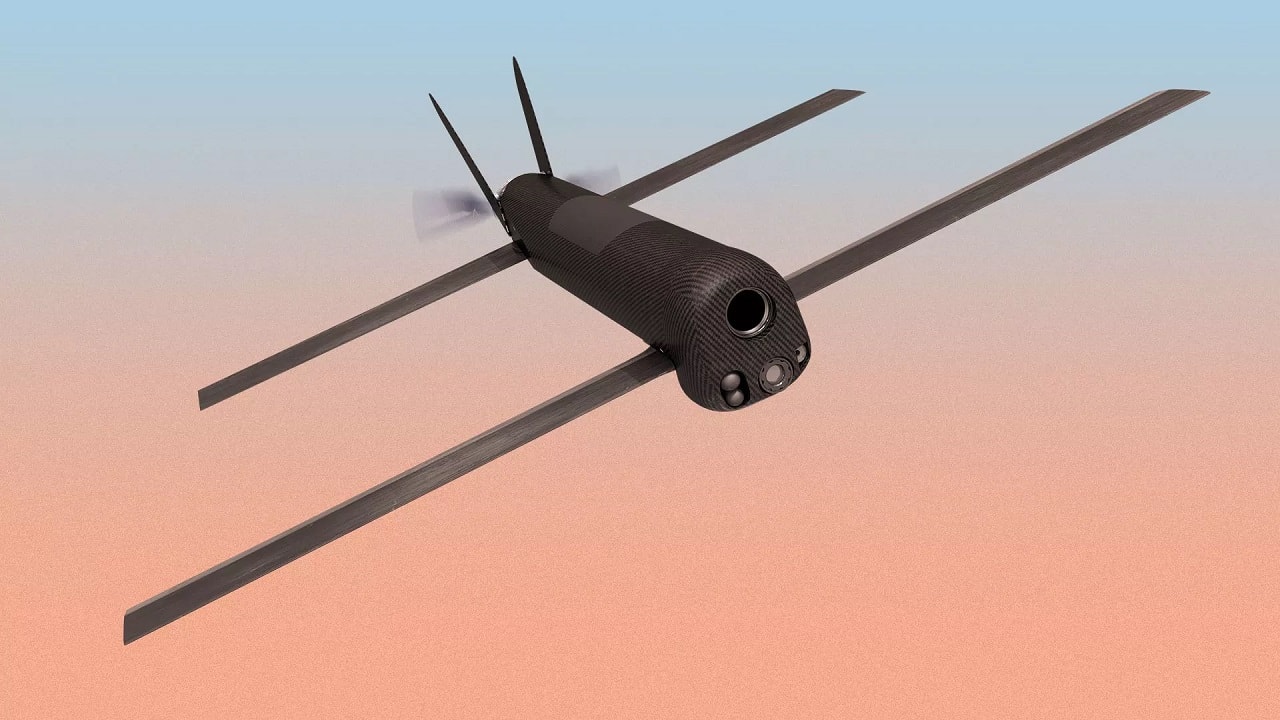
Switchblade Drone. Image Credit: Manufacturer Handout.
By utilizing drones for reconnaissance and strikes, the AbramsX and future ranks reduce the risk to their crews. Drones can operate in hostile environments without putting soldiers in harm’s way, thereby minimizing potential casualties. This feature enhances the tank’s operational effectiveness and contributes to the safety and morale of military personnel.
The Downside of Integrated Drones
While drones have their advantages, there are also a few disadvantages that must be considered. Despite their advanced technology, drones are susceptible to electronic warfare techniques such as jamming, hacking, and GPS spoofing.
Adversaries equipped with sophisticated electronic warfare capabilities can disrupt drone operations, rendering them ineffective. This vulnerability poses a significant challenge, as it can compromise the tank’s ability to conduct reconnaissance and precision strikes. Currently, EW technology cannot disable drones consistently. However, as drones become more sophisticated, EW systems will advance in tandem.
While the Switchblade 300 drones offer precision strike capabilities, their payload and range are relatively limited compared to larger UAVs. The Switchblade was criticized for its lackluster performance, especially compared to cheaper FPV drones or the Russian Lancet.
This limitation restricts the scope of their operations, making them less effective against heavily fortified targets or in extended engagements. The tank crew must carefully manage drone resources to maximize their impact on the battlefield.
Some have also criticized the concept of having a dedicated drone operator inside a tank. With a rear-mounted autoloader, the AbramsX only needs a crew of three. Currently, the new tank houses a crew of four, with the fourth being a drone operator. This is an odd and arguably impractical design choice, as a drone operator does not need to work inside the tank. In Ukraine, drone operators operate at safe distances out of harm’s way, where they can do their work without any risks. Inside a tank, however, the drone operator is exposed to unnecessary risk. All that has been accomplished is adding a fourth casualty in case the tank gets destroyed.
About the Author:
Isaac Seitz, a 19FortyFive Defense Columnist, graduated from Patrick Henry College’s Strategic Intelligence and National Security program. He has also studied Russian at Middlebury Language Schools and has worked as an intelligence Analyst in the private sector.

