
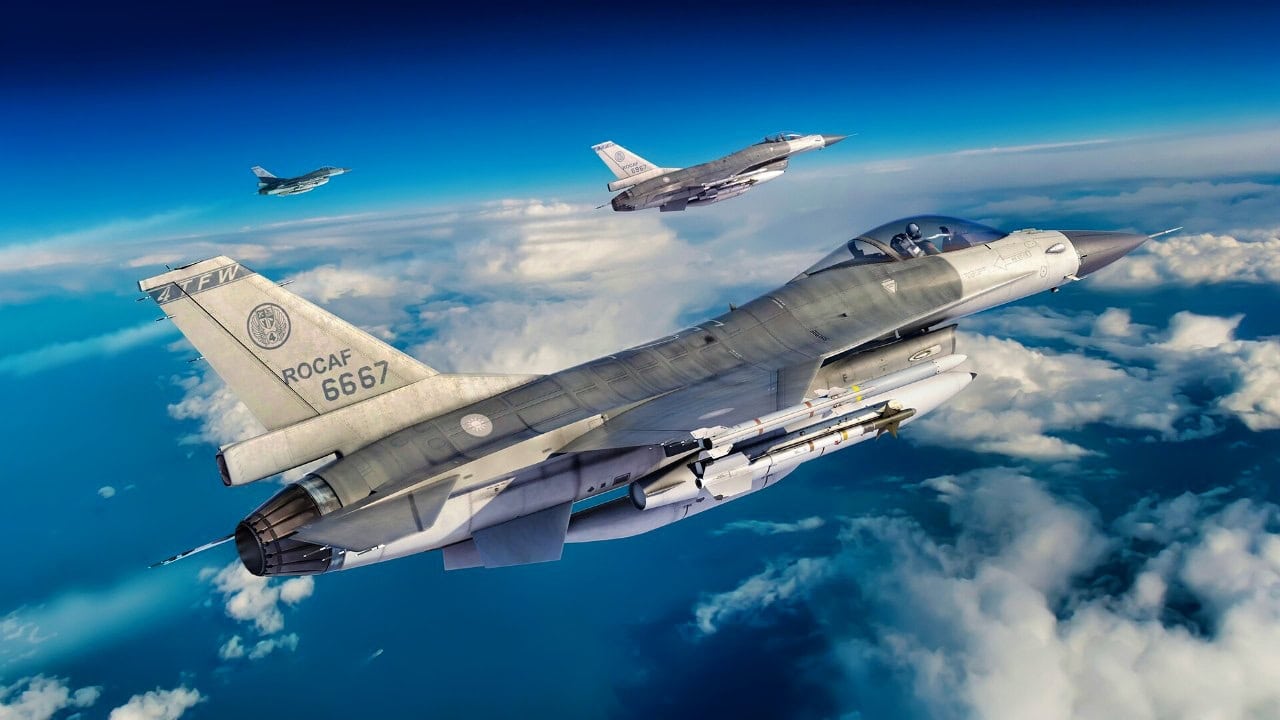
Article Summary – Taiwan’s purchase of 66 F-16V Block 70/72 fighters gives its air force a major leap in capability, with AESA radar, open-architecture avionics, modern EW, extended airframe life, and powerful engines that keep the jet competitive against most Chinese 4th-gen aircraft.
-Yet geography and scale work against Taipei.
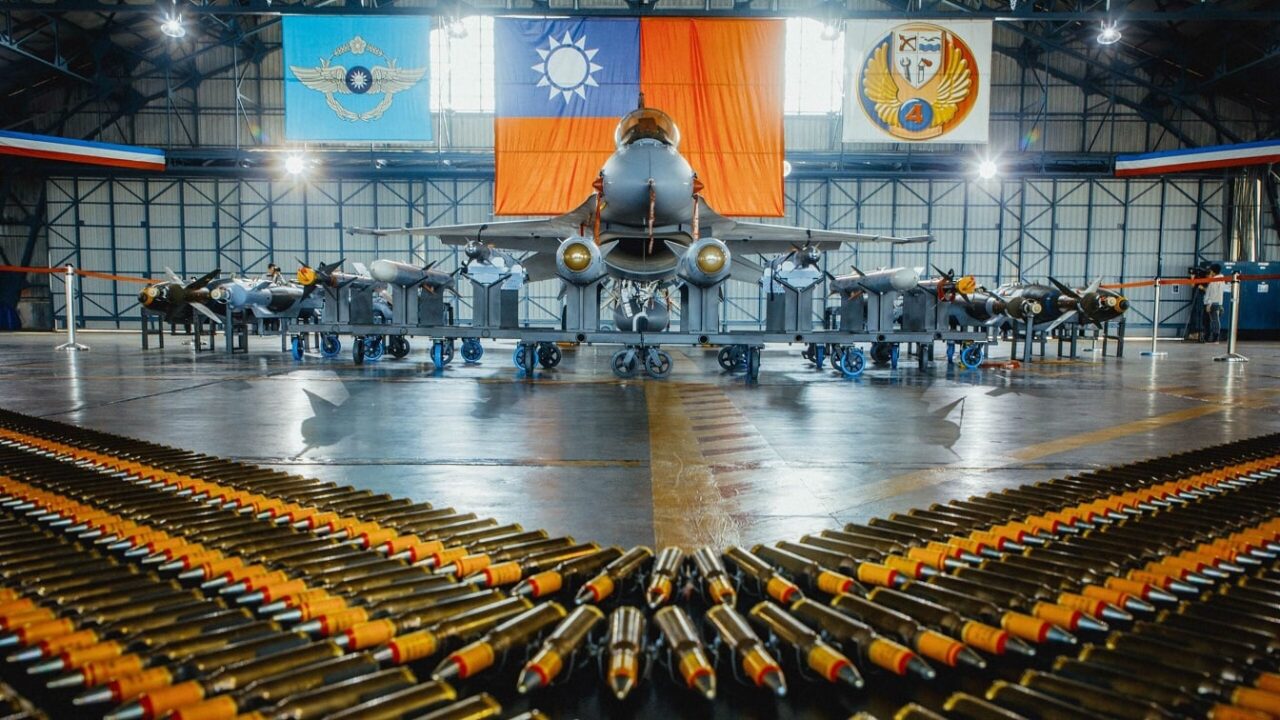
New Taiwan F-16V fighter jet. Image Credit: ROC government.
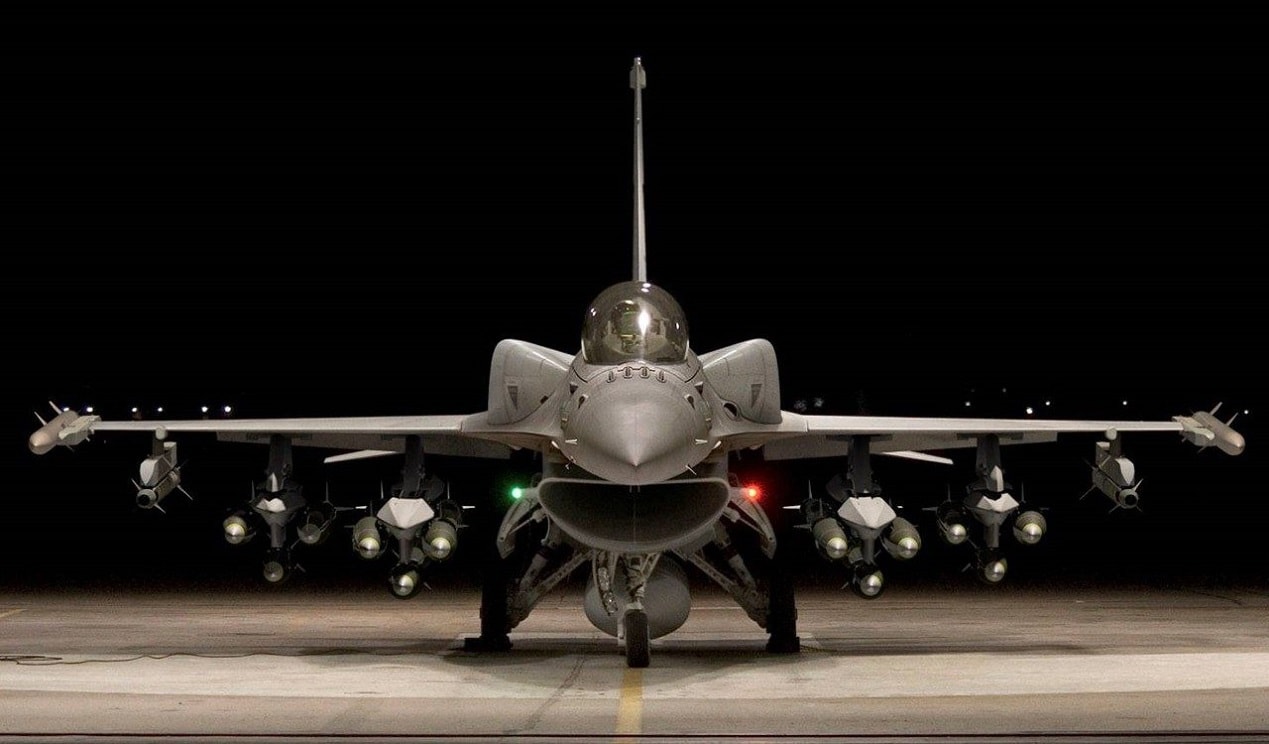
F-16 Fighter. Image: Creative Commons.
-Every base is within range of PLA missile and drone strikes, and China fields hundreds of J-20s plus large Su-27–derived fleets.
-In a straight numbers game, Taiwan’s F-16Vs cannot win alone; survival in any conflict would hinge on U.S. and regional support—and on China underperforming in combat.
Taiwan’s New F-16V Fighters vs China’s J-20: Is It Enough?
In 2019, the Republic of China (Taiwan) placed an order for 66 F-16 Block 70/72 (more commonly referred to as the F-16V) fighters to replace its older aircraft and modernize its air force.
The F-16V is a huge improvement over previous iterations of the fighter, offering better radar, better avionics, and better engine performance, among other things.
However, the big question is whether the F-16V is enough to combat the rapidly modernizing Chinese air force just a couple of kilometers to the east. Now fielding fifth-generation aircraft, China is gaining a qualitative edge alongside its already vast fleet.
What Improvements does the F-16V Make?
One of the most significant improvements to the F-16V is the AN/APG-83 Scalable Agile Beam Radar (SABR), an Active Electronically Scanned Array (AESA) system.
Previous F-16 models relied on mechanically scanned radars, which limited detection range, tracking speed, and resistance to jamming.
The APG-83 AESA radar offers simultaneous air-to-air and air-to-ground operations, high-resolution Synthetic Aperture Radar (SAR) for precise ground mapping, and multiple target tracking and engagement.
It also provides anti-jamming resilience and a low probability of intercept. This radar shares hardware and software commonality with the F-35’s APG-81 and the F-22’s APG-77, giving the F-16V near-fifth-generation sensor capability.
Beyond radar, the F-16V introduces a modular mission computer and an open-architecture avionics suite, enabling rapid software upgrades and integration of future systems.
These improvements include a high-speed Ethernet data bus for faster data transfer, advanced digital flight control systems for improved handling, and Link-16 data link for real-time networked operations with allied platforms.
Helmet-Mounted Cueing Systems (HMCS) allow pilots to target enemies off-boresight, dramatically improving combat flexibility.
These upgrades make the F-16V interoperable with fifth-generation fighters like the F-35 and coalition forces, ensuring it remains a valuable asset in joint operations.
Improvements to Avionics
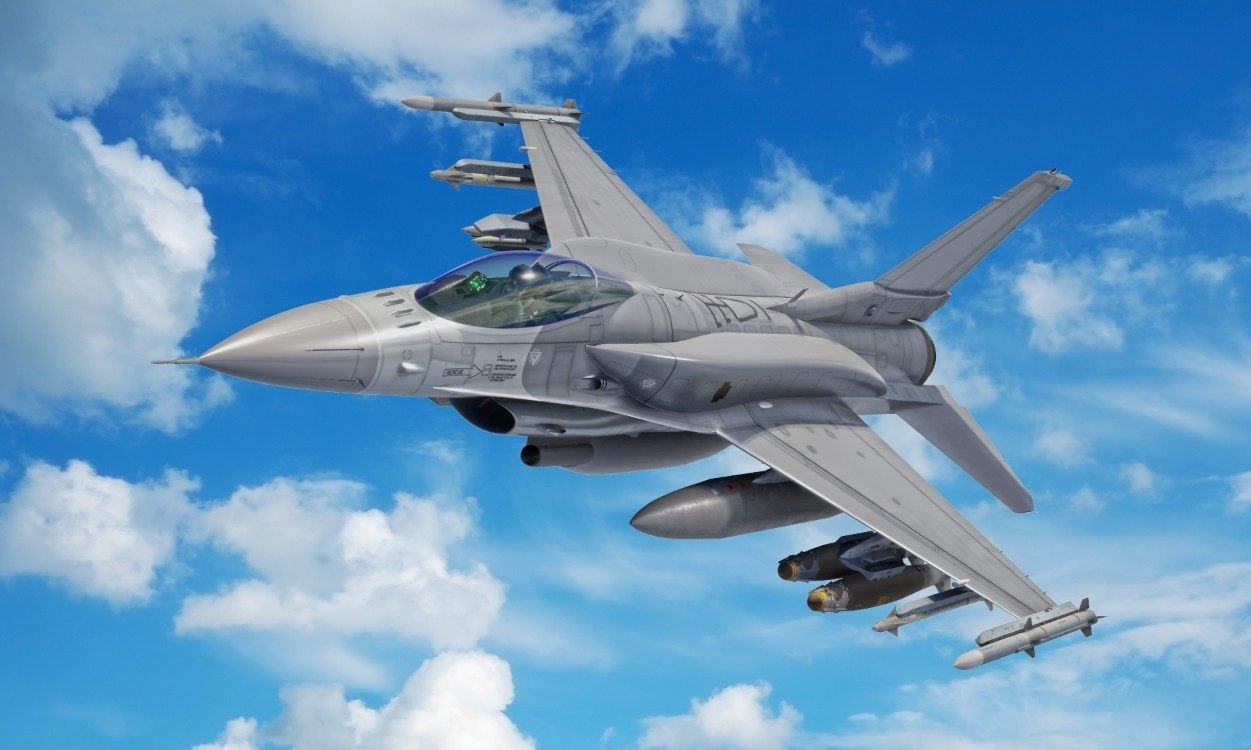
Image: Lockheed Martin.
The cockpit has been redesigned for 21st-century warfare. The centerpiece of this modernization is the Center Pedestal Display (CPD), a 6×8-inch high-resolution screen that displays color moving maps, tactical imagery, and sensor-fusion data.
Digital flight instruments and improved ergonomics reduce pilot workload, while a 3D audio intercom system enhances situational awareness. Combined with the F-16’s iconic bubble canopy, these upgrades give pilots unmatched visibility and information management during high-G maneuvers.
Electronic warfare and survivability have also been significantly enhanced. The Viper Shield electronic warfare suite equips the F-16V with a digital radar-warning receiver, advanced jamming capabilities, and enhanced threat detection and countermeasures.
This system enhances survivability in dense RF threat environments, making the F-16V viable in contested airspace where older F-16s would struggle.
Better Performance, More Reliability
Structural improvements dramatically extend the aircraft’s service life. Earlier F-16 variants had an airframe life of about 7,000 to 8,000 flight hours.
The F-16V extends this to 12,000 hours, a 50 percent increase, translating to over 40 years of service life. Structural reinforcements and conformal fuel tanks provide extended range without aerodynamic penalties, reduced drag compared to external tanks, and improved mission endurance for long-range strike or patrol.
These changes ensure the F-16V remains cost-effective and operationally flexible for decades.
Safety innovations include the Automatic Ground Collision Avoidance System (Auto GCAS), a lifesaving feature that automatically recovers the aircraft if it detects imminent terrain impact.
This system has already saved multiple pilots and planes in real-world scenarios, making it one of the most essential additions to the platform.
Is it Enough For a War with China?
The F-16V Block 70/72 offers two engine choices: the General Electric F110-GE-129 and the Pratt & Whitney F100-PW-229.
Both deliver over 29,000 pounds of thrust, enabling a top speed of Mach 2+, faster than the F-35, and 9G maneuverability for superior dogfighting performance. The aircraft has a range of 1,740 nautical miles, further extended by conformal tanks, making it one of the fastest and most agile fighters in its class.
Currently, Taiwan has placed an order for 66 F-16V fighters to replace its aging fleet of Mirage 2000 and F-5 aircraft.
While the F-16V is a significant improvement over previous iterations, it would still be hopelessly outnumbered in a conflict with China.
The People’s Liberation Army Air Force (PLAAF) currently operates more than 300 J-20 stealth fighters, in addition to several hundred aircraft derived from the Su-27. Although not all of these fighters would necessarily be deployed against Taiwan, China’s numerical advantage in any large-scale conflict is overwhelming.
Why Taiwan Needs More Than the F-16V
Unlike Ukraine, which benefits from its vast landmass of 603,550 square kilometers, Taiwan is considerably smaller, with an area of only 36,197 square kilometers. Even with the advantage of being an island, its close proximity to China places all of its military installations within range of Chinese ballistic missiles.
In the event of a significant conflict, Taiwan’s airbases would likely be among the first targets of mass missile and drone strikes.
Assuming the F-16Vs manage to get airborne, they would face a numerically superior PLAAF and contend with advanced fifth-generation fighters such as the J-20 and J-35.
In a one-on-one engagement, the F-16V could likely defeat most Chinese aircraft and, under the right circumstances, even challenge some of China’s stealth fighters. However, these jets alone cannot secure victory against China.
With support from the United States and regional allies such as Japan and the Philippines, Taiwan could repel an invasion (assuming U.S. involvement does not escalate into nuclear war).
Still, this outcome would depend heavily on China’s military underperforming in combat. While such a scenario is possible, it should not be assumed by default, as underestimating an adversary is one of the surest paths to defeat.
About the Author: Isaac Seitz
Isaac Seitz, a Defense Columnist, graduated from Patrick Henry College’s Strategic Intelligence and National Security program. He has also studied Russian at Middlebury Language Schools and has worked as an intelligence Analyst in the private sector.