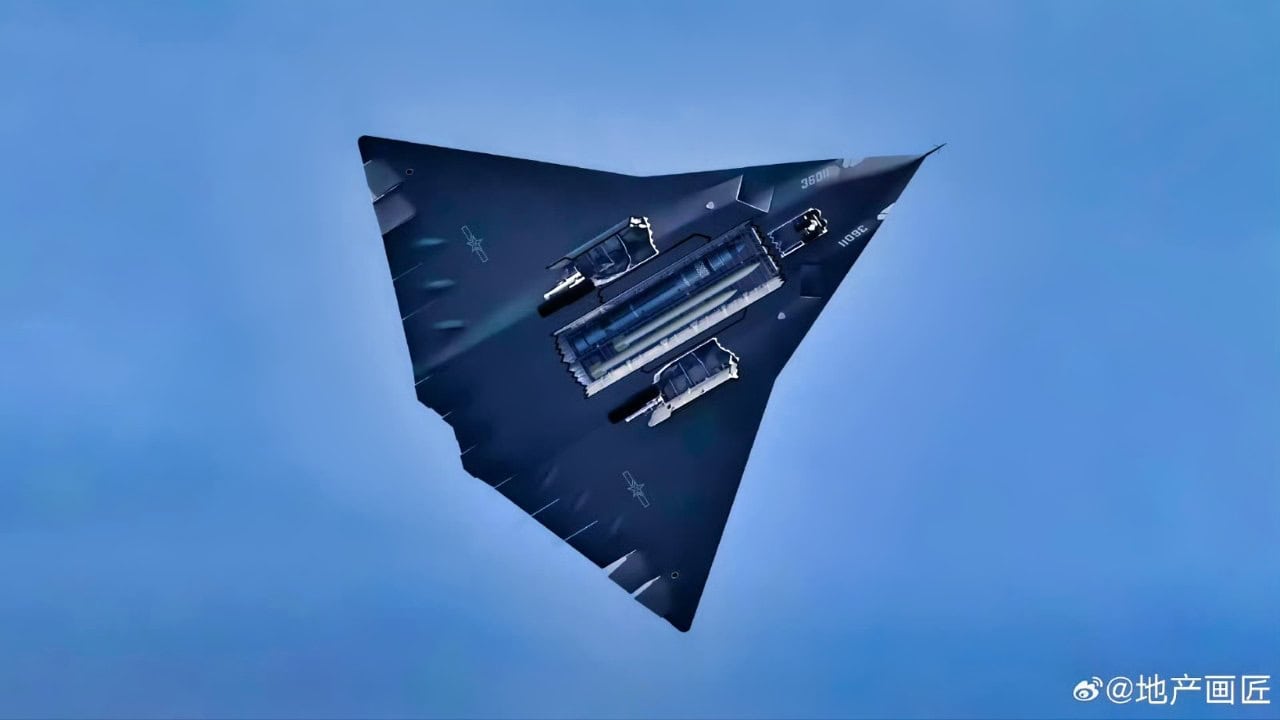
Key Points and Summary – New photos and clips circulating online appear to show a third prototype of Chengdu’s rumored J-36 fighter-bomber flying over the company’s Chengdu facilities on December 25—one year after the first prototype surfaced.
-If accurate, the third airframe strengthens the case that China is running multiple prototypes in parallel, testing different configurations rather than refining a single conservative design.
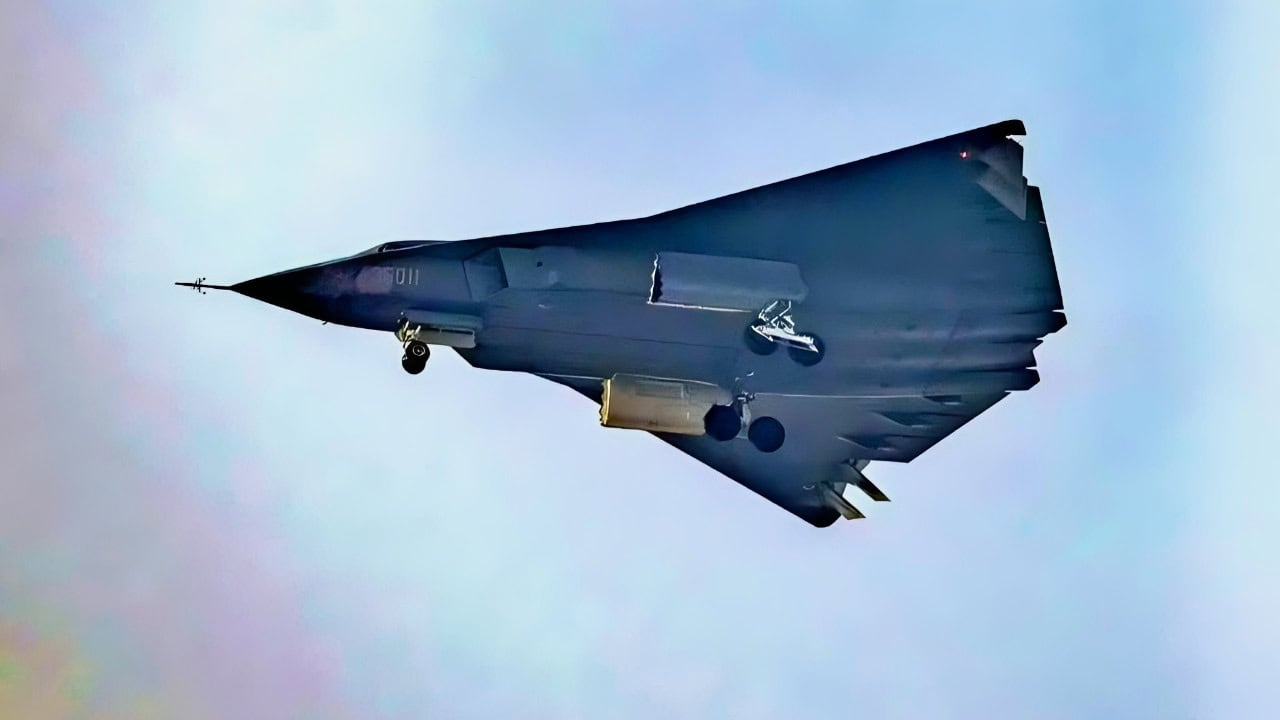
J-36 Fighter from China. Image Credit: X Screenshot.
-Observers also claim the latest aircraft lacks the prominent pitot tube seen on earlier examples, a detail that could suggest flight testing is moving beyond heavily instrumented early validation.
-Across China’s next-gen programs, the shared flying-wing logic points to an emphasis on range, survivability, and strategic reach.
New J-36 Footage Sparks a Big Question: How Many Prototypes Now?
China’s Chengdu Aircraft Research and Design Institute has checked another box in the development of a rumored sixth-generation fighter aircraft. Photos and video clips seen in the last two days have been assessed to be a third prototype of Chengdu’s J-36 fighter-bomber.
The J-36 is thought to be a new long-range attack platform for the People’s Liberation Army Air Force (PLAAF). As with all the previous images of this aircraft, the photos were posted on unofficial military-aviation fan websites and are not sanctioned by Chengdu or the PLA. Even the J-36 designation has never been confirmed by anyone in authority.
According to social media posts, the prototype took to the air on December 25, exactly one year after the first prototype was publicly revealed.
Like the two prototypes before it, this J-36’s maiden test flight took place in the skies over Chengdu facilities and the co-located Aircraft Plant No. 132. During the flight, it was escorted by another Chengdu aircraft, a J-10C fighter that was pressed into the role of a chase aircraft.
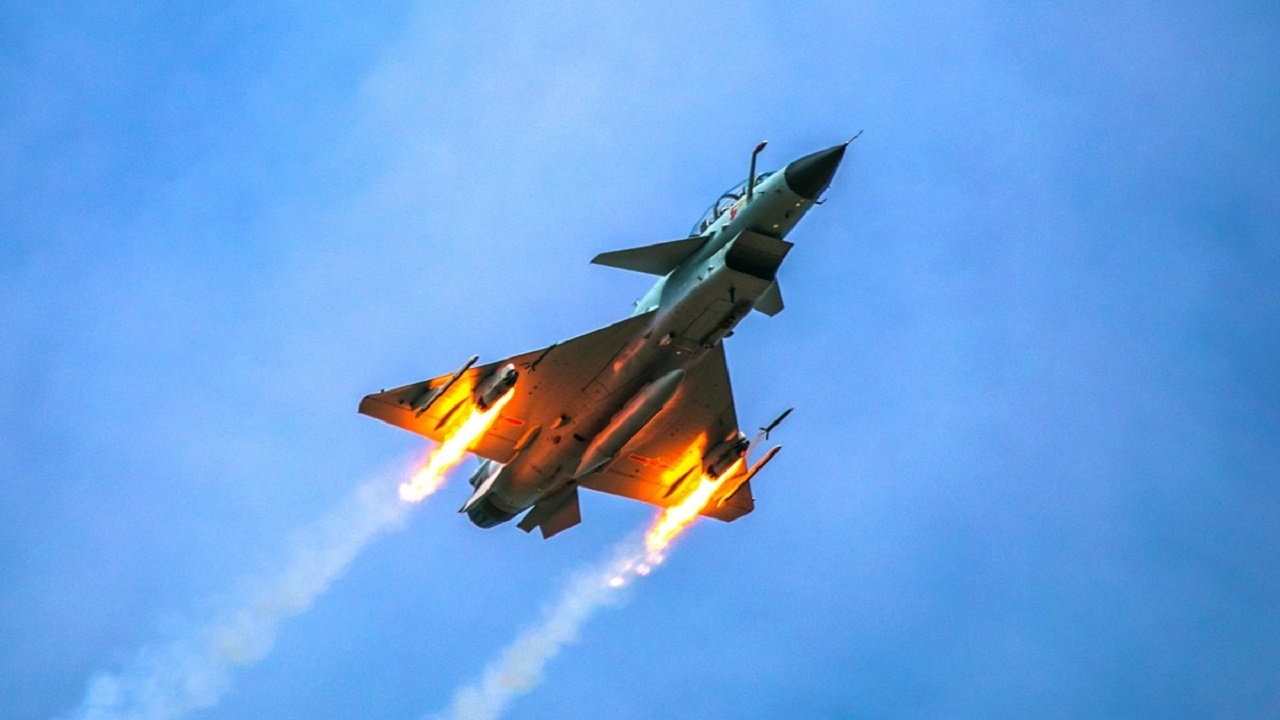
J-10 Fighter. Image Credit: Creative Commons.
The Dominant New-Generation Design
According to open source reporting, if this prototype is indeed a third, separate airframe, China currently has five next-generation aircraft in one stage of flight testing or another. All of them build on a flying-wing design configuration that has no vertical control surfaces.
These five aircraft “include the three J-36 prototypes, the Shenyang J-XDS/J-50, and another model that has yet to be identified.”
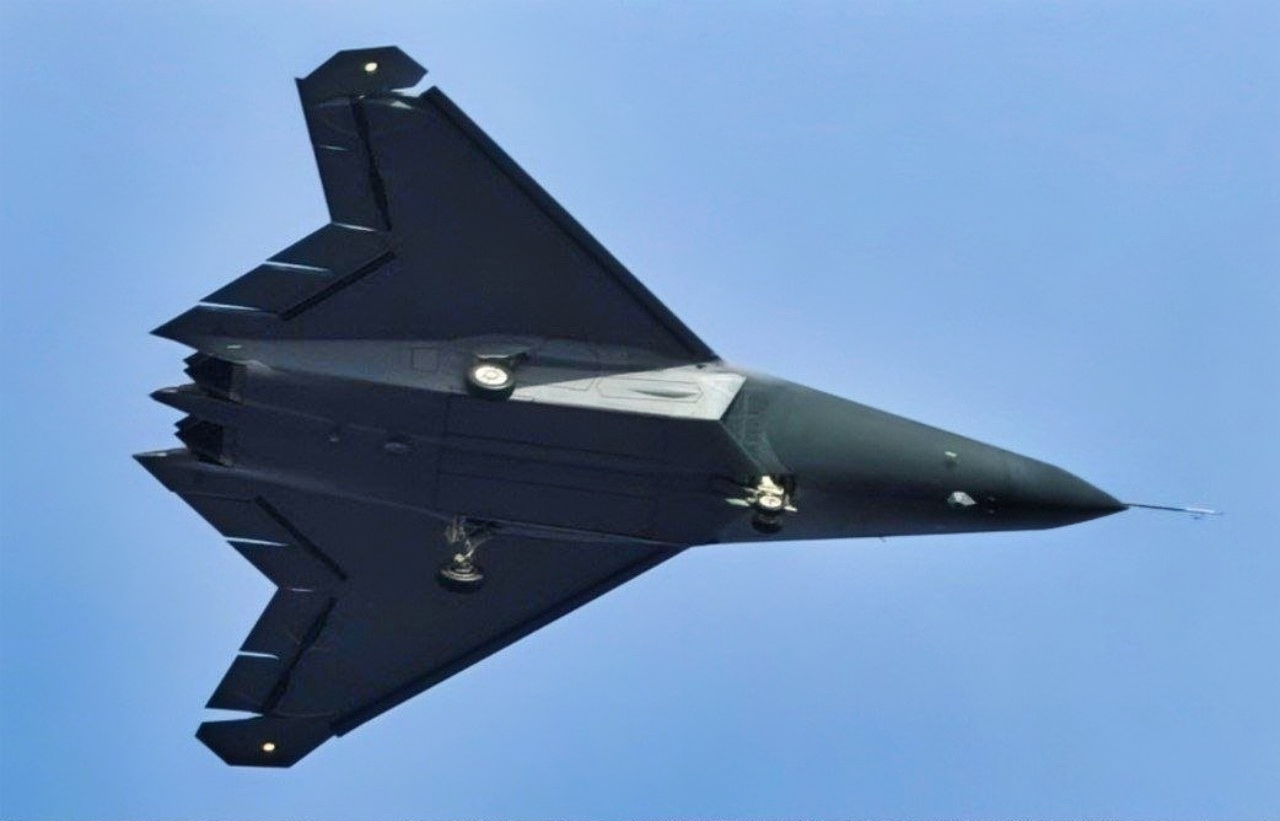
J-50 Fighter. Image Credit: Creative Commons.
An in-depth profile of the J-36 points out that a third prototype marks a watershed moment for Chinese combat aircraft development. A third, slightly different “flying prototype within twelve months of the programme’s public debut marks a fundamental departure from legacy development norms.”
Its revelation “reinforces assessments within Western airpower communities that China is now executing a parallelised, risk-tolerant development model optimised for strategic overmatch rather than conservative perfection.”
One of the observable distinctions of the third J-36 prototype is that the pitot tube seen in the other aircraft has been deleted from the airframe. This could mean the J-36 design has progressed beyond the initial flight-test stages that would require extensive instrumentation.
If an air data probe is no longer a requirement for validating the performance of an inherently unstable platform, then the aircraft’s design process is no longer in the conceptual phase and has entered an advanced level of aerodynamic validation.
Observations about the pitot data sensor are described as coming from “credible postings.” As with other aspects of the aircraft, these are based on reports from individuals with direct knowledge of activity around the Chengdu facilities.
Multiple Configurations for J-36 Fighter-Bomber
Chengdu seems to be developing multiple configurations of the same aircraft. They are being flown in parallel to assess and compare performance until an optimal combination of design features is identified, resulting in a final configuration.
Some of the visible differences highlighted in previous reports include variations in the air intakes, differing engine exhaust designs, and landing gear configuration.
The second J-36 aircraft, photographed in October 2025, had side-by-side main landing gear rather than the tandem placement seen in the prototype.
That second aircraft also featured lateral air intakes, which some analysts have stated are evidence of a Diverterless Supersonic Intake design.
What cannot be seen in any of the images are likely different internal arrangements of avionics, combat sensors, and software.
About the Author: Reuben F. Johnson
Reuben F. Johnson has thirty-six years of experience analyzing and reporting on foreign weapons systems, defense technologies, and international arms export policy. Johnson is the Director of Research at the Casimir Pulaski Foundation. He is also a survivor of the Russian invasion of Ukraine in February 2022. He worked for years in the American defense industry as a foreign technology analyst and later as a consultant for the U.S. Department of Defense, the Departments of the Navy and Air Force, and the governments of the United Kingdom and Australia. In 2022-2023, he won two awards in a row for his defense reporting. He holds a bachelor’s degree from DePauw University and a master’s degree from Miami University in Ohio, specializing in Soviet and Russian studies. He lives in Warsaw.