Summary and Key Points: USS Abraham Lincoln is being redirected from the South China Sea to the Middle East to give President Trump additional military options as unrest inside Iran escalates.
-Beyond its air wing—F-35Cs, F/A-18s, and E-2D surveillance aircraft—the carrier arrives with a strike group of Arleigh Burke–class destroyers capable of launching long-range Tomahawk missiles.
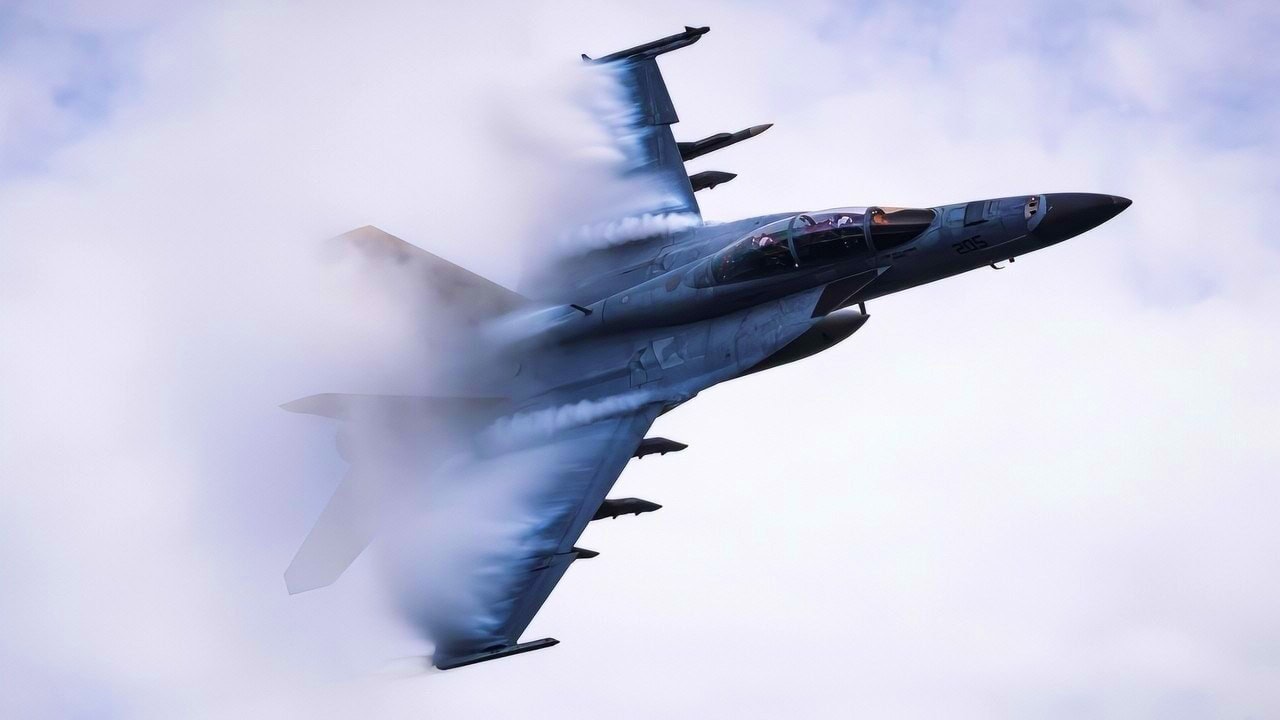
USS George Washington Aircraft Carrier Super Hornet. Image Credit: Creative Commons.
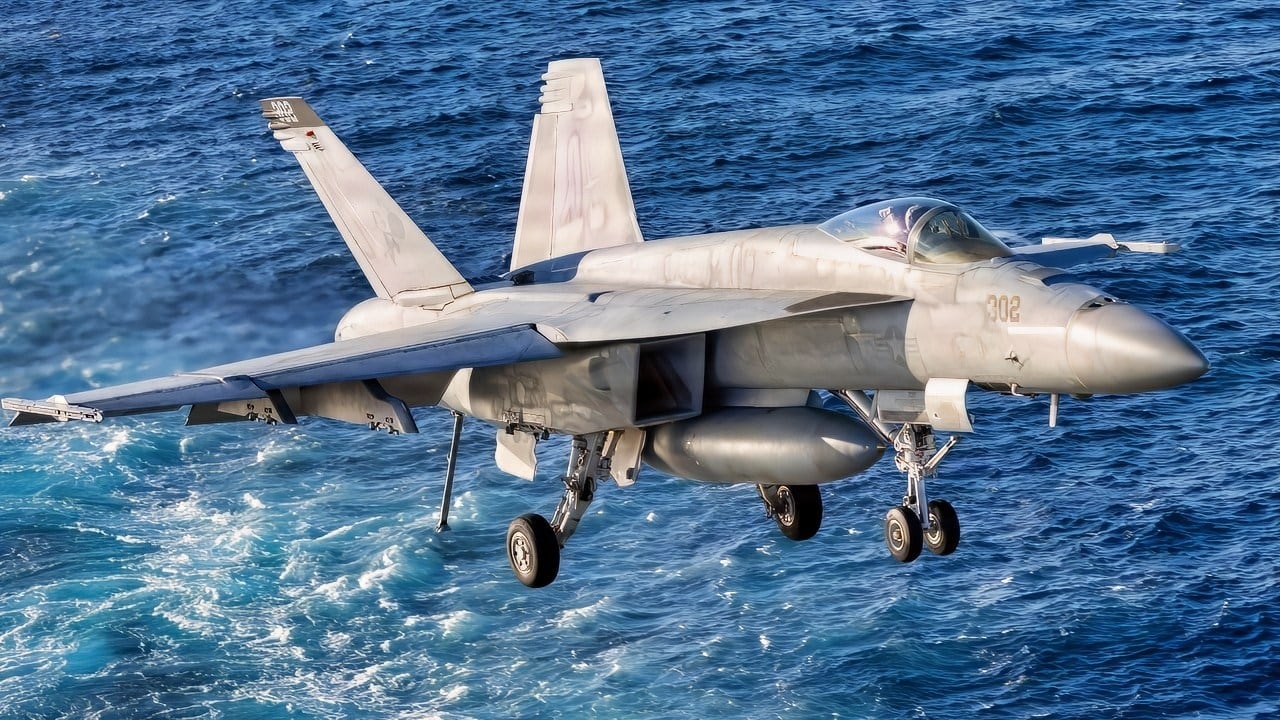
An F/A-18E Super Hornet aircraft approaches the flight deck of the world’s largest aircraft carrier, Ford-class aircraft carrier USS Gerald R. Ford (CVN 78), Nov. 17, 2025. U.S. military forces are deployed to the Caribbean in support of the U.S. Southern Command mission, Department of War-directed operations, and the president’s priorities to disrupt illicit drug trafficking and protect the homeland. (U.S. Navy photo)
-The concept emphasized is a short, highly precise operation focused on command-and-control and leadership nodes rather than broad infrastructure damage.
-Tomahawks could open a campaign by suppressing key targets, with stealth aircraft available to track emerging threats and strike mobile systems.
Supercarrier on the Way: Inside The Carrier Strike Group Firepower Now Moving Toward Iran
The US Navy’s powerhouse USS Abraham Lincoln is surging from the South China Sea to the Middle East to offer President Trump options should he choose to order strikes on Iran.
The carrier is a key foundation of the US Naval fleet and will bring a wide range of attack possibilities for the President to consider, should the decision be made to target the Iranian leadership for killing civilians protesting the regime.
Of course, the USS Abraham Lincoln operates with a Carrier Air Wing armed with F-35Cs, F-18s, and fixed-wing surveillance assets such as the E-2D Hawkeye, yet the massive platform also travels with a Carrier Strike Group including heavily armed destroyers.
The presence of warships surrounding the carrier not only protects the large ship from incoming attacks but also offers heavy firepower options, such as Tomahawk cruise missiles.
Carrier Strike Group FirePower
USS Arleigh Burke-class DDG 51 Destroyers are built with Vertical Launch Systems capable of firing precision-guided Tomahawk missiles from ranges out to 900 miles.
With these weapons, a Carrier Strike Group could exact a military effect without necessarily destroying Iran’s infrastructure or hitting civilian targets.
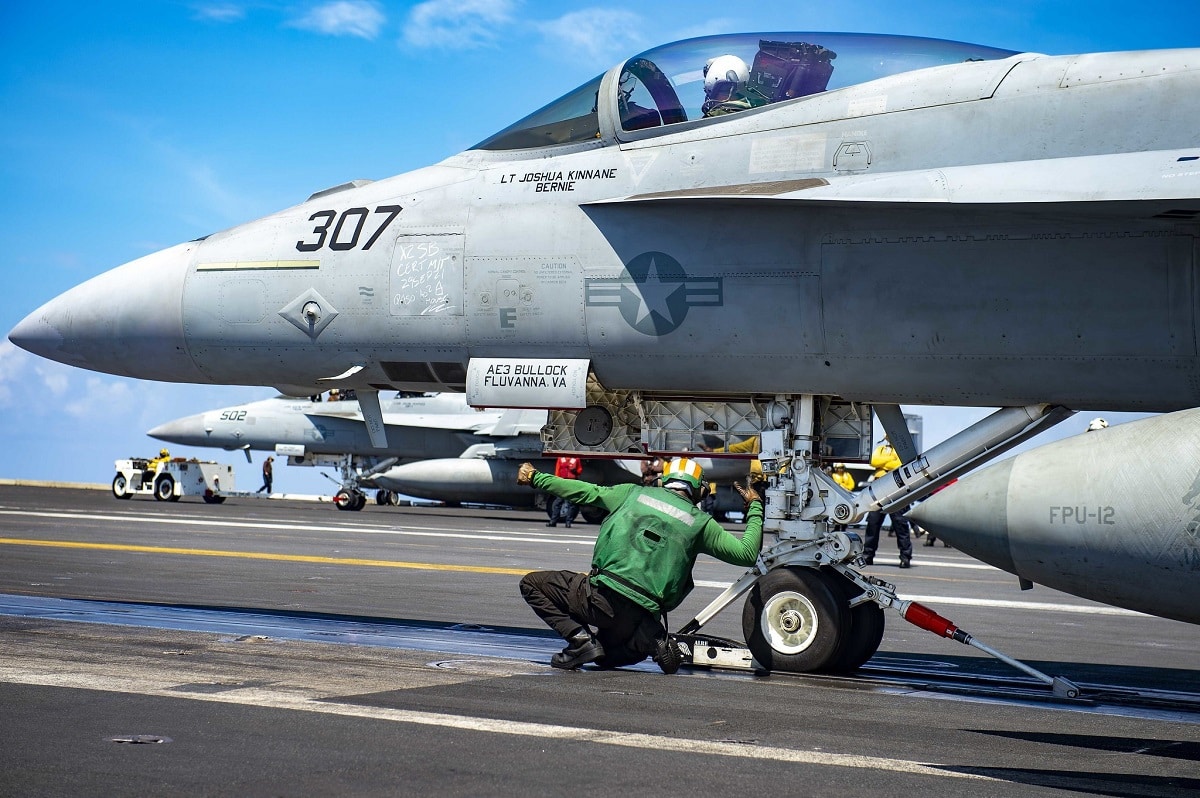
PHILIPPINE SEA (Sept. 29, 2021) An F/A-18E Super Hornet assigned to the “Golden Dragons” of Strike Fighter Squadron (VFA) 192 prepares to launch off the flight deck of the Nimitz-class aircraft carrier USS Carl Vinson (CVN 70), Sept. 29, 2021. The Carl Vinson Carrier Strike Group is on a scheduled deployment in the U.S. 7th Fleet area of operations to enhance interoperability through alliances and partnerships while serving as a ready-response force in support of a free and open Indo-Pacific region. (U.S. Navy photo by Mass Communication Specialist 3rd Class Isaiah Williams) 210929-N-IW069-1057
While details of a military strike of this kind are typically not available, targets in these operations tend to include leadership headquarters, command and control facilities, troop and weapons locations, and ammunition depots.
Iran Strike Similar to Venezuela?
While an operation against Iran would likely be quite different than what was executed in Venezuela, there could be some tactical similarities in the sense that an Iranian strike would likely be quick, precise, and extremely targeted.
This means there is unlikely to be any land deployment, apart from possible missile batteries in the region, and there is unlikely to be a prolonged air campaign.
By contrast, any potential operation is likely to be short, yet decisive. It would potentially not be that much different than what’s known as a “decapitation strike,” meaning a targeted lethal attack on leadership and command and control facilities designed to cripple or destroy the regime without causing widespread destruction.
Decapitate Iranian Leadership?
Without any top-level command and control, forces and supporters loyal to the Iranian regime would be at a loss to communicate, receive orders, or enact any kind of stability or cohesive action.
The strategic intent in this particular scenario would likely be to disable any leadership authority currently operating on behalf of the regime and enable protesters to essentially take over the country or create a power vacuum large enough for new leadership to arrive.
Advanced Tomahawk missiles present US Naval commanders with a number of strike options, given that the Block IV Tomahawks operate with a two-way datalink enabling a rocket to “change course” in flight as needed, loiter if necessary, and even conduct a small measure of ISR-type functions of high-value target areas.
Beyond Block IV, the US Navy also operates what’s known as Tactical Tomahawks, cruise missiles capable of quickly adjusting course to track and destroy “moving” targets. Arriving just in the last several years, these Tomahawks can leverage new generations of radio signal throughput and guidance technology to hit moving ships or, in the case of Iran, track and target leaders on the move.
F-35Cs & Air Attack
Cruise missile strikes using Tomahawks fired from ships or submarines are typically the first weapons used in military campaigns, as they can operate from long range with precision and, in a tactical sense, set conditions for an air attack by destroying air defenses, troop locations, or other fixed, high-value targets.
However, there are also likely contingencies for which 5th-generation stealth aircraft might be needed, should Iran operate mobile air defenses or ballistic missile launchers seeking to target US assets in the region.
Also, while Israeli F-35i Adir strikes have massively degraded Iranian air defenses, drones, and aircraft, there may be a need to establish air supremacy to support a quick-strike option of some kind or strike moving targets from the air. An aircraft such as the F-35C has as much ISR (surveillance and targeting) capability as it does attack capability, so it would be able to find fast-emerging targets from the air.
About the Author: Kris Osborn, Defense Expert
Kris Osborn is the President of Warrior Maven – Center for Military Modernization. Osborn previously served at the Pentagon as a highly qualified expert in the Office of the Assistant Secretary of the Army—Acquisition, Logistics & Technology. He has appeared as a guest military expert on Fox News, MSNBC, The Military Channel, and The History Channel. He also has a Masters Degree in Comparative Literature from Columbia University.