
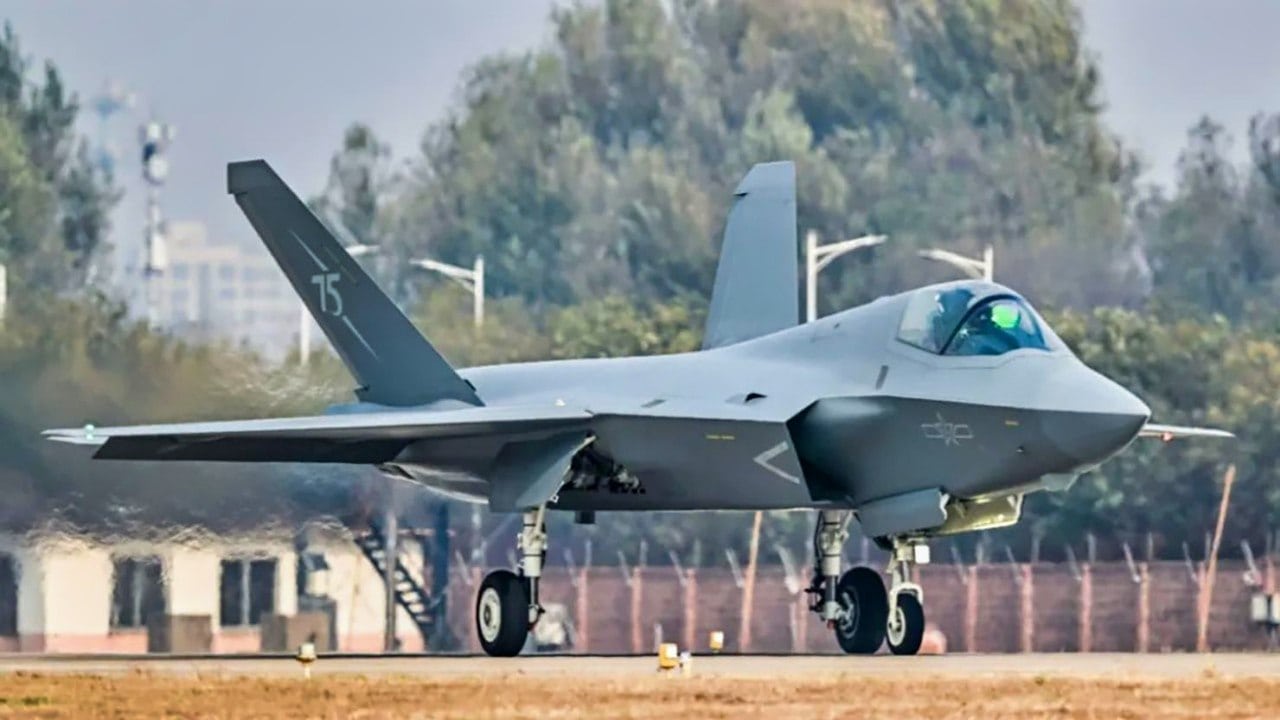
Synopsis: The Shenyang J-35A officially transitioned from a domestic priority to a global export product at the 2026 Singapore Airshow.
-Positioned as a low-cost, stealthy alternative to the F-35, the J-35A land-based variant entered PLAAF service in late 2025, following successful EMALS-assisted trials of its naval counterpart on the carrier Fujian in September 2025.
-Beijing is now leveraging the fighter’s $50 million price tag and lack of political strings to court international buyers, with Pakistan already negotiating a 40-unit deal.
-This move signals China’s intent to disrupt long-standing Western defense monopolies across Asia, the Middle East, and Africa.
-In 2 Words: For Sale.
Why the J-35 in Singapore’s Backyard Just Put the F-35 on Notice
China used the 2026 Singapore Airshow to present its new Shenyang J-35A stealth fighter to the international market, marketing it as a cost-competitive alternative to Western fifth-generation jets such as the F-35 Lightning II.
The presence of a J-35A model alongside other Chinese military hardware at the February event appears to signal Beijing’s intent to expand its footprint into global defense markets as it rapidly grows its own military capabilities and fleets. The model was shown alongside other military hardware, including full-size fighter jets.
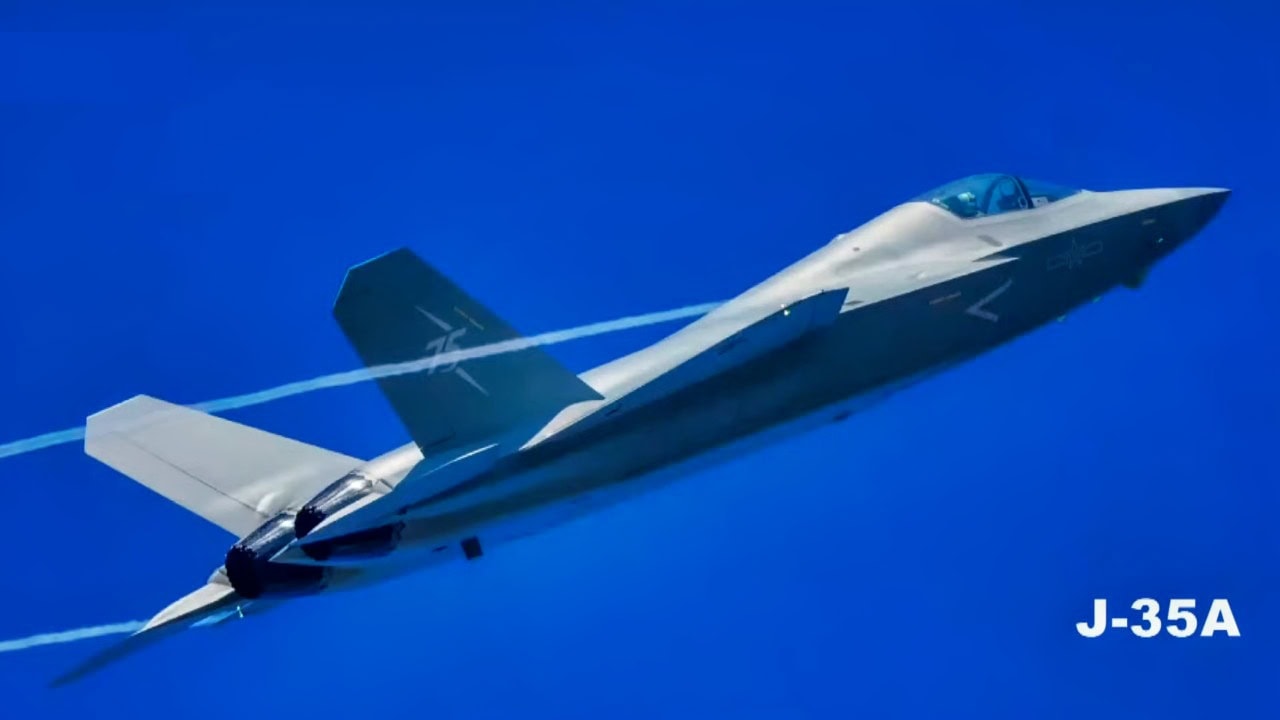
China J-35 Fighter. Image Credit: Creative Commons.
Reports from China also revealed that the PLA Air Force’s aerobatic team attending the show used mid-air refuelling to fly directly to Singapore in the Chengdu J-10C fighter jet. Reuters notes that Tim Robinson, the editor-in-chief of the Royal Aeronautical Society’s Aerospace magazine, described the move as a message to say Chinese power projection is “growing.”
“It’s one of the key enablers a modern air force should have,” he said. “Previously people said this is one of their weaknesses.”
How the J-35 Got Here
The J-35 program traces its roots to the FC-31 Gyrfalcon, a privately funded stealth aircraft demonstrator that flew in 2012.
Initially aimed at potential export customers, the design lost out to the Chengdu J-20 in China’s own stealth fighter competition and eventually evolved into a formal military program to develop carrier- and land-based fighters. As of late 2025, the land-based J-35A variant has officially entered service with the People’s Liberation Army Air Force (PLAAF).
At the Singapore Airshow, China’s state-owned Aviation Industry Corporation of China (AVIC) placed a large-scale model of the J-35A at the center of its exhibit. Analysts attending the show noted that the emphasis on the J-35A at the exhibit marked a divergence from previous focuses on the carrier variant, reflecting a deliberate message now tailored to air forces rather than navies: China is ready to sell advanced aircraft to forces that can’t (or won’t) work with the United States.
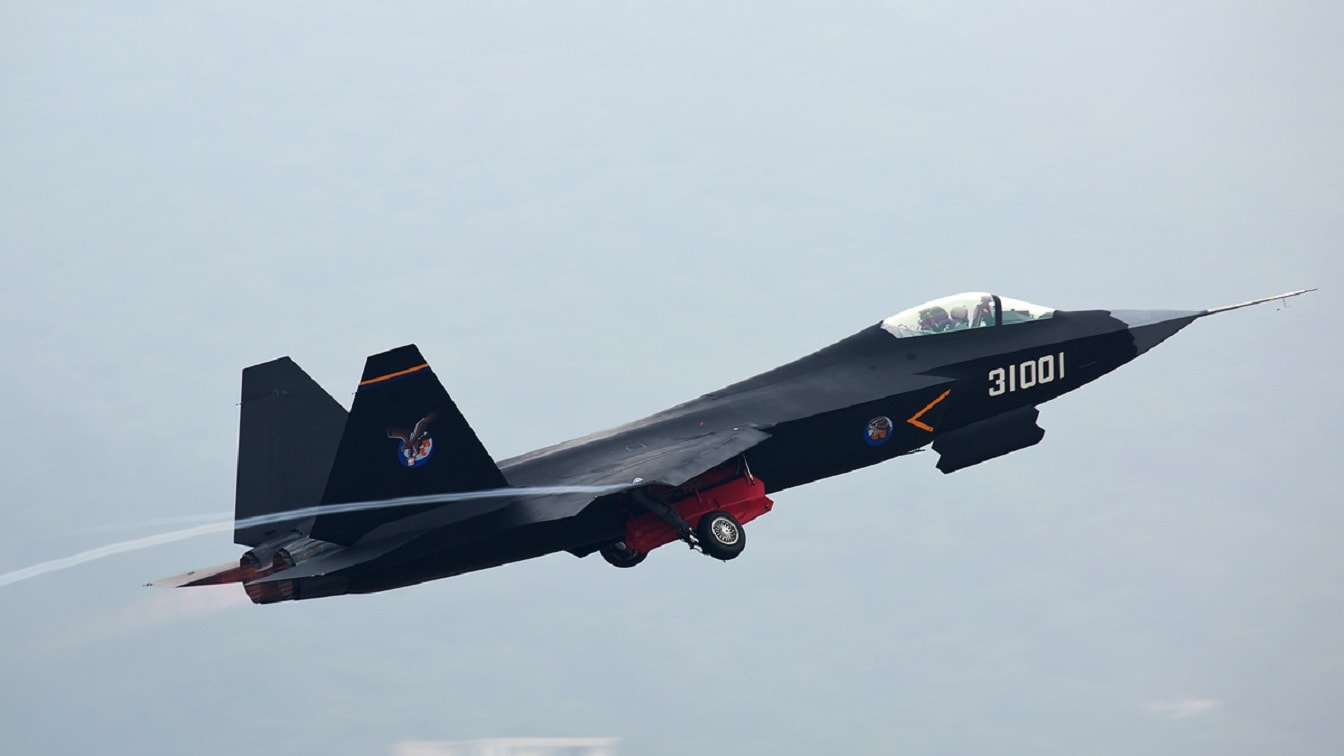
J-35 Stealth Fighter. Image Credit: Creative Commons.
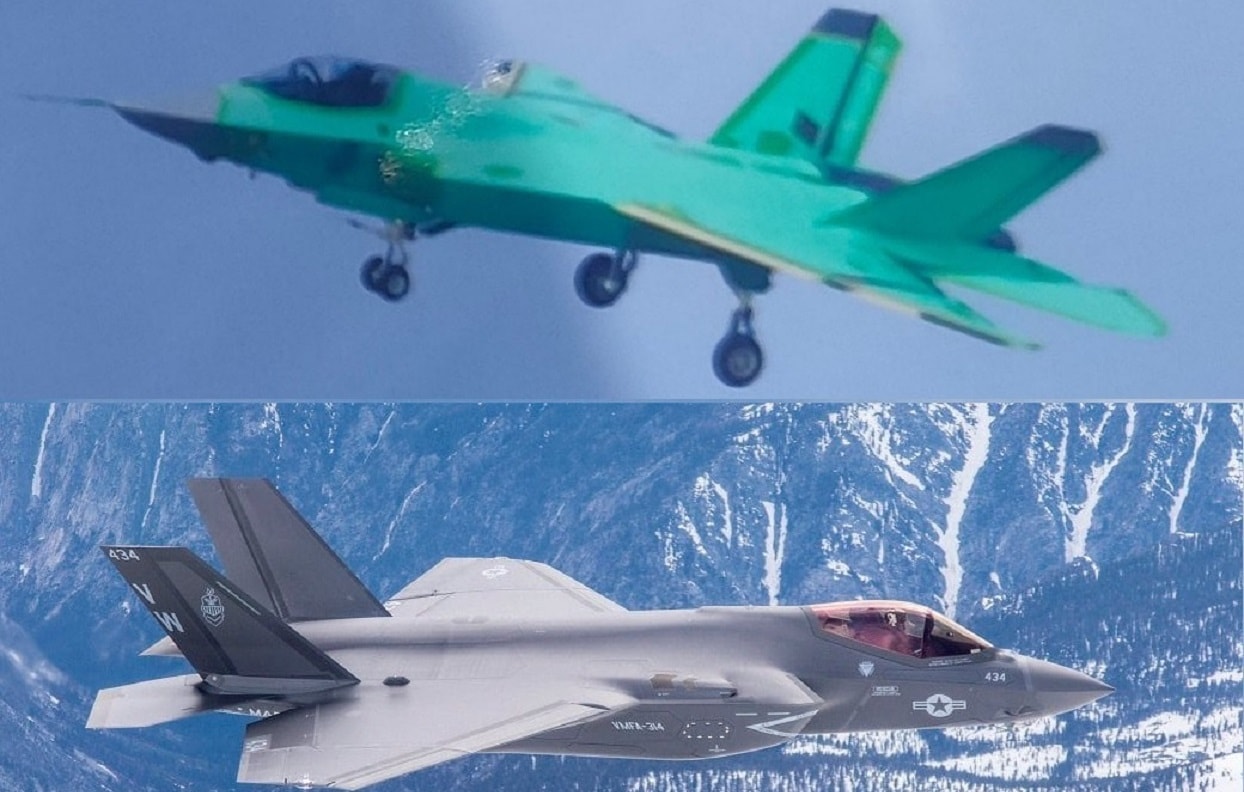
J-35 vs. F-35 Comparison. Image by Twitter User RupprechtDeino.
The land-based J-35A retains fifth-generation design elements, including stealth shaping, internal weapons bays, and advanced avionics packages for networked warfare, although detailed performance metrics remain closely held. Unlike the naval variant, which incorporates reinforced landing gear and folding wings for carrier operations, the J-35A is optimized for conventional runway take-offs and sustained air superiority missions.
The J-35 Is Operational
The J-35 family has already achieved notable milestones, with the fighter tested aboard the Chinese aircraft carrier Fujian, a Type 003-class ship equipped with electromagnetic aircraft launch systems (EMALS). In September 2025, Chinese state media released footage showing the J-35 conducting an EMALS-assisted launch from Fujian’s deck, making it the first reported fifth-generation stealth fighter from China to be launched in this way.
The Fujian also represents a substantial leap in Chinese carrier capability, moving on from older ski-jump launch designs and narrowing a key technological gap with U.S. carrier aviation. EMALS enables fighters to depart with heavier internal fuel and weapons loads, increasing mission radius and improving sortie effectiveness, particularly for stealth platforms that rely on internal carriage to preserve low observability.
These recent developments reflect China’s ongoing efforts to field a more advanced and credible carrier air wing, integrating the J-35 with other carrier-borne assets, such as the KJ-600 early-warning aircraft. While operational experience and maintenance infrastructure still lag behind Western counterparts, these milestones are significant because they signal that Beijing’s fighter programs are maturing.
Exports Next?
While China was in many ways using the airshow to signal its capabilities to the world – or, more accurately, the West – it was also an opportunity to attract potential international customers. AVIC representatives and Chinese media have described the aircraft as a low-cost alternative to Western fifth-generation fighter jets, targeting countries that either cannot afford to purchase F-35s or are constrained by political limitations on U.S. arms procurement.
There have also been reports that China has begun making offers to prospective clients. In mid-2025, Islamabad announced that China had proposed the sale of up to 40 J-35 aircraft to the Pakistan Air Force. The Pakistani government announced on its X account that, in addition to the J-35 aircraft, Beijing also offered to provide support to Islamabad with the Shaanxi KH-500 airborne early warning aircraft and the new HQ-19 surface-to-air missile (SAM) system.
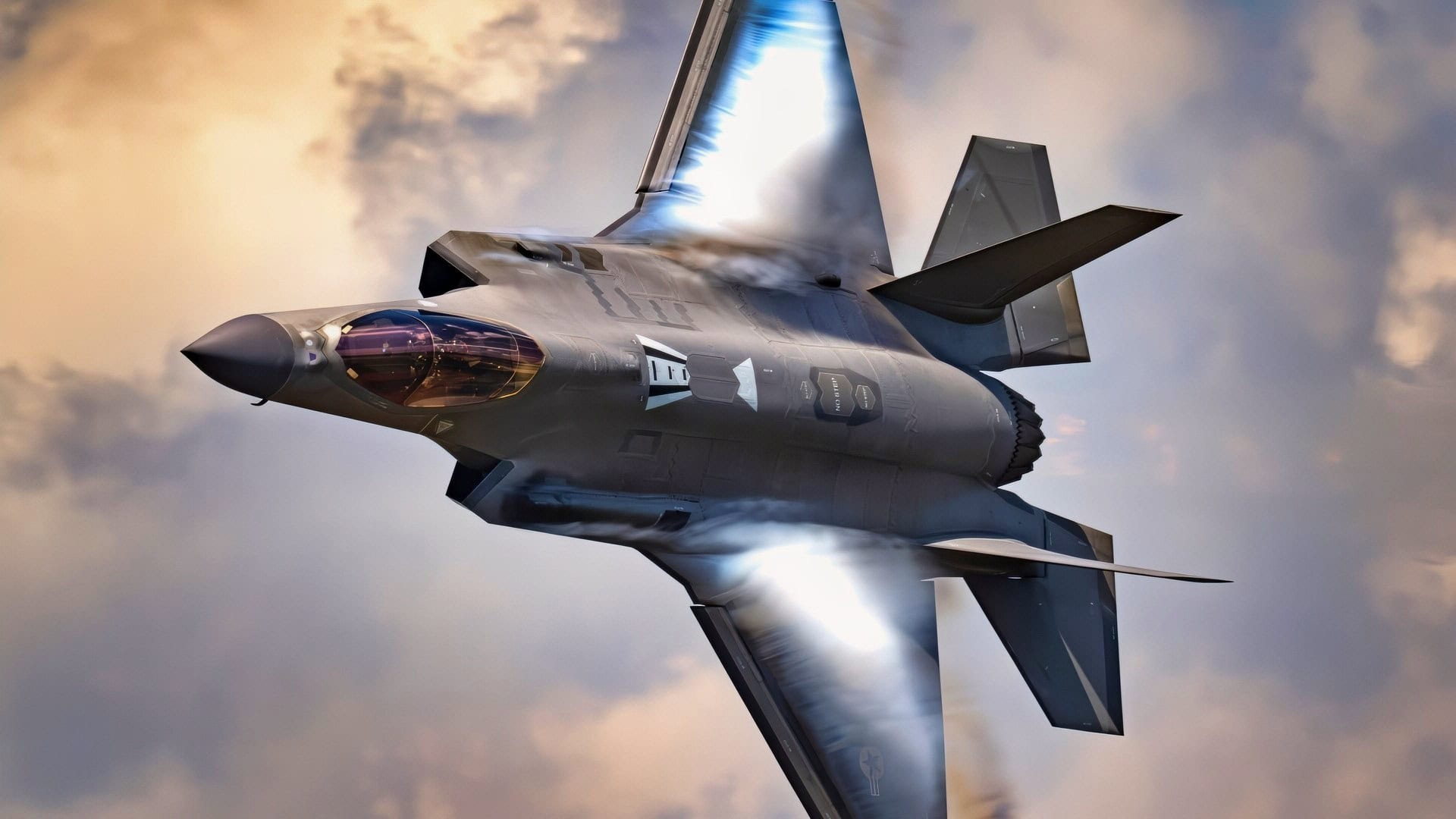
A U.S. Air Force F-35A Lightning II, assigned to the F-35A Lightning II Demonstration Team, piloted by Maj. Melanie ‘MACH’ Kluesner, performs during the 2025 Battle Creek Field of Flight Air Show over Battle Creek, Michigan, July 5, 2025. The F-35A Demonstration Team showcases the jet’s unique maneuverability and advanced capabilities at air shows across the nation. (U.S. Air Force photo by Staff Sgt Zachary Rufus)
China’s offers are becoming increasingly attractive as well.
Not only are its newest platforms attractive for their capabilities, but there is also a growing willingness across Southeast Asia, the Middle East, and Africa to consider non-Western systems that offer similar capabilities to platforms like the F-35 without the price tag, export controls, and data sovereignty issues.
MORE – $5,500,000,000 Nuclear Navy Aircraft Carrier ‘Sunk’ By $850,000,000 Australian Diesel Submarine
MORE – Yes, the U.S. Military Can Take Back the Medal of Honor
China’s participation in the Singapore Airshow, including outreach to regional defense officials and demonstrations of multiple aircraft, suggests that Beijing is serious about penetrating markets long dominated by American, European, and Russian suppliers.
About the Author: Jack Buckby
Jack Buckby is a British researcher and analyst specialising in defence and national security, based in New York. His work focuses on military capability, procurement, and strategic competition, producing and editing analysis for policy and defence audiences. He brings extensive editorial experience, with a career output spanning over 1,000 articles at 19FortyFive and National Security Journal, and has previously authored books and papers on extremism and deradicalisation.