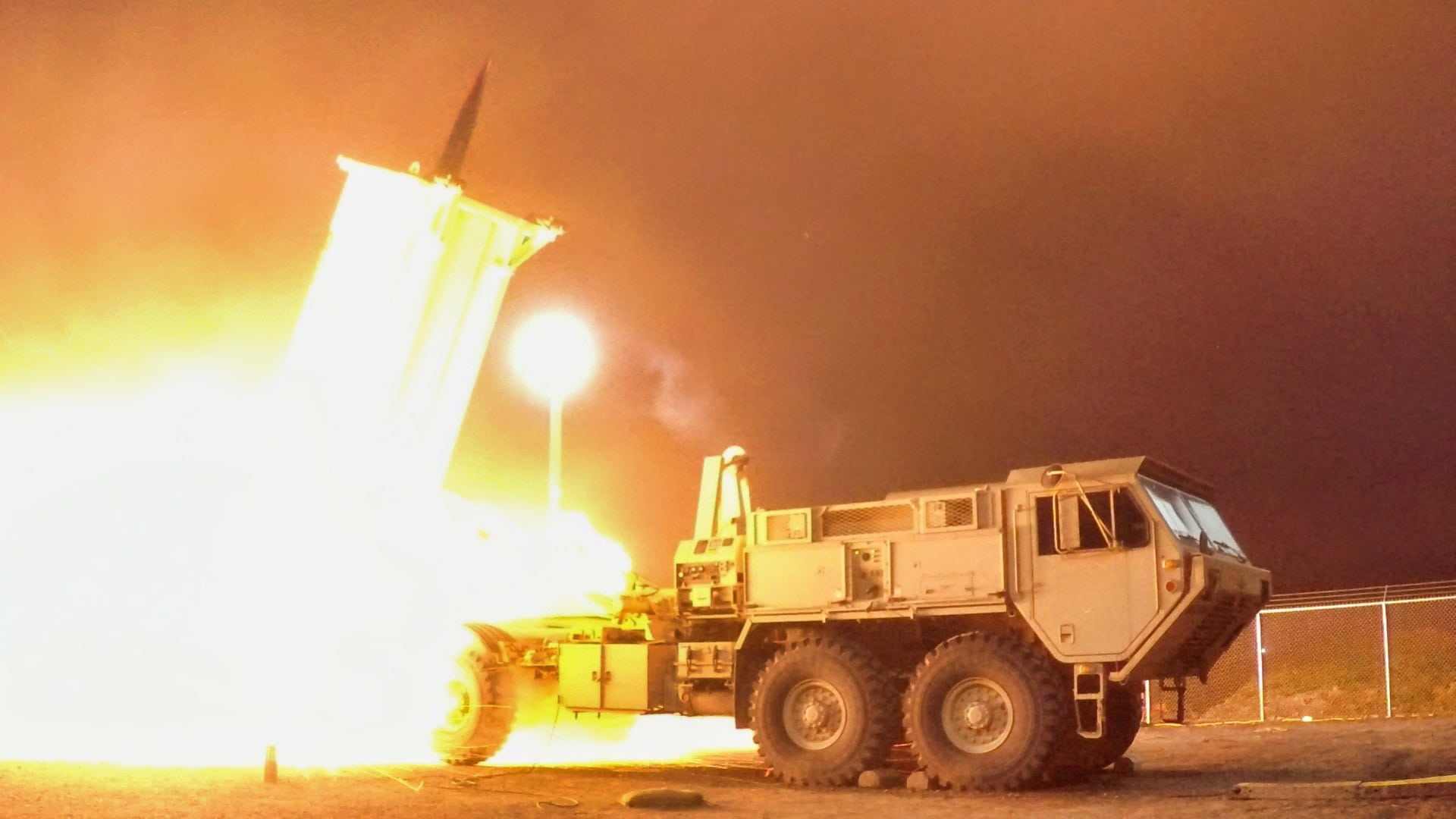
Summary and Key Points: Reuben F. Johnson, a veteran defense technology analyst, evaluates the “full-blown crisis” in U.S. missile interceptor stockpiles during Operation Epic Fury.
-While Patriot PAC-3 MSE, THAAD, and SM-3 systems have achieved stellar results against Iranian salvos, the “just-in-time” production model has left the U.S. Navy and Army with dangerously low inventories.
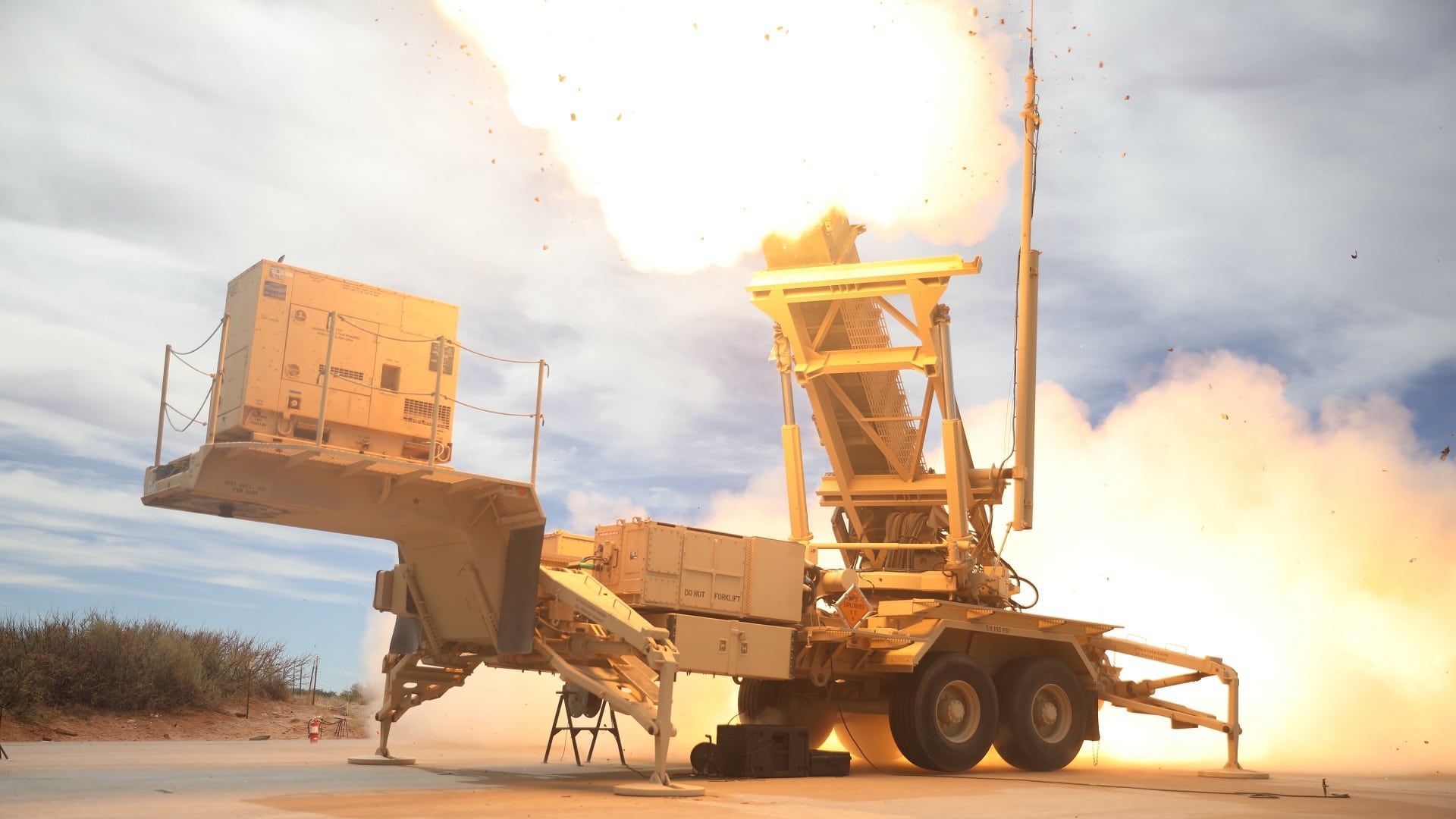
Soldiers from 69th Air Defense Artillery Brigade conducted Patriot Missile live fire training, November 5, at McGregor Range Complex on Fort Bliss. The live fire exercise was conducted jointly with Air Defense counterparts from the Japanese Self-Defense Force. (U.S. Army Photo by Staff Sgt. Ian Vega-Cerezo)
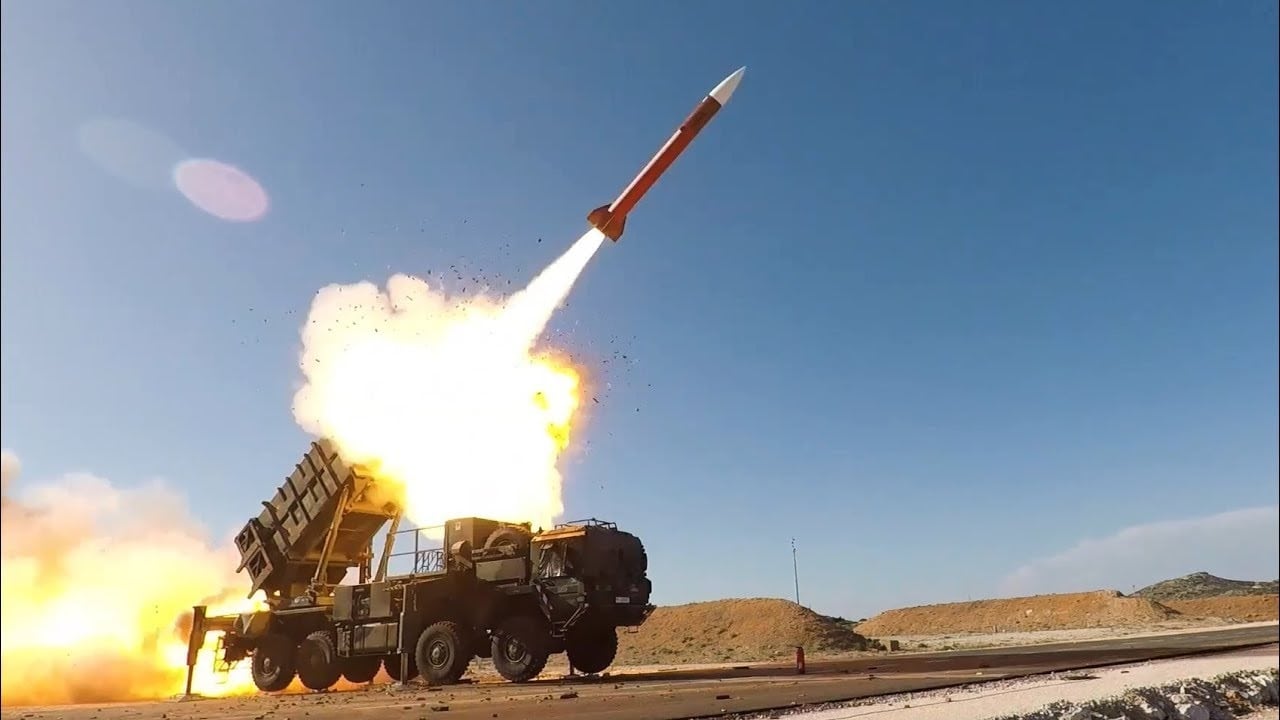
Patriot Missile. Image Credit: Lockheed Martin.
-This 19FortyFive report analyzes the strategic overstretch across the Middle East, Indo-Pacific, and NATO, concluding that the U.S. must treat interceptor production as a central strategic asset and pivot toward lower-cost solutions like directed energy.
Niche No More: Why Missile Defense is the New Strategic Priority for the U.S. Military
Since the United States began air operations against Iran last weekend, nations throughout the region have faced missile and drone barrages from the Islamic Republic. Reports of hits on civilian infrastructure continue to filter in, prompting progressively more parties to the conflict to ask how they can obtain more air-defense assets.
There is no problem with the capabilities of the integrated air and missile defense systems (IADS) and air forces of the United States, Israel, and their major military partners in the Gulf region. By all accounts, those systems have delivered stellar performance against attacks of multiple types of Iranian air, missile, and drone systems.
The success of these air and missile defense systems was long in the making. The requirement for such defenses was made clear by attacks against Israel and Gulf Arab nations by Iraqi surface-to-surface missile systems in 1991. It has taken more than three decades of progressively more sophisticated operational, technical, and political investments by these nations to build these IADS networks across the Middle East.
How We Got Here
An op-ed this week by Frank A. Rose, a former U.S. assistant secretary of state, details how painstaking was the process of creating the air and missile defenses seen operating against Iran today.
Consecutive U.S. administrations kept working to solve technological problems and political issues. They engaged closely with Israel, while also building bridges with all the nations that are members of the Gulf Cooperation Council.
But the effectiveness of the U.S.-made Patriot PAC-3 MSE system has also revealed where not enough was done in the past—and what problems may arise in the future. The inconvenient secret that has now broken out into the open is that the United States does not have nearly enough interceptor missiles.
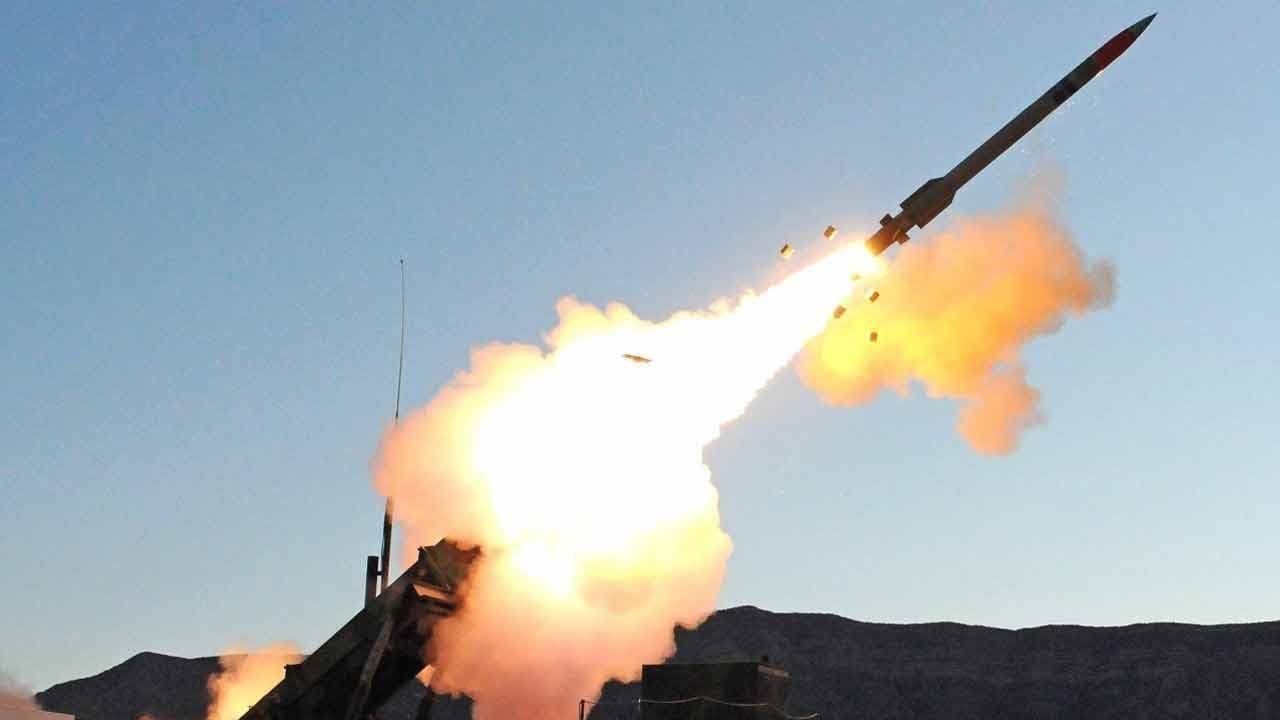
Patriot Missile. Image Credit: Creative Commons.
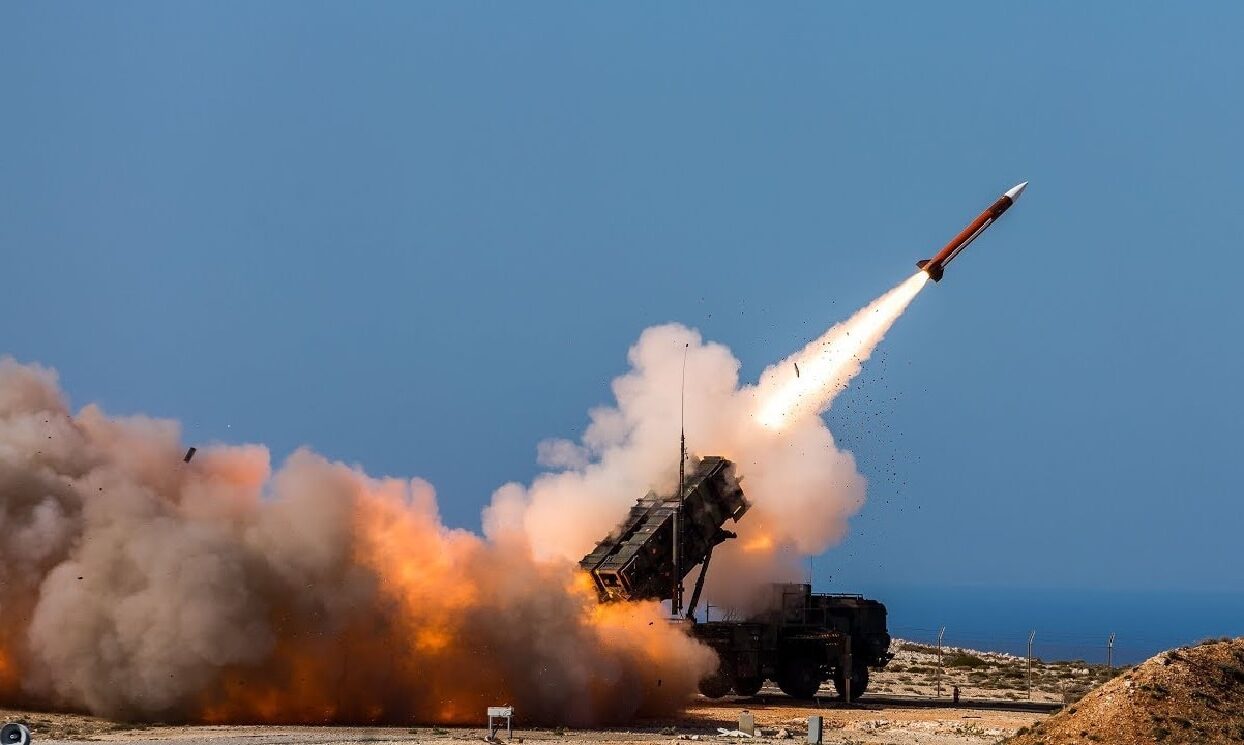
Image: Creative Commons.
Moreover, U.S. industry has not been given contracts to build enough of these interceptors to support nations against a sustained campaign such as Iran’s. As Rose points out in his essay:
“Intercepting large salvos burns through munitions at an alarming rate. And the United States is now drawing from the same limited stockpiles to support:
-Ongoing commitments in the Middle East.
-Deterrence and defense requirements in Korea and Guam.
-NATO reassurance efforts.
-And potential contingencies involving China.”
As the Wall Street Journal recently reported, the question of how to maintain adequate stocks of missiles for the Theater High-Altitude Air Defense (THAAD) system—plus the three missiles used in the Patriot batteries, as well as SM-3 interceptors—is more than a rising concern for the Pentagon. It is turning into a full-blown crisis.
As he concludes, the United States and its allies landed in this conundrum because in the post-Cold War era “production lines were sized for peacetime assumptions. Budget trade-offs prioritized other weapons.”
“If you want to find someone to point the finger at, blame the Japanese and the much-ballyhooed ‘just in time’ philosophy of production,” said a now-retired U.S. defense industry executive. “The U.S. defense industry has moved to a model where the maximum priority was the top efficiency. That is the exact opposite of how you want to run defense production if you are in a situation as we are now that demands the ability to upshift into surge capacity.”
Missile Defense: Addressing The Shortage For The Long Term
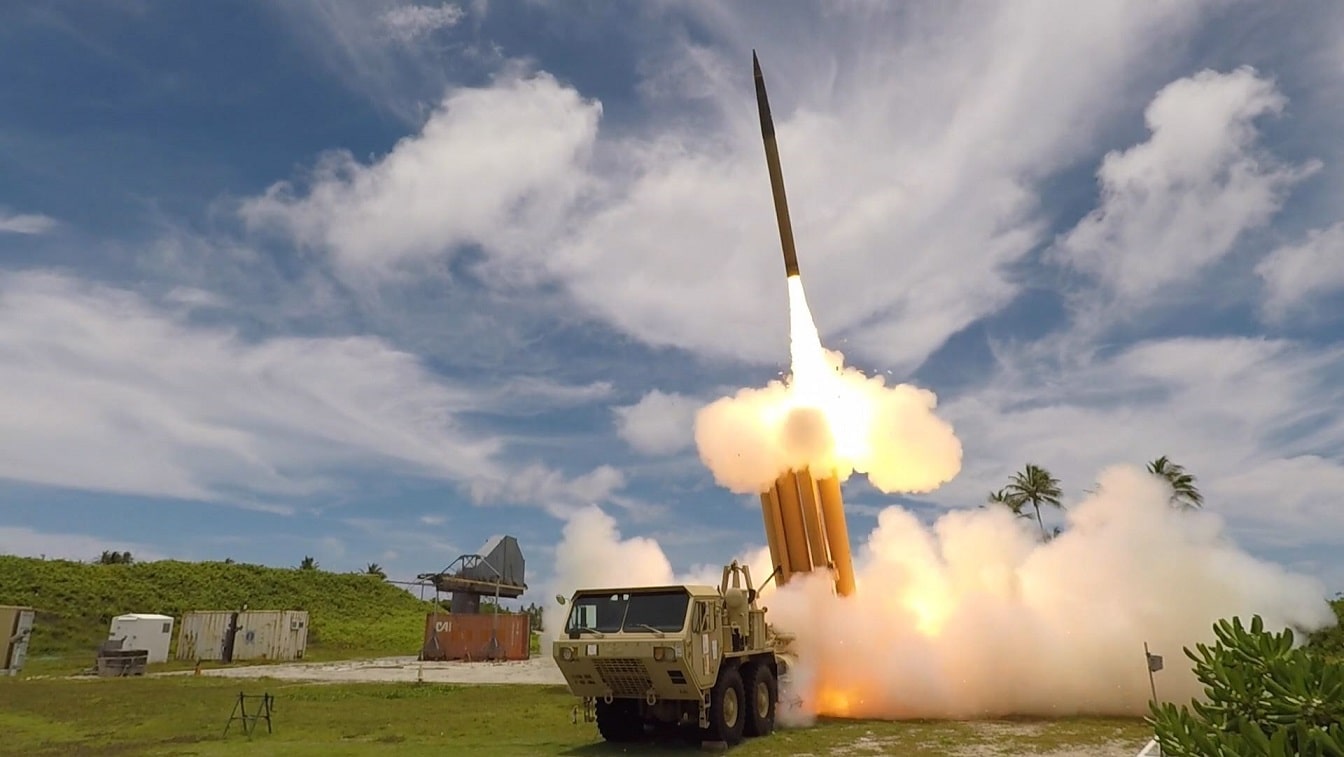
THAAD Missile Defense Battery Firing. Image Credit: Lockheed Martin.
Rose lays out a series of required actions:
-Surge the production of missile defense interceptors for systems such as THAAD, Patriot MSE, and SM-3. Some of this is already underway with recent new contracts. Production of the Patriot battery missile will increase from 500 to 2,000 per year.
-Establish multi-year procurement authorities to stabilize demand signals for industry.
-Work with allies and partners on co-production and co-financing arrangements. Some of this will require the United States to overhaul the export control and technology transfer policies.
-Accelerate the integration of lower-cost intercept solutions and complementary capabilities such as directed energy where feasible. Some of this is already being done in locations such as Ukraine.
-Treat interceptor inventory as a strategic asset, not a budgetary afterthought. Missile defense needs to be treated as a central requirement for defense in many of the major theaters worldwide. It is, as Rose points out, “no longer a niche capability.”
In the meantime, more than one senior defense official has said recently, “this needs to be the last time that inventories run so low that we worry about running out.”
About the Author: Reuben F. Johnson
Reuben F. Johnson has thirty-six years of experience analyzing and reporting on foreign weapons systems, defense technologies, and international arms export policy. Johnson is the Director of Research at the Casimir Pulaski Foundation. He is also a survivor of the Russian invasion of Ukraine in February 2022. He worked for years in the American defense industry as a foreign technology analyst and later as a consultant for the U.S. Department of Defense, the Departments of the Navy and Air Force, and the governments of the United Kingdom and Australia. In 2022-2023, he won two awards in a row for his defense reporting. He holds a bachelor’s degree from DePauw University and a master’s degree from Miami University in Ohio, specializing in Soviet and Russian studies. He lives in Warsaw.