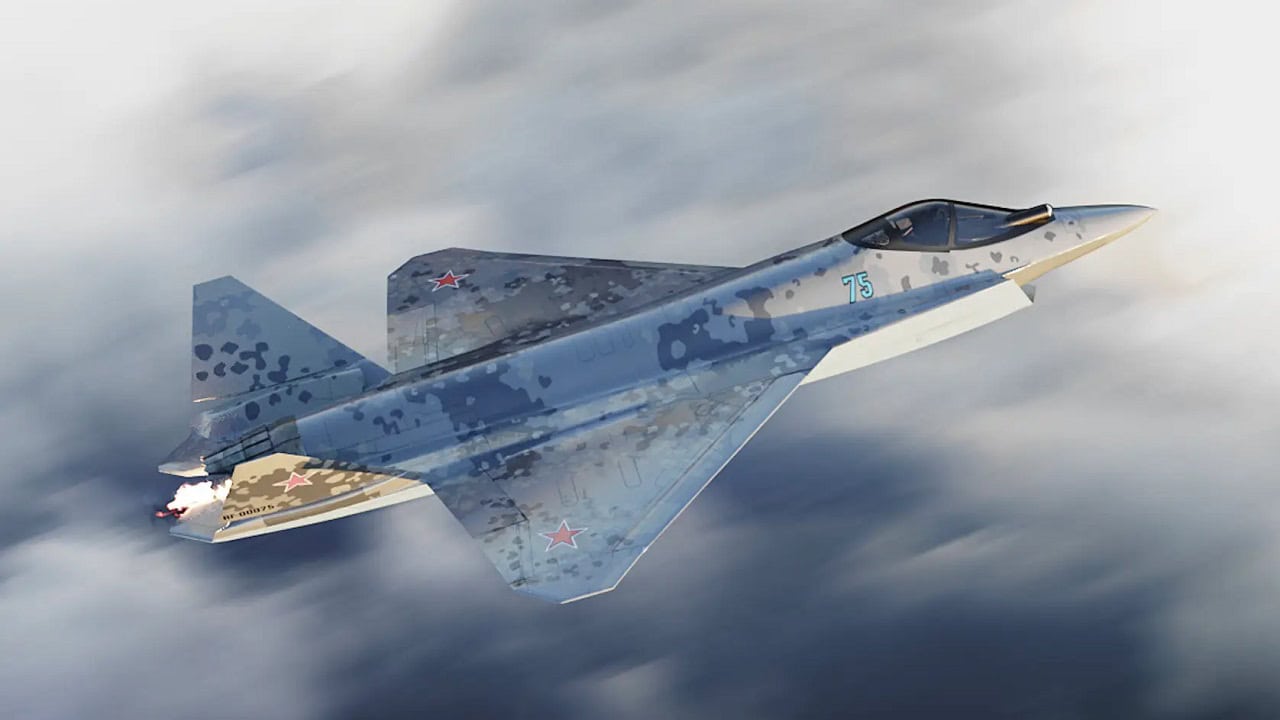
Summary and Key Points: Caleb Larson evaluates the Su-75 Checkmate, a single-engine stealth fighter unveiled by Sukhoi in 2021, as a budget alternative to the F-35 Lightning II.
-Designed for exports to India, Vietnam, and the UAE, the jet features AESA radar, internal weapons bays, and a 7,400kg payload capacity.
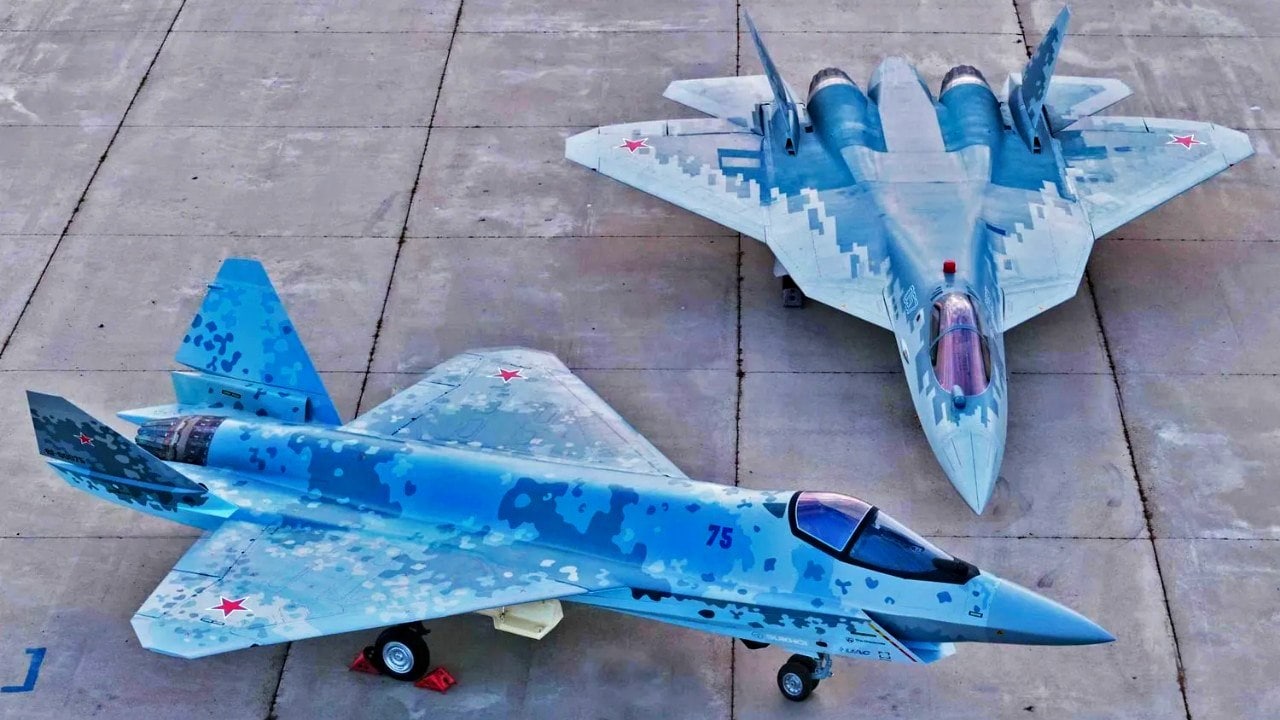
Su-57 and Su-75 Checkmate Russian Air Force.
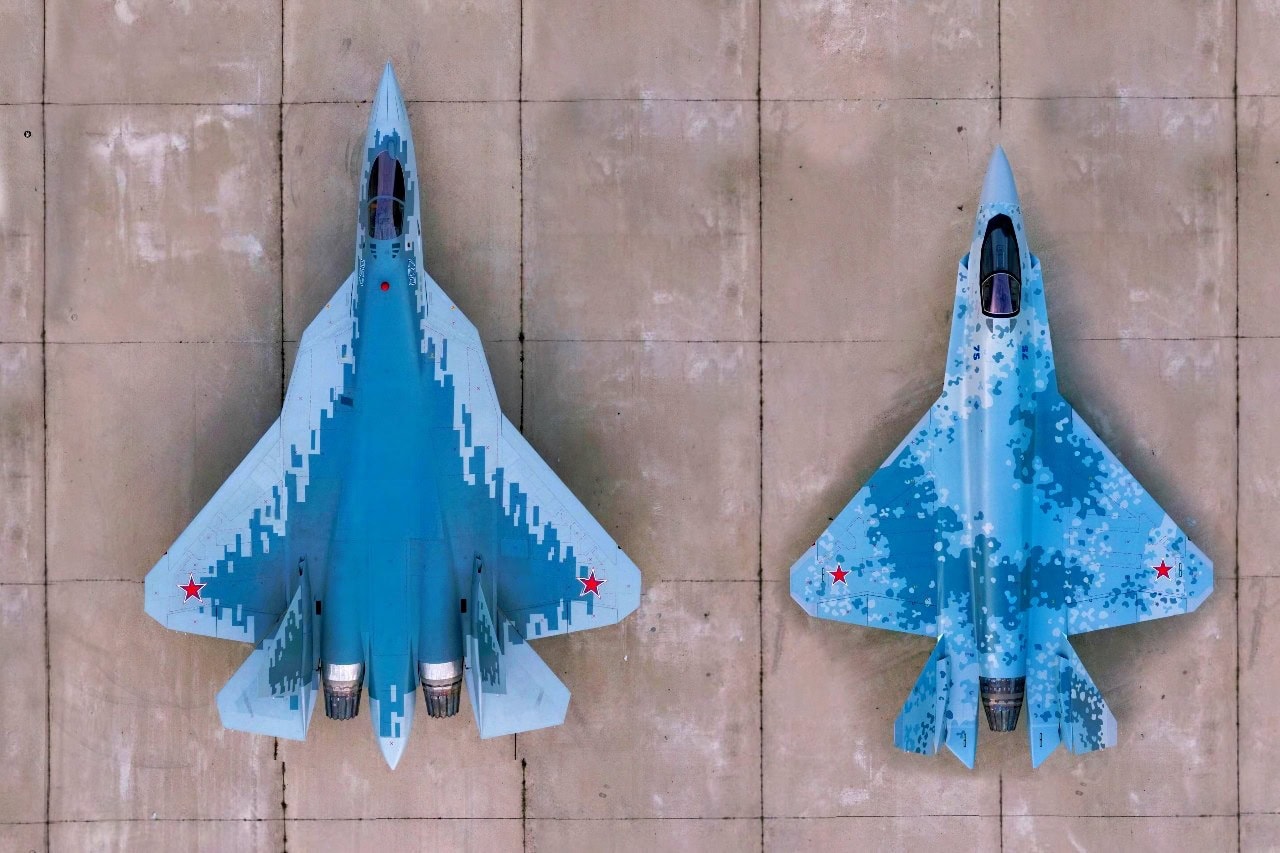
Su-57 Felon and Su-75 Fighters From Russia. Image Credit: Creative Commons.
-However, this report analyzes how the Ukraine War shifted Russia’s industrial focus toward drones and land systems, delaying the Su-75’s 2026 production timeline indefinitely.
-Larson concludes that while the dual-engine Su-57 has achieved export success in Algeria, the Checkmate remains a “concept demonstrator” with a highly uncertain future.
The Su-75 Checkmate Paradox: Why Russia’s $30 Million Stealth Fighter is Stuck in the Conceptual Stage
Russia’s Su-75 Checkmate is a proposed single-engine stealth fighter that was unveiled by Sukhoi in 2021 at the MAKS Air Show in Moscow. The fighter is nominally aimed at potential Russian export customers, and it was presented as a light, relatively inexpensive alternative to the much larger two-engined Su-57 aircraft.
The jet emerged before Russia’s full-scale invasion of Ukraine in 2022 as an attempt by Russia to compete on the international arms market with a fifth-generation fighter option comparable to Lockheed Martin’s F-35 Lightning II.
While the Su-57 was meant for the Russian Aerospace Forces, the Su-75 was designed as a budget alternative to U.S.-dominated fifth-generation exports.
United Aircraft Corporation marketed the jet, albeit briefly, to the Middle East, Asia, and possibly a few African countries, while also promoting it in marketing materials to Argentina, India, the United Arab Emirates, and Vietnam.
The Jet
On a conceptual level, the Su-75 would fill a niche similar to that of the F-35: a single-engine, multi-role aircraft capable of air-to-air combat, reconnaissance, and strike missions.
The jet’s single-engine design choice is a marked shift in Russian aircraft design, which has typically favored dual engines. Had prototypes of the jet been built, it is thought that the Checkmate’s engine would have been the Saturn AL-41F1 engine or a variant of the Izdeliye 30 engine.
Su-75 Checkmate artist rendition.
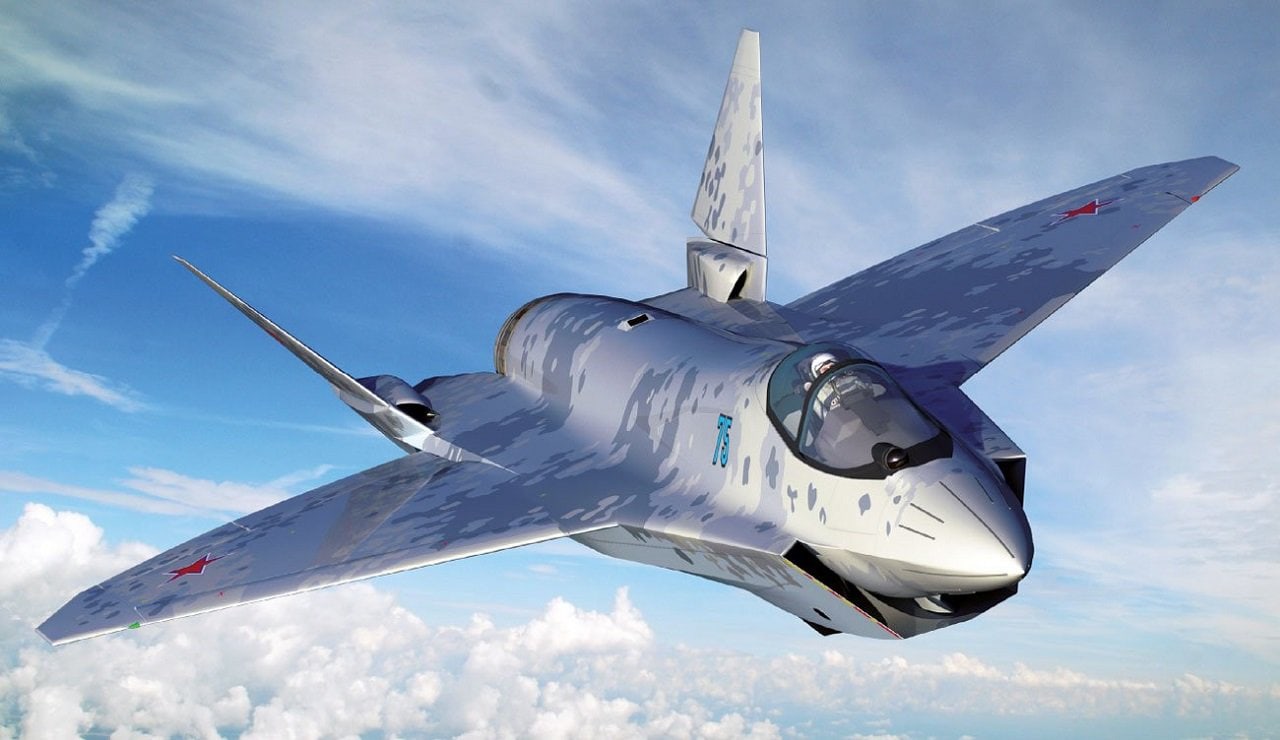
Russia’s Su-75 Checkmate Stealth Fighter. Image Credit: Creative Commons.
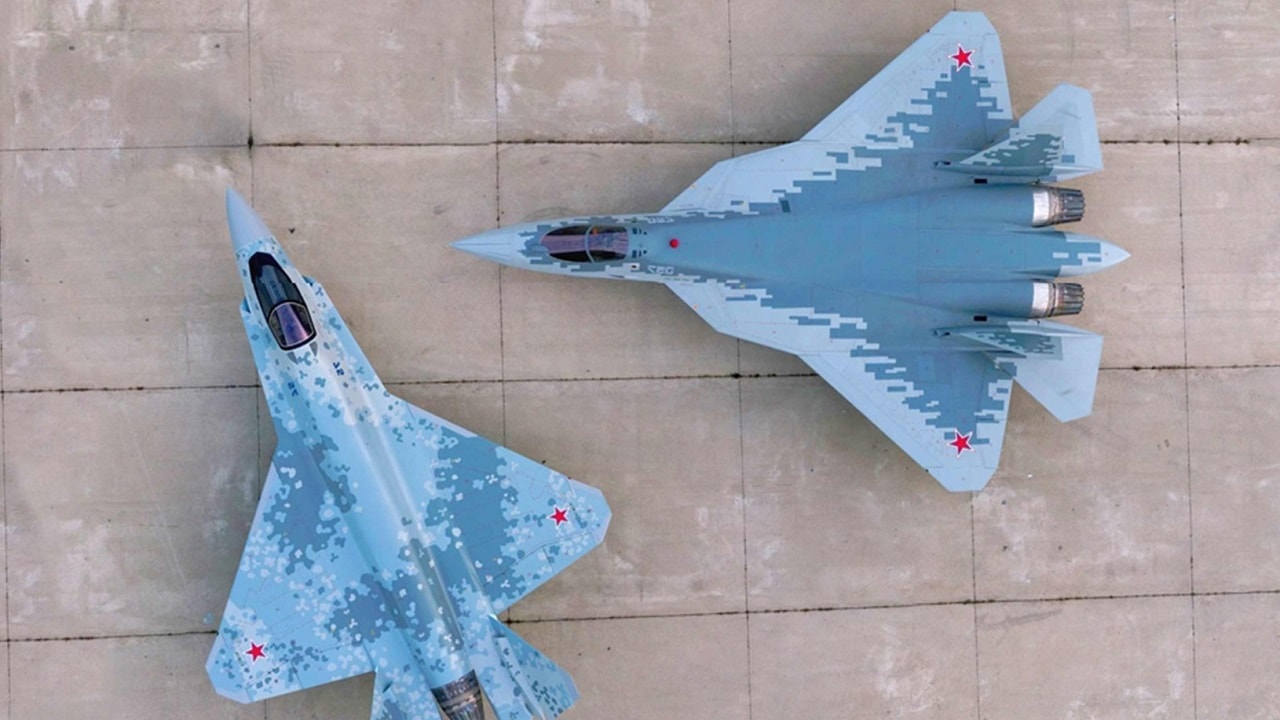
Su-75 Artist Rendering. Image Credit: Creative Commons.
Some of the jet’s features are staples of fifth-generation aircraft, such as diverterless supersonic inlets that feed air to the jet’s single engine; internal weapons bays that shield radar-reflective munitions from adversary radar; a canted V-tail; and carefully contoured wings and fuselage to minimize radar bounce-back.
Checkmate promotional material indicates that the small jet’s weapons bay is rated for payloads of up to 7,400 kilograms.
And while the jet has never actually moved from the conceptual stage to production, it is presumed to have an active electronically scanned array (AESA) radar, integrated electronic warfare systems, and a data link for connectivity with other aircraft.
Initial promotional material at the MAKS show indicated Checkmate pilots would be assisted by artificial intelligence.
The Su-75’s specifications were rather ambitious.
With a top speed of about Mach 1.8, a combat radius of roughly 1,500 kilometers, and a unit cost in the $25–30 million range, the Checkmate would be markedly cheaper than the F-35A, which costs between $82–110 million.
Development Status
The future of the Su-75 is very much up in the air. Prototypes of the jet have been built, but none since the jet’s 2021 unveiling.
The project exists today only as a concept demonstrator. Sukhoi, via United Aircraft Corporation, projected that the jet’s first flight would be in 2023 or 2024, with production in 2026 or 2027. Of course, Russia’s invasion of Ukraine threw a wrench into those works, but the sheer ambitiousness of the Checkmate’s design schedule led to questions about the project’s seriousness.
In any event, the Russian defense industry is bent on prosecuting the Russian invasion, a decidedly land-centric campaign shaped by developments in drone warfare, rather than one of highly contested aerial battles.
Dubious Future
The Su-75 Checkmate is, seemingly, an earlier Russian attempt to enter the fifth-generation stealth export market with a low-cost, low-end expert-oriented fighter. Conceptually, the Checkmate would have shared some qualities with the F-35 fighter—notably its single-engine design and multirole capability.
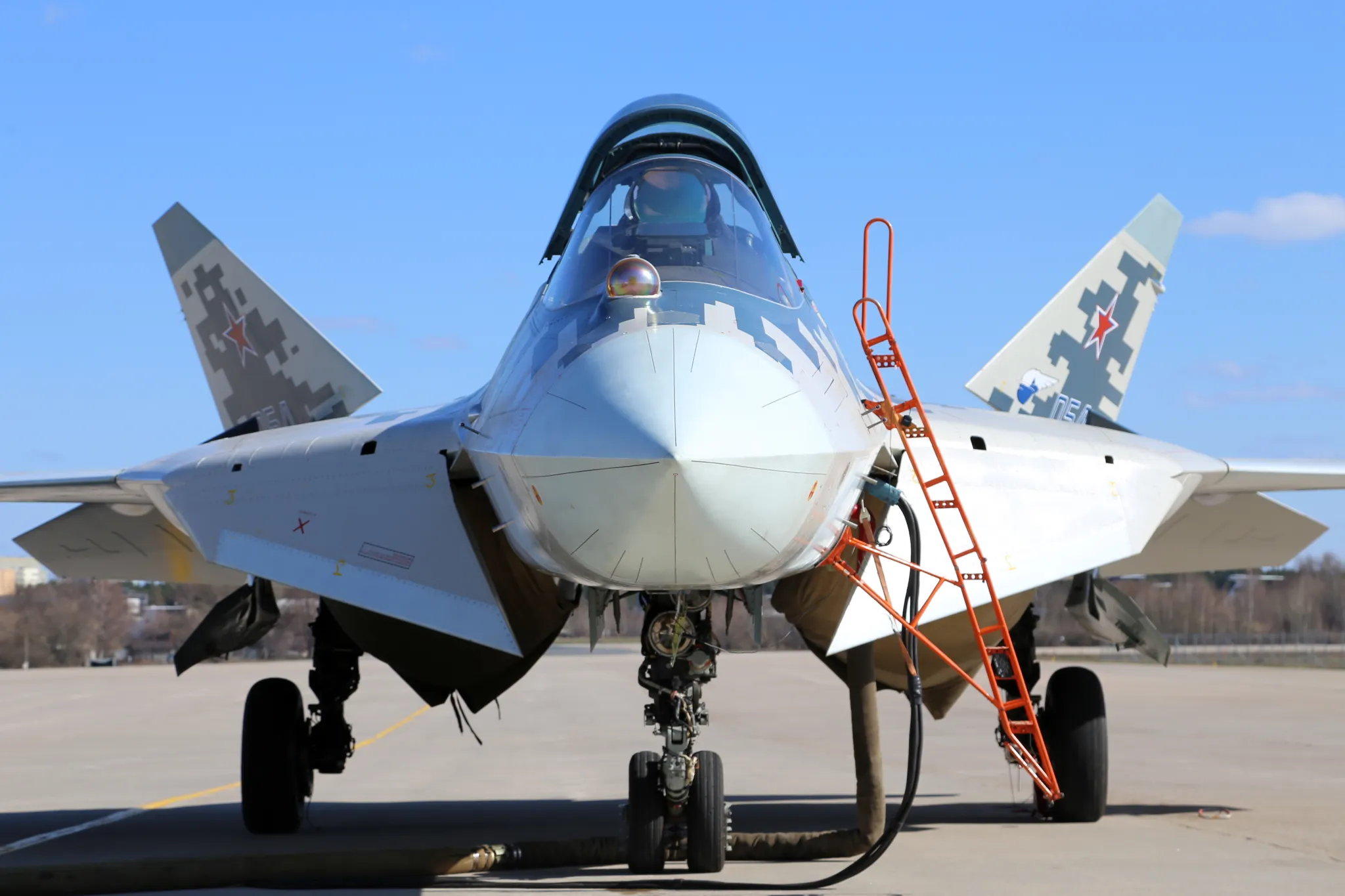
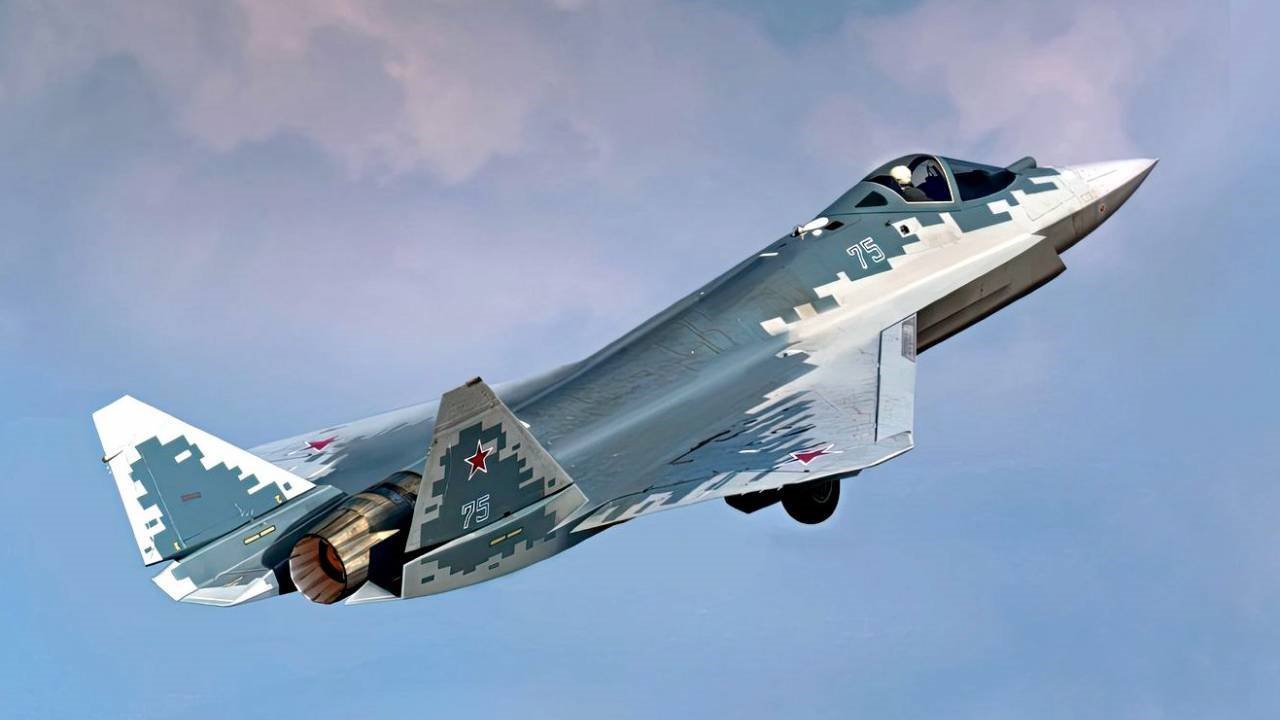
Russia’s Su-57 Stealth Fighter. Image Credit: Creative Commons.
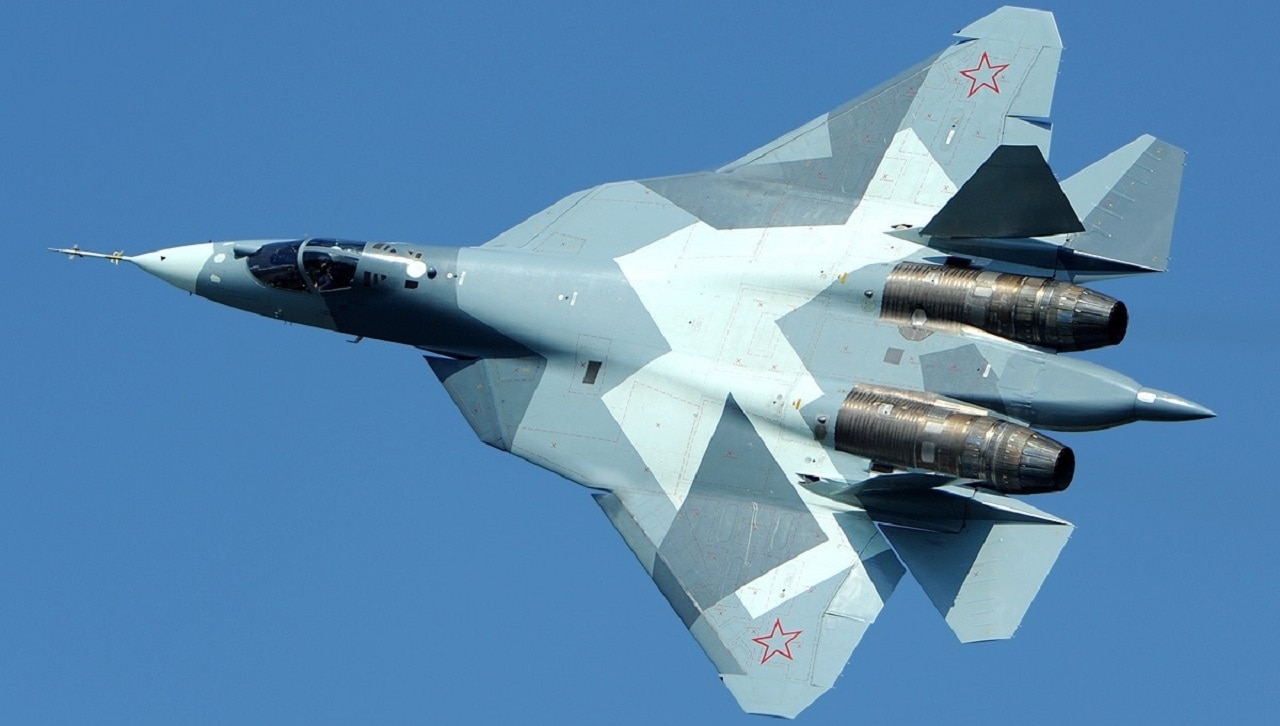
Su-57. Image Credit: Creative Commons.
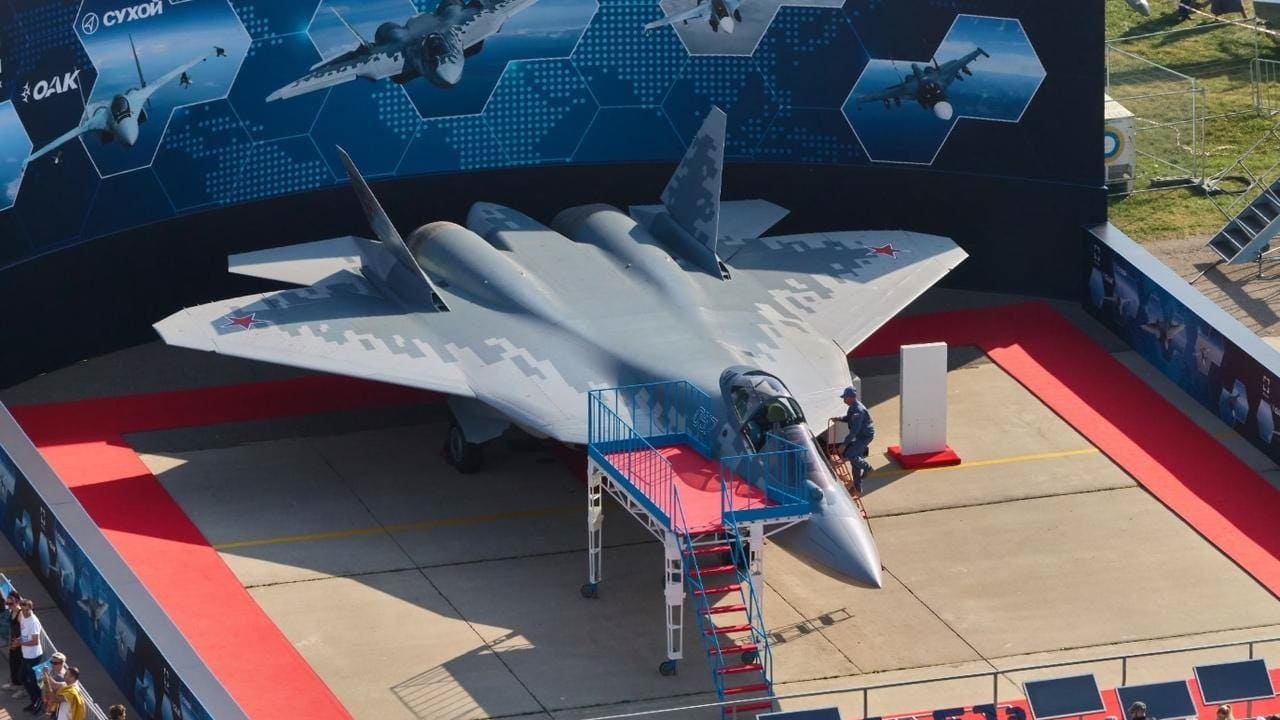
Su-57 Felon Fighter. Image Credit: Creative Commons.
But, overshadowed by the war in Ukraine, the Checkmate is unlikely to be produced until hostilities end.
Russian fifth-generation export success has become clearer with the Su-57, recently delivered to Algeria.
While the Su-57’s production has been extremely limited in comparison to that of the F-35, it has, unlike the Su-75, actually been prototyped and built. Look to that jet for the future of Russian fifth-generation aircraft.
About the Author: Caleb Larson
Caleb Larson is an American multiformat journalist based in Berlin, Germany. His work covers the intersection of conflict and society, focusing on American foreign policy and European security. He has reported from Germany, Russia, and the United States. Most recently, he covered the war in Ukraine, reporting extensively on the war’s shifting battle lines from Donbas and writing on the war’s civilian and humanitarian toll. Previously, he worked as a Defense Reporter for POLITICO Europe. You can follow his latest work on X.