
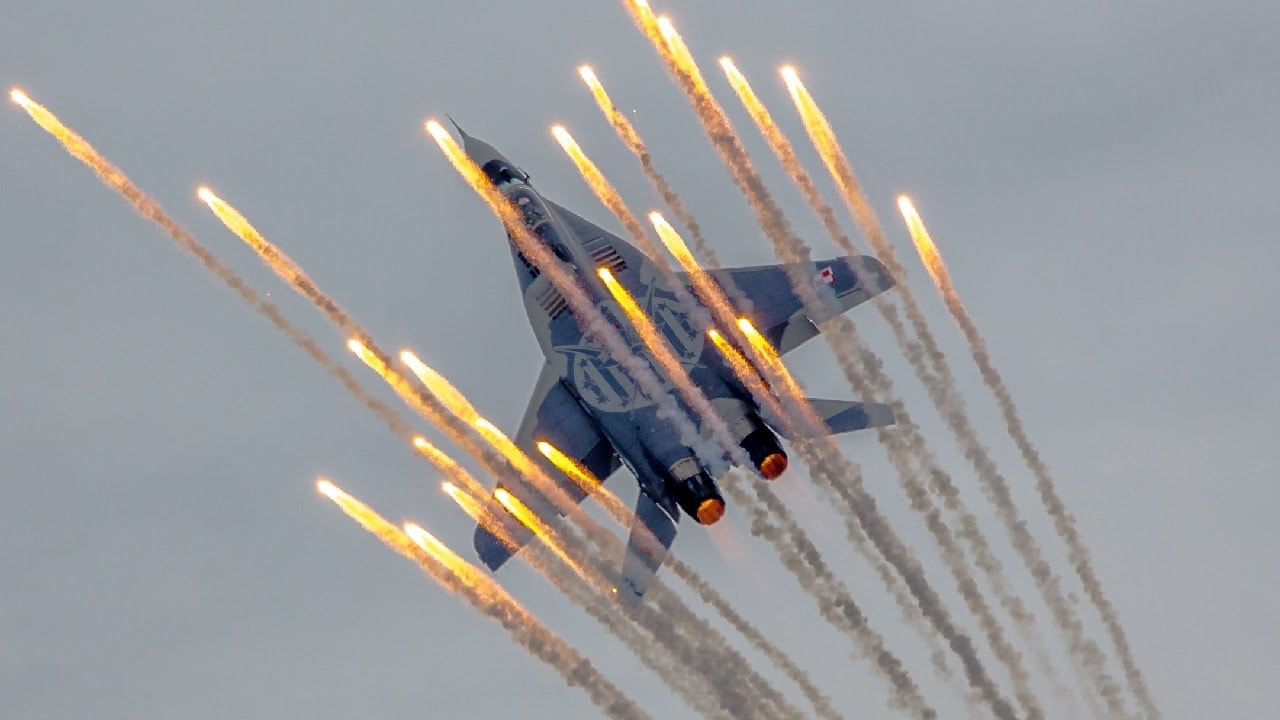
Summary and Key Points: National Security Columnist Steve Balestrieri evaluates the 1997 U.S. acquisition of 21 Moldovan MiG-29 fighters, including 14 nuclear-capable MiG-29C variants.
-Designed by the Mikoyan-Gurevich Design Bureau to rival the F-15 and F-16, the “Fulcrum” featured Isotov RD-33 engines and helmet-mounted sights for high-agility dogfighting.
-This report analyzes how the Clinton administration used the Cooperative Threat Reduction Program to intercept an Iranian purchase and ship the airframes to Wright-Patterson Air Force Base.
-Balestrieri concludes that this proactive move neutralized a potential Iranian nuclear delivery threat while providing invaluable intelligence to U.S. and Israeli pilots.
The US Stopped Iran from Getting Nuclear-Capable MiG-29 Fighters
President Donald Trump has been in the news a lot in the past few weeks, with a consistent message about the United States stopping Iran from fulfilling its dream of building and fielding nuclear weapons.
However, the United States made a secret deal nearly 35 years ago to stop the Islamic Republic from purchasing nuclear-capable bombers.
Following the collapse of the Soviet Union, many former Soviet republics inherited weapons systems they could no longer afford to operate or maintain. One of those republics was the small country of Moldova.
They were looking to sell their fleet of 34 MiG-29s, which they no longer needed or could operate or maintain. The tiny country did not need advanced air superiority MiG-29 Fulcrum fighters. But the cash-strapped country had a buyer.
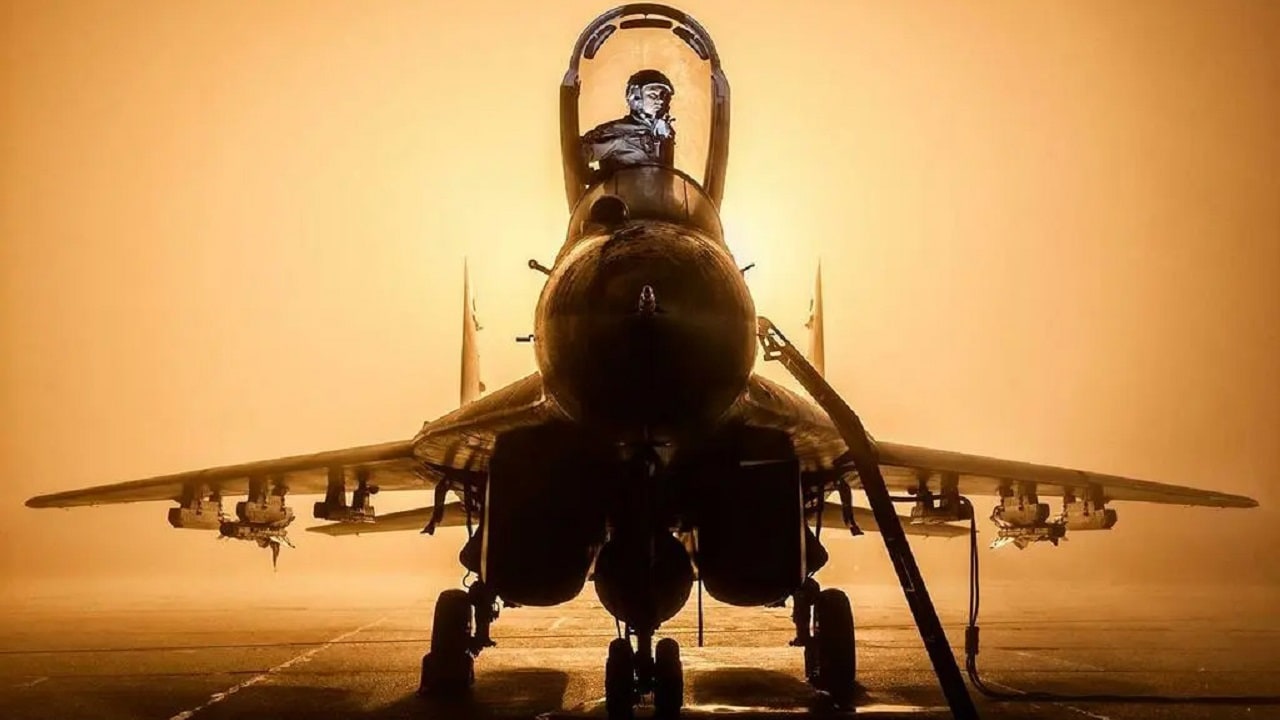
MiG-29 fighter. Image Credit: Creative Commons.
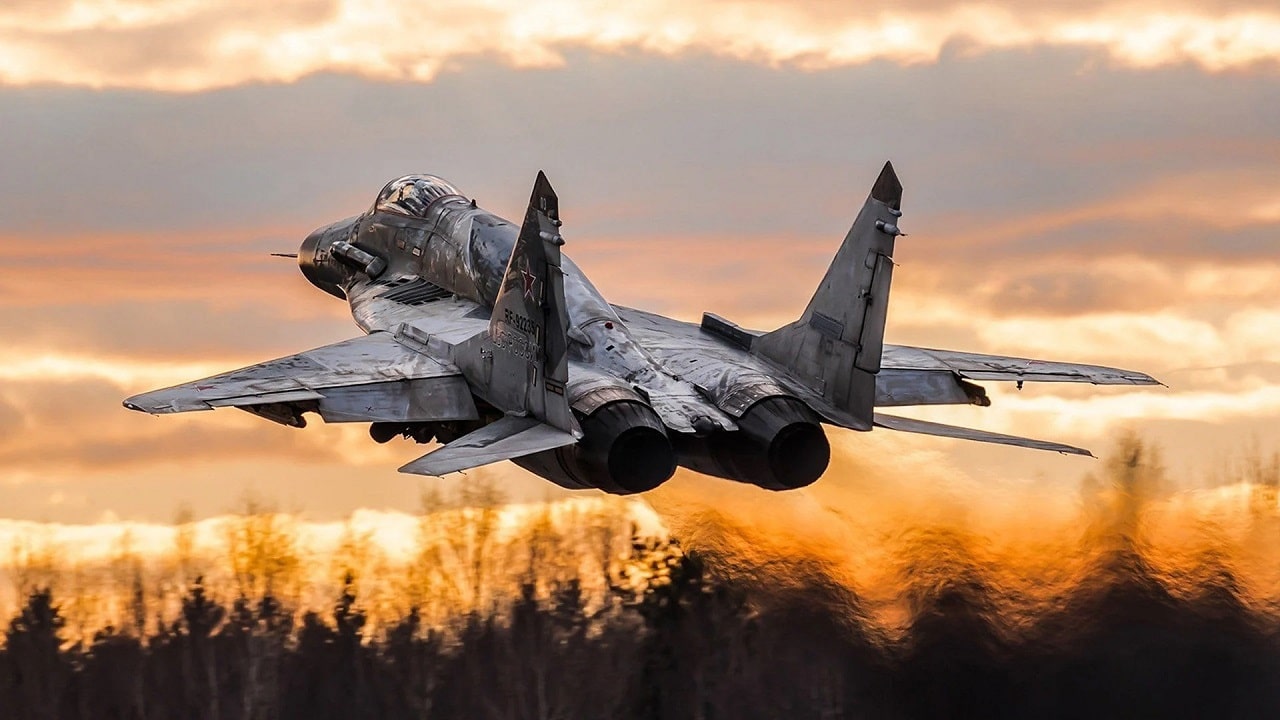
MiG-29 fighter jet. Image Credit: Creative Commons.
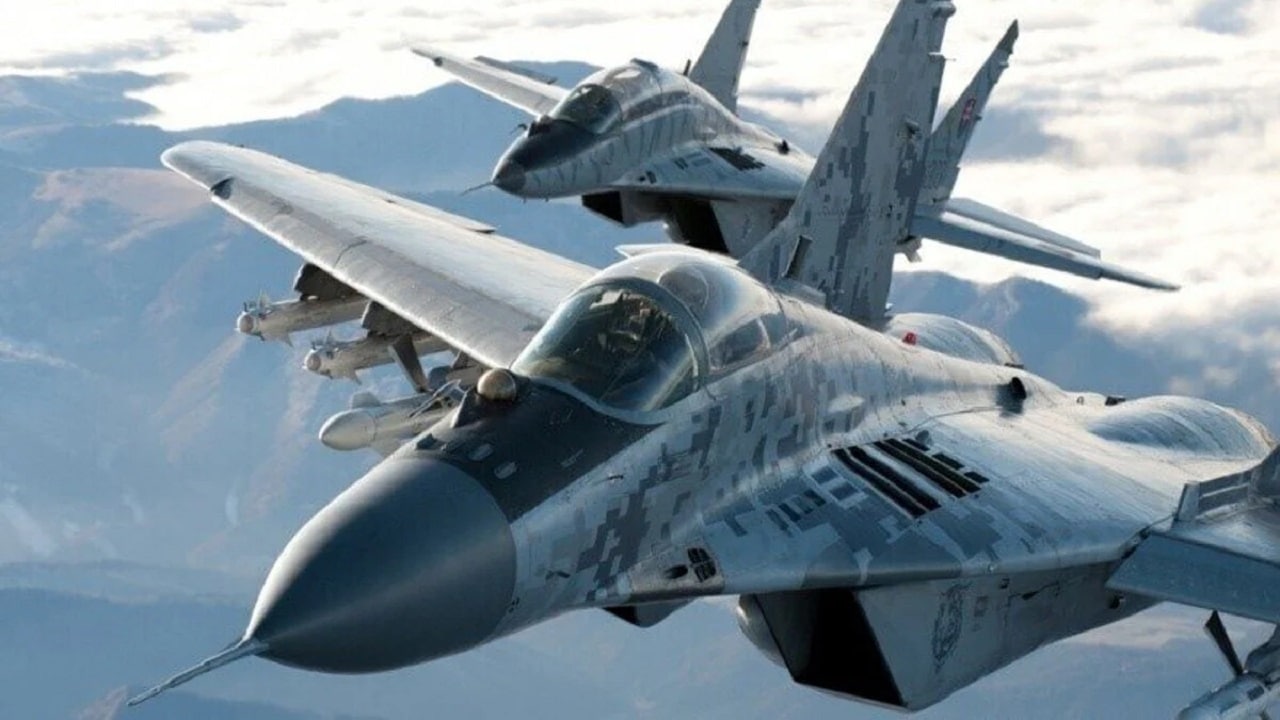
MiG-29. Image Credit: Creative Commons.
The surprising buyer was the United States, which purchased 21 of them at a considerable discount in 1997. The United States paid $40 million for the fighters, along with humanitarian assistance, including non-lethal defense equipment, such as trucks.
The post-1991 world was ripe with arms markets replete with Soviet arms and equipment. Rogue countries (such as Iran) and bad actor terror groups were intent on purchasing arms on the market.
Why was the Clinton administration so interested in purchasing the MiG-29? There were several reasons for this secret deal.
The MiG-29 Was Still an Outstanding 4th-generation Fighter
The Mikoyan-Gurevich Design Bureau set about designing the MiG-29 in the 1970s. The Russian Mikoyan-Gurevich MiG-29 was designed to engage in dogfights against American-made F-16s and F-15s. However, it also possessed ground attack capabilities.
U.S. reconnaissance satellites detected the new fighter in late 1977, and NATO designated it as the “Fulcrum.” Early aircraft were deficient in several areas, such as the radars, which couldn’t distinguish low-flying aircraft from ground clutter.
The MiG-29’s builders remedied the issue. An improvement in the pilot’s helmet allowed the pilot to look at the target without turning his head to engage the missile lock.
Two Isotov RD-33 turbofans, each with a thrust of approximately 18,300 lbs., powered the MiG-29, equipped with thrust afterburners, which produced a top speed of Mach 2.3.
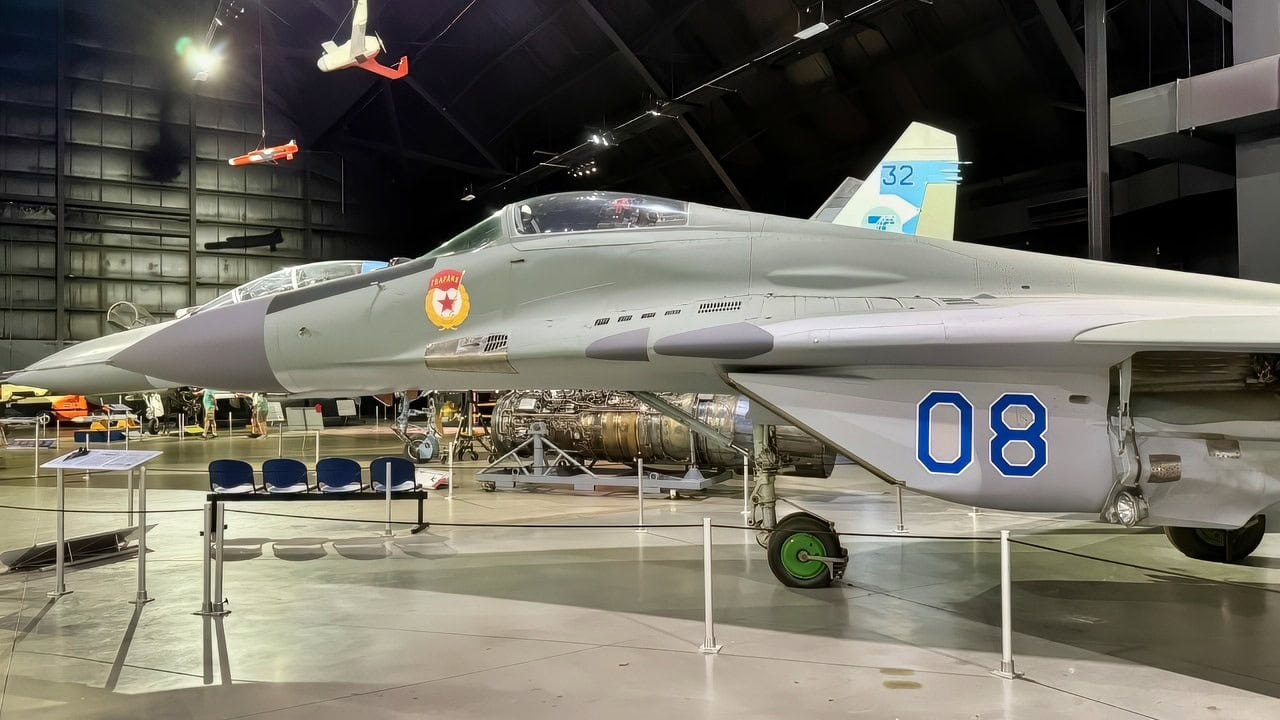
Real MiG-29 at USAF Museum in Dayton. Image Credit: 19FortyFive.com
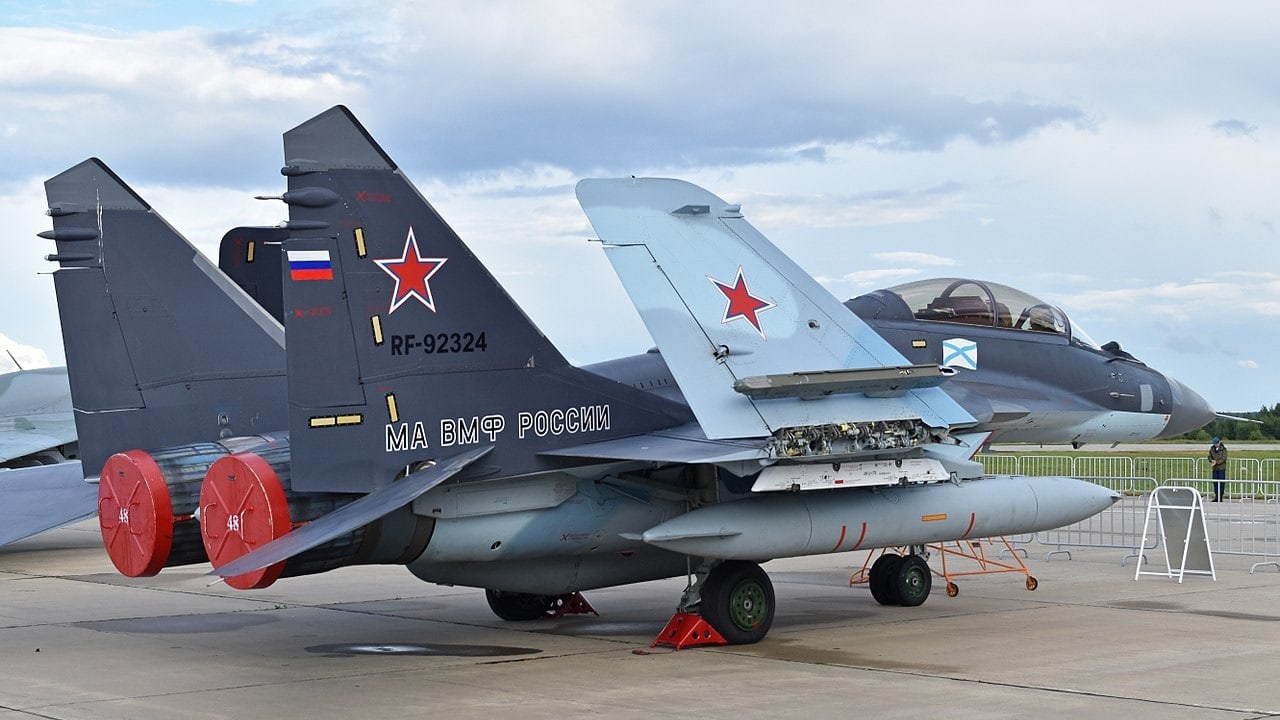
Naval variant of the second generation MiG-29, with the NATO codename ‘Fulcrum-D’. Reported to be operated by the 100th Independent Shipborne Fighter Aviation Regiment (OKIAP) based at Severomorsk. On static display at the Aviation cluster of the ARMY 2017 event. Kubinka Airbase, Moscow Oblast, Russia.
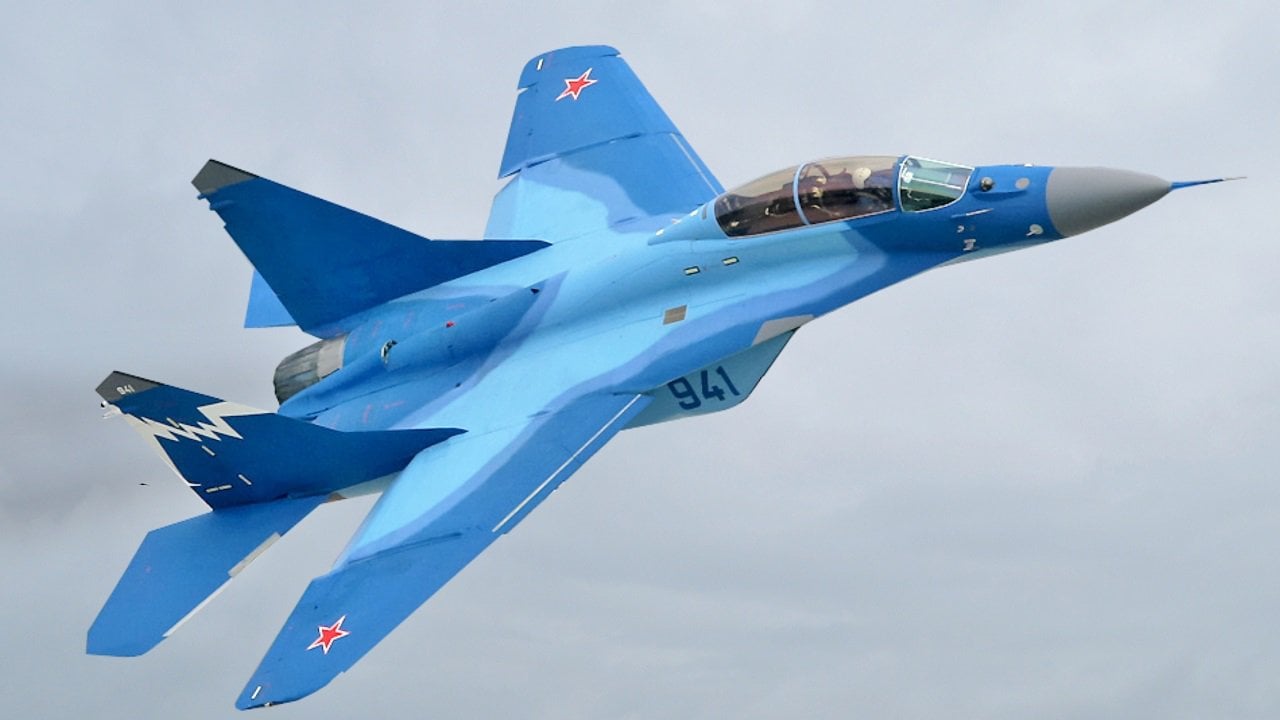
MiG-29K. Image Credit: Creative Commons.
The MiG-29 was armed with a 30 mm GSh-301 cannon; six air-to-air missiles (a mixture of medium-range, radar-guided AA-10 “Alamo-A” or close-range, infrared-guided AA-11 “Archer” and/or close-range, infrared-guided AA-8 “Aphid” missiles); able to carry bombs and 57mm, 80mm, and 240mm rockets in the attack role.
In many ways, the MiG-29 was the equal of the F-16 and F-15 aircraft; in some ways, it was even better.
In 1997, Iran Was Already Planning to Go Nuclear
Moldova had informed the United States in late 1996 that Iran was inquiring about purchasing the aircraft.
The Iranians then journeyed to Moldova to conduct a pre-purchase inspection of the MiG-29s, especially the nuclear-capable MiG-29C.
This drew additional attention from high-ranking officials within the Clinton administration.
Washington was afraid that Moldova would sell the MiGs to Iran, especially the MiG-29C variant that could carry nuclear weapons. Even as far back as the 1980s, it was no secret that Iran was desperate to become a nuclear power. Iran said it was interested in the MiG-29C, Moldova told Washington.
Iran already had the older MiG-29A models. However, beyond being nuclear-capable, the Moldovan MiG-29Cs were superior in performance to earlier-model MiG-29As.
The deal was financed through the Cooperative Threat Reduction Program, commonly known as Nunn-Lugar.
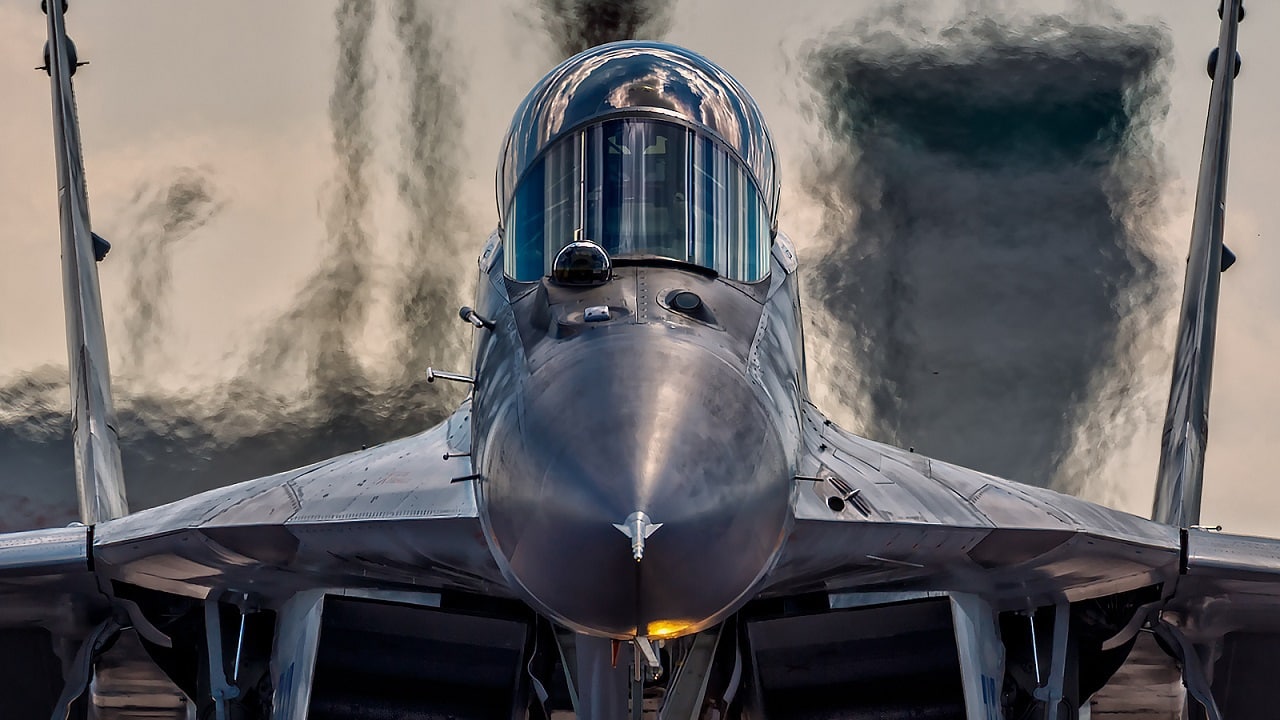
Russia’s MiG-29 fighter. Image Credit: Creative Commons.
The final agreement was for the sale of 21 of these Moldovan-owned fighters to Washington, including 14 MiG-29C aircraft.
It was the MiG-29Cs, the later-built models of the aircraft, that the United States wanted to keep out of Iranian hands. Even more intriguing, these MiG-29s weren’t export models, but were the frontline Soviet models in use by their Aerospace Forces.
The United States believed that if Iran got its hands on nukes, it would destabilize the entire Middle East. The United States purchased 21 MiGs and secretly shipped them to the National Air and Space Intelligence Center at Wright-Patterson Air Force Base on C-17s. The United States bought 14 MiG-29Cs as part of the package.
Under an agreement finalized in October 1997, the United States acquired 14 of the nuclear-capable MiG-29Cs, six MiG-29As, one MiG-29 B, 500 air-to-air missiles, and all the spare parts and diagnostic equipment present at the Moldovan air base where the aircraft were stationed.
The US and Israel Tested the MiG-29s In Secret
There, in secrecy from the rest of the world, the U.S. pilots began to study, train on, and fly the MiG-29s. They learned that the aircraft was a very worthy adversary. The Israelis acquired some of their own MiG-29s and particularly appreciated several of its features.
“It’s an advanced aircraft, and in close maneuvering engagements, it is absolutely terrific,” Israeli Air Force LTG M. said. “It makes sharp turns, it’s quick, and in my opinion, as a platform, it does not fall short of our advanced fighter jets.”
U.S. pilots quickly learned that in low-speed, close dogfights, the MiG had the agility that U.S. aircraft lacked. Assessments further found that, at ranges out to 40 miles apart, American aircraft enjoyed an advantage over the Fulcrum, but at ranges of 10 miles, that advantage was rapidly diminishing, and by the time engagements closed to five miles apart, the MiG-29’s superior maneuverability gave it an advantage.
Russia has produced more than 1,600 MiG-29s since 1983. They are still widely used worldwide by Russia, Ukraine, Algeria, Azerbaijan, Belarus, Bulgaria, Bangladesh, Cuba, Egypt, Eritrea, India, Iran, North Korea, Mongolia, Myanmar, Peru, Poland, Serbia, Sudan, Syria, Libya, Turkmenistan, Kazakhstan, and Uzbekistan, and was previously used by the air forces of Kyrgyzstan, the Czech Republic, East Germany, Hungary, Moldova, Malaysia, Iraq, Slovakia, and Yugoslavia.
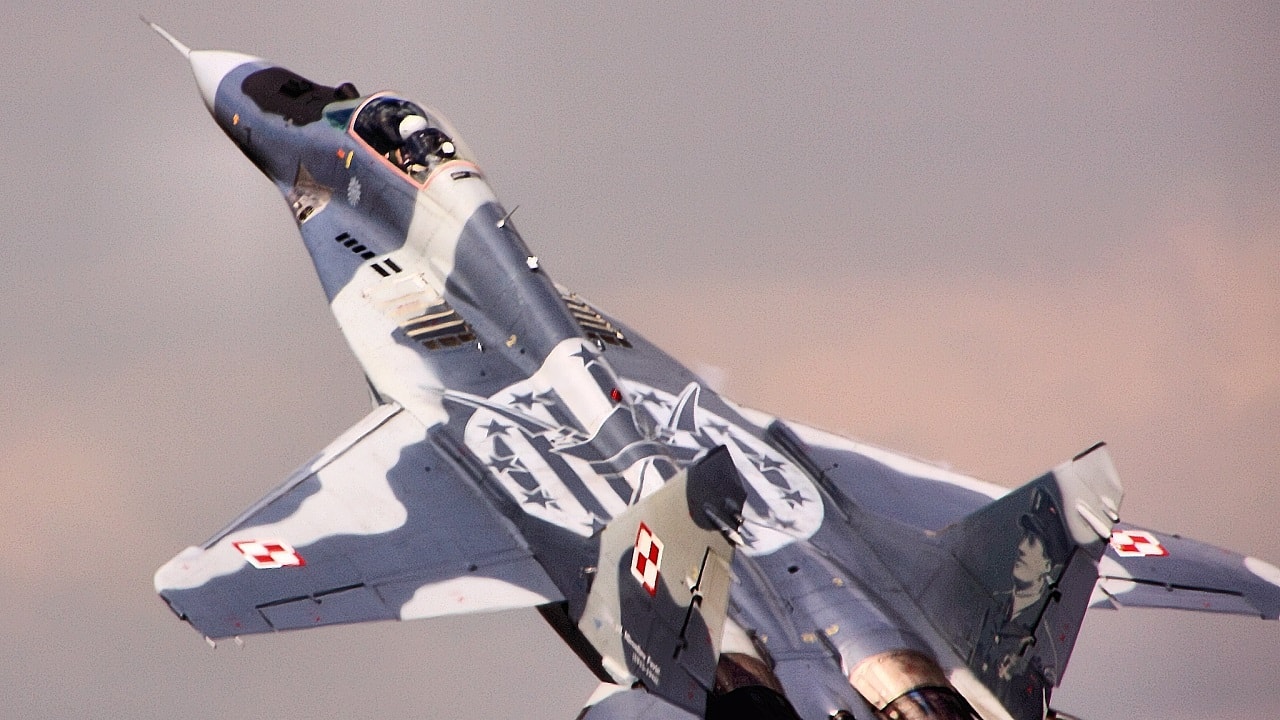
MiG-29 fighter. Image Credit: Creative Commons.
As a fourth-generation fighter, it remains a very capable aircraft. However, keeping it out of Iran’s hands was worth even more to the United States and the rest of the world.
It was an outstanding, proactive approach by the Clinton administration to simply remove the threat before it ever reached a threatening status. By denying Iran the possibility of having a nuclear-capable bomber by purchasing it out from under its very nose, it diffused a potentially ugly situation.
Iran’s Air Force, what little remains of it today, is a weak, non-threatening service. And as long as the current regime is in place, the United States and Israel will ensure it will likely remain that way.
About the Author: Steve Balestrieri
Steve Balestrieri is a National Security Columnist. He served as a US Army Special Forces NCO and Warrant Officer. In addition to writing on defense, he covers the NFL for PatsFans.com and is a member of the Pro Football Writers of America (PFWA). His work was regularly featured in many military publications