
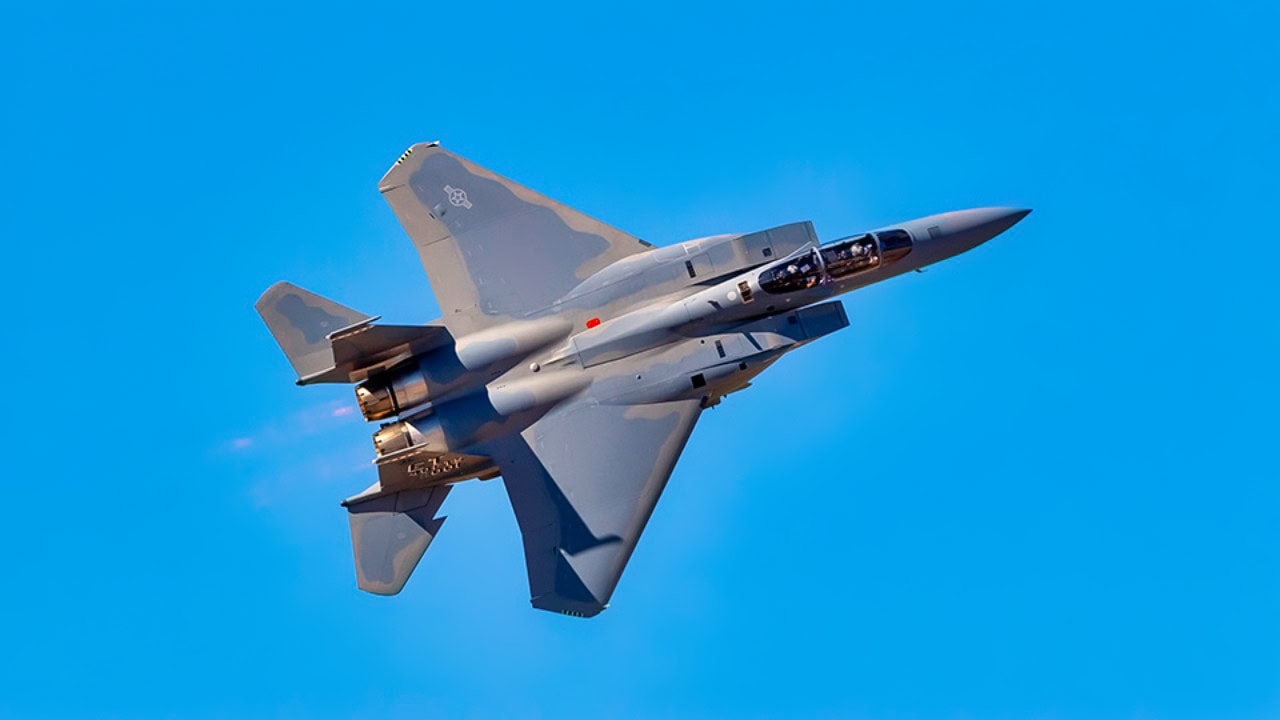
Summary and Key Points: Defense analyst Jack Buckby evaluates the F-15SE Silent Eagle, Boeing’s 2009 attempt to inject 5th-generation stealth into a 4th-generation airframe.
-Featuring canted vertical stabilizers and Conformal Weapons Bays, the F-15SE was pitched as a “missile carrier” that could bridge the gap between the F-35’s stealth and the F-15’s massive payload.
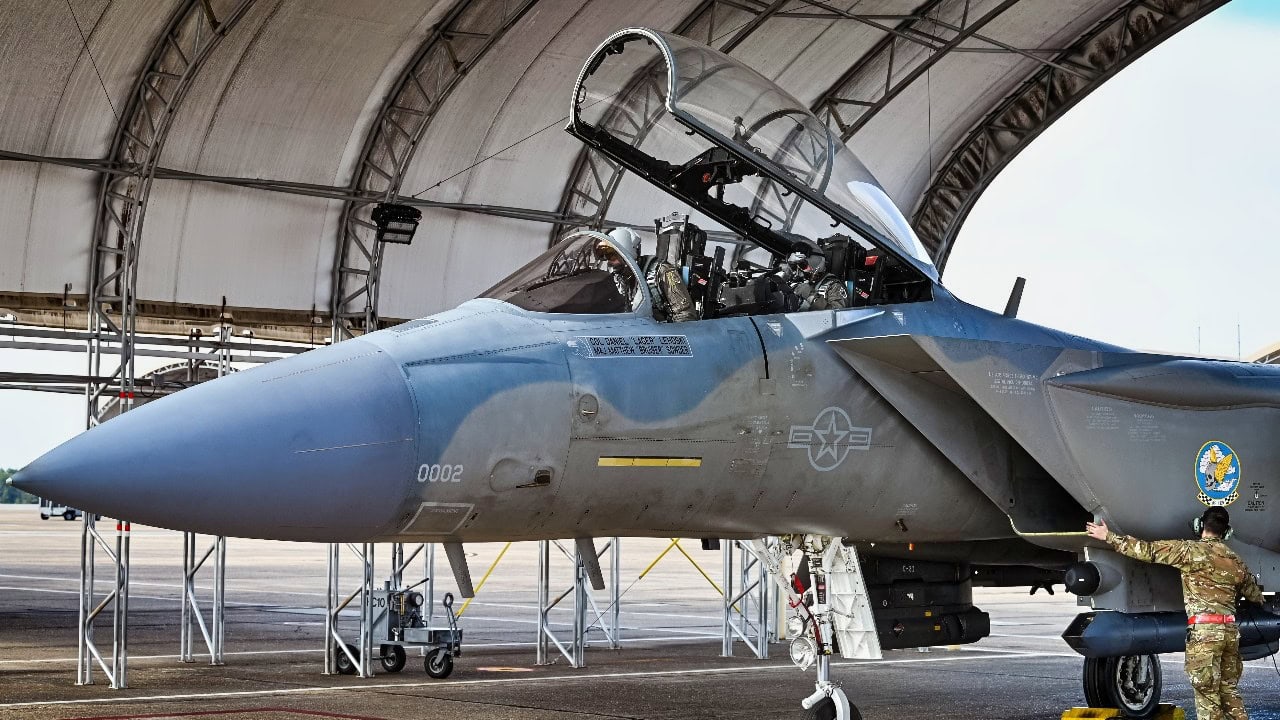
U.S. Air Force Maj. Aaron Eshkenazi, F-15EX Test Director for the 84th Test and Evaluation Squadron, performs preflight procedures for the F-15EX with Lt. Gen. Michael Koscheski, deputy commander of Air Combat Command, at Eglin Air Force Base, Florida, January 29, 2025. During his visit, Koscheski gained valuable insights from the 84th TES and 85th TES to help inform future decisions regarding the platform. The future F-15 fleet will complement 5th generation aircraft, bringing substantial additional capacity for over-sized long-range fires, sensors, and electronic warfare capabilities to defend critical locations in highly contested areas. (U.S. Air Force photo by 1st Lt. Rebecca Abordo)
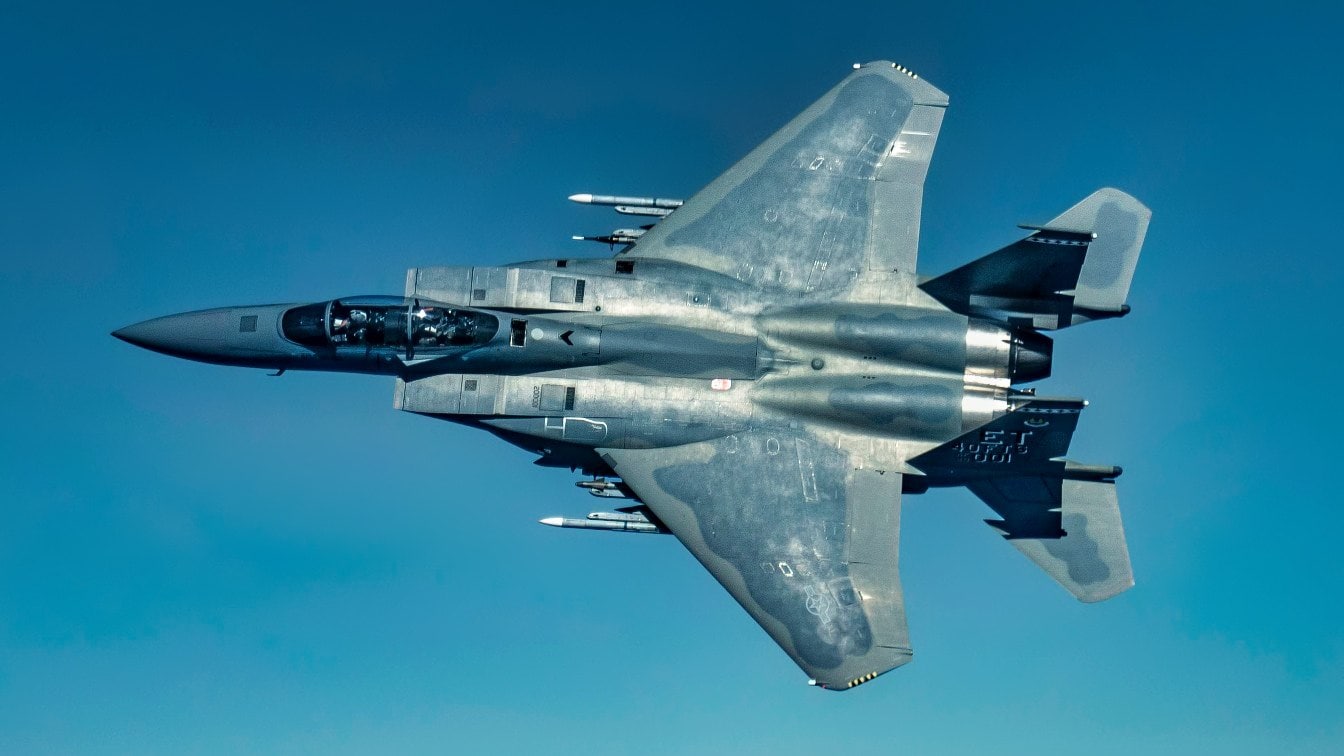
U.S. Air Force Lt. Col. Richard Turner, 40th Flight Test Squadron commander flies 40 FLTS Senior Enlisted Leader, MSgt Tristan McIntire during a test sortie in the F-15EX Eagle II over the Gulf of Mexico on Jun. 14, 2022. Assigned to the 96th Test Wing at Eglin Air Force Base, Fla., the F-15EX Eagle II is the Air Force’s newest 4th generation fighter being tested at the 40 FLTS. (U.S. Air Force photo by Tech. Sgt. John McRell)
-This report analyzes why the U.S. Air Force ultimately chose the non-stealth F-15EX Eagle II, concluding that the Silent Eagle’s “limited stealth” could not compete with the total low-observability of the F-35, despite its superior 29,500-lb weapons capacity.
Why Boeing’s Stealthy F-15SE Silent Eagle Never Made it to the 2026 Battlefield
Modern air warfare is increasingly shaped by stealth aircraft designed to penetrate sophisticated air-defense networks. Platforms such as the F-35 Lightning II, B-2 Spirit, and the upcoming B-21 Raider are built around low-observable design principles that allow them to enter heavily defended airspace and strike targets before enemy radars can respond.
Ongoing U.S. and Israeli operations against Iranian military infrastructure have again shown how stealth aircraft typically lead the opening phase of modern air campaigns, suppressing air defenses and clearing the way for other aircraft to operate.
But stealth aircraft aren’t always ideal for every mission. Advanced fighters like the F-35 trade payload and range to maintain their low-observable shape, meaning they cannot carry as many weapons as larger aircraft such as the F-15. That trade-off raises an interesting question: could a heavy fighter retain its enormous payload while becoming at least somewhat harder to detect?
Boeing attempted to answer exactly that question in 2009 with the F-15SE Silent Eagle, a modified version of the F-15 Strike Eagle designed to incorporate limited stealth features without redesigning the aircraft from scratch. The concept added internal weapons bays and modern sensors to create what Boeing effectively pitched as a stealth-enhanced F-15.
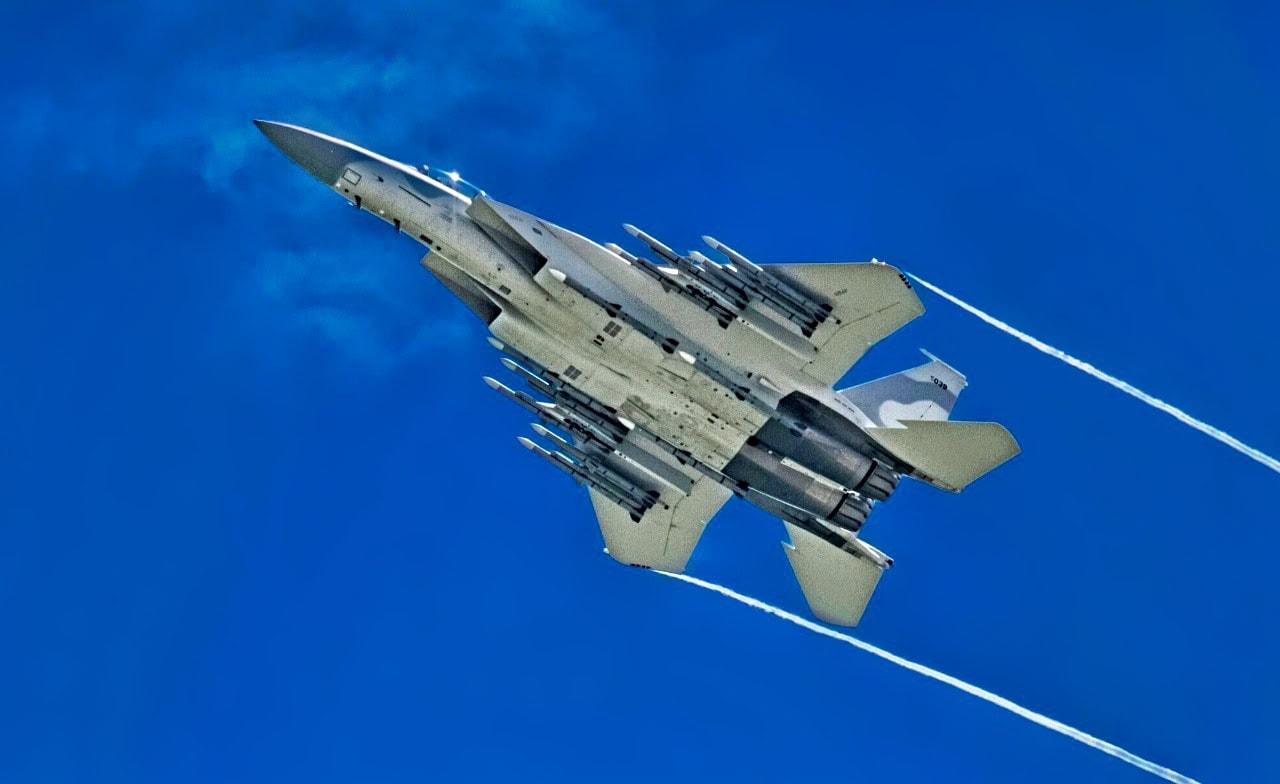
F-15EX Eagle II from U.S. Air Force
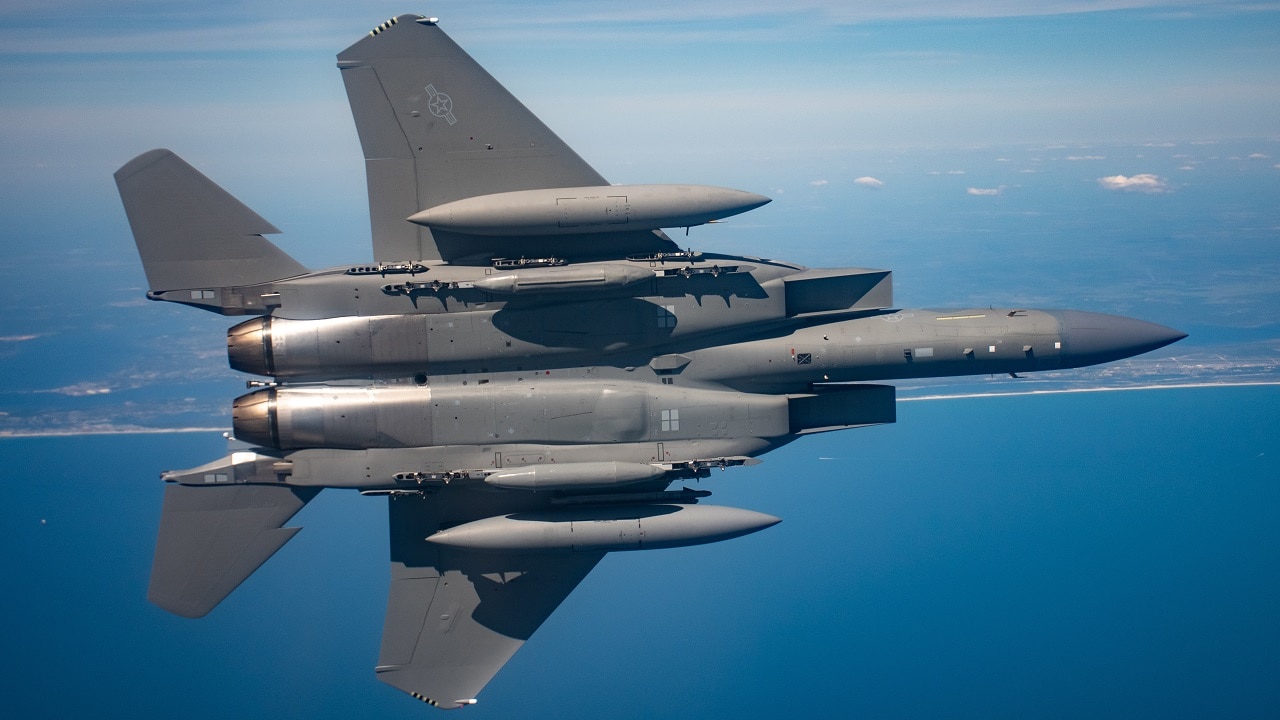
An F-15EX Eagle II from the 85th Test and Evaluation Squadron, 53rd Wing, takes flight for the first time out of Eglin Air Force Base, Fla., April 26, 2021, prior to departure for Northern Edge 2021. The F-15EX brings next-generation combat technology to a highly successful fighter airframe that is capable of projecting power across multiple domains for the Joint Force. (U.S Air Force photo by 1st Lt Savanah Bray)
The idea never progressed beyond demonstration aircraft, however. Instead, the U.S. Air Force ultimately went down a different path, opting to field the F-15EX Eagle II – a modernized but non-stealth version of the aircraft optimized for carrying large numbers of weapons alongside fifth-generation stealth fighters.
Understanding why that decision was made offers an interesting look at how the U.S. military balances stealth and payload with budgetary constraints and political realities.
Boeing’s Stealth-Enhanced F-15
Boeing introduced the F-15SE Silent Eagle in March 2009 as an advanced derivative of the F-15E Strike Eagle. The aircraft was designed primarily for international customers seeking some stealth capability without purchasing a full fifth-generation fighter like the F-35. The central goal was to reduce the aircraft’s radar cross-section without fundamentally redesigning the airframe. Boeing achieved this through several modifications.
The most important change was the addition of Conformal Weapons Bays (CWBs) that replaced the standard conformal fuel tanks found on the Strike Eagle. The internal bays allowed the aircraft to carry missiles and other weapons inside the fuselage, reducing the radar signature created by external stores.
Other design features included Canted vertical stabilizers, which were angled outward by around 15 degrees to reduce radar reflections. Radar-absorbing materials and composite structures applied to parts of the airframe were also included, along with an advanced AESA radar and a digital electronic warfare system intended to improve survivability.
The result of the changes was not a true stealth aircraft in the same class as the F-35 or the F-22, but a “4.5-generation” fighter – a conventional aircraft with reduced observability and modern sensors. A demonstrator aircraft first flew in 2010, even launching an AMRAAM missile from its internal weapons bay during testing.
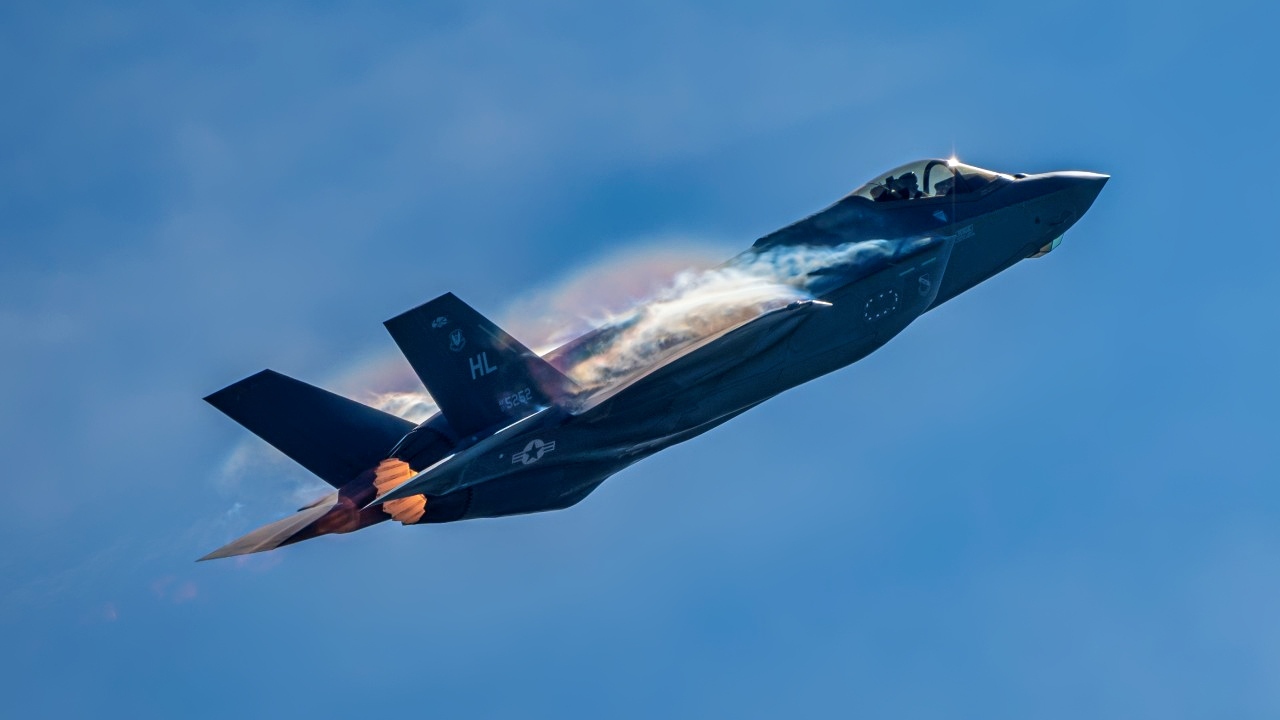
U.S. Air Force Maj. Kristin “BEO” Wolfe, F-35A Lightning II Demonstration Team commander and pilot, flies during a demonstration rehearsal at Hill Air Force Utah, April 28, 2021. The F-35A Lightning II Demonstration Team is part of the first operational F-35A wing for the Air Force, the 388th Fighter Wing, and flies over the Hill Air Force Base runway to practice and prepare for upcoming air shows around the world. (U.S. Air Force photo by Capt. Kip Sumner)
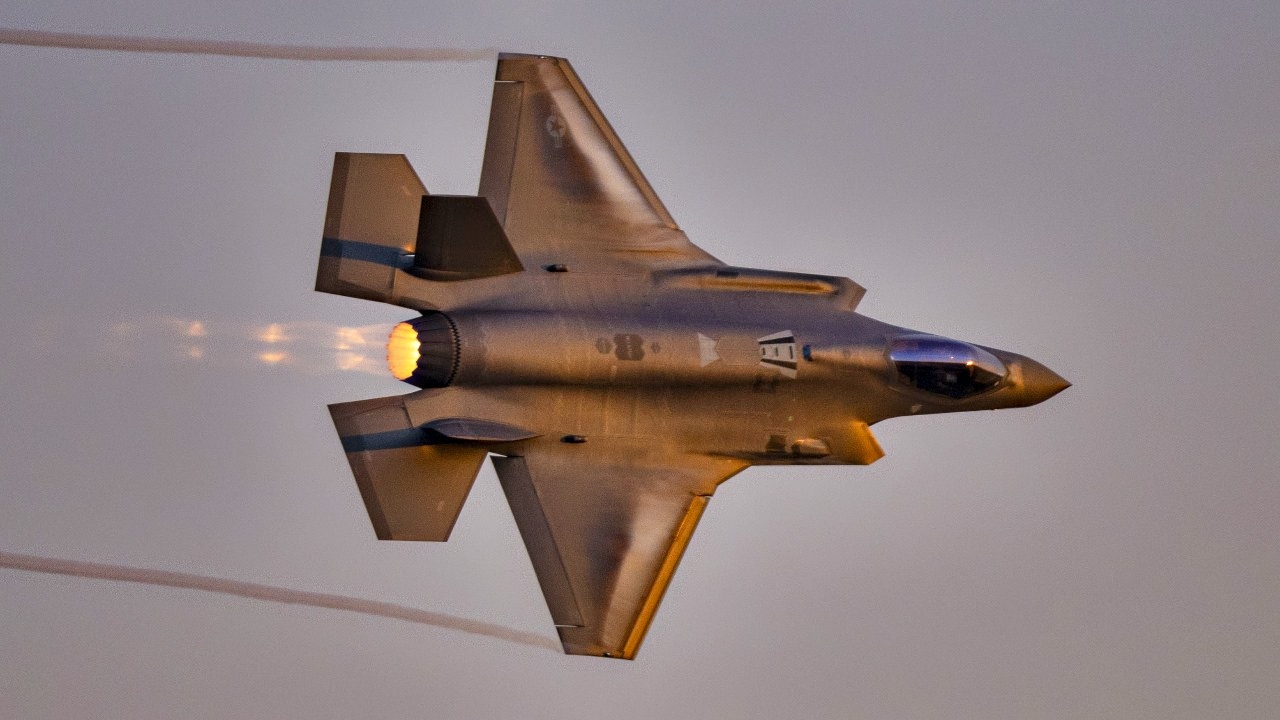
A U.S. Air Force F-35A Lightning II assigned to the F-35A Lightning II Demonstration Team performs at the Capitol Air Show over Sacramento, California, July 15, 2024. Innovations such as the F135 Smart Stacking Tooling Enhancement developed by the OC-ALC mechanics and engineers have significantly improved the rotor assembly process, increasing precision and enhancing the depot’s ability to produce the engine that powers the F-35 Lightning II. (U.S. Air Force photo by Staff Sgt. Zachary Rufus)
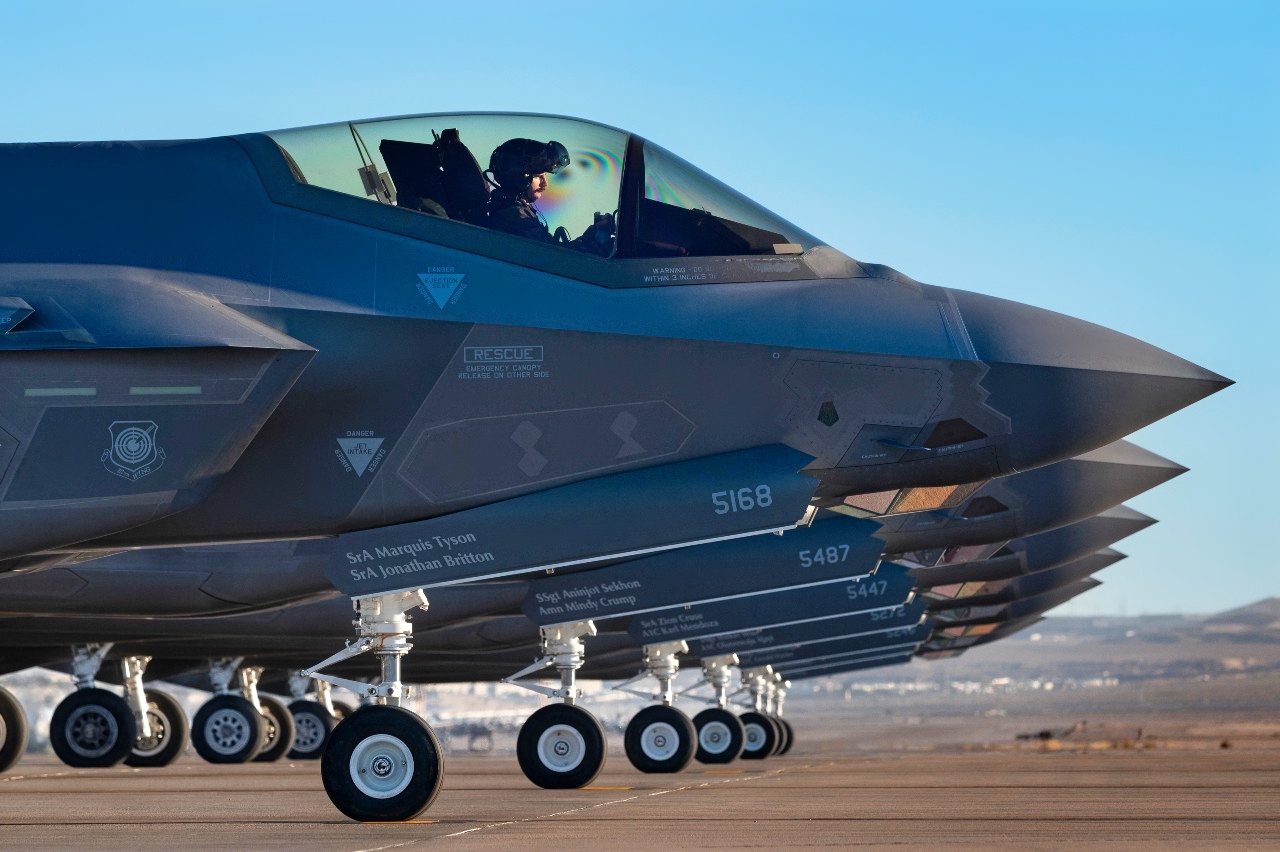
Seven F-35 Lightning II aircraft wait to take off for a U.S. Air Force Weapons School training mission at Nellis Air Force Base, Nevada, Jan. 31, 2024. The U.S. Air Force Weapons School teaches graduate-level instructor courses that provide advanced training in weapons and tactics employment to officers and enlisted specialists of the combat and mobility air forces. (U.S. Air Force photo by William R. Lewis)
Could the Silent Eagle Be Useful Today?
If the Silent Eagle had entered service, it could have filled an interesting niche in modern conflicts. Air campaigns today typically begin with stealth aircraft penetrating enemy air defenses, and once radar systems and missile sites are degraded, less stealthy aircraft follow to deliver large quantities of weapons.
A fighter like the F-15SE could, in theory, have helped bridge that gap. Its reduced radar signature would have made it harder to detect than conventional fourth-generation aircraft, while still retaining the F-15’s large payload capacity.
That matters because the F-15 platform has always been particularly good at carrying weapons, with modern variants hauling enormous payloads compared to those of stealth fighters. The F-15EX Eagle II, for example, can carry up to 29,500 lb, while the F-35 Lightning II can carry around 18,000 lb via internal and external carriage.

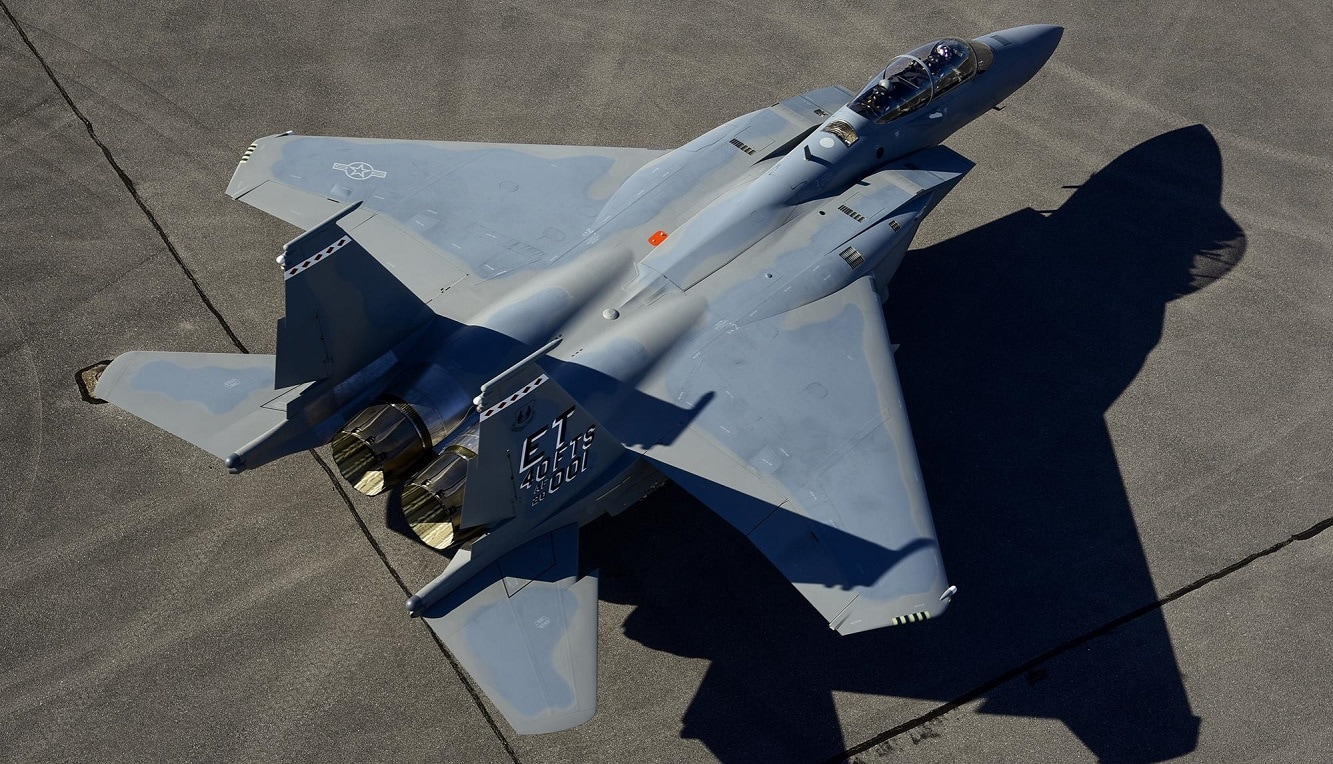
An F-15EX fighter jet taxis to its parking spot at Wright-Patterson Air Force Base, Ohio, Nov. 8, 2021. The jet visited Wright-Patt to give the Air Force Life Cycle Management Center’s F-15EX program office the opportunity to see the aircraft up close. (U.S. Air Force photo by Jaima Fogg)
F-15EX Eagle II
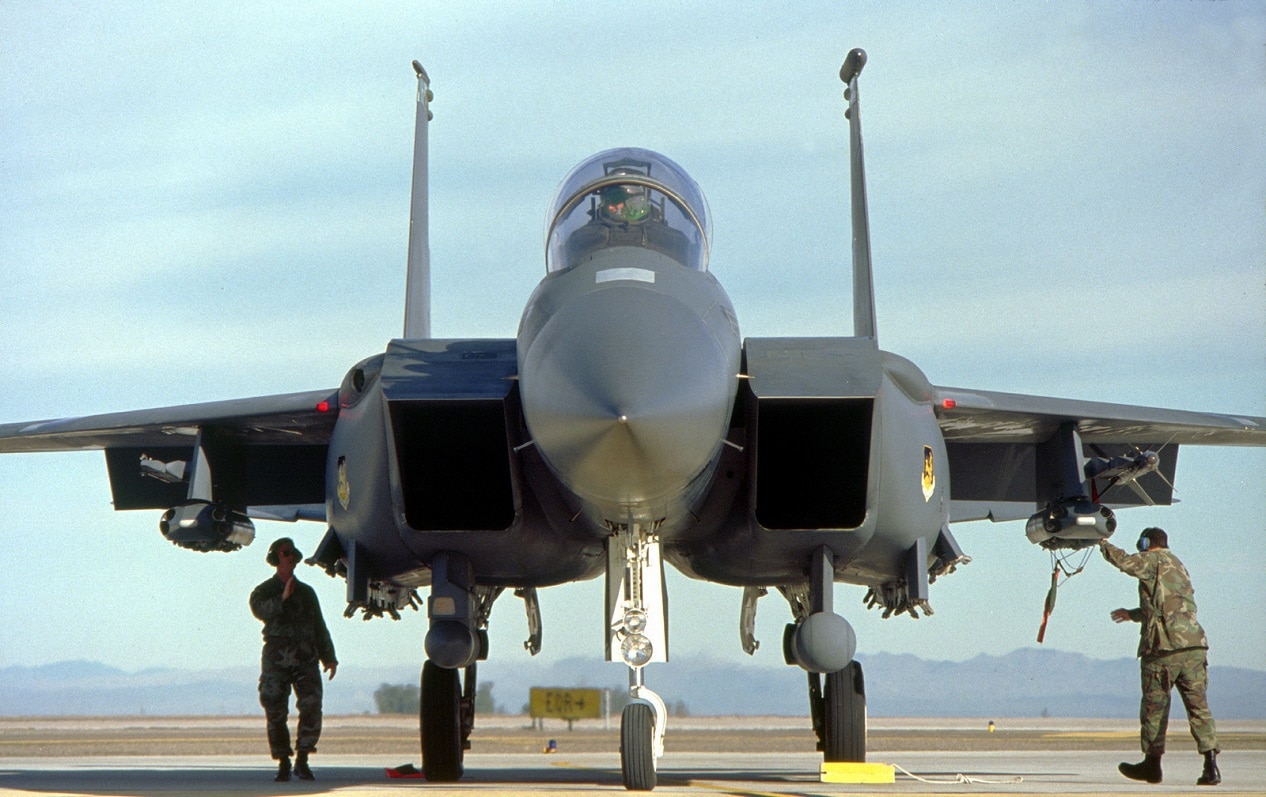
Staff Sgt. Dave Smith and Senior Airman John Pusieski from the 58th Operational Support Squadron, 58th Fighter Wing, peform last-minute checks and arm practice bombs on an F-15E Eagle aircraft from the 461st Fighter Squadron.
In a conflict like the current campaign with Iran, aircraft capable of carrying large numbers of missiles or precision bombs remain extremely valuable. Long-range strike operations, suppression of enemy air defenses, and stand-off missile launches all depend on aircraft capable of carrying heavy loads over long distances. In theory, a stealth-enhanced F-15 might have served as a kind of stealthy missile carrier, supporting true stealth aircraft by delivering large salvos of weapons after the initial defenses were degraded. But that future doesn’t exist.
Why the Silent Eagle Never Took Off
Despite its interesting design, the Silent Eagle never secured a production contract. One reason was pretty simple: the F-35 dominated the global fighter market and continues to do so.
Many countries that might have considered the Silent Eagle instead opted for the fully stealthy F-35 and had no reason to be convinced to use an alternative platform.
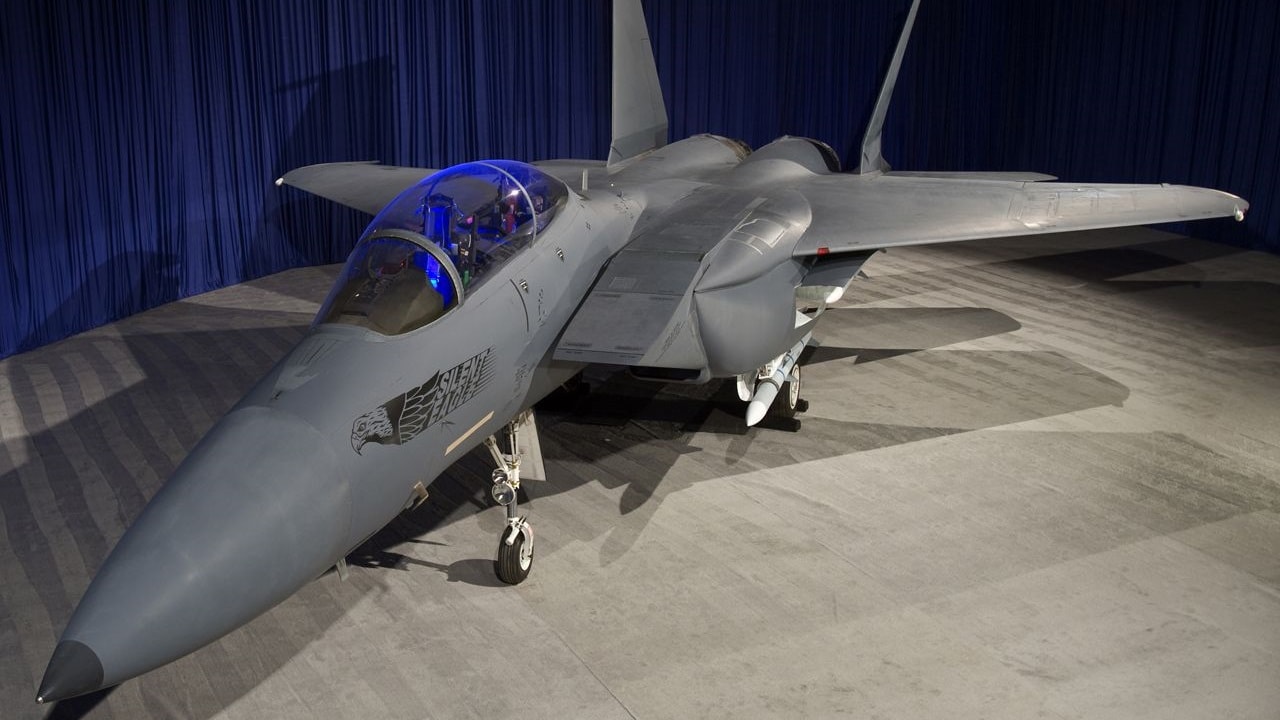
F-15SE Silent Eagle. Image Credit: Creative Commons.
Another factor was that the Silent Eagle did not offer true stealth. While its design could certainly reduce radar signature, the F-15’s large airframe and exposed engine faces still made it far more visible to radar than dedicated stealth fighters. In effect, the U.S. Air Force was heavily invested in the F-22 and F-35 programs, leaving little incentive to fund another stealth-related development program built on a legacy platform.
In the end, the Silent Eagle became an intriguing “what-if” of fighter development.
About the Author: Jack Buckby
Jack Buckby is a British researcher and analyst specialising in defence and national security, based in New York. His work focuses on military capability, procurement, and strategic competition, producing and editing analysis for policy and defence audiences. He brings extensive editorial experience, with a career output spanning over 1,000 articles at 19FortyFive and National Security Journal, and has previously authored books and papers on extremism and deradicalisation.