
Summary and Key Points: Jack Buckby, a New York-based national security researcher, evaluates the strategic refusal to launch a ground invasion during Operation Epic Fury.
-Despite the elimination of Ayatollah Khamenei and the degradation of the IRGC’s naval assets, the Trump administration is prioritizing airpower and cyber operations to avoid a “hundreds of thousands of troops” commitment.
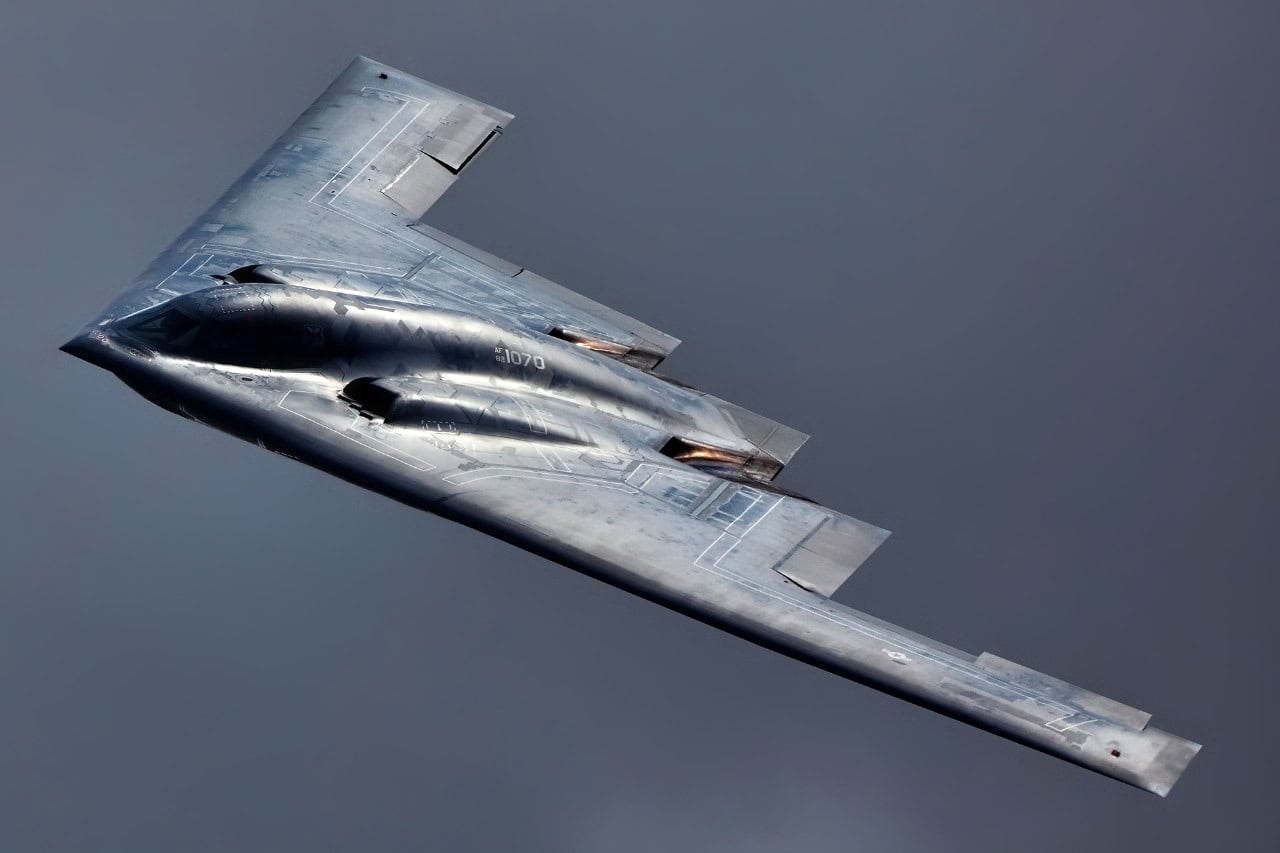
B-2 Bomber. Image Credit: Creative Commons.
-This report analyzes the lack of a viable internal opposition in Iran and the logistical hurdles of its mountainous terrain.
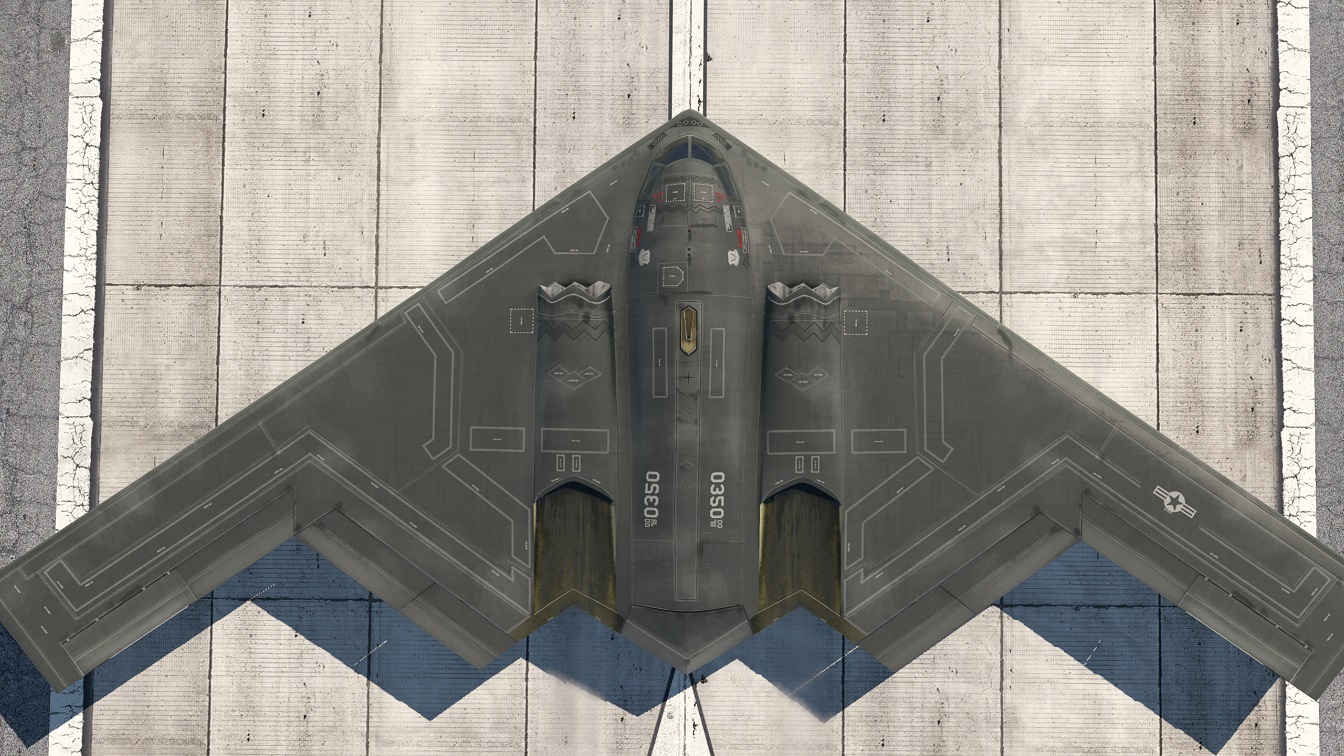
-Buckby concludes that Trump is betting on internal collapse, using the B-2, F-35, and Tomahawk salvos as a “strategic signal” to Russia and China.
The Invasion Gap: Why the U.S. is Avoiding a Ground War Despite Iran’s Leadership Collapse
The ongoing conflict between the United States, Israel, and Iran began on February 28 with coordinated air and missile strikes against Iranian military infrastructure and leaders.
The operation has involved strikes across multiple locations inside the country and has triggered substantial retaliatory missile and drone attacks by Iran across the region. But despite the scale of the fighting in recent days, one thing has not happened: There has been no U.S. or allied ground invasion of Iran. Instead, the conflict remains dominated by airpower, long-range strikes, cyber operations, and missile exchanges across the Middle East.
In the opening days of the war, strikes targeted senior Iranian leaders and key command infrastructure. The first attacks killed Supreme Leader Ayatollah Ali Khamenei and several senior Iranian military figures, successfully weakening the regime’s leadership structure.
Then, the war began spreading beyond Iran’s borders. Iranian forces have taken a beating, with U.S. President Donald Trump claiming that its Navy and missile systems had been largely “knocked out”—but drone and missile strikes have hit U.S. and allied targets across the region. The escalation has begun to affect global markets, with disruptions in the Strait of Hormuz preventing ships from passing.
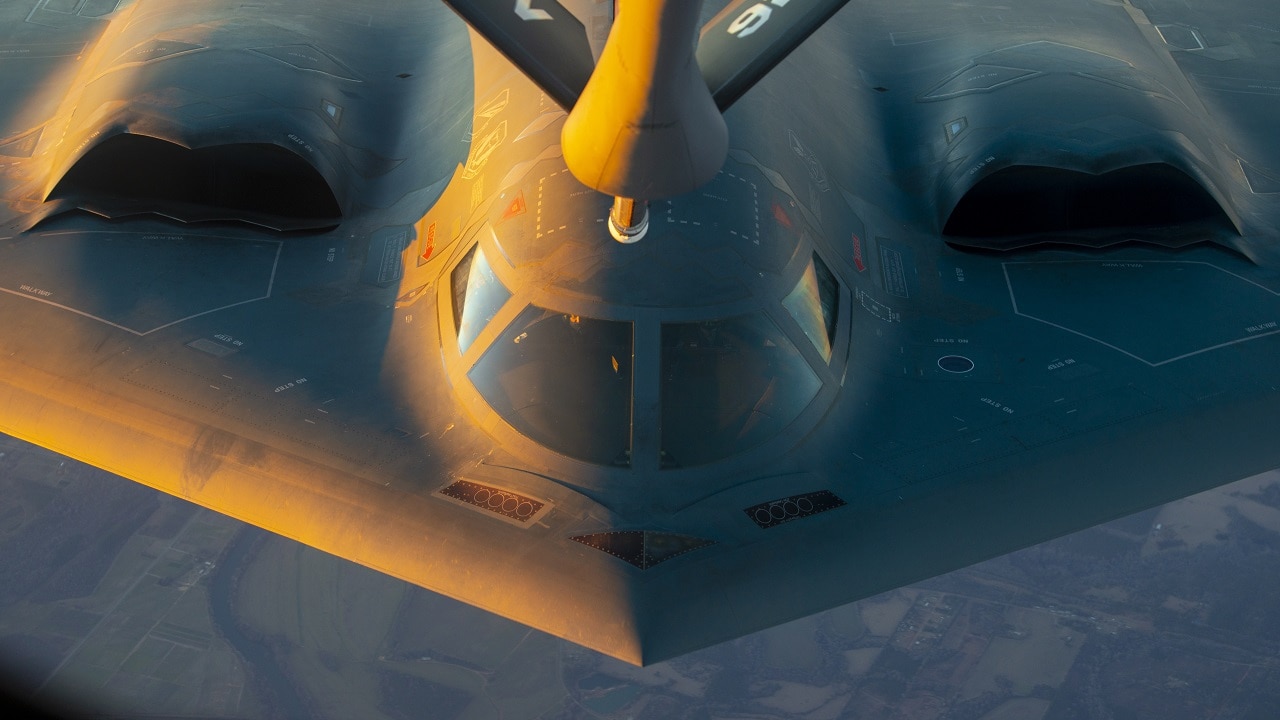
A B-2 Spirit assigned to Whiteman Air Force Base, Mo., prepares to receive fuel from a KC-135 Stratotanker, Feb 7, 2021. A B-2 Spirit performed alongside a B-1B Lancer and a B-52 Stratofortress for the Super Bowl LV flyover on Feb. 7, 2021. (U.S. Air Force photo by Airman 1st Class David D. McLoney)
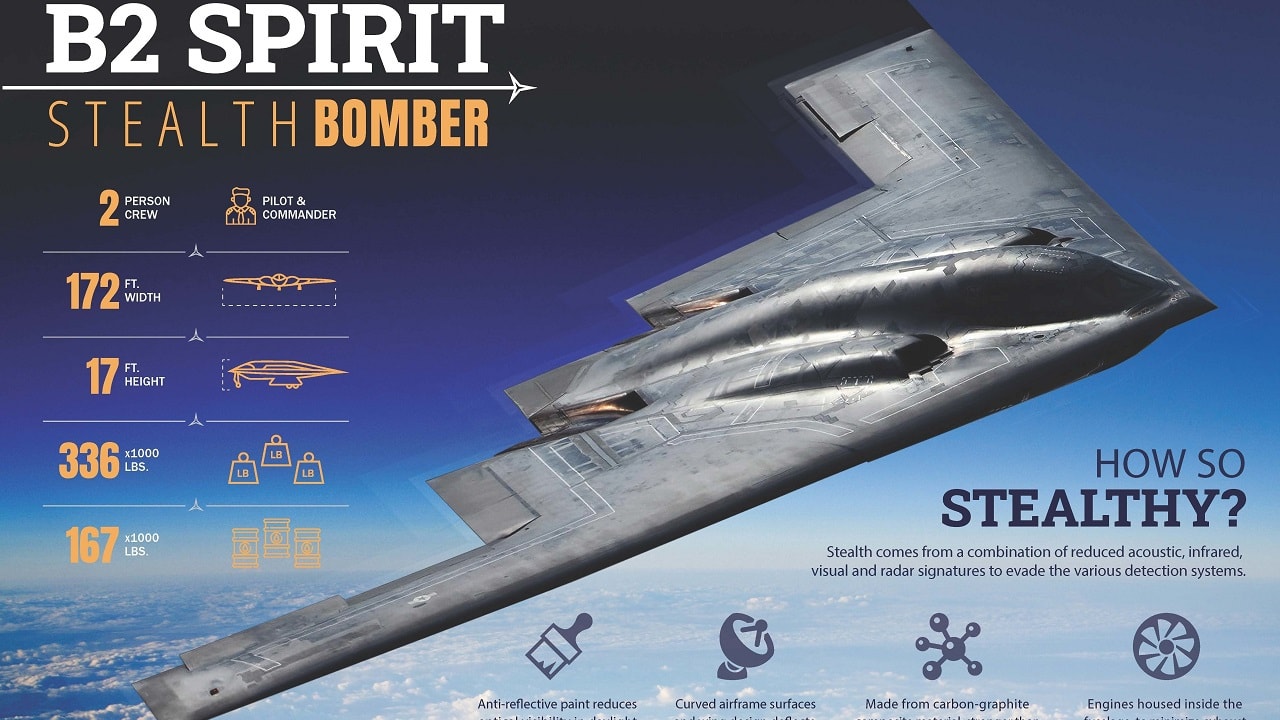
191209-N-HG846-2001 NORFOLK,Va. (Dec. 9, 2019) This poster is designed to communicate the aircraft specifications of the B2 Spirit Stealth Bomber. The B2 bomber was introduced on Jan. 1, 1997 by the Northrop Corporation.
Yet even with the scale of the fighting and the stakes involved, Washington has not committed troops. And to understand why, it’s important to look at both the military realities and the political calculations currently shaping the war.
What the Opening Phase Was Designed to Achieve
The opening phase of the war was specifically intended to degrade Iran’s military capabilities early in the conflict. Air strikes have targeted Iranian command facilities and missile infrastructure, weakening the regime not just in terms of removing leadership, but by preventing or degrading Iran’s ability to fight back. It’s a lesson learned from prior conflicts: In Afghanistan and Libya, airpower was used to weaken regimes, while local forces on the ground ultimately determined the outcome.
But Iran is different. The situation here is arguably more complicated, because unlike in those earlier conflicts, there is no clear internal opposition force capable of immediately taking control of the country if the regime collapses. That reality is one reason a ground invasion in Iran would elevate the war to an entirely different scale.
Why Invading Iran Would Be an Enormous Military Operation
Iran’s size and population make it one of the most difficult countries in the Middle East to occupy militarily. The country has a population of roughly 90 million people and a large, geographically complex territory that includes mountain ranges, deserts, and dense urban areas.
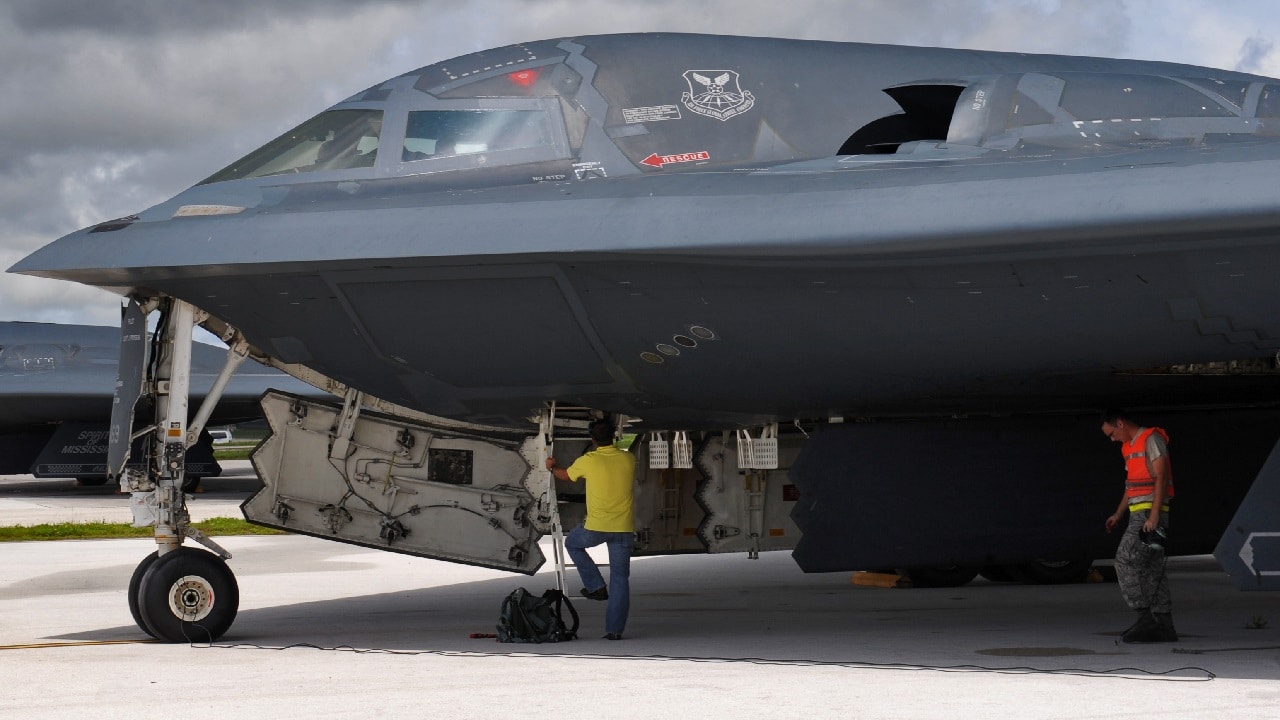
U.S. Air Force B-2 Spirit aircraft undergo pre-flight inspections prior to take off at Andersen Air Force Base, Guam, Aug. 11, 2016. More than 200 Airmen and three B-2s deployed from Whiteman Air Force Base, Mo., to conduct local sorties and regional training and integrate with regional allies in support of Bomber Assurance and Deterrence missions. (U.S. Air Force photo by Tech. Sgt. Miguel Lara III)
A ground presence in Iran would be controversial and hard for Trump to defend—not just politically, but logistically. An assessment from the Arab Center Washington DC suggests that a full regime-change invasion of Iran would likely require “hundreds of thousands of troops” and could lead to a long insurgency similar to or worse than the conflict that followed the 2003 invasion of Iraq. The same analysis notes that the Iranian regime still maintains a powerful internal security apparatus, including the Islamic Revolutionary Guard Corps and various militia forces that are designed specifically to protect the government from internal or external threats.
The cost and complexity of invading Iran would likely be far greater than previous U.S. wars in the region. The political environment inside Iran adds another layer of complexity and uncertainty. The country has experienced repeated anti-government protests in recent years, but analysts don’t generally agree about whether that opposition could translate into widespread support for a foreign military intervention. This uncertainty is just one reason why the current military campaign is designed to rely heavily on airpower rather than ground forces. If those ground forces are not necessary, there’s simply no good reason to deploy them.
Why Trump Prefers Iranians Topple the Regime Themselves
Listen to Trump’s own comments, and it’s clear that Washington wants to weaken the Iranian regime enough that internal political forces eventually determine the country’s fate. The president has instructed IRGC soldiers to lay down their weapons or face “certain death” and explicitly told the Iranian people to take this once-in-a-generation opportunity to take over their government.
Some say, though, that Trump is being somewhat optimistic, and that achieving the outright collapse of Iran’s government would likely require a ground invasion—something Trump has not only refrained from ordering, but would want to avoid.
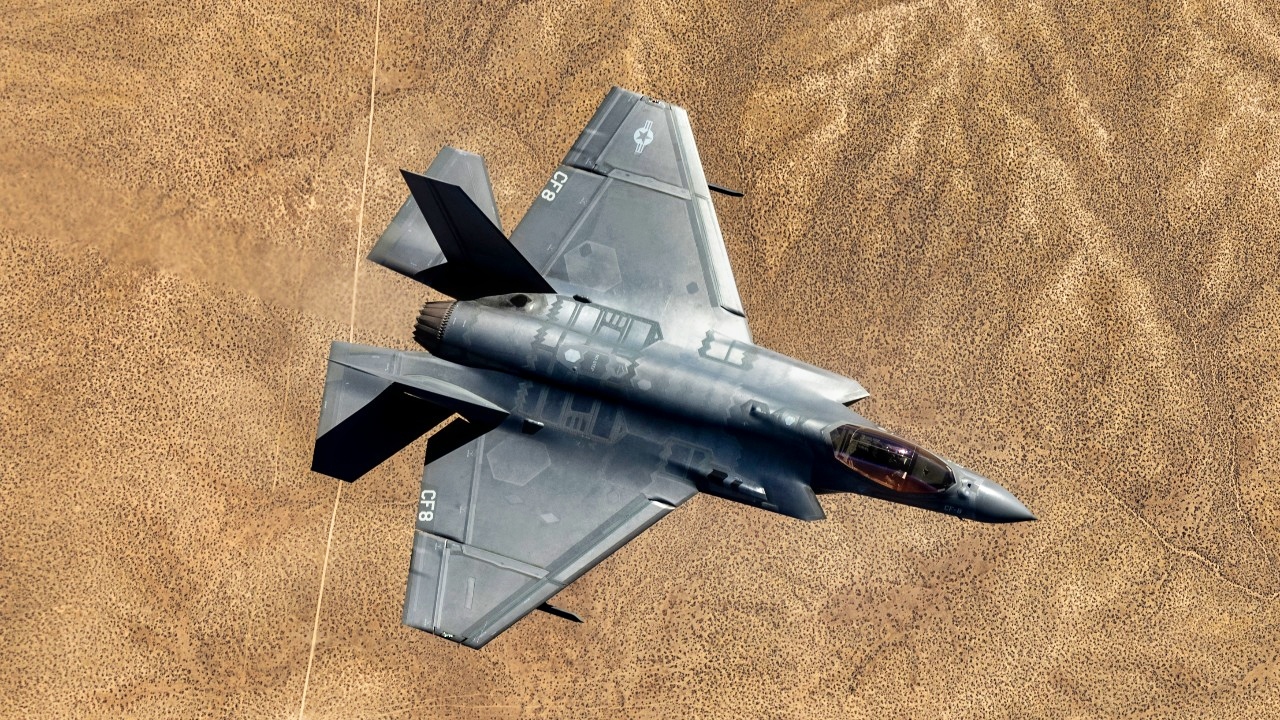
Maj. Nicholas Helmer conducts a mission over the Mojave Desert on October 8, 2024. The F-35C aircraft is assigned to the 461st Flight Test Squadron, F-35 Integrated Test Force at Edwards Air Force Base, California. The aircraft’s dual markings of United States Navy Air Test and Evaluation Squadron Nine (VX-9) and 461st FLTS represents the joint mission of the Integrated Test Force. The F-35 ITF includes people and aircraft from the United States Air Force, United States Navy, United States Marine Corps, foreign partners, Air Force Reserve Command 370th FLTS, and the Air Force Operational Test and Evaluation Center’s 31st TES. (Courtesy Photo, Lockheed Martin Edwards Team)
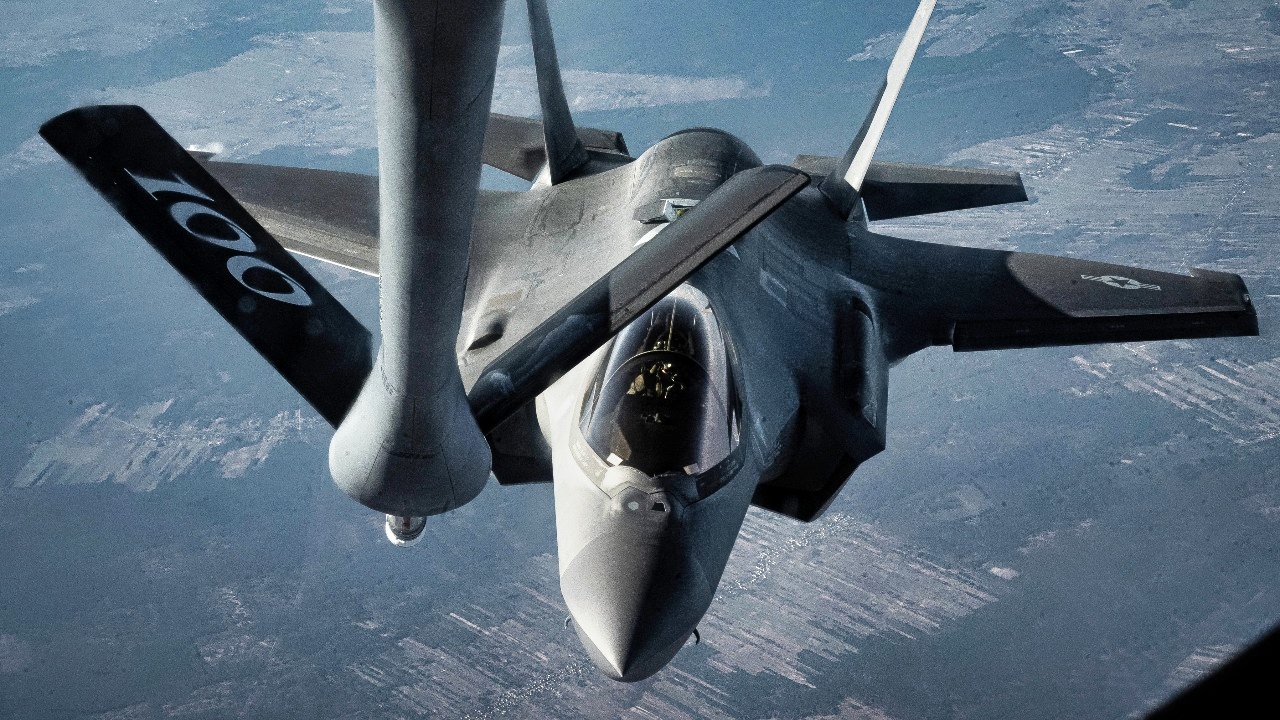
The 388th Fighter Wing’s F-35 Lightning II fifth-generation fighter prepares to receive fuel from a U.S. Air Force Boeing KC-135 Stratotanker attached to the 100th Air Refueling Wing in Eastern European airspace, Feb. 28, 2022. The KC-135 platform is key to enabling U.S. Air Forces in Europe – Air Forces Africa to project credible air power and air operations in concert with NATO allies and partners. (U.S. Air Force photo by Airman 1st Class Edgar Grimaldo)
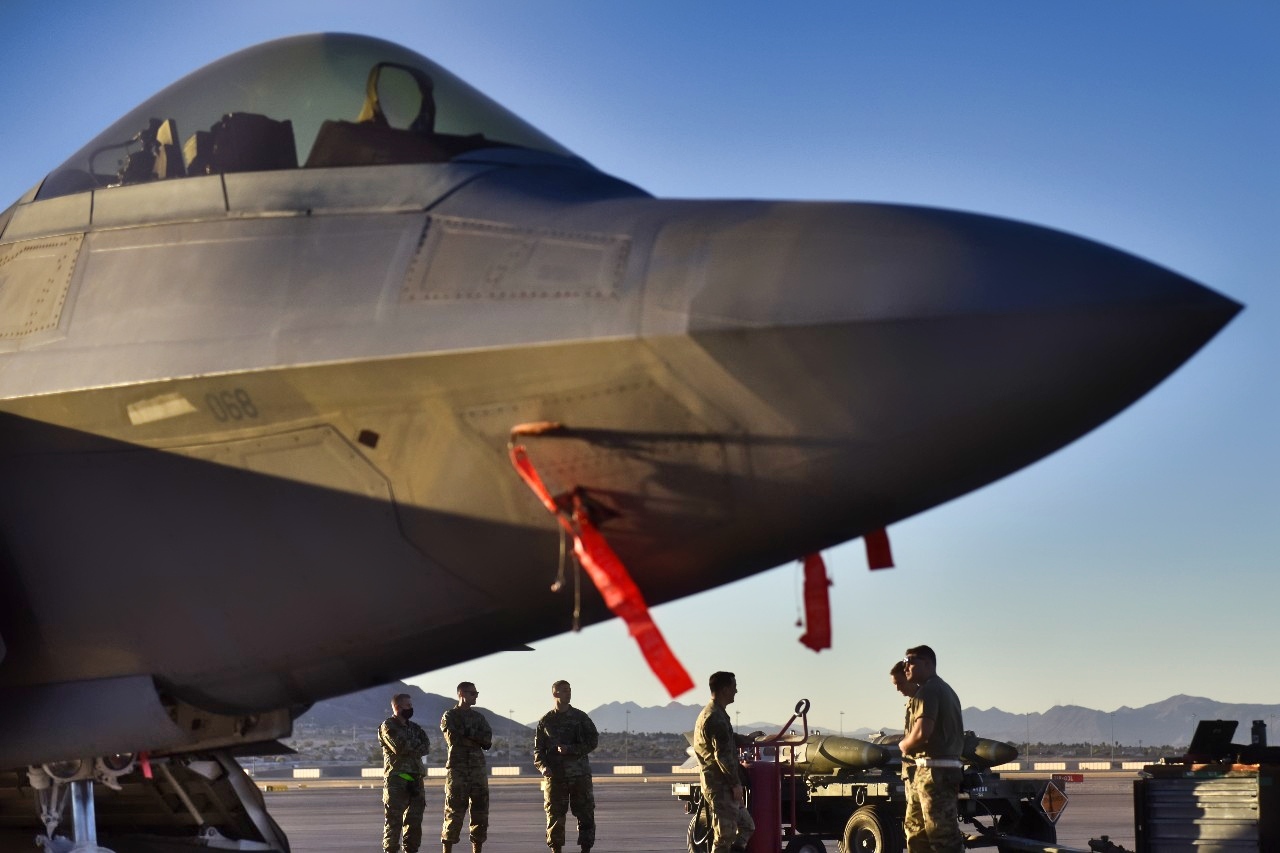
Airmen from the 757th Aircraft Maintenance Squadron talk about their execution plan next to an F-35 Lightning prior to the start of weapons load crew competition at Nellis Air Force Base, Nevada, Oct. 16, 2020. Throughout the year weapons crews are put to the test of safely loading and unloading ordinance to their respective aircraft in front of their peers while being timed. At the end of the year, the winners from each event are pitted against each other to see which team is the best. (U.S. Air Force photo by Tech. Sgt. Alexandre Montes)
Analysts at the Council on Foreign Relations argue that “ensuring the downfall of Iran’s government would require a ground invasion,” because so long as Iran can export oil, it will generate revenues sufficient to support its proxy groups—Hezbollah, the Houthis, and others.
“The only thing that would make Iran stop supporting those organizations would be if the current clerical regime falls and is replaced by a liberal democracy. With his final war aim, Trump is signaling that he is pursuing regime change, but his approach is halfhearted,” CFR analysts argued in a February 28 report.
Deploying U.S. troops technically remains on the cards. Trump has not technically ruled out further escalation, after all. In interviews and public statements, the president has suggested that the United States could play a role in shaping Iran’s political future after the conflict. Trump wants the war to end on positive terms for Washington, obviously, but whether he’ll send in ground troops depends on whether it is politically sensible to do so—unlikely, given the midterms are coming up—and if airstrikes can sufficiently degrade Iranian power and prevent regime-supporting troops from being able to fight back.
Is There More To This?
Perhaps the operation is achieving something different: sending a strategic signal to other countries, specifically, Russia and China. By launching a large-scale military campaign against Iran, Washington may hope not only to remove Iran’s ability to continue its nuclear and intercontinental ballistic missile programs, but also demonstrate to Moscow and Beijing that the United States remains willing to use military power to defend its interests.
Still, the question of a ground invasion remains hypothetical for now, and seriously unlikely.
About the Author: Jack Buckby
Jack Buckby is a British researcher and analyst specialising in defence and national security, based in New York. His work focuses on military capability, procurement, and strategic competition, producing and editing analysis for policy and defence audiences. He brings extensive editorial experience, with a career output spanning over 1,000 articles at 19FortyFive and National Security Journal, and has previously authored books and papers on extremism and deradicalisation.