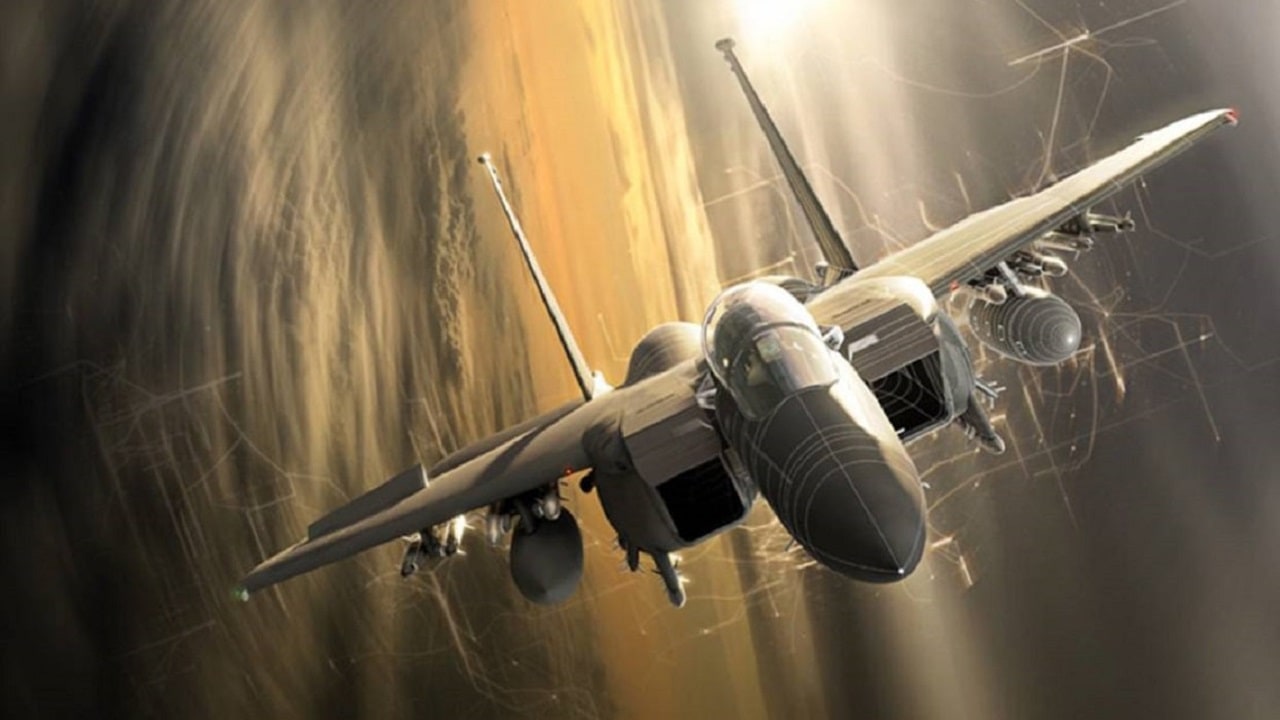
Summary and Key Points: Defense analyst Reuben F. Johnson evaluates the F-15EX Eagle II, noting its reputation boost following the Qatar Air Force’s destruction of two Iranian Su-24 bombers.
-With a 30,000-lb payload and Mach 2.5 speed, the F-15EX is being adopted by the Israeli Air Force (IAF) for long-range missions and considered by Poland to counter Russia.
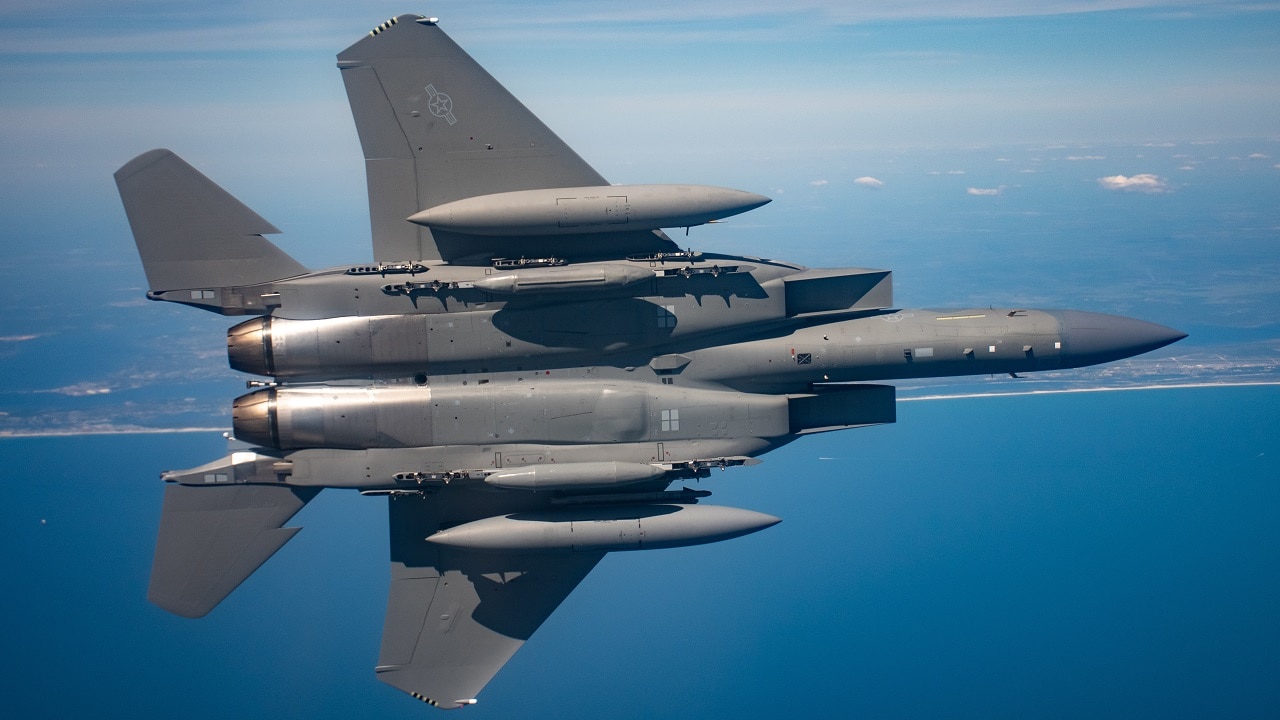
An F-15EX Eagle II from the 85th Test and Evaluation Squadron, 53rd Wing, takes flight for the first time out of Eglin Air Force Base, Fla., April 26, 2021, prior to departure for Northern Edge 2021. The F-15EX brings next-generation combat technology to a highly successful fighter airframe that is capable of projecting power across multiple domains for the Joint Force. (U.S Air Force photo by 1st Lt Savanah Bray)
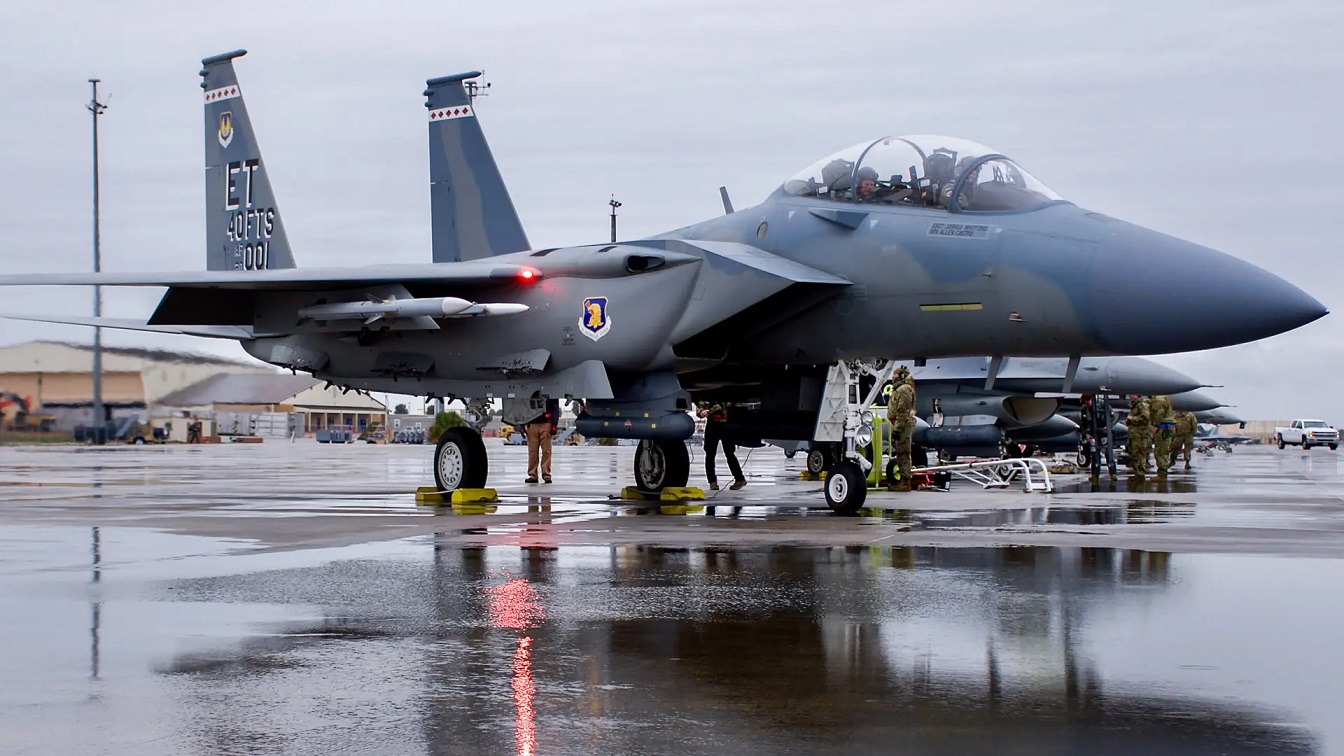
F-15EX. Image Credit: U.S. Air Force.
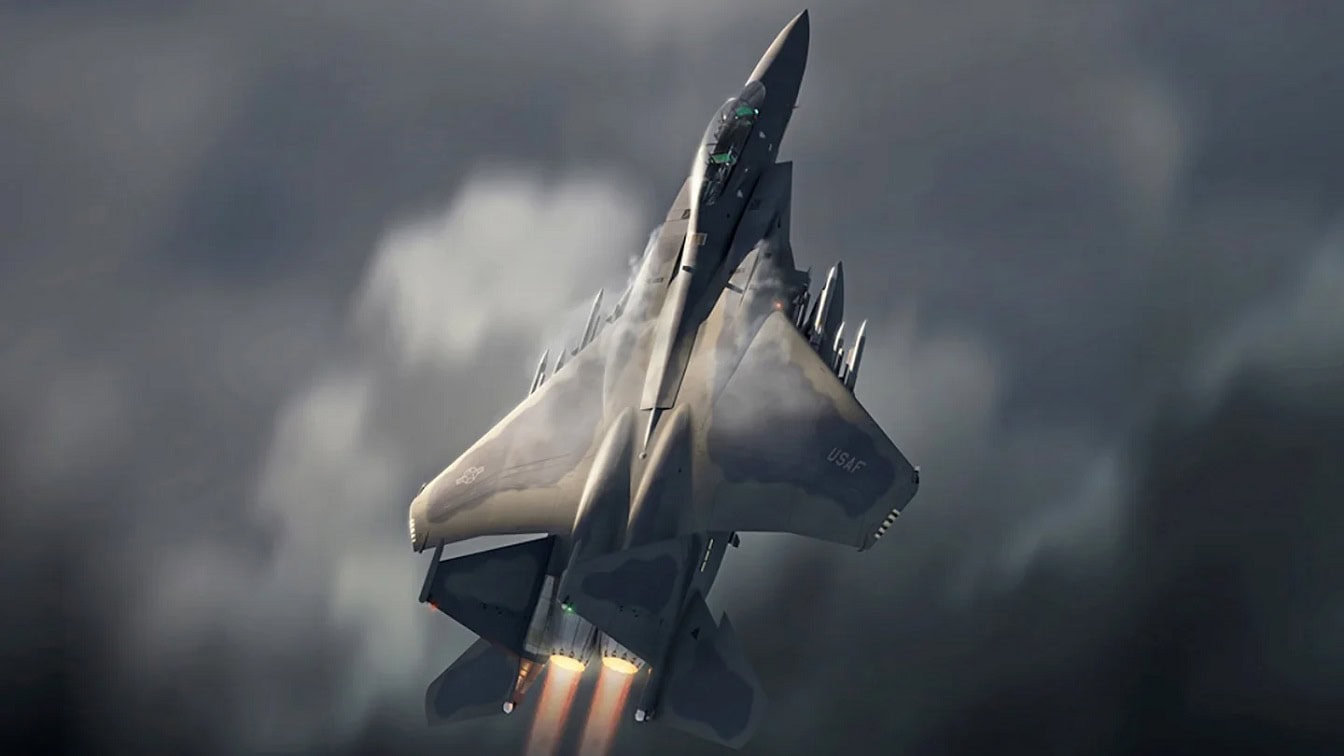
F-15EX. F-15EX. Image Credit: Boeing.
-This report analyzes the AN/APG-82(V)1 AESA radar and GE F110-129 engines, concluding that the “B-52 lite” configuration provides the necessary “missile truck” capacity to defeat large-scale drone salvos and complement existing F-35 fleets.
The Eagle’s New Reign: Why the F-15EX Eagle II is Outshining Stealth Fighters
Conventional wisdom holds that the aircraft enjoying the biggest reputation boost from its performance in the Iran air campaign is the stealthy F-35. That aircraft is being operated by U.S. services, but also by the Israeli Air Force (IAF) with its F-35I Adir.
But the U.S. aircraft that seems to be impressing potential customers most is instead the F-15EX Eagle II.
Among other sorties during the past ten days, a Qatar Air Force variant of the -EX configuration—designated the F-15QA Ababil in this export version—successfully shot down two Sukhoi Su-24 tactical, theater-range bombers operated by the Islamic Republic of Iran Air Force (IRIAF).
Partly due to the age of the F-15s currently in regional inventories, and also because of the superior combat capabilities of the F-15EX, the largest and most capable air forces in the Middle East region have shown significant interest in acquiring this latest version of the Boeing twin-engine fighter.
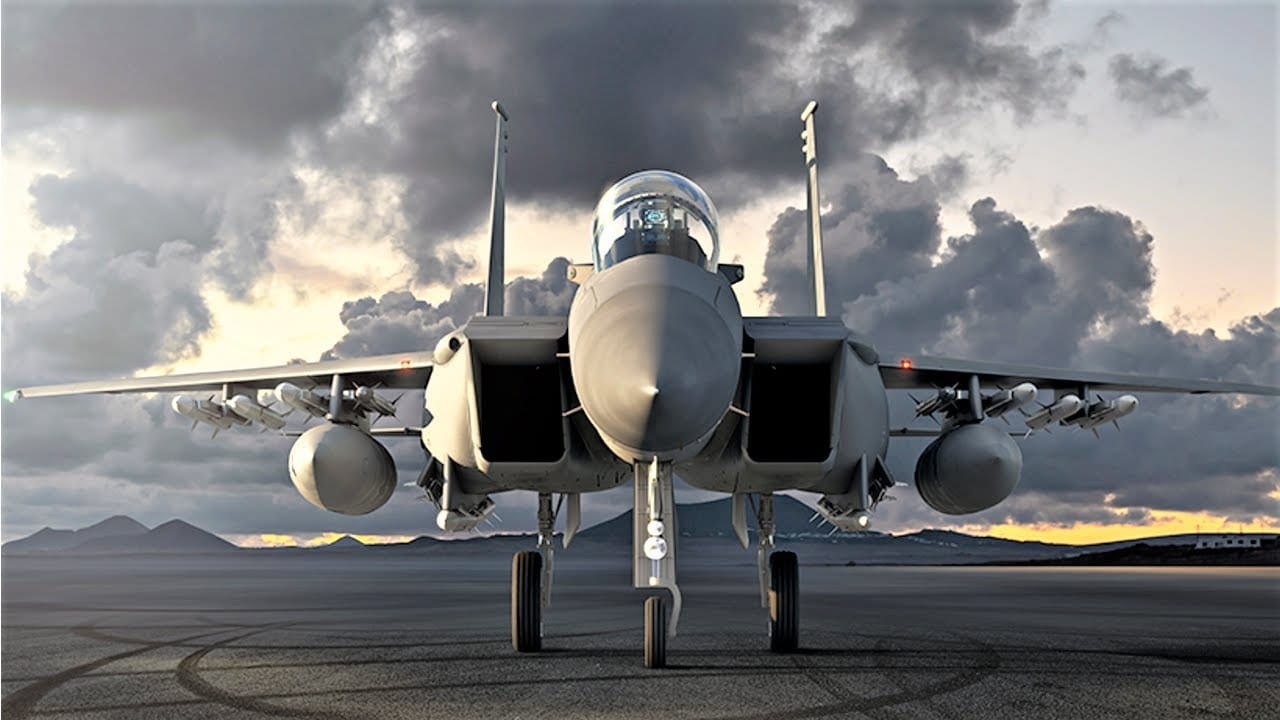
F-15EX Eagle II. Image Credit: Creative Commons.
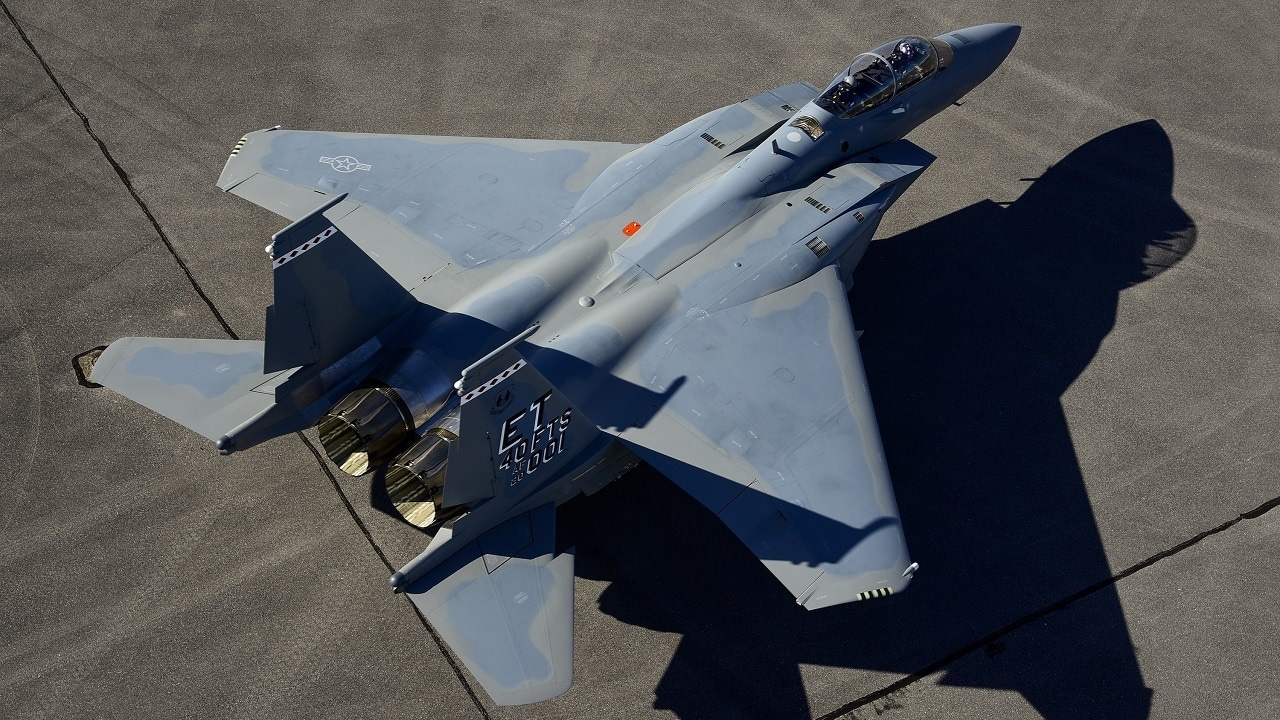
The F-15EX Eagle II, the Air Force’s newest fighter aircraft, arrives to Eglin Air Force Base, Florida March 11. The aircraft will be the first Air Force aircraft to be tested and fielded from beginning to end through combined developmental and operational tests. The 40th Flight Test Squadron and the 85th Test and Evaluation Squadron personnel are responsible for testing the aircraft. (U.S. Air Force photo/1st Lt. Karissa Rodriguez)
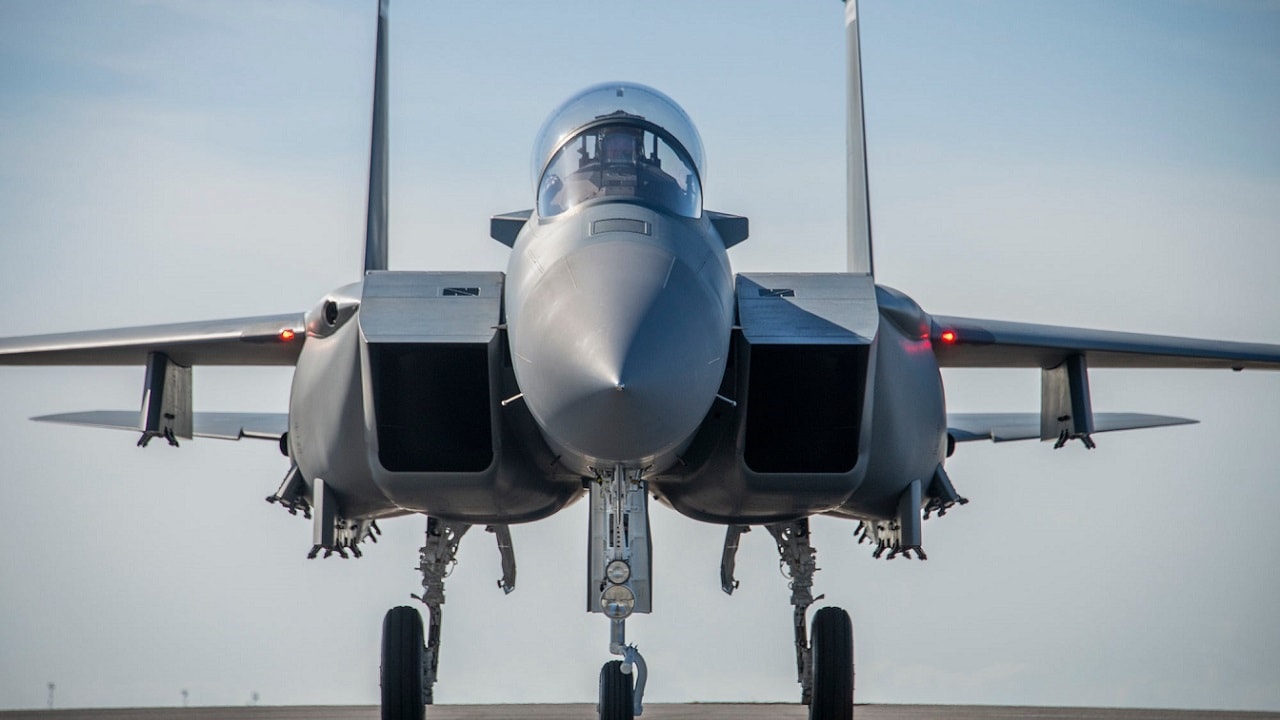
F-15EX Eagle II. Image Credit: Boeing.

An F-15EX fighter jet taxis to its parking spot at Wright-Patterson Air Force Base, Ohio, Nov. 8, 2021. The jet visited Wright-Patt to give the Air Force Life Cycle Management Center’s F-15EX program office the opportunity to see the aircraft up close. (U.S. Air Force photo by Jaima Fogg)
The IAF is now purchasing 25 F-15EX aircraft in an initial batch, with an option for a second tranche of 25 jets. The IAF is procuring these aircraft specifically for their long-range capabilities.
The F-15EX is a step up from the older-generation F-15 models because it can carry heavier, specialized payloads.
The aircraft for the IAF are tailored to include state-of-the-art Israeli technologies. The upgraded aircraft will feature not only enhanced range and increased payload capacity, but also improved performance across various operational scenarios.
Aside from Israel, the Royal Saudi Air Force is also considering the F-15EX as part of a fleet upgrade.
These aircraft would potentially replace or complement older F-15C/D/S models.
Central European Powerhouse
Poland is becoming the most powerful air force in all Central Europe, and Warsaw is considering an F-15EX procurement as well. The aircraft is a strong candidate for several reasons, including its considerable payload capacity of 30,000 lbs or greater, its Mach 2.5 speed, and hardpoints that can carry 12 or more air-to-air missiles.
The aircraft is also one of the best complementary platforms for an air force that is already operating F-35s and F-16s. Its range and firepower are the best possible combination for air superiority and strike missions.
This ability to carry so much ordnance earns the aircraft the label of “B-52 lite.” For the requirements of Poland, which faces an existential threat in Russia, the F-15EX can put enough ordnance on target while F-35s and F-16s suppress air defenses and carry out close air support missions.
It is not for nothing that the F-15EX acts as a “missile truck” against large drone/missile salvos, which is a capability highly relevant to the regional threats seen in the Ukraine war.
Advanced Subsystems for F-15EX Eagle II
The aircraft is also equipped with the Raytheon AN/APG-82(V)1 AESA radar.
This radar offers superior situational awareness, increased range, better detection of low-observable targets and frequency-hopping operation for jamming immunity.
It combines the back-end processing and target acquisition performance of the F/A-18E/F’s AN/APG-79 radar, combined with a much larger active electronically scanning array (AESA). The latest version of the AESA array is the AN/APG-82(V)X that is equipped with Gallium Nitride transmit/receive modules.
This radar features an open-architecture processor that can switch rapidly between air-to-air, air-to-ground, and electronic-warfare modes. The Raytheon design team emphasizes that these characteristics enable faster target detection, tracking, and engagement across multiple mission profiles.
Last but not least, the aircraft is powered by two General Electric F110-GE-129 engines, each with 29,500 lbs. of thrust. In an interview he gave in September 2021 after flying the F-15EX, retired U.S. Air Force General Paul V. Hester told Air & Space Forces Magazine that the benefits of the GE F110-129 “have never been plainer.”
“It’s no surprise that from Saudi Arabia to Qatar to the United States, every single one of the new advanced F-15s is powered by the GE motor,” Hester said. “When the Air Force decided they wanted to buy the EX version, they awarded the contract to GE as a sole source.”
“It is the best engine I ever flew,” he concluded.
About the Author: Reuben F. Johnson
Reuben F. Johnson has thirty-six years of experience analyzing and reporting on foreign weapons systems, defense technologies, and international arms export policy. Johnson is the Director of Research at the Casimir Pulaski Foundation. He is also a survivor of the Russian invasion of Ukraine in February 2022. He worked for years in the American defense industry as a foreign technology analyst and later as a consultant for the U.S. Department of Defense, the Departments of the Navy and Air Force, and the governments of the United Kingdom and Australia. In 2022-2023, he won two awards in a row for his defense reporting. He holds a bachelor’s degree from DePauw University and a master’s degree from Miami University in Ohio, specializing in Soviet and Russian studies. He lives in Warsaw.