
Summary and Key Points: National security analyst Dr. Brent M. Eastwood evaluates the S-400 Triumf, Russia’s premier anti-access/area denial (A2/AD) system.
-The system’s integration into “mosaic defense” layers is being tested in various wartime scenarios, like in Ukraine.
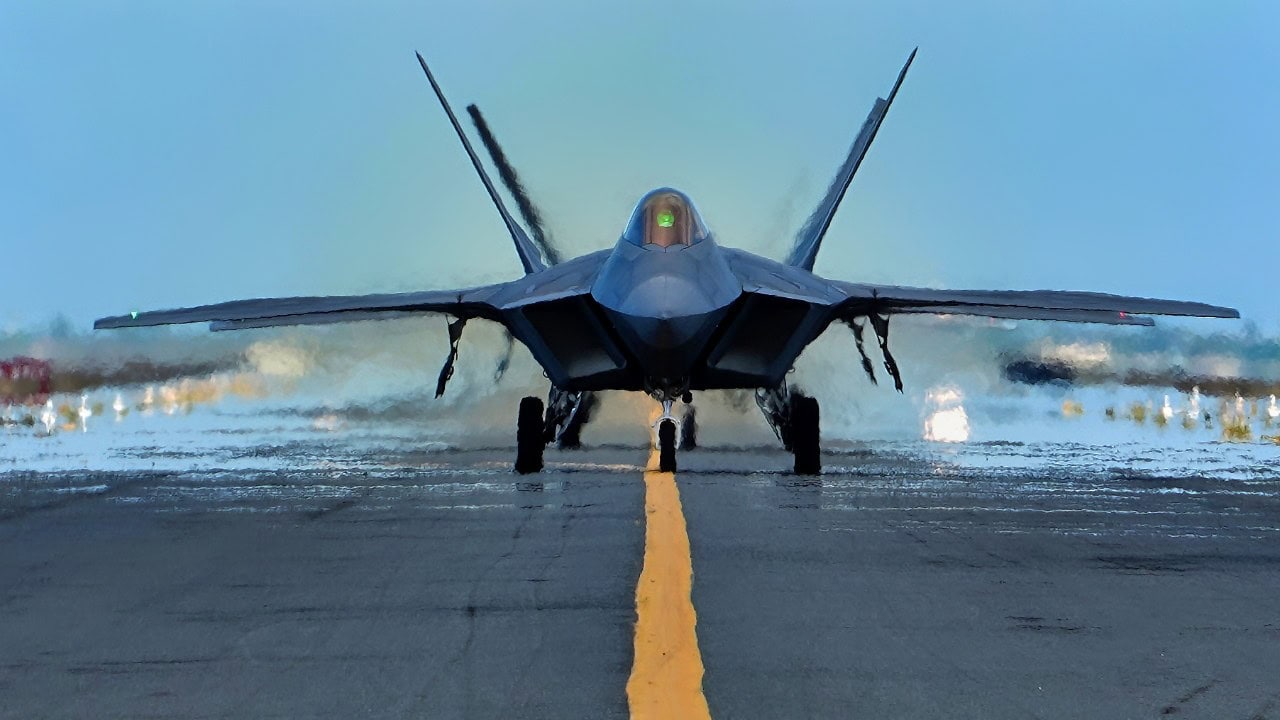
A U.S. Air Force F-22 Raptor taxis on the runway during a routine training schedule April 21, 2020, at Honolulu International Airport, Hawaii. Given the low traffic at the airport due to COVID-19 mitigation efforts, the active-duty 15th Wing and the Hawaii Air National Guard’s 154th Wing seized an opportunity to document the operation which showcases readiness and their unique Total Force Integration construct. The units of Team Hickam work together seamlessly to deliver combat airpower, tanker fuel, and humanitarian support and disaster relief across the Indo-Pacific. (U.S. Air Force photo by Airman 1st Class Erin Baxter)
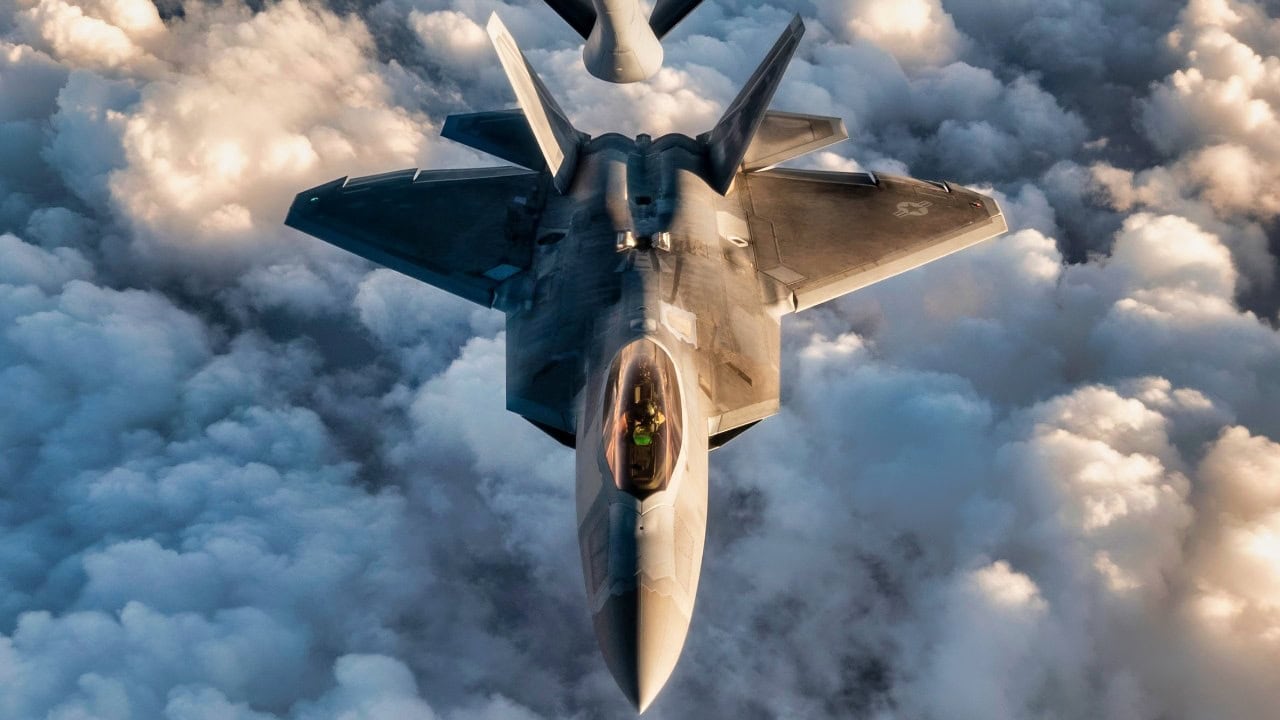
A U.S. Air Force F-22 Raptor departs after being refueled by a KC-135 Stratotanker over the U.S. Central Command area of responsibility November 5, 2024. Raptors provide air dominance and conduct missions delivering airpower within the region. (U.S. Air Force photo)
-This report analyzes the S-400’s ability to track 300 targets and its mobility “shoot and scoot” survival doctrine.
-Eastwood explores how Russia and China are granting S-400 operators greater independence to counter B-21 Raider and F-35 penetrations, concluding that neutralizing command-and-control nodes remains the U.S. Air Force’s primary objective.
The S-400 Paradox: Why Russia’s “Stealth Hunter” is Struggling Against 2026 Cruise Missile Swarms
Just how much of a triumph is the S-400 surface-to-air missile system?
This hardware is Russia’s marquee SAM, which is one way Vladimir Putin’s forces can put U.S. stealth fighter jets like the F-22 and F-35 in jeopardy. The S-400 is full of high-end technology that would be a challenge for aviators flying fifth-generation airplanes.
The Kremlin wants to protect its population from strike warplanes like the stealth B-2 Spirit bomber and the future B-21 Raider. They aim to create an environment in which stealthy aircraft would have to avoid certain geographic locations and deny them areas of operation that could create havoc for U.S. Air Force battle planners.
Russia Has Exported the S-400 to China
It is not just Russia that deploys the S-400 Triumf. The system has been exported to China, Turkey, and India, with Beijing being the most troublesome operator. The Chinese have their own anti-access/ area denial scheme that is designed to keep U.S. stealth airplanes from encroaching on Chinese airspace.
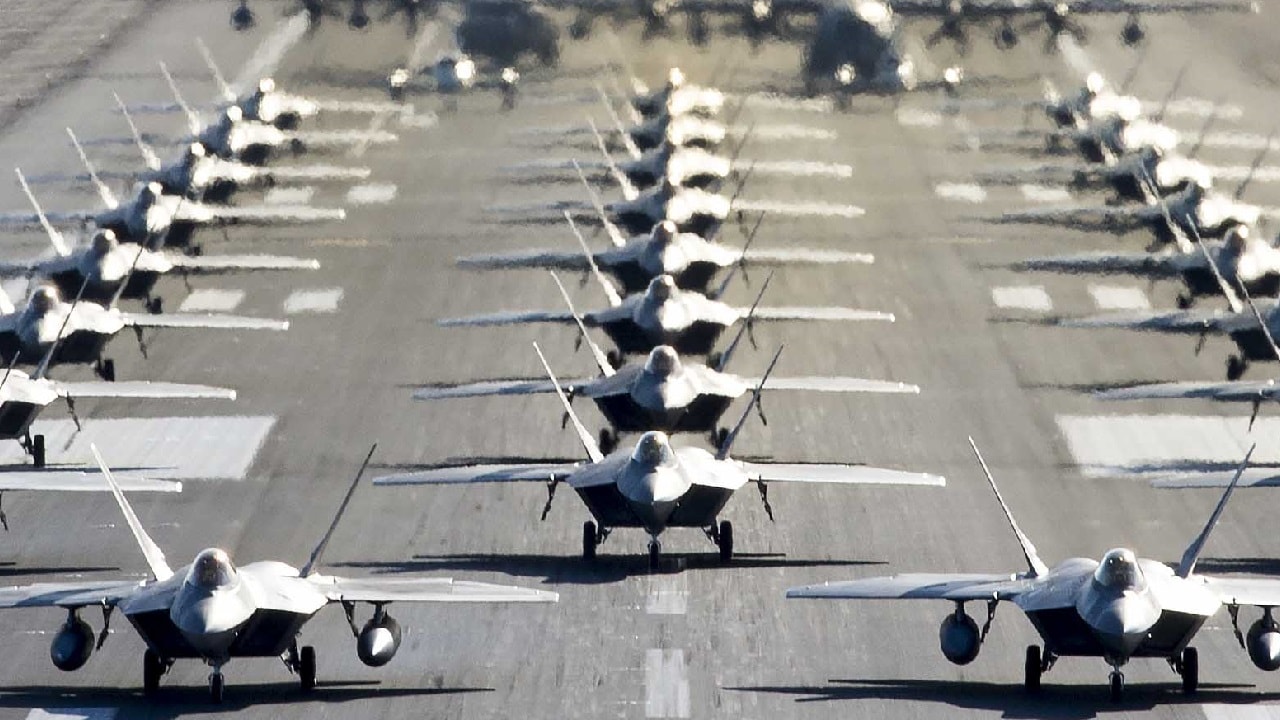
U.S. Air Force F-22 Raptors, E-3 Sentrys, C-17 Globemaster IIIs, C-130J Herculeses and C-12F Hurons participate in a close formation taxi known as an elephant walk at Joint Base Elmendorf-Richardson, Alaska, May 5, 2020. This event displayed the ability of the 3rd Wing, 176th Wing and the 477th Fighter Group to maintain constant readiness throughout COVID-19 by Total Force Integration between active-duty, Guard and Reserve units to continue defending the U.S. homeland and ensuring a free and open Indo-Pacific. (U.S. Air Force photo by Senior Airman Jonathan Valdes Montijo)
Not a Bad System
The S-400 is one worthy adversary. It can track 300 targets simultaneously and engage 36 targets over a range of 249 miles. Russia and China are confident that the S-400 can create a protective bubble around friendly forces and keep the Americans guessing about how far they can fly into a multi-threat environment. The S-400 is part of a layered, mosaic defense in which the S-400 operators have the wherewithal and smarts to make their own decisions about engaging the SAM system without orders from above. Iran has used the mosaic strategy during the fight against the Americans and Israelis during Operation Epic Fury.
Can Russia and China Improve on the S-400 Mosaic Strategy?
So far, the Americans and Israelis have worn down Iranian air defenses with Tomahawk cruise missile strikes and precision-guided bombs like JDAMs. China and Russia are looking at ways to deny the U.S. Air Force airplanes’ freedom to operate.
If a mosaic strategy is effective against the enemy, the Chinese and Russians could consider giving S-400 SAM operators greater leeway, flexibility, independence, and freedom of action to attack enemy aircraft at will without direct orders from Beijing or Moscow.
Ukraine Has Been a Handful During the War
The S-400 entered active duty in 2007. It has been used against Ukraine extensively to protect against missile attacks and drone strikes from Volodymyr Zelensky’s forces.
The S-400 can also take out helicopters, bombers, and fighters.
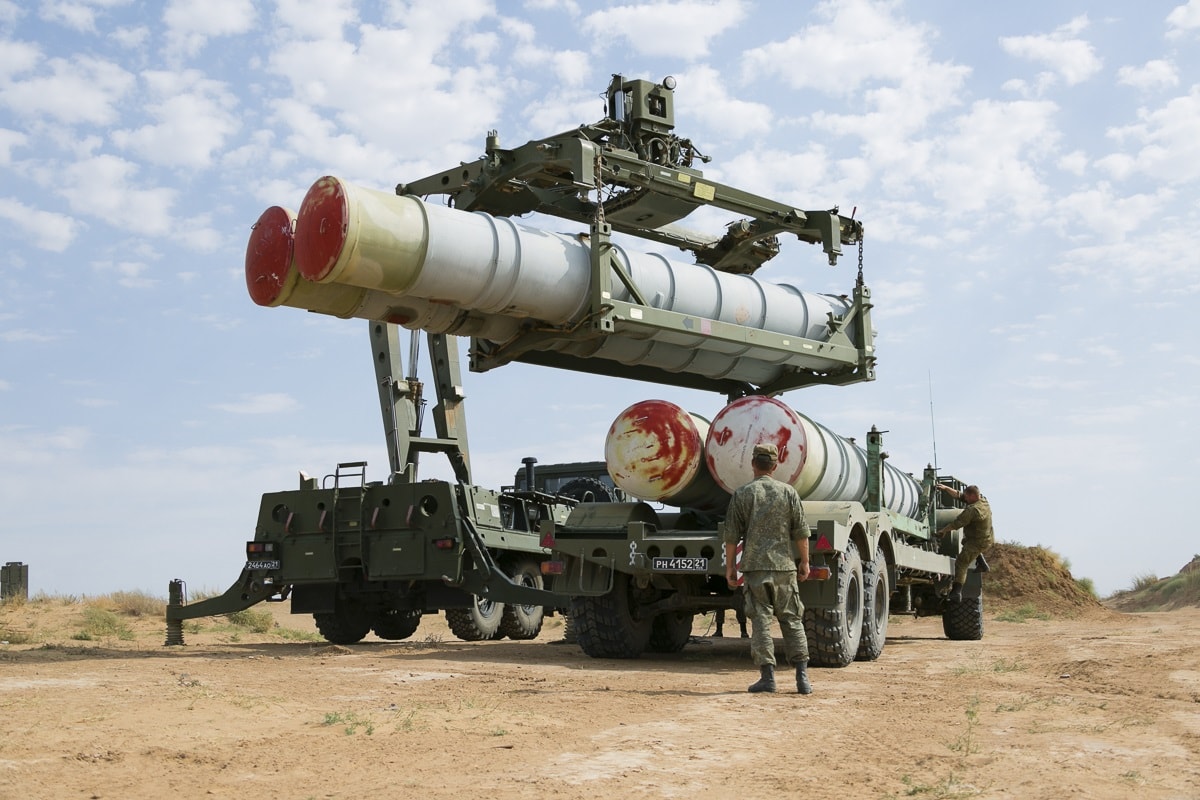
Russia’s S-400 Air Defense System. Image: Russian Military.
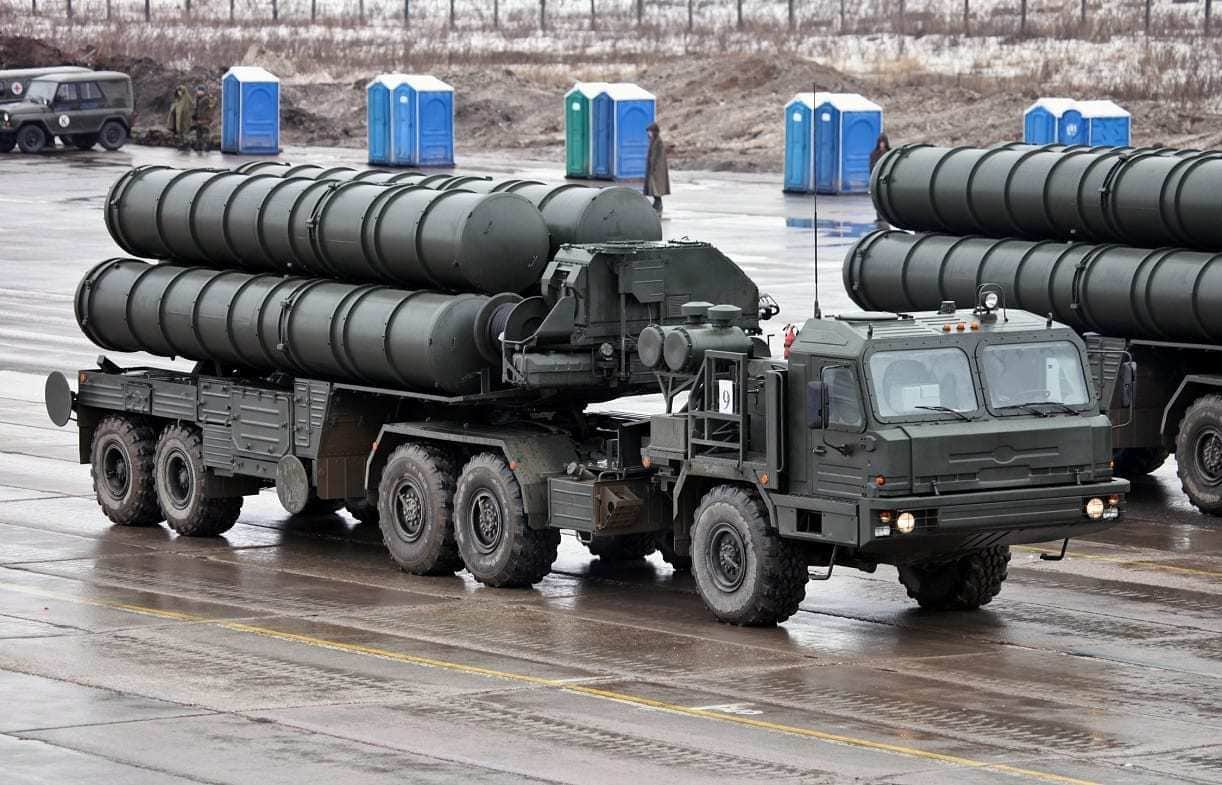
S-400. Image Credit: Creative Commons.
One important deployment of S-400s has been to protect air bases that the Ukrainians have tried to punish with one-way suicide drones and new organically-produced cruise missiles like the FP-5 Flamingo. The S-400 provides part of the protective shield, often combined with shorter-range systems such as the Pantsir and older S-300 SAM systems.
The early warning radar and command-and-control efficiencies can activate the defense bubble more effectively when the entire defense constellation is engaged.
How Does the S-400 Work?
“A typical S-400 battalion is highly mobile and includes a command post, a long-range acquisition radar for detecting targets at long range, an engagement radar for tracking and missile guidance, and multiple transporter-erector-launchers that each carry four missiles. Each of the S-400’s components can redeploy relatively quickly and move off-road, a boon to survivability and a hindrance to preemptive adversary strikes,” my colleague Caleb Larson wrote.
A Diverse Range of Targets Can Be Eliminated
There are different altitudes at which the S-400 interceptors can be used. There is the low-flying capability for drones, cruise missiles, and helicopters. Intermediate-range projectiles take care of E-3 AWACS aircraft and refueling tankers. Then the additional S-500 model can eliminate high-altitude ballistic missiles.
Counteracting American Stealthiness Could Be a Problem
This sounds great, but how would the S-400 perform against F-35s and F-22s?
These would be airplanes used on Day One or Day Two of warfare and could sneak in past the S-400. However, this assumes that the United States would suppress enemy air defenses, such as the S-300, S-400, and S-500, through bombing runs by the B-2 and B-21.
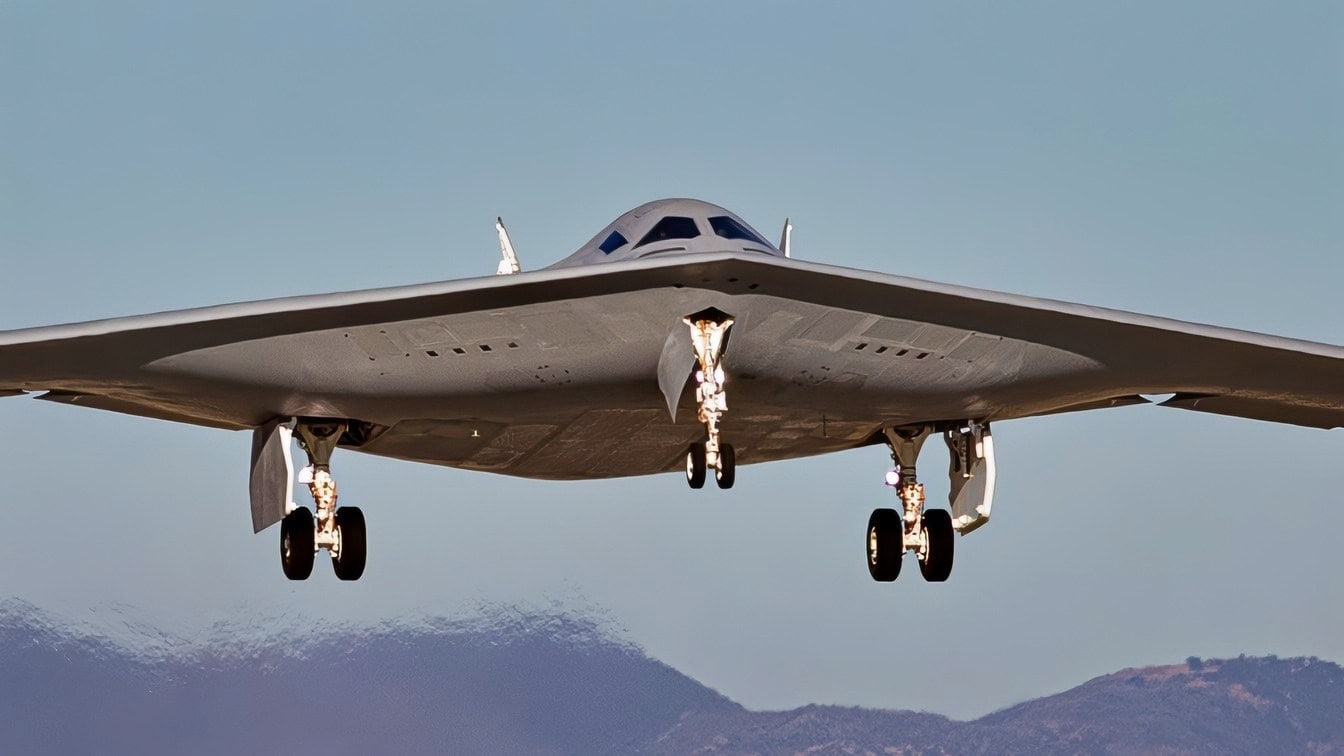
A second B-21 Raider test aircraft takes off, Sept. 11, from Palmdale, Calif., to join the Air Force’s flight test campaign at Edwards Air Force Base, Calif. The addition of the second test aircraft expands mission systems and weapons integration testing, advancing the program toward operational readiness. (Courtesy photo)
How far could Air Force bombers penetrate the Russian defense bubble if needed?
U.S. Tactics Against Air Defenses Like the S-400
Early bombing and cruise missile attacks would have to focus on radar and command-and-control facilities that operate the S-400.
Keep in mind the system is mobile and can shoot and scoot for better survivability. The later stages of warfare would have to concentrate on eliminating the launchers after sensors and control centers are neutralized.
With stealth bombers providing the first “punch” against enemy air defenses, the F-35s and F-22s could also make their strike runs to eliminate the launchers. However, the multi-layered constellation of different SAM systems would be a challenge.
Strike First with Tomahawks
It may be important for the United States to use Tomahawk cruise missiles from submarines and ships to attrit the Russian and Chinese radar and command control nodes first with follow-on strikes from the B-2s and B-21s.
Iran is proving a good test case for configuring air defenses. So far, the United States and Israel have created a high level of air superiority over Iran. The air defenses throughout the country have posed little problem for the friendly air forces.
Russia and China may reconfigure their defensive bubbles to counter early-stage cruise missile and drone strikes by the Americans and better protect their SAMs with early-warning radar, creating a more mobile and agile group of SAMs led by the S-400.
This might be a winning strategy against F-22s, F-35s, and Air Force stealth bombers.
About the Author: Dr. Brent M. Eastwood
Author of now over 3,000 articles on defense issues, Brent M. Eastwood, PhD is the author of Don’t Turn Your Back On the World: a Conservative Foreign Policy and Humans, Machines, and Data: Future Trends in Warfare plus two other books. Brent was the founder and CEO of a tech firm that predicted world events using artificial intelligence. He served as a legislative fellow for US Senator Tim Scott and advised the senator on defense and foreign policy issues. He has taught at American University, George Washington University, and George Mason University. Brent is a former US Army Infantry officer. He can be followed on X @BMEastwood.