
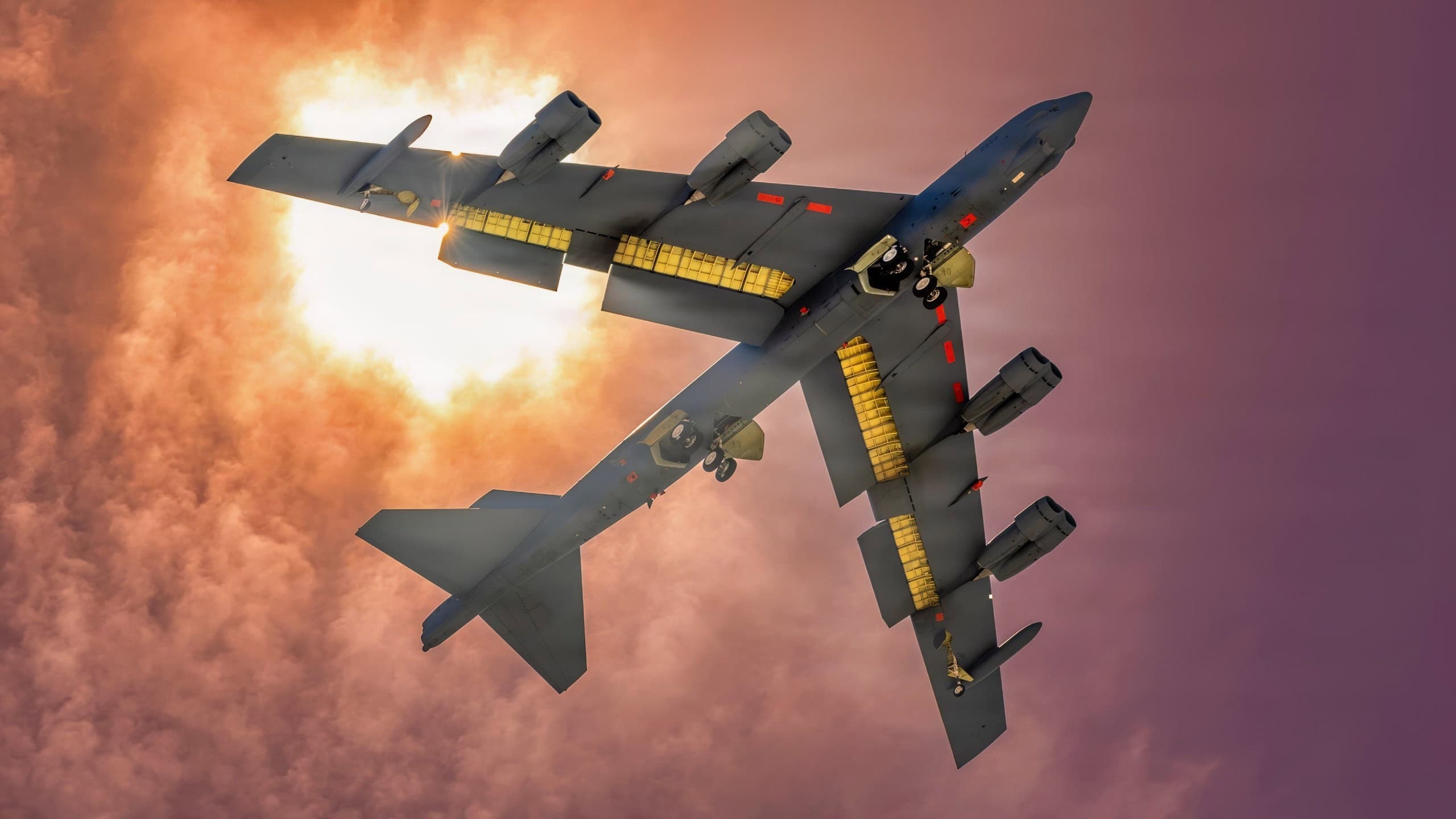
Summary and Key Points: National security analyst Dr. Andrew Latham evaluates the B-52 Stratofortress‘s role in the 2026 Iran Air War. After initial suppression of Iranian IADS by B-2 Spirit bombers and Tomahawk missiles, CENTCOM commander Adm. Brad Cooper confirmed that B-52s are now striking IRGC command posts and mobile launchers with “impunity.” This report analyzes the B-52J variant, featuring Raytheon AN/APG-188 AESA radar and Rolls-Royce F130 engines, which completed high-altitude testing in February 2026. Latham concludes that the B-52’s 70,000-lb payload remains the “brutally practical” equalizer in sustained strategic air campaigns.
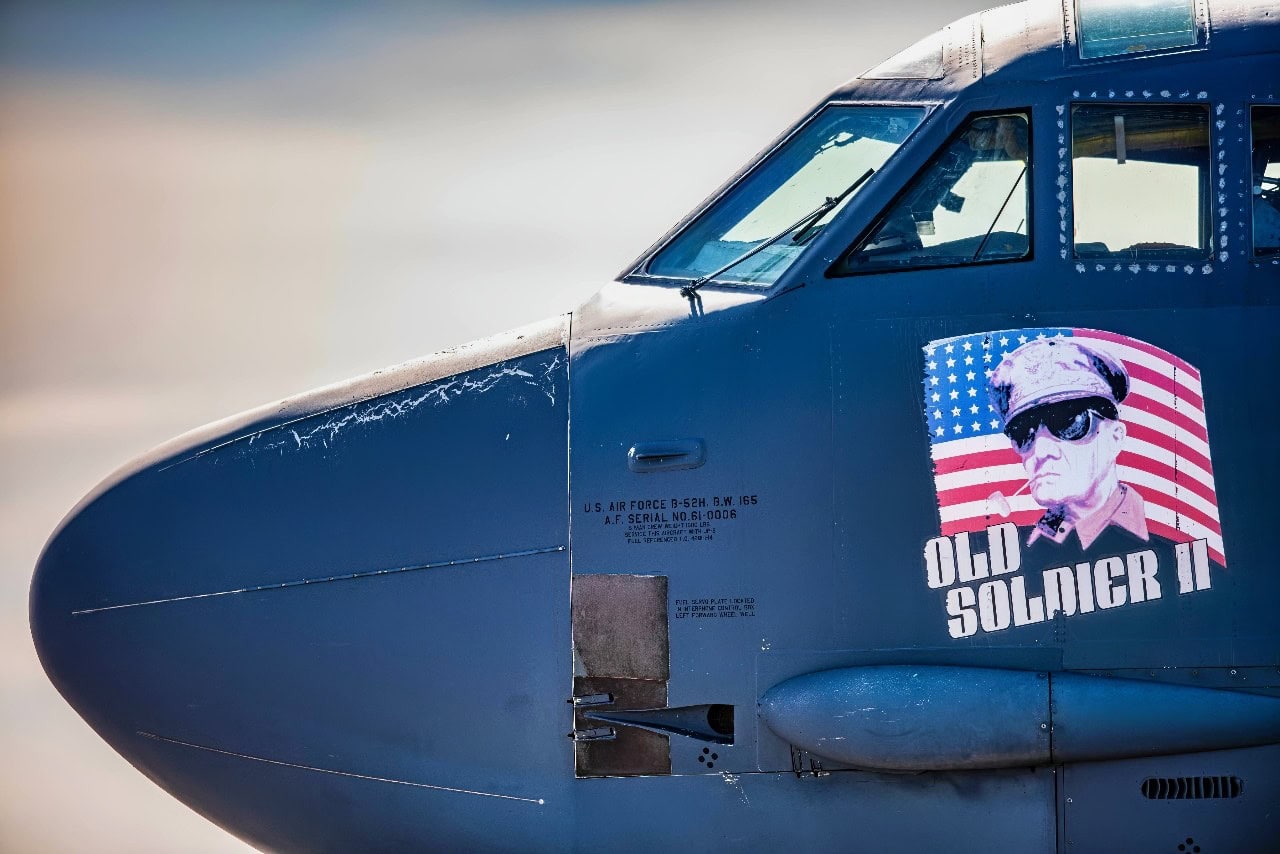
A U.S. Air Force B-52H Stratofortress assigned to the 96th Bomb Squadron, Barksdale Air Force Base, Louisiana, sits on the flightline during exercise Prairie Vigilance 25-1 at Minot Air Force Base, North Dakota, April 12, 2025. For more than 60 years, the B-52 has been the backbone of the strategic bomber force of the United States. As a routine training mission, PV 25-1 enhances the safety, security, and reliability of the bomber leg of the U.S. nuclear triad. (U.S. Air Force photo by Senior Airman Kyle Wilson)
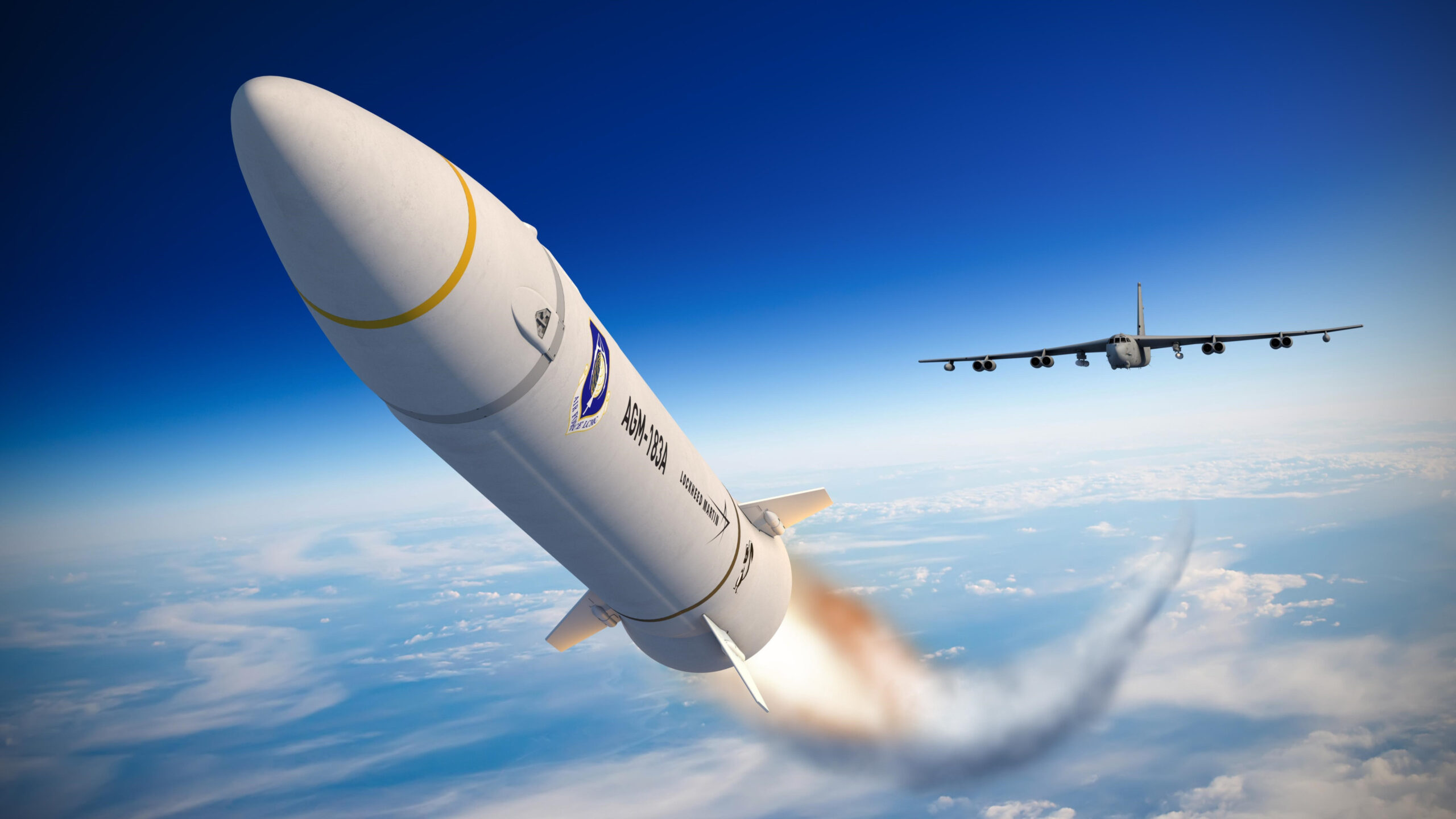
Hypersonic Missiles fired from B-52. Image Credit: Creative Commons.
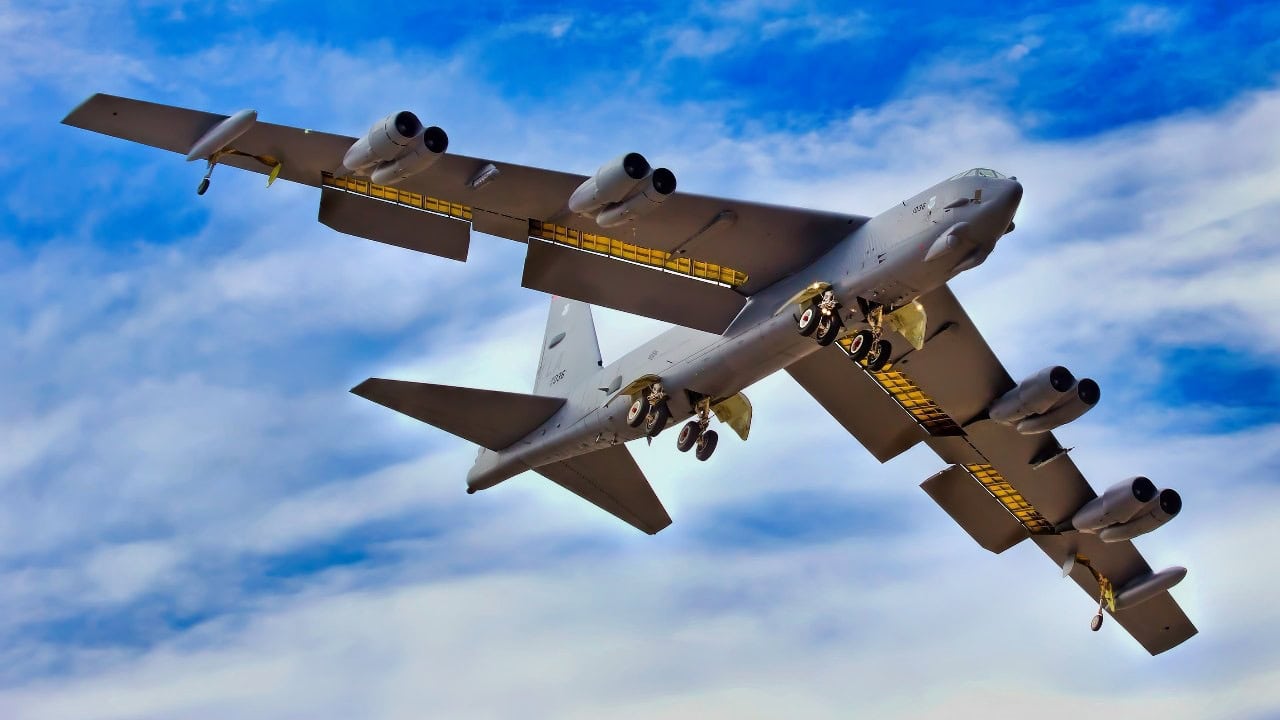
B-52 Bomber. Image Credit: Creative Commons.
The 100-Year Bomber: Inside the 2026 Logic Keeping the B-52J Flying Until the Mid-Century
The air war over Iran has unfolded quickly. Radar sites, missile depots, and command facilities have been hit by U.S. and Israeli aircraft flying sustained strike missions across a country roughly the size of Western Europe. The geography of the battlefield alone tells you something about the scale of the problem planners face.
But if you look closely at the aircraft flying those missions, one detail stands out.
Mixing with stealth fighters and the latest precision-guided weapons are bomber aircraft that have not changed much since the Eisenhower administration: B-52 Stratofortresses.
The aircraft looks almost out of place in a war defined by networked targeting systems and modern airpower. Yet it keeps appearing in real combat for a reason.
The timing of that reminder is interesting. The U.S. Air Force is currently debating whether the aircraft should remain in service for decades more through the B-52J modernization program, which would give the bomber new engines, improved radar, and updated avionics so it can keep flying well into the middle of the century.
Critics have questioned the program for years. If the Air Force is building the stealthy B-21 Raider, they ask, why keep investing billions in a bomber first introduced during the Cold War?
The war with Iran may be starting to answer that question in a way procurement debates rarely do.
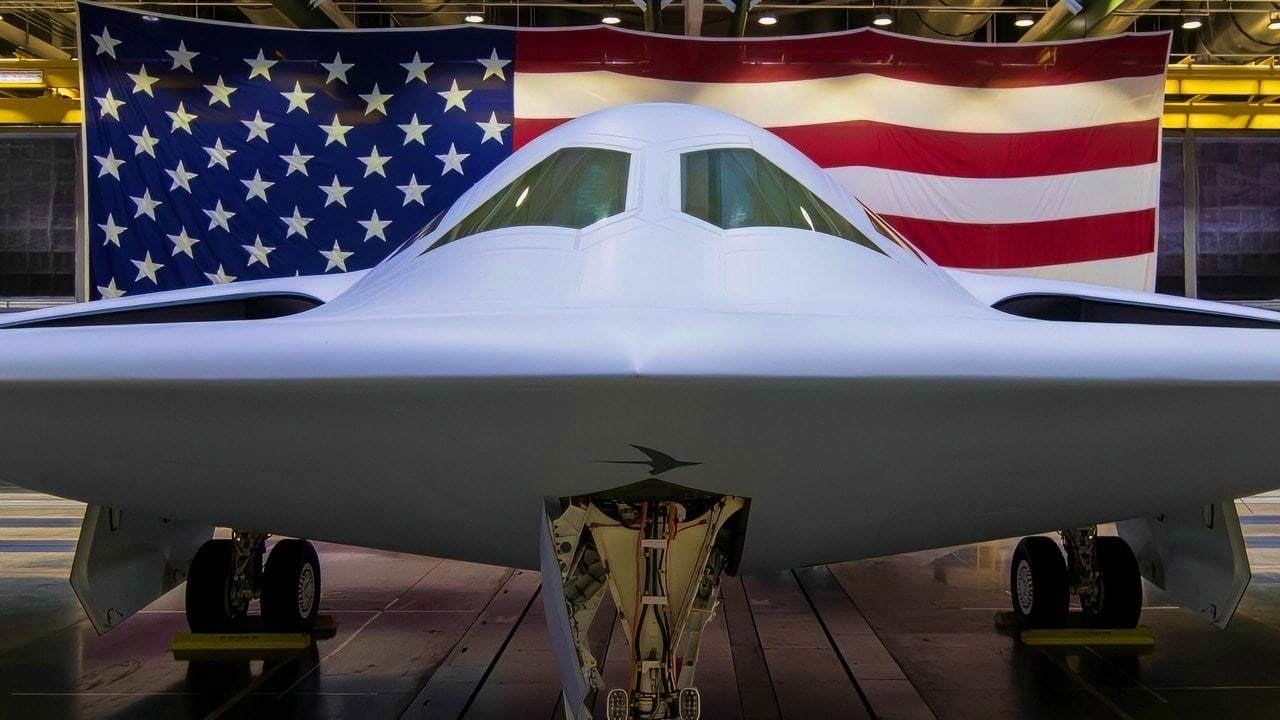
The B-21 Raider was unveiled to the public at a ceremony on December 2, 2022, in Palmdale, Calif. Designed to operate in tomorrow’s high-end threat environment, the B-21 will play a critical role in ensuring America’s enduring airpower capability. (U.S. Air Force photo)
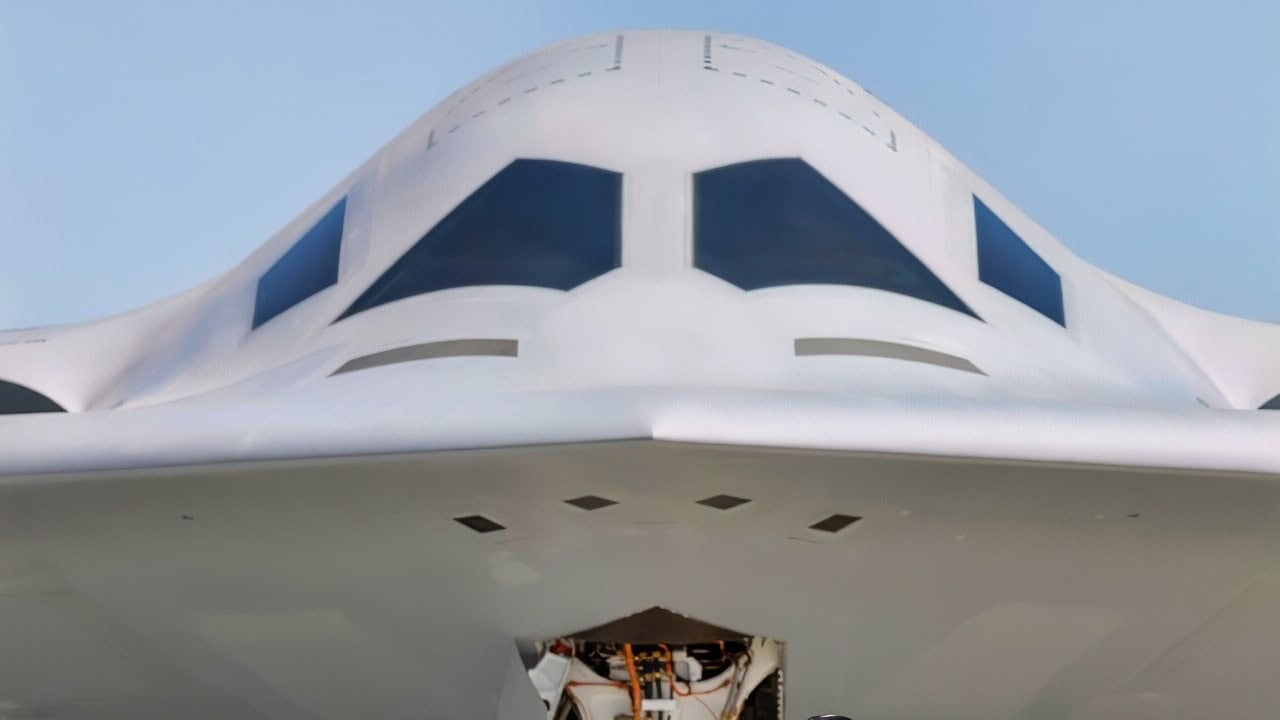
U.S. Air Force Airmen with the 912th Aircraft Maintenance Squadron prepare to recover the second B-21 Raider to arrive for test and evaluation at Edwards AFB, Calif., Sept. 11, 2025. The arrival of a second test aircraft provides maintainers valuable hands-on experience with tools, data and processes that will support future operational squadrons. (U.S Air Force photo by Kyle Brasier)
The Quiet Transformation of the Bomber
A quiet shift in bomber doctrine has been underway for years—but it becomes obvious only when you watch how modern air campaigns actually operate.
During the Cold War, the logic was brutally straightforward. A bomber’s job was to fight through defended airspace and deliver nuclear weapons against hardened targets. Speed mattered, altitude mattered, and eventually stealth mattered as well—but all for the same reason: keeping the aircraft alive long enough to reach the target.
Modern air warfare works a little differently. Instead of forcing its way through dense air defenses, the aircraft launches stand-off weapons that can travel hundreds of miles after release. Cruise missiles and long-range precision munitions do the dangerous part of the job while the bomber remains well outside the most heavily defended areas.
Once that shift takes hold, the logic of the air campaign begins to change.
Penetration still matters, particularly early in a conflict. But payload begins to matter just as much. The question gradually shifts from whether the bomber can reach the target to how many weapons it can carry and how long it can remain in the fight delivering them. That shift is exactly where the B-52 continues to offer something modern aircraft struggle to match.
What the Iran War Reveals About Airpower
The Stratofortress can carry enormous quantities of ordnance, and that still counts, even in an era dominated by precision weapons. A single bomber can launch large numbers of stand-off missiles in one sortie while remaining far enough from hostile air defenses that the aircraft itself never becomes the primary target.
To see why that matters, look at the opening phase of the Iran war. Iran is a large country, and its military infrastructure is spread accordingly. Missile facilities, radar networks, command centers, and logistics hubs sit across hundreds of miles of territory. Striking them becomes less a single decisive blow than a continuing sequence of attacks.
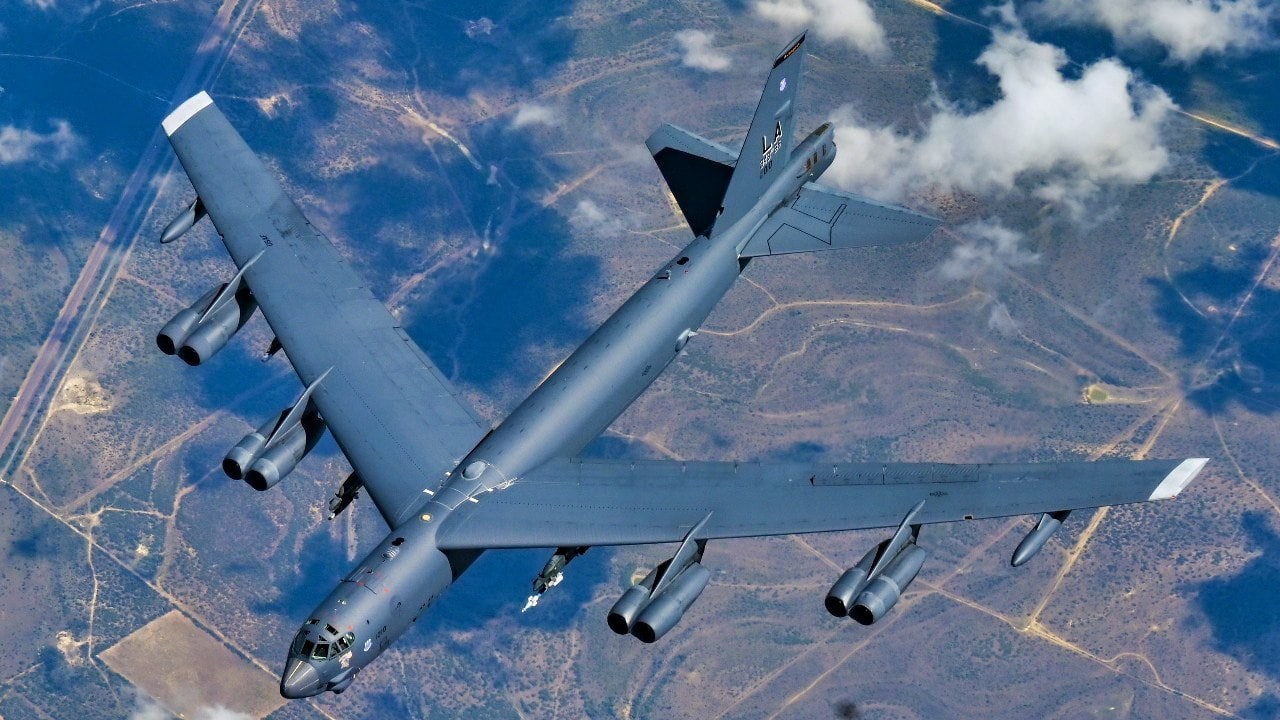
A KC-135 Stratotanker from the 465th Air Refueling Squadron assigned to Tinker Air Force Base, Oklahoma, refuels a B-52 Stratofortress from the 96th Bomb Squadron assigned to Barksdale Air Force Base, Louisiana, during a cross country mission 13 Sept 2021. The sortie enabled the B-52’s dynamic and close air support mission in support of Special Operations Attack Course qualification. (U.S. Air Force photo by 2nd Lt. Mary Begy)

B-52 Bomber. Image Credit: Creative Commons.
Some targets demand stealth aircraft capable of penetrating sophisticated defenses. Many others simply require the ability to deliver substantial volumes of precision weapons from a distance. Once a campaign widens beyond the opening exchanges, the operational logic begins to favor platforms that can sustain the flow of weapons over time.
A bomber carrying dozens of stand-off missiles can deliver far more firepower in one mission than most tactical aircraft. The bomber launches its weapons, turns for home, and the missiles finish the job. It is not glamorous airpower, but it is brutally practical—and wars tend to reward what works.
Why the Air Force Still Wants the B-52J
This helps explain why the Air Force has shown little enthusiasm for retiring the B-52 even as the B-21 Raider approaches operational service. The two aircraft are not really competitors. They occupy the same strike ecosystem but perform different roles inside it.
The B-21 is designed to penetrate sophisticated air defenses and strike the hardest targets early in a conflict. It represents the cutting edge of bomber design. It will also be expensive, and the fleet of Raiders will probably remain relatively small.
The B-52 brings range, endurance, and sheer payload. Once a war moves past the opening exchanges and the strike campaign spreads across a wide battlespace, those attributes begin to matter a great deal.
Seen from that angle, the B-52J modernization program looks less like reinvention than simple preservation of a very useful capability. New engines extend range and efficiency, updated avionics keep the bomber connected to modern targeting networks, and the rest of the upgrades ensure the aircraft can keep doing the job it already performs well.
Looked at in isolation, maintaining a 70-year-old bomber can feel like bureaucratic inertia. Looked at in the context of a real war demanding persistent strike capacity across enormous distances, the calculation begins to look different. The decision to keep the B-52 flying starts to resemble straightforward strategic pragmatism.
The Strange Longevity of the Stratofortress
There is a certain historical irony in the aircraft’s continued presence in modern conflicts. The B-52 entered service in the 1950s and has appeared in nearly every major American war since. It flew missions over Vietnam, delivered massive strikes during the Gulf War, and later returned to the skies over Afghanistan and Iraq.
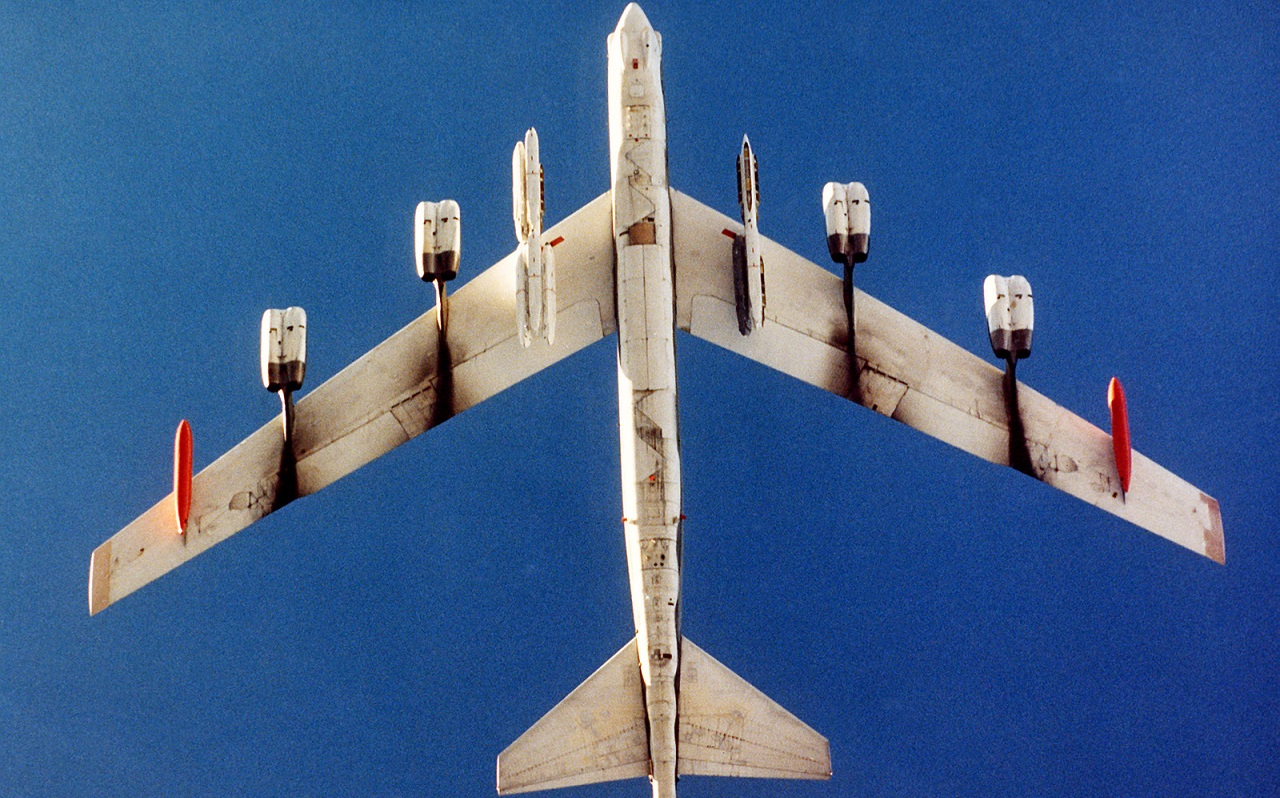
A B-52 Stratofortress aircraft flies overhead near the Air Force Flight Test Center. The Stratofortress is carrying AGM-86 air-launched cruise missiles.
Now it is flying again—this time in a conflict defined by precision weapons, digital targeting networks, and stand-off munitions that did not exist when the aircraft first flew. The surrounding technology has changed dramatically, but the Stratofortress still relies on the same strengths that made it useful decades ago: range, endurance, and payload.
The Iran war will not settle the debate over the B-52J modernization program by itself. Procurement arguments rarely resolve themselves so neatly. What the conflict is already doing, however, is reminding observers that military capabilities are judged in the context of real wars rather than theoretical ones.
Sometimes those wars reveal something uncomfortable for defense planners: the future of airpower is not always about replacing the past.
Sometimes it is about discovering that an aircraft designed seventy years ago still solves the problem the war has placed in front of you.
About the Author: Dr. Andrew Latham
Andrew Latham is a non-resident fellow at Defense Priorities and a professor of international relations and political theory at Macalester College in Saint Paul, MN. You can follow him on X: @aakatham. Dr. Latham is a daily columnist for 19FortyFive.com.