

Summary and Key Points: Isaac Seitz — defense columnist, Patrick Henry College Strategic Intelligence and National Security graduate — delivers a rigorous battlefield post-mortem on General George S. Patton‘s three most consequential tactical failures of World War II.
-Seitz examines how Patton’s U.S. Seventh Army prioritized Palermo over a decisive Messina encirclement during Operation Husky in Sicily, allowing German forces to evacuate across the Strait of Messina.
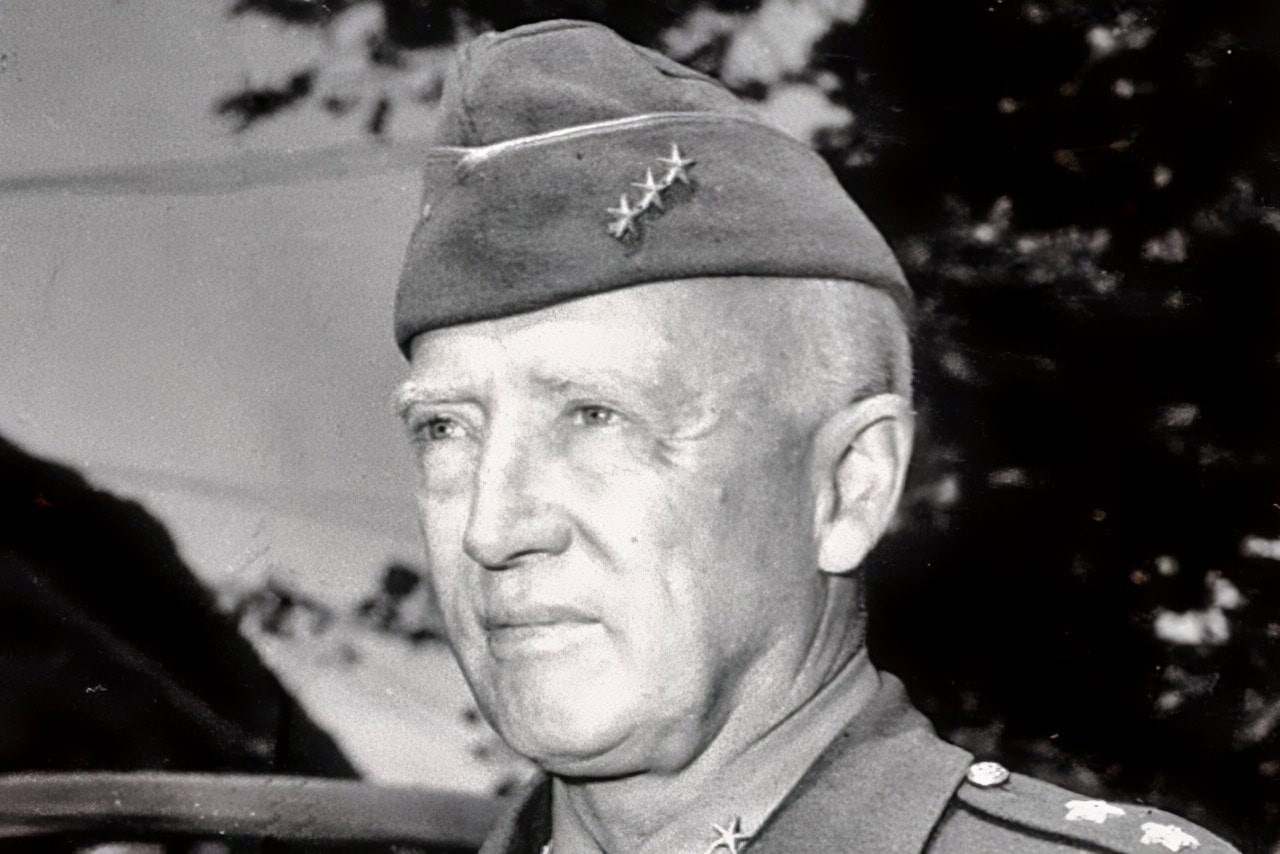
George S. Patton Quote of the Day. Creative Commons Image.
-He then analyzes how the Third Army’s Lorraine campaign along the Moselle River devolved into attritional warfare, and how the subsequent Metz fortifications battle and the under-resourced Saar Offensive left American formations exhausted ahead of the Battle of the Bulge.
Quote of the Day: George Patton Was a Military Legend — but These Three Battlefield Mistakes Cost Thousands of Lives
“Wars may be fought with weapons, but they are won by men. It is the spirit of the men who follow and of the man who leads that gains that victory.” – George Patton, U.S. Army General
Of all the Allied commanders who served during World War II, few had a personality as unique as George S. Patton.
Patton was an aggressive leader whose confidence and assertiveness often led him to great victories—or at least to operational success. However, ol’ Blood and Guts made his fair share of tactical mistakes that often ended up incurring unnecessarily large casualty counts.
Operation Husky
This first such error happened in Sicily, in 1943, during Operation Husky. Initially, Patton’s U.S. Seventh Army was assigned a largely protective role, guarding the left flank while Bernard Montgomery’s Eighth Army drove up the eastern side of the island toward Messina.
When Montgomery’s advance stalled in the face of stiff German resistance, Patton saw an opening not only to claim an operational advantage, but to one-up Montgomery, with whom he often butted heads. Patton moved rapidly, pivoting from defensive assignments to an offensive aimed at Palermo, and eventually a race for Messina.
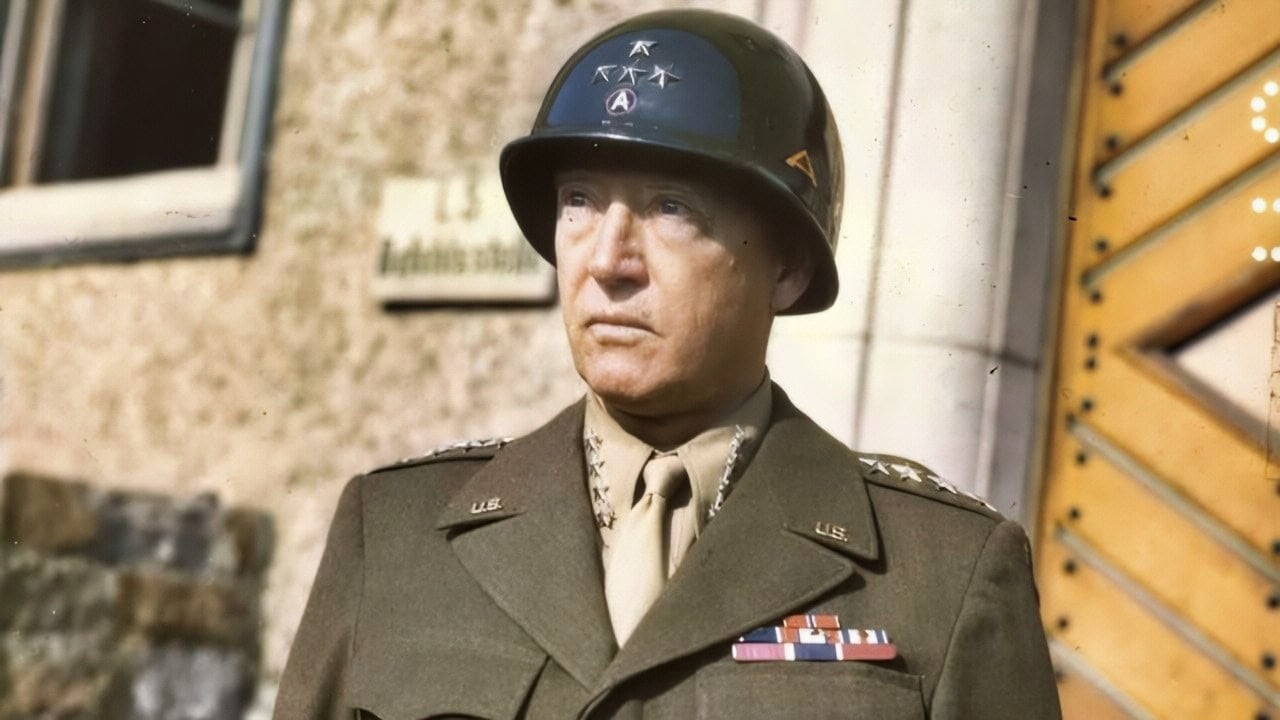
General George Patton U.S. Army Photo
The seizure of Palermo on July 22 was a public-relations coup, showcasing his speed and audacity. But that city was not the most strategically critical target, nor did its capture directly contribute to trapping Axis forces on the island.
By prioritizing a dramatic maneuver, Patton complicated the broader operational design. Coordination with the British suffered, and the Germans managed a skillful evacuation across the Strait of Messina, preserving formations that would fight again on the Italian mainland. ‘
Patton’s instinct for speed gave him an impressive headline but not a decisive encirclement.
This does not diminish the accomplishments of the Seventh Army in Sicily, but it does show how Patton’s desire to seize the initiative could lead him to objectives whose political and psychological value outstripped their operational payoff.
The Lorraine Campaign
If Sicily displayed the high and low edges of Patton’s leadership, the Lorraine campaign in the fall of 1944 provided his most consequential strategic misjudgment. After the whirlwind breakout from Normandy, Patton’s Third Army shattered German lines and surged across France. It was a triumph of operational maneuver, but it also carried the risks of operation overreach.
As the Third Army approached the region of Lorraine, near the German border, the geography changed significantly in favor of the Germans. The terrain was cut by rivers such as the Moselle, dotted with strongpoints and transformed by autumn rains into mud that swallowed vehicles and slowed infantry. The Germans, though battered, were not broken. They were fighting on terrain that favored defense, and they knew it.
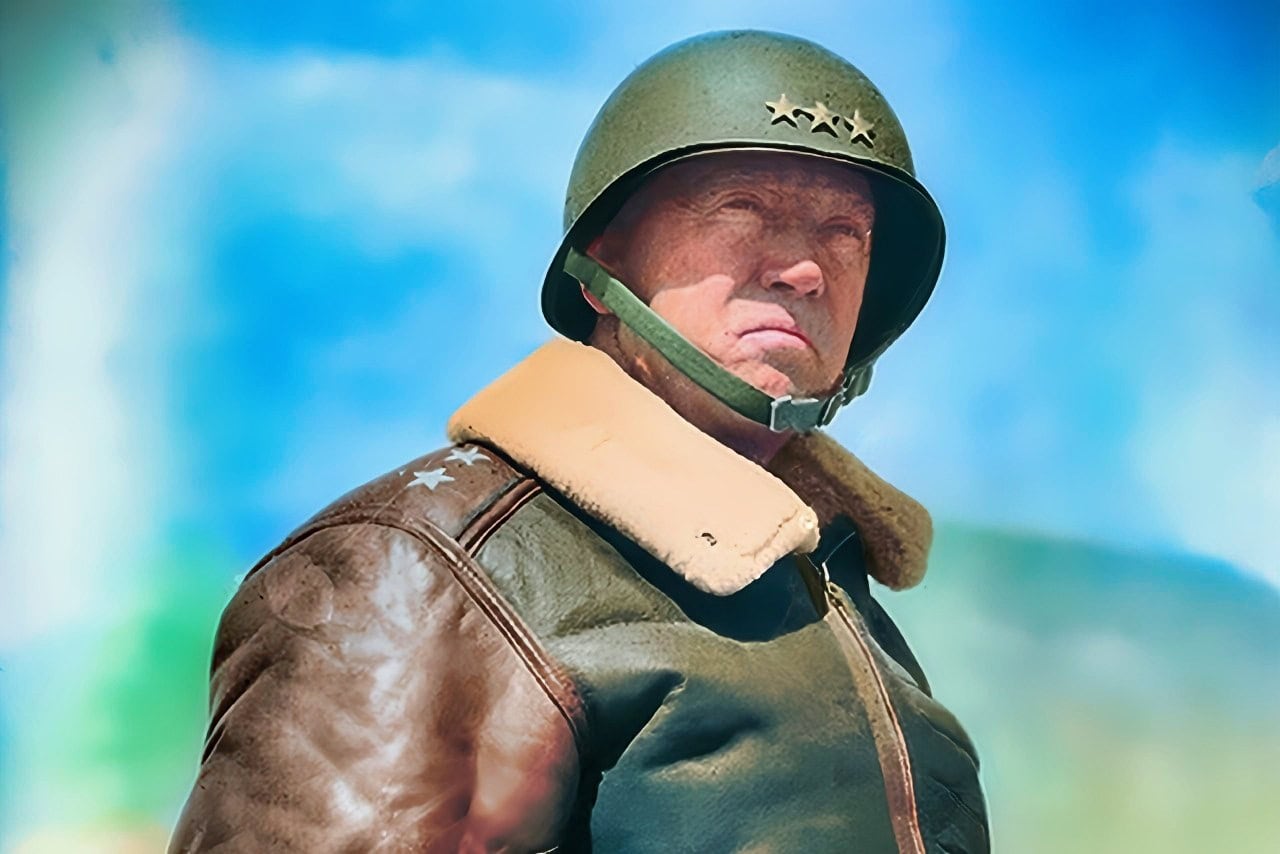
George Patton U.S. Army Photo
Patton misread this turn. He believed the enemy was on the verge of collapse and that relentless pressure would crack the line. He pushed forward in conditions that negated his strengths. Fuel shortages throttled his mobility just when his doctrine required sustained motion.
The boggy fields and fortified towns turned his offensive into a grinding slog. Rather than pausing to regroup, the headstrong Patton persisted with attacks that yielded high casualties for limited gains.
For months, the Third Army was pinned in an attritional fight in Lorraine that was exactly the kind of warfare Patton typically avoided or outflanked. The campaign succeeded in wearing down the Germans and eventually secured key crossings, but at a cost disproportionate to the gains.
Battles for Metz and the Saar Land
Closely bound up with Lorraine was the struggle for Metz, one of the most fortified urban complexes in Europe. Patton, again believing that aggressive maneuver could carry the day, underestimated the depth and resilience of the Metz fortifications, as well as the German determination to hold them.
The forts, some dating to the 19th century but modernized and cleverly sited, commanded key lines of approach and forced the Third Army into repeated assaults under punishing conditions.
The autumn rains added to the misery, turning assault routes into quagmires and complicating supply. The eventual reduction of Metz was a testament to American persistence and tactical adaptation, but it was by no means an easy victory.
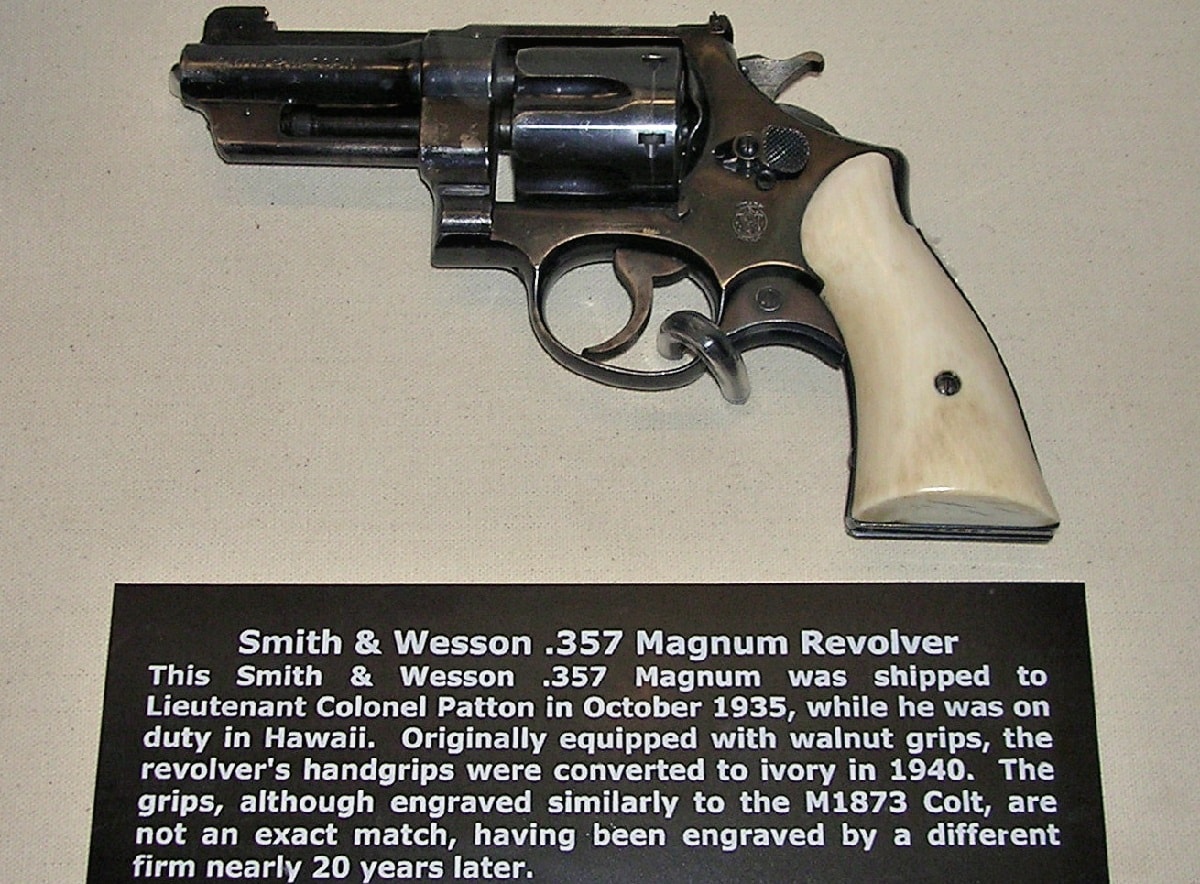
Patton’s well-known custom ivory-handled revolver.
Here, again, Patton’s instinct to keep attacking collided with the reality that some places cannot be bypassed or bullied into submission without the slow, deliberate application of combined arms against hardened positions.
During the Saar Offensive that followed, Patton confronted a different problem: resource shortages. Eisenhower’s broad-front strategy required tough allocation decisions, which meant that at times Patton’s army had to operate without the fuel and ammunition necessary for his ambitious thrusts.
Patton nevertheless pressed for action, seeking to maintain pressure on the Germans and exploit any weakness.
But where Sicily rewarded boldness and France rewarded speed, the Saar punished under-resourced attacks against a prepared enemy on favorable ground. The result was exhaustion in formations that soon would be called upon to pivot suddenly during the Battle of the Bulge, where Patton’s responsiveness and operational agility would redeem him in dramatic fashion.
About the Author: Isaac Seitz
Isaac Seitz, a Defense Columnist, graduated from Patrick Henry College’s Strategic Intelligence and National Security program. He has also studied Russian at Middlebury Language Schools and has worked as an intelligence Analyst in the private sector.