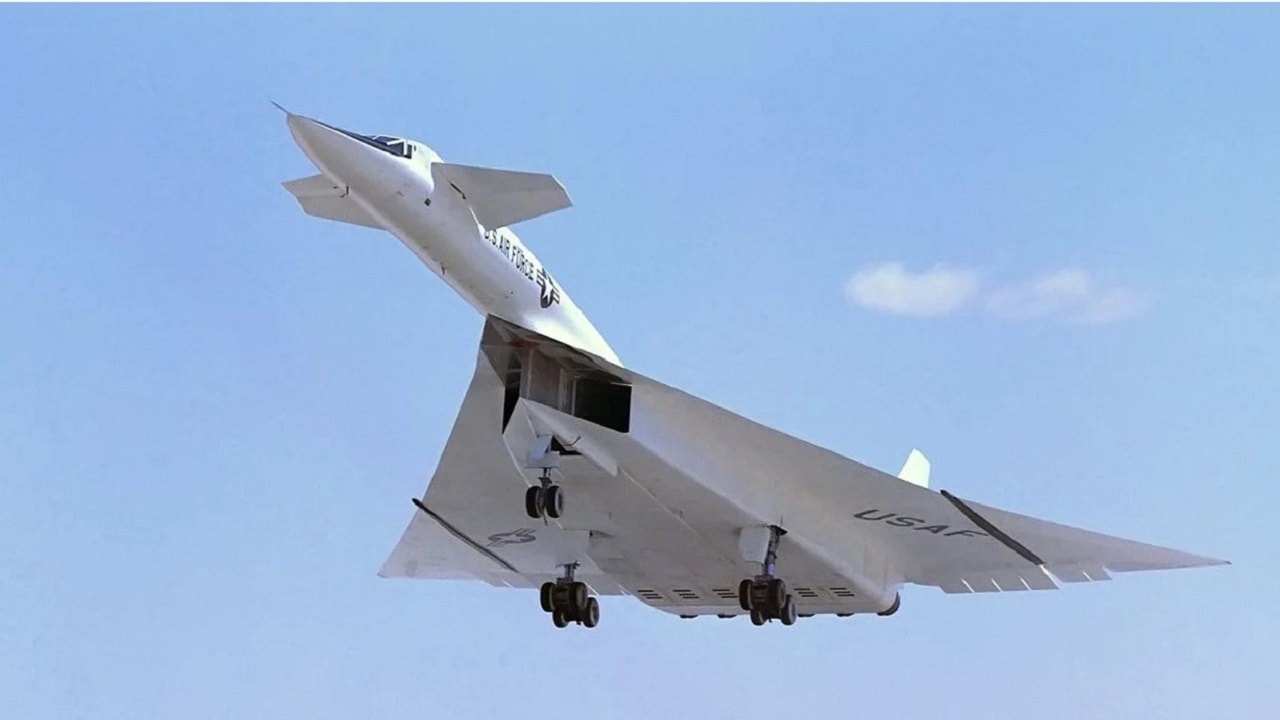
Summary and Key Points: Defense expert Brandon Weichert notes that the XB-70 Valkyrie was the most extraordinary bomber America never flew in combat.
-Designed in the 1950s to cruise at Mach 3 and 70,000 feet — faster than any Soviet missile could reach — it was a masterpiece of Cold War engineering featuring compression lift, folding wingtips, and a canard-delta airframe built from titanium and stainless-steel honeycomb.
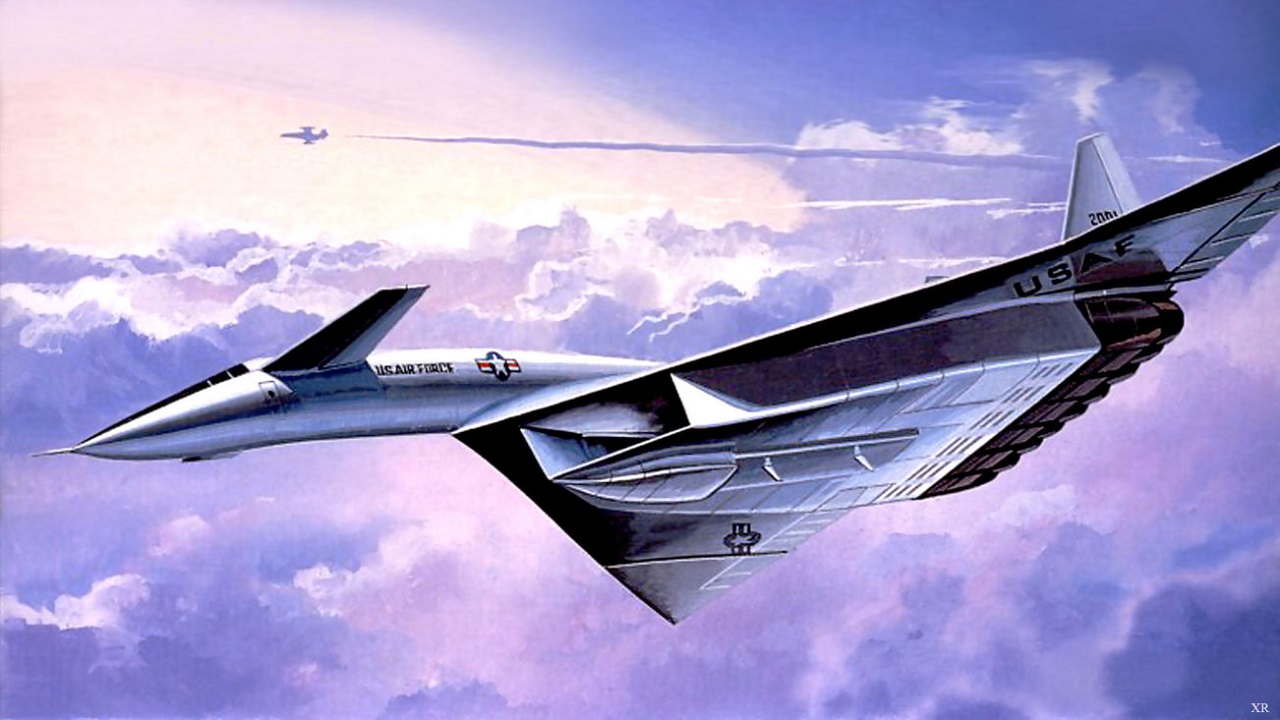
XB-70. Image Credit: Creative Commons.

XB-70. Image Credit: Creative Commons.
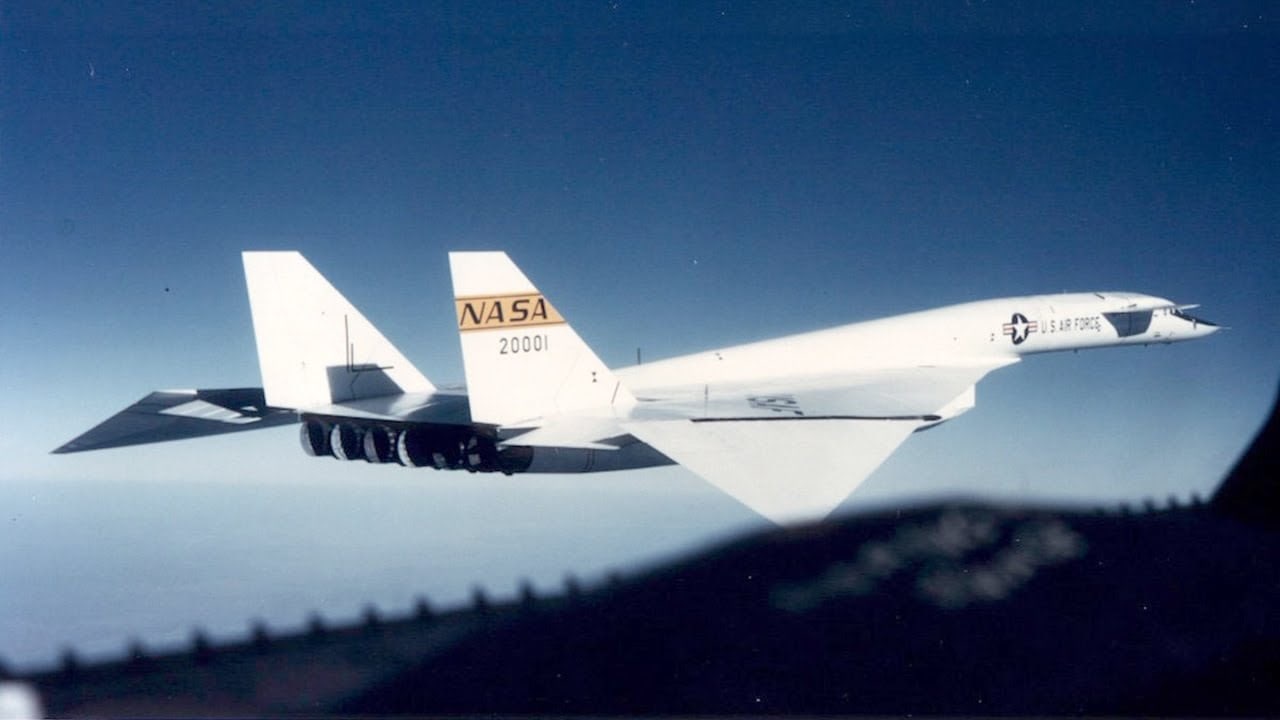
XB-70. Image Credit: Creative Commons.
The futuristic XB-70A was originally conceived in the 1950s as a high-altitude, nuclear strike bomber that could fly at Mach 3 (three times the speed of sound) — any potential enemy would have been unable to defend against such a bomber.
-Then the Soviet Union deployed better surface-to-air missiles, ICBMs made high-altitude bombers obsolete overnight, and Robert McNamara canceled the program.
-The XB-70 didn’t fail because the engineering was wrong. It failed because the war it was built to fight no longer existed.
The XB-70 Valkyrie Proves That Winning the Next War Requires Predicting It First
At the height of the Cold War, the Soviet Union and United States tried all manner of new technologies—notably aerospace technologies—as they fought their titanic geopolitical and ideological struggle for supremacy.
The Cold War Race for the Ultimate Bomber
The XB-70 Valkyrie was just one notable U.S. technology. In fact, the Valkyrie was one of the most interesting designs for any modern bomber ever conceived, on either side of the Cold War.
Yet, it was overtaken by strategic reality before it could become an operational weapon.
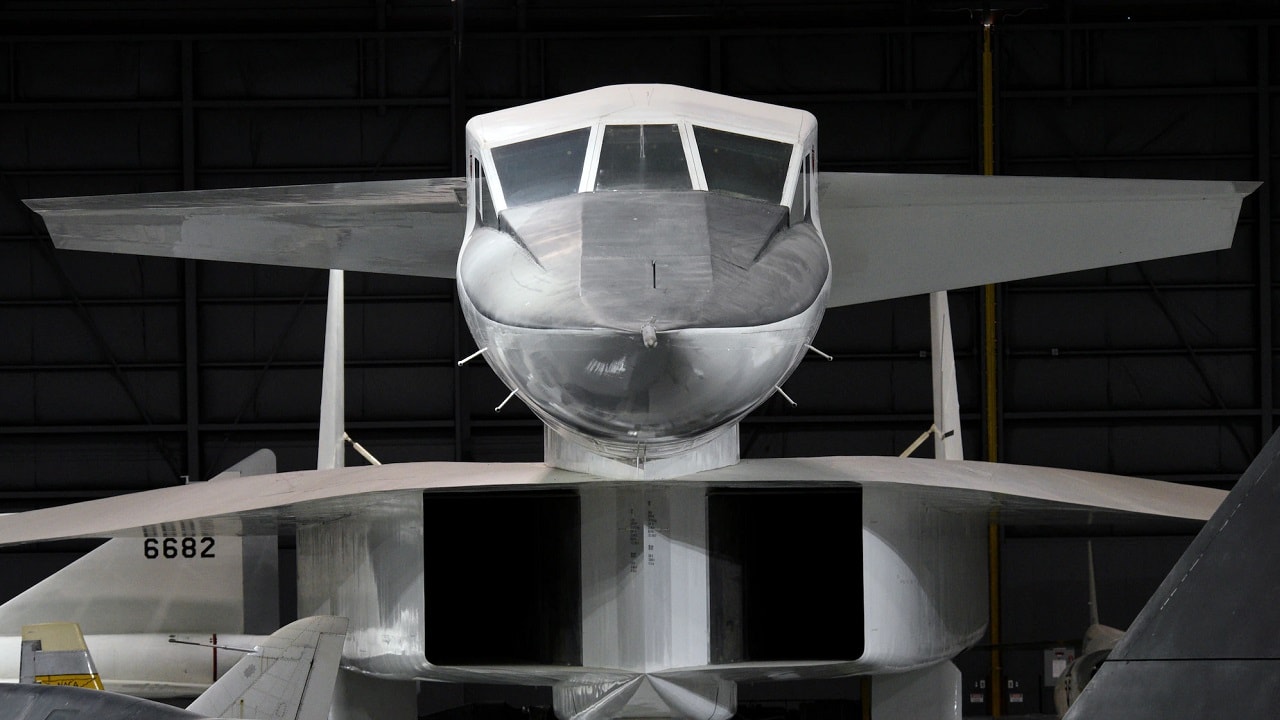
Sadly, the massive bomber sits in a museum collecting dust, as 19FortyFive staff saw back in 2025, and we have pictures below showing what she looks like today.
A Mach-3 Nuclear Penetrator Built to Outrun the Soviet Union
The XB-70 was designed in the 1950s as a six-engine, nuclear-armed penetrator that would cruise at about Mach 3 and around 70,000 feet, using its sheer speed to simply punch through—and outrun—Soviet air defenses.

XB-70 photo taken at U.S. Air Force Museum by 19FortyFive in 2025.

XB-70 photo taken at U.S. Air Force Museum by 19FortyFive in 2025.

XB-70 photo taken at the U.S. Air Force Museum by 19FortyFive in 2025.
The plane first took wing on September 21, 1964.
What made the Valkyrie so fascinating was not just its speed, but the marvelous engineering involved. Multiple analyses of this incredible bird point out key features, such as the canard-delta layout, the stainless-steel honeycomb structure, titanium in hot areas, variable-geometry inlets, and folding wingtips.
The XB-70 was designed to employ what’s known as “compression lift,” which basically means a plane uses its own shockwave for added lift while traveling at fast speeds.
When the Strategy Changed Faster Than the Tech
Despite all the incredible technological leaps made through the development of the XB-70, the Valkyrie was one of the victims of the Cold War era’s rapidly changing technology and political instability. By the early 1960s, the strategic environment had shifted right beneath the XB-70s still-developing airframe.
New Soviet surface-to-air missiles made high-altitude penetration much less survivable, while intercontinental ballistic missiles (ICBMs) looked cheaper, faster, and more politically attractive as the backbone of nuclear deterrence.
Ultimately, the Kennedy administration canceled the program in 1961—before any units of this bomber class entered service. Instead, two XB-70A prototypes were built and used as research aircraft. Those testbeds generated valuable data on Mach 3 flight and on possible supersonic transport development. Indeed, at that time, the Americans were becoming interested in developing a civilian supersonic transport system. That project was ultimately nixed by the Nixon administration, though.
Missiles, SAMs, and the Death of the High-Altitude Bomber
Nevertheless, the XB-70 can be credited with spinning off many technologies key to multiple successful platforms. But as for the plane itself—if missiles could reach higher and faster than any bomber, the advantage of Mach 3 penetration evaporated. At the same time, a fight within the Pentagon showed the XB-70 was not universally loved. The Kennedy administration, given the politics of the era, wanted to cut this massively expensive system, and his Secretary of Defense, Robert McNamara, concluded that the United States no longer required a fleet of supersonic bombers.
The 1966 Crash That Ended the Valkyrie’s Future
A tragic turning point for the XB-70s came in 1966. One of the two prototypes was lost in a midair collision with a NASA F-104N during a formation flight. Joe Walker and Maj. Carl Cross were killed; Al White survived after ejecting. After that crash, the program’s research future narrowed sharply, and the surviving aircraft carried on only until 1969.
The surviving prototype craft continued flying for another three years, after which the experimental program was canceled. Today, the last XB-70 sits in the National Museum of the Air Force as a perennial reminder of a future that never arrived. We saw it, and it looks quite sad.
At its core, the XB-70 was not an engineering failure. It proved the United States could build a bomber capable of sustained Mach 3 flight, something no operational bomber has ever matched.
The XB-70’s failure was strategic.
The XB-70 Valkyrie Shows Why Winning the Next War Requires Predicting It First
Here was a bomber designed for one kind of war—but by the time it was ready to hit the unfriendly skies, the world had moved on. Missiles, air defenses, and nuclear doctrine evolved faster than the technology meant to support them.
The Valkyrie remains one of the clearest examples that even the most advanced weapons in the world become obsolete.
About the Author: Brandon J. Weichert
Brandon J. Weichert is the Senior National Security Editor at 19FortyFive.com. Recently, Weichert became the editor of the “NatSec Guy” section at Emerald.TV. He was previously the senior national security editor at The National Interest. Weichert is the host of The National Security Hour on iHeartRadio, where he discusses national security policy every Wednesday at 8pm Eastern. He hosts a companion show on Rumble entitled “National Security Talk.” Weichert consults regularly with various government institutions and private organizations on geopolitical issues. His writings have appeared in numerous publications, among them Popular Mechanics, National Review, MSN, and The American Spectator. And his books include Winning Space: How America Remains a Superpower, Biohacked: China’s Race to Control Life, and The Shadow War: Iran’s Quest for Supremacy. Weichert’s newest book, A Disaster of Our Own Making: How the West Lost Ukraine, is available for purchase wherever books are sold. He can be followed via Twitter/X @WeTheBrandon.