
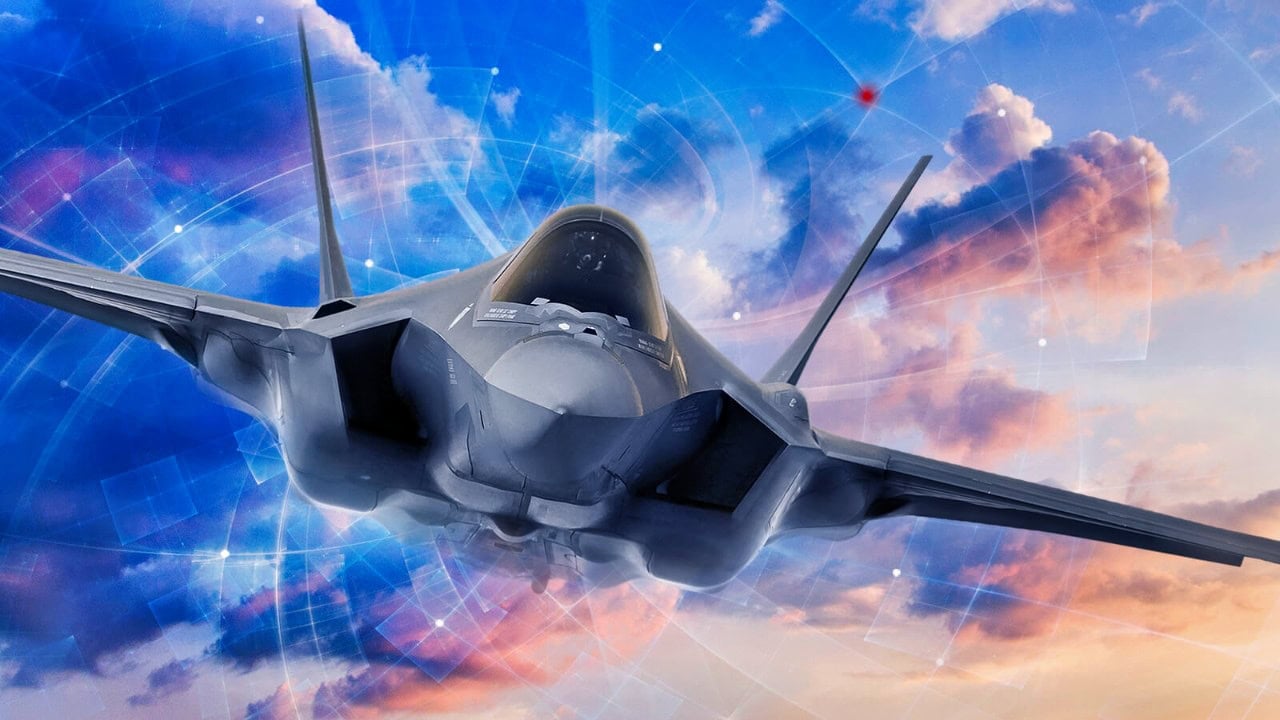
Summary and Key Points: National security analyst Jack Buckby evaluates the Lockheed Martin F-35 Lightning II’s performance during Operation Epic Fury.
-As the U.S. Air Force inventory drops to 1,100 available fighters, the emphasis has shifted to the TR-3 (Technology Refresh-3) and Block 4 upgrades.
-These enhancements provide the computing power and thermal management necessary for 6th-generation capabilities, including controlling Collaborative Combat Aircraft (CCA).
-While China’s J-20 production scales, Buckby asserts that U.S. victory depends on fielding “Ferrari” variants—fully mission-ready jets with advanced MADL data links—rather than simply increasing raw procurement numbers.
The “Ferrari” F-35: Why Quality Must Outpace Quantity in the 2026 Air War

Ferrari at Mecum Auctions January 17, 2026. Image Credit: Harry J. Kazianis.

Ferrari at the Mecum Car Auction. Image Credit: Harry J. Kazianis
The F-35 is the world’s most advanced and widely adopted fifth-generation fighter jet, and it is actively shaping combat operations over Iran right now.
During Operation Epic Fury, U.S. and allied F-35s have been used not just for strike missions but also as forward sensor nodes, penetrating contested airspace and providing real-time targeting data across the entire force. They’re doing exactly what they were designed to do.
At the same time, the program continues to face well-documented issues. The delayed rollout of Technology Refresh-3 (TR-3), which is necessary for the Block 4 upgrades, has slowed the delivery of new capabilities, while readiness and sustainment challenges also persist.
Still, as retired Lt. Gen. David A. Deptula just argued in Forbes, the conclusion should not be to scale back, but to accelerate procurement.
He is right. But simply building more F-35s is not enough. The United States needs to ensure it is fielding fully capable, high-performance aircraft – what might be called “Ferrari F-35s” instead.
The F-35 Is Proving Its Value
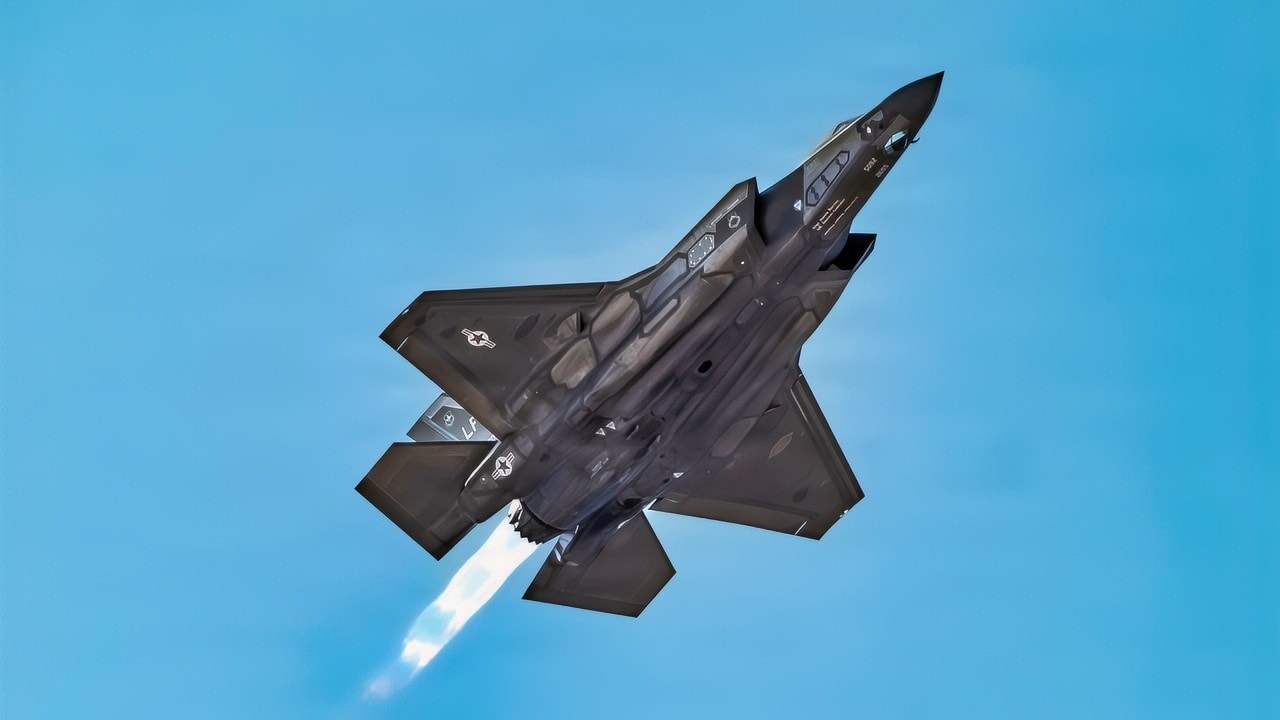
A U.S. Air Force F-35A Lightning II, assigned to the 56th Fighter Wing, takes flight, Nov. 26, 2025, at Luke Air Force Base, Arizona. The F-35A’s is designed for missions ranging from air superiority and electronic warfare. The 56th FW’s training programs emphasize interoperability, ensuring F-35A pilots can effectively collaborate with partner nations to achieve shared objectives. (U.S. Air Force photo by Airman 1st Class Belinda Guachun-Chichay)
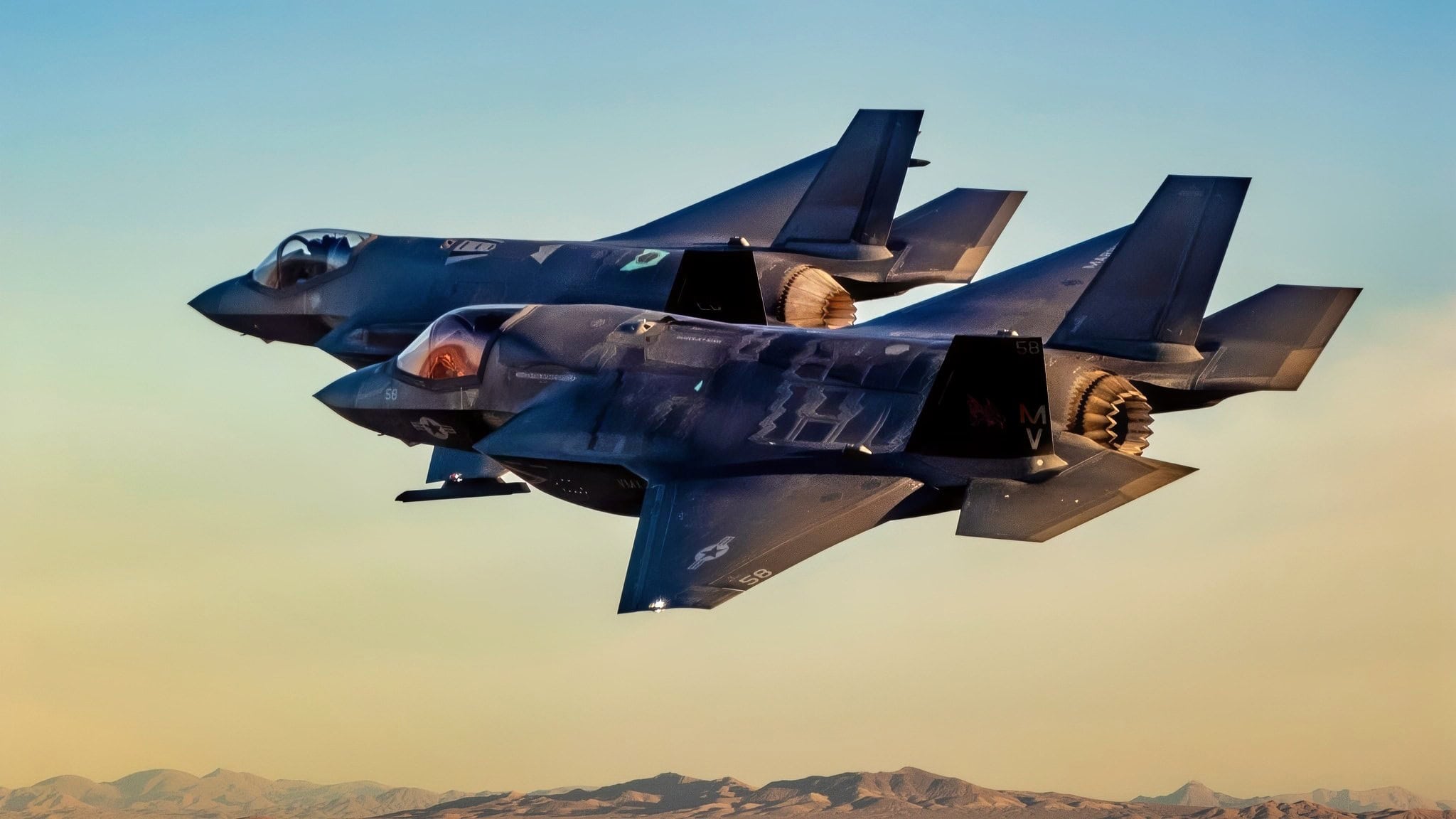
Test pilots with the 461st Flight Test Squadron, 412th Test Wing, return to Edwards Air Force Base, California, on January 21 after conducting a TR-3 AIM-120 live fire mission over the Pacific Test Range. The F-35 Integrated Test Force at Edwards is responsible for developmental testing of all three F-35 aircraft variants across the joint-services. (Courtesy Photo)
The ongoing campaign in Iran proves why the F-35 is such a valuable air asset. In contested environments, stealth aircraft are used to gather intelligence and map enemy air defenses, paving the way for other aircraft. This concept – sensor fusion combined with secure data links – is central to modern air warfare.
The F-35’s ability to collect and distribute data across networks allows it to function as more than a fighter jet. It serves as an airborne command node, supporting other aircraft and long-range strike systems. This is a critical distinction from legacy aircraft like the F-15 and F-16, which rely more heavily on external ISR support. The F-35 integrates all of those capabilities internally.
The impact of these capabilities is visible when compared to other conflicts. In Ukraine, for example, neither side has achieved air superiority, resulting in a prolonged war of attrition. But by contrast, Western airpower operations – enabled in part by stealth aircraft – have demonstrated the ability to strike deep inside defended airspace with extreme precision. The F-35 is a proven platform that is already central to how the United States fights. And now is the time to scale.
Numbers Alone Might Not Be Enough
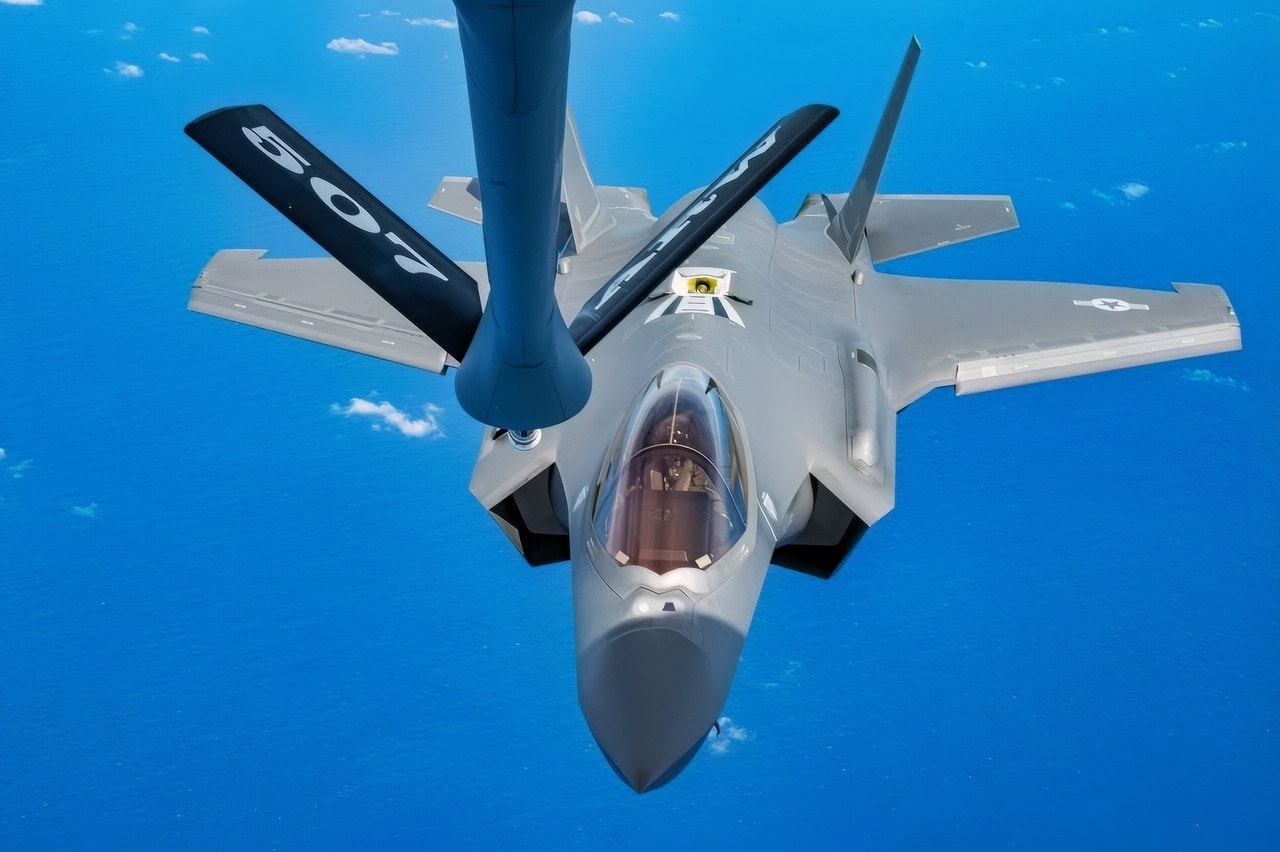
A U.S. Air Force F-35A Lightning II assigned to the 134th Fighter Squadron, Burlington Air National Guard Base, Burlington, Vermont is in pre-contact over the U.S. Indo-Pacific Command area of responsibility before receiving fuel from a U.S. Air Force KC-135 Stratotanker assigned to the 465th Air Refueling Squadron, Tinker Air Force Base, Oklahoma during exercise Cope North 2025, Feb. 7, 2025. The KC-135 provides the core aerial refueling capability for the U.S. Air Force and has performed this role for over 50 years. It provides aerial refueling to the U.S. Air Force, U.S. Navy, U.S. Marine Corps and allied nation aircraft during CN25 to support exercise operations. (U.S. Air Force photo by Staff Sgt. Caleb Roland)
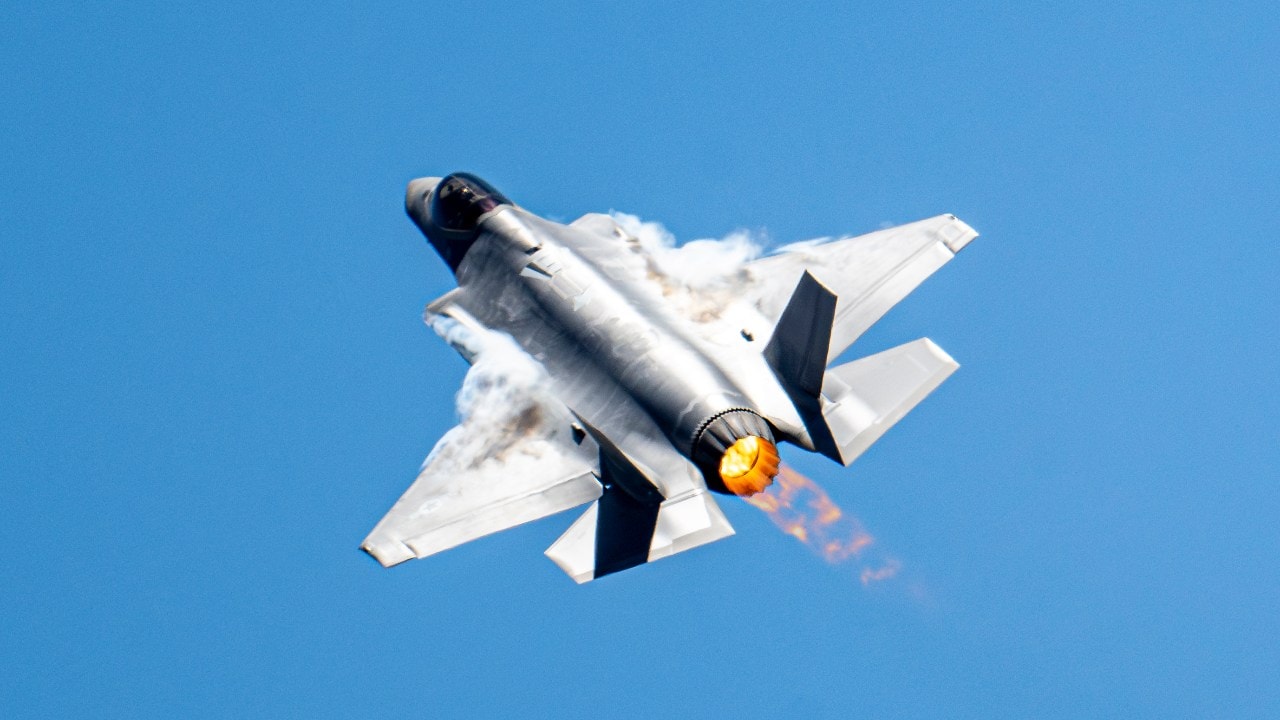
U.S. Air Force Maj. Melanie “Mach” Kluesner, pilot of the F-35A Demonstration Team, performs aerial maneuvers at the Wings and Eagles Airshow at Kingsley Field, Oregon, on July 19, 2025. The demonstration team travels across the country to showcase the power and precision of the world’s most advanced 5th-generation fighter jet. (U.S. Air Force photo by Senior Airman Nicholas Rupiper)
In his Forbes piece, Deptula argued that the U.S. fighter force is too small – and the data support that. The Air Force inventory has dropped from more than 4,000 fighters during the Cold War to roughly 1,100 immediately available fighters today, while average aircraft age has climbed to around 30 years.
At the same time, China is rapidly expanding its airpower. The Pentagon’s annual China Military Power Report notes continued growth in advanced aircraft production, including the J-20 stealth fighter, with Beijing investing heavily in industrial capacity. Some estimates suggest China could produce hundreds of fighters annually by the end of the decade.
The U.S. Air Force has long stated it needs to procure at least 72 fighters per year simply to prevent the fleet from shrinking, but recent budgets have fallen well short of that threshold. Scale is obviously a problem, but it is only part of the equation. A larger fleet will not automatically translate into greater combat power if aircraft are not fully upgraded or ready to deploy.
The F-35 program has struggled with sustainment costs and spare parts shortages, which have at times reduced mission-capable rates to worryingly low levels – stagnating between 50% and 60% since 2022. So, the U.S. isn’t just short on fighters – it is short on fully mission-ready and high-capability fighters.
What A “Ferrari” F-35 Looks Like

F-35D of Ferrari F-35 Fighter Mock Up Illustration. Image Created with Ideogram.
If the goal is to maximize combat effectiveness, the focus needs to shift away from simply producing more aircraft to producing better ones. Thankfully, the F-35 is already an advanced platform that, as we see with the block upgrades, can be adapted and upgraded.
A “Ferrari” F-35 is not a different platform, but the same F-35 operating at its intended performance ceiling. Lockheed Martin officials have already described a potential new “Ferrari” variant that would offer 80% of sixth-generation capabilities at a fraction of the cost – but it all begins with completing the transition to TR-3 and Block 4, which will expand the aircraft’s computing power and electronic warfare capabilities, while also providing room for new and advanced weapons integration. Lockheed Martin has described Block 4 as enabling a wide range of new capabilities, including improved sensors.
Power and cooling are another critical factor here. As mission systems become more complex and demand on the aircraft’s internals increases, the aircraft’s electrical output must also increase significantly. Pratt & Whitney has been working on engine upgrades to support these requirements, with a particular focus on improving thermal management.
Scaling the F-35 fleet with next-generation F-35s like this would institutionalize strength, but only if the readiness problem can also be solved. During deployments, F-35 mission-capable rates have proven to be capable of exceeding 80-90 percent when properly supported, but at home stations that figure typically drops as a result of parts shortages and maintenance delays. Addressing that gap requires sustained investment in supply chains and logistics, and it’s crucial this is addressed soon.
And finally, the aircraft’s role in networked warfare must be fully realized. The F-35’s current networked warfare capability is built around two care data links: MADL (Multifunction Advanced Data Link) and Link 16. MADL allows F-35s to share high-bandwidth, low-intercept-probability data among themselves while preserving stealth, effectively enabling multiple aircraft to operate as a single distributed sensor. At the same time, Link 16 connects the F-35 to legacy fighters and allied systems, allowing it to act as a sort of “translator” between fifth-generation and older platforms. That means one F-35 can detect a target and pass precise tracking data to another aircraft or even a ship to execute the strike.
Those capabilities are already highly valuable, but Block 4 and TR-3 upgrades will significantly expand this role by improving processing power, sensor range, and bandwidth, resulting in faster data fusion and improved integration with more weapons and platforms. Crucially, though, it will allow the F-35 to function like the coming sixth-generation NGAD fighter, directing a team of unmanned “loyal wingman” unmanned systems. This matters because future air combat will depend less on individual aircraft performance and more on how effectively platforms share and act on data across the entire force.
The case for more F-35s is clear, but the timeline now matters just as much as the number we procure. The TR-3 upgrade, which is necessary for Block 4 to move forward, has been delayed but is expected to begin fielding in 2026, paving the way for the next phase of capability growth after years of software and hardware setbacks.
The U.S. Air Force currently plans to acquire 1,763 F-35As, but annual procurement has fallen well short of the 72 aircraft required to sustain the force structure.
If Washington is serious, than number should rise – and those aircraft must be delivered in their most capable configuration.
About the Author: Jack Buckby
Jack Buckby is a British researcher and analyst specialising in defence and national security, based in New York. His work focuses on military capability, procurement, and strategic competition, producing and editing analysis for policy and defence audiences. He brings extensive editorial experience, with a career output spanning over 1,000 articles at 19FortyFive and National Security Journal, and has previously authored books and papers on extremism and deradicalisation.