
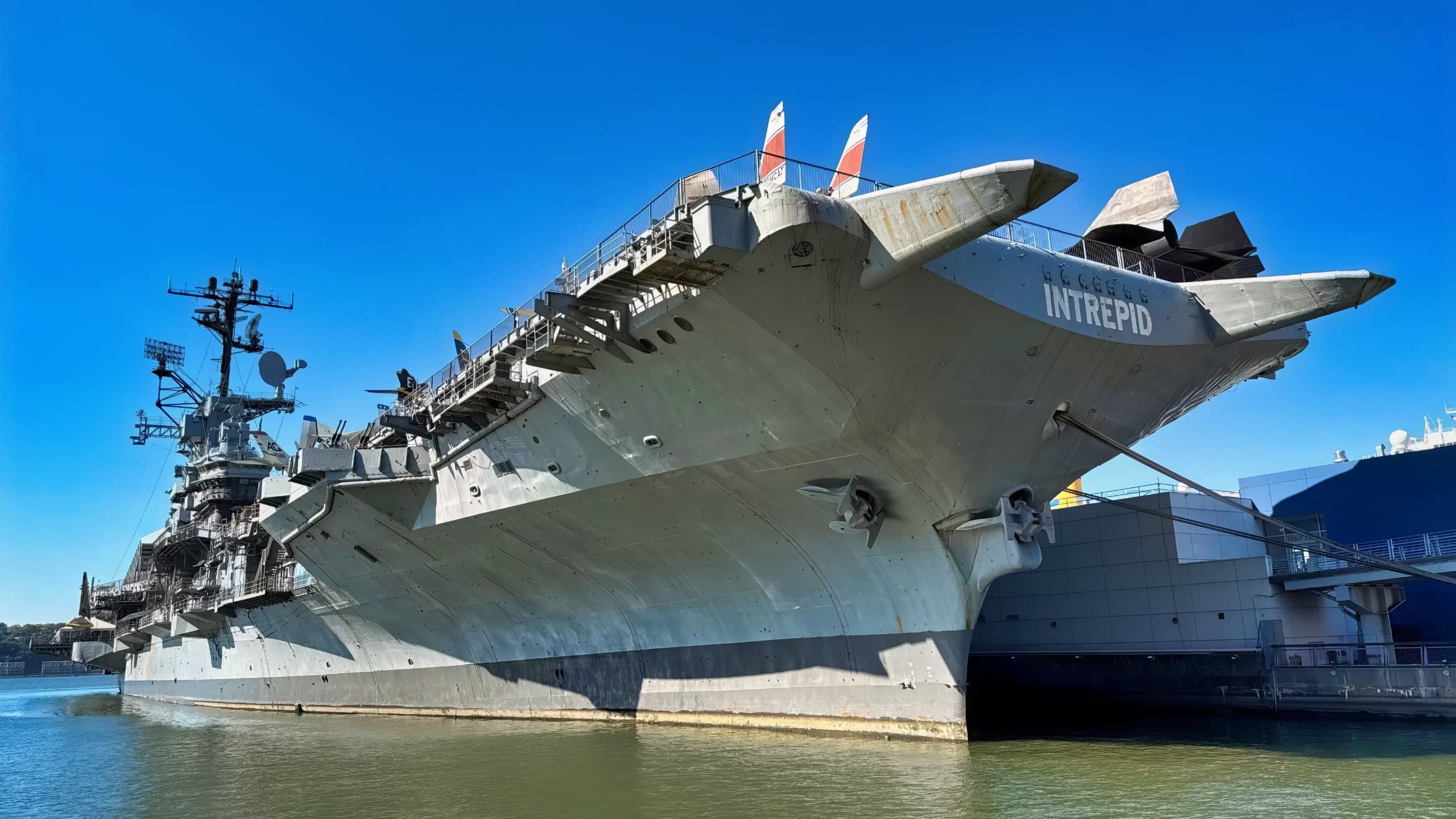
Summary and Key Points: Defense columnist Isaac Seitz deconstructs the Essex-class aircraft carrier, the most widely produced capital ship program in U.S. Navy history.
-Led by Leslie Kniskern and James Russell, the design bypassed naval treaty limits to field 90 aircraft and reach speeds of 33 knots via Westinghouse turbines.

Essex-Class Aircraft Carrier. Image Credit: Creative Commons.
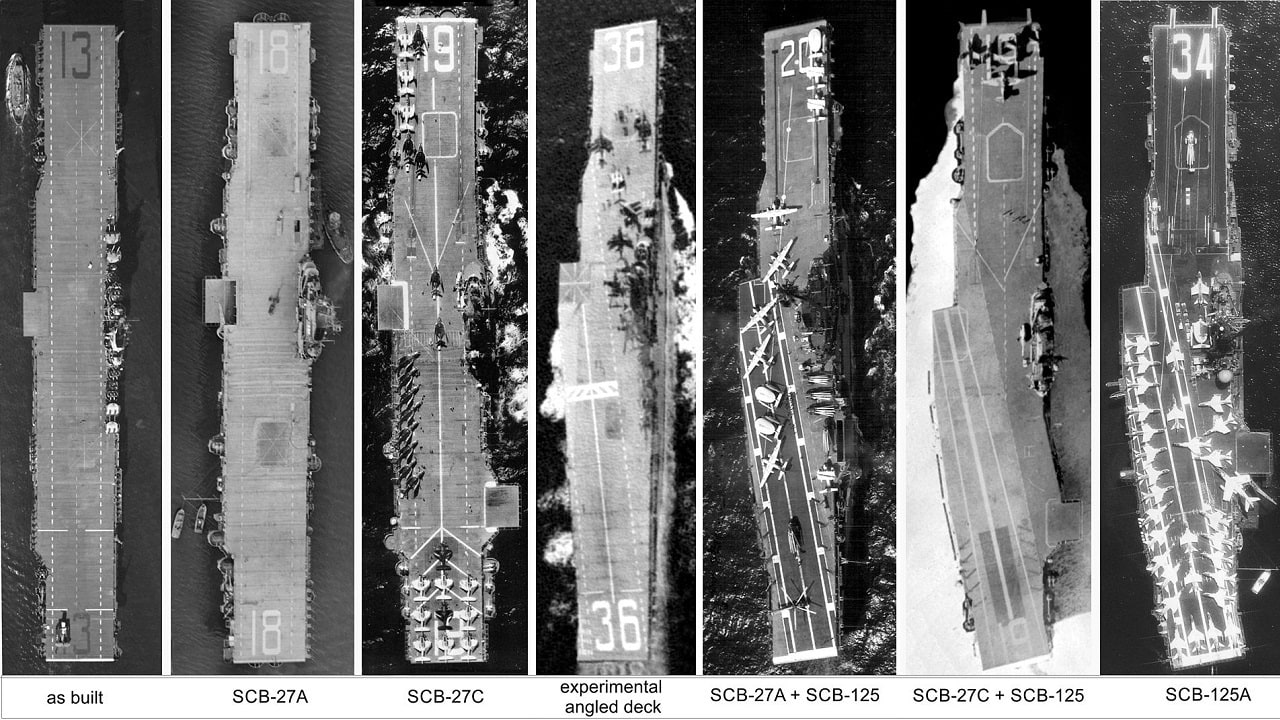
Seven aerial photographs showing the major different modernizations of the U.S. Navy Essex-class aircaft carriers (l-r): USS Franklin (CV-13), a “short hull” type as delivered, 21 February 1944. Franklin, USS Bunker Hill (CV-17), USS Boxer (CV-21), USS Princeton (CV-37), USS Tarawa (CV-40), USS Valley Forge (CV-45) and USS Philippine Sea (CV-47) received no or little modernization. USS Wasp (CV-18), after her SCB-27A conversion in late 1951: new hydraulic catapults, new island, removal of the deck guns, new bow. Modernized as such were USS Essex (CV-9), USS Yorktown (CV-10), USS Hornet (CV-12), USS Randolph (CV-15), Wasp, USS Bennington (CV-20), USS Kearsarge (CV-33) and USS Lake Champlain (CV-39). USS Oriskany (CV-34) was completed as such. USS Hancock (CV-19) after her SCB-27C modernization, circa 1955: like SCB-27A but new steam catapults and relocation of the aft elevator to the deck edge. USS Intrepid (CV-11) and USS Ticonderoga (CV-14) also received SCB-27C. USS Antietam (CV-36) after the installation of an experimental angled deck, circa 1954. USS Bennington (CV-20) after SCB-125: enclosed hurricane bow, angled deck, starboard deckedge elevator. USS Essex (CV-9), USS Yorktown (CV-10), USS Hornet (CV-12), USS Randolph (CV-15), Wasp, USS Bennington (CV-20) and USS Kearsarge (CV-33) received SCB-125. USS Hancock (CV-19) after SCB-125 in April 1957. The three SCB-27C ships were modernized as such an had the starboard deckedge elevator located further aft. The forward elevator was enlarged. USS Oriskany (CV-34) received SCB-125A, here on 30 May 1974. Similar to SCB-27C/SCB-125, only the starboard deckedge elevator was located further forward, as with the SCB-27A/SCB-125 ships. USS Lexington (CV-16), USS Bon Homme Richard (CV-31) and USS Shangri-La (CV-38) received SCB-27C/SCB-125 in one refit but had the starboard elevator in the same position as Oriskany.
-Of the 32 ordered, 24 were completed, serving as the backbone of the Pacific Fleet from the Battle of Leyte Gulf to Okinawa.
-Post-war SCB-27 and SCB-125 modernizations integrated angled flight decks and steam catapults, allowing the class to operate jets through the Vietnam War until the USS Lexington (CV-16) retired in 1991.
The Industrial Sledgehammer: How the Essex-Class Aircraft Carriers Won the Pacific War
The Essex-class aircraft carriers were one of the most ambitious and influential warship programs in naval history. Their development began at a pivotal moment when the United States Navy recognized that rapid technological and tactical changes demanded a new generation of fleet carriers.
Work on the design commenced in 1939, led by Commander Leslie Kniskern at the Bureau of Ships. He coordinated an array of experts, including Commander James Russell, a seasoned aviator who had served aboard USS Yorktown and whose firsthand knowledge of carrier flight operations significantly shaped the emerging design.
Development of the Essex-class
The collapse of the naval treaties in the late 1930s further enabled American engineers to pursue a larger, more capable platform, no longer constrained by strict tonnage limits. By 1938, they had created an enlarged Yorktown-derived design exceeding 27,000 tons, capable of operating ninety aircraft with improved launch and recovery cycles.
A key practical limitation remained: the hull had to be narrow enough to pass through the Panama Canal. This requirement imposed strict constraints on the beam, yet still allowed substantial increases in length and displacement. It defined the proportions that would become hallmarks of the Essex-class.
The Most Widely Produced Carrier in History
As the U.S. commitment to naval expansion intensified, the Essex project grew into a colossal undertaking. Thirty-two ships were ordered in total, and twenty-four of them were ultimately completed. Multiple major shipyards participated in their construction, including Newport News, Fore River, Philadelphia, New York Navy Yard, and Norfolk.
The lead ship, USS Essex (CV-9), was laid down in 1941 and commissioned in 1942. Her early completion on December 31, 1942, and entry into operational service by May 1943 exceeded expectations and set the tempo for one of history’s fastest mass-production efforts for large capital ships.
As construction progressed, the class evolved into two major hull types. Early ships followed the short-hull design at 872 feet, while later units adopted an extended bow configuration, increasing the overall length to 888 feet. Fourteen ships were ultimately built to this longer configuration.
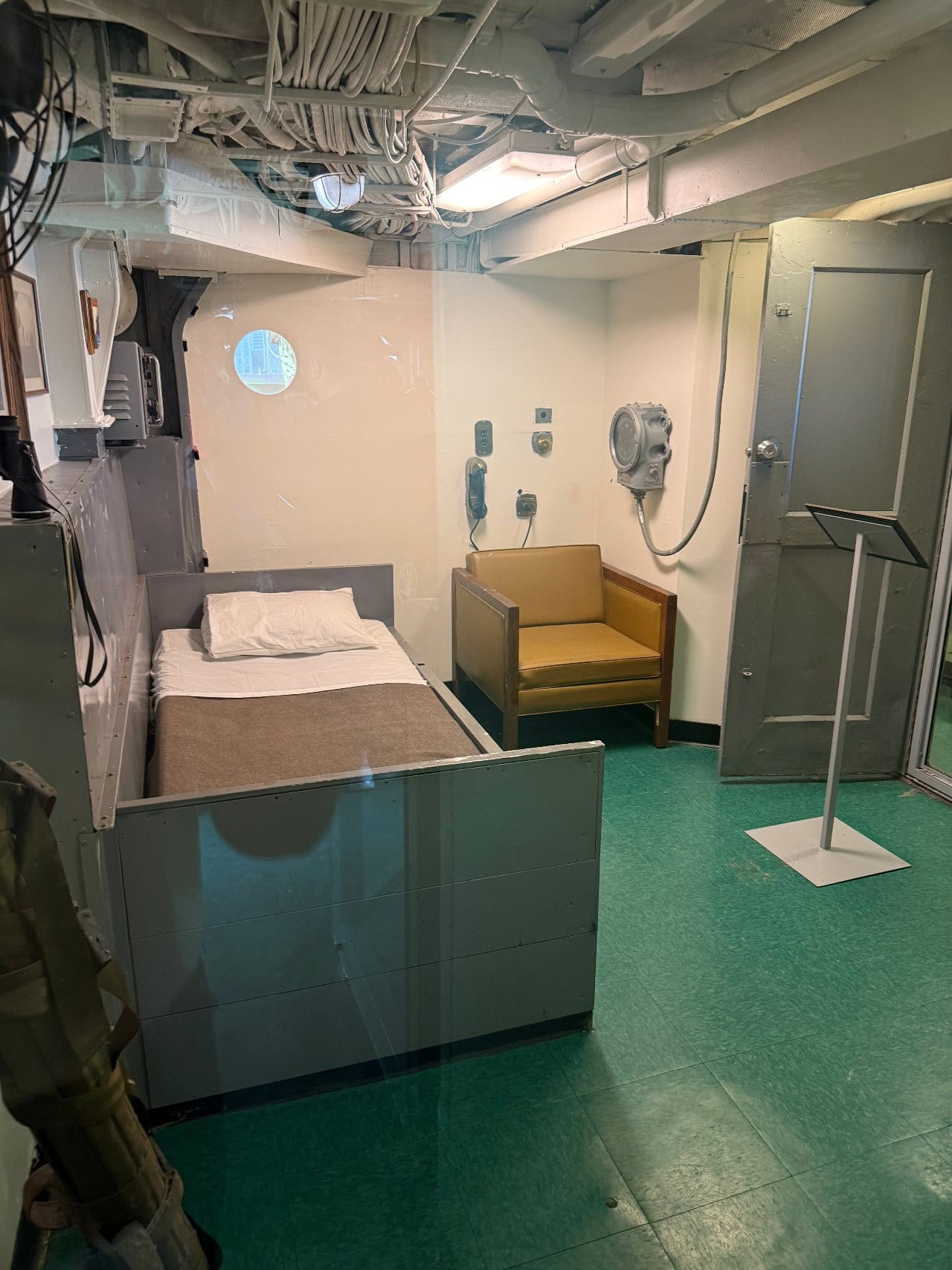
Inside USS Intrepid Essex-class. Image Credit: 19FortyFive.com
By the end of 1944, these vessels were joining the Pacific Fleet in rapid succession, giving the United States the unprecedented ability to field multiple fast-carrier task forces simultaneously. This surge in carrier availability was one of the decisive industrial advantages that allowed the U.S. Navy to overwhelm Japanese naval aviation.
Specs and Capabilities
The Essex-class brought significant advances in propulsion power, survivability, and aviation capacity. A fresh off the line Essex-class displaced between 27,000 and over 30,000 tons standard and more than 36,000 tons at full load. They carried a beam of ninety-three feet at the waterline and nearly 147 feet at maximum width.
Their Westinghouse geared turbines produced 150,000 shaft horsepower, allowing a top speed of thirty-three knots and sufficient endurance to steam 20,000 nautical miles at fifteen knots.
These performance metrics were essential for the high-tempo, wide-ranging operations of the Pacific theater, where distances were vast, and mobility was crucial.
Essex-class carriers carried 12 5-inch/38 guns as their primary dual-purpose armament, supported by dense layers of medium- and light-weight anti-aircraft weapons, including 32–72 Bofors 40mm guns and 55–76 Oerlikon 20mm cannons. Their armor scheme included a 2.5-inch armored hangar deck and improved subdivision.
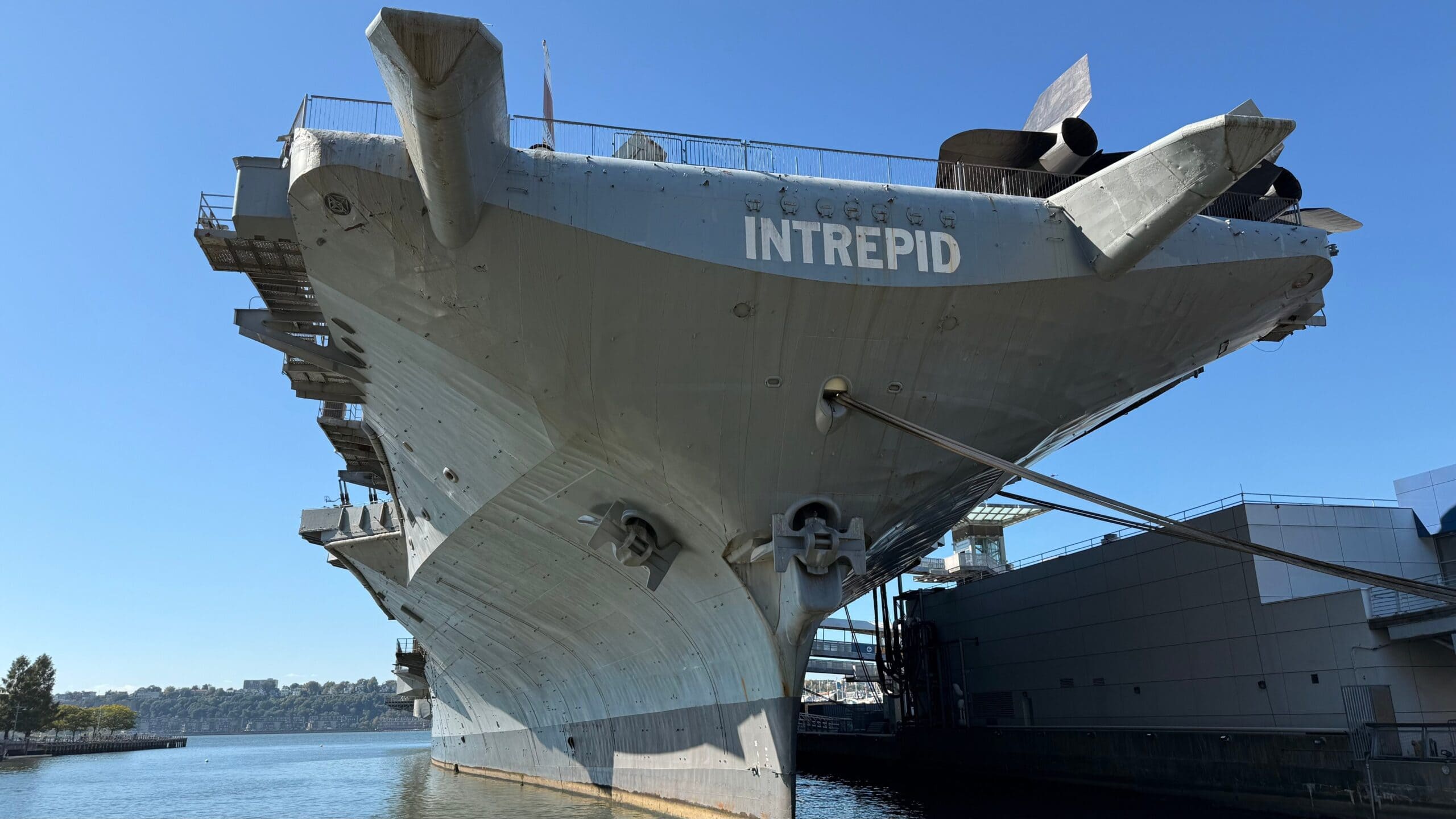
Exterior of Essex-Class USS Intrepid. Image Credit: 19FortyFive.com
Later ships added a three-inch armored hangar deck and stronger hull protection. These features significantly increased survivability.
No Essex-class carrier was lost to enemy action, even though several suffered severe damage from kamikaze strikes, with ships such as USS Franklin surviving catastrophic hits that might have sunk earlier carriers.
One of the Most Important Carrier Types In U.S. History
The arrival of the Essex-class in mid-1943 fundamentally altered the balance of power. According to historians, the deployment of Essex-class carriers irreversibly tipped the scales of air power in favor of the United States. It enabled Admiral Nimitz to execute his Central Pacific offensive with extreme flexibility.
They participated in major battles, including the Gilberts, Marshalls, Marianas, the Battle of the Philippine Sea, Leyte Gulf, Formosa air raids, Okinawa, and the final strikes on the Japanese home islands. Throughout these engagements, their superior radar coverage, protective features, and large air groups allowed them to defeat Japanese airpower while sustaining operations across enormous distances.
The end of World War II did not mark the end of the Essex-class era. Many of the ships entered the Puget Sound mothball fleet, but most were soon reactivated as the Cold War demanded a large, modern carrier force. A series of reconstruction programs, known as SCB-27 and SCB-125, transformed several ships into platforms capable of operating jet aircraft.
These conversions introduced angled flight decks, steam catapults, modernized arresting gear, and enclosed hurricane bows.
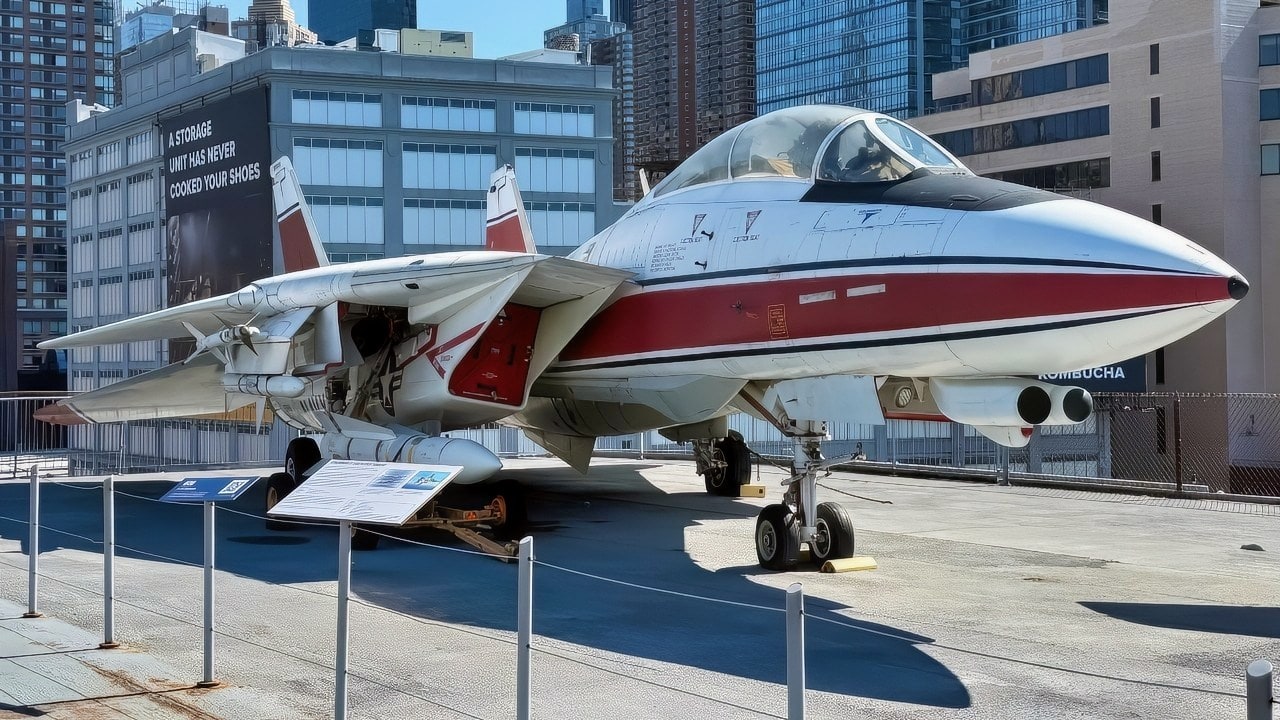
F-14 Tomcat Fighter in USS Intrepid Deck. Image taken late on 2025 by Jack Buckby for 19FortyFive. All Rights Reserved.

USS Intrepid USN Aircraft Carrier 19FortyFive Original Image.
These improvements allowed Essex carriers to serve well into the 1950s and 1960s, participating in the Korean War, early Cold War crises, and even the Vietnam War. USS Lexington remained in service as a training carrier until 1991, becoming the last operational unit of the class.
Essex-Class: The Right Aircrat Carrier for the Right Time
Historians consistently rank the Essex-class among the most important capital ship programs ever undertaken. The program was the world’s largest capital ship program and became the backbone of U.S. naval power during both World War II and the early Cold War, setting the stage for the supercarrier era that followed.
The combination of industrial scalability, combat effectiveness, and postwar adaptability makes the Essex class unique in naval history.
Compared to a Ford-class or even a Nimitz-class carrier, the Essex-class might seem insignificant. They’re smaller, have less sophisticated radar and sonar systems, and can’t carry the aircraft of today. For their time, however, the Essex class provided both the quality and the quantity that the U.S. Navy needed during WWII.
They proved instrumental in defeating Japan, remained central to American sea power long after the war, and left a lasting legacy visible both in preserved museum ships and in the operational principles of today’s carrier strike groups.
About the Author: Isaac Seitz
Isaac Seitz, a Defense Columnist, graduated from Patrick Henry College’s Strategic Intelligence and National Security program. He has also studied Russian at Middlebury Language Schools and has worked as an intelligence Analyst in the private sector.