Summary and Key Points: Defense expert Kris Osborn analyzes an ironic twist in modern naval warfare: the heavily criticized Littoral Combat Ship (LCS) is suddenly exactly what the U.S. Navy needs.
-As Iranian forces deploy deadly sea mines across the Strait of Hormuz, the LCS’s ability to operate in shallow waters and deploy advanced countermine technology—like the Airborne Laser Mine Detection System (ALMDS) and the Barracuda drone—has transformed the vessel from a controversial procurement into a vital strategic asset.

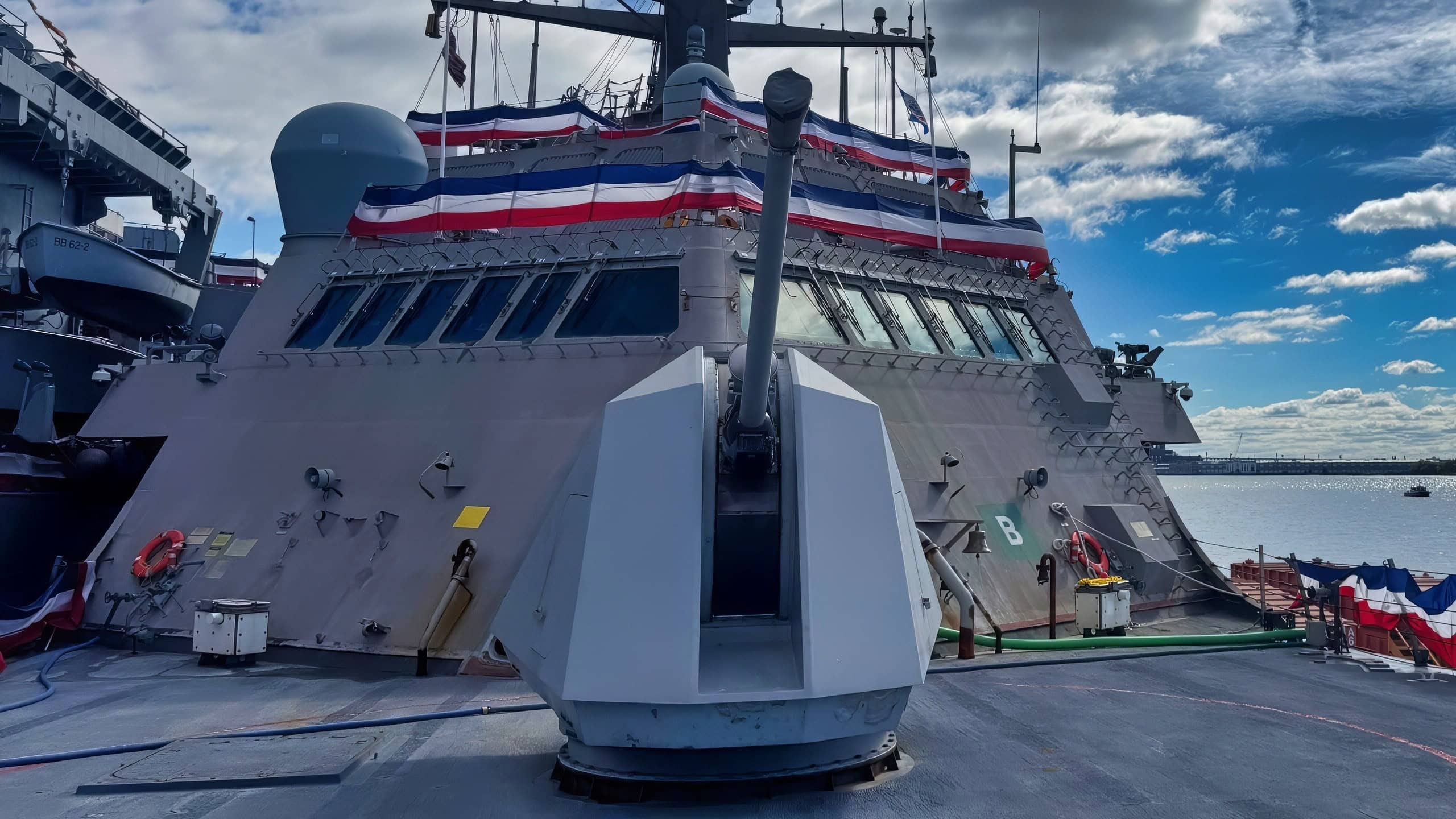
USS Billings Littoral Combat Ship 2025 Fleet Week. Image by Stephen Silver for 19FortyFive.com

Littoral Combat Ship from Fleet Week 2025. Image Credit: Stephen Silver/19FortyFive.com
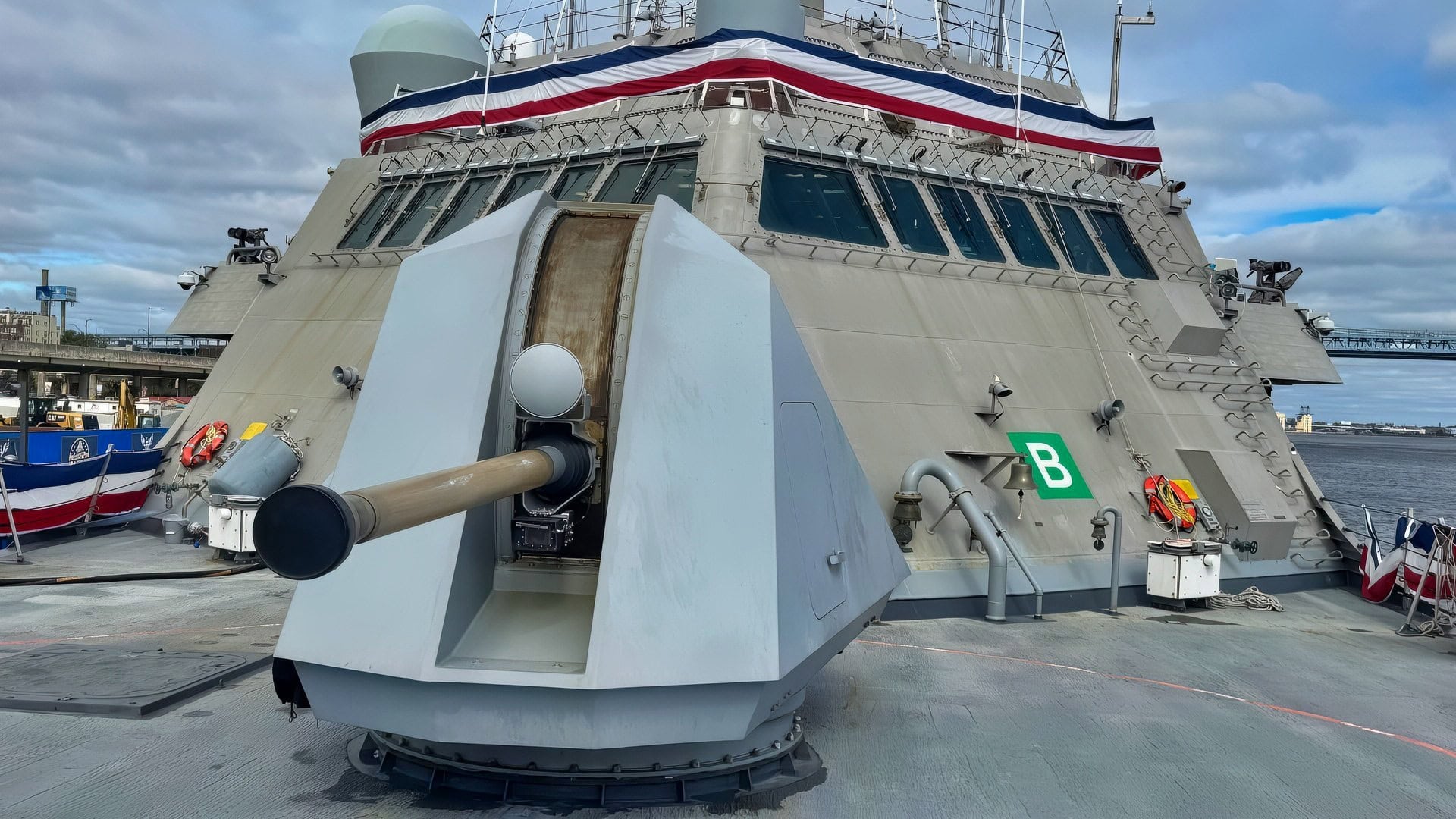
Littoral Combat Ship USS Cooperstown. Image Credit: 19FortyFive.com
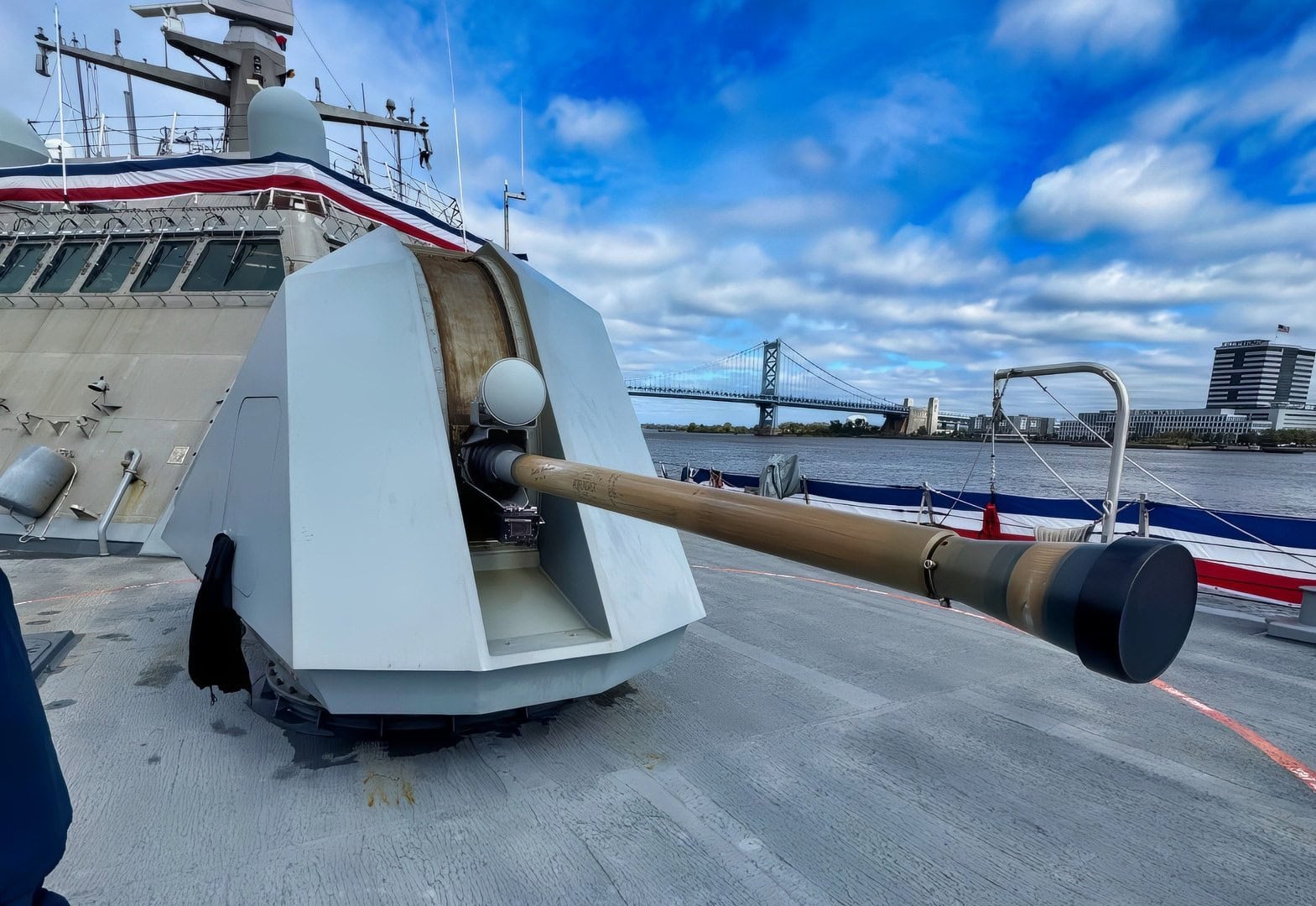
Littoral Combat Ship Deck Gun U.S. Navy. Image Credit: 19FortyFive.com
-Bonus: 19FortyFive presents photos in this article from our last visit aboard the USS Billings, a real-life U.S. Navy Littoral Combat Ship, during Fleet Week in 2025. All photos from that visit are posted above.
Kris Osborn on the Mine Threat: The Surprising Return of the Littoral Combat Ship
The U.S. Navy’s Littoral Combat Ship has been derided for decades for not being survivable enough, not being engineered for great-power, blue-water maritime warfare, and not being sufficiently armed for major Naval warfare; therefore, it is not without some measure of irony that the U.S. Navy finds itself in need of LCS mine-countermeasure vessels right now in the Strait of Hormuz.
Sea mines lurk beneath the ocean surface, armed with explosive power, often buried in the sea floor, denying enemies access to combat-critical waterways.
They can explode on impact or use sensor technologies for proximity detonation.
They are shallow-water, deep-water, and open-ocean weapons that are inexpensive, readily available, and increasingly deployed in critical waters by both rogue nations and great powers.
LCS Vision
Mine clearing in littoral waterways, surveillance in coastal regions, and closer-in surface warfare are among the specific missions the LCS was created to perform.
These missions are in high demand right now in the Strait of Hormuz as the U.S. Navy endeavors to find and destroy Iranian mines dispersed throughout the region. The LCS can move quickly through coastal areas with a vertical-towed-array sonar and the ability to launch and recover mine-hunting drones.
The U.S. Navy has Independence-class LCS mine-countermeasure ships based in the Middle East, yet multiple reports now suggest they are in Asia.
This scenario could leave the U.S. Navy currently insufficiently equipped to address the Iranian mine threat.
U.S. Navy Countermine Tech
Despite the disappearance of the Avenger-class and the faraway LCS, the U.S. Navy does have some mine-detection capabilities it could deploy quickly if needed.
Marine Expeditionary Units and amphibious assault ships, such as the one headed to the Middle East at the moment, could deploy small Unmanned Surface Vehicles capable of scanning the water column for mines using towed sonar arrays.
Several of the U.S. Navy’s platforms could launch undersea drones, many of which are configured to identify and detonate mines from beneath the ocean’s surface.
Drones & Lasers
The U.S. Navy operates a wide range of undersea drones capable of searching for mines. Raytheon’s Barracuda, for example, is engineered to search for mines, use an undersea wireless signal to verify a mine target before detonating as an explosive to destroy it.
The Barracuda combines sonar, an RF antenna, an acousting modem, an Electro-Optical/Infrared camera, and a highly specialized explosive.
The U.S. Navy can also deploy its helicopter-integrated Airborne Laser Mine Detection System (ALMSD), which uses laser technology to scan the water column and send reelected images to a helicopter command station able to identify hidden mines. Instead of using more narrowly configured, mechanized, or towed mine detection systems, ALMDS massively expands the surface area where mine detection occurs.
Naturally, this enables shallow-water warships such as the LCS to function in a much safer operational area, as commanders will have much greater advanced warning of mine-cluttered areas.
The ALMDS pod is mechanically attached to the MH-60S via a standard Bomb Rack Unit 14 mount and electrically via primary and auxiliary umbilical cables to the operator console.
Having this ALMDS technology operational, it seems, offers a few new strategic nuances.
First and foremost, detecting mines more quickly and at greater ranges, of course, makes the LCS much more survivable. It will be able to pursue attack, anti-submarine, and reconnaissance missions with a much lower risk of mine attack.
Furthermore, identifying mines at greater distances provides the added advantage of enabling lower-risk small-boat missions to approach target areas for shore missions, surface attacks, or recon.
Littoral Combat Ship Reborn
Given all this, the Grim Reaper may have arrived too early for the LCS, at least to some extent, as the ship has not only been made more lethal and survivable but also designed to meet certain key requirements for surveillance, countermine measures, manned-unmanned teaming, and coastal or closer-in reconnaissance, patrol, drone operations, and mine-clearing.
Regarding coastal surveillance, the LCS has been able to reach critical, high-risk waters that are inaccessible to deeper-draft ships.
This can enable finding and destroying mines, accessing ports unreachable by deep-draft ships, launching drones, and performing littoral reconnaissance closer to the enemy coastline.
The LCS has also been able to launch and recover drones and helicopters, all while still launching anti-submarine, surface warfare, and countermine mission packets, or suites of technology specifically engineered to integrate with ship-based command and control.
LCS mission packages have also shown promise, integrating otherwise disparate systems in a networked, coordinated way for submarine hunting, coastal enemy engagement, and shoreline reconnaissance.
About the Author: Kris Osborn
Kris Osborn is the President of Warrior Maven – Center for Military Modernization. Osborn previously served at the Pentagon as a highly qualified expert in the Office of the Assistant Secretary of the Army—Acquisition, Logistics & Technology. Osborn has also worked as an anchor and on-air military specialist at national TV networks. He has appeared as a guest military expert on Fox News, MSNBC, The Military Channel, and The History Channel. He also has a Masters Degree in Comparative Literature from Columbia University.