Iran’s Military Isn’t Destroyed Yet and Could Still Damage
Without a clear regime change in Iran, thousands of hopeful Iranians are likely to be massively disappointed.
While much of Iran’s military has been destroyed, it remains a question whether the war will accomplish the necessary longer-term objective of encouraging a more U.S.-friendly regime to take over that is less repressive toward its own people.
Ending the war without regime change would, in a long-term sense, potentially increase and not decrease the Iranian threat. Iran could quickly rebuild and, with Russian and Chinese help, potentially acquire new generations of weaponry and high-tech platforms.
What if Iran operated hundreds of Chinese-built J-20 fighters or Russian-built hypersonic weapons? How quickly could these be scaled?
But before anyone goes down that rabbit hole, we should consider the military forces Iran still has across different domains.
Iranian Ground Force
There is also the key question of Iran’s ground forces, which may remain quite intact.
Iran has more than 1 million soldiers, along with thousands of tanks and armored vehicles, some of which may be combat-ready. Perhaps they are hidden underground as well. It is possible this force could be reconstituted, modernized, and upgraded with new weapons, technologies, and platforms.
Iran operates nearly 400,000 more military personnel than Israel. Iran’s total force of 1,015,000 is significantly larger than Israel’s reported force of 646,000.
While Iran does, at least on paper, appear to have a larger ground force, particularly when it comes to tanks and armored vehicles, that does not in any way mean that its land force would in any way be equivalent to Israel’s or the United States’.
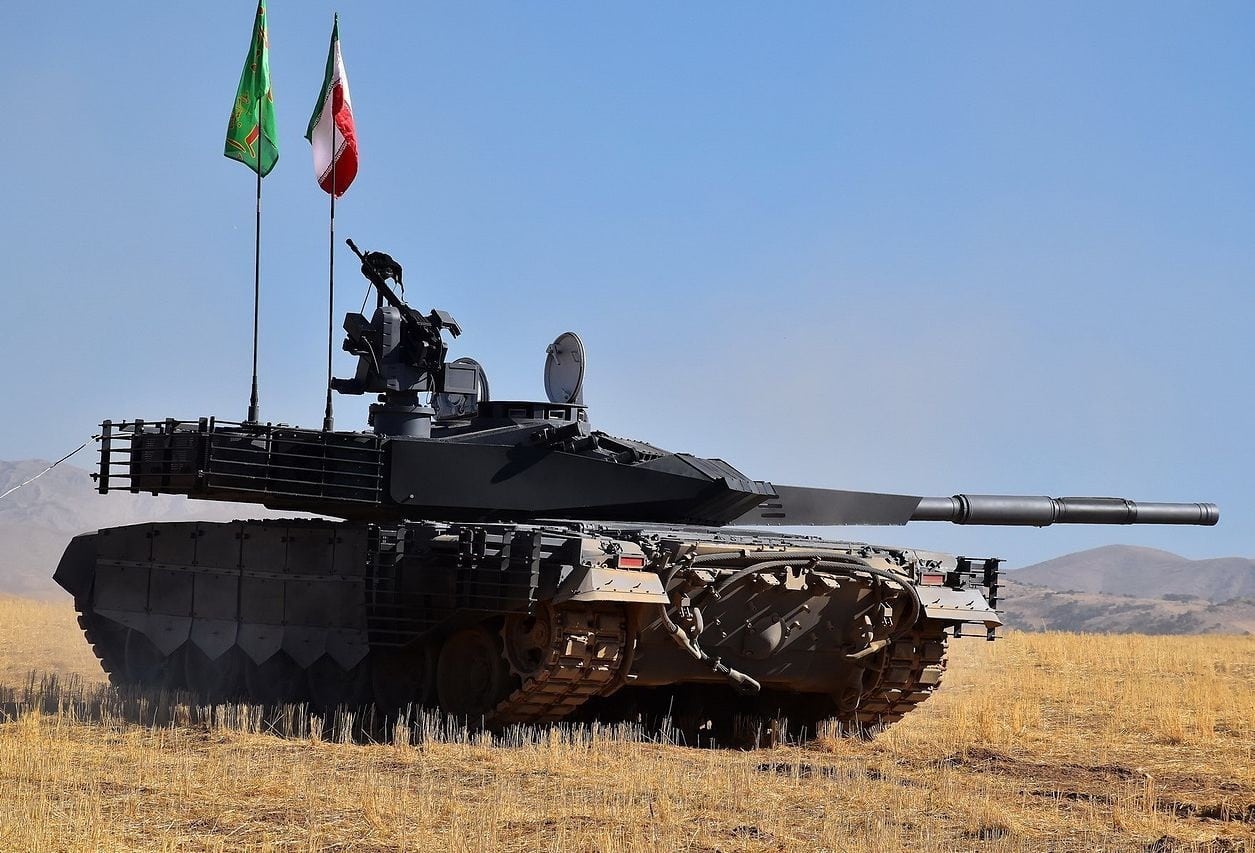
Iran tank. Image: Creative Commons.
Globalfirepower’s 2023 military assessments, for instance, list Iran as having 4,071 tanks, compared to Israel’s 2,200 tanks.
However, this does not by any stretch ensure military overmatch, as sheer numbers of tanks may prove to be much less of an advantage against a smaller tank force equipped with vastly superior sensors, weapons, computing, and targeting.
Even a cursory look at Israel’s highly regarded Merkava tanks shows a force that stacks up well against Iran’s upgraded Soviet-era T-72s.
Iran has 8,500 Armored Vehicles
Iran is listed in the Globalfirepower 2021 assessment as having 8,500 armored vehicles, compared with Israel’s 7,000. Again, the size deficit is likely to be less consequential than it appears, since technological capability is not in any way comparable.
The advanced technologies built into the Israeli Merkava suggest it is also unlikely that Iran has superior infantry carriers and armored vehicles. Without superior tanks capable of breaking through the proactive barriers or defensive configurations of an Israeli or U.S. force, Iranian advances might be unlikely to succeed.
U.S. & Israeli Tanks vs. Iranian Tanks
According to the 21st Century Asian Arms Race blog, Iran operates German-built Leopard tanks, as well as Russian T-90s and even some Abrams variants. Iran’s first widely reported indigenous tank, called the Karrar, has emerged in recent years.
The platform is said to be based on an upgraded Iranian T-72S chassis. The Iranian tank, reported to operate with an electro-optical fire control system, a laser rangefinder, and a ballistic computer, would, at least on the surface, appear vastly inferior to the Israeli Merkava, which is among the most advanced armored vehicles in the world.
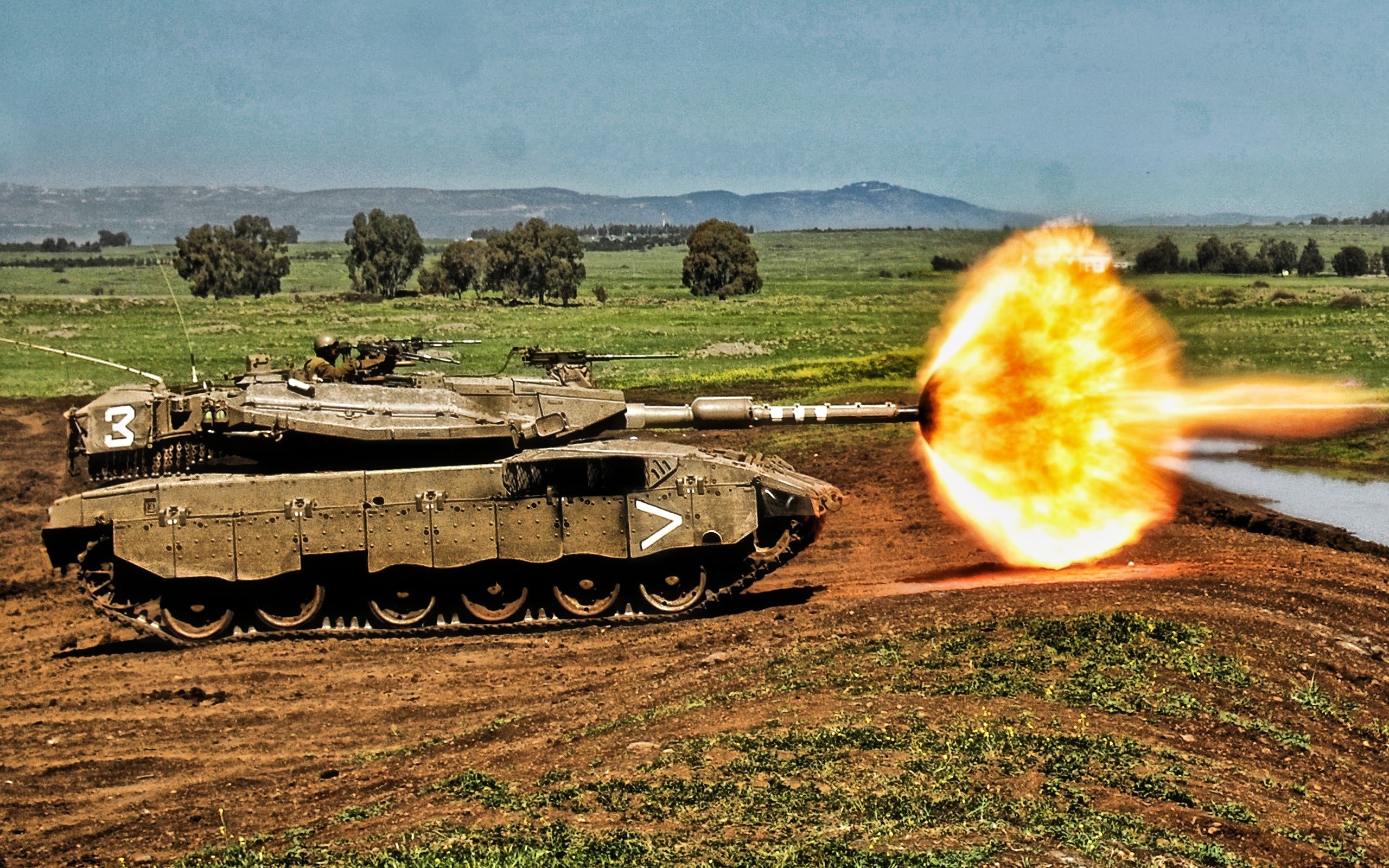
Merkava Tank. Image Credit: Creative Commons.
The Merkava can carry infantry or injured soldiers, or leverage a rear exit hatch for dismounted operations or safety escape. Perhaps of greatest significance, its main gun tube can fire anti-tank missiles, according to The National Interest.
The Merkava also has top-attack missiles that can be useful against helicopters and other targets beyond the range of a standard tank shell.
In short, even if Israel operates as many as 2,000 fewer main battle tanks than Iran, Israel and the United States may field vastly superior land forces.
During the Gulf War’s famous tank battles, for example, U.S. Abrams’ advanced thermal sights were able to detect, find, and then help destroy Iraqi T-72s before they were in range to even be detected by the Iraqi tanks. Large numbers of Iraqi tanks were destroyed by far fewer Abrams armed with long-range, high-fidelity targeting sensors.
How Much of Iran’s Ballistic Missile Arsenal is Left?
Despite the massive U.S. and Israeli aerial bombardment, it appears that Iran still operates some unknown number of ballistic missiles.
Perhaps those are lodged deep in tunnels beneath mountainous terrain or have simply remained undetected by U.S. surveillance. The Pentagon says massive amounts of Iran’s weapons have been destroyed, yet the Islamic Revolutionary Guard Corps is believed to operate an extremely large arsenal.
A report from Iran Watch shows that indeed Iran does possess a massive arsenal of ballistic missiles, at least five types of which can reportedly travel distances of 1,300 kilometers or more. The Shahab-3, for instance, is listed by Iran Watch as capable of traveling 1,300 km with a 1,000-kilogram warhead.
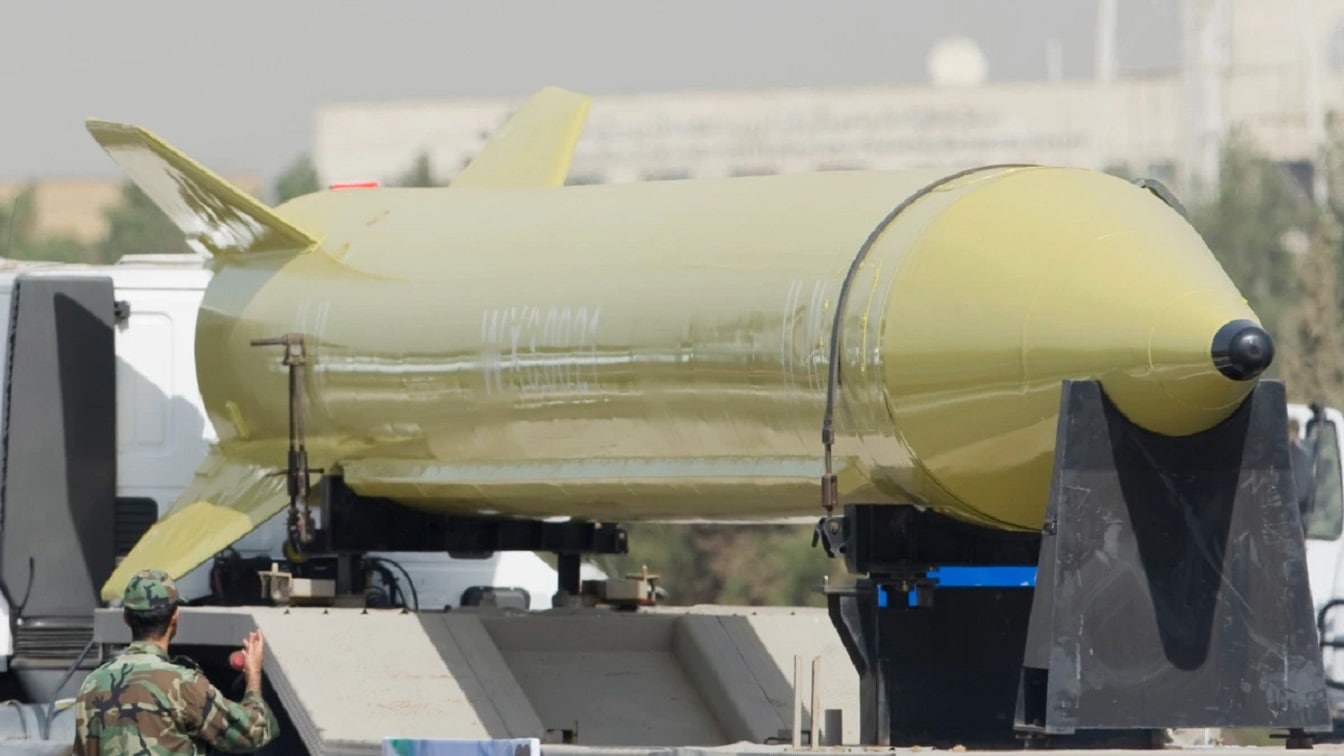
Iranian Ballistic Missile. Image Credit: Creative Commons.
The liquid-fuel, single-stage Shahab-3 rocket is now deployed and in large numbers.
The longest-range ballistic missiles listed by Iran Watch are the Khorramshahr weapons, which are reported to have a range of 2–3,000 km. According to the latest reports, it is still tough to determine whether these are operational, yet the long-range attack on Diego Garcia suggests that perhaps that was the weapon used.
Long Range Iranian Missiles?
If operational, such a missile could hit anywhere in Israel and strike at U.S. interests throughout the Middle East, fired from Tehran or most places throughout Central and Western Iran.
Other Iranian medium-range ballistic missiles (MRBM) capable of traveling 1,600 km or more include the now-deployed Ghadr, Emad, and Paveh missiles, according to Iran Watch.
The Iranian Sejjil MRBM can travel 2,000 km. Iran does, however, have much more artillery and multiple launch rocket systems (MLRS) when compared to Israel, but with ranges of 70–80 km, these would not be in a position to strike Israel unless they were moved close to its borders.
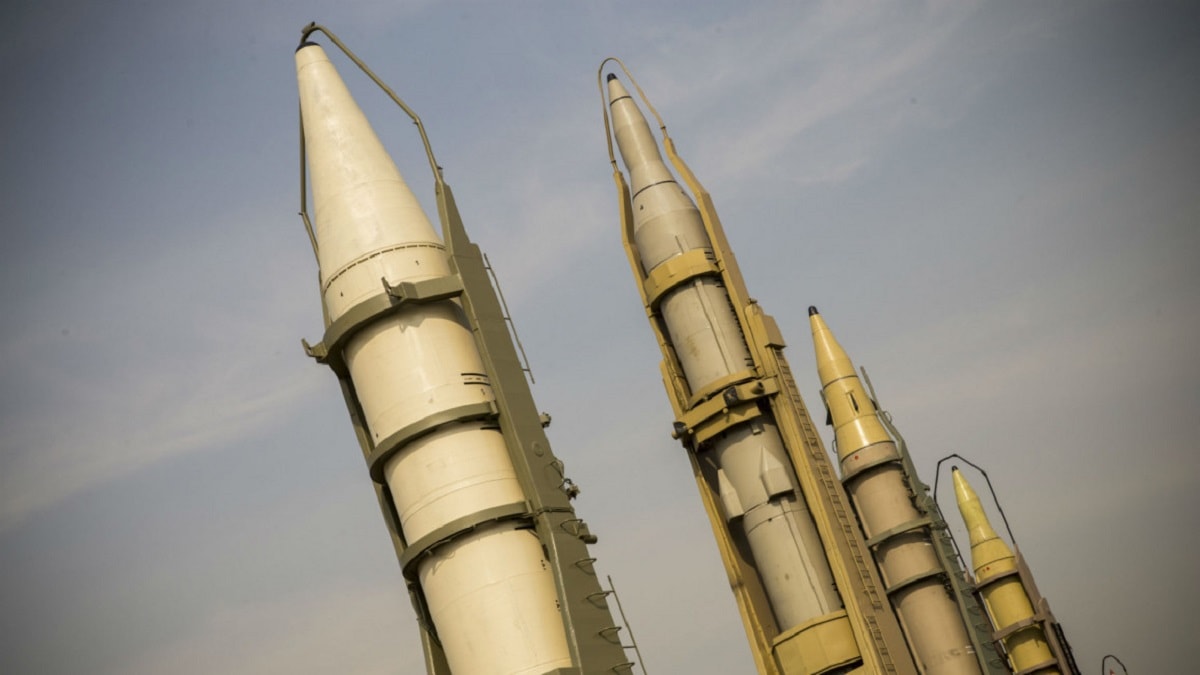
Iran’s missiles. Image Credit: Creative Commons.
At the same time, Iran is reported to operate a large number of short-, medium-, and long-range ballistic missiles in position to hit Israel.
An examination of Iran’s large ballistic missile arsenal, with a mind to guidance and range, reveals a genuine and severe threat to Israel—Iran appears to now operate at least five different long-range ballistic missiles capable of hitting Israel from Iran.
Maps of the Middle East show Iranian missiles are easily able to hit Jerusalem and other parts of Israel from locations throughout Iran, as Jerusalem is less than 2,000 km from Tehran.
This means some ballistic missiles launched from Iran’s capital can hit Israel, and an even higher number of long-range weapons can easily hit Israel or U.S. interests from other locations within Western Iran.
MORE – Russia Has Built 30 Su-57 Stealth Fighters: The F-35 is 1,300 Strong and Adding More by the Day
MORE – The U.S. Navy’s New $15,000,000,000 Columbia-Class Nuclear Submarine Is Way Behind Schedule
About the Author: Kris Osborn
Kris Osborn is the President of Warrior Maven – Center for Military Modernization. Osborn previously served at the Pentagon as a highly qualified expert in the Office of the Assistant Secretary of the Army—Acquisition, Logistics & Technology. Osborn has also worked as an anchor and on-air military specialist at national TV networks. He has appeared as a guest military expert on Fox News, MSNBC, The Military Channel, and The History Channel. He also has a Master’s Degree in Comparative Literature from Columbia University