
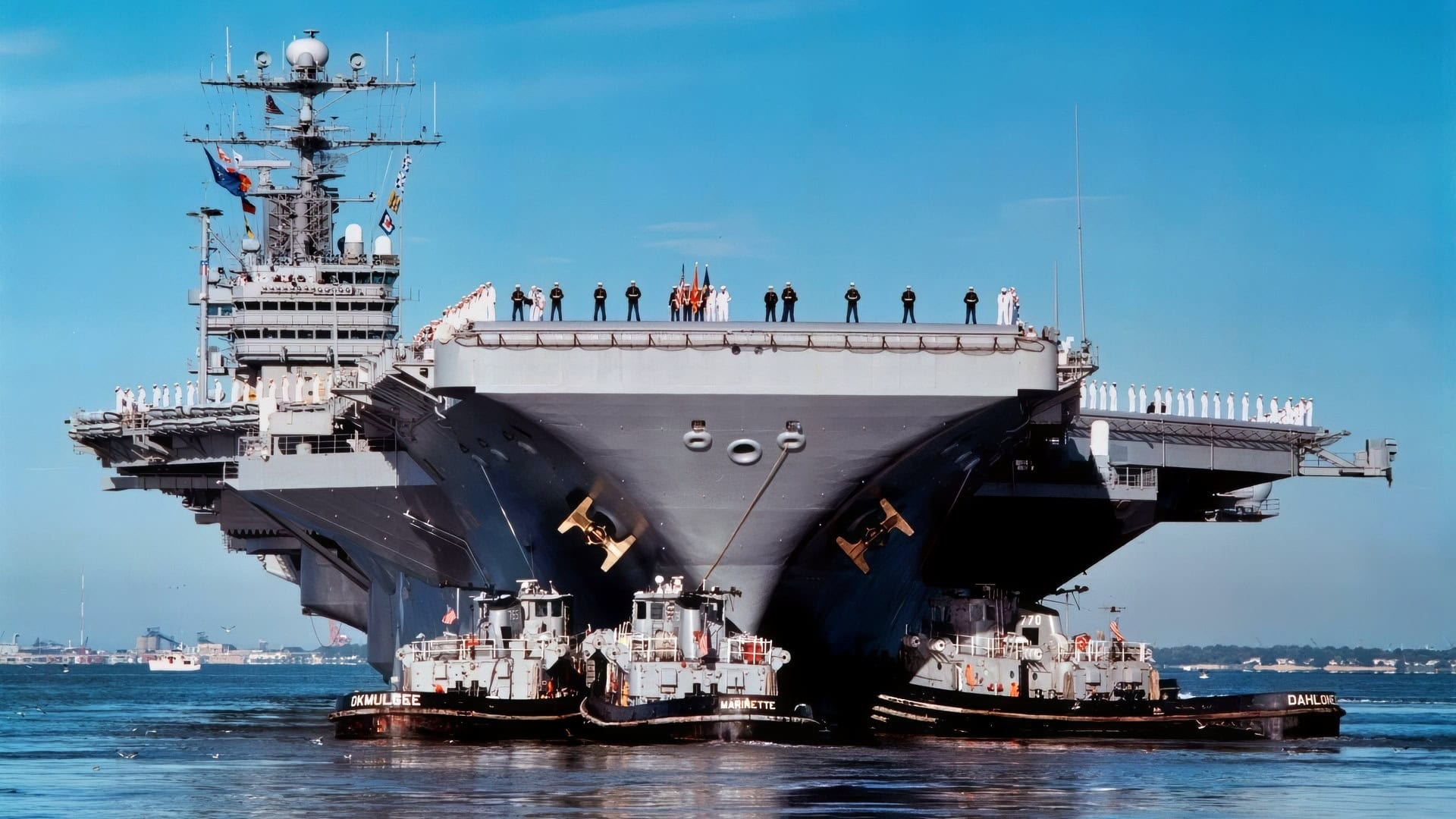
What Is Wrong With the U.S. Navy’s Aircraft Carrier Fleet? In a Word: Numbers
The U.S. Navy is striving to operate in three theaters at once. The most pressing concern is in the Central Command Area of Responsibility. The Navy needs at least two carriers there. Then there is Europe, with the Russo-Ukrainian war still raging. The next area of interest is East Asia, where China is particularly aggressive toward Taiwan.
All of these operational needs mean that the Navy requires as many aircraft carriers as it can muster in the waters it operates in. By law, the Americans should have 11 carriers on active duty at all times. But many flat-tops, even as many as seven to eight, are in maintenance for Refueling and Complex Overhaul (RCOH). This process can sometimes take five years to conduct.
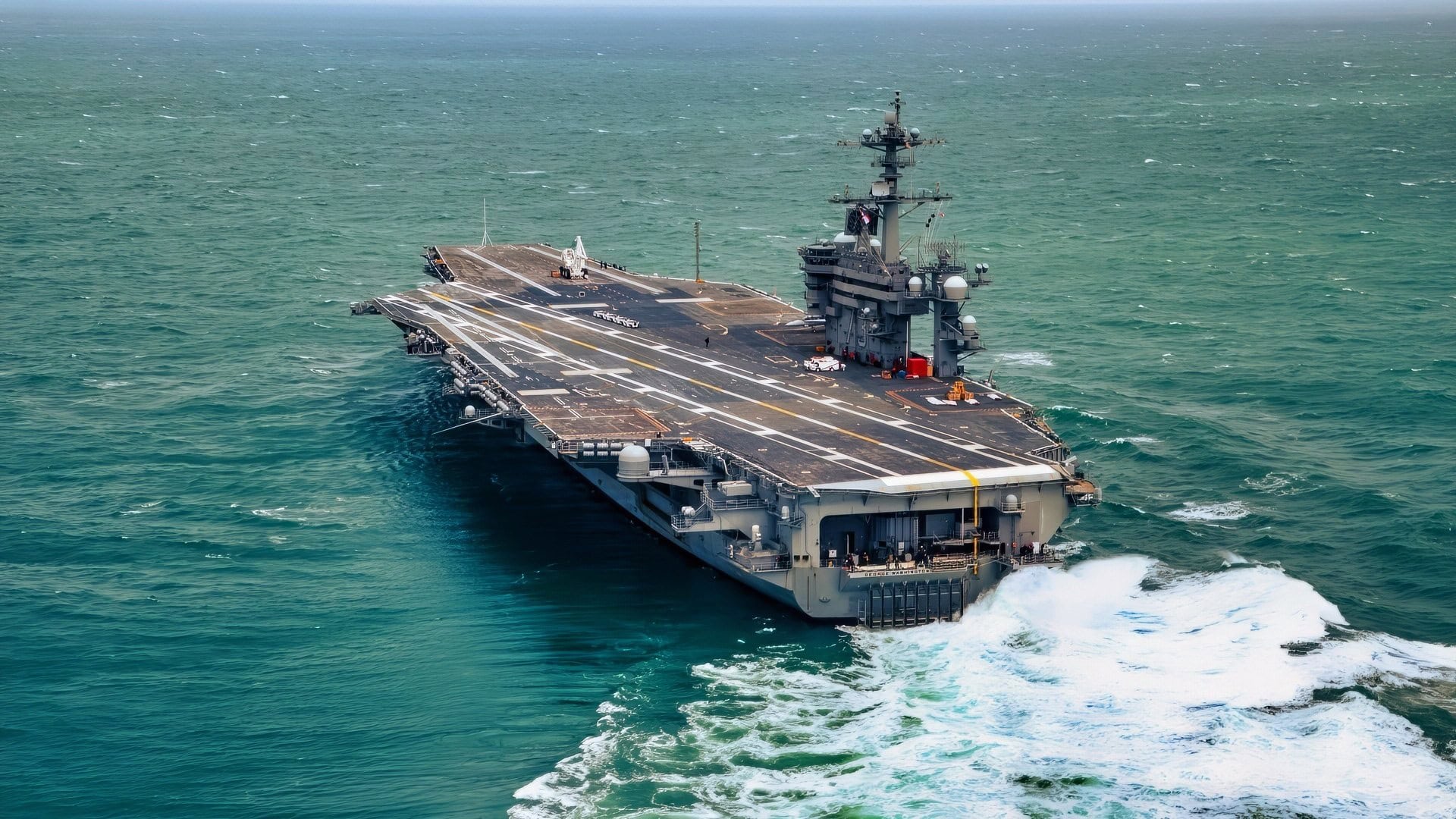
The Nimitz-class aircraft carrier USS George Washington (CVN 73) transits through the Atlantic Ocean May 25, 2023. George Washington was underway after completing its mid-life refueling and complex overhaul and sea trials, a comprehensive test of the ship’s system and technologies. (U.S. Navy photo by Mass Communication Specialist 3rd Class Nicholas A. Russell)
Where Did All of the Aircraft Carriers Go?
The USS John Stennis has been in RCOH since 2021. The USS Harry Truman is in the preparatory stages for this downtime cycle. The USS Dwight D. Eisenhower, USS Ronald Reagan, and USS Carl Vinson are also inoperable for incremental maintenance and repair periods.
The USS Nimitz was scheduled for retirement this year, but its life cycle has been extended to 2027, when the USS John F. Kennedy is ready for active duty.
The USS Abraham Lincoln Is Doing a First-rate Job
That leaves the USS Abraham Lincoln to pick up the slack against Iran during Operation Epic Fury.
One must give ample credit to these sailors who are working around the clock to attack targets in Iran.
They must be experiencing some form of burnout, but this is what the shipmates have signed up for, and many are glad to be on the pointy end of the spear.
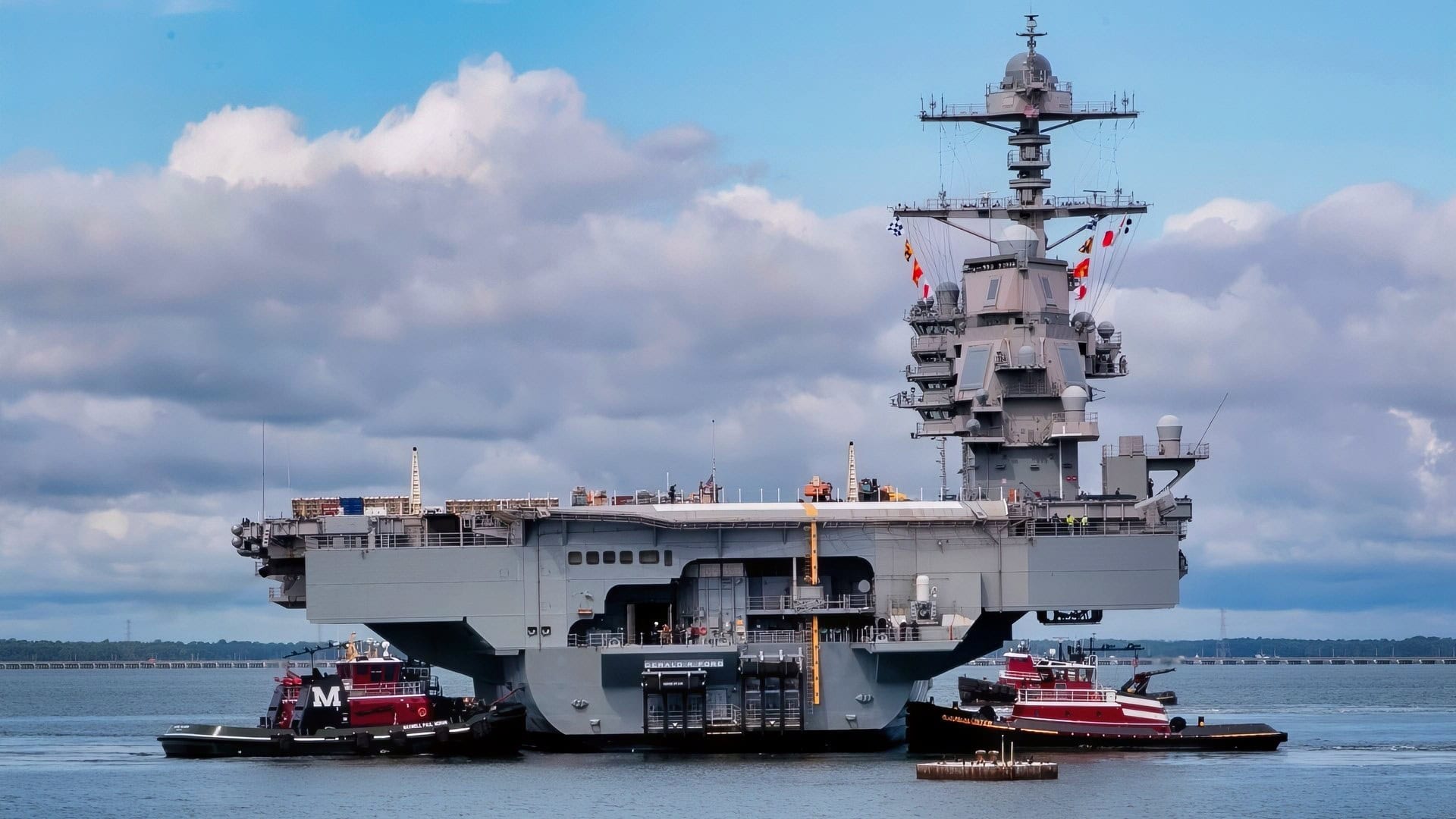
The aircraft carrier USS Gerald R. Ford (CVN 78) departed Naval Station Norfolk to make the transit to Newport News Shipyard in support of her Planned Incremental Availability (PIA), a six-month period of modernization, maintenance, and repairs, Aug. 20, 2021. (U.S. Navy photo by Mass Communication Specialist 1st Class Ryan Seelbach)
But the USS Gerald R. Ford Has Struggled
Meanwhile, the USS Gerald R. Ford, which the Navy hoped would play a large role during the war in the Middle East, has endured a string of bad luck. The sewage system has never worked properly.
Toilets have overflowed and are difficult to fix. There was a fire in the aft laundry room that injured three sailors and destroyed several berthing areas, forcing the sailors to sleep on tables. Two hundred personnel were treated for smoke inhalation. The Ford has been deployed for nine months, and the crew is at its wits’ end. It went to Souda Bay in Crete for initial assessment and then on to Croatia for further repairs.
Can We Take Some Time Off?
The Department of Defense maintains that the Ford is still operational, but the repair work will be extensive and could take several months to complete. Hopefully, the sailors had some liberty to blow off steam in Crete and Croatia before they returned to work.
RCOH Delays Are Frustrating
One issue with the RCOHs is that only one facility can conduct this work: Huntington Ingalls Newport News, Virginia.
This is a critical point of vulnerability if the shipyard were incapacitated.
The USS George Washington had a six-year RCOH period, much longer than the four years it is supposed to take. The John C. Stennis was extended for more than 14 months. The Harry S. Truman will be out for another four to five years for its RCOH.
Later Ford-class Carriers Should Arrive in Better Shape
However, the new Ford-class USS John F. Kennedy is coming online, and hopefully, many of the technological innovations, like EMALS catapults and Advanced Arresting Gear, will work properly.
Later Ford-class flattops, such as the USS Enterprise and the USS Doris Miller, are mostly on schedule for delivery in 2030 and 2032. This will take some pressure off the fleet.
The Student Who Predicted the Future of Carrier Aviation
In 2017, I was alerted to maintenance problems of U.S. carriers as an adjunct professor at George Washington University Elliott School of International Affairs.
One of my students was an F/A-18E/F Super Hornet pilot who served in Afghanistan and Iraq.
He wrote a paper on RCOH and maintenance issues across various carriers.
This astounded me, and I even set up a meeting with him to go over his many points, which even seemed to question the future of carriers. Now, almost 10 years later, what this student said is becoming true.
High Operational Tempo Can Sometimes Hurt Morale
The high operational tempo of carriers is difficult for sailors and their families.
Personnel miss life events like infant births, children’s birthdays, and other momentous occasions. The carriers are floating air bases and have many of the accouterments you would expect at home, but it is still not the same.
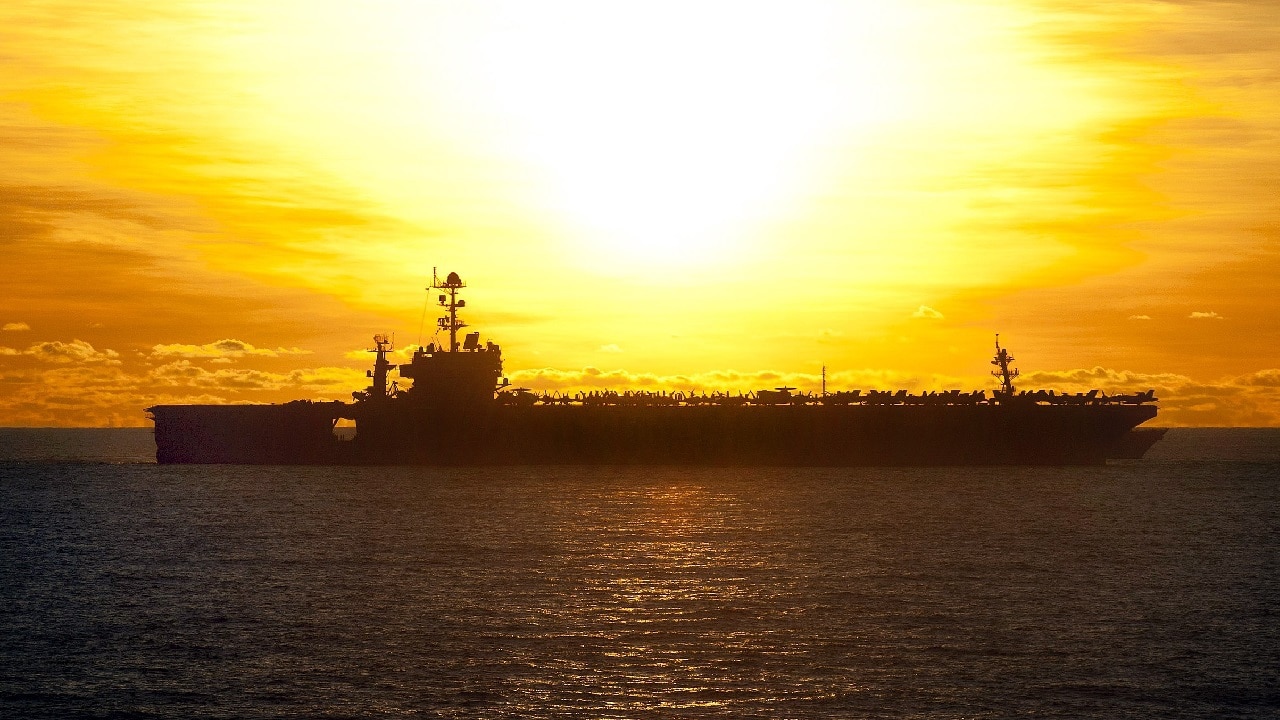
(July 8, 2012) The Nimitz-Class aircraft carrier USS George Washington (CVN 73) conducts an early morning replenishment at sea with the George Washington Strike Group. George Washington is forward deployed to Yokosuka, Japan, and is underway in the U.S. 7th Fleet area of responsibility. (U.S. Navy photo by Mass Communication Specialist 3rd Class Paul Kelly/Released) .
It Is Time for the U.S. Government to Sound the Alarm
Congress and federal watchdogs like the Government Accountability Office must take notice of the maintenance and RCOH problems. The Congressional Research Service (CRS) has played a role in oversight. In a report from CRS late last year, the analysts there found that the USS Gerald R. Ford had faulty welds.
The research also questioned how the Ford-class is being procured under the “two-ship” process. This may have led to delays and cost overruns for the USS Gerald R. Ford and could cause problems for the USS John F. Kennedy.
Watchdogs are Barking
Even as far back as 2017, when my student alerted me to carrier maintenance problems, the GAO found that the Ford would cost more than $2 billion over estimate. The authors concluded that the Navy was ignoring these problems, which could lead to additional cost overruns and schedule slips.
It is time for the Navy to address these issues so more carriers can patrol when needed.
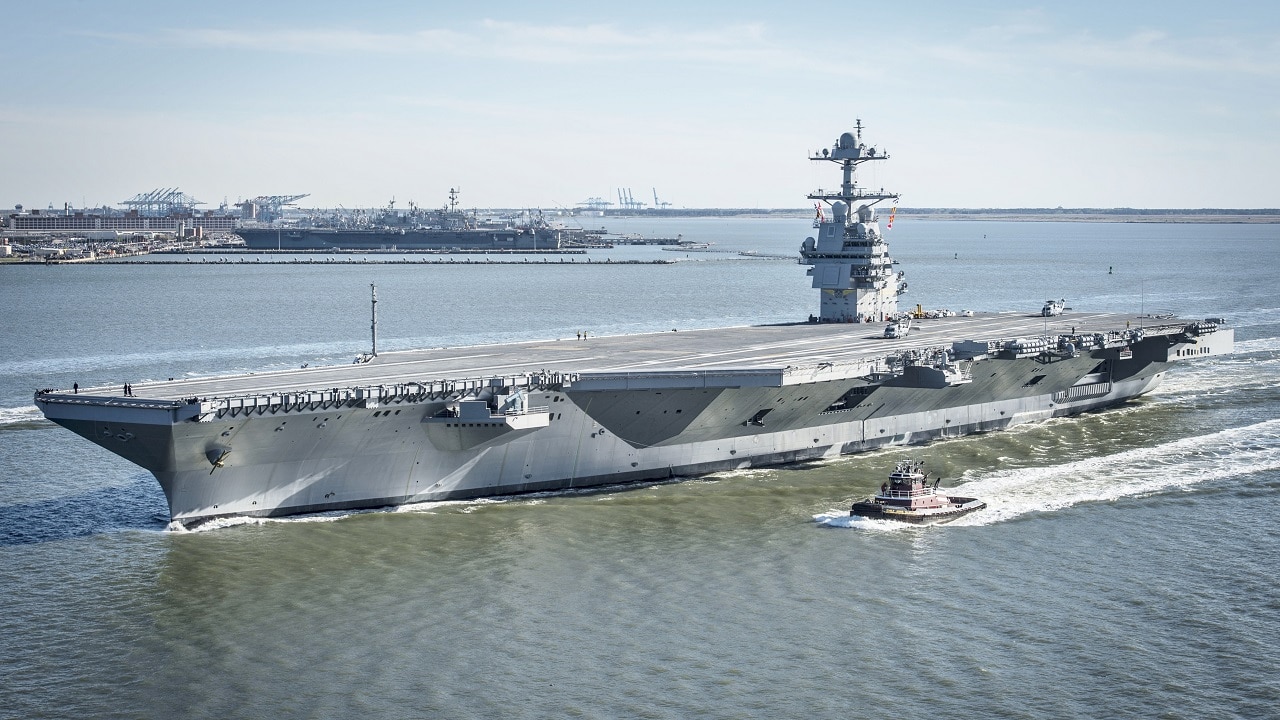
The U.S. Navy aircraft carrier USS Gerald R. Ford (CVN-78) underway under her own power for the first time while leaving Newport News Shipbuilding, Newport News, Virginia (USA), on 8 April 2017. The first-of-class ship – the first new U.S. aircraft carrier design in 40 years – spent several days conducting builder’s sea trials, a comprehensive test of many of the ship’s key systems and technologies. USS George Washington (CVN-73) and the amphibious assault ship USS Kearsarge (LHD-3) are visible in the background.
The three-front areas of responsibility – Europe, the Middle East, and the Indo-Pacific are not going away.
The carrier force is clearly overstretched, and plans must be adjusted to maximize efficiency and improve processes for workers.
The Navy must devise a renewed process for administering RCOHs and maintenance periods, or there will not be enough flat-tops to execute Naval tactics and strategy worldwide.
MORE – The Navy Almost Flew ‘Mini’ B-2 Bombers from Aircraft Carriers
About the Author: Dr. Brent M. Eastwood
Author of now over 3,000 articles on defense issues, Brent M. Eastwood, PhD, is the author of Don’t Turn Your Back On the World: A Conservative Foreign Policy and Humans, Machines, and Data: Future Trends in Warfare, plus two other books. Brent was the founder and CEO of a tech firm that predicted world events using artificial intelligence. He served as a legislative fellow for US Senator Tim Scott, advising the senator on defense and foreign policy issues. He has taught at American University, George Washington University, and George Mason University. Brent is a former US Army Infantry officer. He can be followed on X @BMEastwood.