

Meet the Navy’s Newest Virginia-Class Submarine, USS Massachusetts (SSN-798)
The U.S. Navy officially welcomed its newest Virginia-class nuclear attack submarine over the past weekend.
On a sunny Saturday in Boston Harbor, the Navy commissioned the USS Massachusetts (SSN 798), a new Virginia-class fast-attack submarine.
The submarine was positioned next to the wooden frigate, the USS Constitution, “Old Ironsides as the Massachusetts’ crew, sponsor former Facebook CEO Sheryl Sandberg, Jennifer Boykin, the President of Newport News Shipbuilding, and military and elected officials, held a ceremony formally welcoming the ship into the Navy beside its oldest warship, which is still on the rolls.
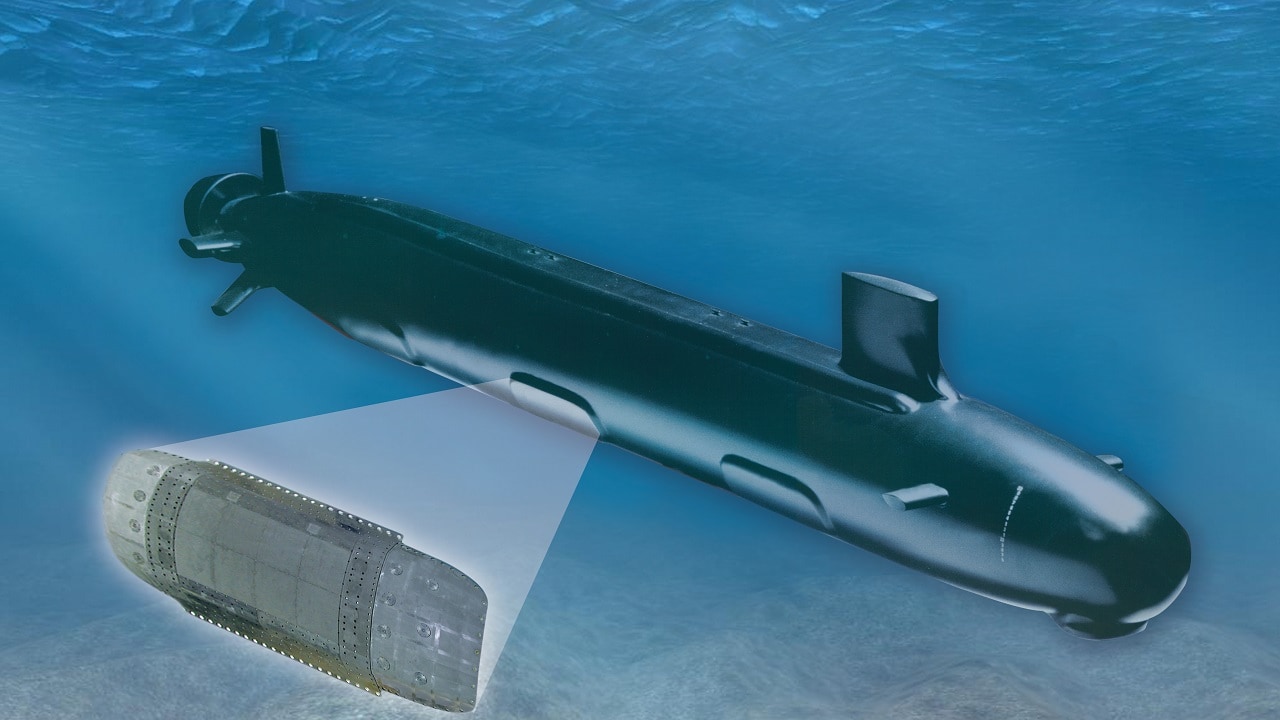
Block IV Virginia-class Submarine.
Cmdr. Michael Siedsma, the submarine’s commander, addressing the crew, said: “To the crew, the plankowners, the Iron Patriots of the USS Massachusetts, we did it.”
“Your hard work and unshakable dedication is evident,” he added.
The Many Ships Named After The State Of Massachusetts:
Eight U.S. Navy and Revenue-Marine vessels have been named USS Massachusetts in honor of the Commonwealth of Massachusetts. Other notable vessels included early revenue cutters, 19th-century steamers, and the famous World War II battleship USS Massachusetts, BB-59, which now permanently resides in Fall River, MA as a museum ship.
The South Dakota-class fast battleship that participated in the invasion of North Africa and was then in nearly every major Pacific campaign from 1943 to 1945 earned 11 battle stars for its World War II service, according to a service news release.
The battleship, known to its crew as the “Big Mamie,” didn’t lose a sailor to enemy action in World War II, and it was the last vessel to fire its guns at the Japanese prior to Tokyo’s unconditional surrender, firing its big 16-inch guns at Japanese factories on the coastline.
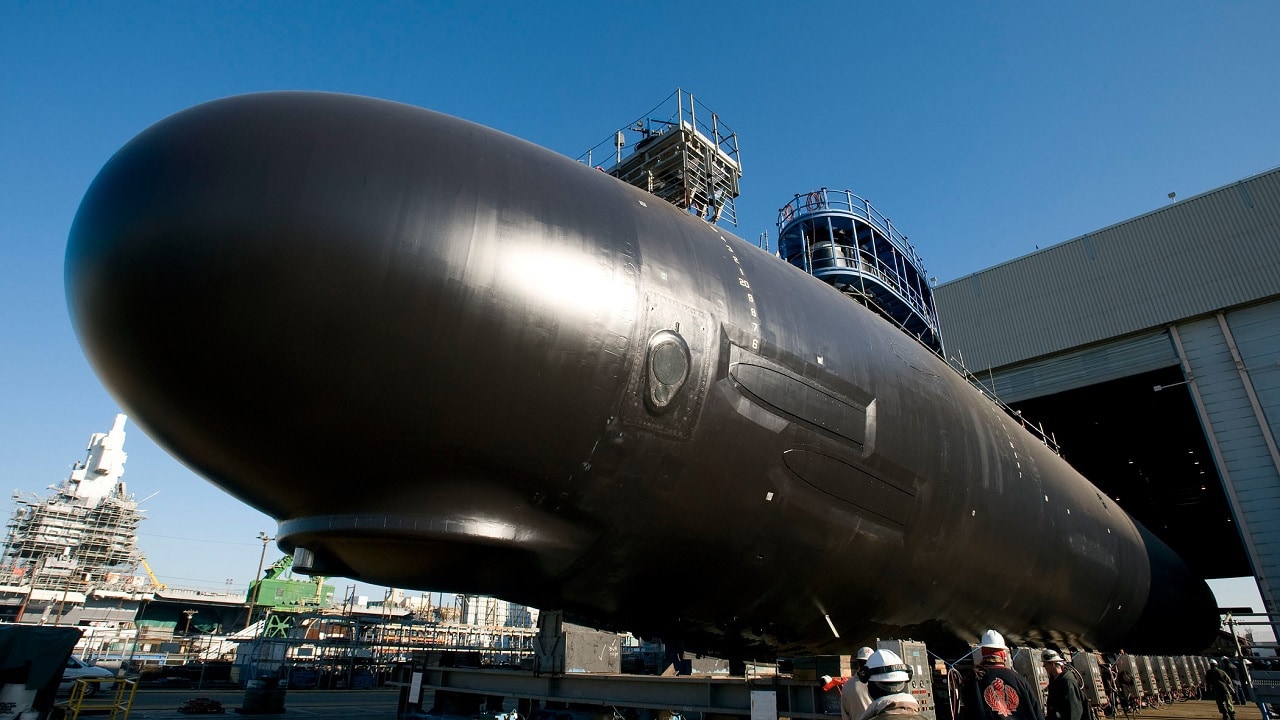
Virginia-Class. Image Credit: Creative Commons.
Meet The USS Massachusetts (SSN-798):
The submarine is the 25th submarine in the Virginia-class program, the backbone of the US Navy’s future submarine fleet, designed for stealth, intelligence-gathering, and precision-strike missions.
Construction began in December 2020, and the submarine completed sea trials in the Atlantic before being delivered to the Navy in November 2025.
The USS Massachusetts is the seventh Block IV Virginia-class submarine built through a partnership between General Dynamics Electric Boat and HII’s Newport News Shipbuilding. The submarine is a result of years of construction, testing, and sea trials before entering active service.
The submarine measures 377 feet (115 meters) long, with a beam of 34 feet, and displaces roughly 7,800–8,000 tons, and is powered by a nuclear reactor, allowing it to operate for its entire lifecycle without refueling.
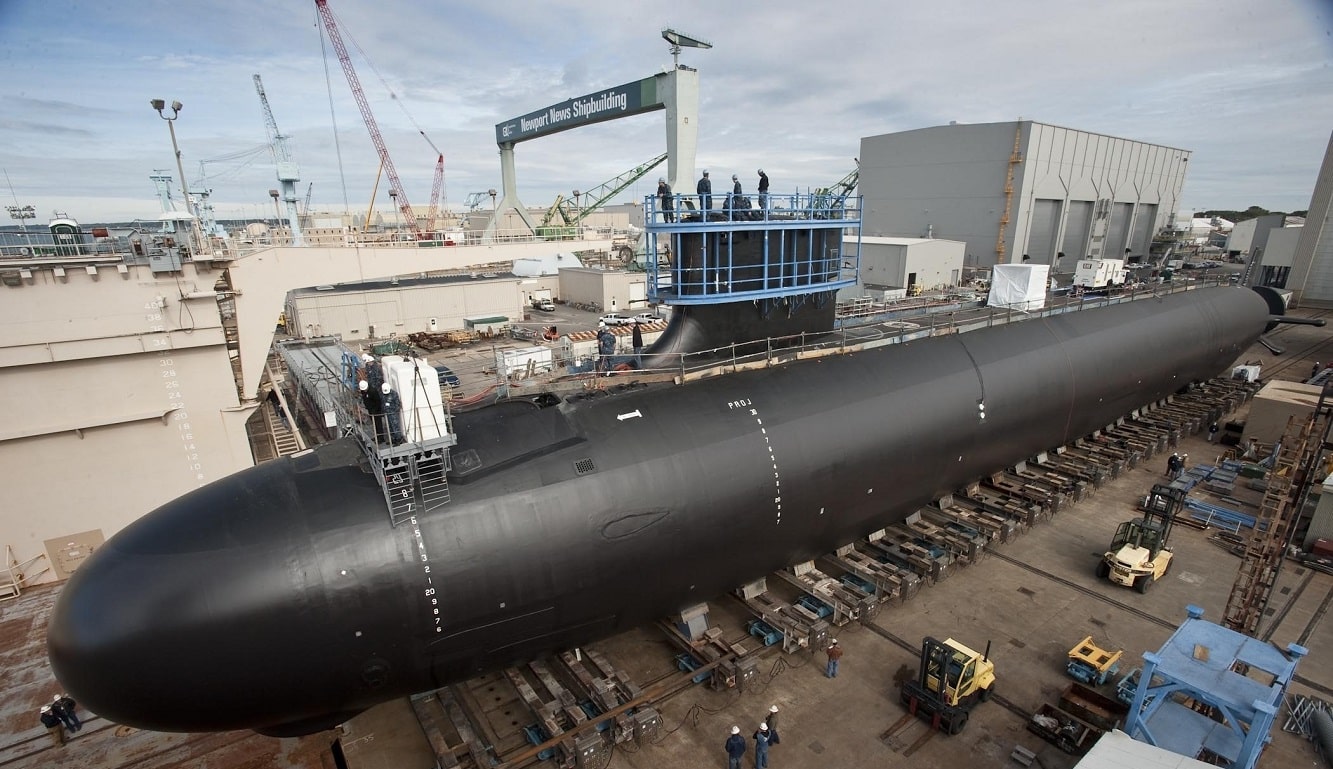
The Virginia-class attack submarine Minnesota (SSN 783) is under construction at Huntington Ingalls Newport News Shipbuilding. (U.S. Navy photo courtesy of Newport News Shipbuilding/Released)
The USS Massachusetts is armed with 12 Vertical Launch System (VLS) tubes, four 21-inch (530mm) torpedo tubes for Mk-48 torpedoes, and BGM-109 Tomahawk missiles
It can reach underwater speeds of about 25 knots and dive to depths greater than 800 feet, according to U.S. Navy specifications.
The crew consists of 15 officers and 132-135 crewmen, depending on the mission.
Special Features Of Virginia-Class Submarines:
“With each Virginia-class submarine delivery, the Navy strengthens its partnership with the shipbuilding industry to maintain our undersea dominance,” said Capt. Mike Hollenbach, Virginia Class Submarine program manager.
“I’m proud of the work thousands of shipbuilders and Navy personnel have put into reaching this important construction milestone. Together, we continue to build the best submarines in the world.”
The Virginia-class submarines have several innovative features that significantly enhance their warfighting capabilities, including in littoral and deep-ocean operations.
Virginia-class vessels have special features to support Special Operations Forces (SOF), including a reconfigurable torpedo room that can accommodate a large number of SOF personnel and all their equipment for prolonged deployments, as well as future off-board payloads.
The Virginia-class also has a large lockout trunk for combat divers and unmanned underwater vehicles (UUV).
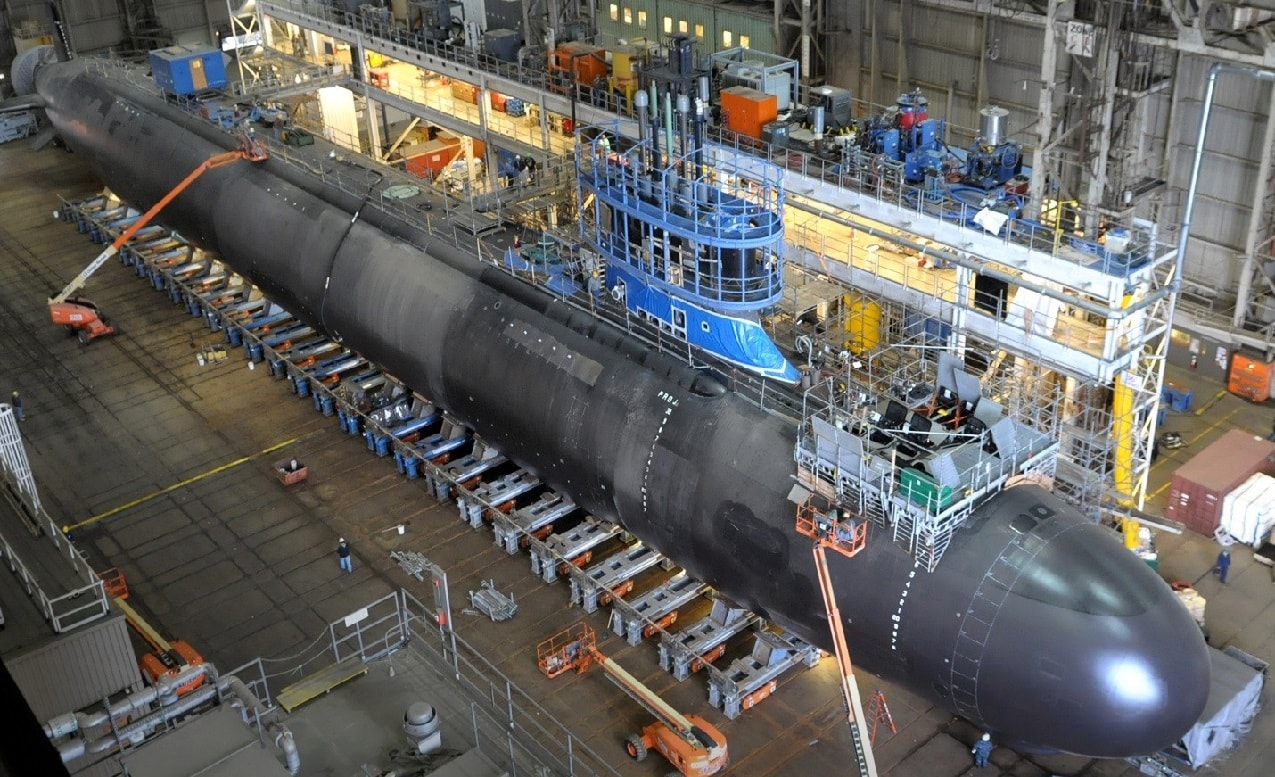
US Navy Virginia-class Submarine Under Construction.
Instead of traditional periscopes that penetrate the hull, two non-penetrating photonics masts use high-resolution, infrared, and color cameras. This allows the control room to be moved from the cramped top deck to a larger, more functional space lower in the ship.
The class utilizes a pump-jet propulsor for extreme quietness, making them nearly undetectable. The hull features specialized acoustic coatings and is designed for reduced magnetic, acoustic, and infrared signatures.
Virginia Payload Module For Block VI Subs:
The Virginia Payload Module (VPM) adds weapons flexibility to its capabilities. Later blocks include the Virginia Payload Module (VPM), which adds extra length and tubes, increasing Tomahawk missile capacity from 12 to 40.
The Block VIs will be the second set of Virginia-class attack submarines to feature the Virginia Payload Module (VPM), which will meet the Navy’s requirement for a large-scale land strike missile platform after the service decommissions four Ohio-class guided-missile submarines by the end of the decade.
In the last several years, the Ohio guided-missile boats, each capable of fielding 154 Tomahawk Land Attack Missiles, have been a favorite of combatant commanders.
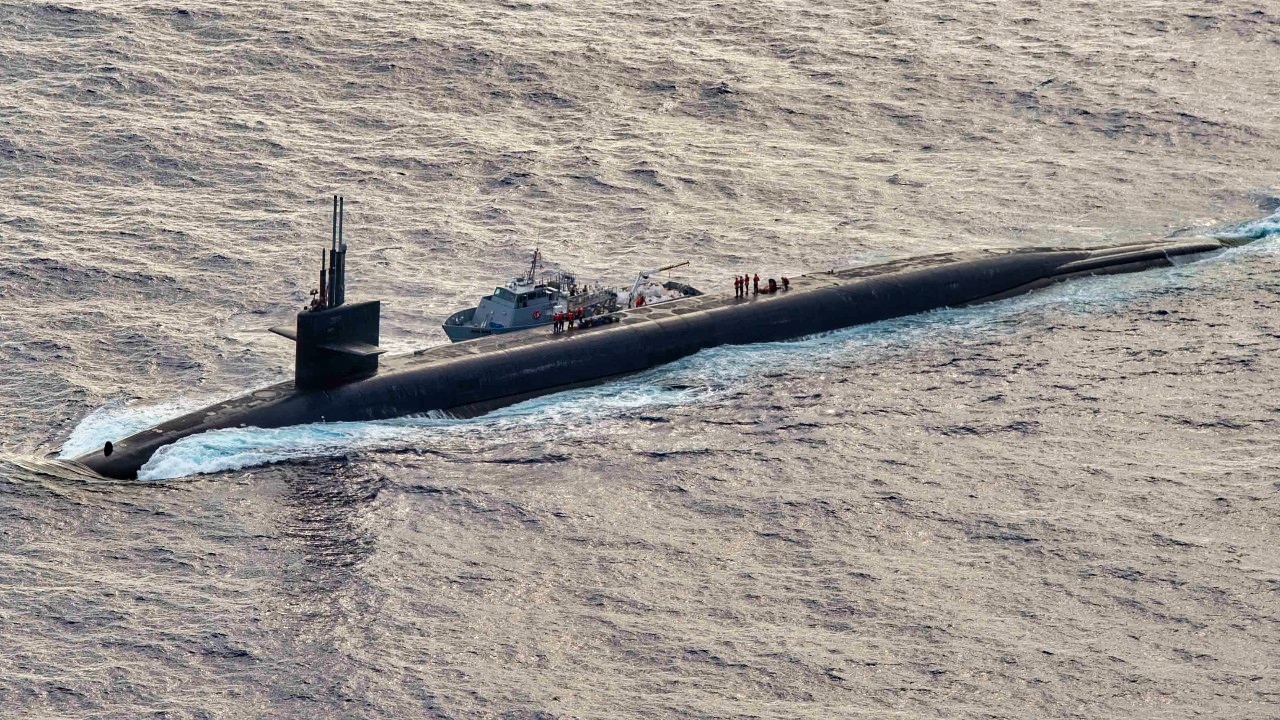
The Ohio-class ballistic missile submarine USS Kentucky (SSBN 737) sails alongside a submarine support vessel during a routine armed air escort (AAE) exercise, April 24, 2025. AAEs are designed to improve interoperability between our services, increasing lethalitythrough multi-domain integration.. Commander, Submarine Group (SUBGRU) 9, exercises administrative control authority for assigned submarine commands and units in the Pacific Northwest providing oversight for shipboard training, personnel, supply and material readiness of submarines and their crews. SUBGRU-9 is also responsible for nuclear submarines undergoing conversion or overhaul at Puget Sound Naval Shipyard in Bremerton, Washington. (U.S. Navy photo by Mass Communication Specialist 1st Class Ryan Riley)
USS Florida (SSGN-728) was deployed for almost two years to defend against threats in the Mediterranean and the Middle East.
The VPM inserts four Multiple All-up-round Canisters (MAC) in the middle of the submarine in addition to two in the bow. Each MAC tube can contain seven Tomahawk cruise missiles. The Navy has stated that it will need 20 VPM boats to compensate for the loss of strike missiles when the Ohio-class submarines retire.
The module is 84 feet long — bringing the total length of the Virginia-class subs up from 377 feet to 461 feet, the Navy file said — and can store and launch payloads with diameters larger than the 21-inch diameter of a torpedo or Tomahawk missile.
New Technology Emerging:
The US Navy is using strong fiber optic cable to connect undersea submarines to drones able to travel to the surface and interface with surface gateway technologies in a position to essentially translate acoustic data gathered by submarines beneath the surface into RF signals and other kinds of data links able to share information with air, surface, and land communications nodes.
This line of communication enables a submarine to use its long-range, high-fidelity acoustic sensors to gather sensitive threat information and network it to a drone, which will surface and interface with gateway systems in real-time, sending time-sensitive threat data to surface ships, aircraft, and land bases.
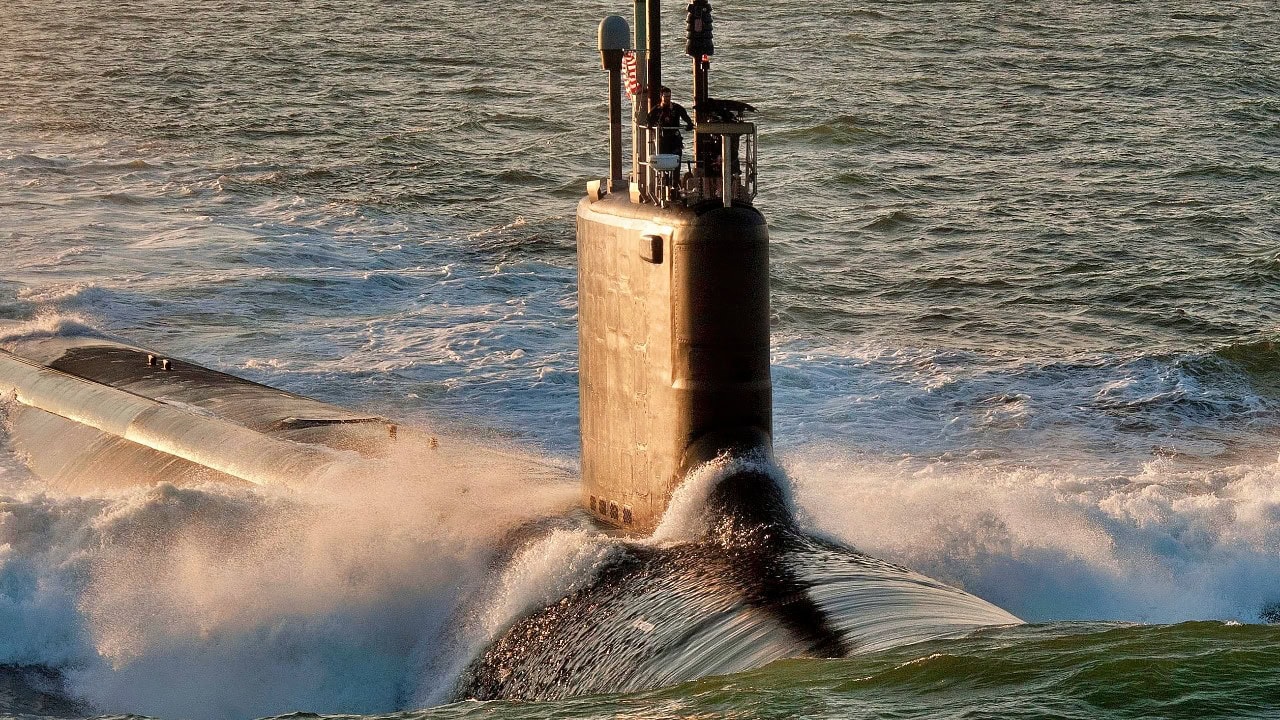
U.S. Navy Virginia-Class Submarine.
Among the new technologies is the Navy’s hypersonic weapons. The Navy intends to arm its submarines with the Conventional Prompt Strike weapon before 2028. The arrival of undersea-launched hypersonics will ensure the Navy has a high-speed attack advantage.
The USS Massachusetts (SSN-798) is the latest Virginia-class attack submarine, ensuring the US Navy’s continued qualitative superiority over near-peer threats from China and Russia.
MORE – The X-43A Can Hit Mach 9.6 But Will Never Fly Again
MORE – The Aircraft Carrier Era Is Over
About the Author: Steve Balestrieri
Steve Balestrieri is a National Security Columnist. He served as a US Army Special Forces NCO and Warrant Officer. In addition to writing on defense, he covers the NFL for PatsFans.com and is a member of the Pro Football Writers of America (PFWA). His work was regularly featured in many military publications