
China Could Flood the Taiwan Strait With Missile-Armed Cargo Ships — And the U.S. Navy Wouldn’t Know Which Ones to Shoot
New imagery suggests China is experimenting with containerized missile systems mounted on a commercial cargo ship. The concept would turn civilian vessels into armed missile platforms.
At a glance, the experiment seems to be a clever workaround, but it is unclear whether the capability is real or just a staged demonstration. Regardless, China appears to be considering ways to accelerate the growth of its naval power.
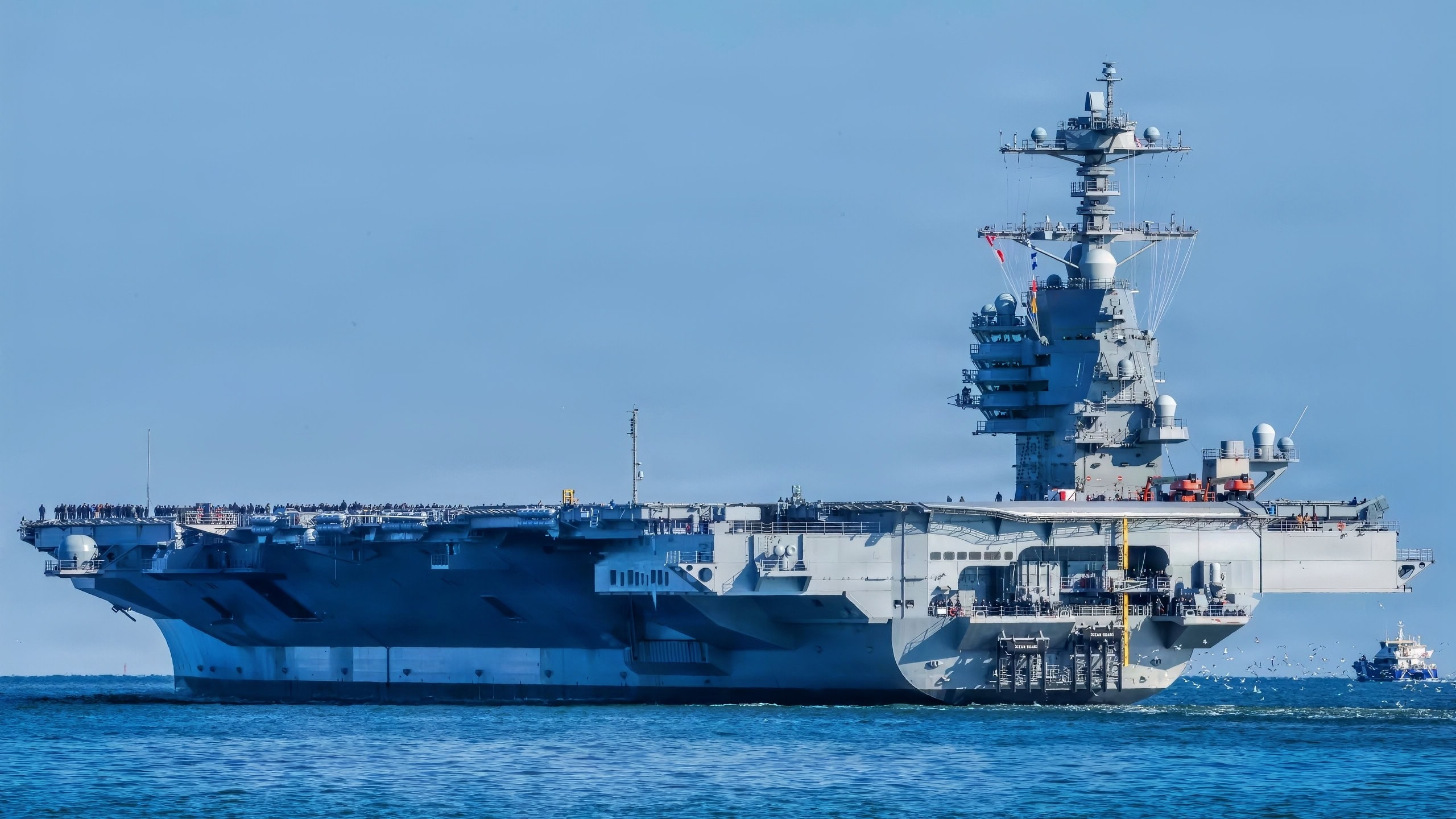
Pre-Commissioning Unit John F. Kennedy (CVN 79) transits the James River as the ship departs for Builder’s Trials, Jan. 28, 2026. Builder’s Trials provide an opportunity to test ship systems and components at sea for the first time, and make required adjustments prior to additional underway testing. (U.S. Navy photo by Mass Communication Specialist Seaman Jayden Howard)
What the Technology Includes
The platform seen in the new images is just a standard commercial cargo ship hull, but modified to include containerized weapons and sensors.
The configuration is five containers wide and three deep; each container holds four launch tubes.
In total, the platform holds 60 vertical launch cells, which is about two-thirds of an Arleigh Burke destroyer’s vertical launch system (VLS) loadout.
The sensors on the platform reportedly include a large phased-array radar mounted on the container stack. Additionally, the platform reportedly includes dome radar and communication systems.
In effect, China appears to have crafted a modular warship bolted onto a civilian platform—a clever improvisation.
How It Would Be Used
If the platform actually functions, China could use it for a variety of possible roles—including as an arsenal ship with a large number of missiles, or for air defense, providing area coverage. Such a platform would be geared to provide missile volume and supplemental radar coverage.
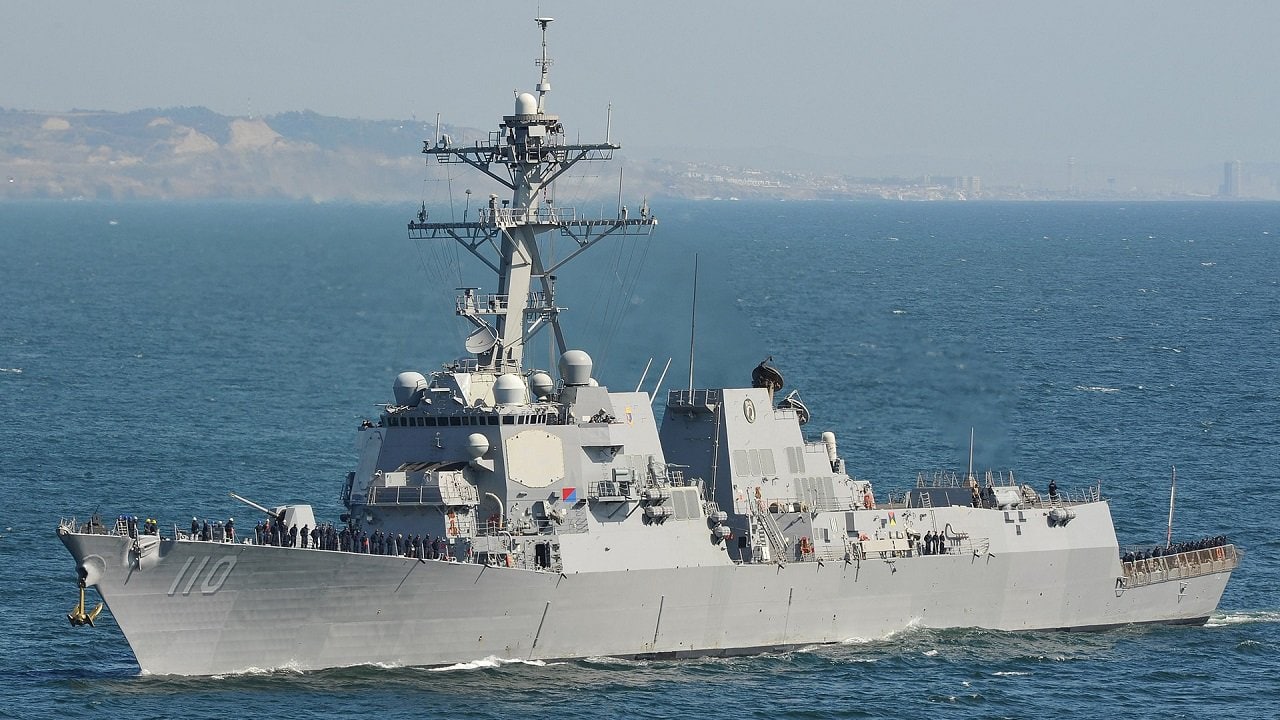
PACIFIC OCEAN (May 4, 2015) – The guided-missile destroyer USS William P. Lawrence (DDG 110) steams toward San Diego Harbor. (U.S. Navy photo by Mass Communication Specialist 3rd Class Nathan Burke/Released)
It would grant at-sea flexibility, as containerized systems could carry surface-to-air, anti-ship, or land-attack missiles based on the needs of the moment.
The ideas here are mass and distribution—concepts reinforced in Ukraine, where saturated missile attacks have proven effective.
Converting Commercial Assets
China has a massive commercial shipping fleet and enormous shipbuilding capacity, as the country has demonstrated throughout its 21st-century shipbuilding spree—indeed, the most ambitious shipbuilding campaign ever undertaken.
The implication that China could convert civilian ships into military platforms is significant. Strategically, this could offer China increased missile capacity and distribution at low cost with low friction. Indeed, China may be trying to rapidly expand launch capacity at low cost.
The Other Shoe
But the platform is unproven, and questions remain unanswered. Can the sensors and weapons all work together when jammed into a civilian platform? Even if the platform does work as designed, these are modified cargo ships; they are not hardened and are highly visible.
If they’re loaded with 60 missile cells, they’re going to be high-priority, vulnerable targets.
It’s possible the cargo-ship conversion is just a demonstrator—or a propaganda item—not a system meant for operations.
Strategic Implications of the Tech
Either way, the technology does have strategic implications. For China, it may signal the ability to rapidly expand naval firepower. This would support a Taiwan contingency and enhance China’s regional area-denial strategy.
For the United States, the potential platform has the ability to complicate target identification and raise the risk of civilian and military ambiguity. And of course, the United States would struggle to operate in an environment with an increased Chinese missile presence.
Blurring the Line
The cargo ship conversion fits a pattern of China turning civilian infrastructure toward military use.
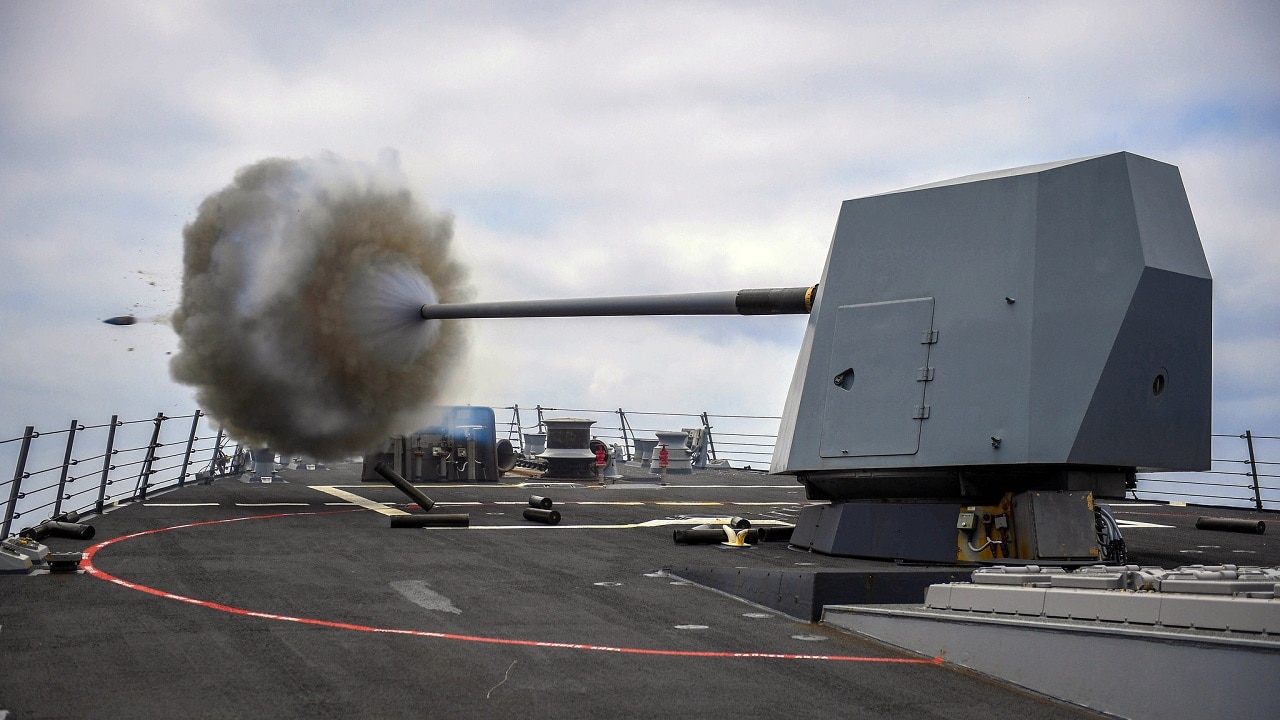
ATLANTIC OCEAN (June 30, 2018) The Arleigh Burke-class guided-missile destroyer USS Bainbridge (DDG 96) fires its Mark 45 five-inch gun during a live-fire exercise. Bainbridge, homeported at Naval Station Norfolk, is conducting naval operations in the U.S. 6th Fleet area of operations in support of U.S. national security interests in Europe and Africa. (U.S. Navy photo by Mass Communication Specialist 1st Class Theron J. Godbold/Released)180630-N-FP878-566
Examples include amphibious ferries and dual-use logistics. These efforts blur the line between civilian and military assets, complicating targeting decisions.
The result is that it’s harder for the United States and allies to apply the rules of engagement.
Future of the Platform
The concept is not likely to be a one-off. It could evolve into a modular ship.
And the United States is taking note, especially since it is also experimenting with containerized weapons. Both countries are contributing to a growing trend in naval warfare of shifting toward distributed, modular firepower—and away from concentrated platforms such as the battleship (which is why the proposed Trump-class battleship likely won’t happen).
Such trends also explain why questions are being raised about the viability of the aircraft carrier in modern warfare.
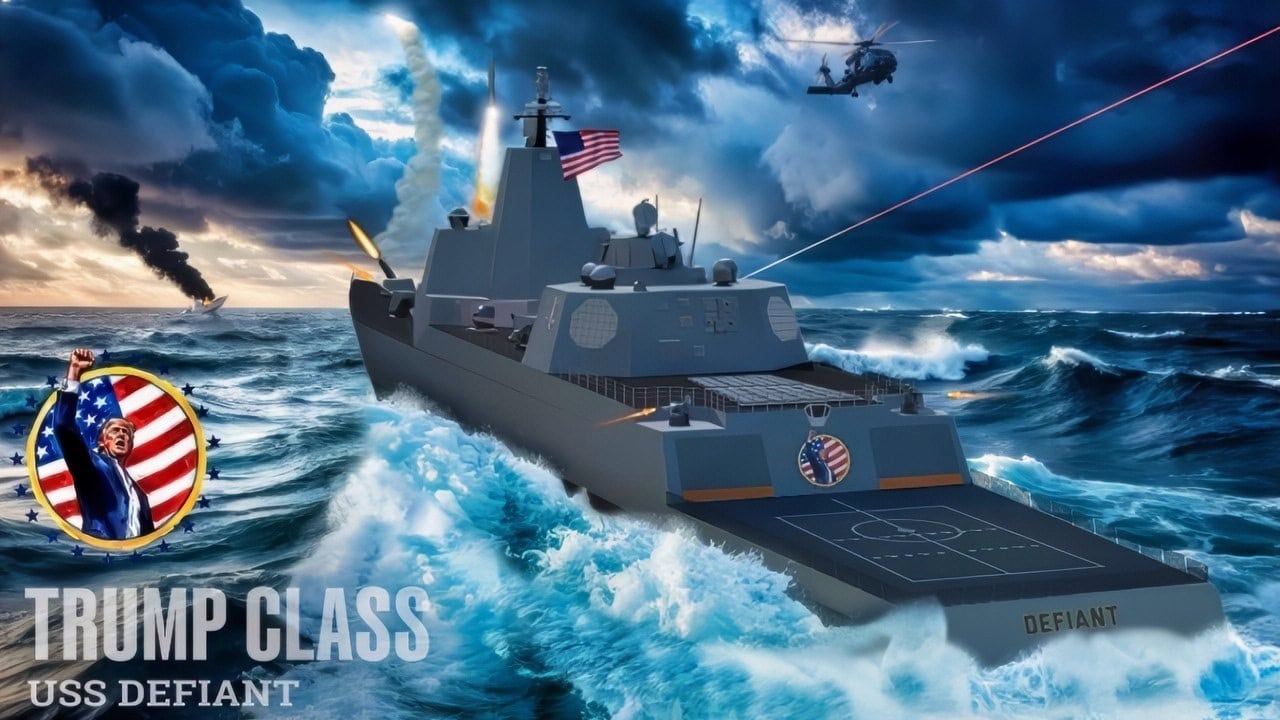
Trump-Class Battleship. Image Credit: Creative Commons/White House Photo.
But Questions Remain
China’s concept of weaponized cargo ships is impressive in theory, but remains unproven.
Regardless of this specific platform, the concept has staying power.
China fitting cargo ships with armed drones, missile launchers? Leaked photos spark buzz https://t.co/jjndaGFOTS
— Economic Times (@EconomicTimes) January 14, 2026
More missiles, more platforms, and more ambiguity enhance China’s regional denial ambitions, complicating the U.S. ability to operate and target. Accordingly, China will keep experimenting and keep scaling.
About the Author: Harrison Kass
Harrison Kass is an attorney and journalist covering national security, technology, and politics. Previously, he was a political staffer and candidate, and a US Air Force pilot selectee. He holds a JD from the University of Oregon and a master’s in global journalism and international relations from NYU.