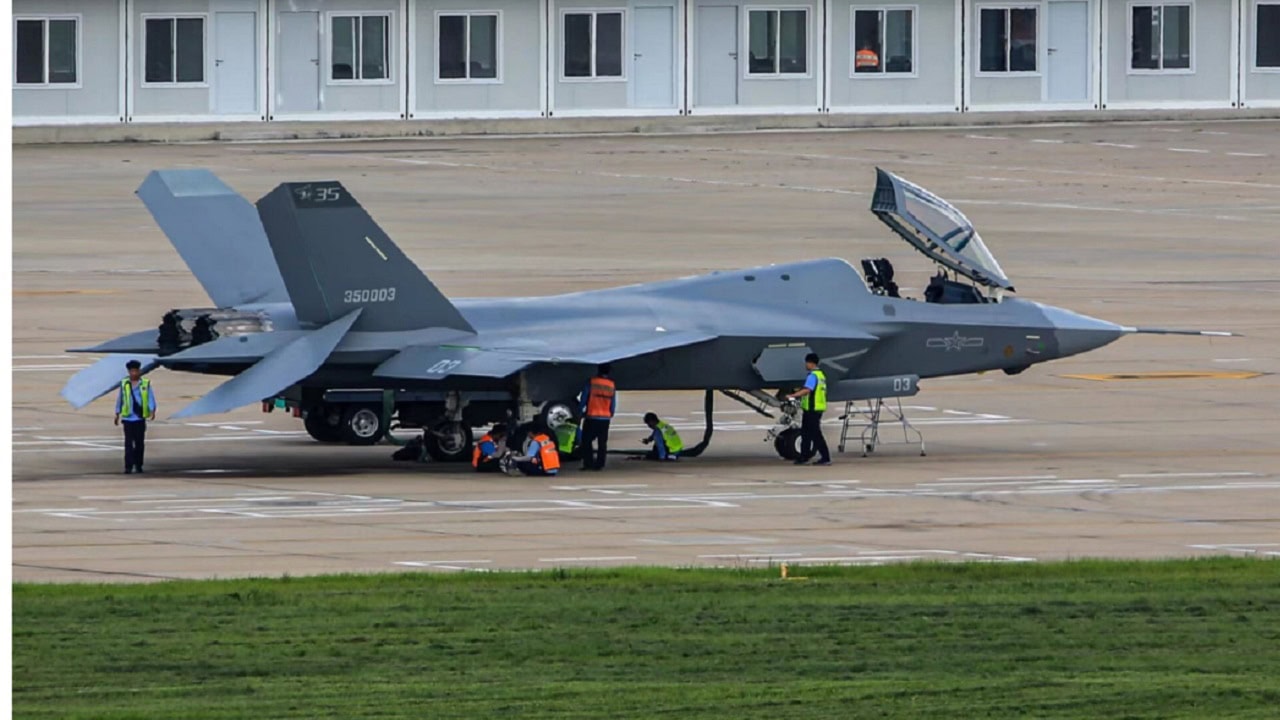
Strange Stealth: China’s J-35 Looks Like a Powerhouse No Nation Wants to Buy
In a world where every country is supposed to want stealthy fighter aircraft, why is it that only the United States’ F-35 — and, potentially in the future, the South Korean KF-21 — are attracting interest from potential foreign buyers?
Why is it that the People’s Republic of China (PRC), with its Chengdu J-20 and Shenyang J-35, is not on any nation’s wish list?
The answer is a combination of two realities.
One is that most countries that have the choice between buying something Western or the J-35, for example, will always opt for a non-Chinese option. The fact remains that the Chinese-made aircraft have zero combat performance results to report.
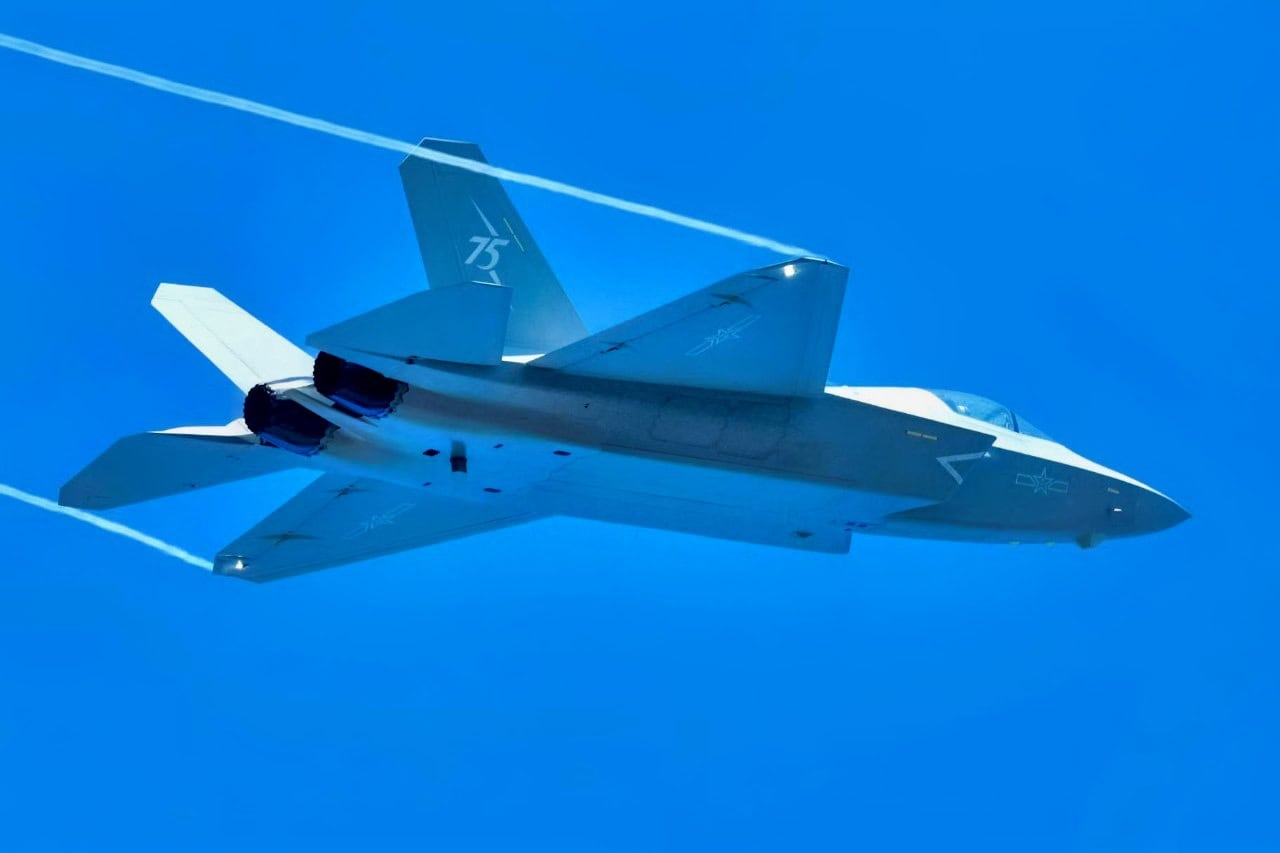
J-35 Fighter. Image Credit: Chinese State Media.
Any nation that decides to buy into these Chinese programs is accepting claims presented by company marketing representatives and computer-driven simulations. “It’s like buying a virtual product,” said one South American military representative whose country had been lobbied hard by the Chinese. “You have real problems believing that the product performs as advertised.”
A second very serious issue is that, in the 2030s, much of what will determine the combat radius and effectiveness of fighter aircraft will be adaptive-cycle propulsion systems.
Although the PRC’s industry is finally designing and building its own aeroengines, those designs are nonetheless based on previous-generation Russian engine technology. They will lag behind any Western designs in both performance and reliability.
Those Chinese engine designs — like the aircraft — are unproven. While the airframes they are installed in will at least appear to be stealthy, questions remain about the engines themselves. Are they stealthy enough on the front (fan frame, turbine blades, inlet design, etc.), and do they have a manageable infrared signature in the exhaust/rear hemisphere section?
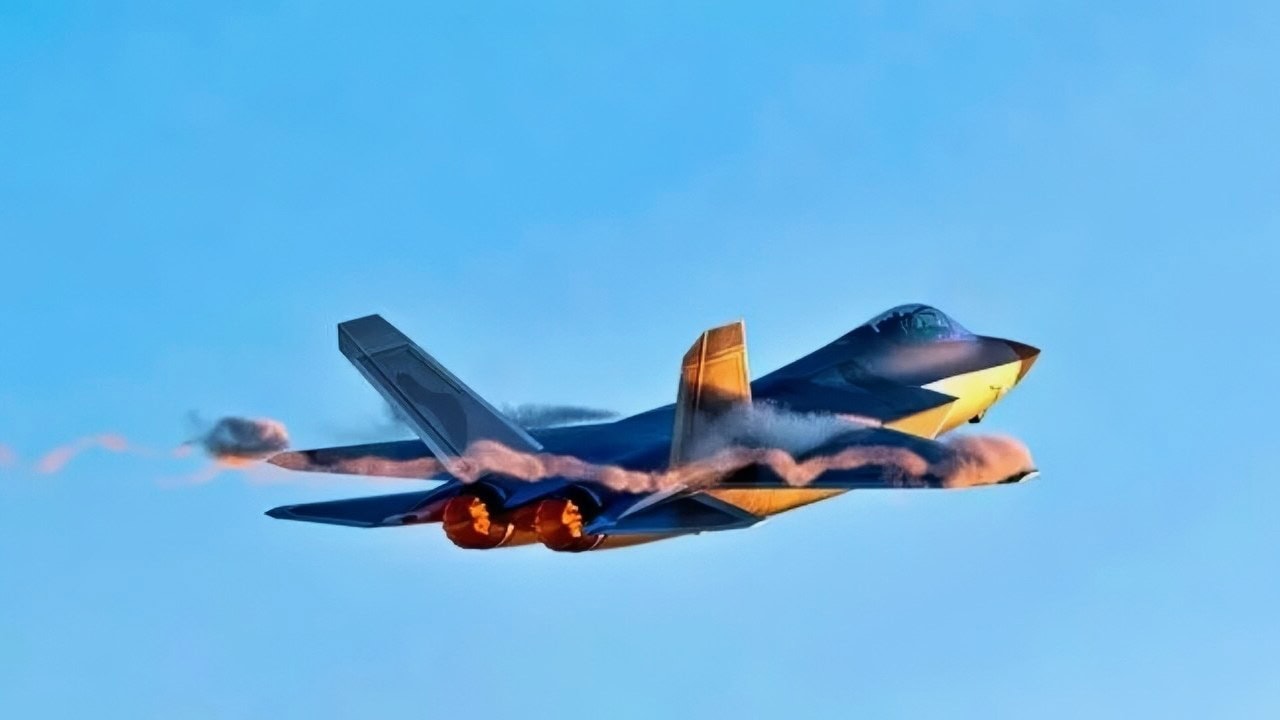
J-35A Fighter from China PLAAF. Image Credit: Creative Commons.
What is the Future for Xi’s Industry
Then there are the geopolitical risks associated with doing business in the defense sector with the PRC. The increasing support that Beijing is providing Russia for its war against Ukraine is generating mounting calls for Western sanctions to be imposed on the PRC.
Outside of the risks of potential U.S. sanctions, these Chinese jets have no operational track record to accurately present a cost per flight hour for day-to-day operations, nor a proven availability rate.
In addition, Chinese fighters have previously been presented as having a lower sticker price, but today their platforms have risen in some cases to the top ten most expensive fighters in the world.
Then there is the factor that is generally the number one killer of fighter aircraft effectiveness: maintenance. One reason the U.S. was able to roll over the Venezuelan Air Force’s Su-30MKV2 fleet was that Russia had not provided adequate spares for years.
Russia has had far more experience than China in providing after-sales support for military systems.
But even its dismal record in Venezuela and other customer nations is better than that of Chinese defense companies when they use them as suppliers.
Owning a Chinese Fighter — Experience Matters
These various realities, combined with the price per flight hour, maintenance, and other factors, yield a total ownership cost, another area in which Chinese aircraft do not compete well with their Western counterparts.
Available data indicate that maintenance accounts for 40 to 60 percent of total operating costs for modern fighters.
The F-35 requires approximately 13 hours of maintenance for every one hour of flight time.
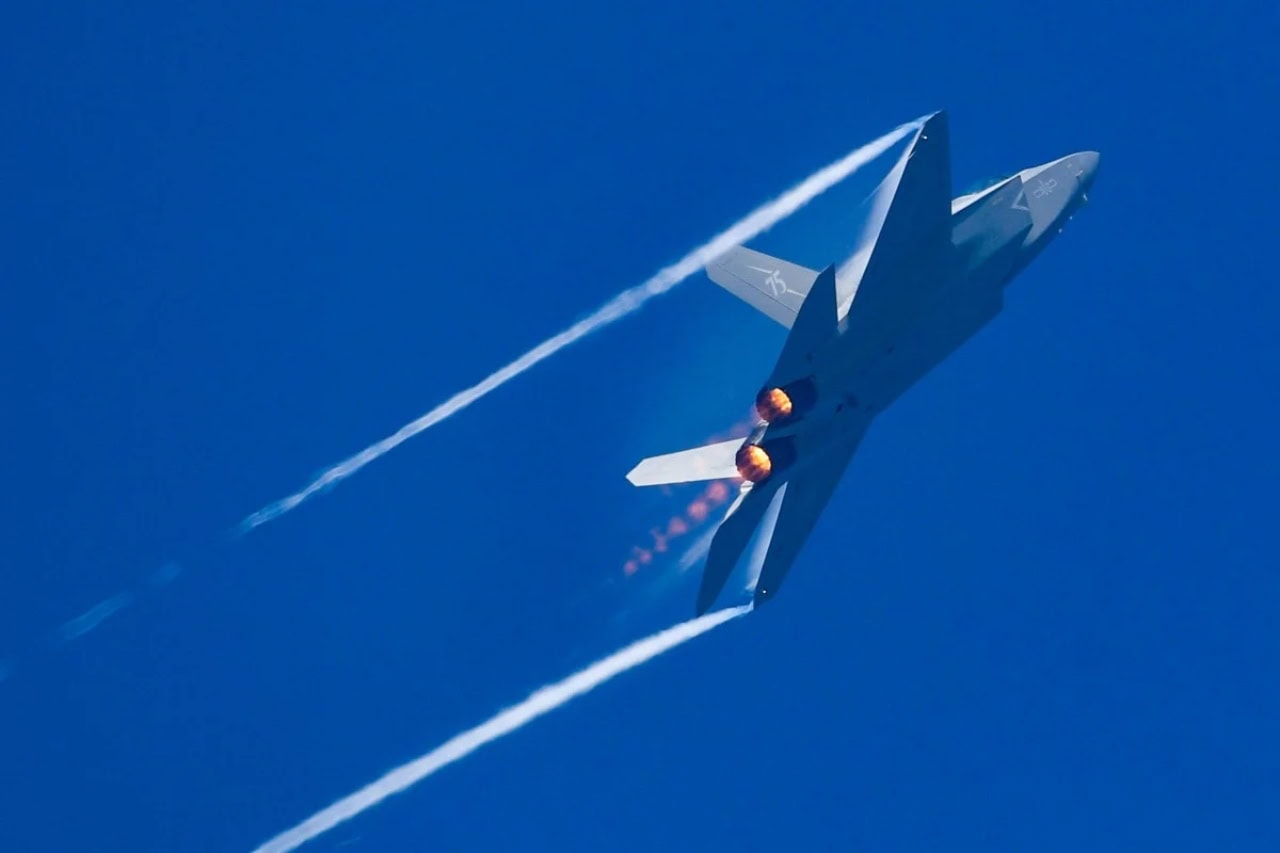
J-35. Image Credit: Chinese State Media.
The F-22 Raptor requires even more — 30 hours of maintenance per flight hour. For these new Chinese aircraft, no real numbers exist, and if they did, say military aircraft experts, their labor rates are so low that they have no problems “pouring people into a maintenance pool because it has no real impact on overall operational costs.”
Routine inspections for modern fighters include checking thousands of individual systems and replacing wear-and-tear items.
Modern avionics systems, such as the F-35’s AN/APG-81 AESA radar, require highly experienced technicians who earn high salaries.
These maintenance labor costs can exceed $3,000 to $6,000 per flight hour. The Rafale, which is designed for efficient maintenance, requires only 6 to 7 hours of maintenance per flight hour, making it significantly cheaper to operate than American fifth-generation fighters.
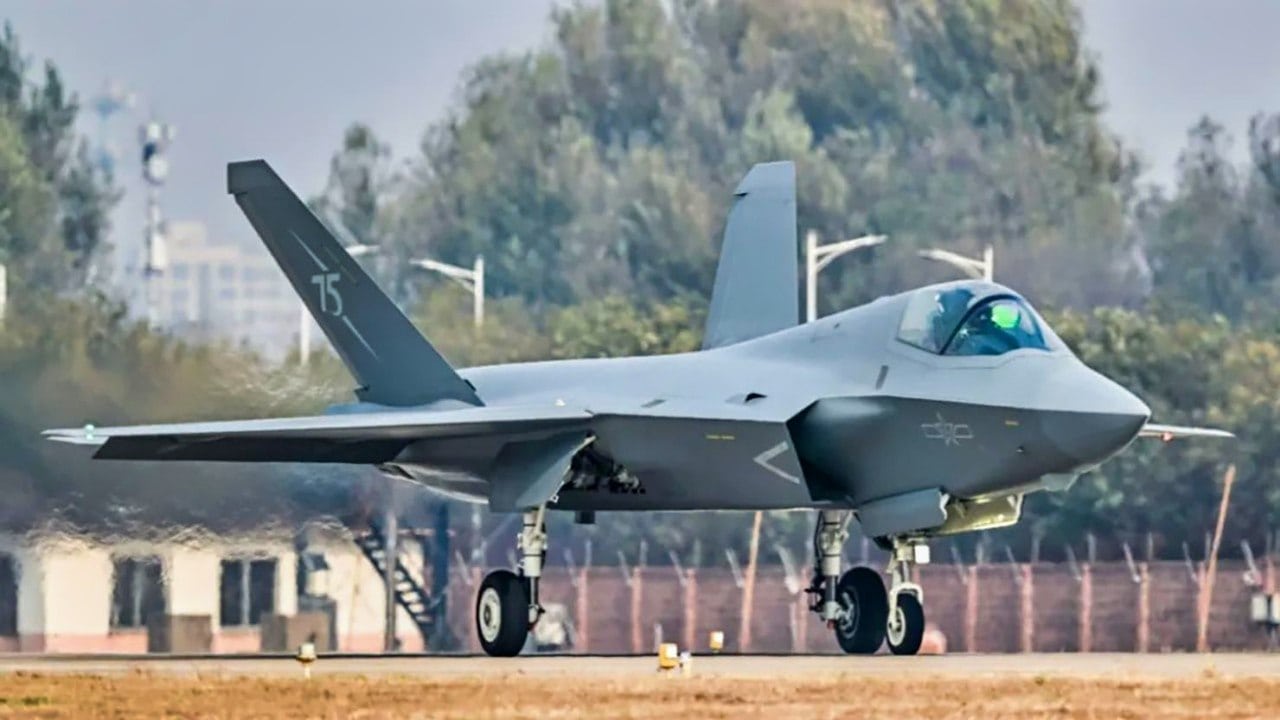
J-35A Fighter from China. Image Credit: Chinese Military
Given these many cost question marks, given the ability of the Chinese to provide long-term maintenance (not their strong suit, say previous customers), issues of spare parts availability, and the reliability of Chinese technology over the lifetime of the aircraft.
These are all line items that usually give potential buyers pause when the Shenyang or Chengdu salesmen come calling.
Nations that have the financial wherewithal to afford a 5th-generation fighter will therefore elect to buy from the U.S. or another allied partner nation. Those suppliers will offer far better interoperability with NATO and decades of proven technology.
All of which makes for what most government procurement offices are always looking for: lower risk.
MORE – Canada Won’t Commit to the F-35, and That’s A Problem
About the Author: Reuben F. Johnson
Reuben F. Johnson has thirty-six years of experience analyzing and reporting on foreign weapons systems, defense technologies, and international arms export policy. Johnson is the Director of Research at the Casimir Pulaski Foundation. He is also a survivor of the Russian invasion of Ukraine in February 2022. He worked for years in the American defense industry as a foreign technology analyst and later as a consultant for the U.S. Department of Defense, the Departments of the Navy and Air Force, and the governments of the United Kingdom and Australia. In 2022-2023, he won two awards in a row for his defense reporting. He holds a bachelor’s degree from DePauw University and a master’s degree from Miami University in Ohio, specializing in Soviet and Russian studies. He lives in Warsaw.