
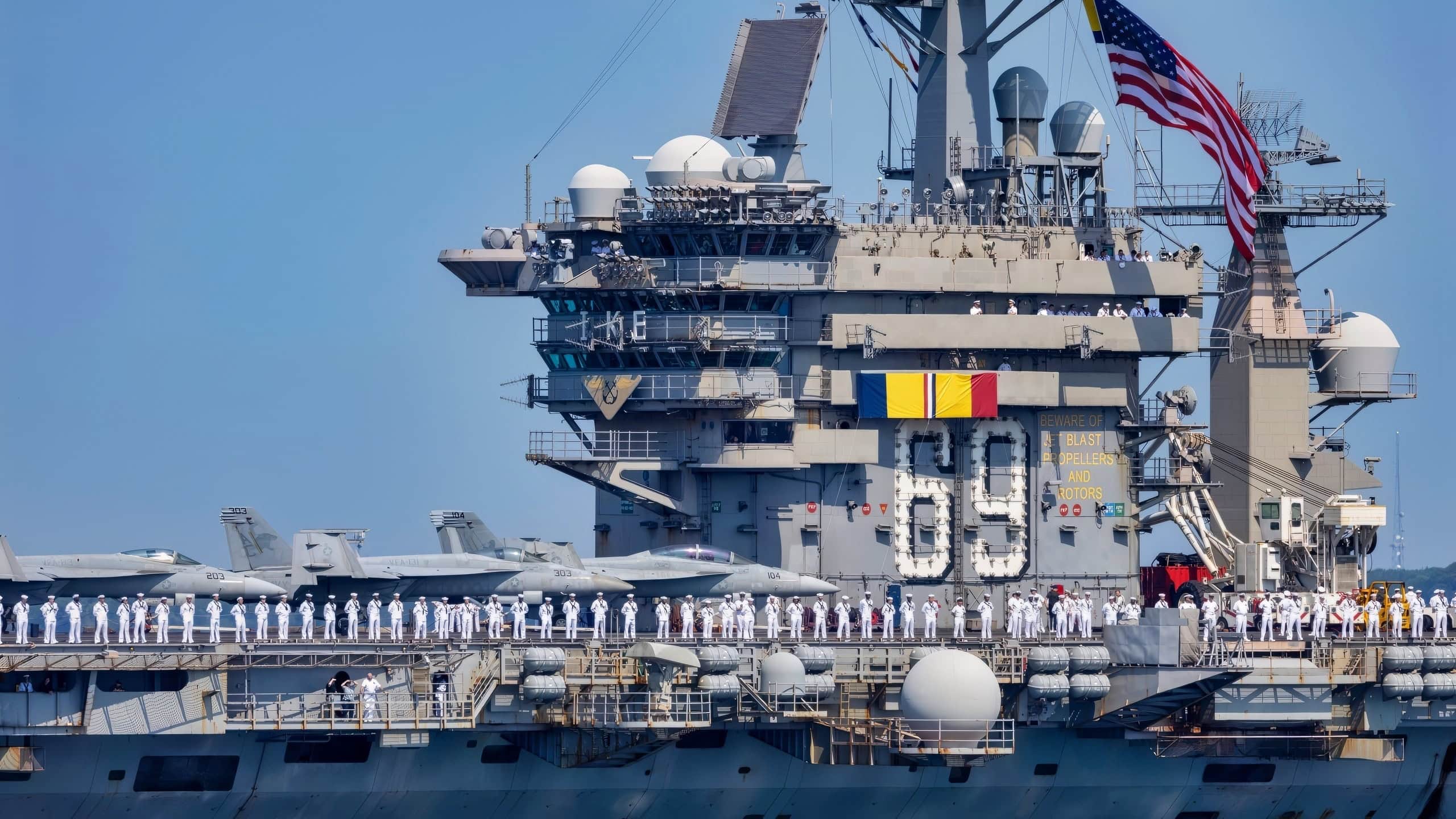
DF-21D, DF-26B, DF-17, and DF-27 — Inside China’s Four ‘Carrier Killer’ Missiles and Why None of Them Have Been Proven in Combat
With the current air campaign against Iran still in full swing, much has been written (and the excessive pearl-clutching) over Iranian missiles possibly sinking a US aircraft carrier has been well-documented.
And despite Iran claiming it had hit an aircraft carrier in the Gulf, it has not. And it isn’t nearly as easy to hit a moving aircraft carrier as some would have you believe.
Some analysts argue that the carrier’s age may be nearing its end. Does the War Department view the aircraft carrier as an increasingly obsolete power-projection platform due to the threat of China’s newest and longer-range missiles? They have a much better range and accuracy than before.
US War Secretary Pete Hegseth set tongues wagging last year when he made the statement that Chinese hypersonic missiles could sink all US aircraft carriers within minutes of a potential conflict.
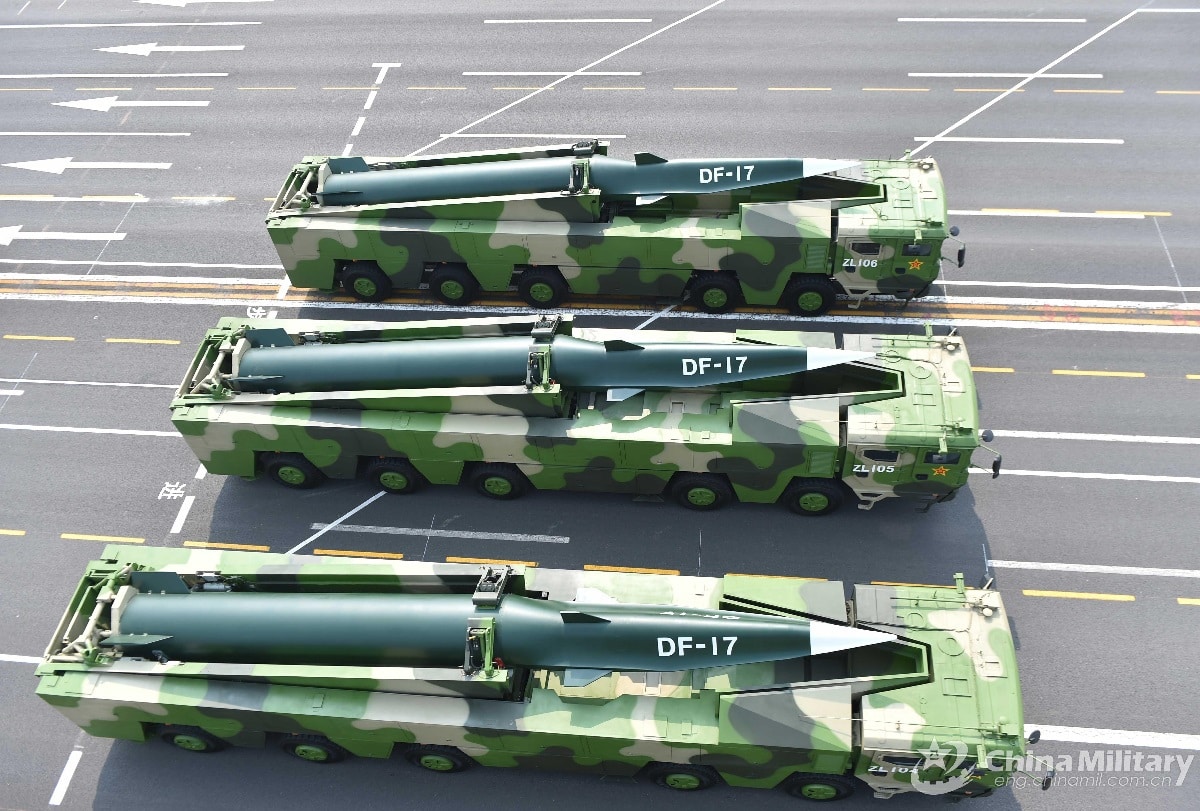
Chinese DF-17 missiles. Image: Chinese internet.
“So, if our whole power projection platform is aircraft carriers, and the ability to project power that way strategically around the globe. And, yeah, we have a nuclear triad and all that, but [carriers are] a big part of it. And if 15 hypersonic missiles can take out our 10 aircraft carriers in the first 20 minutes of a conflict, what does that look like?” he said in an earlier interview.
While that may have been hyperbole to gain greater traction for a larger defense budget, he is correct in his assessment that China has upgraded its armed forces for one purpose: to confront and defeat the United States.
But is the aircraft carrier as vulnerable as the old battleships some would suggest? China obviously doesn’t believe so; it has three carriers, is building a fourth, and plans to have nine carriers by 2035.
China’s Anti-Access/Area Denial(A2/D2) Strategy:
China’s “carrier-killer” missiles are a core component of its broader A2/AD strategy, intended to push U.S. naval forces beyond an effective strike range.
The strategy was influenced by a 1996 incident during the Taiwan Strait Crisis, when China felt humiliated by its inability to counter U.S. carrier groups.

PACIFIC OCEAN (April 29, 2021) Two F/A-18 Super Hornets assigned to Carrier Air Wing (CVW) 11 launch from the flight deck of the aircraft carrier USS Theodore Roosevelt (CVN 71), April 29, 2021. The Theodore Roosevelt Carrier Strike Group is on a scheduled deployment conducting routine operations in U.S. 3rd Fleet. (U.S. Navy photo by Mass Communication Specialist 3rd Class Erik Melgar) 210429-N-XX200-4059
China has developed a “Kill Chain,” a sophisticated network of reconnaissance satellites, over-the-horizon radars, and drones to locate, track, and provide targeting data for its anti-ship missiles.
In a conflict, China would likely launch a coordinated, high-volume salvo of anti-ship missiles to try to overwhelm a carrier strike group’s defenses. Let’s take a look at China’s anti-ship missile capabilities.
China’s Growing Hypersonic Missile Arsenal:
The Chinese military has built up its ballistic missile force and its arsenal of anti-ship missiles to deny the US Navy aircraft carrier strike groups access to the Western Pacific in a war sparked by an invasion of Taiwan.
China’s “carrier-killer” strategy is based on three land-based missile systems. The DF-21D is the original, a medium-range ballistic missile (MRBM) with a maneuverable warhead designed to strike U.S. carriers inside the First Island Chain.
The DF-21D is capable of rapid in-field reloading. This is a road-mobile, medium-range anti-ship ballistic missile (ASBM).
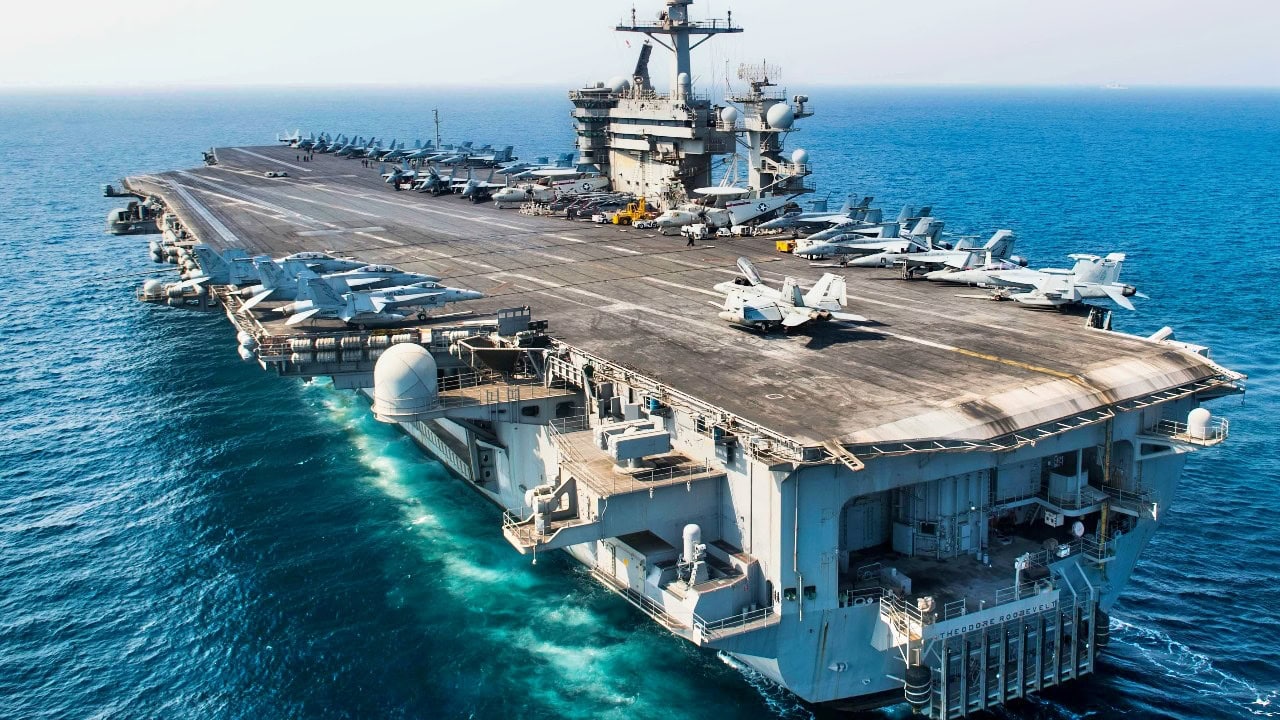
(Oct. 10, 2015) The aircraft carrier USS Theodore Roosevelt (CVN 71) transits the Arabian Gulf. Theodore Roosevelt is deployed in the U.S. 5th Fleet area of operations supporting Operation Inherent Resolve, strike operations in Iraq and Syria as directed, maritime security operations and theater security cooperation efforts in the region.
It is equipped with a maneuverable re-entry vehicle (MaRV) and flies at hypersonic speeds during its final phase, making it difficult for existing missile defense systems to intercept, and has a range of 1,500 to 2,000 km.
In 2013, the missile was tested against a ship target roughly the same size as contemporary U.S. aircraft carriers.
The DF-26B is a longer-range IRBM (4,000 km) that extends this threat to U.S. bases in the Second Island Chain.
Dubbed the “Guam Killer”, it is “enough to send all the American aircraft carriers within and beyond the Second Island Chain to the bottom of the sea”, said Yangtse Post military commenter Chen Gwangwen.
The DF-26 anti-ship ballistic missile variant can rapidly be swapped with conventional and nuclear land-attack warheads. It is capable of nuclear precision strikes, potentially with low-yield optionality.
In addition to conventional anti-ship and conventional and nuclear land-attack payloads, it is mobile and can be moved rapidly after firing.
China has described the DF-21 and the DF-26B as “Carrier Killers.”
China’s numerous DF-17s carry hypersonic glide vehicles to evade U.S. and allied radar and ballistic missile defenses. “The DF-17 has demonstrated a high degree of accuracy in testing, with one U.S. government official saying a test warhead was “within meters” of its intended, stationary target.
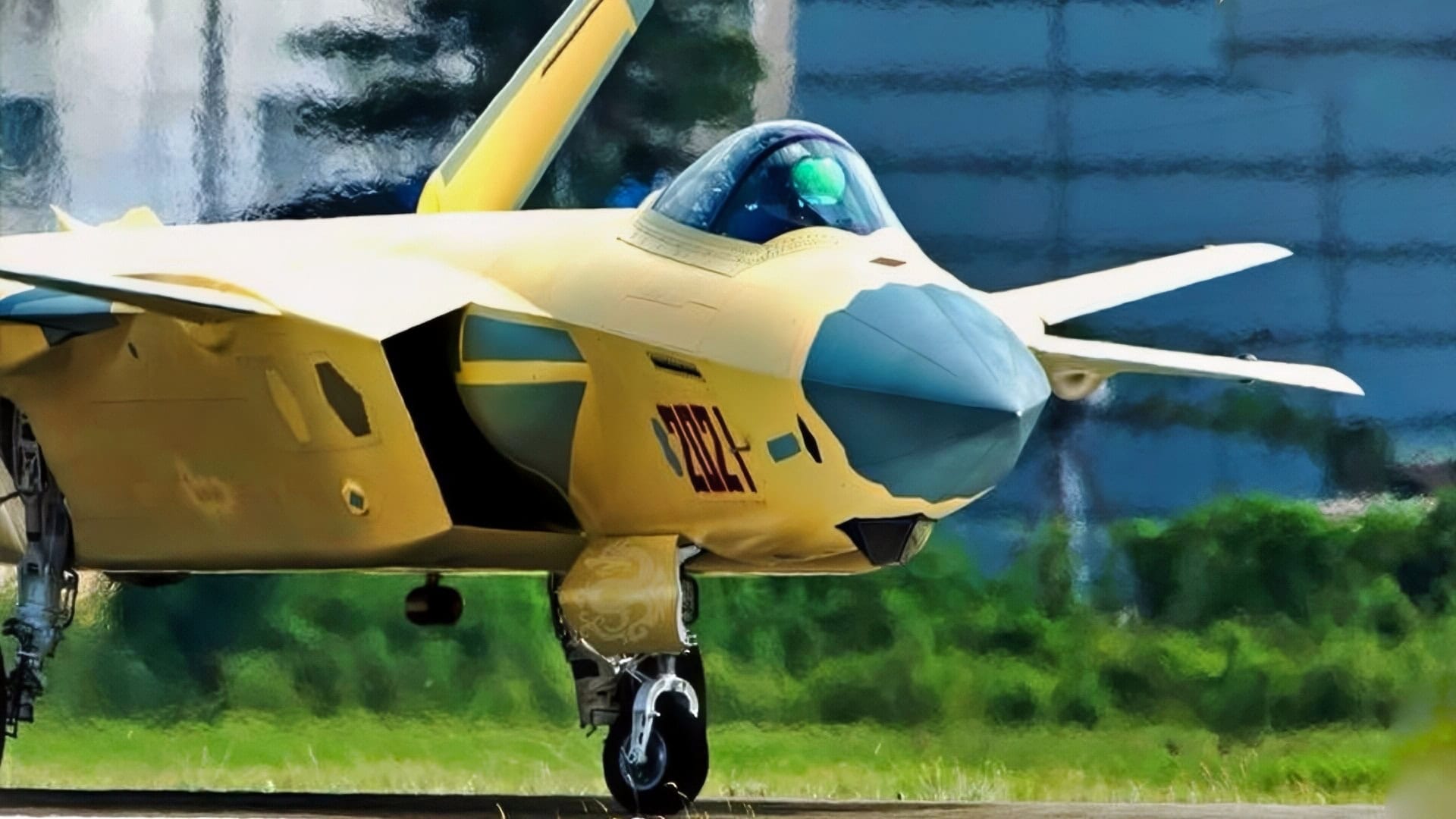
China’s J-20 Mighty Dragon in Yellow. Image Credit: Screenshot.
U.S. defense officials have also said the DF-ZF HGV performed “extreme maneuvers” and “evasive actions” in previous test flights,” a CSIS Missile Threat essay says.
China successfully tested its DF-27 intermediate-range ballistic missile with a hypersonic glide vehicle in 2023.
China test-fired an intercontinental ballistic missile into the Pacific Ocean last September, adding to already heightened tensions in the region where multiple countries have overlapping territorial claims, and both Beijing and Washington seek to project their influence.
Drew Thompson, a former U.S. defense official, said the test launch, which coincides with the U.N. General Assembly meeting in New York, “is a pretty blunt signal” to the international order.
“China is signaling that its forbearance has limits, that it is prepared to use its most powerful weapons to deter adversaries or punish them if needed, if deterrence fails,” he said.
Accurate Targeting Of Moving Carriers Is No Easy Feat:
However, accurate targeting also depends on the Chinese systems’ ability to track a moving American vessel and penetrate newer, more advanced missile systems.
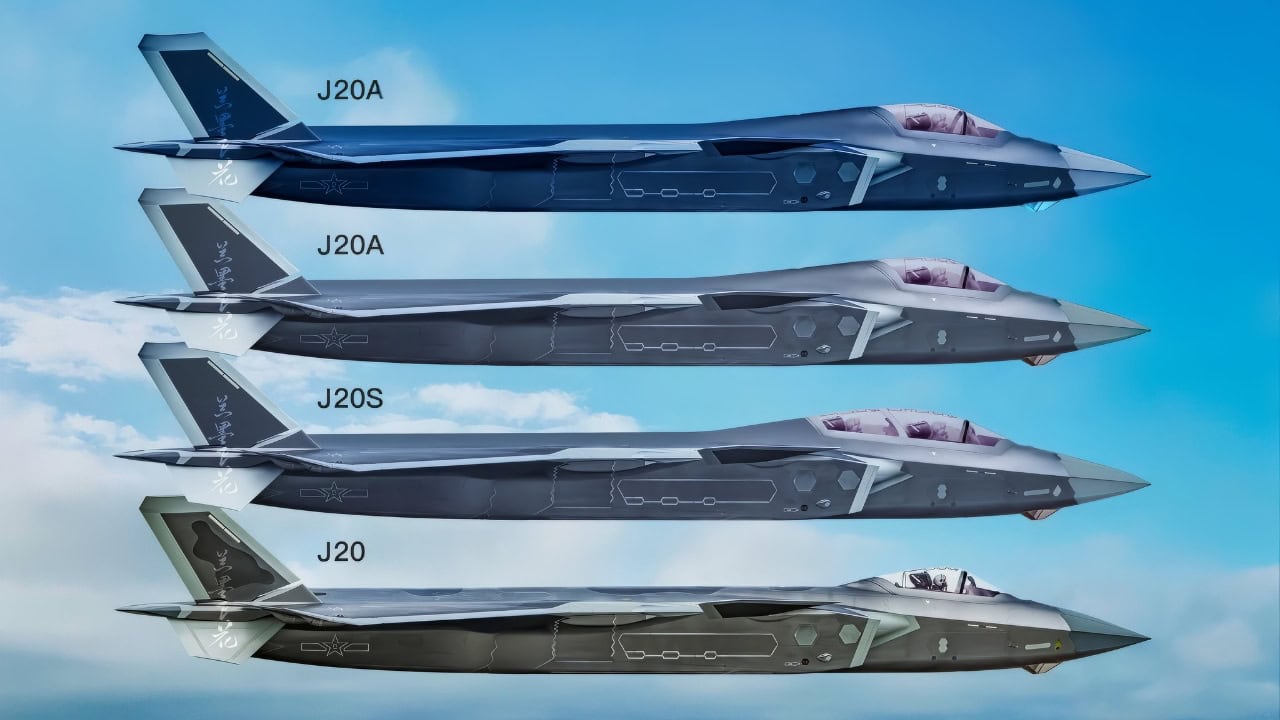
J-20 fighter diagram. Image Credit: Creative Commons.
The Chinese will have to fuse efforts to use satellites, over-the-horizon radars, airborne and maritime scouts, and drones to track and fix US aircraft carriers. While it sounds easy, it has never been proven in combat. This will also entail sending course corrections while the missiles are in flight.
US Layered Air Defenses And Countermeasures:
The Chinese do have thousands of missiles that they can salvo against US aircraft carrier strike groups in the event of an invasion of Taiwan, which many analysts believe will happen by 2027.
The U.S. military continues to develop and field countermeasures to address the threat posed by these missiles.
The US will utilize a layered defense strategy. A carrier strike group isn’t a single ship. An American carrier strike group will have at least three surface combatants, such as Ticonderoga-class guided missile cruisers or Arleigh Burke-class guided missile destroyers.
These warships pack big air defense firepower, including Standard Missiles 2, 3, and 6 missiles, as well as RIM-162 Evolved Sea Sparrow Missiles (ESSM). An Arleigh Burke-class destroyer, for example, can carry nearly 100 missiles and a Ticonderoga-class nearly 125, airborne early warning, electronic attack, decoys, and fighters, where they use a multi-layered defense system that includes:
For intercepting ballistic missiles in different phases of flight.
Electronic Warfare (EW): EA-18G Growler aircraft can blind or jam sensors and data links. Nulka active decoys and other shipborne deception tools can pull seekers off real targets in the terminal phase..
Close-in Weapons Systems are a last line of defense. The Phalanx CIWS is a rapid-fire, computer-controlled, radar-guided gun that can defeat anti-ship missiles and other close-in threats on land and at sea.
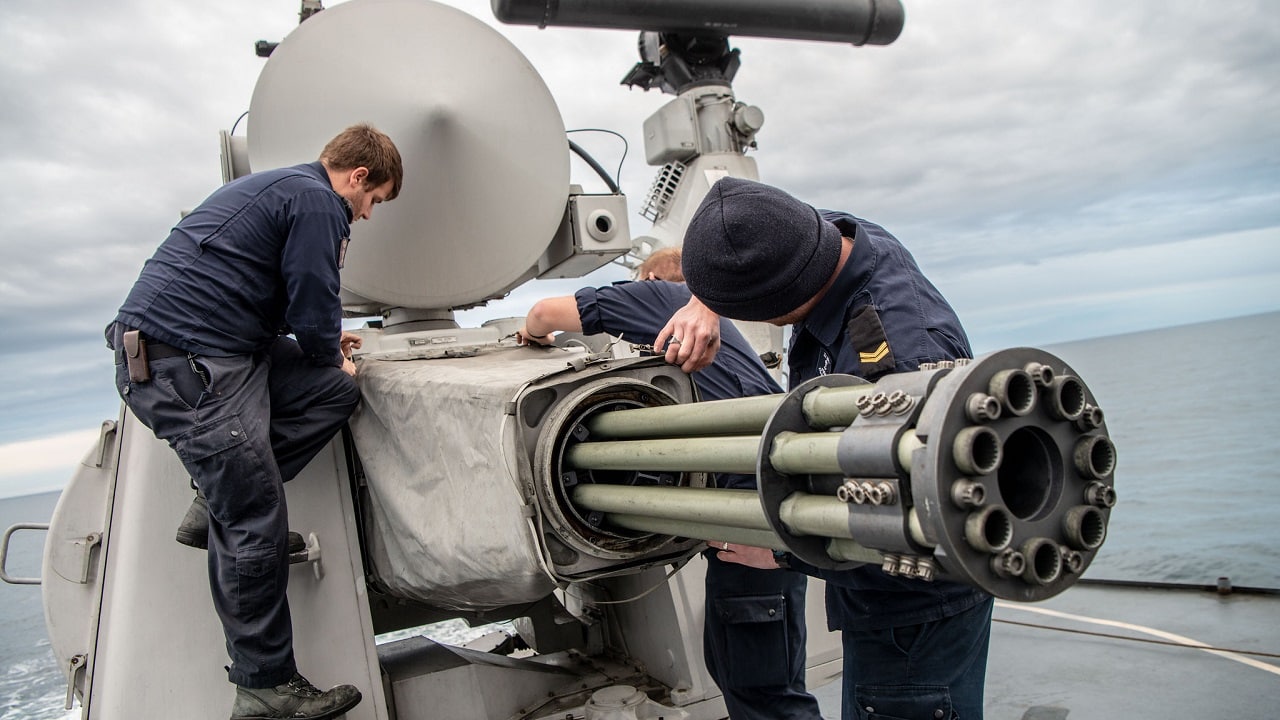
Crew members aboard Standing NATO Maritime Group Two (SNMG2) flagship HNLMS De Ruyter inspect their Goalkeeper Close in Weapons System (CIWS) before a gunnery exercise as part of NATO exercise Trident Juncture 2018 on October 31, 2018.
Newer technologies, such as the MQ-25 Stingray unmanned refueling drone, can extend the range of carrier-based aircraft, allowing the carrier strike group to operate further from China’s missile range.
Submarines Are An Underrated Part Of CSG Defenses:
The U.S. is exploring ways to counter the A2/AD strategy by using submarines, unmanned systems, and distributing forces across a broader area to complicate Chinese targeting.
“Rather than talking about the vulnerability of the aircraft carrier … we should think about it as perhaps the most survivable airfield in the region,” Chief of Naval Operations Adm. John Richardson said at a recent Brookings Institution event when National Defense asked him about the new Chinese weapons and how the Navy plans to counter them.
Tom Callender, a senior research fellow for naval warfare and advanced technologies at the Heritage Foundation and a former Navy officer, said that despite the number of hypersonics that China has, it does not signal the end of the carrier.
“I don’t want people to throw in the towel … with China or Russia saying, ‘Oh, that’s it. Game over. We’re done,” he added.
“It makes the problem a little harder, but it’s not insurmountable, and we’re already working ahead to adapt and overcome and regain advantages in there. It’s not going to be easy … but it’s not the doomsday that I think some people will have you believe.”
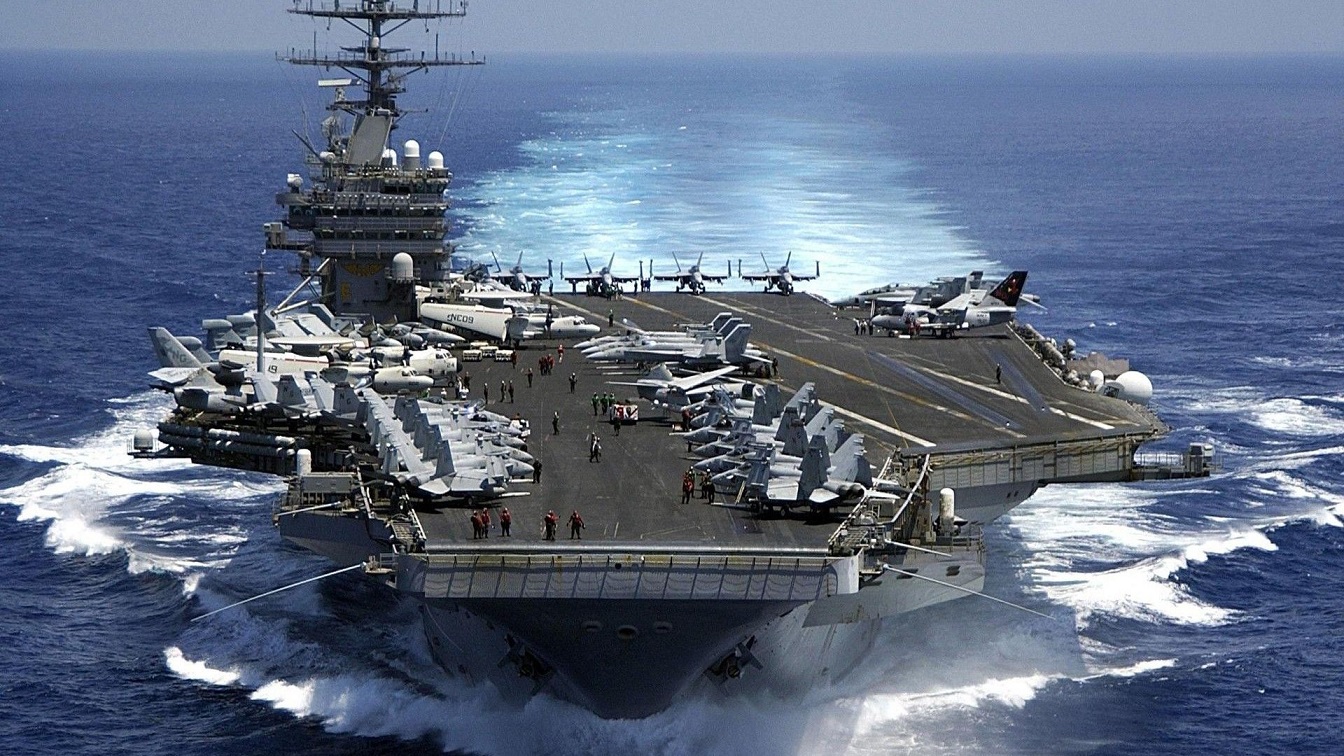
Image of U.S. Navy Nimitz-class Aircraft Carrier.
China Believes In Aircraft Carriers:
China, however, doesn’t view the carrier as obsolete, given the production rate of new carrier development and construction. As of January 2026, China operates three aircraft carriers—Liaoning (Type 001), Shandong (Type 002), and the advanced Fujian (Type 003)—with plans to expand its fleet to six by the 2030s and up to nine by 2035.
The Fujian, commissioned in late 2025, features advanced electromagnetic aircraft launch systems (EMALS), marking a significant shift toward a blue-water navy. China has built a dense anti-access/area denial (A2/AD) envelope to protect its fleet and homeland from US strikes.
China is also advancing its own naval aviation. The introduction of the J-35 stealth carrier fighter and the KJ-600 airborne early warning aircraft strengthens China’s ability to contest sea and air control.
While Chinese military doctrine emphasizes that American carriers are vulnerable to China’s Anti-Access/Area Denial (A2/AD) capabilities, Beijing views aircraft carriers as essential for projecting power far from its shores, protecting global maritime supply lines, and achieving its goal of becoming a “world-class” military.
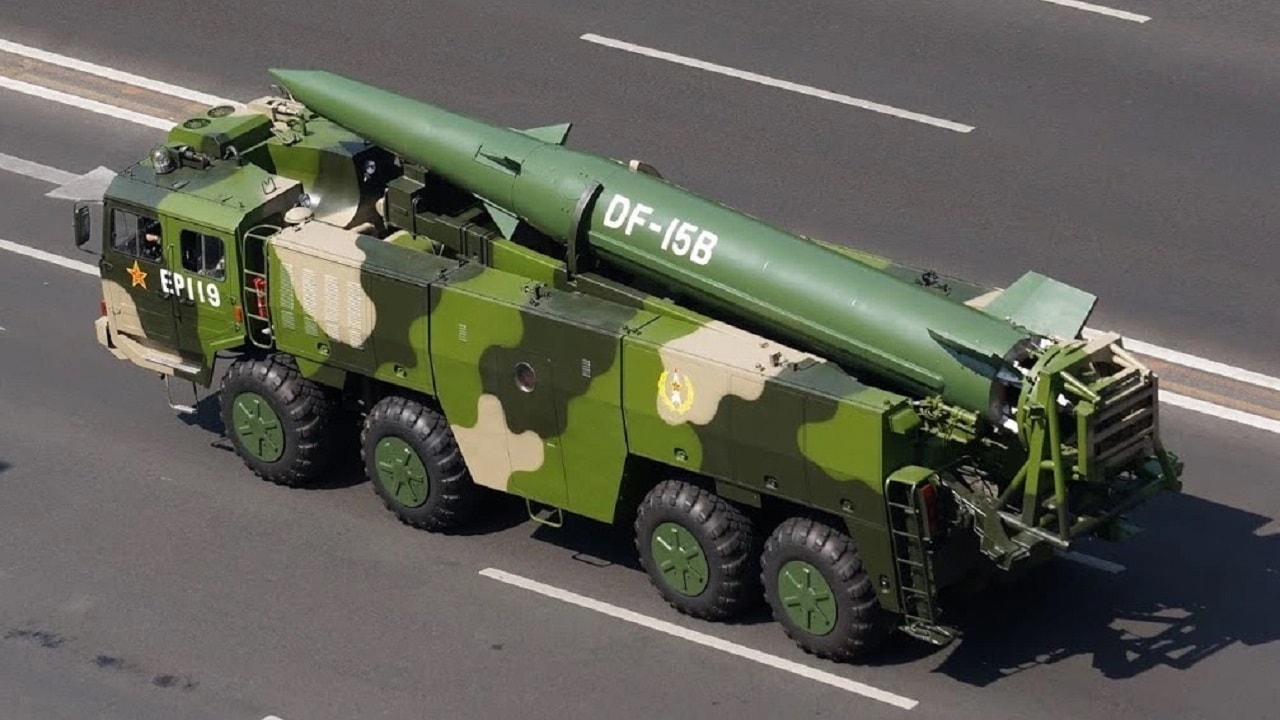
DF-15B missile from China
Chinese and Iranian Propaganda Have Definitely Colored Our View:
One thing to keep in mind is that all of these claims about China’s weapons capabilities come from China itself. As the piece from “War on the Rocks” that was cited earlier stated:
“China has the world’s largest bureaucracy to propagandize its greatest strengths while hiding (or at least dismissing) its greatest weaknesses. America, by contrast, ultimately bears all for all to see. It is an elementary analytical error to confuse the respective great powers’ “dirty laundry” with their “designer clothes.”
Obviously, this doesn’t negate any of the threat levels the US would face if war did break out between the two superpowers. Complacency is death in wartime.
The Iranians have made a big show of shooting missiles at a stationary target resembling a US carrier in the desert. While it looks impressive to the uninitiated, hitting a moving target surrounded by support ships is another matter.
The US would obviously face a daunting task in an Indo-Pacific war with China, and while the mobile missiles would themselves be challenging to track and destroy, the Chinese Navy, which is crucial for the invasion of Taiwan, would not.
And the US Navy and Air Force would target Chinese carriers, and landing ships needed for an invasion. That in itself would be a problematic scenario for the Chinese to overcome. And the entire purpose of China firing on our carriers is a Taiwan invasion.

DF-17. Image Credit: Creative Commons.
And what’s lost in the threat is that China’s own ships are more vulnerable to missile attacks than US carrier strike groups are. They have to reach and support an invasion of Taiwan. Chinese air defenses for their navy are not currently up to US standards, although they are improving.
The big question remains: would the carrier strike groups have enough non-kinetic means to defend themselves against a salvo of hypersonic weapons launched from China? Eventually, the support vessels will run short of missiles for their defense. This is a subject that has been brought up during the current air campaign against Iran.
As the face of war evolves, the ability to adapt to evolving threats must evolve as well. And having a steady supply of air defense munitions will be critical.
About the Author: Steve Balestrieri
Steve Balestrieri is a National Security Columnist. He served as a US Army Special Forces NCO and Warrant Officer. In addition to writing on defense, he covers the NFL for PatsFans.com and is a member of the Pro Football Writers of America (PFWA). His work was regularly featured in many military publications.