$1.5 Trillion Is the Largest Defense Budget in History — It Doesn’t Matter If 99% Goes to Legacy Systems and Less Than 1% Goes to Innovation
The President’s budget request landed on Friday on Capitol Hill with a $1.5 trillion topline for defense spending. If enacted, it would represent the largest defense budget in U.S. history and would exceed budgets during President Reagan’s military buildup and even World War II.
But in an era defined by increasing geopolitical conflict and rapid technological change, ensuring America’s military advantage will require more than just a higher budget request from the President or even more appropriations from Congress.
When it comes to how the Pentagon actually allocates contracts, there’s an uncomfortable reality: our current defense spending is misaligned with modern warfare.
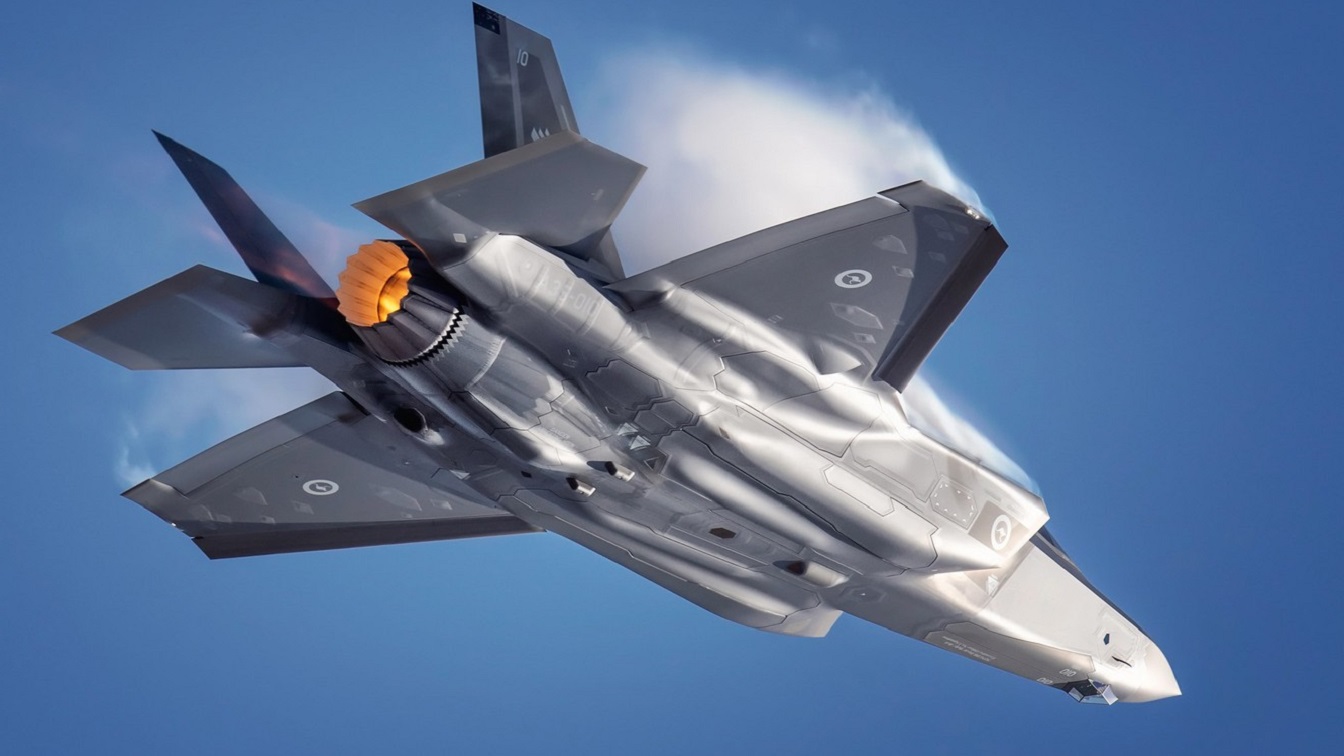
F-35. Image Credit: Creative Commons.
There is some good news. The signal the U.S. government is sending to the national security technology ecosystem is getting clearer – and louder. The rhetoric around “winning the innovation race” is now ubiquitous.
Leaders from Congress to the White House to the Pentagon are recognizing that autonomy, software, and emerging technologies will define the future battlefield. They have implemented reforms, from standing up new offices to expanding pathways for non-traditional contractors. They are relentlessly pursuing delivering capabilities at speed and scale.
That’s real progress toward improving the demand signal – but if you follow the money, the signal flickers.
While the Pentagon’s defense tech spending has doubled in recent years, less than 1% of Pentagon contract spending goes to top defense technology companies.
That statistic alone should set off alarm bells from Washington to Silicon Valley and everywhere in between.

A 2nd Bomb Wing B-52H Stratofortress taxis under a spray of water after returning from a mission July 12, 2014, at Barksdale Air Force Base, La. This marked the last flight for one crew member on the aircraft, Lt. Col. Ronald Polomoscanik, the 343rd Bomb Squadron director of operations, who is retiring after 23 years of service. (U.S. Air Force photo by Master Sgt. Greg Steele/Released)
This isn’t merely a budgetary quibble. It has battlefield implications.
In Operation Epic Fury, the United States has relied heavily on weapons and platforms that date back decades. Nearly every system the U.S. military has deployed in Iran is from the Reagan administration or earlier. These are important and capable systems, to be sure – but many are 40, 60, or even 80 years old.
Only one U.S. weapons system to see operational use in Iran was developed in the last 15 years. The Low-cost Unmanned Combat Attack System (LUCAS) was developed as a cheaper, rapidly produced option for autonomous drones.
The system moved from initial concept to operational fielding in just 18 months – a remarkably fast development cycle for the U.S. military. It provides a cheaper alternative to missile systems like the Tomahawk: each LUCAS drone costs around $35,000 compared with a traditional missile price tag in the millions. It’s worth noting that LUCAS was a reverse-engineered response to the Iranian Shahed drone.
This should serve as a wakeup call. So much of the U.S. combat toolkit is aging. So, few systems represent new innovation, and those that do are derived from adversary designs. It should force hard questions about the health of America’s national security innovation base.
None of this is an argument for abandoning decades-old legacy systems or sidelining the traditional defense industrial base. The United States does not face a choice between traditional defense primes and defense tech disruptors, or between legacy platforms and emerging technologies. We need all of the above.
The existing defense industrial base provides scale and reliability, delivering complex systems at global reach. No one can question the importance of the USS Abraham Lincoln aircraft carrier, built in the 1980s, to U.S. power projection in the Middle East in recent weeks.
New entrants bring speed and iteration, promising commercial-sector agility and software-first innovation. The future of the U.S. military advantage depends on integrating these strengths rather than pitting them against each other. And U.S. defense spending should reflect that strategy.
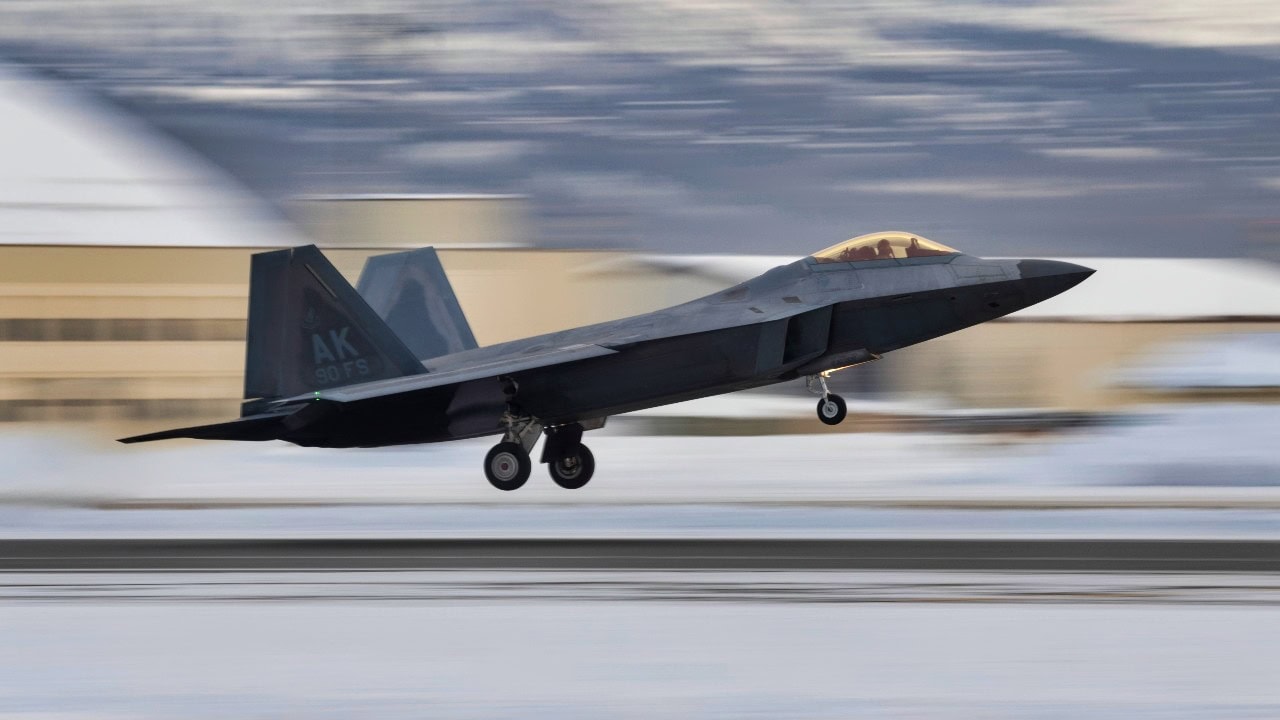
A U.S. Air Force F-22 Raptor assigned to the 3rd Wing takes off from Joint Base Elmendorf-Richardson, Alaska, Nov 21., 2023. The F-22 Raptor is a critical component of the Global Strike Task Force, and is designed to project dominance rapidly and at a great distance to defeat threats. (U.S. Air Force photo by Alejandro Peña)
With over 99% of Pentagon contract dollars still flowing to a small number of large, incumbent contractors, the funding is not aligning to stated priorities. Without meaningful procurement dollars going to defense tech companies, they will not be able to scale.
This is where Congress and the Pentagon must drive change – not just with policy reforms and strategy announcements, but with real investment.
Topline spending matters. Congressional defense appropriations for 2026 totaling $1 trillion were a step in the right direction. The President’s request for $1.5 trillion in defense spending for 2027 is certainly encouraging. But increasing the size of the pie is only part of the equation. How that pie is divided will determine whether the United States can sustain its technological edge.
If defense tech companies continue to receive less than 1% of total Pentagon contract spending, a larger budget alone will not solve the underlying problem.
What’s needed is a deliberate rebalancing that preserves critical legacy capabilities while significantly expanding investment in emerging technologies. That means moving beyond pilot programs and prototypes into scaled procurement. It means creating predictable demand signals that companies and their investors can rely on – because partners in the private sector are watching closely.

An F-22 Raptor aircraft takes off from Joint Base Pearl Harbor-Hickam, Hawaii, Aug. 8, 2024. The F-22 Raptor is a fifth-generation stealth fighter designed for air dominance, with capabilities in precision attack, advanced avionics, and unparalleled maneuverability. (U.S. Air National Guard photo by Tech. Sgt. Joseph Pagan)
Over the past several years, venture capital has begun to flow into defense technology at unprecedented levels. VC investment in defense tech companies totaled $56 billion in 2025, up 83% from the previous year. VC-backed startups are tackling everything from autonomous systems to space capabilities to advanced manufacturing. The influx of private capital into the defense tech ecosystem is a strategic asset for the United States, enabling innovation at a pace the government alone cannot match.
But venture capital is not patient capital. It follows signals, and it can just as quickly flow elsewhere.
If investors conclude that the Pentagon is not a reliable customer, or that procurement pathways – not just prototyping or development contracts – remain too slow and uncertain, the current momentum is at risk of dissipating. Companies will pivot to purely commercial markets. Talent will migrate. And the defense innovation ecosystem will shrink, just as strategic competition is intensifying.
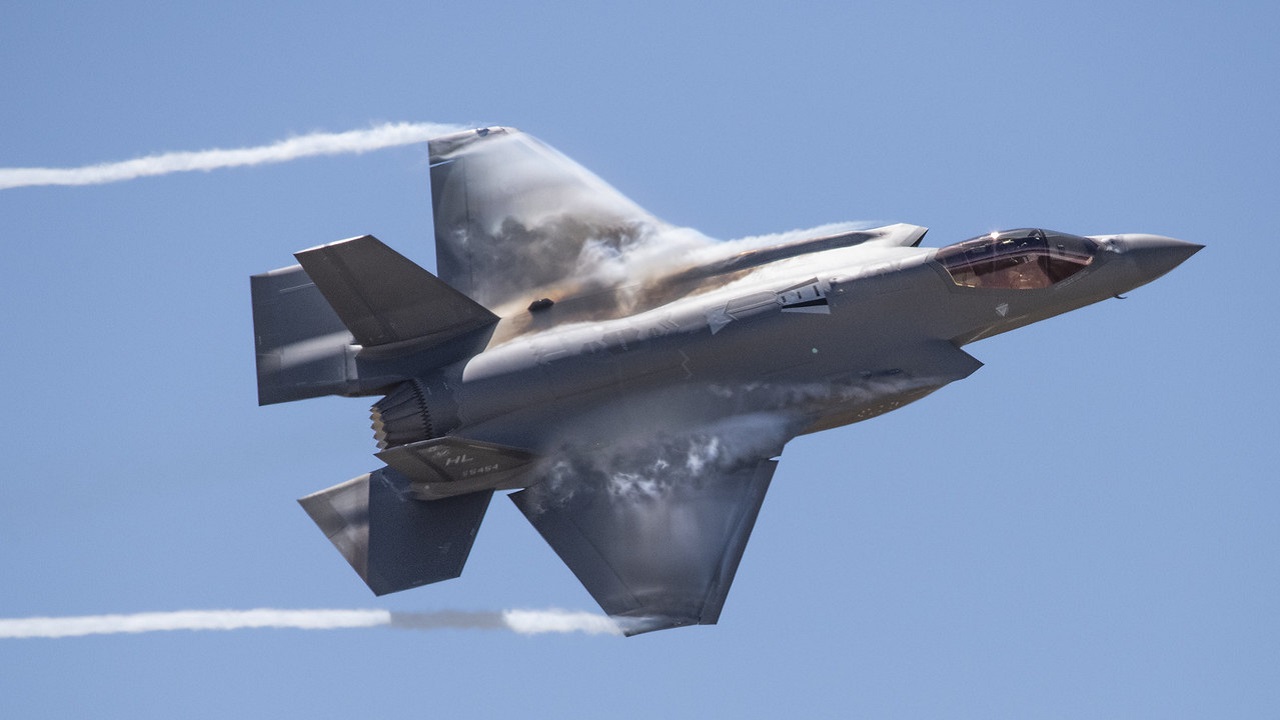
U.S. Air Force Maj. Kristin Wolfe, F-35A Lightning II Demonstration Team commander and pilot, showcases the unique aerial capabilities of the USAFs most advanced 5th generation multi-role stealth fighter, the F-35A, during Wings Over Solano at Travis Air Force Base, California, May 15, 2022. The Wings Over Solano open house and air show provided an opportunity for the local community to interact directly with the base and its Airmen and see capabilities on full display at Travis AFB. (U.S. Air Force photo by Heide Couch)
Sustained public investment is required to demonstrate the consistency and credibility of demand. The Pentagon has made real progress in recent years. The defense technology conversation has changed, and leaders in Washington understand the urgency. The next phase requires translating that urgency into dollars – and doing so at scale.
As President Reagan said 40 years ago, “Innovation is our advantage…But innovation is not enough. We have to follow through. Blueprints alone don’t deter aggression. We have to translate our lead in the lab to a lead in the field.”
About the Author: Rachel Hoff
Rachel Hoff is the Policy Director at the Ronald Reagan Institute, where she leads the National Security Innovation Base Program that publishes the annual NSIB Report Card. She formerly served as Speechwriter and Policy Advisor to John McCain at the Senate Armed Services Committee.