
The United States and Iran this week agreed to a two-week ceasefire. The announcement came after U.S. President Donald Trump had threatened to annihilate Iran’s civilian infrastructure. The ceasefire is intended to pave the way for a long-term peace agreement that would include a settlement between the United States, its regional allies, and Iran and all its proxies.
Negotiations are expected to begin in Islamabad, with Pakistan mediating between the two sides. Lengthy peace talks remain before any lasting settlement can be reached, and many questions remain unanswered, but there is a possibility that Operation Epic Fury may be nearing its conclusion.
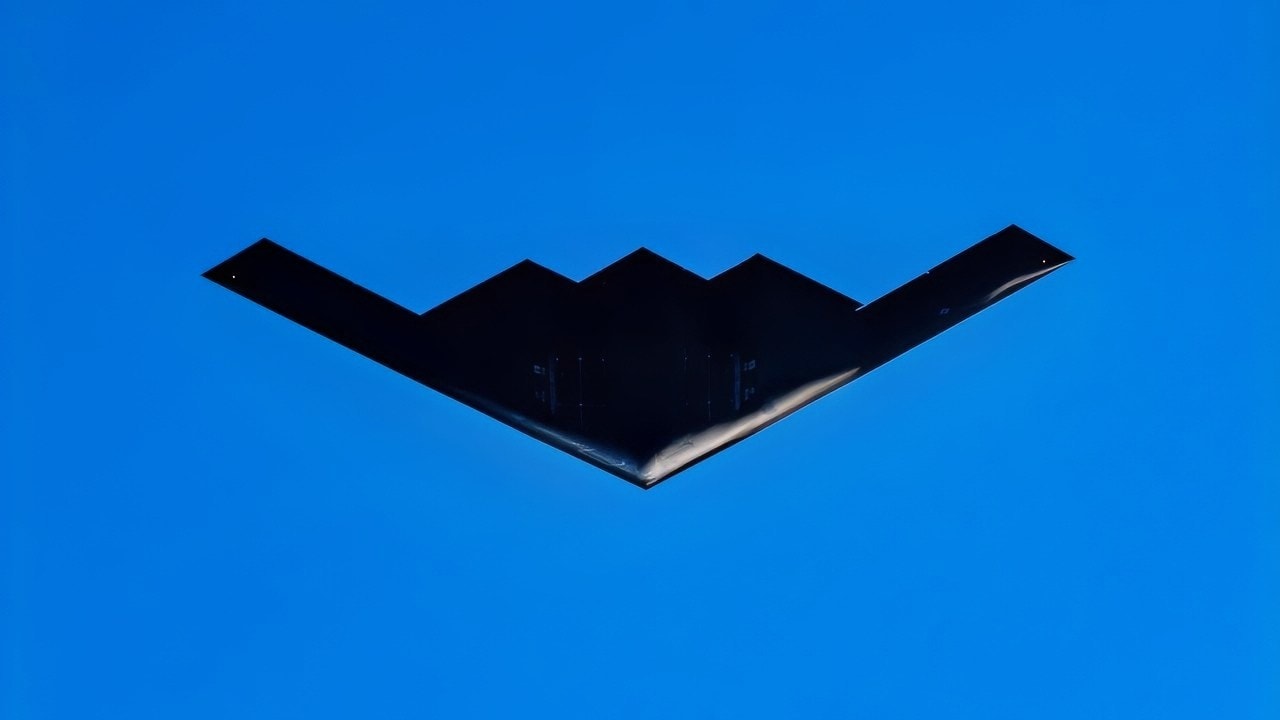
The B-2 Spirit flies over the Rose Parade at Pasadena Ca., Jan. 1, 2024. The Rose Parade is a parade of flower covered floats, marching band, and equestrian units that is produced by the Tournament of Roses. (U.S. Air Force photo by Airman 1st Class Bryce Moore)
Iran War Ceasefire: Don’t Get Your Hope Up Yet
Readers should temper their expectations. While officials from Iran and the United States have expressed optimism that the ceasefire will lead to a lasting peace, this agreement has not yet been fully ratified.
It is still not clear when peace talks will take place, nor was it strictly established when the ceasefire will be implemented—Iran continues to launch missiles at Israel in response to Israeli strikes in Lebanon.
There is no guarantee the ceasefire will last the whole two weeks.
A single ballistic missile launched from Iran, or one Israeli airstrike, could reignite the conflict and stall negotiations indefinitely.
Ceasefires are often used as cover to rebuild and replenish military forces in anticipation of a greater conflict—see Minsk II as an example. The United States could be using the ceasefire as cover to bring more forces into the region and prepare for greater military operations.
Iran likewise could use the pause in strikes to replenish its arsenal of ballistic missiles and relocate some of its air defense assets to secure locations.
This is, admittedly, a rather cynical reading of the situation, but it would not be all that surprising if negotiations suddenly fell apart and hostilities resumed.
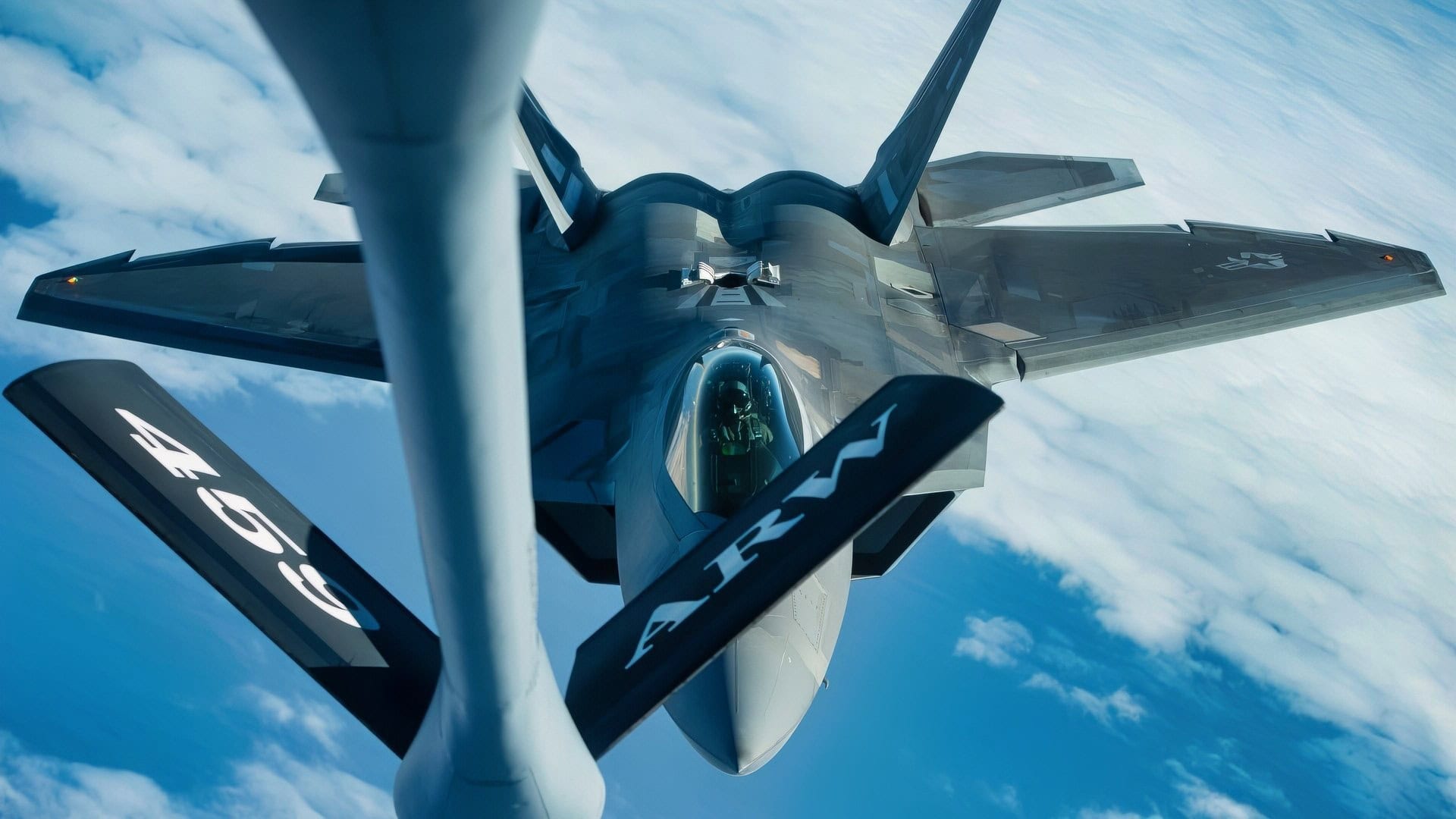
An F-22 Raptor from the Hawaii Air National Guard’s 199th Fighter Squadron, conducts aerial refueling with a KC-135 Stratotanker near Joint Base Pearl Harbor-Hickam, Hawaii, Jan. 15, 2019. The F-22 Raptors conducted interoperability training with the B-2 Spirit bomber deployed here from Whiteman Air Force Base, Missouri. The bombers and more than 200 Airmen are deployed in support of U.S. Strategic Command’s bomber task force mission. Bomber aircraft regularly rotate through the Indo-Pacific region to integrate capabilities with key regional partners and maintain a high state of aircrew proficiency. (U.S. Air Force photo by Master Sgt. Russ Scalf)
What Iran is Demanding
In President Trump’s ceasefire-announcement post, he said that “we received a ten-point proposal from Iran and believe it is a workable basis on which to negotiate.” The ten points proposed by Iran are as follows:
- Strait of Hormuz to be reopened “under the coordination of the armed forces of Iran.”
- Establishment of a “secure transit protocol” in the Strait of Hormuz
- The war against “all components” of Iran’s so-called Axis of Resistance to end
- U.S. forces to withdraw from “all bases and points of deployment within the region.”
- Full payment of compensation to Iran
- Lifting of all primary sanctions
- Lifting of all secondary sanctions
- Termination of all UN Security Council resolutions
- Termination of all International Atomic Energy Agency resolutions on Iran’s nuclear program
- Release of all frozen Iranian assets and properties abroad
One reason it is doubtful the negotiations will go anywhere is that any final settlement that satisfies even a few of these points might represent a pyrrhic victory for Iran. Trump did say the ten points were a “workable basis” for negotiations, but it is unclear whether the United States intends to accept any of them.
Has Operation Epic Fury Achieved Its Goals?
The bright side is that the United States is well-positioned to walk away from this war while claiming victory. One primary goal of Operation Epic Fury was, as stated by Secretary of War Pete Hegseth, to “destroy Iranian offensive missiles, destroy Iranian missile production, destroy their navy and other security infrastructure.”
While Iran’s offensive and defense capabilities have not been completely destroyed, the U.S. Armed Forces inflicted heavy damage on the Islamic Revolutionary Guard Corps. According to some sources, the United States and its allies have launched around 13,000 combat sorties and have hit around 12,300 targets. This alone is enough for the White House to claim victory, even if the IRGC is left as a fighting force once the dust settles.
The Iranian Navy has been effectively neutered. Its most capable surface ships have been destroyed, leaving only two Kilo-class submarines and smaller speedboats at its disposal. Iran’s missile production and launch capabilities have been hit hard. Most of its production of drones and missiles takes place in large underground factories, which are difficult to penetrate—even with U.S. bunker-buster bombs.
While Iran’s volume of ballistic missiles has been reduced significantly since the first week of hostilities, Iran did continue to fire constant volleys of drones and missiles at U.S. and allied locations in the region hours after the ceasefire took hold.
The Iranian Regime is Still in Charge
Regime change was never an official goal of Operation Epic Fury, but it has been a goal of U.S. and Israeli policy toward Iran for a long time, and many officials have expressed hope for regime change since the start of Epic Fury.
In this regard, the United States is likely to leave empty-handed. Despite decapitation strikes against the Supreme Leader and numerous IRGC higher-ups, the regime in Iran has proven to be surprisingly resilient. Its institutions have remained stable despite changing leaders, and the IRGC’s command chain became increasingly decentralized, allowing individual units to remain operational without receiving orders from the top.
The United States can hand-wave this by saying that regime change was never an explicit goal, but the IRGC and the clerical regime will likely remain in control of Iran.
About the Author: Isaac Seitz
Isaac Seitz, a Defense Columnist, graduated from Patrick Henry College’s Strategic Intelligence and National Security program. He has also studied Russian at Middlebury Language Schools and has worked as an intelligence Analyst in the private sector.