
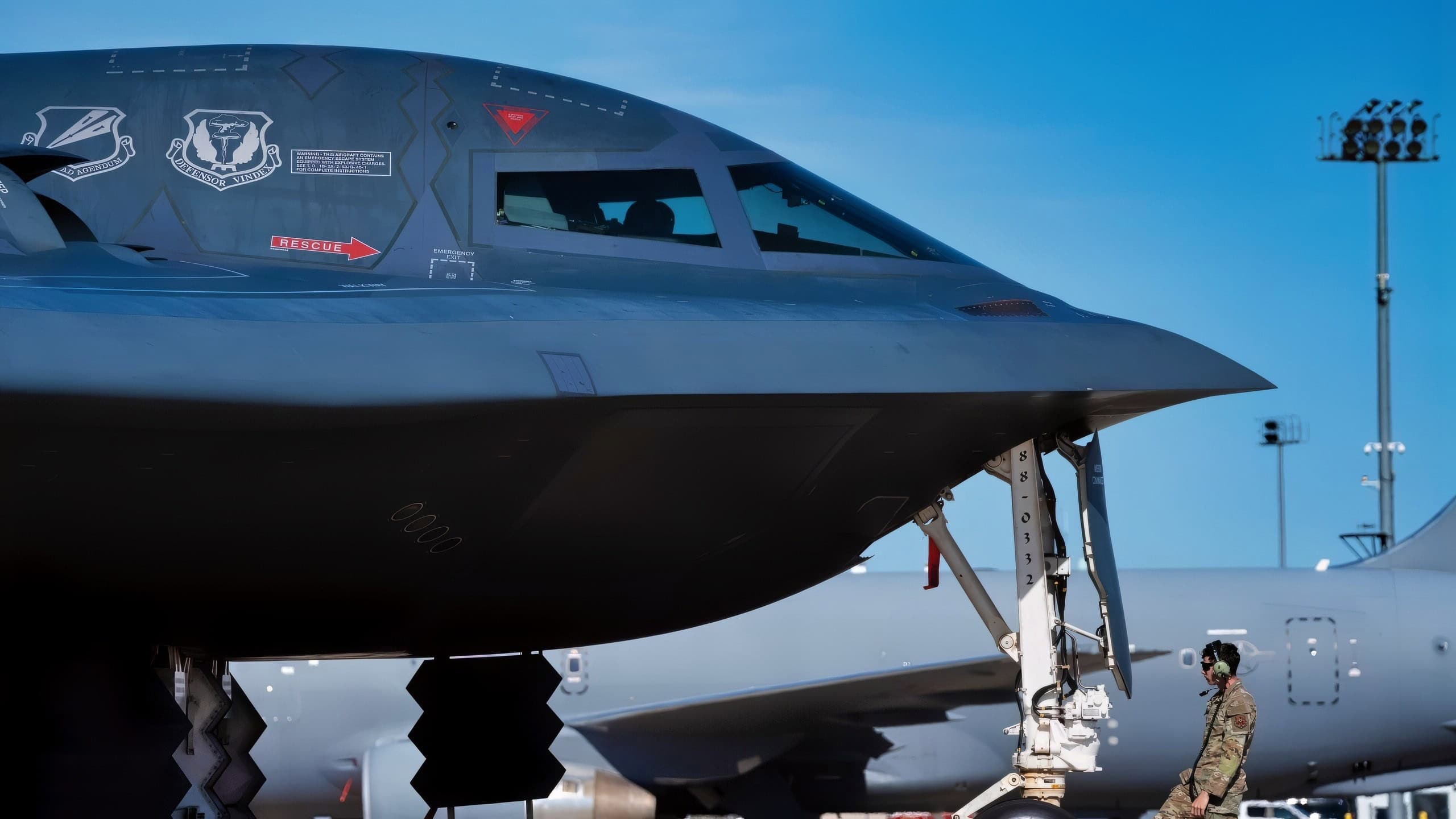
The B-21 Raider is coming, and the B-2 just proved how valuable it will be: Strategic aviation has performed a vital role in Operation Epic Fury; however, none have been more instrumental than the B-2 Spirit. Ever since the start of hostilities, the B-2 has been able to consistently slip through Iranian air defenses, drop its payload, and escape unharmed.
This level of survivability gives B-2 an unmatched advantage over other bombers, who cannot risk entering into any sort of contested airspace. The experience gained in Iran bodes well for the upcoming B-21 Raider, which reportedly employs even greater levels of stealth and low observability.
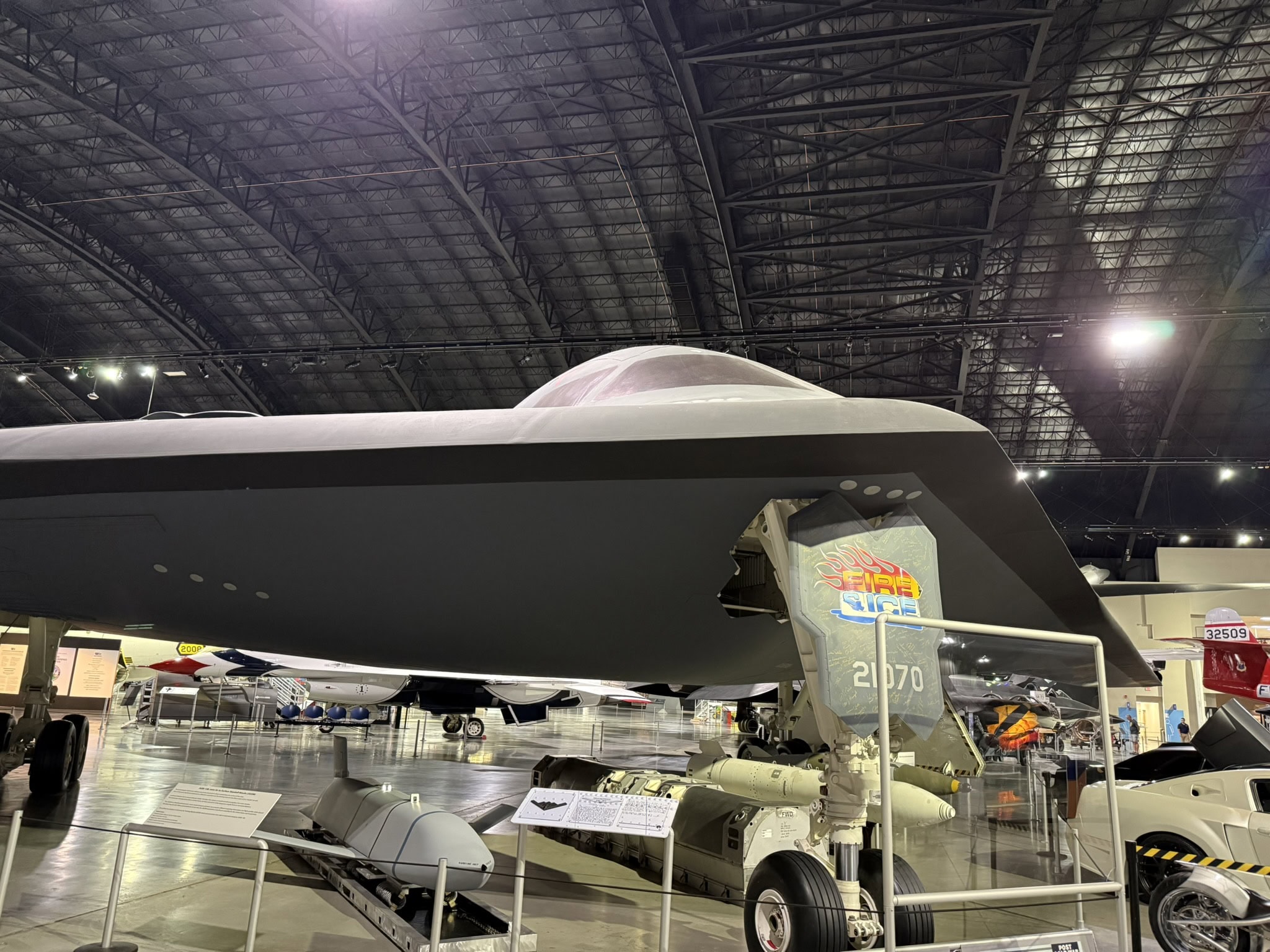
B-2 Spirit Stealth Bomber. 19FortyFive.com Photo from National Museum of the U.S. Air Force Visit in 2025.
The B-2 Spirit in Operation Epic Fury
From the outset, the B-2 was employed in accordance with its original design philosophy. Its goal was to penetrate the most heavily defended airspace to strike targets that could not be reliably neutralized by standoff weapons or non-stealth platforms.
Unlike B-1B and B-52 bombers, which were forward deployed to RAF Fairford in the United Kingdom, B-2 Spirits conducted intercontinental round-trip combat sorties directly from Whiteman Air Force Base in Missouri.
These combat missions usually last around 36 hours nonstop for a full round-trip to and from Iran.
These grueling flights involved multiple aerial refuelings supported by KC-135 and KC-46 tanker aircraft staged along transatlantic and Mediterranean routes, as well as in the broader CENTCOM area of responsibility.
According to senior U.S. military leadership, at least eighteen bomber missions flown during Epic Fury were round-trip sorties originating in the continental United States, with B-2s forming a significant portion of those missions.
The ability to sustain repeated ultra-long-range missions under combat conditions demonstrated U.S. global strike capability unmatched by any other air force.
The Importance of Stealth Bombers in Modern Combat
What is most significant about the B-2 compared to other platforms is its survivability. Throughout weeks of sustained operations over Iranian territory, not a single B-2 was lost or damaged.
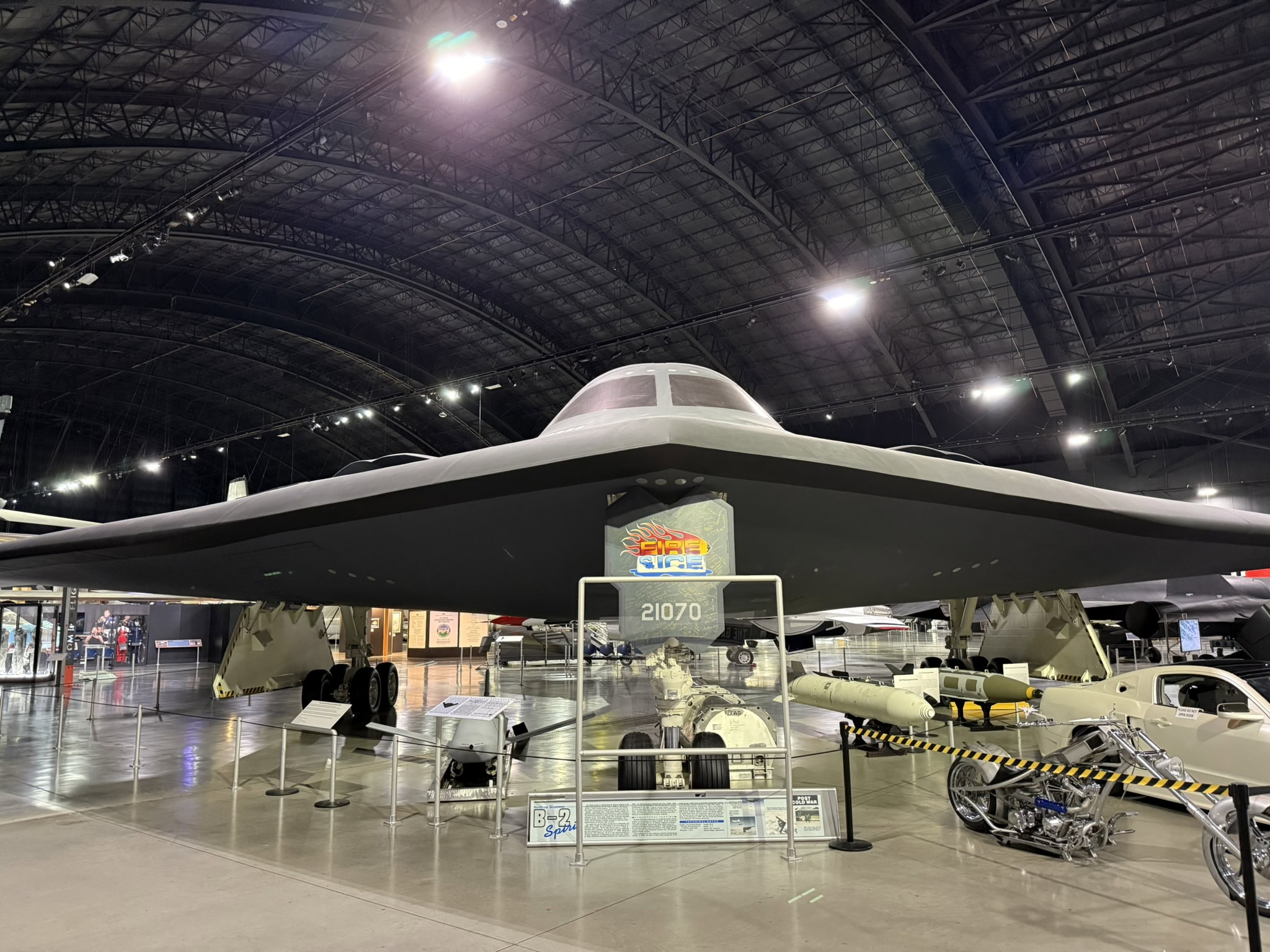
B-2 Spirit Stealth Bomber. 19FortyFive.com Photo from National Museum of the U.S. Air Force Visit in 2025.
This achievement stands in sharp contrast to losses suffered by other U.S. and allied platforms during the same campaign, including fighter aircraft, UAVs, and even high-value support assets such as tankers and AWACS. The complete absence of B-2 combat losses reinforced a longstanding conclusion of modern air warfare: low observability, when paired with disciplined tactics and joint integration, remains a decisive counter to any air defense network.
As Iranian air defenses throughout the conflict, the B-2 also had to adapt in its own way. Photographs released by CENTCOM showed white rectangular patches along the leading edges of several aircraft.
While the exact function of these modifications was not officially disclosed, some analysts have speculated that they are mission-specific radar-signature management, temporary repairs to radar-absorbent materials, or integration of updated sensors or communications systems.
Regardless of their precise purpose, the presence of such visible adaptations demonstrates the platform’s adaptability despite its Cold War origins.
It also demonstrates that even the B-2, one of the Air Force’s stealthiest assets, needs to adapt and evolve to survive in even sparsely defended airspace.
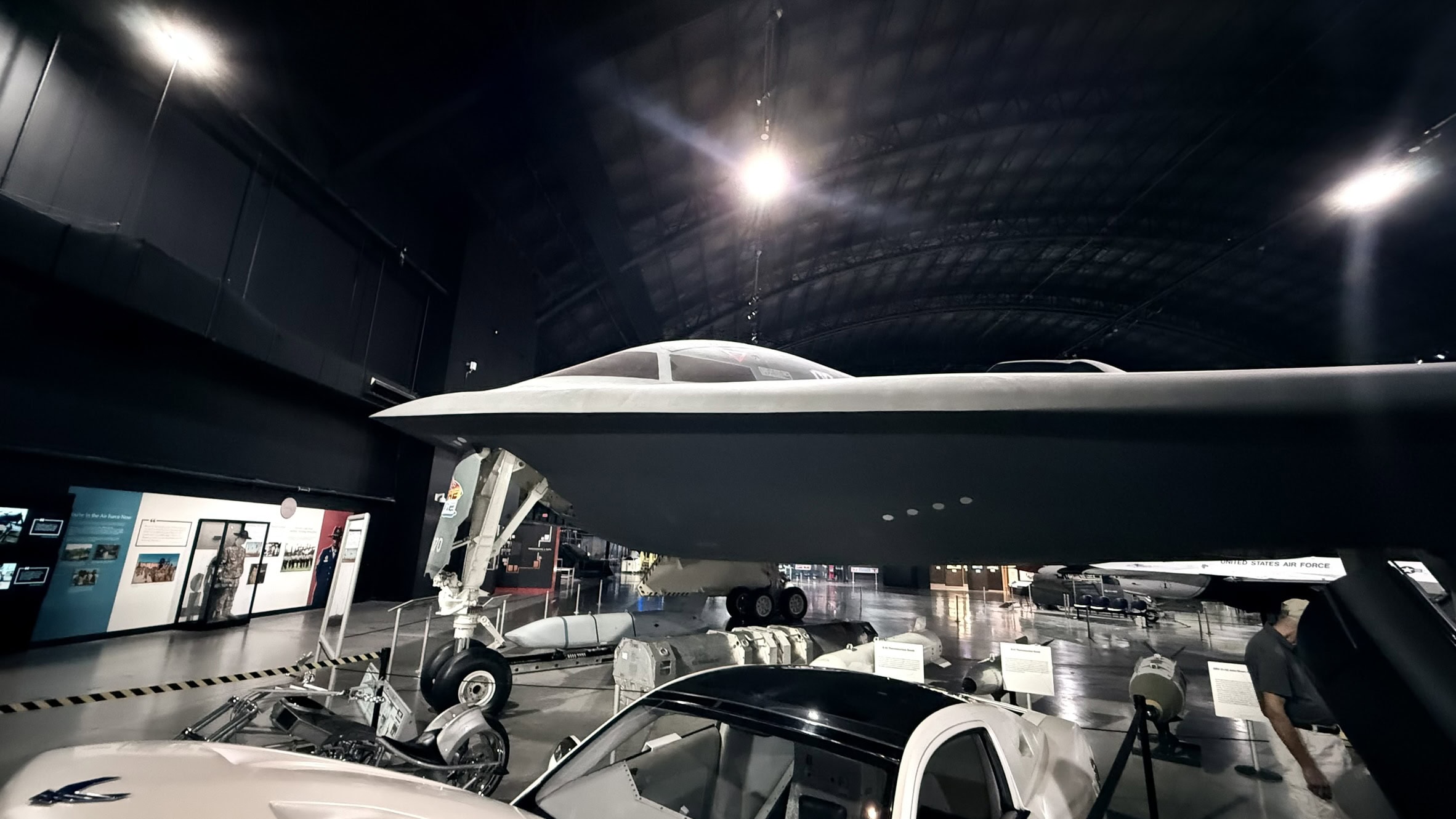
B-2 Spirit Stealth Bomber. 19FortyFive.com Photo from National Museum of the U.S. Air Force Visit in 2025.
The U.S. Air Force at its Finest
In the opening nights of the operation, B-2s delivered large numbers of two-thousand-pound class precision-guided penetrator munitions against hardened missile bases and underground facilities linked to Iran’s ballistic missile force.
These strikes played a critical role in blunting Iran’s ability to conduct coordinated missile retaliation during the first phase of the conflict.
While such effects might theoretically be achieved by other aircraft under permissive conditions, Epic Fury was characterized precisely by the absence of permissive airspace, making the B-2’s survivable penetration decisive.
It is also important to note that the B-2 did not operate in isolation. Its success during Epic Fury was closely tied to its integration into a broader stealth-centric kill chain. Fifth-generation fighters such as the F-22 and F-35 performed air superiority and SEAD roles, while electronic warfare aircraft degraded Iranian radar coverage.
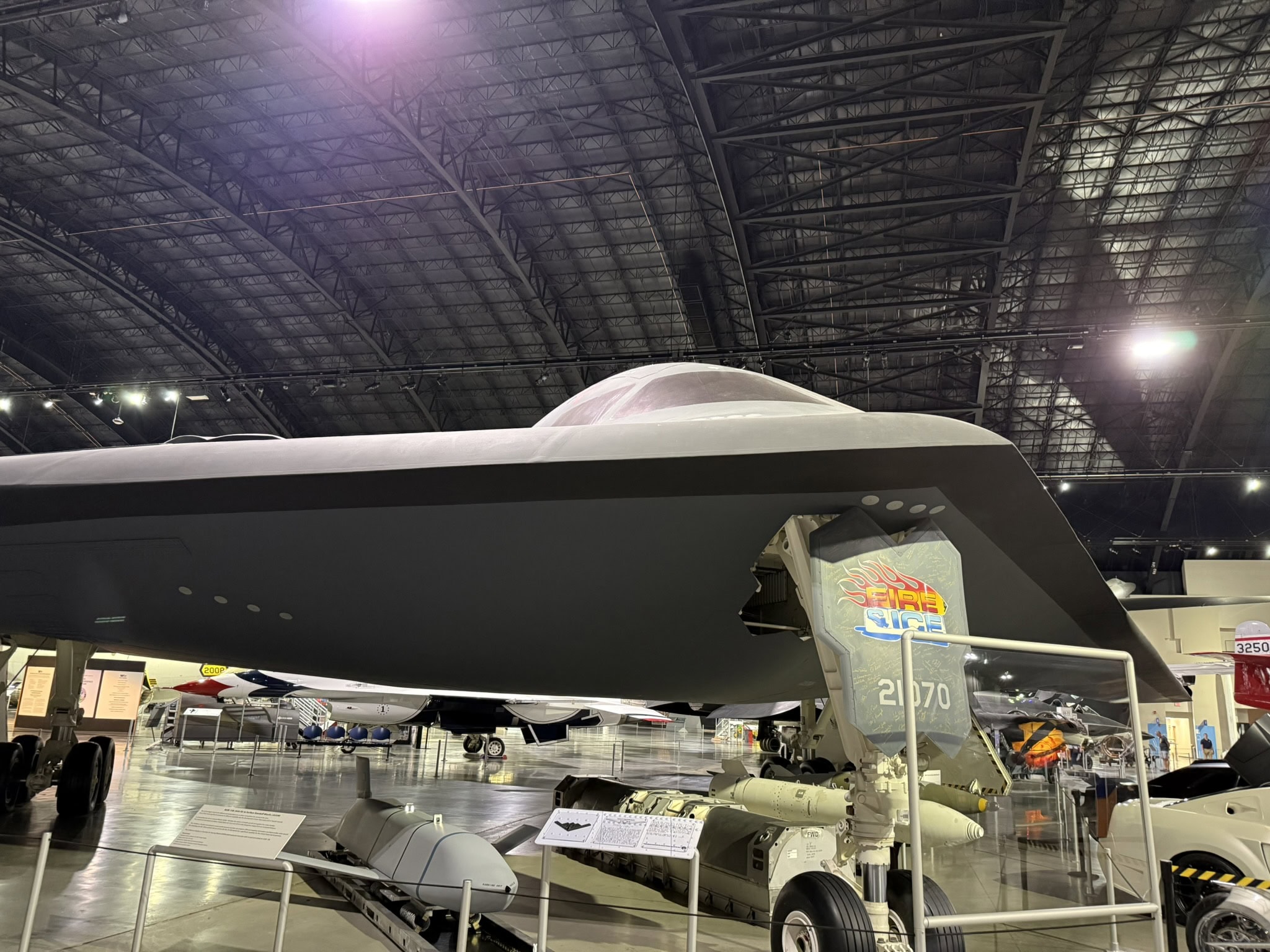
B-2 Spirit Stealth Bomber. 19FortyFive.com Photo from National Museum of the U.S. Air Force Visit in 2025.
In this construct, the B-2 often functioned as the terminal striker, exploiting corridors opened and sustained by other stealth platforms while delivering munitions capable of destroying the hardest targets on the battlefield.
Unlike previous combat operations, where the B-2 typically acted as the lone penetrator rather than as part of a networked stealth force.
The B-21: the Next Step in American Air Dominance
The B-2’s example proves that the B-21 has a bright future ahead of it. Despite being smaller than the B-2, the B-21 is expected to be manufactured in much larger numbers than its Cold War ancestors.
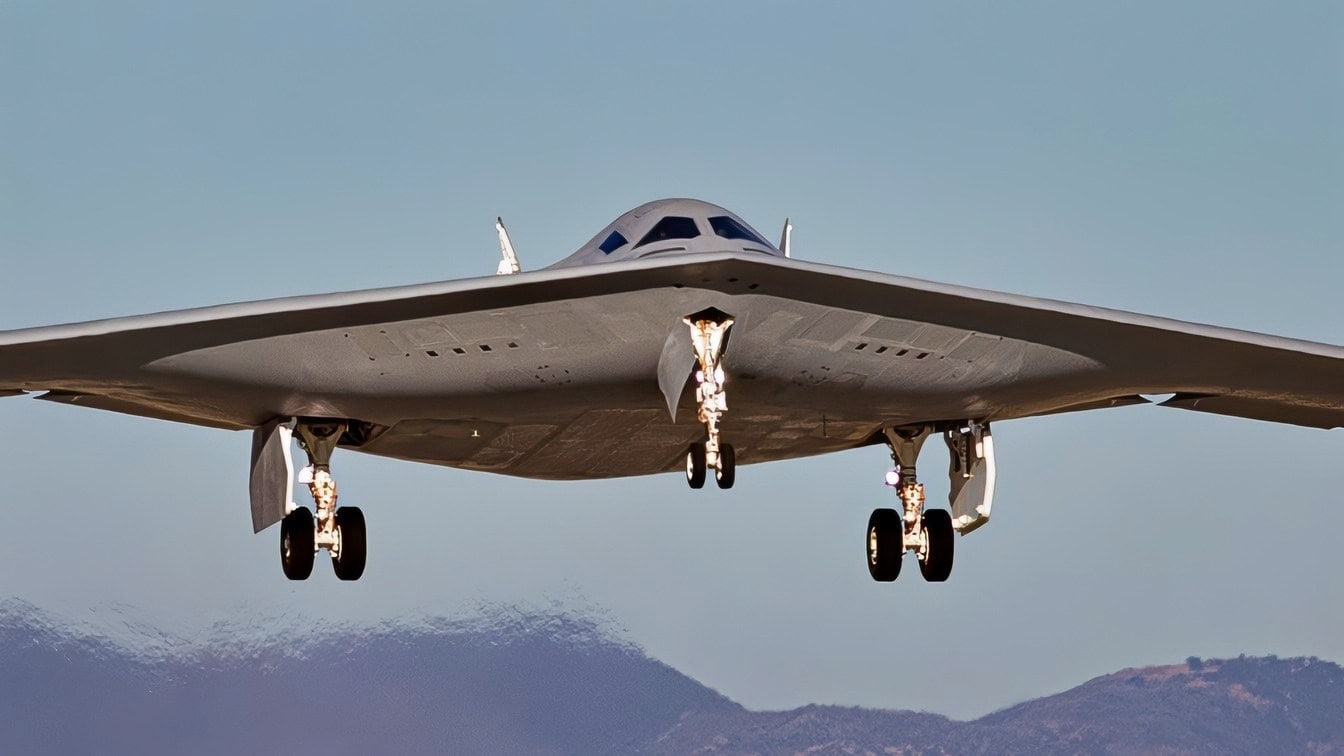
A second B-21 Raider test aircraft takes off, Sept. 11, from Palmdale, Calif., to join the Air Force’s flight test campaign at Edwards Air Force Base, Calif. The addition of the second test aircraft expands mission systems and weapons integration testing, advancing the program toward operational readiness. (Courtesy photo)
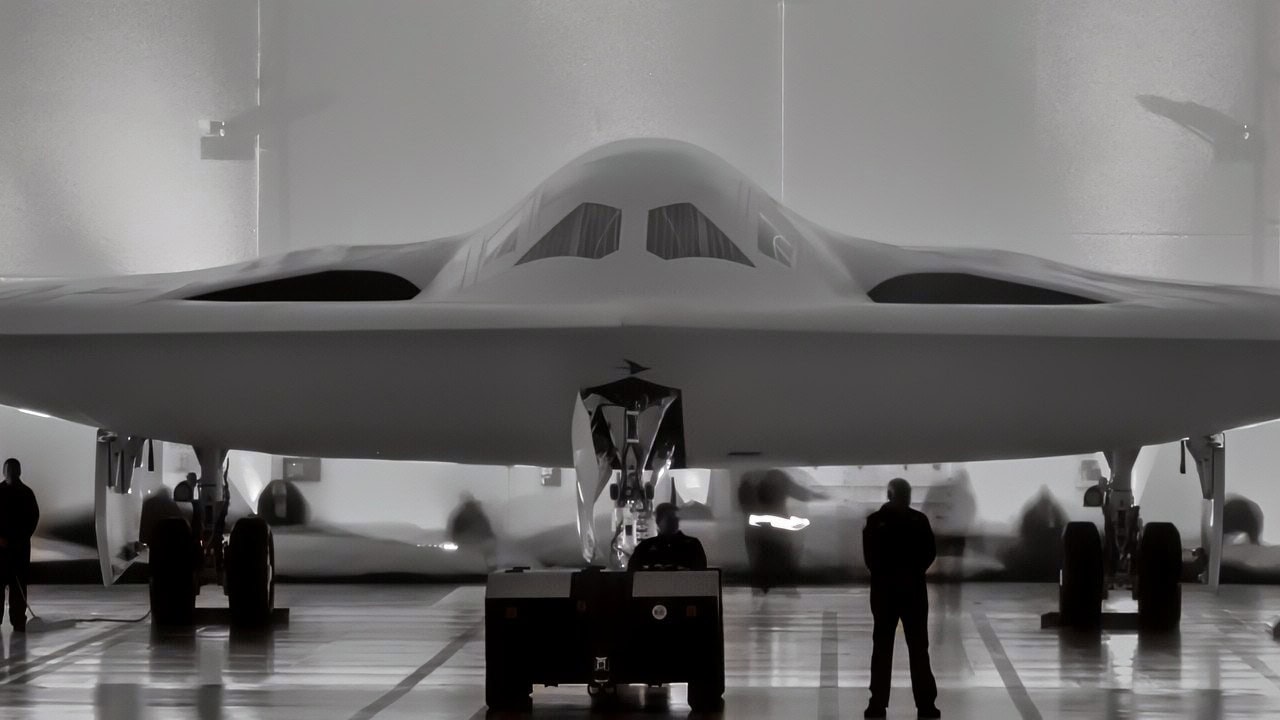
A B-21 Raider is unveiled at Northrop Grumman’s manufacturing facility on Air Force Plant 42 in Palmdale, California, Dec. 2, 2022. The B-21 will be a long-range, highly survivable, penetrating strike stealth bomber capable of delivering both conventional and nuclear munitions. (U.S. Air Force photo by Airman 1st Class Joshua M. Carroll)
The current plan is to acquire 100 of these new bombers, although many defense officials have advocated for higher numbers.
The B-21 is marketed as a sixth-generation aircraft and is supposedly equipped with stealth features that dwarf those of its predecessors. Not much detail has been given about its stealth systems due to the project’s confidentiality, but the aircraft features a smooth, flying-wing layout designed to reduce its radar cross-section as much as possible.
Aside from its revolutionary stealth systems, the B-21 reportedly employs advanced data fusion capabilities that enable it to act as a flying command center during combat missions.
The bomber is designed to operate as part of a family of systems encompassing complementary ISR, C2, and electronic warfare platforms and capabilities, all designed for survivability in high-end threat environments.
All of this is to ensure that the B-21 can operate in the most contested environments on the planet and that the U.S. Air Force retains a decisive battlefield advantage.
About the Author: Isaac Seitz
Isaac Seitz, a Defense Columnist, graduated from Patrick Henry College’s Strategic Intelligence and National Security program. He has also studied Russian at Middlebury Language Schools and has worked as an intelligence Analyst in the private sector.